
Boxxi original cuisine · European inspiration
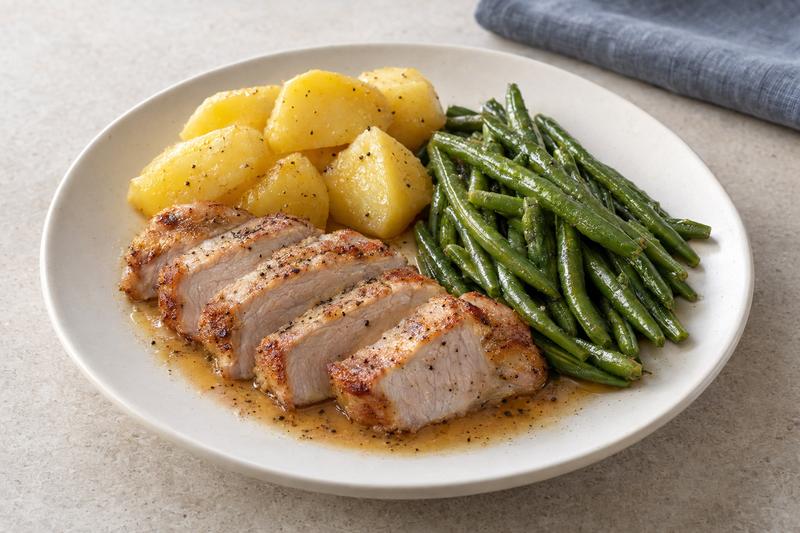
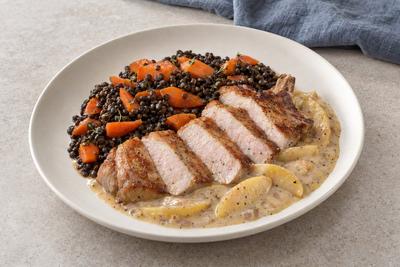
Duroc pork chop with buttered potatoes and green beans
We sear the aged Duroc chop along its fat edge as well as its sides and leave it on the bone until it is finished. We share one generous chop between two, adding buttered potatoes, lemony green beans and the pan juices. The meat itself provides the main flavour in this Sunday lunch.
The total time allows for chops 2–4 cm thick, cooking the sides and resting the meat. A thinner chop will be ready sooner; a thicker one needs longer in the oven.
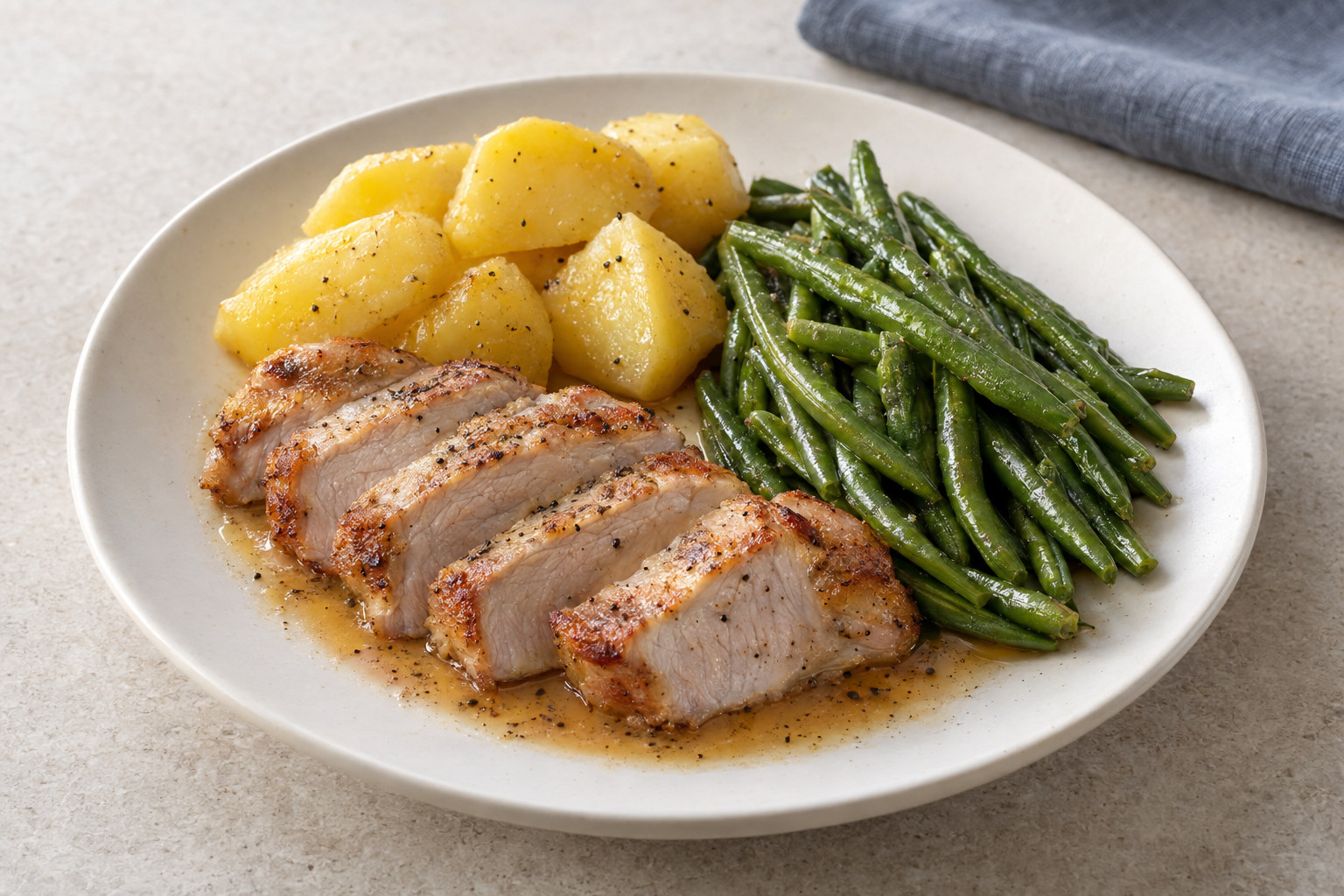
The golden-brown crust and pan juices give the plate a rich meaty flavour. Butter softens the potatoes, lemon lifts the beans and a little pepper completes the dish.
Step-by-step method
What you will need
- kitchen scales
- knife and chopping board
- thin-tipped probe thermometer
- oven
- 28 cm frying pan and two hob rings
- 25 × 20 cm roasting dish
- tongs
- 3-litre pot with lid
- 2-litre saucepan with lid
- colander
- heatproof bowl for fat
Before we start
We first cook the potatoes and beans at the same time in two pots, then drain them. Then we sear the meat. We warm the sides once the chop reaches at least 55 °C in the oven; if it is already at that temperature when it goes in, we start immediately. If the chop is ready in the pan, we warm them while it rests. Two hob rings suffice: once the sides are hot, we take one pot off and use that ring for the pan juices. We keep the meat loosely covered until the sides are ready and slice it only just before serving.
Prepare the meat and potatoes
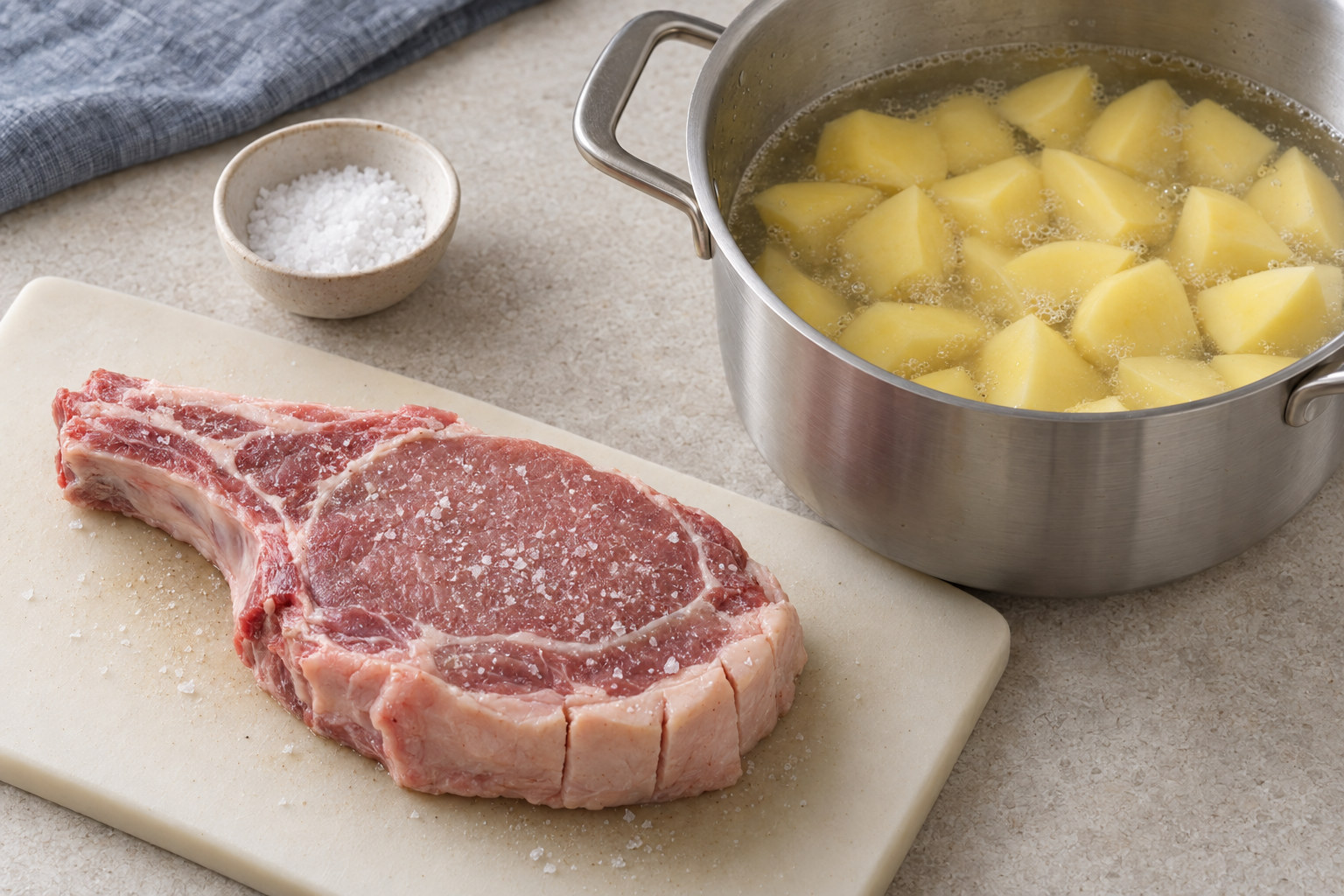
We preheat the oven to 170 °C. We pat one chop dry and measure the thickness of its lean meat. We lightly score the fat edge every 2 cm, cutting only into the fat, and season the meat with ½ teaspoon salt. If we plan to finish with Icelandic salt, we reduce the ordinary salt on the meat by one small pinch. We keep the prepared meat covered in the fridge and take it out only just before searing. We peel the potatoes, cut them into pieces about 3 cm across and cover them with water in a pot. We bring to a boil and simmer for 15–20 minutes until tender. We do not salt the water yet. While they cook, we boil the beans in a second saucepan as described in step 4. We drain the tender potatoes, return them to the empty pot and let excess moisture evaporate for 1 minute. We cover and set aside. We begin searing the meat only after both side dishes are cooked.
Sear the chop
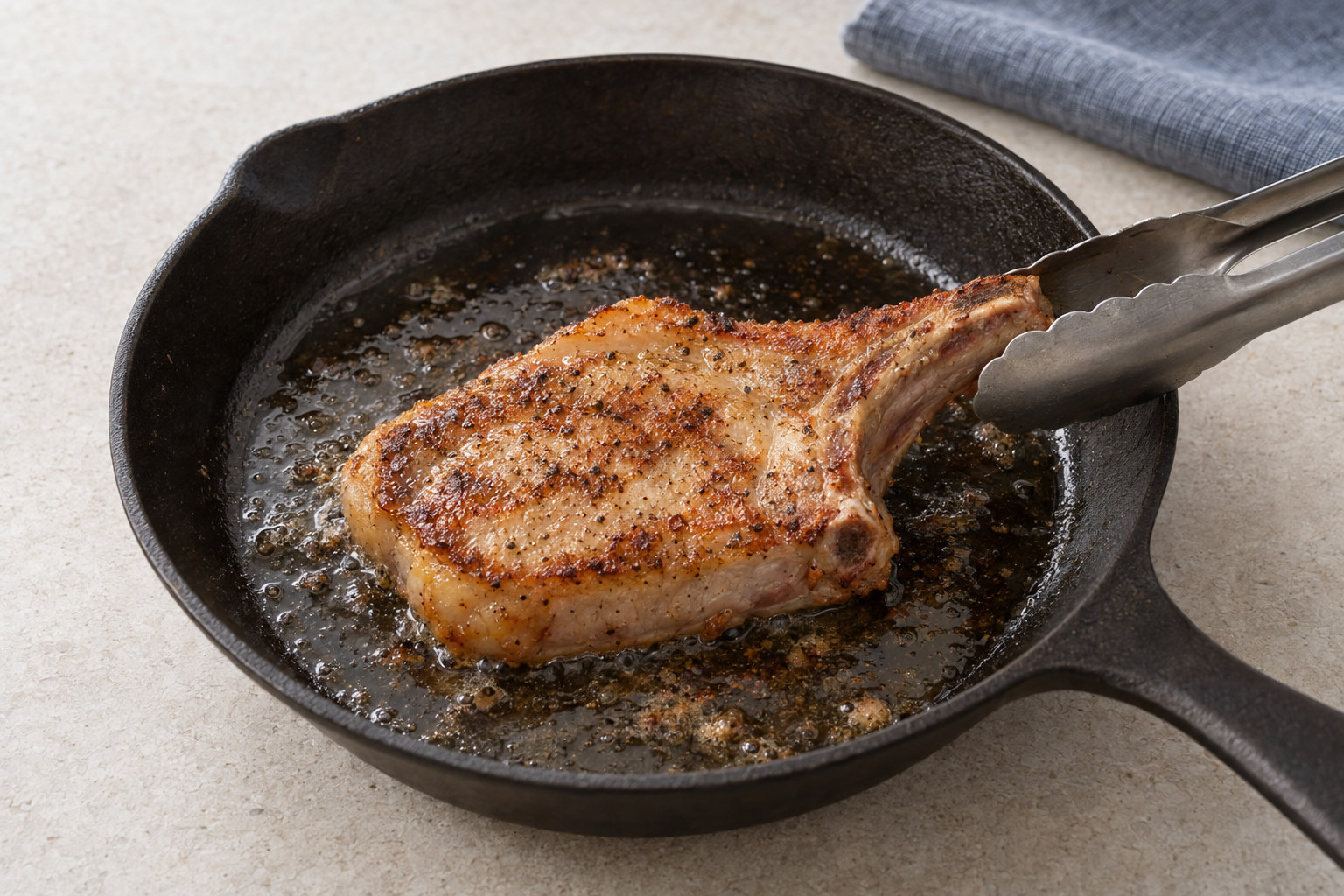
In a 28 cm frying pan, we heat two teaspoons of oil over a medium heat. We hold the chop on its fat edge with tongs for 4–6 minutes, until some fat renders, then sear each broad side for 2 minutes. We lower the heat if the fat smokes. While the chop is still in the hot pan, we check the temperature in the centre of the meat, away from the bone. If it has already reached 63 °C, we remove it from the pan and let it rest; otherwise we transfer it to a roasting dish and put it in the oven at 170 °C. We start checking its temperature after 6 minutes in the oven and then every 4 minutes. Depending on thickness, we usually finish it for 8–30 minutes. Once the chop reaches at least 63 °C inside, we take it out and let it rest loosely covered for 5–8 minutes.
The surface is golden-brown; we check whether the centre is cooked with a thermometer.
Warm the potatoes with butter
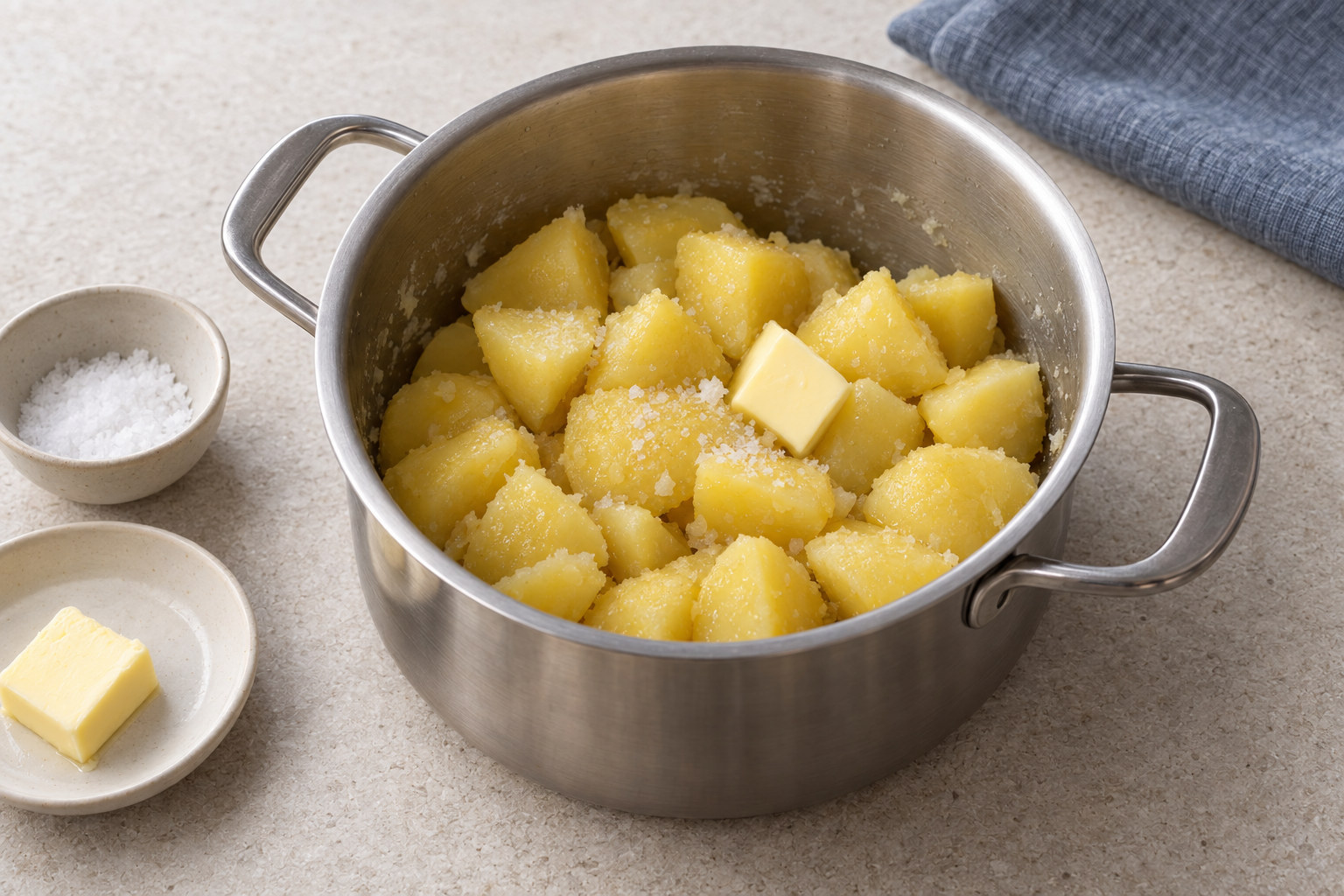
We start warming the sides once the chop in the oven reaches at least 55 °C, or immediately after putting it in if it has already reached that temperature. If the meat is cooked in the pan, we use its resting time. We add ½ teaspoon salt and two teaspoons butter to the potatoes. We cover and warm them over a low heat for about 4–6 minutes, shaking the pot occasionally so they do not catch. Once they are hot inside, we set them aside covered and use the hob ring for the pan juices.
The pieces hold their shape and do not sit in water.
Cook the beans and finish with lemon
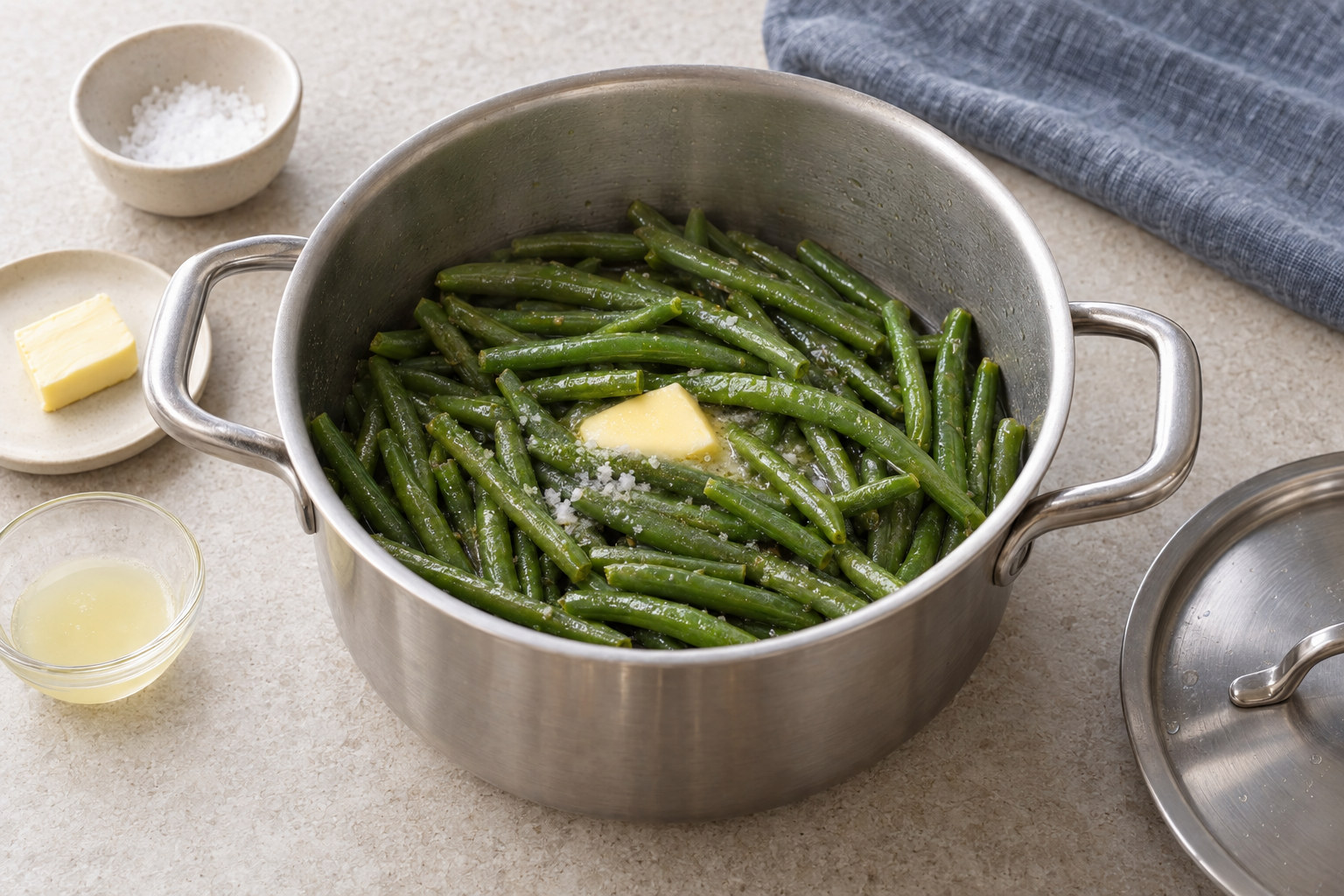
We wash the beans and trim off the tough ends. In the second saucepan, we bring about 1 litre of water to the boil. We add the beans and top up with water if needed to keep them submerged. From when the water returns to the boil, we cook at a steady boil for 8–10 minutes. After 8 minutes, we check whether they have softened inside; we give thicker pods the full 10 minutes. We drain, briefly cool under cold water and let them drip dry. We return them to the empty saucepan, cover and set aside until we cook the meat. We warm them at the same time as the potatoes in the previous step. We add 70 ml clean water, ¼ teaspoon salt and the remaining teaspoon butter. We cover and heat for about 4–6 minutes, stirring occasionally, until hot inside. We uncover, let excess water evaporate and stir in 10 ml lemon juice. The brief warming does not replace the initial boiling of the beans.
Make the pan juices and serve
While the meat rests, we pour free fat from the pan into a heatproof bowl. We add 60 ml water to the pan and simmer the brown bits for 1–2 minutes. We add pepper and the juices released during resting. We cut the meat from the bone and slice it across the grain into 1 cm slices. We divide all the sliced meat between 2 plates with potatoes, beans and pan juices. We serve at once. If finishing with Icelandic salt, we first taste the meat with the sides and juices. If needed, we distribute one small pinch of Saltverk Icelandic birch-smoked flaked salt over the meat in place of the ordinary salt withheld at the start. If the mouthful is salty enough, we omit it.
Tips from our kitchen
- We slice the meat across the grain so even thicker pieces are easy to eat.
How we serve it
- After resting, we remove the meat from the bone and slice it across the grain. We divide the meat, potatoes and beans into comparable portions and spoon over the pan juices.
Ingredient swaps
green beans
the same weight of broccoli in small florets We steam the broccoli when finishing the sides, without boiling beans beforehand. We use the water allocated to the final warming of the beans and cook for 5–7 minutes until tender. We add butter, salt and lemon in the amounts given for the beans.
Ingredient notes
- We share one chop between two people; for four, we cook two chops.
- We remove any tough rind and divide the cooked meat between diners.
During preparation
- We keep the prepared meat covered in the fridge until its cooking step. After handling raw meat, we wash our hands, knife and chopping board; we put the cooked meat on clean equipment.
- We insert the thermometer probe from the side into the thickest part of the meat, away from bone and fat. We measure each chop separately and rest it after cooking as directed.
Our inspiration
When the smell of a searing pork chop rises from the pan, we want to cut into it at once. A few minutes of resting help the meat and give us time to turn the browned bits into simple pan juices. Buttered potatoes and green beans need no elaborate sauce: the flavour of the browned meat brings everything together.
Similar recipes
Recipe for 4 people
Step-by-step method
Before we start
We first cook the potatoes and beans at the same time in two pots, then drain them. Then we sear the meat. We warm the sides once a chop reaches at least 55 °C in the oven; if it is already at that temperature when it goes in, we start immediately. If it is ready in the pan, we warm them while it rests. We sear the meat in two pans and use the third hob ring for the final pan juices. If the chops finish at different times, we serve the first after resting with half the sides and juices; we warm the rest for the second.
Prepare the meat and potatoes
We preheat the oven to 170 °C. We pat two chops dry and measure the thickness of the lean meat. We lightly score the fat edge every 2 cm, cutting only into the fat, and season the meat with ¾ teaspoon salt. If we plan to finish with Icelandic salt, we reduce the ordinary salt on the meat by two small pinches. We keep the prepared meat covered in the fridge and take it out only just before searing. We peel the potatoes, cut them into pieces about 3 cm across and cover them with water in a pot. We bring to a boil and simmer for 15–20 minutes until tender. We do not salt the water yet. While they cook, we boil the beans in a second saucepan as described in step 4. We drain the tender potatoes, return them to the empty pot and let excess moisture evaporate for 1 minute. We cover and set aside. We begin searing the meat only after both side dishes are cooked.
Sear the chop
In two 28 cm frying pans, we heat two teaspoons of oil in each at the same time over a medium heat. We hold each chop on its fat edge with tongs for 4–6 minutes, until some fat renders, then sear each broad side for 2 minutes. We lower the heat if the fat smokes. While the chops are still in the hot pans, we check the temperature in the centre of each, away from the bone. We remove any that have already reached 63 °C from the pan and let them rest; we transfer the others side by side to a roasting dish and put them in the oven at 170 °C. We start checking their temperature after 6 minutes in the oven and then every 4 minutes. Depending on thickness, we usually finish them for 8–30 minutes. Once a chop reaches at least 63 °C inside, we take it out and let it rest loosely covered for 5–8 minutes. If the second chop is considerably behind, we serve the first after resting with two portions of sides as described in the final step; we finish the second separately.
The surface is golden-brown; we check whether the centre is cooked with a thermometer.
Warm the potatoes with butter
We start warming the sides once the first chop in the oven reaches at least 55 °C, or immediately after putting it in if it has already reached that temperature. If the meat is cooked in the pan, we use its resting time. If we will serve the chops separately, we first warm half the potatoes with half the butter and salt; we keep the rest covered for the second serving. For the full batch of potatoes, we use one teaspoon salt and one tablespoon butter. We cover and warm over a low heat for about 6–8 minutes, shaking the pot occasionally so they do not catch. Once they are hot inside, we set them aside covered. We can make the juices on the third hob ring meanwhile.
The pieces hold their shape and do not sit in water.
Cook the beans and finish with lemon
We wash the beans and trim off the tough ends. In the second saucepan, we bring about 1.5 litres of water to the boil. We add the beans and top up with water if needed to keep them submerged. From when the water returns to the boil, we cook at a steady boil for 8–10 minutes. After 8 minutes, we check whether they have softened inside; we give thicker pods the full 10 minutes. We drain, briefly cool under cold water and let them drip dry. We return them to the empty saucepan, cover and set aside until we cook the meat. We warm them at the same time as the potatoes in the previous step. For the full batch, we add 120 ml clean water, ¼ teaspoon salt and the remaining tablespoon butter. We cover and heat for about 6–8 minutes, stirring occasionally, until hot inside. We uncover, let excess water evaporate and stir in 20 ml lemon juice. If serving in two rounds, we divide the beans and all these additions in half and finish the second half the same way when the second chop is ready. The brief warming does not replace the initial boiling of the beans.
Make the pan juices and serve
While the meat rests, we pour free fat from both pans into a heatproof bowl. We add 100 ml water to one pan and simmer the brown bits for 1–2 minutes; for four servings, we scrape in the browned bits from the second pan too. We add pepper and the juices released during resting. We cut the meat from the bones and slice it across the grain into 1 cm slices. If both chops are ready at about the same time, we divide all the sliced meat between 4 plates with the sides and juices. If the second is considerably behind, we divide the first between two plates with half the sides and juices after resting and serve at once. We finish the second chop separately; when serving it, we warm the reserved sides as in steps 3 and 4 and the remaining juices. If finishing with Icelandic salt, we first taste the meat with the sides and juices. If needed, we distribute two small pinches of Saltverk Icelandic birch-smoked flaked salt over the meat in place of the ordinary salt withheld at the start. If the mouthful is salty enough, we omit it. If serving in two rounds, we use no more than half the reserved Icelandic salt each time.