
From the Boxxi kitchen · European-inspired
Duroc pork chop with cider, apples and beluga lentils
We serve the browned Duroc chop with apples in a gentle cider sauce with crème fraîche. Black lentils with roasted carrots and thyme make a satisfying accompaniment with a pleasant bite.
Before frying a thin chop, we have the lentils cooked and the carrots tender; for a thicker piece, cooking the accompaniments and meat overlaps. We adjust the oven time for a chop 2–4 cm thick according to the thermometer reading.
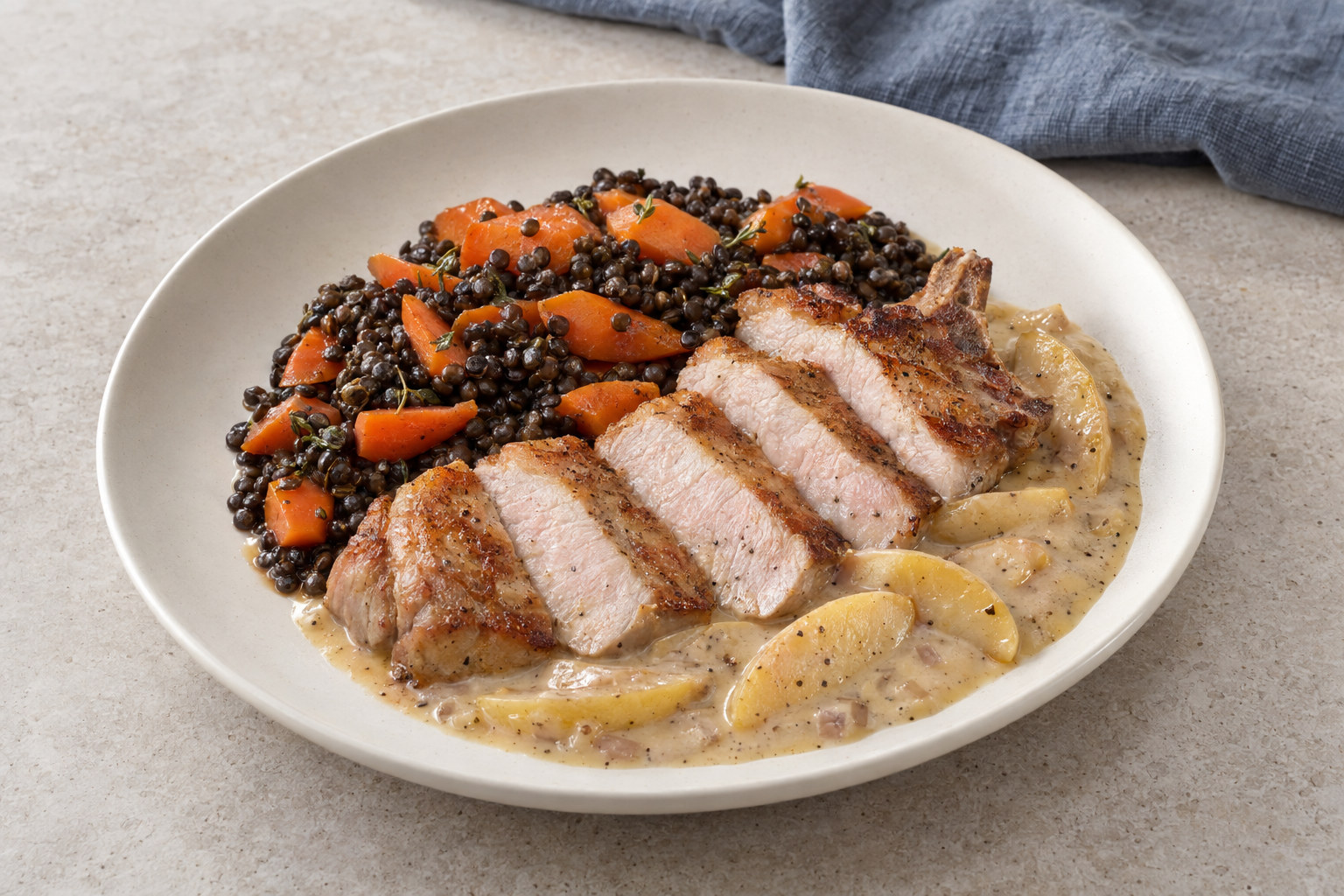
Dry cider and crème fraîche balance the sweetness of the apples and carrots, while the rich flavour of browned pork still comes through the sauce.
Step-by-step method
What you will need
- kitchen scales
- knife and chopping board
- fine-tipped probe thermometer
- oven
- 25 × 20 cm roasting dish
- 30 × 25 cm baking tray
- 28 cm frying pan
- 2 l saucepan with a lid
- colander
- tongs
- bowl
- heatproof bowl for the fat
- small saucepan with a lid for the prepared sauce
Before we start
We start with the lentils and chopping the vegetables. We then prepare the apple sauce base and transfer it to a small saucepan. We start roasting the carrots before frying the meat. For a thin chop, we wait until the carrots are tender and the lentils cooked before frying; for a thicker piece, we allow longer to finish it in the oven as described in the method. While the meat rests, we finish the sauce and combine the accompaniments.
Cook the lentils and prepare the vegetables
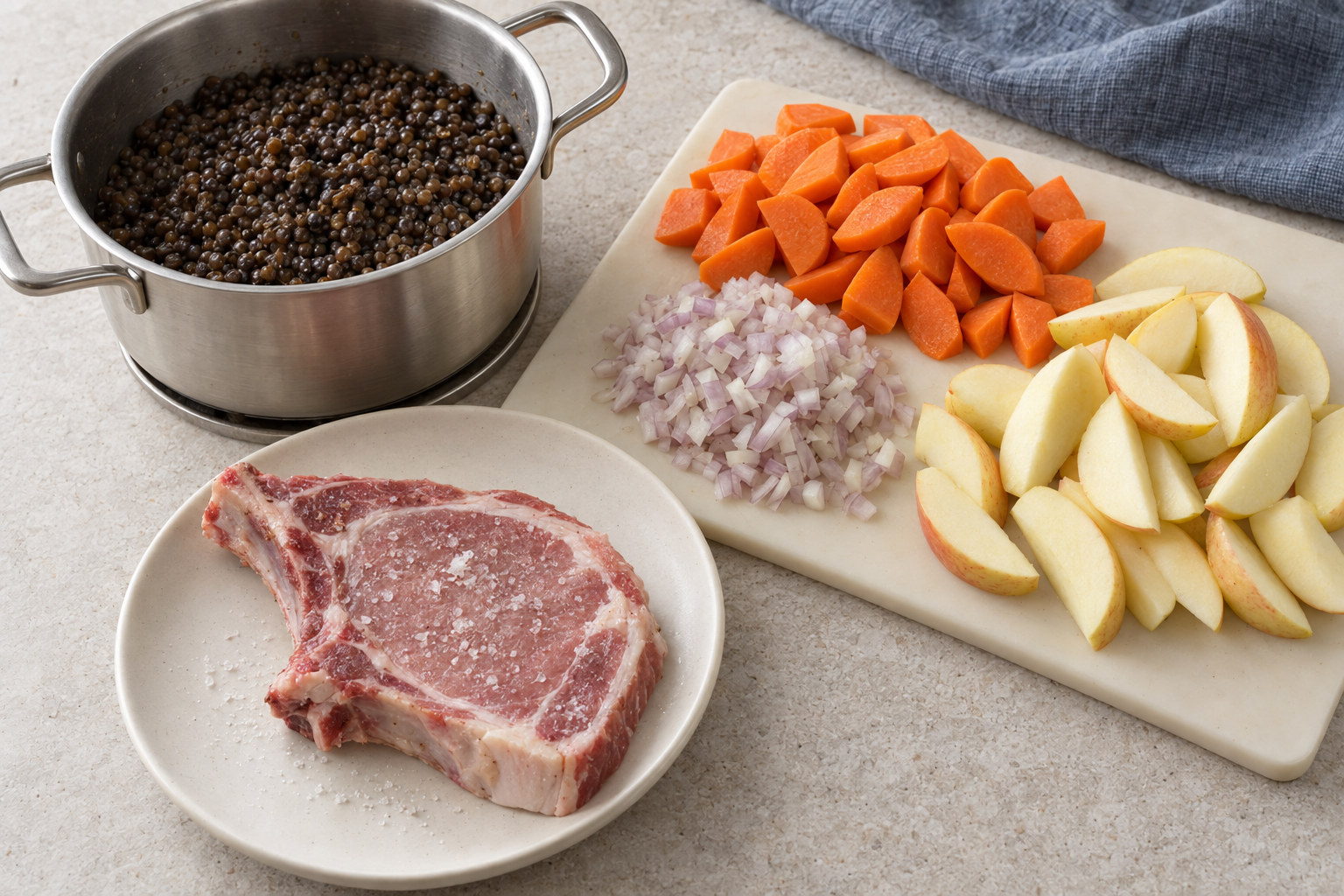
We preheat the oven to 170 °C. We rinse the lentils and cover them with plenty of water in a 2 l saucepan. We simmer gently for 25–35 minutes until tender but still holding their shape, then drain and season with ¼ teaspoon of salt. We wash and core the apple. We peel the carrots and shallot. We cut the carrots into half-moons 1 cm thick, finely chop the shallot and cut the apple into wedges 1.5 cm thick. We pat the meat dry and season with ½ teaspoon of salt. If finishing with Icelandic salt, we reduce the regular salt on the meat by one small pinch.
Prepare the sauce before frying the meat
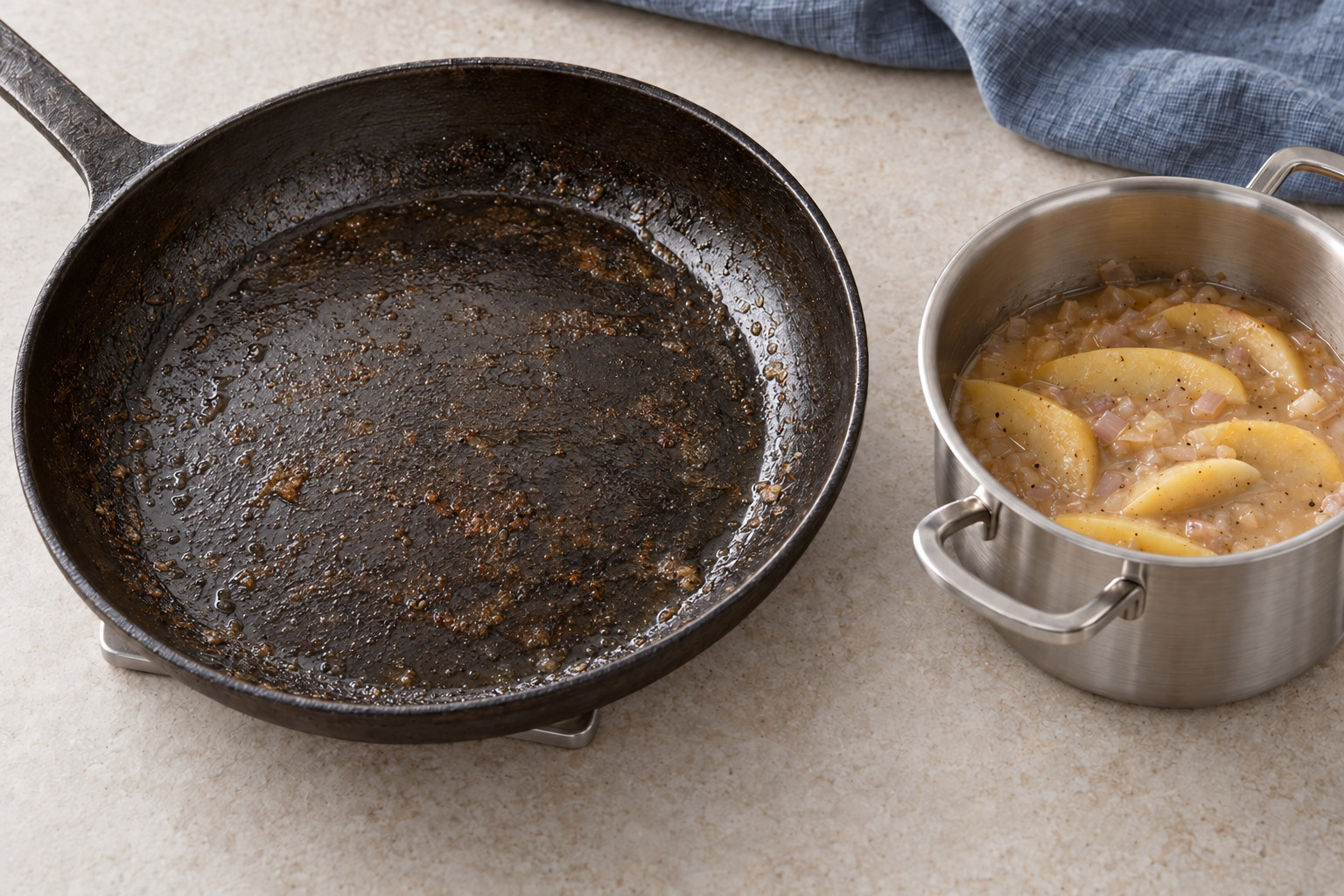
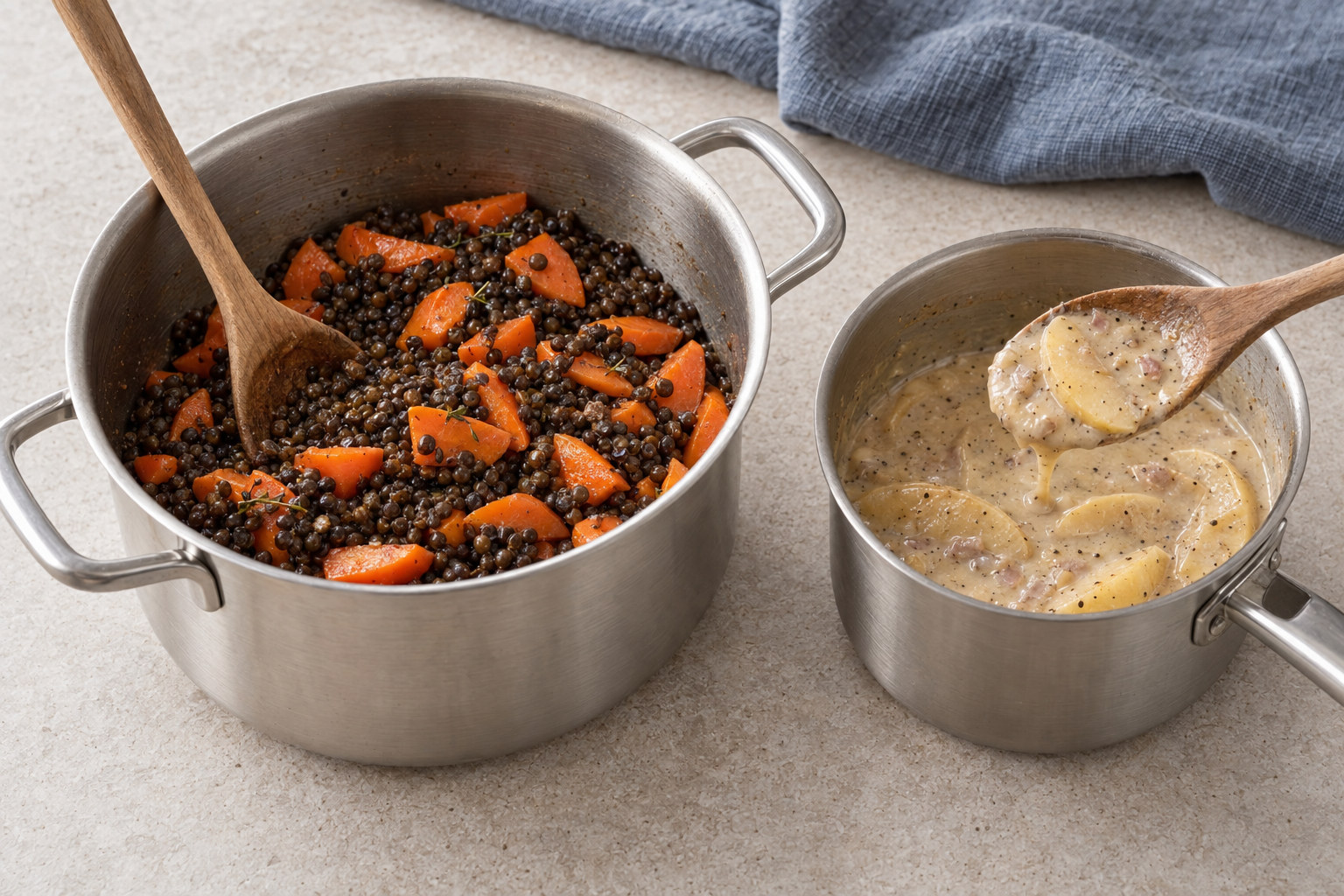
We use a teaspoon of oil from the quantity listed for the meat in the frying pan, reserving the rest for the carrots and chop. We fry the shallot over a medium heat for 3 minutes, add the apple and cook for another 3 minutes. We pour in the cider and reduce it by about half over 4–6 minutes, then add 100 ml water and simmer gently for 5–7 minutes. Some of the apple must remain in whole wedges. We transfer the sauce to a small saucepan and cover. We wipe out the frying pan and use it for the meat.
The sauce smells of apples, and the raw alcohol aroma has mellowed.
Roast the carrots and finish the chop
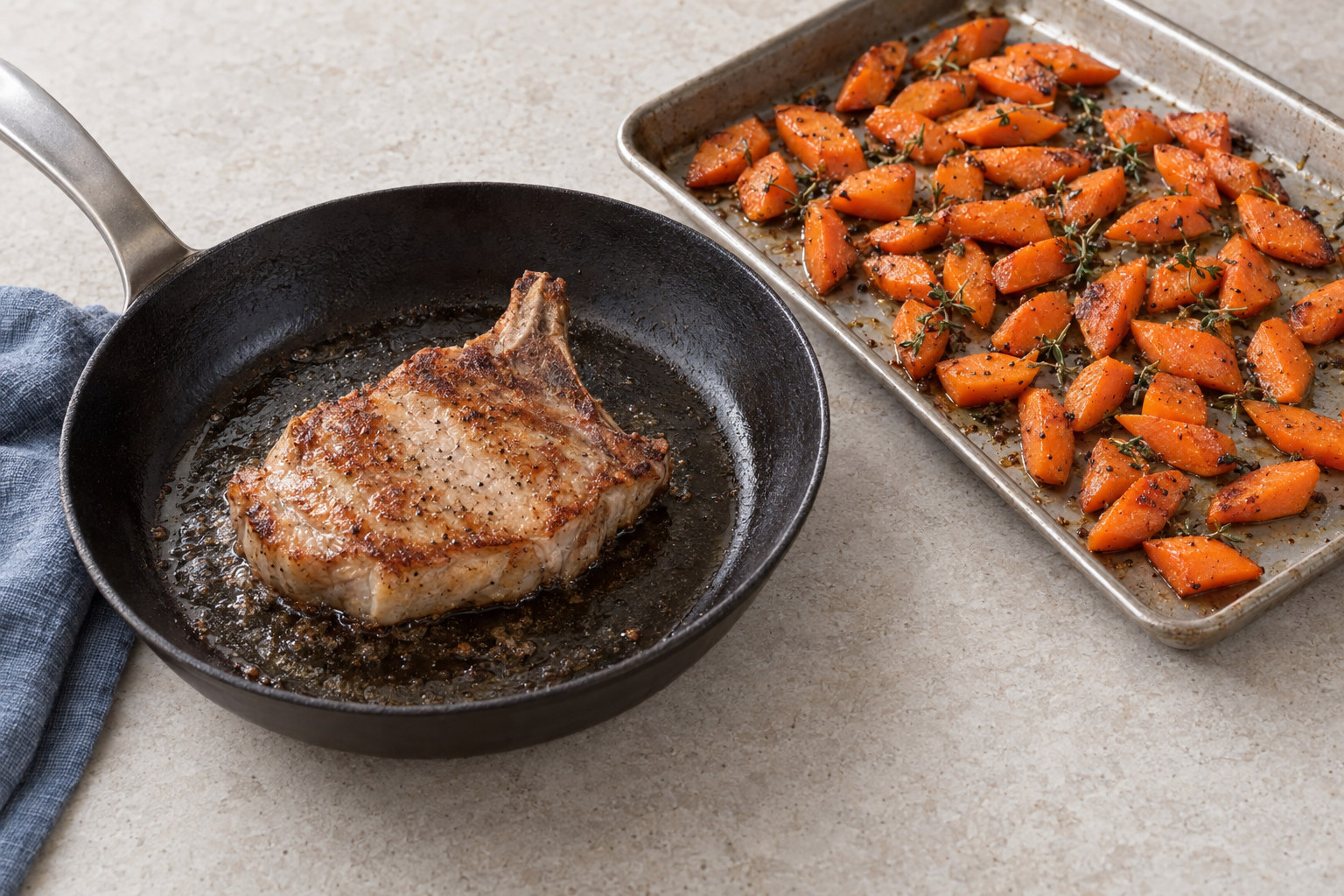
We strip the thyme leaves and discard the woody stems. We toss the carrots with a teaspoon of oil, ¼ teaspoon of salt and the thyme leaves, and spread them in a single layer on a separate baking tray. We roast at 170 °C for 25–35 minutes, stirring halfway through. For chops no more than 2.5 cm thick, we start frying only when the carrots are tender and the lentils are cooked. We take the roasted carrots out and cover them. For a thicker piece that will need longer to finish in the oven, we start frying after putting the carrots in the oven. We heat the remaining teaspoon of oil for the meat in a 28 cm frying pan. We first fry the meat on its fatty edge for 4–6 minutes, then for 2 minutes on each side. While it is still in the hot pan, we measure the temperature at the centre of the lean meat, away from the bone. If it has already reached 63 °C, we take the chop out and move on to resting; otherwise, we transfer it to a roasting dish and put it in the oven at 170 °C. We start checking the temperature after 6 minutes in the oven, then every further 4 minutes. Depending on thickness, finishing usually takes 8–30 minutes. We remove each chop as soon as it reaches at least 63 °C inside and let it rest, loosely covered, for 5–8 minutes.
The carrots have tender centres and lightly browned edges.
Combine the accompaniments and finish the sauce
We stir the tender carrots into the lentils. We put the saucepan over the lowest heat and stir the lentils and carrots for 2–3 minutes, then cover and keep the accompaniment warm for no more than 15 minutes. While the meat rests, we pour off the excess fat from the frying pan. We add some of the prepared sauce, loosen the browned bits and return everything to the small saucepan. We stir in the crème fraîche and pepper and warm the sauce through without boiling it vigorously. For a thicker chop, we time warming the accompaniment for the end of the oven cooking. We do not leave the cooked meat resting for more than 10 minutes while waiting for the accompaniments.
The sauce lightly coats a spoon; we do not thicken it by boiling vigorously.
Slice and serve
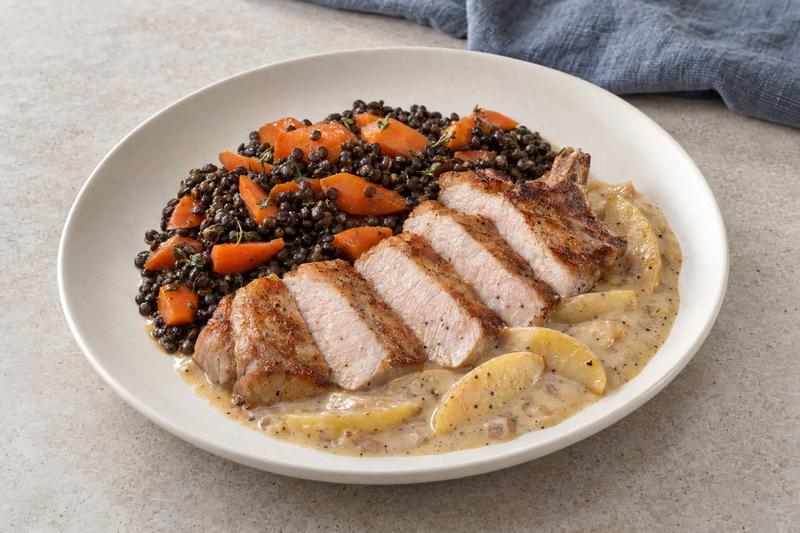
After resting for at least 5 minutes, we cut the meat from the bone and slice it 1 cm thick. We stir the juices from the board into the sauce. We divide the lentils and carrots, all the sliced meat and the apple sauce between 2 plates. We serve immediately. If finishing with Icelandic salt, we first taste the meat with the lentils, carrots and apple sauce. If needed, we distribute one small pinch of Saltverk Icelandic flake salt with Arctic thyme over the meat, in place of the regular salt we reduced at the start. If the mouthful is already salty enough, we leave it out.
There are enough lentils on the plate to catch the sauce, without the meat being completely submerged.
Tips from our kitchen
- We use a dry cider without pronounced sweetness and add no sugar to the sauce.
What to watch out for
- We do not cook the lentils to a mush or boil the hot sauce vigorously after adding the crème fraîche.
How we serve it
- We divide the lentils with roasted carrots and the sliced chop between plates. We add the apple sauce with the juices from the board and serve immediately.
Ingredient swaps
dry cider
The same volume of unsweetened apple juice, plus 10 ml cider vinegar for 2 portions or 15 ml for 4 portions. We reduce the water in the sauce by this added volume. The juice brings a sweeter fruit flavour, balanced by the vinegar. We taste the adjusted sauce only after adding the cream.
Ingredient notes
- We share one chop between two people; for four, we prepare two chops.
- We remove any tough rind and divide the cooked meat between the diners.
During preparation
- We keep the prepared meat covered in the fridge until the relevant step. After handling raw meat, we wash our hands, knife and board, and use clean utensils for the cooked meat.
- We insert the thermometer probe from the side into the thickest part of the meat, avoiding bone and fat. We check each chop separately and let it rest after cooking as described in the method.
Our inspiration
Apple appears here both in wedges and in the cider. Sweet pieces of fruit and a fresh apple flavour come together in a gentle cream sauce that suits browned pork beautifully. Beluga lentils add small, firm grains, and roasted carrots bring sweetness: a welcome change from pork chops with potatoes.
Similar recipes
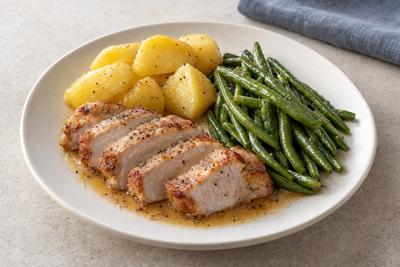
Recipe for 4 people
Step-by-step method
Before we start
We start with the lentils and chopping the vegetables. We then prepare the apple sauce base and transfer it to a small saucepan. We start roasting the carrots before frying the meat. For a thin chop, we wait until the carrots are tender and the lentils cooked before frying; for a thicker piece, we allow longer to finish it in the oven as described in the method. While the meat rests, we finish the sauce and combine the accompaniments. If one chop is ready much earlier, we serve it after resting with two portions of lentils, carrots and sauce. We finish the remaining accompaniments only when the second chop is ready.
Cook the lentils and prepare the vegetables
We preheat the oven to 170 °C. We rinse the lentils and cover them with plenty of water in a 3 l saucepan. We simmer gently for 25–35 minutes until tender but still holding their shape, then drain and season with ½ teaspoon of salt. We wash and core the apples. We peel the carrots and shallots. We cut the carrots into half-moons 1 cm thick, finely chop the shallots and cut the apples into wedges 1.5 cm thick. We pat the meat dry and season with ¾ teaspoon of salt. If finishing with Icelandic salt, we reduce the regular salt on the meat by two small pinches.
Prepare the sauce before frying the meat
We use two teaspoons of oil from the quantity listed for the meat in the frying pan, reserving the rest for the carrots and chops. We fry the shallots over a medium heat for 3 minutes, add the apples and cook for another 3 minutes. We pour in the cider and reduce it by about half over 4–6 minutes, then add 170 ml water and simmer gently for 5–7 minutes. Some of the apple must remain in whole wedges. We transfer the sauce to a small saucepan and cover. We wipe out the frying pan and use it for the meat.
The sauce smells of apples, and the raw alcohol aroma has mellowed.
Roast the carrots and finish the chop
We strip the thyme leaves and discard the woody stems. We toss the carrots with two teaspoons of oil, ¼ teaspoon of salt and the thyme leaves, and spread them in a single layer on a separate baking tray. We roast at 170 °C for 25–35 minutes, stirring halfway through. For chops no more than 2.5 cm thick, we start frying only when the carrots are tender and the lentils are cooked. We take the roasted carrots out and cover them. For a thicker piece that will need longer to finish in the oven, we start frying after putting the carrots in the oven. We divide the remaining two teaspoons of oil for the meat between two 28 cm frying pans, one teaspoon in each; the chops will release more fat as we fry their edges. We first fry the meat on its fatty edge for 4–6 minutes, then for 2 minutes on each side. While still in the hot pans, we measure each chop separately at the centre of the lean meat, away from the bone. We remove any piece that has already reached 63 °C and let it rest; we place the others side by side in a roasting dish and put them in the oven at 170 °C. We start checking the temperature after 6 minutes in the oven, then every further 4 minutes. Depending on thickness, finishing usually takes 8–30 minutes. We remove each chop as soon as it reaches at least 63 °C inside and let it rest, loosely covered, for 5–8 minutes. If the second chop is taking considerably longer, we finish the accompaniments and serve in stages as described in the following steps.
The carrots have tender centres and lightly browned edges.
Combine the accompaniments and finish the sauce
If serving in two stages, we first combine only half the cooked lentils with half the tender carrots; we keep the rest covered separately and finish it in the same way before the second serving. Otherwise, we stir the tender carrots into all the lentils. We put the saucepan over the lowest heat and stir the lentils and carrots for 2–3 minutes, then cover and keep the accompaniment warm for no more than 15 minutes. While the meat rests, we pour off the excess fat from the frying pan. We add some of the prepared sauce, loosen the browned bits and return everything to the small saucepan. We stir in the crème fraîche and pepper and warm the sauce through without boiling it vigorously. For a thicker chop, we time warming the accompaniment for the end of the oven cooking. We do not leave the cooked meat resting for more than 10 minutes while waiting for the accompaniments. If serving in two stages, we use half the finished sauce with the first chop; we cover the rest and briefly warm it through before the second serving, without boiling vigorously.
The sauce lightly coats a spoon; we do not thicken it by boiling vigorously.
Slice and serve
After resting for at least 5 minutes, we cut the meat from the bone and slice it 1 cm thick. We stir the juices from the board into the sauce. If everything is ready together, we divide the lentils and carrots, all the sliced meat and the apple sauce between 4 plates. If the second chop is taking considerably longer, we divide the first one, after resting, between two plates with half the accompaniments and sauce. We finish and rest the second chop separately, warming the remaining accompaniments and sauce as described in the previous step. We take each serving to the table immediately. If finishing with Icelandic salt, we first taste the meat with the lentils, carrots and apple sauce. If needed, we distribute two small pinches of Saltverk Icelandic flake salt with Arctic thyme over the meat, in place of the regular salt we reduced at the start. If the mouthful is already salty enough, we leave it out. When serving in two stages, we use no more than half the reserved Icelandic salt each time.
There are enough lentils on the plate to catch the sauce, without the meat being completely submerged.