
From the Boxxi kitchen · European inspiration
Duroc pork chop with potato pavé, pear and mustard sauce
We crisp up layered potato pavé and serve it with slices of Duroc pork chop and mustard sauce. Roasted pear brings sweetness, while lamb’s lettuce with cider vinegar adds freshness. We start the day before so the potato layers can firm up overnight.
We ideally make the pavé the day before. The total estimate includes baking, about 50 minutes of cooling, at least 8 hours in the fridge and the final preparation; a longer overnight chill will extend it.
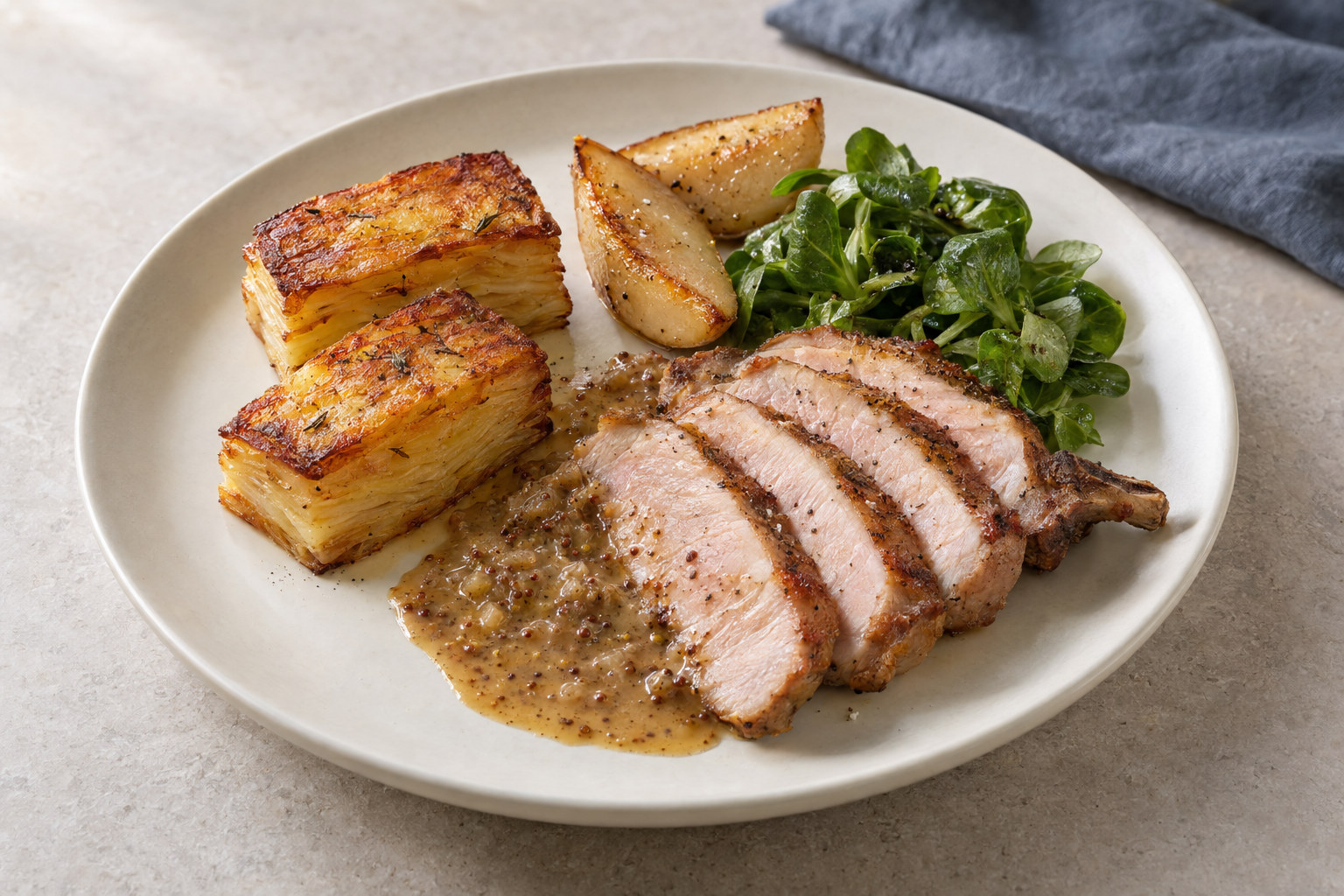
A golden potato crust and full-flavoured meat, sweet pear and a gently piquant mustard sauce; the salad with vinegar lightens the whole plate.
Step-by-step method
What you will need
- kitchen scales
- knife and chopping board
- probe thermometer with a fine tip
- oven
- mandoline with a guard
- tin with an internal base of 20 × 10 cm, at least 5 cm deep
- flat board to fit the tin and a 1 kg weight
- baking paper and foil
- baking tray with a wire rack
- small roasting dish for the pears
- 28 cm non-stick frying pan
- salad bowl
- space in the fridge
- larger shallow container for a water bath
- small saucepan for the sauce
- non-stick frying pan with an actual flat base at least 24 cm across
Before we start
We first reheat the pavé thoroughly and roast the pears. We then lower the oven to 90 °C and keep the accompaniments there. We cook the chop entirely in the pan. During the meat’s 7–8 minute rest, we briefly crisp up the pavé again and finish the prepared sauce.
Bake the layered potatoes
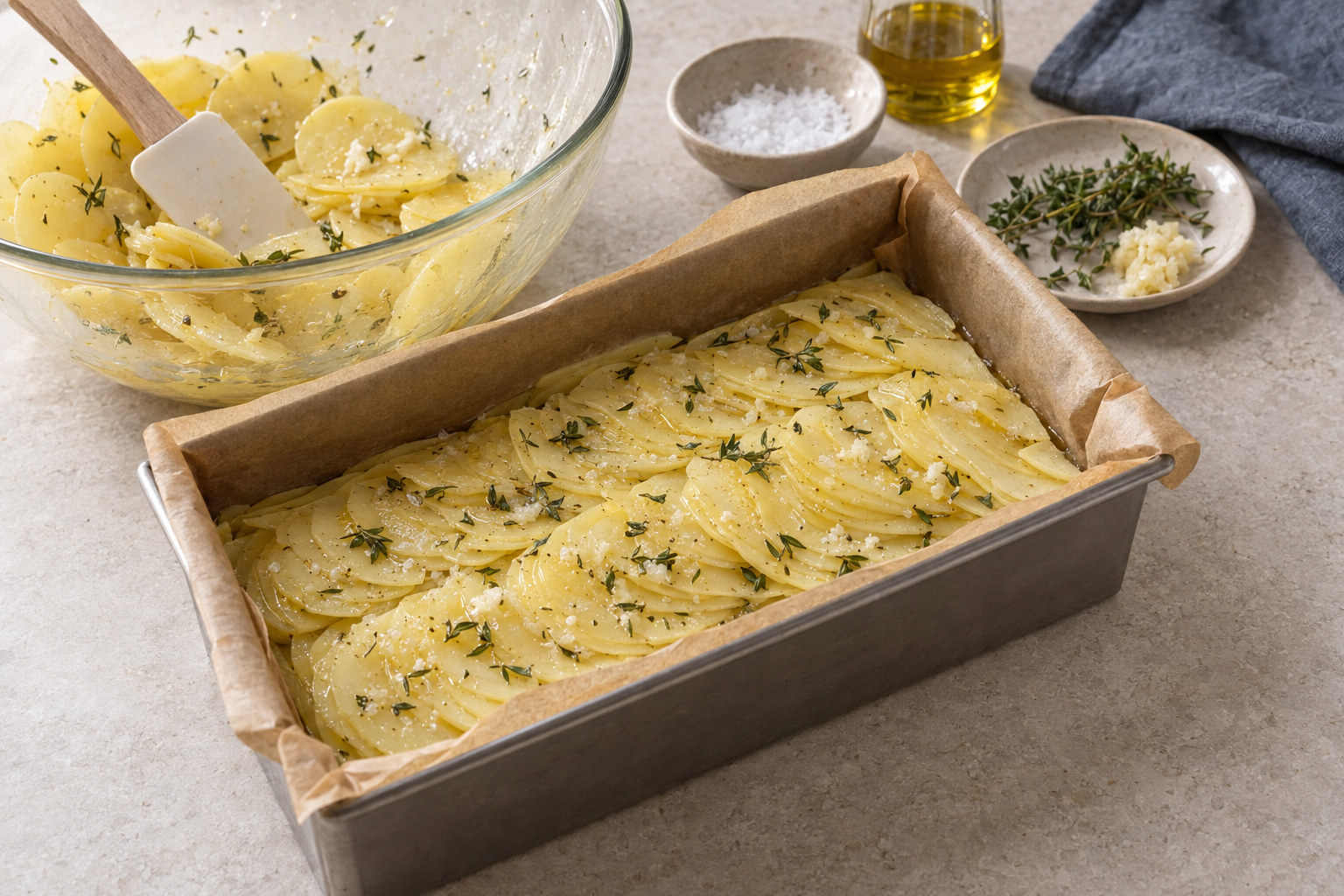
We preheat the oven to 160 °C. We line a tin with an internal base of 20 × 10 cm with baking paper. We peel the potatoes and use a mandoline with a guard to cut them into 2 mm slices; we do not rinse them. We peel and crush the garlic. We strip the thyme leaves from their woody stems and discard the stems. We toss the potatoes with two tablespoons of oil, ½ teaspoon of salt, the crushed garlic and thyme leaves. We arrange them in overlapping layers in the tin, adding all the oil from the bowl. The layers will be about 2.5–3 cm deep. We cover them with paper and tightly with foil, then bake for 60–80 minutes, until a knife slides through the potatoes without resistance.
Press and chill the pavé
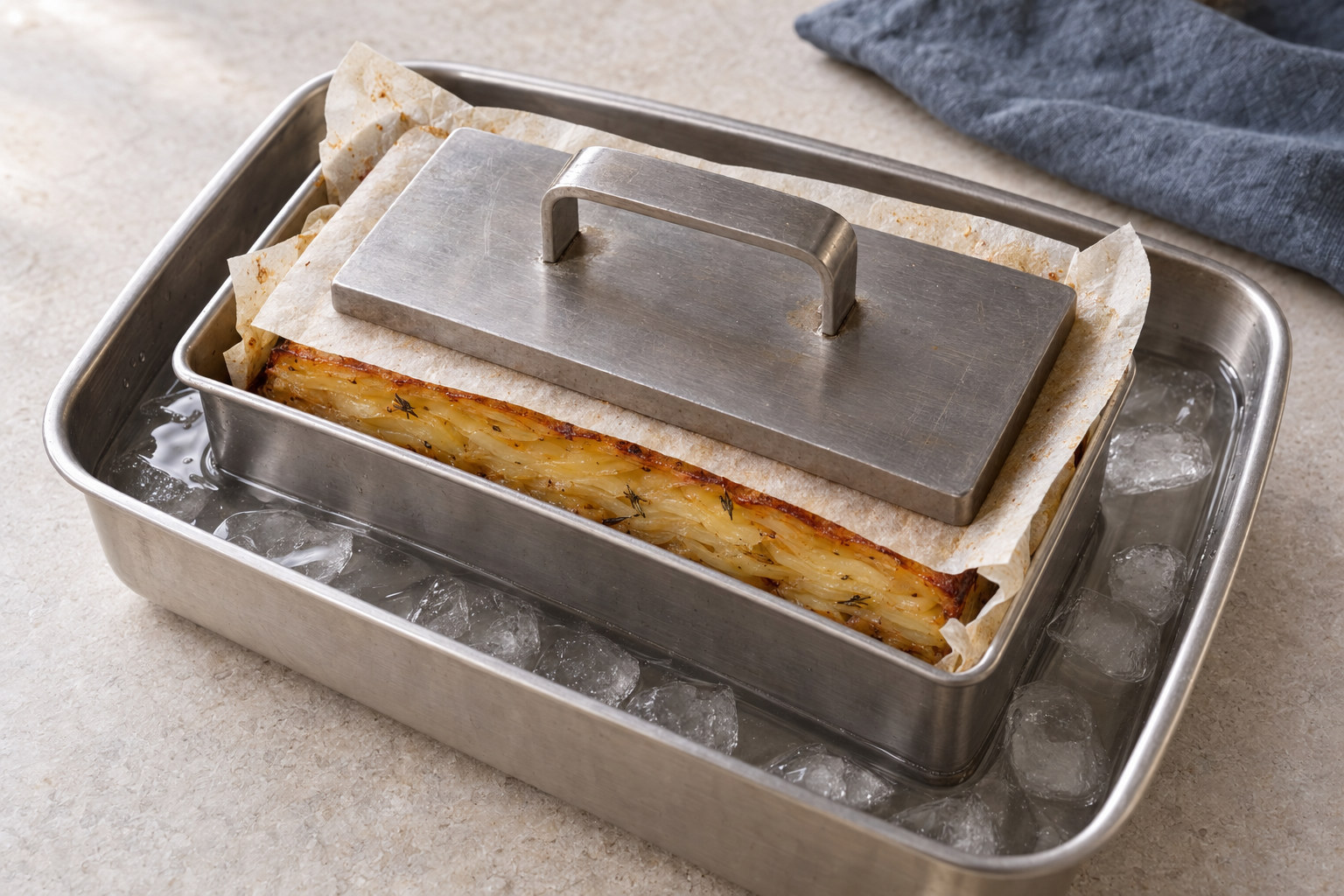
We lay a clean sheet of baking paper over the baked potatoes, place a flat board that fits the tin on top and weigh it down with a 1 kg weight. We leave the steam to escape for 20 minutes. We put the tin in a larger shallow container and pour cold water around it, no higher than halfway up the tin. After 15 minutes, we replace the water with fresh cold water. We keep all water out of the food. Within 2 hours of the end of baking, we put the pavé in the fridge, still weighted down, for at least 8 hours. Before frying, we turn it out and cut it into four rectangles measuring 10 × 5 cm.
The cold pavé holds its layers firmly and cuts cleanly.
Reheat the pavé and roast the pear
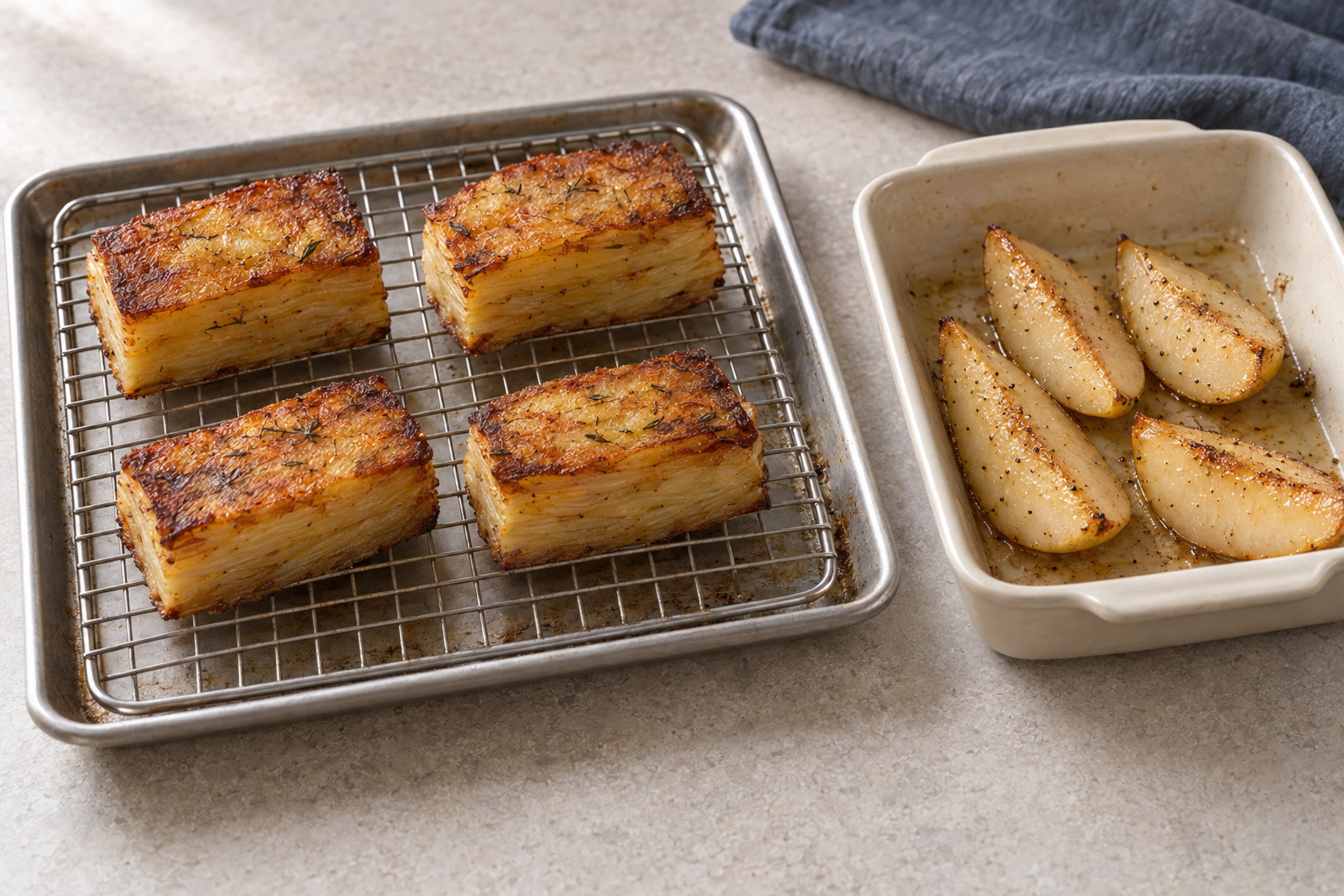
We preheat the oven to 170 °C. We wash and core the pear, then cut it into four wedges. We place them in a small roasting dish. We heat a tablespoon of oil in a 28 cm non-stick frying pan with an actual flat base at least 24 cm across. We brown the four pieces of pavé for 3–4 minutes on each broad side, then transfer them to a wire rack over a baking tray. We put them in the oven with the pears. We heat the pavé through for 20–30 minutes, checking that the centre reaches at least 70 °C and stays at that temperature for 2 minutes; we remove the pears after 15–25 minutes, once tender. Once the pavé is hot throughout, we turn the oven down to 90 °C and open the door for a minute to let the excess heat escape. We keep the pavé and pears warm in the oven while we cook the meat, for no longer than 60 minutes. We do not start frying the meat yet.
The pavé has a golden crust and, once reheated, a hot centre; the pear is tender but holds its shape.
Prepare the sauce and cook the meat
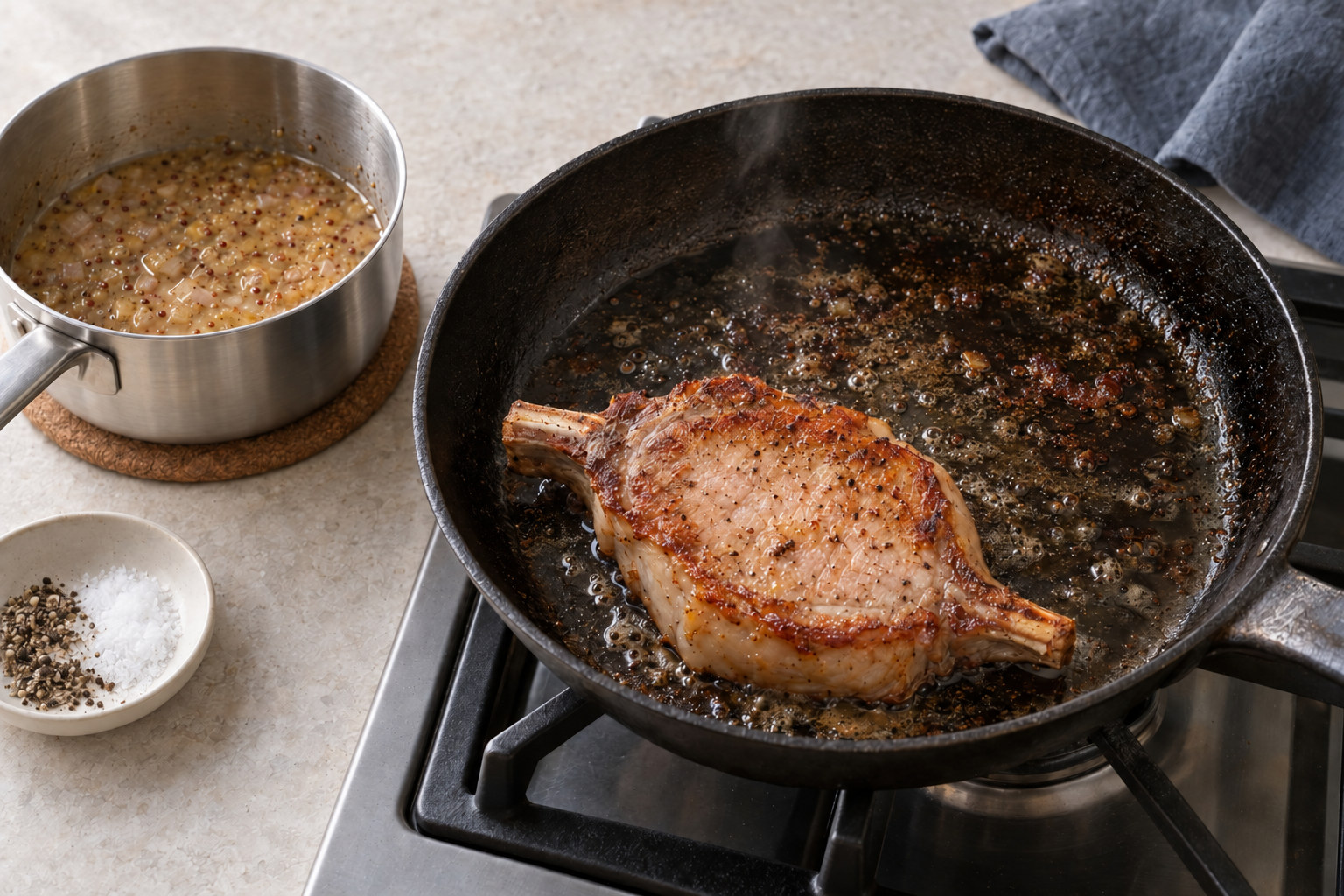
We peel and finely chop the shallot. In a small saucepan, we soften it for 3 minutes in a teaspoon of butter taken from the amount for the sauce. We add 110 ml water and simmer for 4–6 minutes to reduce it by about a third. We stir in the mustard and pepper, then take the saucepan off the heat and cover it. We pat the meat dry and season with ½ teaspoon of salt. If we are finishing with Icelandic salt, we use one small pinch less of the ordinary salt on the meat. We wipe out the pan used for the pavé and add a teaspoon of oil. We fry the meat on its fat edge for 4–6 minutes, then for 2 minutes on each side. We lower the heat to medium-low and finish cooking in the pan, turning every 2 minutes. From the first turn onwards, we regularly check the temperature in the centre of the meat, away from the bone; a piece 2–4 cm thick usually takes 10–30 minutes in total, depending on its thickness, while a thicker piece may take up to 45 minutes. Once the centre of each piece reaches at least 63 °C, we remove it and leave it to rest for 7–8 minutes. We do not put the meat in the oven; we use the oven to keep the prepared sides warm.
Crisp up the pavé again and finish the sauce
As soon as we remove the meat, we pour off the excess fat from the pan, leaving only a thin film on the bottom. We transfer the hot pavé from the oven to the pan and fry again over a medium-high heat for 45–60 seconds on each broad side. We add no more oil. We briefly reheat the mustard sauce base in the saucepan, add the juices from the resting meat, take it off the heat and whisk in the remaining teaspoon of cold butter. We do not boil it vigorously again.
A brief sear restores the crust on the hot pavé while the meat rests.
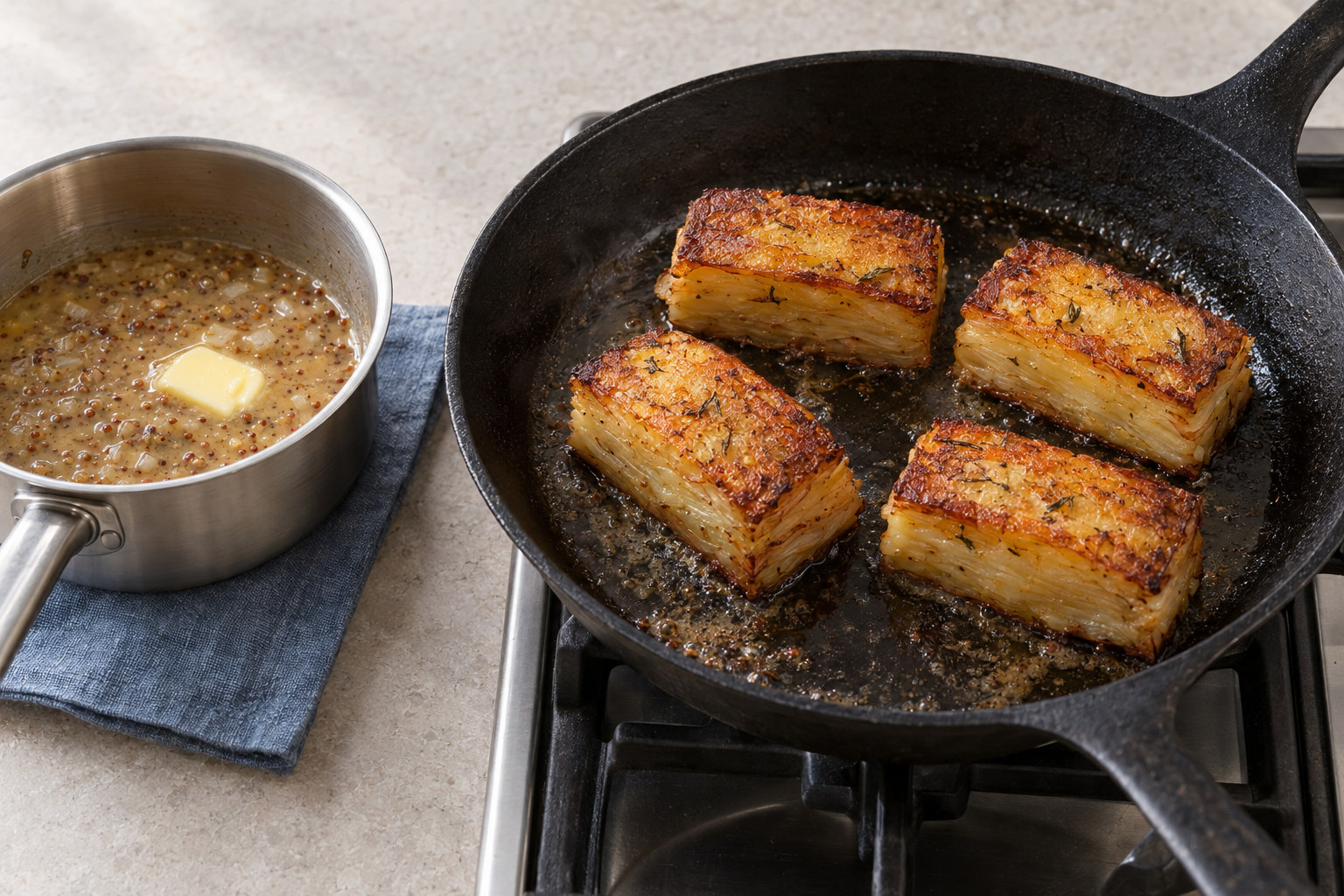
Plate up
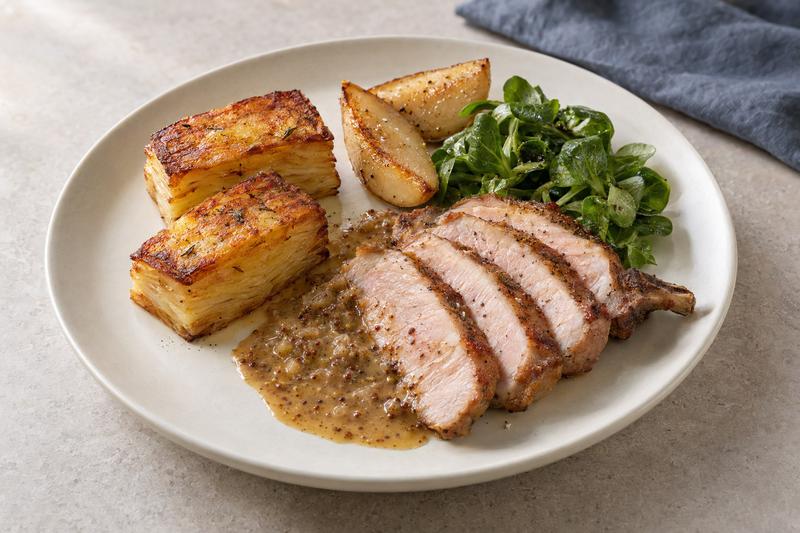
We wash and dry the lamb’s lettuce, then toss it with the vinegar, two teaspoons of oil and a pinch of salt. After resting for 7–8 minutes, we cut the meat from the bone and slice it. On each of 2 plates, we arrange two pieces of pavé, two pear wedges, salad and an equal share of the meat. We pour the sauce beside the meat to keep the crisp potatoes from getting soggy. We serve straight away. If finishing with Icelandic salt, we first taste the meat with the sides and mustard sauce. If needed, we sprinkle one small pinch of Saltverk Icelandic flake salt with Arctic thyme over the meat, replacing the ordinary salt we left out at the start. If the mouthful is already salty enough, we leave it out.
Tips from our kitchen
- We do not rinse the potato slices; their starch helps the layers stick together.
What to watch out for
- We do not cut the pavé while it is lukewarm or cover it tightly during the final reheating.
How we serve it
- We put two pieces of pavé, two pear wedges, lamb’s lettuce and a share of the sliced chop on each plate. We pour the mustard sauce alongside the meat so the pavé stays crisp.
Ingredient swaps
pear
the same number of similarly sized firm apples We roast the wedges for approximately the same time, judging by tenderness rather than variety.
Ingredient notes
- We share one chop between two people and prepare two chops for four.
- We remove any tough rind and divide the cooked meat between the diners.
During preparation
- We keep the prepared meat covered in the fridge until the relevant step. After handling raw meat, we wash our hands, knife and chopping board; we put cooked meat on clean equipment.
- We insert the thermometer probe from the side into the thickest part of the meat, avoiding bone and fat. We check each chop separately and leave it to rest after cooking as directed in the method.
Our inspiration
For potato pavé, chilling is just as important as baking. In his recipe for pavé with goat’s cheese and squash, Charlie Hibbert, who heads the kitchen at Ox Barn at Thyme, first layers thin slices and then weights them down after baking. The cold block can then be cut neatly. We use the same principle alongside our pork chop: we prepare the potatoes the evening before, then brown the individual portions the next day for a crisp surface and soft layers within.
Charlie Hibbert
Charlie Hibbert heads the kitchen at Ox Barn at Thyme. He previously worked at London’s Quo Vadis. From his recipe for potato pavé with goat’s cheese and squash, we borrow the principle of layering, weighting and chilling the potatoes.
Similar recipes
Recipe for 4 people
Step-by-step method
Before we start
We first reheat the pavé thoroughly and roast the pears. We then lower the oven to 90 °C and keep the accompaniments there. We cook the chops entirely in the pans. During the meat’s 7–8 minute rest, we briefly crisp up the pavé again and finish the prepared sauce.
Bake the layered potatoes
We preheat the oven to 160 °C. We line a tin with an internal base of 20 × 20 cm with baking paper. We peel the potatoes and use a mandoline with a guard to cut them into 2 mm slices; we do not rinse them. We peel and crush the garlic. We strip the thyme leaves from their woody stems and discard the stems. We toss the potatoes with four tablespoons of oil, 1 teaspoon of salt, the crushed garlic and thyme leaves. We arrange them in overlapping layers in the tin, adding all the oil from the bowl. The layers will be about 2.5–3 cm deep. We cover them with paper and tightly with foil, then bake for 60–80 minutes, until a knife slides through the potatoes without resistance.
Press and chill the pavé
We lay a clean sheet of baking paper over the baked potatoes, place a flat board that fits the tin on top and weigh it down with a 2 kg weight. We leave the steam to escape for 20 minutes. We put the tin in a larger shallow container and pour cold water around it, no higher than halfway up the tin. After 15 minutes, we replace the water with fresh cold water. We keep all water out of the food. Within 2 hours of the end of baking, we put the pavé in the fridge, still weighted down, for at least 8 hours. Before frying, we turn it out and cut it into eight rectangles measuring 10 × 5 cm.
The cold pavé holds its layers firmly and cuts cleanly.
Reheat the pavé and roast the pear
We preheat the oven to 170 °C. We wash and core the pears, then cut them into eight wedges in total. We place them in a small roasting dish. We heat a tablespoon of oil in each of two 28 cm non-stick frying pans, each with an actual flat base at least 24 cm across. We brown four pieces of pavé in each pan for 3–4 minutes on each broad side, then transfer them to a wire rack over a baking tray. We put them in the oven with the pears. We heat the pavé through for 20–30 minutes, checking that the centre reaches at least 70 °C and stays at that temperature for 2 minutes; we remove the pears after 15–25 minutes, once tender. Once the pavé is hot throughout, we turn the oven down to 90 °C and open the door for a minute to let the excess heat escape. We keep the pavé and pears warm in the oven while we cook the meat, for no longer than 60 minutes. We do not start frying the meat yet.
The pavé has a golden crust and, once reheated, a hot centre; the pear is tender but holds its shape.
Prepare the sauce and cook the meat
We peel and finely chop the shallots. In a small saucepan, we soften them for 3 minutes in two teaspoons of butter taken from the amount for the sauce. We add 190 ml water and simmer for 4–6 minutes to reduce it by about a third. We stir in the mustard and pepper, then take the saucepan off the heat and cover it. We pat the meat dry and season with ¾ teaspoon of salt. If we are finishing with Icelandic salt, we use two small pinches less of the ordinary salt on the meat. We wipe out the pans used for the pavé and add a teaspoon of oil to each. We fry the meat on its fat edge for 4–6 minutes, then for 2 minutes on each side. We lower the heat to medium-low and finish cooking in the pan, turning every 2 minutes. From the first turn onwards, we regularly check the temperature in the centre of the meat, away from the bone; a piece 2–4 cm thick usually takes 10–30 minutes in total, depending on its thickness, while a thicker piece may take up to 45 minutes. Once the centre of each piece reaches at least 63 °C, we remove it and leave it to rest for 7–8 minutes. We do not put the meat in the oven; we use the oven to keep the prepared sides warm. If one chop is ready well before the other, we serve it with its share of the sides after the stated rest, following the next step, while the second chop continues cooking in the pan.
Crisp up the pavé again and finish the sauce
If both chops are ready at roughly the same time, we pour off the excess fat from the pans as soon as we remove them, leaving only a thin film on the bottom. We transfer the hot pavé from the oven to both pans, four pieces in each, and fry again over a medium-high heat for 45–60 seconds on each broad side. We add no more oil. We briefly reheat the mustard sauce base in the saucepan, add the juices from the resting meat, take it off the heat and whisk in the remaining two teaspoons of cold butter. We do not boil it vigorously again. If the first chop is ready well before the other, we restore the crust on the first four pieces of pavé in the same way while it rests, using only the pan that is now free. We finish the mustard sauce as described above, using just the juices from the first chop for now. After the stated rest, we slice the chop and serve it on the first two plates with the pavé and half the pears, lamb’s lettuce and mustard sauce. We dress the lamb’s lettuce for each serving with only its half of the dressing and salt. We keep the remaining pavé and pears in the oven within the stated holding time, and cover the remaining mustard sauce off the heat. Once the second chop is ready, we finish the other four pieces of pavé in the same way while it rests. We gently reheat the remaining mustard sauce and stir in the juices from the second chop, without boiling it vigorously. After resting, we serve the second chop with the remaining sides as described in the final step.
A brief sear restores the crust on the hot pavé while the meat rests.
Plate up
We wash and dry the lamb’s lettuce, then toss it with the vinegar, a tablespoon of oil and two pinches of salt. After resting for 7–8 minutes, we cut the meat from the bone and slice it. On each of 4 plates, we arrange two pieces of pavé, two pear wedges, salad and an equal share of the meat. We pour the sauce beside the meat to keep the crisp potatoes from getting soggy. We serve straight away. If finishing with Icelandic salt, we first taste the meat with the sides and mustard sauce. If needed, we sprinkle two small pinches of Saltverk Icelandic flake salt with Arctic thyme over the meat, replacing the ordinary salt we left out at the start. If the mouthful is already salty enough, we leave it out.