
From the Boxxi kitchen · European-inspired
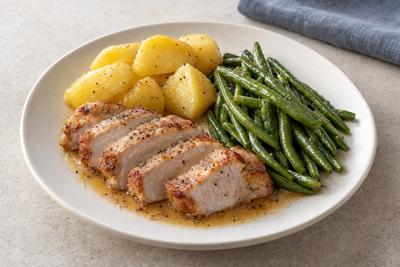
Duroc pork chop with a herb crust, spätzle and Savoy cabbage
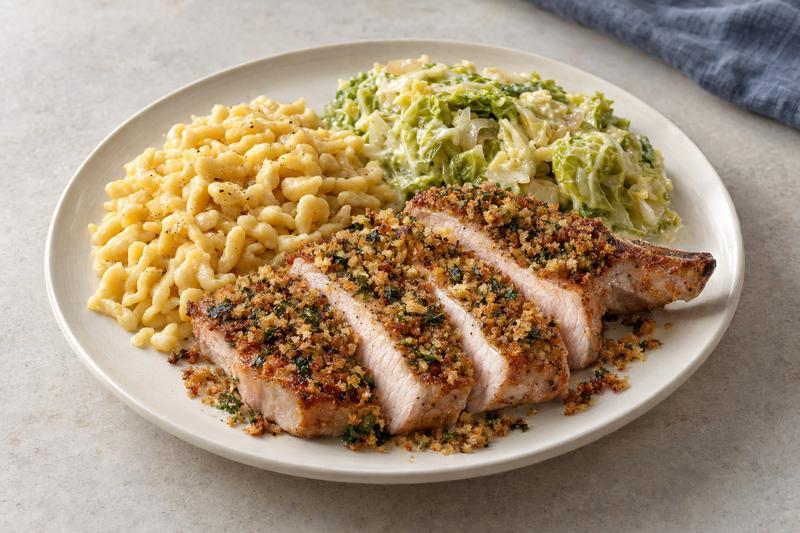
A parsley crust adds a satisfying crunch to the Duroc chop alongside soft homemade spätzle. Creamed Savoy cabbage brings moisture and Dijon mustard a gentle bite. For this hearty dinner, we take time over both the meat and the homemade side dish.
We allow for 15 minutes of resting the batter, cooking the spätzle in batches and reheating them at the end.
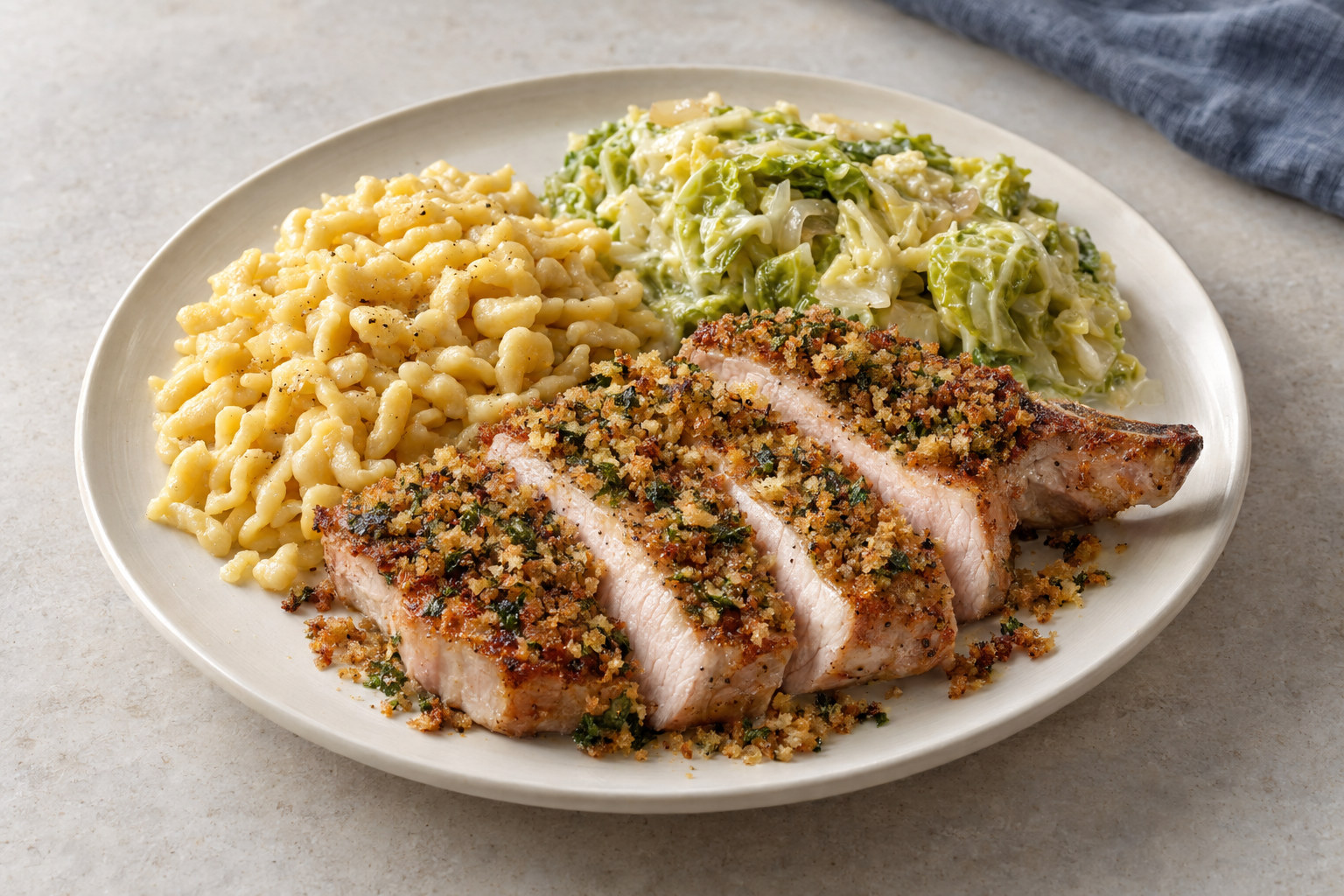
Buttery spätzle and tender creamed Savoy cabbage complement the seared pork, tangy mustard and crisp parsley crumbs.
Step-by-step method
What you will need
- kitchen scales
- knife and chopping board
- probe thermometer with a fine tip
- oven
- 25 × 20 cm roasting tin
- spätzle maker
- slotted spoon
- 5 l saucepan
- 3 litre bowl
- colander
- 28 cm frying pan and 28 cm non-stick frying pan with a lid
- 3 l casserole with a lid
- 40 × 30 cm tray
- foil
- three hob rings
- small 20 cm frying pan for the breadcrumbs
Before we start
We cook the spätzle ahead, cool them and refrigerate. We then toast the breadcrumbs and prepare the cabbage. For a thin chop that may cook through in the pan, we finish the cabbage first; for a thicker chop, we let it soften at least partly before searing the meat. We spread mustard over the cooked chop and press on the crumbs. During its 8–10 minute rest, we reheat the spätzle and, if needed, the cabbage.
Mix the batter
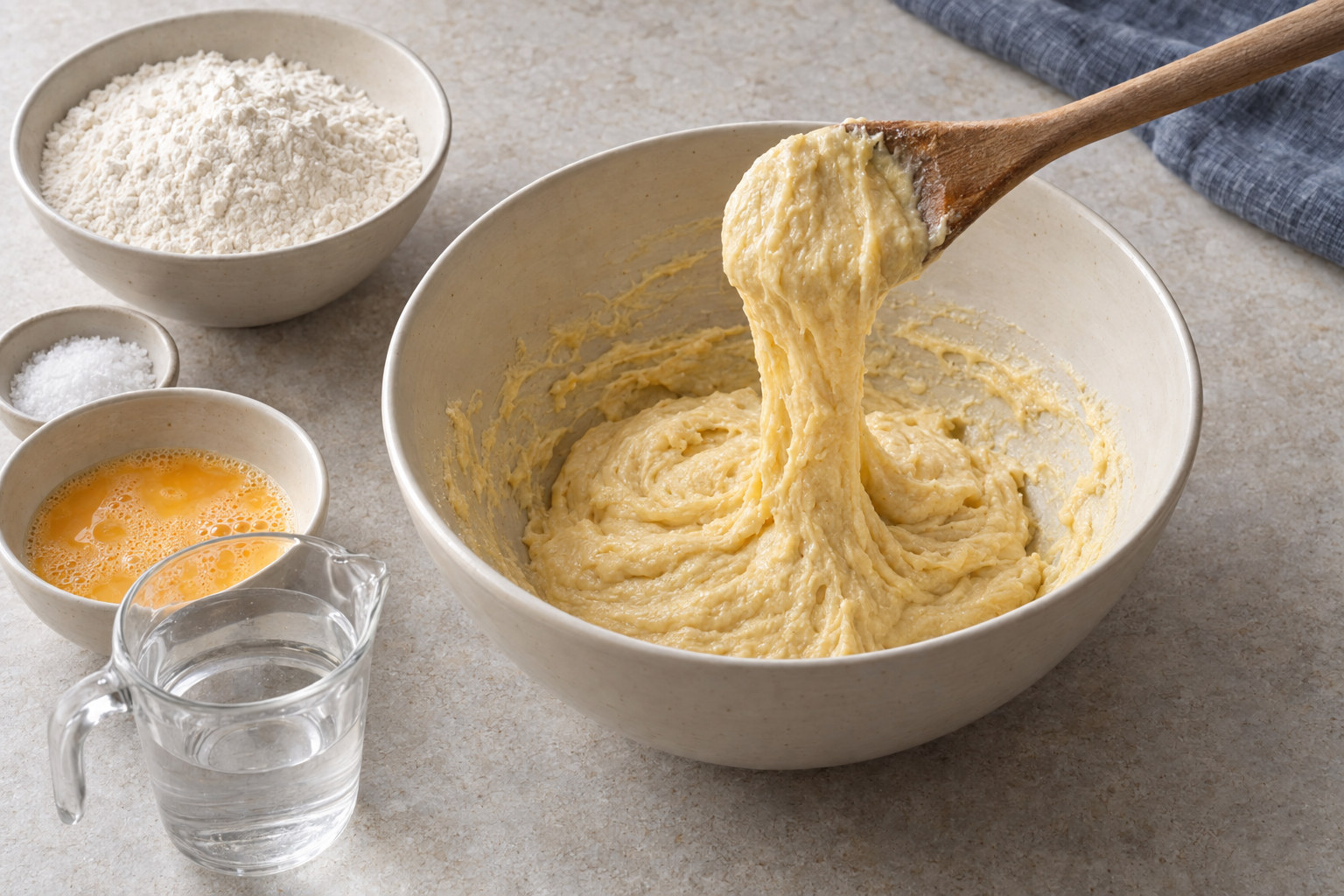
We stir the flour, 2 eggs, 80 ml of water and the salt for the batter with a wooden spoon for 3–4 minutes. We should have a thick, elastic batter that falls from the spoon in broad ribbons. We leave it to stand for 15 minutes. Meanwhile, we bring water with the salt for cooking to the boil in a wide saucepan, and fill a bowl with enough cold water to cool the spätzle quickly.
Cook the spätzle
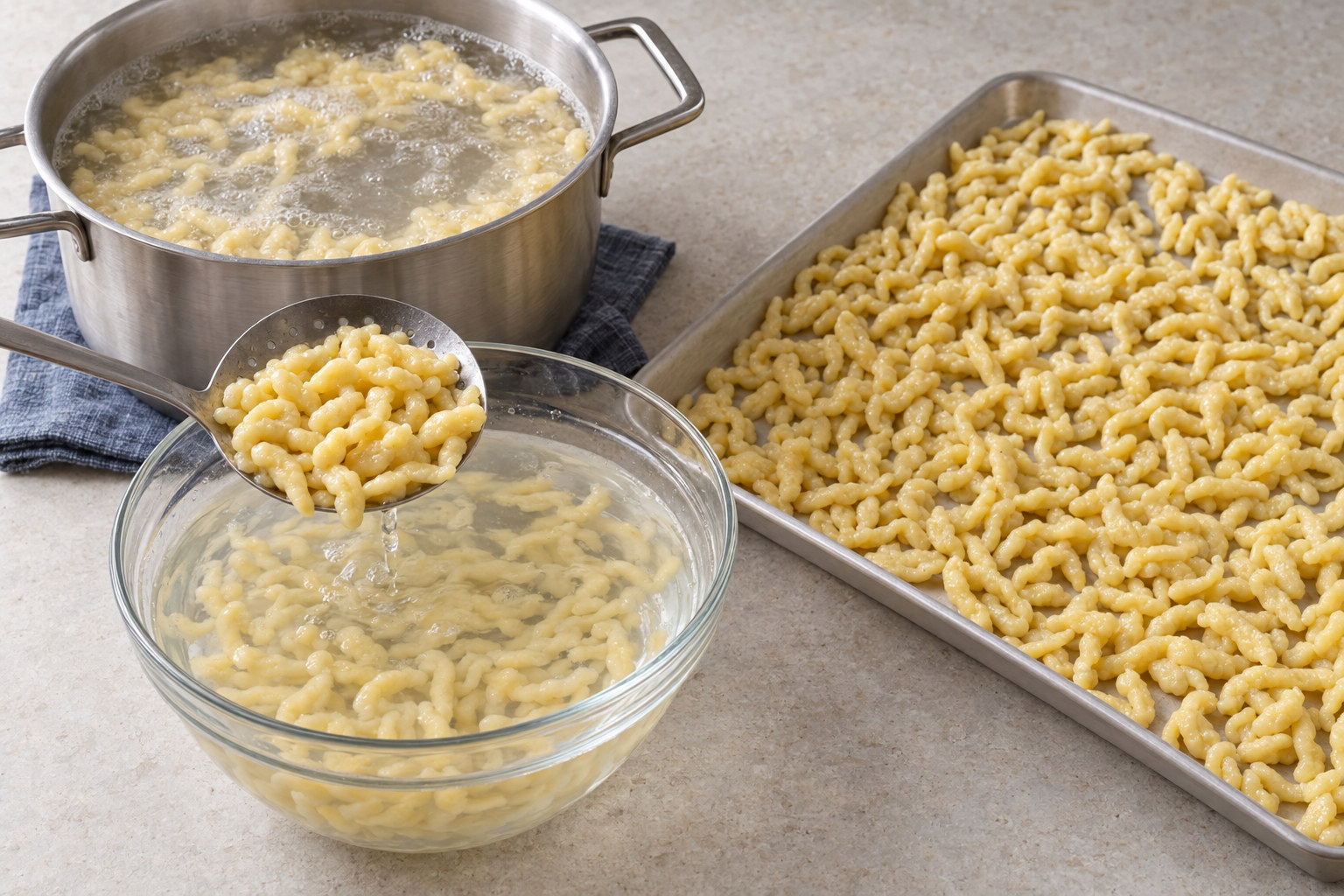
We press the batter through a spätzle maker into boiling water in two batches. We gently stir each batch, cook for a further 1 minute after the spätzle float, then lift them into the cold water with a slotted spoon. After half a minute, we drain thoroughly and spread in a thin layer on one tray. We cover and refrigerate while we prepare the meat.
The spätzle are firm and do not taste floury; we do not leave them to soak in the cooling water.
Prepare the cabbage and crust
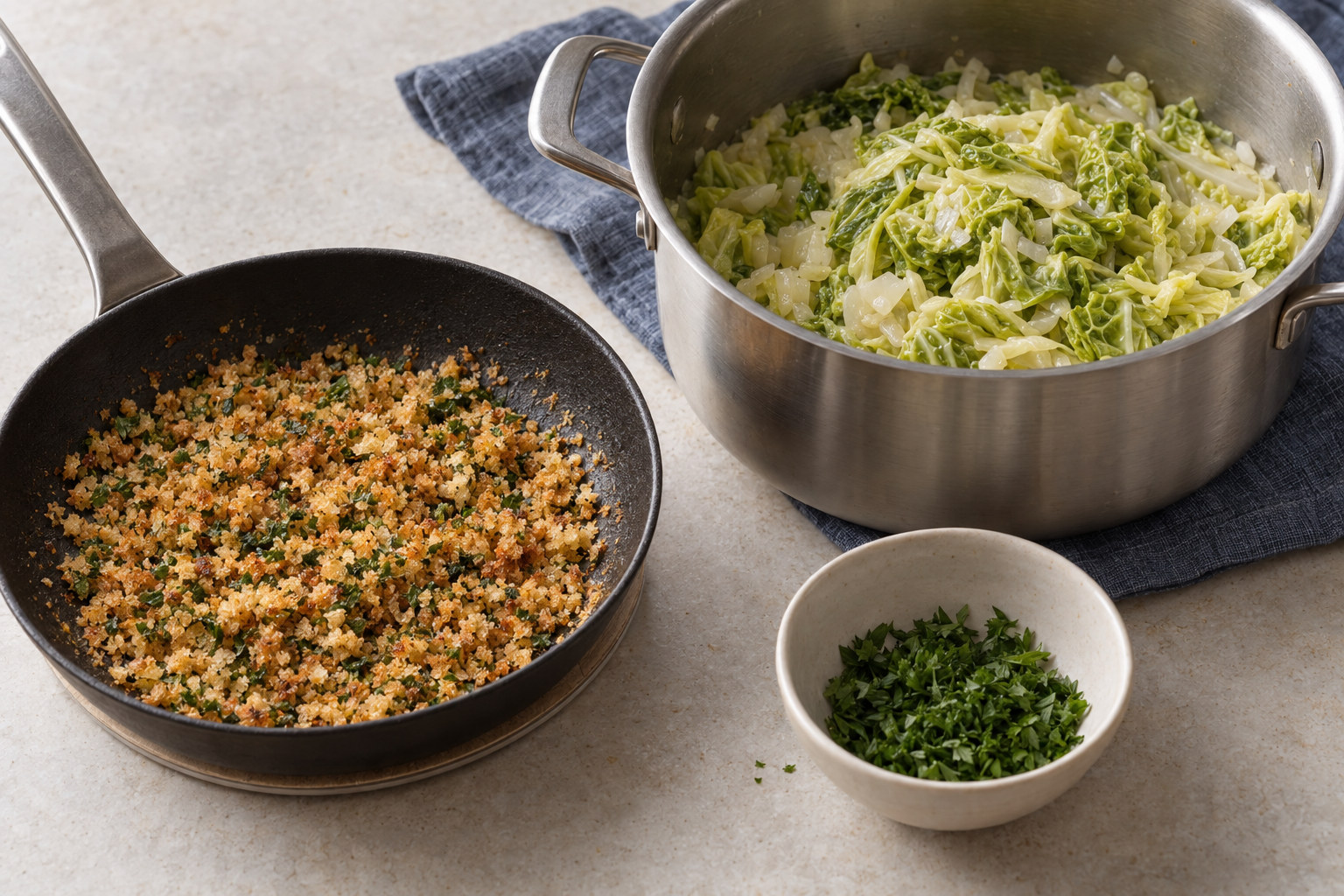
First, we melt two teaspoons of butter for the crust in a small frying pan, add the breadcrumbs and toast for 3–4 minutes until pale golden, stirring. We wash the parsley, pick off the leaves and chop them. We take the pan off the heat and stir in the parsley and pepper. We wash the cabbage, cut out the tough ribs and slice the leaves into strips about 1 cm wide. We peel and finely chop the onion. In a 3 l casserole, we heat a teaspoon of butter and gently cook the finely chopped onion for 4 minutes. We add the cabbage, ¼ tsp of salt and 100 ml of water. We cover and braise for 12–18 minutes until tender, then stir in the cream and simmer for 2 minutes. For a thin chop, we finish the cabbage before searing the meat and briefly reheat it during the meat’s rest if needed. For a thicker chop, we start searing only once the cabbage has softened at least partly; it will finish while the meat cooks. We keep the cooked cabbage covered over the lowest heat for no more than 35 minutes.
The cabbage is tender with a little bite, and there is only a little creamy liquid at the bottom.
Cook the chop and add the golden crust
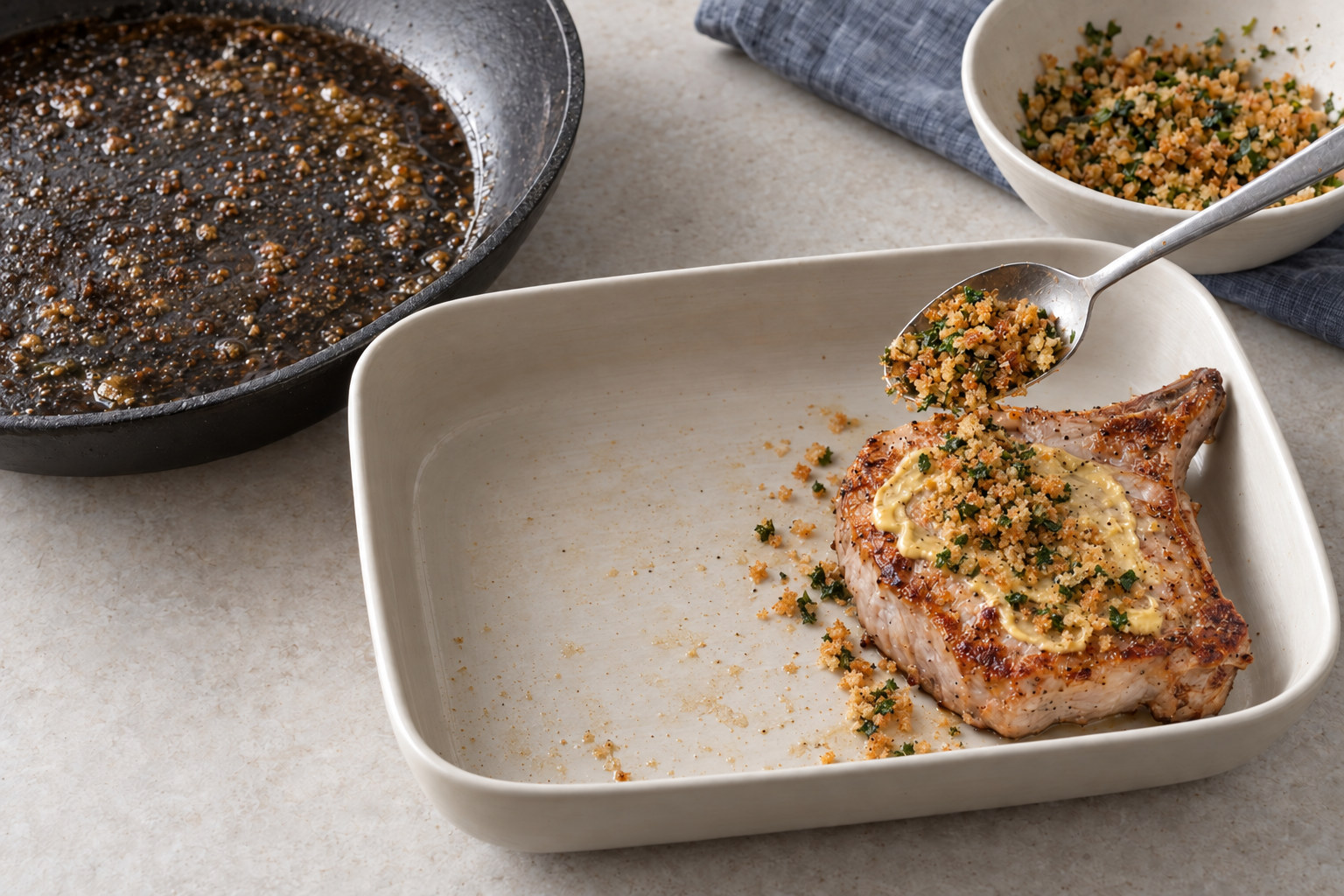
We preheat the oven to 170 °C. We pat the meat dry and season with ½ tsp of salt. We heat two teaspoons of oil in a 28 cm frying pan. We sear the chop on its fatty edge for 4–6 minutes and on each broad side for 2 minutes. While it is still in the hot pan, we check the temperature in the centre of the lean meat, away from the bone. If it has already reached 63 °C, we remove the chop and move on to resting it; otherwise, we transfer it to the roasting tin and place in the oven at 170 °C. In the oven, we start checking the temperature after 6 minutes and then every 4 minutes. Depending on thickness, the chops usually need 8–30 minutes to finish cooking. We remove each chop as soon as it reaches at least 63 °C inside and let it rest, loosely covered, for 8–10 minutes. At the start of the rest, we spread mustard over the top of the meat and press on the golden herb crumbs. The crumbs are already toasted, so we do not bake the cooked meat again just for the crust.
Reheat the spätzle and serve
As soon as we remove the cooked meat, we start reheating the spätzle in a 28 cm non-stick frying pan with two teaspoons of butter and 40 ml of water. We cover and heat for 3–4 minutes, stir and check that the centre reaches at least 70 °C and stays at that temperature for 2 minutes; we then uncover and briefly evaporate the remaining water. After the meat has rested, we remove it from the bone and carefully slice it with a sturdy knife so some crust stays on each slice. We divide the spätzle, cabbage, all the meat slices and crust crumbs between 2 plates and serve straight away.
The spätzle are hot right through, and the crust is kept clear of the creamed cabbage.
Tips from our kitchen
- We have the spätzle maker ready in advance; an ordinary fine sieve will not let the thick batter through.
What to watch out for
- We do not use the cooling water for the final reheating, or add raw batter to cooked spätzle.
How we serve it
- We divide the sliced chop between plates with the spätzle and cabbage. We add any loose herb crumbs and serve straight away, keeping the crust clear of the creamy sauce.
Ingredient swaps
Savoy cabbage
the same weight of white cabbage We braise the white cabbage for 20–25 minutes, so we start it about 10 minutes earlier.
Ingredient notes
- We share one chop between two people, or prepare two chops for four.
- We remove any tough rind and divide the cooked meat between the diners.
During preparation
- We keep the prepared meat covered in the fridge until needed. After handling raw meat, we wash our hands, knife and chopping board; we place the cooked meat on clean utensils.
- We insert the thermometer probe from the side into the thickest part of the meat, away from the bone and fat. We check each chop separately and let it rest after cooking as described in the method.
Our inspiration
Homemade spätzle need no rolling out. We press a thick batter of flour, eggs and water through a spätzle maker straight into the pan, where the little pieces quickly set. This method is also taught by Austrian chef Tici Kaspar, who previously ran her namesake restaurant near Längsee. Her basic spätzle recipe inspires our side dish for the pork chop. We put together the complete combination with a herb crust and creamed Savoy cabbage for this recipe.
Tici Kaspar
Tici Kaspar is an Austrian chef who previously ran her namesake restaurant near Längsee. She now works at Studio 13 in Villach, where she also teaches cooking classes. Her basic spätzle recipe is the inspiration for our side dish.
Similar recipes
Recipe for 4 people
Step-by-step method
Before we start
We cook the spätzle ahead, cool them and refrigerate. We then toast the breadcrumbs and prepare the cabbage. For a thin chop that may cook through in the pan, we finish the cabbage first; for a thicker chop, we let it soften at least partly before searing the meat. We spread mustard over the cooked chop and press on the crumbs. During its 8–10 minute rest, we reheat the spätzle and, if needed, the cabbage. If the chops finish at very different times, we reheat only half the spätzle for the first serving and serve them with the first chop and half the cabbage; we finish the other half with the second chop.
Mix the batter
We stir the flour, 4 eggs, 150 ml of water and the salt for the batter with a wooden spoon for 3–4 minutes. We should have a thick, elastic batter that falls from the spoon in broad ribbons. We leave it to stand for 15 minutes. Meanwhile, we bring water with the salt for cooking to the boil in a wide saucepan, and fill a bowl with enough cold water to cool the spätzle quickly.
Cook the spätzle
We press the batter through a spätzle maker into boiling water in four batches. We gently stir each batch, cook for a further 1 minute after the spätzle float, then lift them into the cold water with a slotted spoon. After half a minute, we drain thoroughly and spread in a thin layer on two trays. We cover and refrigerate while we prepare the meat.
The spätzle are firm and do not taste floury; we do not leave them to soak in the cooling water.
Prepare the cabbage and crust
First, we melt a tablespoon of butter for the crust in a small frying pan, add the breadcrumbs and toast for 3–4 minutes until pale golden, stirring. We wash the parsley, pick off the leaves and chop them. We take the pan off the heat and stir in the parsley and pepper. We wash the cabbage, cut out the tough ribs and slice the leaves into strips about 1 cm wide. We peel and finely chop the onion. In a 4 l casserole, we heat two teaspoons of butter and gently cook the finely chopped onion for 4 minutes. We add the cabbage, ½ tsp of salt and 170 ml of water. We cover and braise for 12–18 minutes until tender, then stir in the cream and simmer for 2 minutes. For a thin chop, we finish the cabbage before searing the meat and briefly reheat it during the meat’s rest if needed. For a thicker chop, we start searing only once the cabbage has softened at least partly; it will finish while the meat cooks. We keep the cooked cabbage covered over the lowest heat for no more than 35 minutes.
The cabbage is tender with a little bite, and there is only a little creamy liquid at the bottom.
Cook the chop and add the golden crust
We preheat the oven to 170 °C. We pat the meat dry and season with ¾ tsp of salt. We heat two teaspoons of oil in each of two 28 cm frying pans. We sear the meat on its fatty edge for 4–6 minutes and on each broad side for 2 minutes. While the chops are still in the hot pans, we check each one separately in the centre of the lean meat, away from the bone. We remove any chop that has already reached 63 °C and let it rest; we transfer the others side by side to the roasting tin and place in the oven at 170 °C. In the oven, we start checking the temperature after 6 minutes and then every 4 minutes. Depending on thickness, the chops usually need 8–30 minutes to finish cooking. We remove each chop as soon as it reaches at least 63 °C inside and let it rest, loosely covered, for 8–10 minutes. At the start of the rest, we spread each cooked chop with its share of the mustard and press half the golden herb crumbs onto it. We do not wait for the second chop; we add its crust once it is cooked. The crumbs are already toasted, so we do not bake the cooked meat again just for the crust.
Reheat the spätzle and serve
If both chops finish at roughly the same time, we reheat all the spätzle in two 28 cm non-stick frying pans, each with two teaspoons of butter and 35 ml of water. If the second chop is well behind, we reheat only half the spätzle in one pan with two teaspoons of butter and 35 ml of water while the first chop rests. We leave the other half covered in the fridge and reheat it in the same way while the second chop rests. We cover and heat for 3–4 minutes, stir and check that the centre reaches at least 70 °C and stays at that temperature for 2 minutes; we then uncover and briefly evaporate the remaining water. After the meat has rested, we remove it from the bone and carefully slice it with a sturdy knife so some crust stays on each slice. If everything finishes together, we divide the spätzle, cabbage, all the meat slices and crust crumbs between 4 plates. If serving in two rounds, we serve the first chop with two portions of spätzle and half the cabbage, then the second chop later with the rest. We do not keep the remaining cabbage on the heat for longer than the stated 35 minutes; if the second chop needs more time, we take the covered cabbage off the heat and reheat it before the second serving. We serve straight away.
The spätzle are hot right through, and the crust is kept clear of the creamed cabbage.