
From the Boxxi kitchen · European inspiration
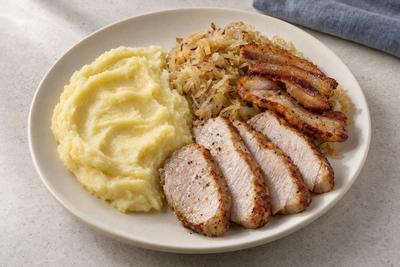
Karrekrone pork chop with homemade lokše, beetroot and horseradish
We serve soft, buttered potato flatbreads alongside the pork chop, with belly slowly braised in apple juice. Beetroot purée adds sweetness, with cold horseradish cream providing a sharp, fresh contrast. We cook and cool the potatoes for the flatbreads in advance.
We start with potatoes that are already boiled, peeled and cold. The time does not include their earlier preparation; if cooking them the day before, we allow another 30–40 minutes for boiling and time to cool completely. The time includes 90–150 minutes to braise the belly and cooking the lokše in eight batches.
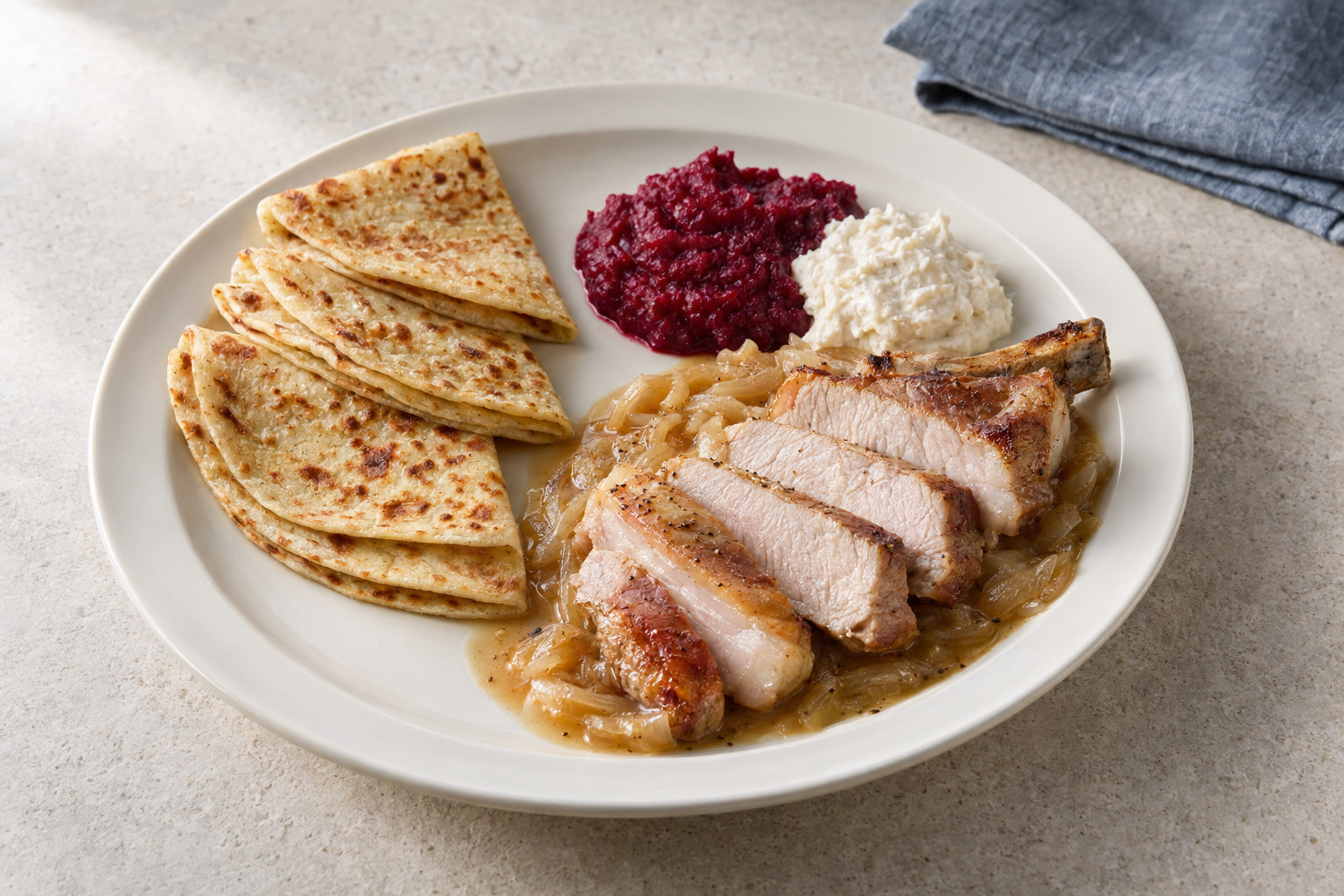
Buttery potato flatbreads, sweet beetroot and meaty juices with apple; fresh horseradish and vinegar keep each mouthful lively and fresh.
Step-by-step method
What you will need
- kitchen scales
- knife and chopping board
- probe thermometer with a fine tip
- oven
- narrow, sharp knife
- 16 cm / 2-litre saucepan with a lid
- 2-litre saucepan for the beetroot
- potato ricer
- pastry board and rolling pin
- 28 cm frying pan, for the lokše first and then the meat
- lidded container for the lokše, a clean tea towel, baking paper and foil
- stick blender
- four hob rings
Before we start
We cook all the lokše and heat them through in a sealed parcel before preparing the lean chop. We then keep them in the oven at 90 °C and cook the chop entirely in the pan. After resting, we slice the meat and divide it between the plates with the prepared sides.
Separate and braise the meat
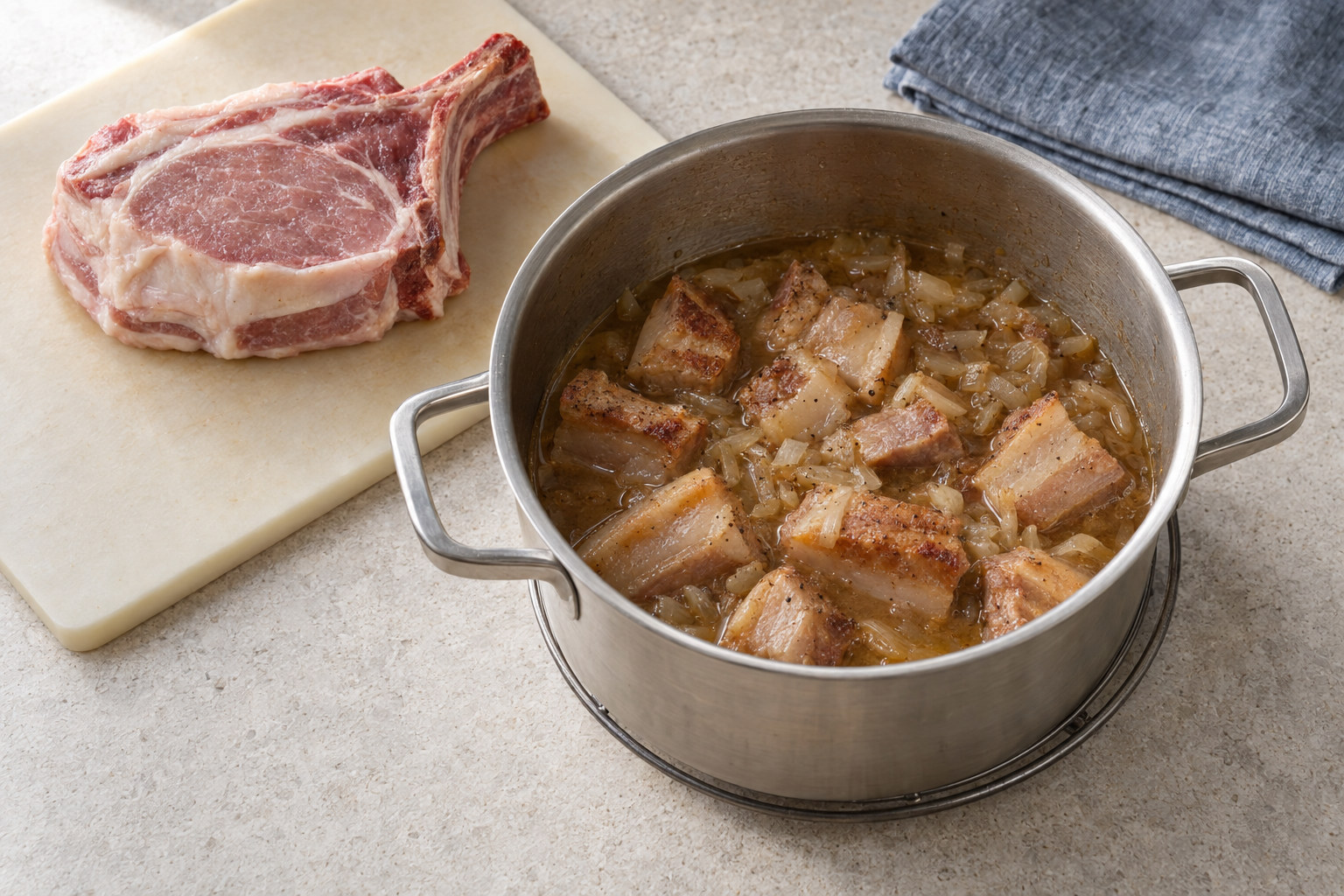
We place the Karrekrone on a chopping board. Following the natural seam, we separate the fattier belly from the lean chop, keeping the knife close to any bone without cutting through it. Where possible, we leave the bone attached to the lean chop, then cover and refrigerate it. We peel and finely chop the onion. We cut the belly into 3 cm pieces and fry in its own fat in a 16 cm, 2-litre saucepan for 5 minutes. We pour off the excess fat, add the finely chopped onion and stir for 4 minutes until softened. We add the apple juice, 300 ml water, two pinches of salt and the pepper. We cover and braise for 90–150 minutes, until a knife slips through with almost no resistance. Every half-hour, we turn the pieces and top up from the reserved 150 ml water as the liquid evaporates, keeping it at least a third of the way up the meat.
Cook the beetroot and prepare the horseradish
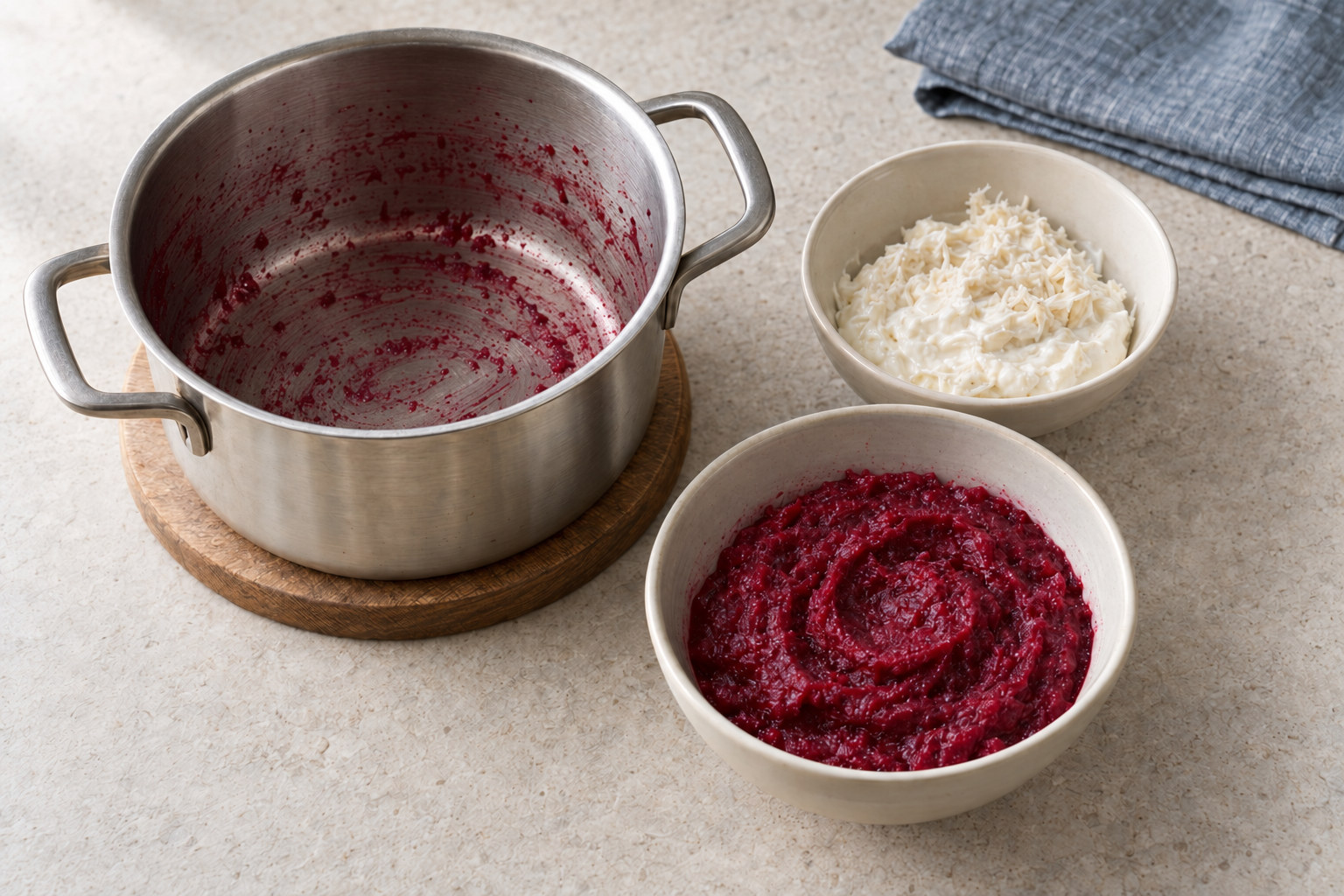
About an hour into braising, we peel the beetroot and cut it into 1 cm cubes. We put it in a 2-litre saucepan with 80 ml water and ¼ teaspoon salt. We cover and cook gently for 30–45 minutes, stirring occasionally. If the pan threatens to dry out, we add water from the separate beetroot reserve, 20 ml at a time. Once completely tender, we briefly blend the beetroot with the vinegar to a coarse purée with small pieces. We peel and finely grate the horseradish, mix with the crème fraîche and a pinch of salt, then refrigerate.
Make and divide the potato dough
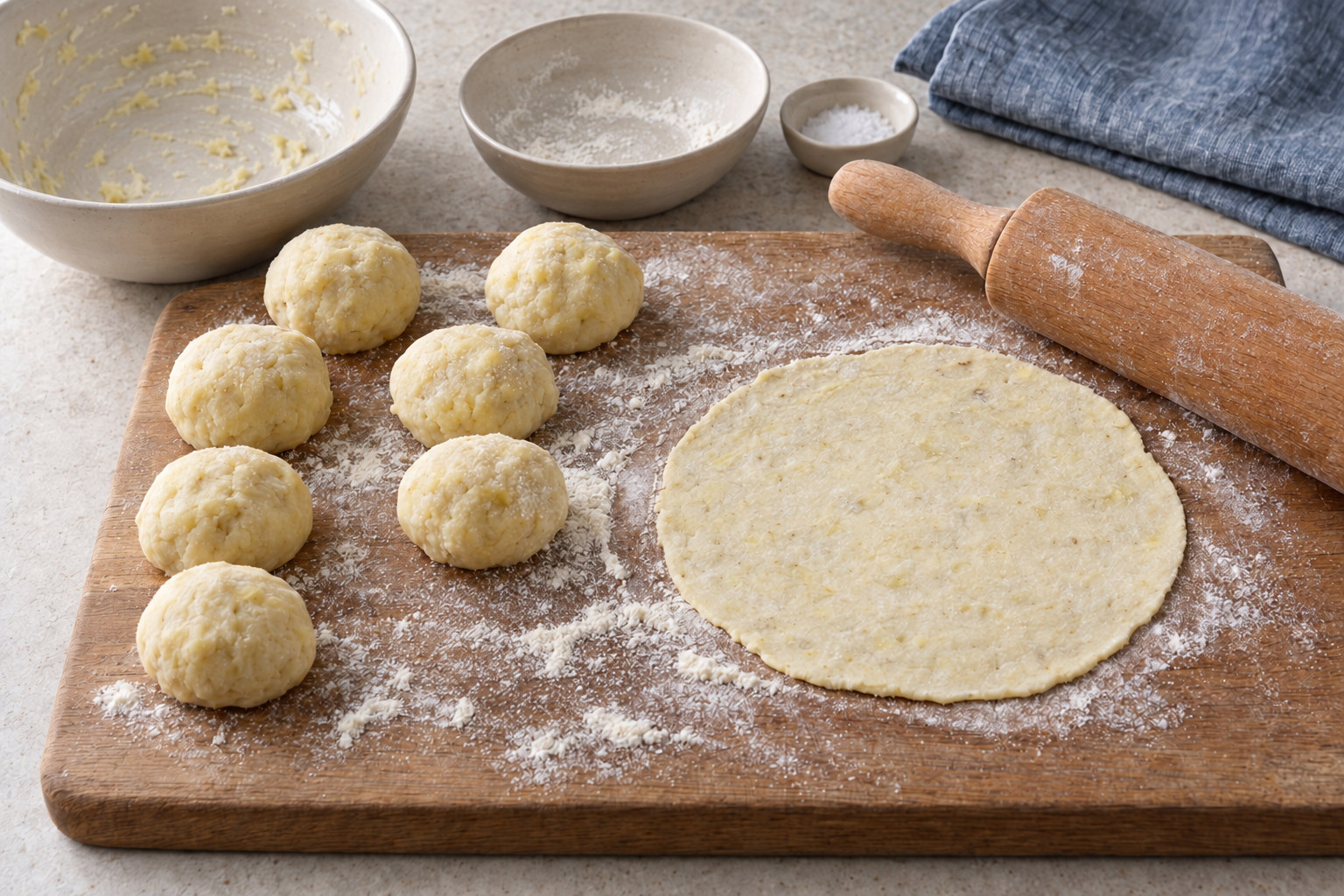
Once the belly is tender, we pass 450 g prepared cold potatoes through a ricer. We quickly combine them with 150 g flour and ½ teaspoon salt, just until the dough holds together. We divide into eight pieces of about 75 g each. We lightly flour the work surface and roll the first piece into a flatbread about 16 cm across and 3 mm thick. If the dough tears and sticks, we work small pinches of the reserved flour into the remaining dough. We avoid prolonged kneading.
The dough can be carefully lifted into the pan and is not rubbery.
Cook the lokše
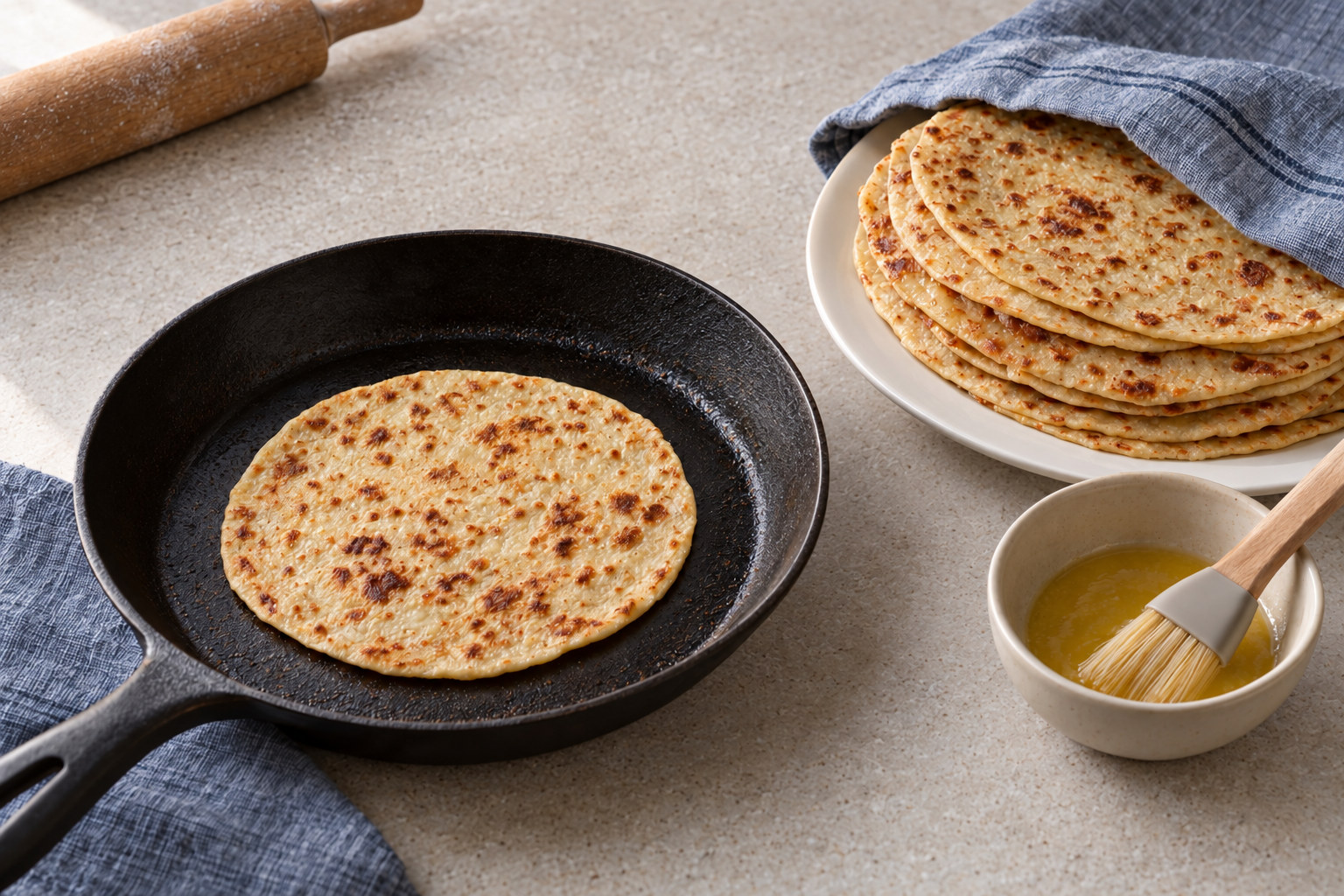
We set the oven to 170 °C. In one dry 28 cm frying pan, we cook the lokše one at a time for about 2 minutes on each side, wiping away excess flour before the next. We cook all eight flatbreads in eight batches before frying the meat. We lightly brush each cooked lokša with melted butter and stack them under a clean tea towel. We then wrap them in baking paper and foil to make one low parcel. We heat it in the oven for 10–15 minutes and check that the centre of the stack has stayed at no less than 70 °C for 2 minutes. Only then do we lower the oven to 90 °C, open it for a minute and keep the parcel hot inside for no more than 60 minutes. During this final heating, we prepare the meat for frying.
Brown blisters appear on the lokše without the whole surface burning.
Finish the meat and juices
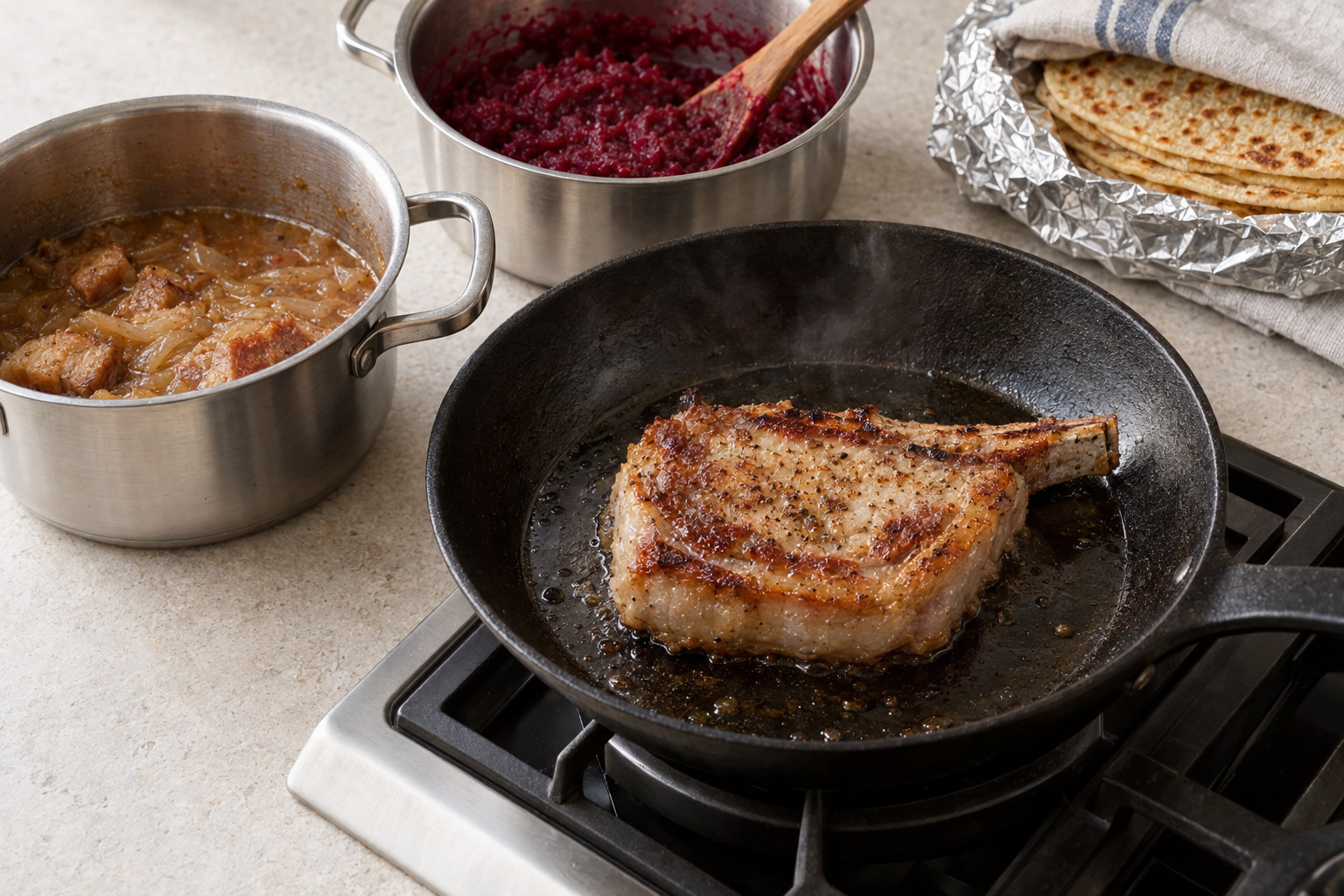
Once all the lokše are cooked and heated through, we pat the lean meat dry and season with ¼ teaspoon salt. We wipe out the pan used for the lokše and add two teaspoons of oil. We sear the meat for 2 minutes on each broad side and any fat edge for another 2–3 minutes. We lower the heat to medium-low and finish cooking in the pan, turning every 2 minutes. From the first turn, we check the centre away from the bone; meat 2–4 cm thick usually takes 10–30 minutes in total, while a thicker piece may need up to 45 minutes. We remove each piece once the centre reaches at least 63 °C and leave it to rest for 5–8 minutes. Meanwhile, we briefly lift the tender belly onto a clean plate. We skim the fat from its cooking juices and reduce them uncovered to about 100 ml; if there is already this amount, we do not cook them further. We return the belly to the juices and keep covered and hot. We warm the beetroot purée over a low heat, stirring.
Serve with lokše and sides
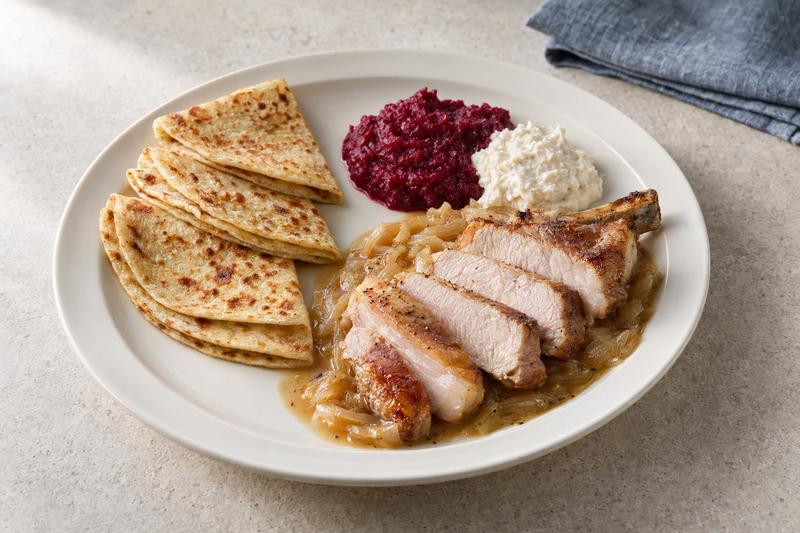
After resting, we cut the meat away from the bone and slice it. We divide all the belly and sliced chop between 2 plates, adding four lokše, beetroot purée and horseradish cream to each. We serve the onion juices with the meat. We open the parcel of hot lokše only when serving, so they stay soft.
The lokše are soft and pliable, not hard; we do not mix the cold horseradish cream into the purée in advance.
Tips from our kitchen
- We mix the potato dough just before cooking. It becomes wetter if left to stand, tempting us to add more flour than it needs.
What to watch out for
- We do not automatically add the rendered pork belly fat to the butter for the lokše.
How we serve it
- We serve four lokše per person, with a share of both lean pork chop and belly, beetroot purée and cold horseradish cream. We spoon the onion juices alongside the meat and unwrap the lokše only when serving.
Ingredient swaps
crème fraîche
the same weight of soured cream with 16–18% fat The horseradish cream will be lighter and thinner; we still serve it cold.
Ingredient notes
- Karrekrone combines a lean pork chop with pork belly. We use one piece for two people and two for four.
- We remove any tough rind and divide the cooked meat between everyone.
During preparation
- We keep the prepared meat covered in the fridge until it is needed in the recipe. After handling raw meat, we wash our hands, knife and chopping board, and use clean utensils for the cooked meat.
- We insert the thermometer probe from the side into the thickest part of the meat, away from bone and fat. We check each chop separately and let it rest after cooking as described in the method.
Our inspiration
Lokše develop brown blisters even in a dry pan. The dough is made with cooked, cold potatoes, and the butter goes on only after cooking. This gives the flatbreads a toasted surface while keeping them soft enough to fold. Here they soak up the onion juices from the meat. We keep the beetroot and horseradish cream alongside, so we can choose the balance of sweetness and heat in each mouthful.
Similar recipes

Recipe for 4 people
Step-by-step method
Before we start
We cook all the lokše and heat them through in sealed parcels before preparing the lean chop. We then keep them in the oven at 90 °C and cook the chop entirely in the pan. After resting, we slice the meat and divide it between the plates with the prepared sides.
Separate and braise the meat
We place each of the two Karrekrone pieces on a chopping board in turn. Following the natural seam, we separate the fattier belly from the lean chop, keeping the knife close to any bone without cutting through it. Where possible, we leave the bone attached to the lean chop, then cover and refrigerate it. We peel and finely chop the onion. We cut the belly into 3 cm pieces and fry in its own fat in a 20 cm, 3-litre saucepan for 5 minutes. We pour off the excess fat, add the finely chopped onion and stir for 4 minutes until softened. We add the apple juice, 450 ml water, ¼ teaspoon of salt and the pepper. We cover and braise for 90–150 minutes, until a knife slips through with almost no resistance. Every half-hour, we turn the pieces and top up from the reserved 250 ml water as the liquid evaporates, keeping it at least a third of the way up the meat.
Cook the beetroot and prepare the horseradish
About an hour into braising, we peel the beetroot and cut it into 1 cm cubes. We put it in a 3-litre saucepan with 130 ml water and ½ teaspoon salt. We cover and cook gently for 30–45 minutes, stirring occasionally. If the pan threatens to dry out, we add water from the separate beetroot reserve, 20 ml at a time. Once completely tender, we briefly blend the beetroot with the vinegar to a coarse purée with small pieces. We peel and finely grate the horseradish, mix with the crème fraîche and two pinches of salt, then refrigerate.
Make and divide the potato dough
Once the belly is tender, we pass 900 g prepared cold potatoes through a ricer. We quickly combine them with 300 g flour and ¾ teaspoon salt, just until the dough holds together. We divide into sixteen pieces of about 75 g each. We lightly flour the work surface and roll the first piece into a flatbread about 16 cm across and 3 mm thick. If the dough tears and sticks, we work small pinches of the reserved flour into the remaining dough. We avoid prolonged kneading.
The dough can be carefully lifted into the pan and is not rubbery.
Cook the lokše
We set the oven to 170 °C. Using two dry 28 cm frying pans at the same time, we cook one lokša in each for about 2 minutes on each side, wiping away excess flour before the next. We cook all sixteen flatbreads in eight simultaneous batches before frying the meat. We lightly brush each cooked lokša with melted butter and stack them under a clean tea towel. We then wrap them in baking paper and foil to make two low parcels of eight. We heat them in the oven for 10–15 minutes and check that the centre of the stack has stayed at no less than 70 °C for 2 minutes. Only then do we lower the oven to 90 °C, open it for a minute and keep the parcels hot inside for no more than 60 minutes. During this final heating, we prepare the meat for frying.
Brown blisters appear on the lokše without the whole surface burning.
Finish the meat and juices
Once all the lokše are cooked and heated through, we pat the lean meat dry and season with ¾ teaspoon salt. We wipe out both pans used for the lokše and add two teaspoons of oil to each. We sear the meat for 2 minutes on each broad side and any fat edge for another 2–3 minutes. We lower the heat to medium-low and finish cooking in the pan, turning every 2 minutes. From the first turn, we check the centre away from the bone; meat 2–4 cm thick usually takes 10–30 minutes in total, while a thicker piece may need up to 45 minutes. We remove each piece once the centre reaches at least 63 °C and leave it to rest for 5–8 minutes. Meanwhile, we briefly lift the tender belly onto a clean plate. We skim the fat from its cooking juices and reduce them uncovered to about 180 ml; if there is already this amount, we do not cook them further. We return the belly to the juices and keep covered and hot. We warm the beetroot purée over a low heat, stirring.
Serve with lokše and sides
After resting, we cut the meat away from the bone and slice it. We divide all the belly and sliced chop between 4 plates, adding four lokše, beetroot purée and horseradish cream to each. We serve the onion juices with the meat. We open the parcels of hot lokše only when serving, so they stay soft.
The lokše are soft and pliable, not hard; we do not mix the cold horseradish cream into the purée in advance.