
Boxxi original cuisine · European inspiration
Karrekrone pork chop with braised belly, pumpkin purée and pearl barley
We serve slow-braised beer pork belly and a separately browned Karrekrone chop beside smooth pumpkin purée. Pearl barley adds a firmer bite, while beer gravy with mustard and sage brings the two cuts together.
We allow 90–150 minutes for the belly to become tender; we start the sides when it is almost ready. A thicker piece with more connective tissue may take longer.
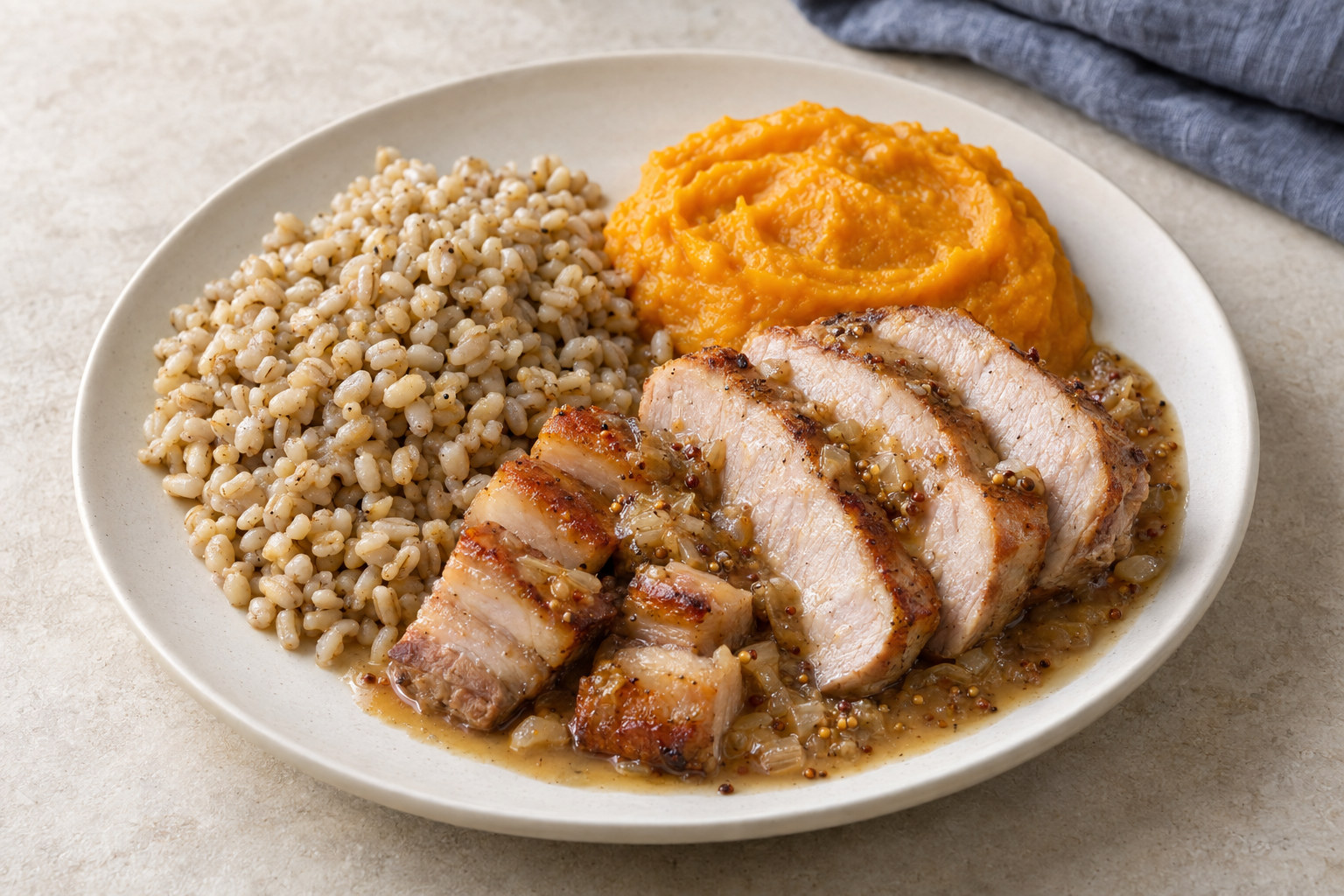
Sweet pumpkin softens the beer and mustard gravy, sage gives it fragrance, and firm grains of barley complement the tender pork belly.
Step-by-step method
What you will need
- kitchen scales
- knife and chopping board
- thin-tipped probe thermometer
- oven
- narrow sharp knife
- 16 cm / 2-litre casserole with lid
- two 2-litre pots
- 28 cm frying pan
- 25 × 20 cm roasting dish
- stick blender
- colander
- measuring jug
- four hob rings
Before we start
We braise the belly first and keep the lean portion in the fridge. We start the barley and squash near the end of the braise. We begin a lean piece thicker than 4 cm at the same time as the barley. For a thinner piece, we wait until the barley is almost tender, the purée is ready and the gravy with tender belly has been reduced.
Prepare the belly for braising
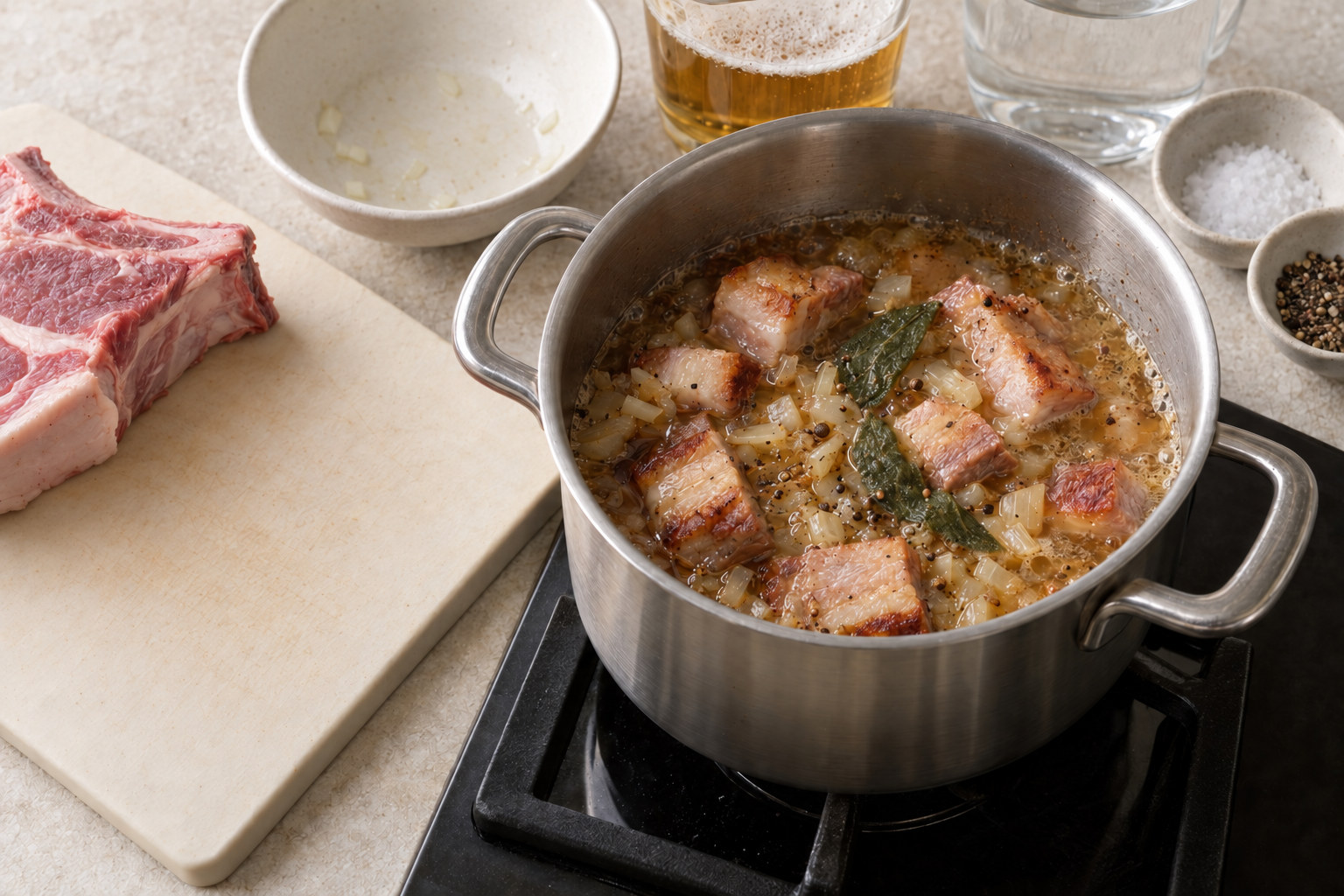
We place the Karrekrone on a board. Along its natural seam, we separate the fattier belly from the lean chop; we run the knife close to any bone without cutting through it. We leave the lean portion on its bone if possible and keep it covered in the fridge. We cut the belly into pieces no larger than 3 cm. We peel and finely chop the onion and rinse the sage. In a 16 cm, 2-litre casserole, we first slowly fry the belly pieces in their own fat for 4–6 minutes. We pour off excess fat, add the onion and stir it over the heat for 4 minutes until soft. We pour in the beer and 300 ml water, then add two pinches of salt, the sage and pepper. The liquid should reach at least halfway up the pieces; if necessary, we add some of the reserved braising water.
The casserole should be small so the meat does not braise in too shallow a layer of liquid.
Braise until tender and time the sides
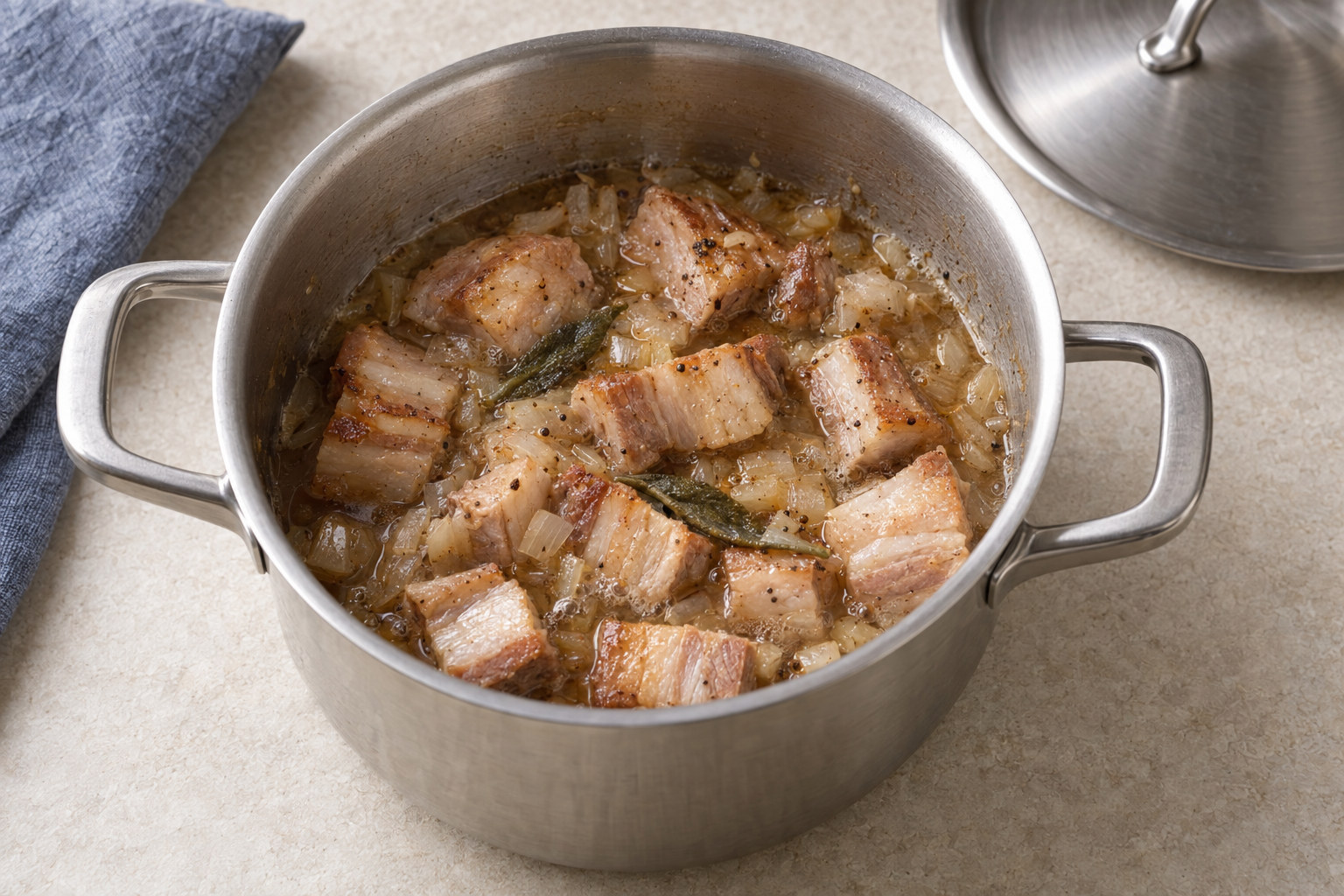
We let the belly simmer very gently under a lid for 90–150 minutes. Every half-hour we turn it and check the bottom; we add only 30–50 ml at a time from the 150 ml reserve so the liquid does not fall below one-third of the meat’s height. When a knife slides into the thickest piece with almost no resistance, we begin the sides. If it is still tough, we continue and keep the lean portion in the fridge.
Cook the barley and squash
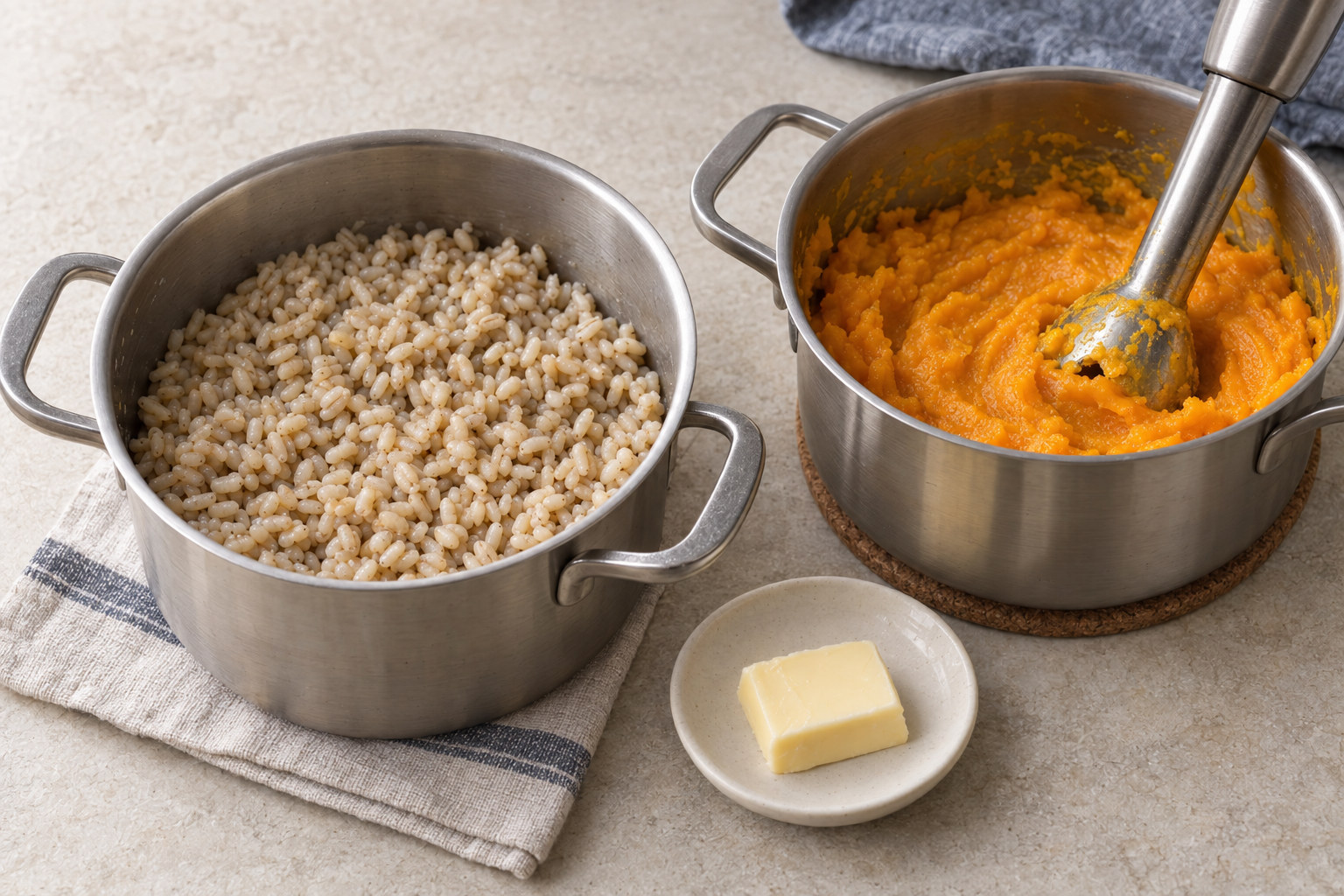
We rinse the barley, add 800 ml water in a 2-litre pot and simmer for 35–45 minutes until tender; then we drain it and stir in ¼ teaspoon salt. We peel the squash and scoop out the seeds. After the first 20 minutes of cooking the barley, we cut the squash into roughly 2 cm cubes. In a second 2-litre pot, we add 70 ml water and ¼ teaspoon salt. We braise under a lid for 15–20 minutes, stirring as needed, then evaporate any excess liquid uncovered. We stir in the butter and blend. We keep the purée covered over low heat, stirring occasionally. While making the sides, we reduce the gravy and return the tender belly to it as described in the final step. Before frying a thin lean chop, we have the purée ready, the barley almost tender and the gravy finished.
The barley has no hard centre and the purée does not run like soup.
Finish the lean portion
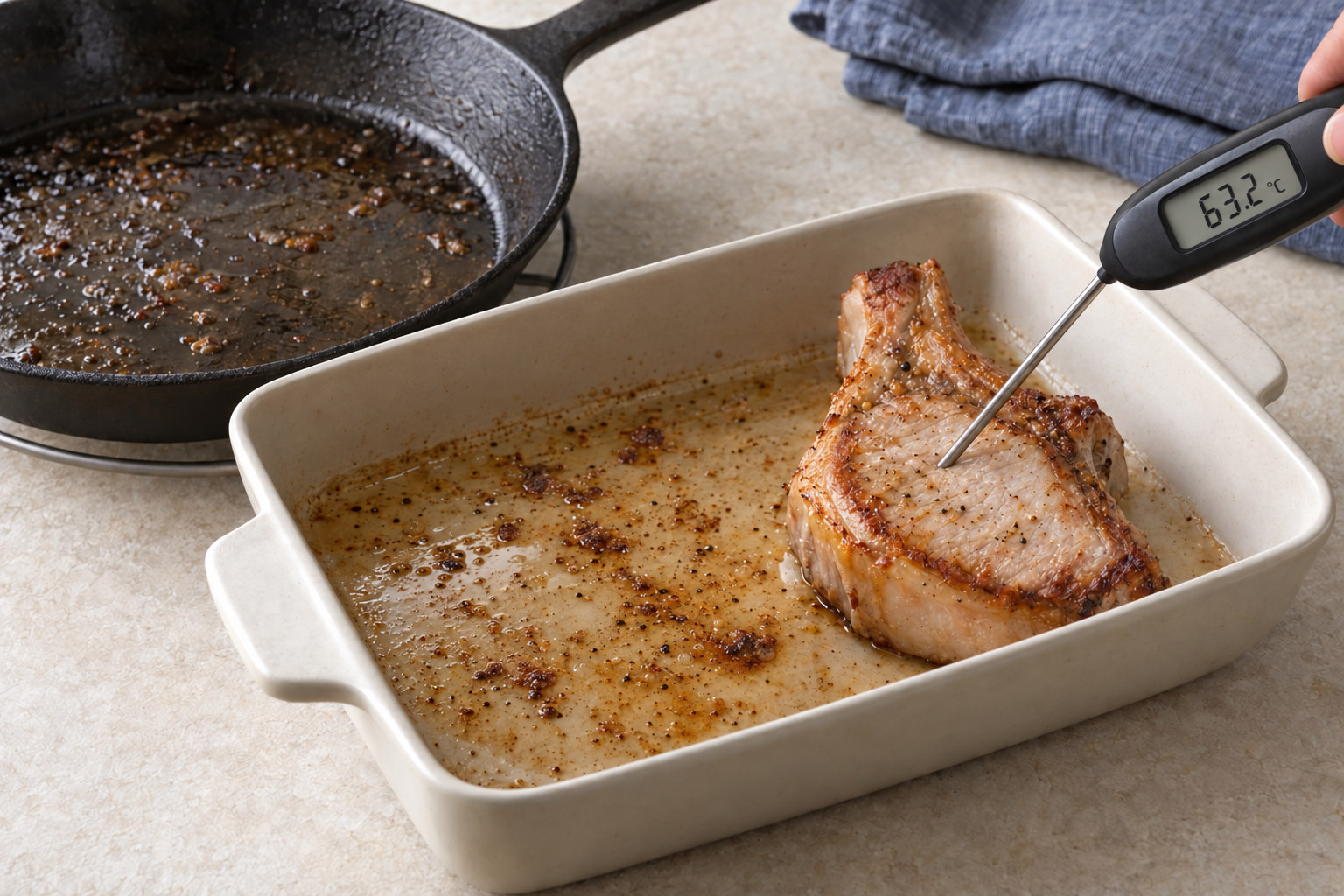
If the lean portion is thicker than 4 cm, we begin cooking it at the same time as the barley. For a thinner portion, we wait until the barley is almost tender, the pumpkin purée is ready and the gravy with tender belly has been reduced as described in the final step. Before frying the lean portion, we preheat the oven to 170 °C. We pat the lean portion dry and season it with ¼ teaspoon salt. We heat both teaspoons of oil in a 28 cm pan. We fry the meat for 2 minutes on each broad side and, if present, the fat edge for another 2–3 minutes. We measure the centre of the lean meat away from the bone while it is still in the hot pan. If it has already reached at least 63 °C, we take it out and go straight to resting; otherwise we transfer it to the roasting dish and finish in the oven at 170 °C. We start checking again after 6 minutes and allow about 6–25 minutes depending on the actual thickness. We remove each piece only when its centre, away from the bone, reaches at least 63 °C and let it rest for 5–8 minutes. We keep cooking a thicker piece and check its temperature every 4 minutes. We keep the other components warm. We keep the cooked barley and purée covered in a warm place for no more than 30 minutes. If the chop needs longer, we take the covered sides off the heat and reheat them thoroughly over gentle heat, stirring, while the chop rests.
Reduce the gravy and divide the portions
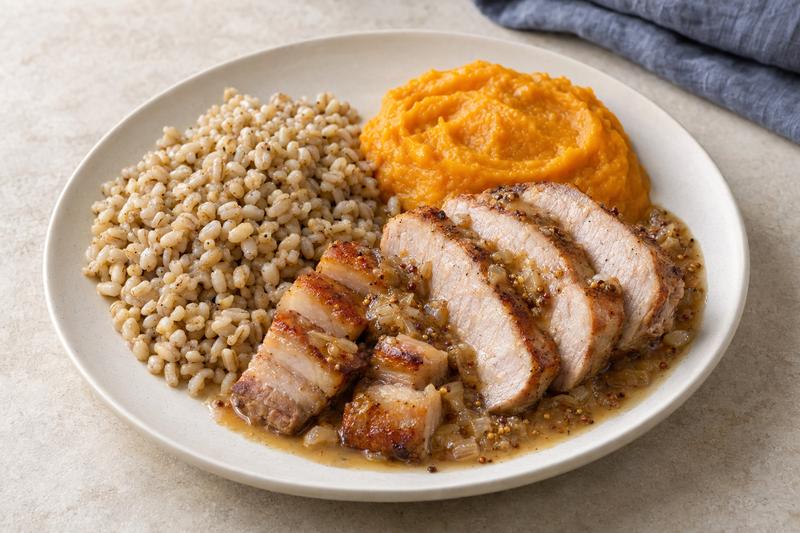
We make the gravy while the sides cook, and for a thin lean chop before frying it. We lift out the tender belly pieces, remove the sage and skim visible fat from the surface of the juices with a spoon. We reduce the juices with the onion uncovered for 5–10 minutes to about 130 ml; if we already have that amount, we do not cook them further. We stir in the mustard, return the belly pieces and keep them hot. After resting, we remove the lean meat from the bone, slice it and divide everything between 2 plates. We add the barley, pumpkin purée, belly and gravy.
The gravy has a concentrated flavour but no continuous layer of fat on top.
Tips from our kitchen
- We start cooking the barley only when the pork belly is nearly tender, so the side does not sit waiting for too long.
What to watch out for
- We do not braise the lean chop for a long time with the belly.
How we serve it
- We divide the sliced chop and tender pieces of belly between plates with barley and pumpkin purée. We spoon over the beer gravy with onion and mustard.
Ingredient swaps
pale beer
the same volume of alcohol-free pale beer The malty flavour remains. We choose a beer that is not too bitter because we will reduce the gravy.
Ingredient notes
- Karrekrone combines a lean chop with pork belly. We prepare one piece for two people or two for four.
- We remove any tough rind and divide the cooked meat between diners.
During preparation
- We keep the prepared meat covered in the fridge until the method calls for it. After handling raw meat, we wash our hands, knife and board; we put cooked meat on clean equipment.
- We insert the thermometer probe from the side into the thickest part of the meat, away from bone and fat. We measure each chop separately and rest it after cooking as directed.
Our inspiration
Karrekrone combines a lean chop with fattier belly, so one cut gives us two different kinds of meat. The belly benefits from slow braising; we cook the chop separately just before serving. The braise also gives us a sauce base of meat, onion, pale beer and sage. Once reduced and seasoned with mustard, it connects both parts on the plate.
Similar recipes

Recipe for 4 people
Step-by-step method
Before we start
We braise the belly first and keep both lean portions in the fridge. We start the barley and squash near the end of the braise. We begin a lean piece thicker than 4 cm at the same time as the barley. For a thinner piece, we wait until the barley is almost tender, the purée is ready and the gravy with tender belly has been reduced. If one chop is ready much earlier, we serve it after resting with half the sides, belly and gravy. We finish the other separately and reheat the remaining sides for it.
Prepare the belly for braising
We place both Karrekrone pieces on the board in turn. Along the natural seam of each, we separate the fattier belly from the lean chop; we run the knife close to any bone without cutting through it. We leave the lean portions on their bones if possible and keep them covered in the fridge. We cut the belly into pieces no larger than 3 cm. We peel and finely chop the onion and rinse the sage. In a 20 cm, 3-litre casserole, we first slowly fry the belly pieces in their own fat for 4–6 minutes. We pour off excess fat, add the onion and stir it over the heat for 4 minutes until soft. We pour in the beer and 450 ml water, then add ¼ teaspoon salt, the sage and pepper. The liquid should reach at least halfway up the pieces; if necessary, we add some of the reserved braising water.
The casserole should be small so the meat does not braise in too shallow a layer of liquid.
Braise until tender and time the sides
We let the belly simmer very gently under a lid for 90–150 minutes. Every half-hour we turn it and check the bottom; we add only 30–50 ml at a time from the 250 ml reserve so the liquid does not fall below one-third of the meat’s height. When a knife slides into the thickest piece with almost no resistance, we begin the sides. If it is still tough, we continue braising and keep both lean portions in the fridge.
Cook the barley and squash
We rinse the barley, add 1500 ml water in a 3-litre pot and simmer for 35–45 minutes until tender; then we drain it and stir in ½ teaspoon salt. We peel the squash and scoop out the seeds. After the first 20 minutes of cooking the barley, we cut the squash into roughly 2 cm cubes. In a second 3-litre pot, we add 120 ml water and ½ teaspoon salt. We braise under a lid for 15–20 minutes, stirring as needed, then evaporate any excess liquid uncovered. We stir in the butter and blend. We keep the purée covered over low heat, stirring occasionally. While making the sides, we reduce the gravy and return the tender belly to it as described in the final step. Before frying a thin lean chop, we have the purée ready, the barley almost tender and the gravy finished.
The barley has no hard centre and the purée does not run like soup.
Finish the lean portion
If a lean portion is thicker than 4 cm, we begin cooking it at the same time as the barley. For a thinner portion, we wait until the barley is almost tender, the pumpkin purée is ready and the gravy with tender belly has been reduced as described in the final step. Before frying the lean portions, we preheat the oven to 170 °C. We take the casserole with the tender belly off the heat and keep it covered, freeing a hob ring for the second pan. If needed, we reheat the belly in the finished gravy before serving. We pat the lean portions dry and season them with ¾ teaspoon salt. We start each piece in its own 28 cm pan with two teaspoons of oil, timed according to its thickness; pieces of different thickness need not start together. We fry the meat for 2 minutes on each broad side and, if present, the fat edge for another 2–3 minutes. We measure the centre of each lean piece separately, away from the bone, while it is still in the hot pan. We take out any piece that has reached at least 63 °C and go straight to resting it; we transfer the others to the roasting dish and finish in the oven at 170 °C. We start checking again after 6 minutes and allow about 6–25 minutes depending on actual thickness. We remove each piece only when its centre, away from the bone, reaches at least 63 °C and let it rest for 5–8 minutes. We keep cooking a thicker piece and check its temperature every 4 minutes. We keep the other components warm. We keep the cooked barley and purée covered in a warm place for no more than 30 minutes. If a chop needs longer, we take the covered sides for that serving off the heat. While it rests, we reheat them thoroughly over gentle heat, stirring. We do not leave the first cooked chop waiting for the sides.
Reduce the gravy and divide the portions
We make the gravy while the sides cook, and for a thin lean chop before frying it. We lift out the tender belly pieces, remove the sage and skim visible fat from the surface of the juices with a spoon. We reduce the juices with the onion uncovered for 5–10 minutes to about 230 ml; if we already have that amount, we do not cook them further. We stir in the mustard, return the belly pieces and keep them hot. After resting, we remove the lean meat from the bones and slice it. If both pieces are ready at roughly the same time, we divide everything between 4 plates. If the second is far behind, we serve the first on two plates with half the barley, purée, belly and gravy. We keep the remaining belly covered in the gravy and reheat it before the second serving; we also reheat the remaining sides as described in the previous step. We serve the second lean piece after its own rest.
The gravy has a concentrated flavour but no continuous layer of fat on top.