
Boxxi original cuisine · European inspiration
Karrekrone pork chop with mash and sauerkraut
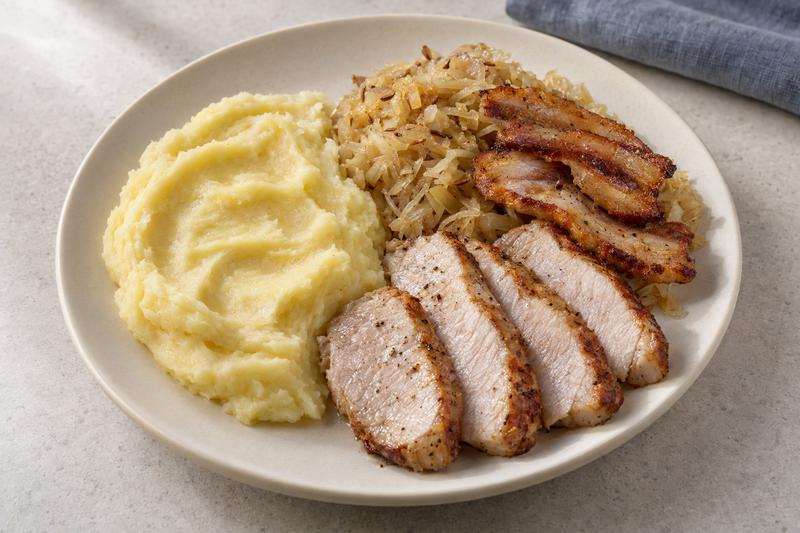
We serve tender slices of pork chop and thin slices of belly with browned edges on the same plate. We pair both parts of the Karrekrone cut with buttery mashed potatoes and caraway-scented sauerkraut.
The time includes separating the belly, slowly frying it and resting the lean meat. If there is more belly, we fry it in two batches and the time may increase by 15 minutes.
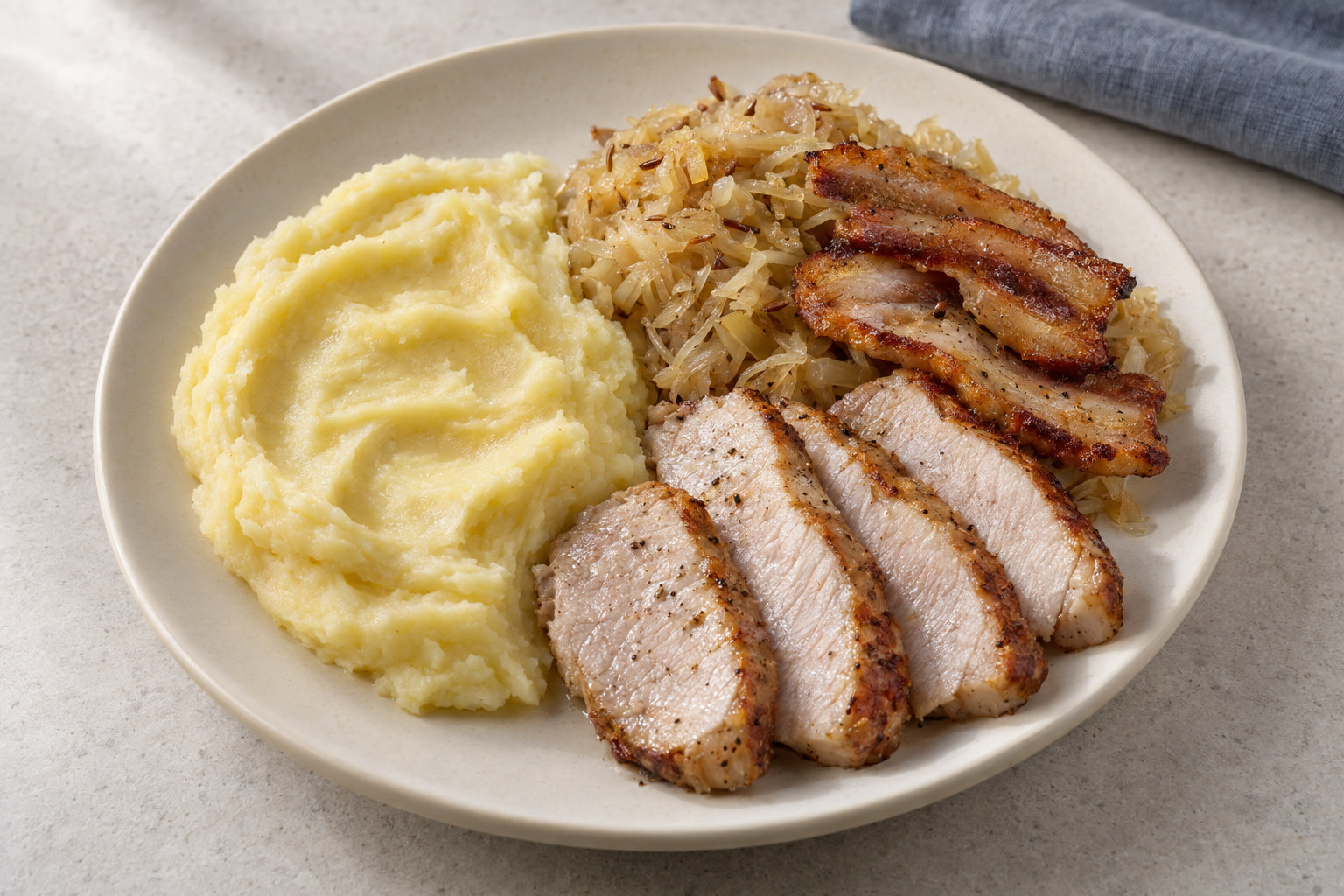
Tangy sauerkraut cuts through the richer belly, soft mash catches the meat juices, and caraway scents every bite.
Step-by-step method
What you will need
- kitchen scales
- knife and chopping board
- probe thermometer with a thin tip
- oven
- boning knife or narrow sharp knife
- 3 l saucepan
- 2 l lidded saucepan
- small saucepan for milk
- 28 cm frying pan
- 25 × 20 cm roasting dish
- potato ricer
- tongs
- heatproof bowl for fat
Before we start
We boil the potatoes while frying the belly. Once we take out the belly, we begin braising the sauerkraut. For a thin lean chop that may finish in the pan, we wait until the sauerkraut is tender and prepare the mash before frying it. For a thicker chop, we can fry the meat while the sauerkraut braises and finish the mash near the end of roasting. We warm the belly slices in the finished sauerkraut while the corresponding lean piece rests.
Separate the meat and start the potatoes
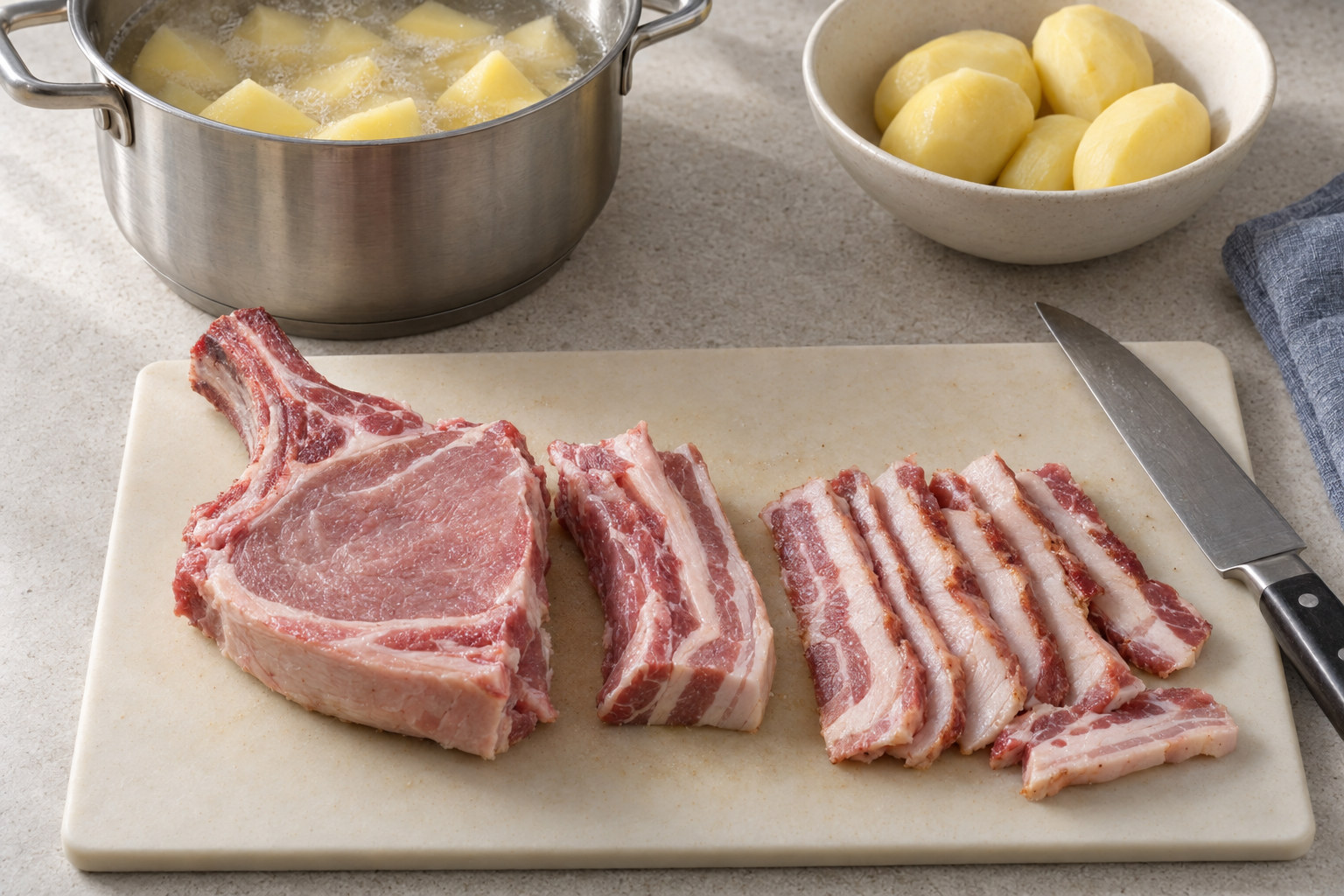
We place the Karrekrone on a board. We separate the richer belly section from the lean chop along their natural boundary, running the knife close to any bone without cutting through it. Where possible, we leave the lean section on its bone and put it back in the fridge, covered. We cut the belly across the grain into slices no thicker than 5 mm. We peel the potatoes, cut them into pieces about 3 cm across and cover them with water in a saucepan. We bring to the boil and simmer gently for 18–22 minutes until tender. We preheat the oven to 170 °C.
Render and brown the thin belly slices
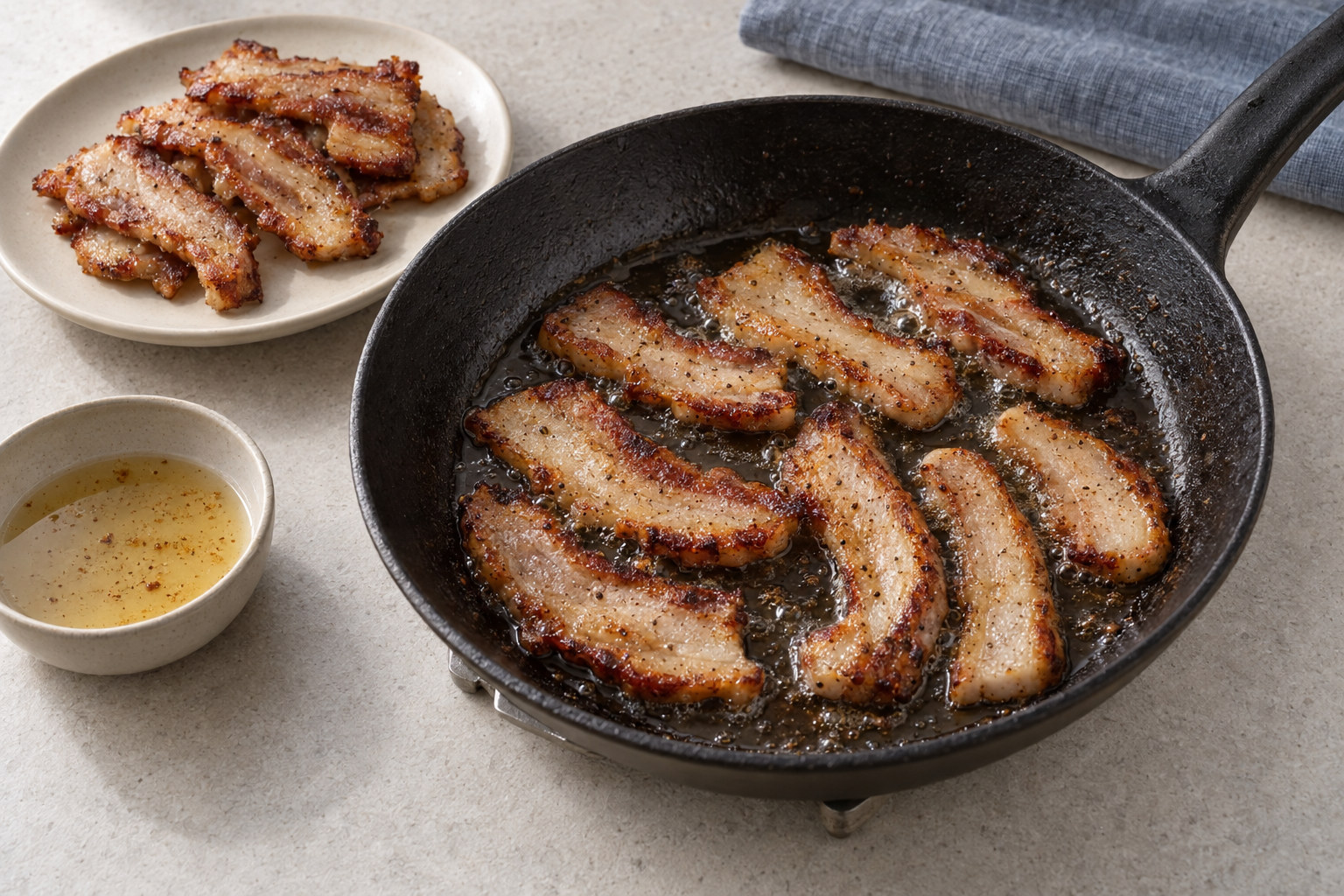
We place the slices in a cold 28 cm pan in a single layer. Over a medium-low heat, we gradually fry them for 12–18 minutes, turning often; if there is more belly, we cook it in two batches. We pour off excess fat into a heatproof bowl as we go. From the side of the thickest slices, we check that they have remained at least at 70 °C for 2 minutes. We season the cooked slices lightly with the salt reserved for the belly and the pepper, then set them on a plate; we add them to the sauerkraut at final serving.
The slices are browned and springy with crisp edges; we are not aiming for falling-apart braised meat.
Braise the sauerkraut
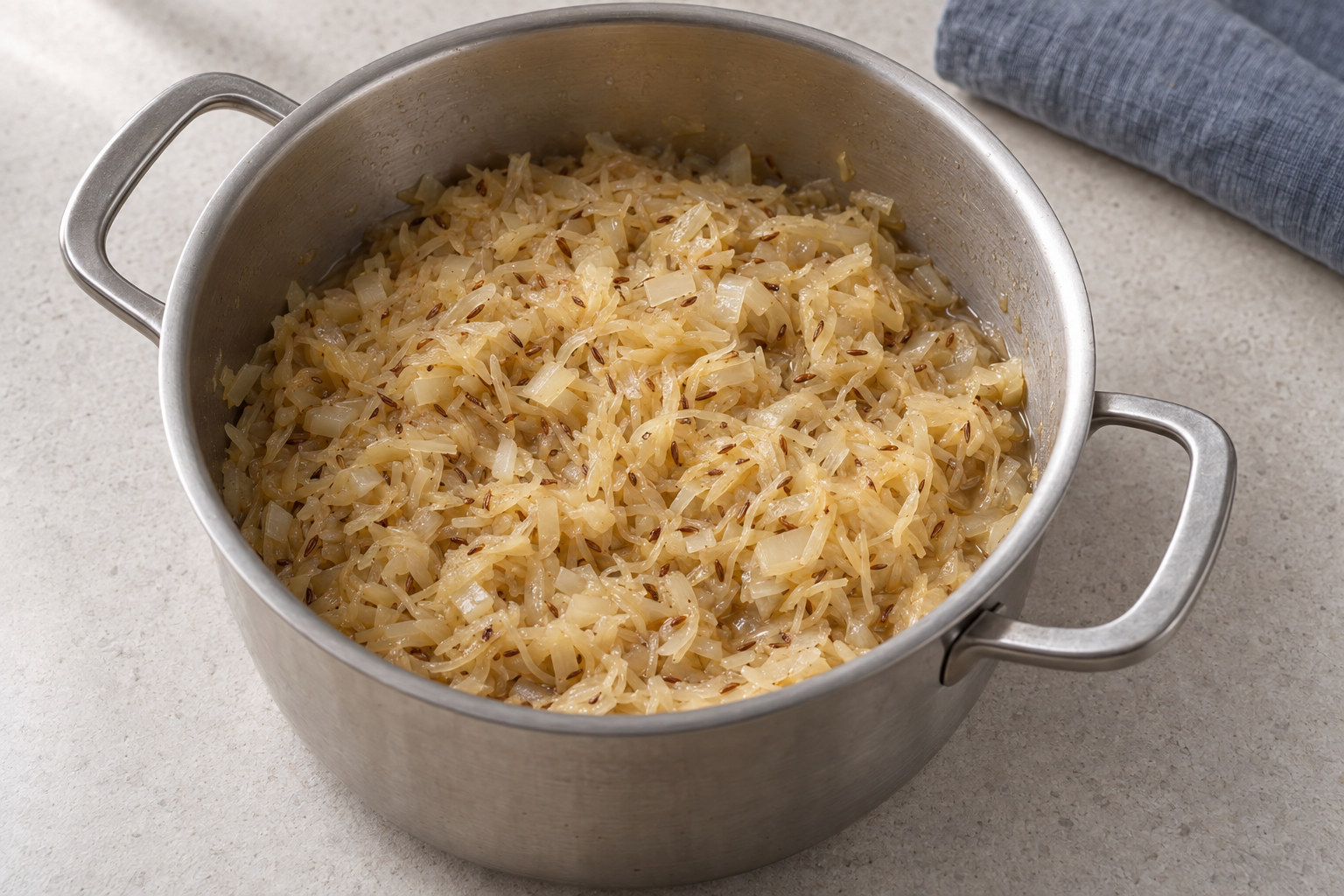
We peel and finely chop the onion. We measure two teaspoons of rendered fat into a 2 l saucepan; if there is less, we use all of it and moisten the onion with a little of the water reserved for the sauerkraut. We heat the finely chopped onion for 4 minutes, stirring, until soft. We add the drained sauerkraut, caraway, sugar and the 100 ml water, minus any used for the onion. We cover and braise for 15–20 minutes. We add no more salt. For a thin chop, we let the sauerkraut soften before we start frying the lean meat. With a thicker piece, it can finish braising while the meat cooks.
The sauerkraut softens but still tastes pleasantly tangy.
Finish the lean meat and mash
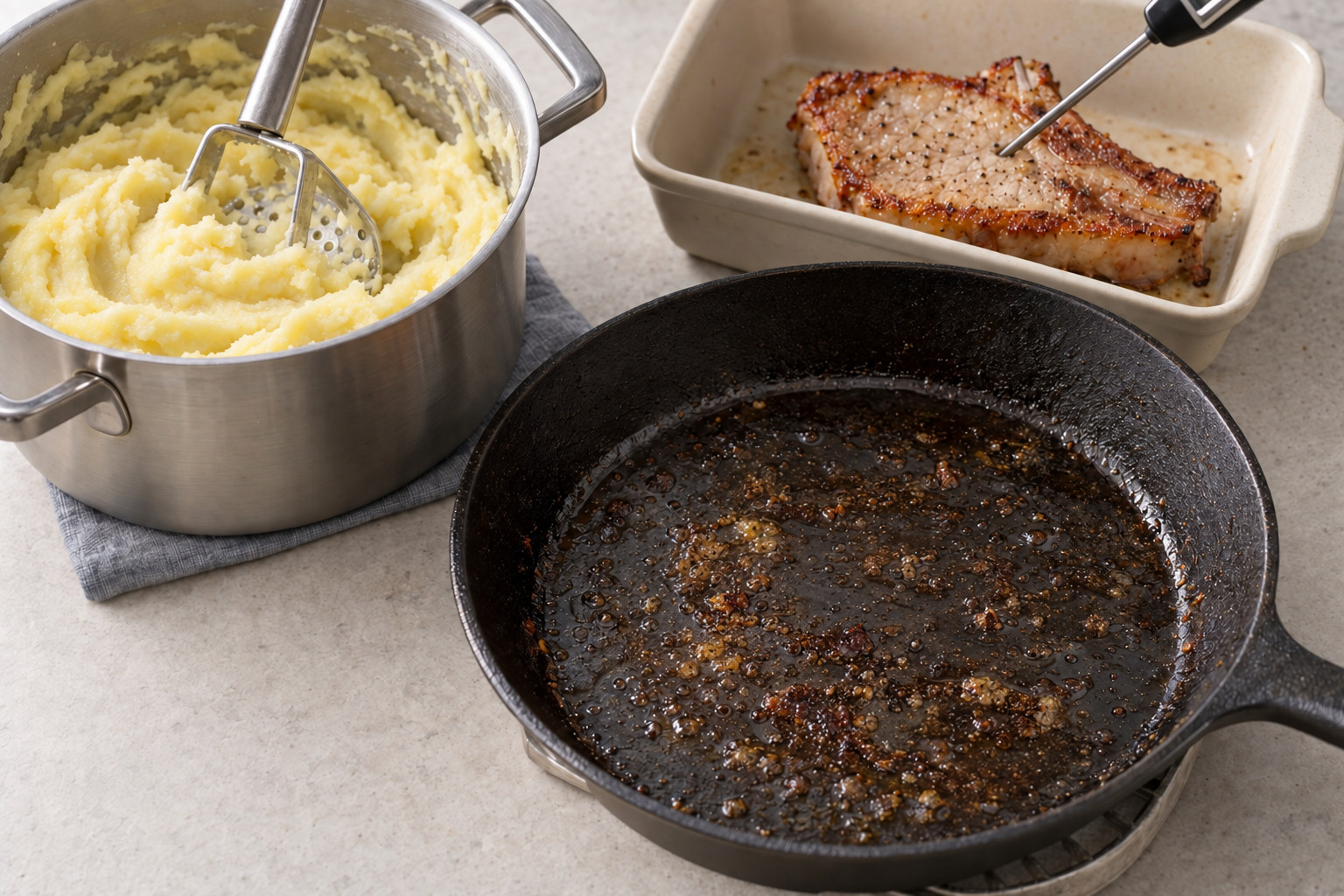
If the lean part is thin and may finish in the pan, we have the sauerkraut tender and the mash ready before we fry it. We pat the lean part dry and season it with ½ teaspoon salt. We heat the whole teaspoon of oil in a 28 cm pan. We fry the meat for 2 minutes on each broad side and any fatty edge for another 2–3 minutes. We check the centre temperature of the lean part, clear of the bone, while it is still in the hot pan. If it has already reached at least 63 °C, we take it out and let it rest; otherwise, we transfer it to the roasting dish and finish in the oven at 170 °C. We start checking again after 6 minutes and allow about 6–25 minutes depending on the actual thickness. We take out each piece only once its centre away from the bone reaches at least 63 °C, then rest it for 5–8 minutes. We continue roasting a thicker piece and check its temperature every 4 minutes. We keep the other components warm. We drain the tender potatoes and let them steam dry for a minute. For a thin chop, we finish the mash before frying; for thicker meat, we finish it near the end of roasting. Until then, we keep the drained potatoes covered. We pass them through a ricer, stir in the butter and ½ teaspoon salt, then gradually add all the milk warmed in a small saucepan. We cover the mash and keep it over a very low heat for no more than 20 minutes, stirring occasionally with a spatula.
The mash is smooth. We measure the meat temperature in the centre of the lean part.
Serve both chop and belly
While the lean meat rests, we put the browned belly slices into the hot sauerkraut and heat them through under a lid for 2–3 minutes. We separate the lean meat from the bone and cut it into thin slices. We divide the mash, sauerkraut and all the meat—both chop and belly—between 2 plates. We serve immediately.
Tips from our kitchen
- We slice the belly really thinly; thick cubes will not become tender with this short cooking method.
What to watch out for
- We do not add all the rendered fat to the sauerkraut and mash.
How we serve it
- We divide the mash, sauerkraut, chop slices and browned belly between plates. Everyone gets a share of both parts of the meat; we serve them together as soon as they are ready.
Ingredient swaps
white sauerkraut
the same weight of red sauerkraut We judge its actual saltiness and do not add any more salt.
Ingredient notes
- Karrekrone combines a lean chop with pork belly. We prepare one whole cut for two people or two for four.
- We remove any tough skin and divide the cooked meat among the diners.
During preparation
- We keep the prepared meat covered in the fridge until the method calls for it. After handling raw meat, we wash our hands, knife and board; we place cooked meat on clean equipment.
- We insert the thermometer probe from the side into the thickest part of the meat, clear of bone and fat. We check each chop separately and let it rest after cooking as instructed.
Our inspiration
A single Karrekrone cut brings together a lean chop and a richer belly section. For this dish, we separate them and give each part a different shape: we leave the chop whole and cut the belly into very thin slices. In the pan, the slices develop browned edges without a long braise. A little of the fat they release goes beneath the onion for the sauerkraut. The cabbage therefore picks up a meaty flavour before we add the cooked slices.
Similar recipes

Recipe for 4 people
Step-by-step method
Before we start
We boil the potatoes while frying the belly. Once we take out the belly, we begin braising the sauerkraut. For a thin lean chop that may finish in the pan, we wait until the sauerkraut is tender and prepare the mash before frying it. For a thicker chop, we can fry the meat while the sauerkraut braises and finish the mash near the end of roasting. We warm the belly slices in the finished sauerkraut while the corresponding lean piece rests. If the second chop is considerably behind, we take half the finished mash for the first serving; we set the rest aside covered and reheat it before the second serving. We serve the first rested chop with its share of belly and sides.
Separate the meat and start the potatoes
We place the two Karrekrone cuts on a board one after the other. We separate the richer belly section from the lean chop along their natural boundary, running the knife close to any bone without cutting through it. Where possible, we leave each lean section on its bone and put it back in the fridge, covered. We cut the belly across the grain into slices no thicker than 5 mm. We peel the potatoes, cut them into pieces about 3 cm across and cover them with water in a saucepan. We bring to the boil and simmer gently for 18–22 minutes until tender. We preheat the oven to 170 °C.
Render and brown the thin belly slices
We place the slices in a cold 32 cm pan in a single layer. Over a medium-low heat, we gradually fry them for 12–18 minutes, turning often; if there is more belly, we cook it in two batches. We pour off excess fat into a heatproof bowl as we go. From the side of the thickest slices, we check that they have remained at least at 70 °C for 2 minutes. We season the cooked slices lightly with the salt reserved for the belly and the pepper, then set them on a plate; we add them to the sauerkraut at final serving.
The slices are browned and springy with crisp edges; we are not aiming for falling-apart braised meat.
Braise the sauerkraut
We peel and finely chop the onion. We measure one tablespoon of rendered fat into a 3 l saucepan; if there is less, we use all of it and moisten the onion with a little of the water reserved for the sauerkraut. We heat the finely chopped onion for 4 minutes, stirring, until soft. We add the drained sauerkraut, caraway, sugar and the 170 ml water, minus any used for the onion. We cover and braise for 15–20 minutes. We add no more salt. For a thin chop, we let the sauerkraut soften before we start frying the lean meat. With a thicker piece, it can finish braising while the meat cooks.
The sauerkraut softens but still tastes pleasantly tangy.
Finish the lean meat and mash
If either lean piece is thin and may finish in the pan, we have the sauerkraut tender and the corresponding share of mash ready before frying it. We pat the lean parts dry and season them with ¾ teaspoon salt. We heat one teaspoon of oil in each of two 28 cm pans at the same time. We fry the meat for 2 minutes on each broad side and any fatty edge for another 2–3 minutes. We check the centre temperature of each lean piece separately, clear of the bone, while it is still in the hot pan. We take out any piece that has reached at least 63 °C and let it rest; we transfer the others to the roasting dish and finish them in the oven at 170 °C. We start checking again after 6 minutes and allow about 6–25 minutes depending on the actual thickness. We take out each piece only once its centre away from the bone reaches at least 63 °C, then rest it for 5–8 minutes. We continue roasting a thicker piece and check its temperature every 4 minutes. We keep the other components warm. We drain the tender potatoes and let them steam dry for a minute. For a thin chop, we finish the mash before frying; for thicker meat, we finish it near the end of roasting. Until then, we keep the drained potatoes covered. We pass them through a ricer, stir in the butter and 1 teaspoon salt, then gradually add all the milk warmed in a small saucepan. We cover the mash and keep it over a very low heat for no more than 20 minutes, stirring occasionally with a spatula. If we serve in two rounds, we take half the finished mash for the first chop. We set the rest aside covered and reheat it over very low heat, stirring, while the second chop rests.
The mash is smooth. We measure the meat temperature in the centre of the lean part.
Serve both chop and belly
While each lean piece rests, we put its share of browned belly into the hot sauerkraut and heat it through under a lid for 2–3 minutes. We separate the lean meat from the bone and cut it into thin slices. If both pieces are ready at about the same time, we divide the mash, sauerkraut and all the meat, both chop and belly, between 4 plates. If the second piece is considerably behind, we serve the first rested piece on two plates with half the belly, sauerkraut and mash. We reheat the remaining sauerkraut and belly while the second piece rests, and reheat the reserved mash for the second serving as described above. We take each serving to the table straight away.