
From the Boxxi kitchen · Chinese-inspired
Homemade bao with Karrekrone pork chop and ginger glaze
We fill soft steamed bao with slices of pork chop and braised belly in a glossy ginger glaze. Tangy cucumber and carrot with toasted sesame seeds bring freshness and crunch to every bite. We allow plenty of time for the dough to rise and the pork to braise slowly.
The time includes both rises and the slow braising of the belly, which overlap. We serve all eight bao at once.
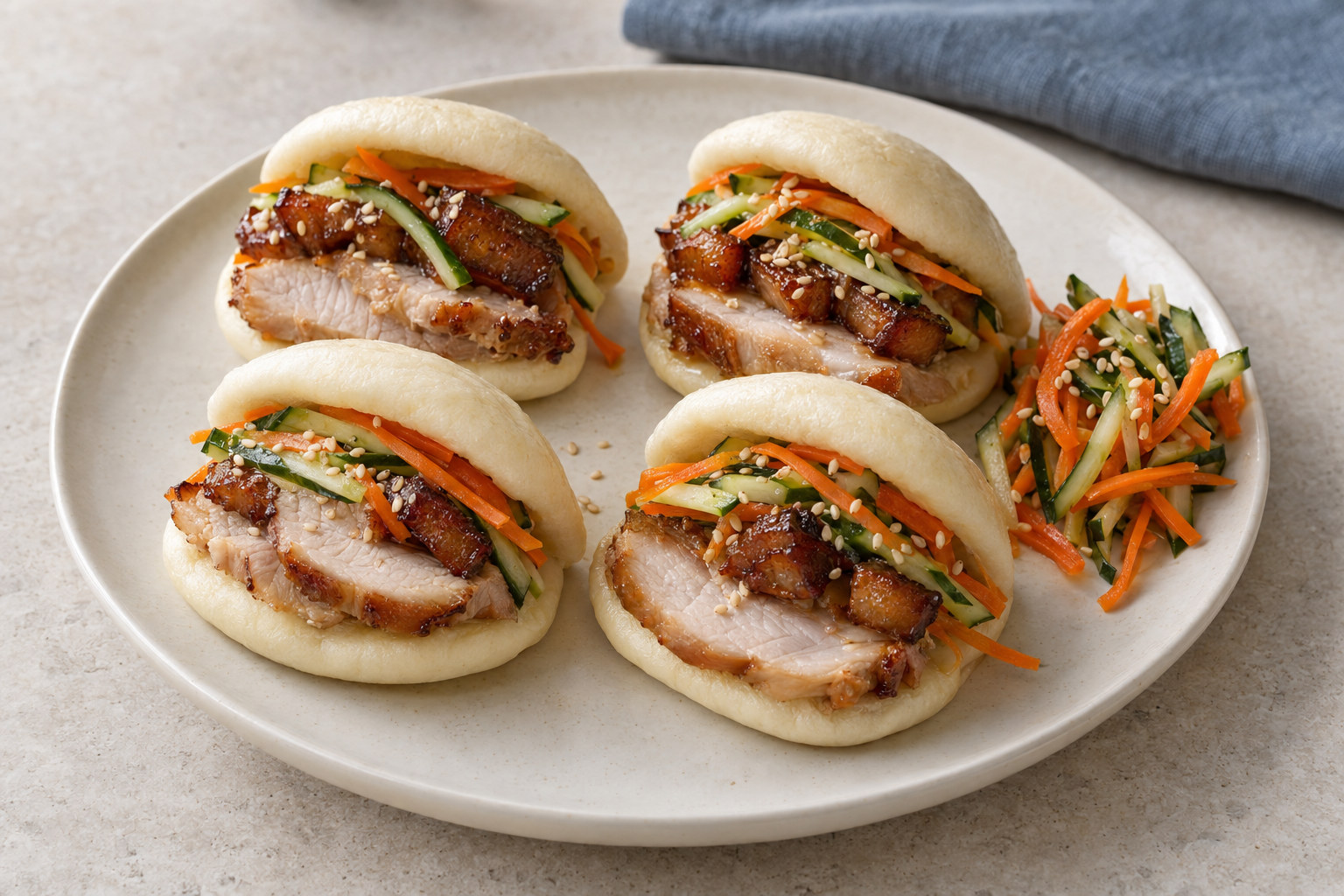
Light, fluffy milk dough wraps around sweet and salty ginger pork; vinegar and crunchy vegetables balance the rich filling.
Step-by-step method
What you will need
- kitchen scales
- knife and chopping board
- probe thermometer with a fine tip
- oven
- narrow, sharp knife
- 16 cm / 2 l casserole with a lid
- mixing bowl for the dough
- rolling pin
- baking paper cut into 8 × 8 cm squares
- two-tier steamer with a usable diameter of at least 24 cm per tier and a base pot of at least 5 l
- lid with a steam vent
- tongs and oven gloves
- 28 cm frying pan
- 25 × 20 cm roasting dish
- bowl and colander for the vegetables
- tray for the dough
- wire rack and a clean, lightly dampened tea towel for the cooked bao
Before we start
We start braising the belly first, then make the dough half an hour later. We steam the eight bao before frying the lean chop. While the meat rests, we simply reheat them briefly; we follow this sequence even if the meat finishes cooking in the pan without needing the oven.
Prepare the belly for braising
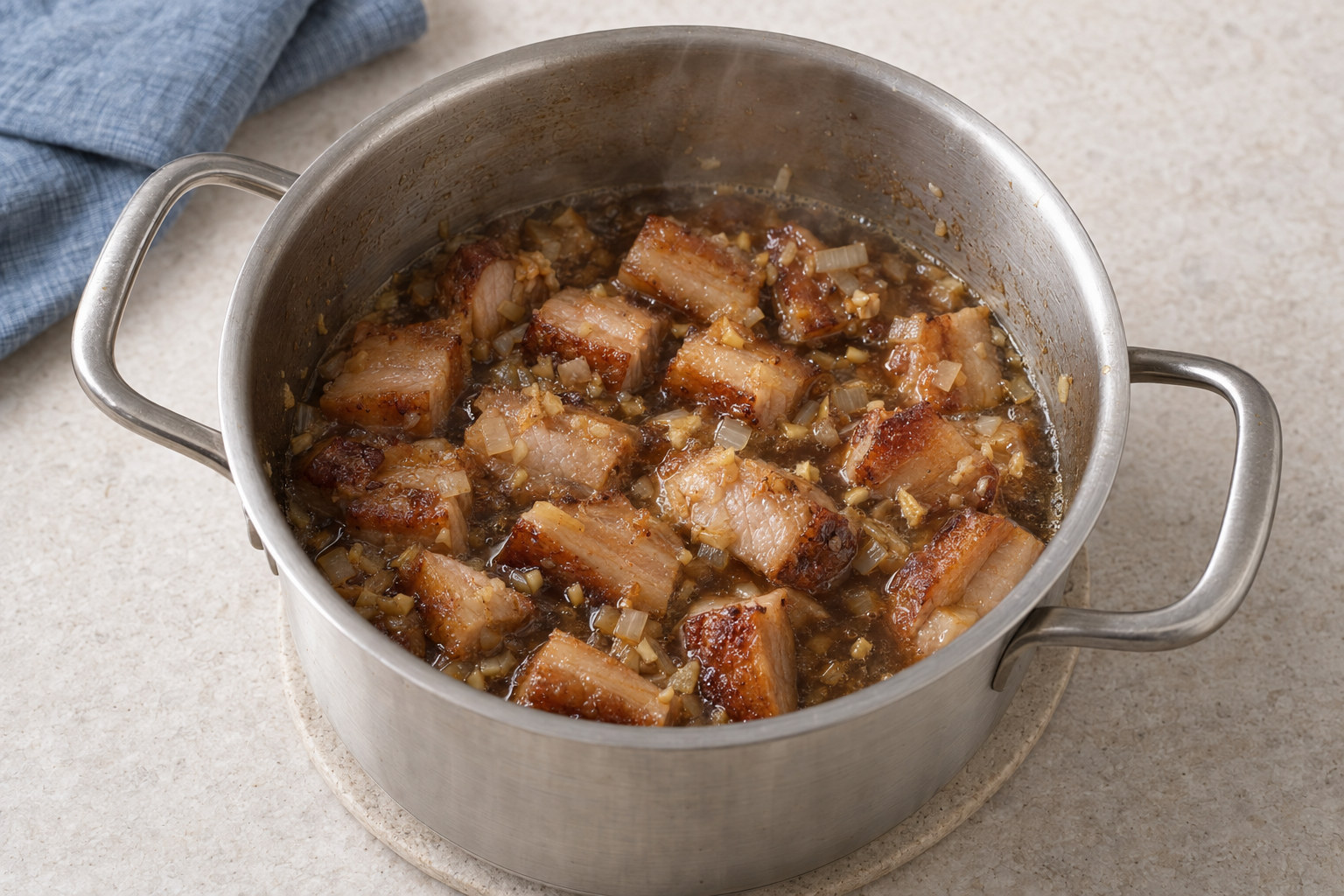
We place the Karrekrone on the chopping board. We separate the fattier belly from the lean chop along the natural seam, keeping the knife close to any bone without cutting through it. We leave the bone attached to the lean part if possible, then cover and refrigerate it. We peel the onion, garlic and ginger. We cut the belly into 3 cm pieces and gently fry it for 5 minutes in a 16 cm / 2 l casserole. We pour off the excess fat, add the finely chopped onion and soften it for 3 minutes, stirring. We add the grated ginger and garlic, then after a minute pour in 300 ml water and the soy sauce. We cover and braise very gently for 90–150 minutes. We turn the pieces every half-hour and add enough of the reserved 150 ml water to keep the liquid between a third and halfway up the meat.
The belly is easy to pierce when ready; we keep the lean meat in the fridge until needed.
Make the dough and leave it to rise
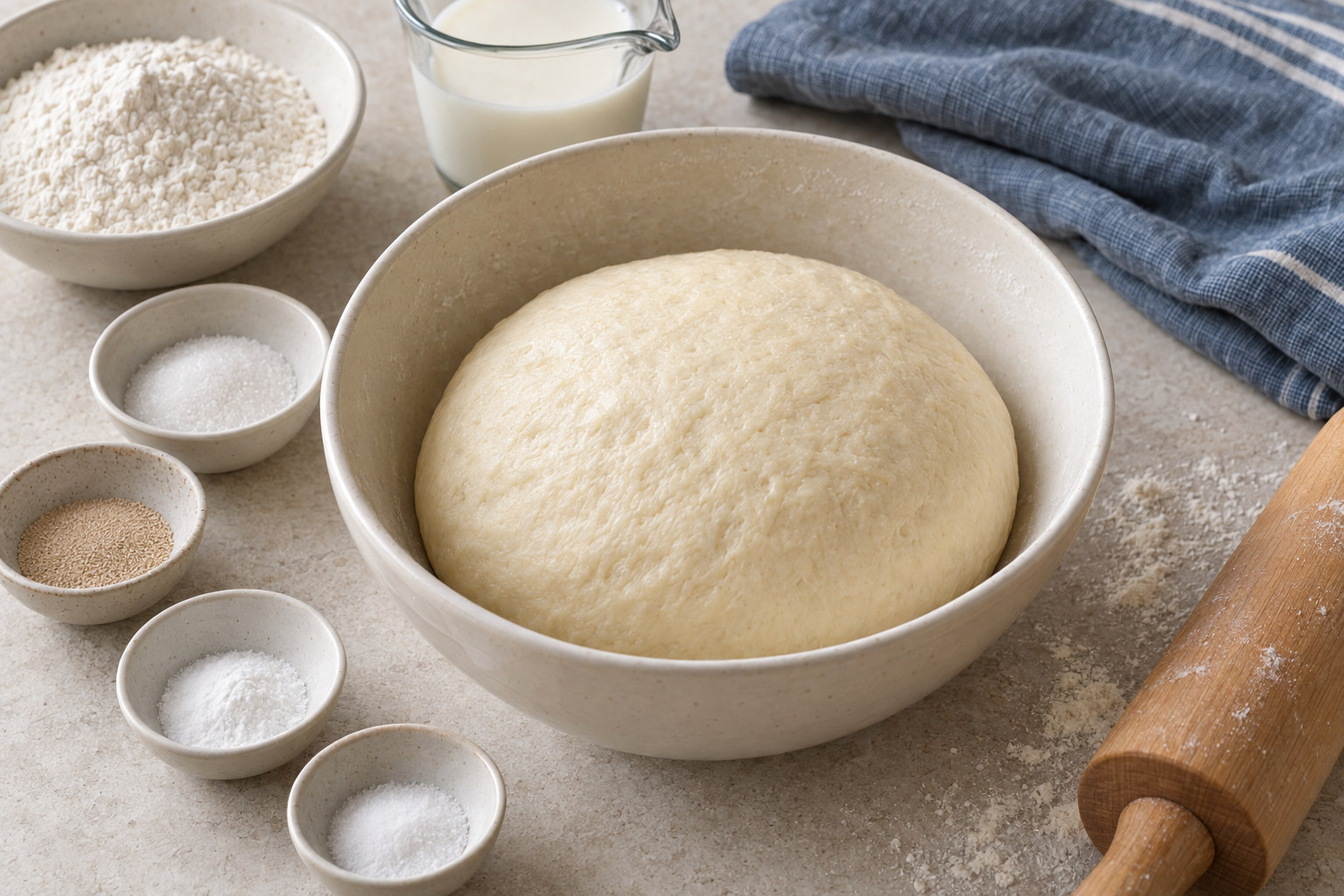
Once the belly has been braising for 30 minutes, we mix the flour, yeast, baking powder, 8 g sugar and 2 pinches of salt. We pour in the lukewarm milk, no warmer than 35 °C, and knead by hand for 8–10 minutes. We cover and rest for 10 minutes, knead for another minute, then leave to rise at room temperature for 45–75 minutes, until roughly doubled in volume. We do not add oil to the dough; we use it only on the folds later.
The dough is smooth and elastic; we judge the proving time by how much it has grown.
Pickle the vegetables and shape the bao
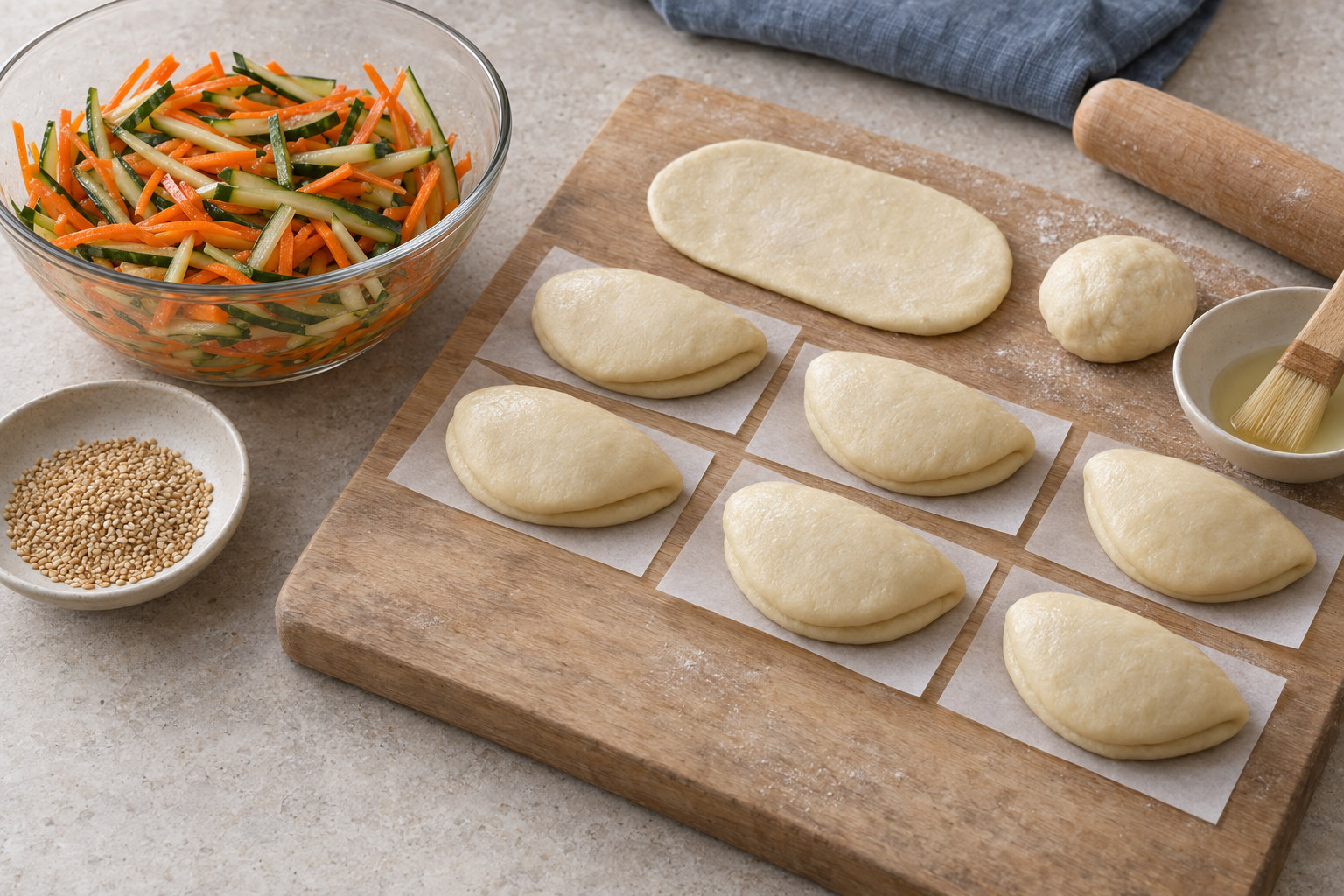
We wash the cucumber and peel the carrot. We remove the soft centre of the cucumber and cut both vegetables into thin matchsticks 4 cm long. We mix them with 25 ml vinegar, 2 ½ teaspoons sugar and ¼ teaspoon salt, then cover and refrigerate for at least 20 minutes. We dry-toast the sesame seeds for 1–2 minutes and set them aside. We briefly knock back the risen dough and divide it into eight equal pieces of about 42 g. We roll them into ovals measuring about 6.5 × 11 cm and 5–6 mm thick. We brush each surface very lightly with some of the two teaspoons oil set aside for the folds, fold each oval in half and place it on its own 8 × 8 cm square of baking paper.
Oil remains inside the fold so the cooked buns can be opened.
Prove the bao and finish the belly
We place four bao in each of the two steamer tiers, each with a usable diameter of at least 24 cm, leaving gaps of at least 2.5 cm before proving. We cover and leave to rise for 20–35 minutes, until their volume has increased by about half. We lift the tender belly out of its juices, skim the fat from the surface and simmer the juices for 5–10 minutes to reduce them to about 110 ml. We add the honey and 10 ml vinegar, cook for a minute and return the belly. We keep it covered just below boiling point; we only start cooking the lean meat once the buns are ready and the belly is tender.
The bao are puffier but still hold their shape and remain separate.
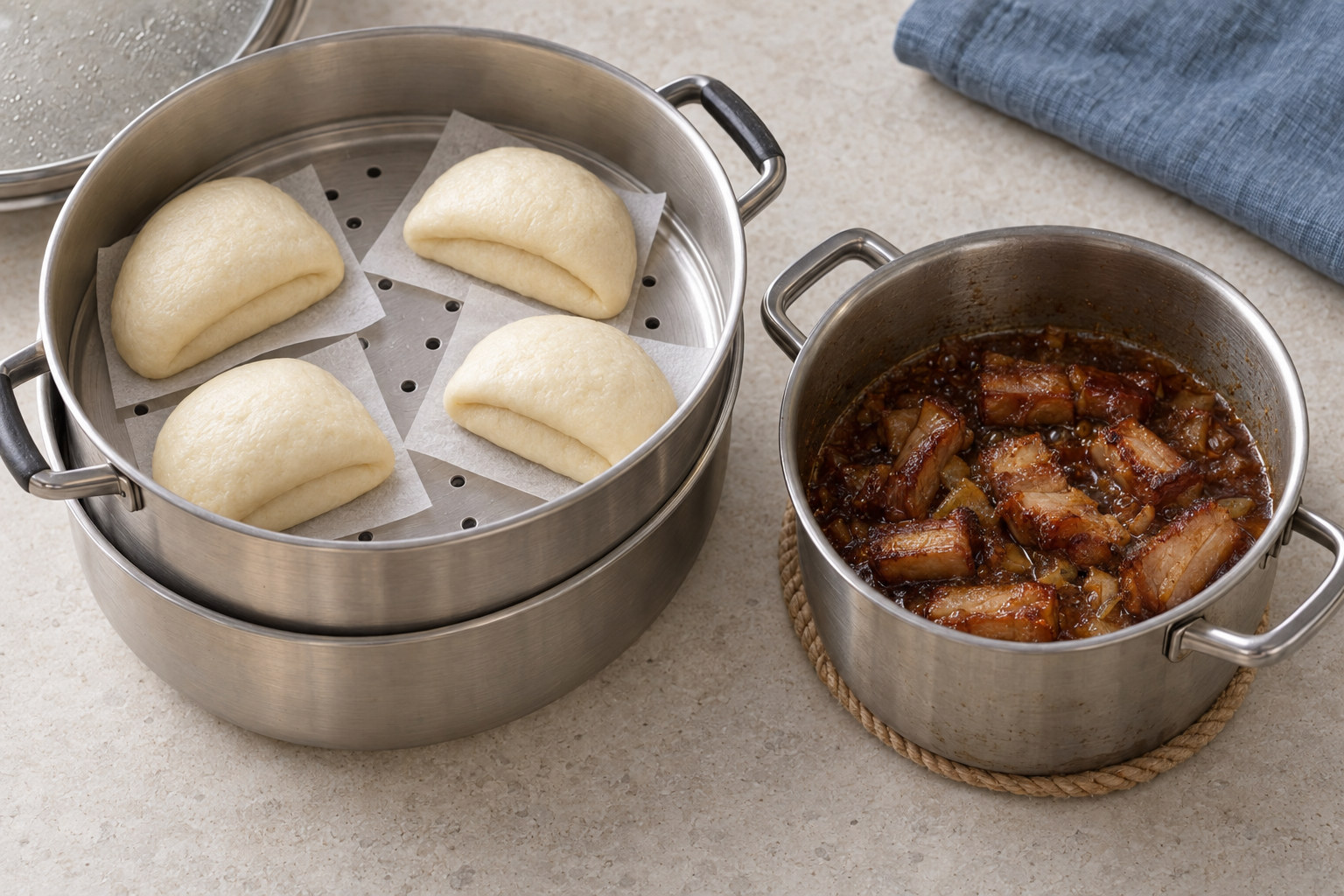
Steam the bao first, then finish the meat
We steam all eight bao before starting to fry the lean meat. We pour water into the base pot; the level must be at least 3 cm below the bottom tier. We fit both tiers, each holding four bao, and the lid. We gradually bring up steam over a medium heat, then steam for 12 minutes over a gentler heat. Halfway through, we carefully swap the tiers; if the steam is slow to build up again, we add 1–2 minutes. We turn off the heat and leave for 5 minutes without opening the lid. We transfer the bao to a wire rack and cover with a clean, lightly dampened tea towel for no longer than 60 minutes. While cooking the meat, we keep the water covered over a low heat just below boiling point, ready to reheat the bao straight away at the end. We preheat the oven to 170 °C. We pat the lean meat dry and season with ¼ teaspoon salt. We heat the full teaspoon oil in a 28 cm frying pan. We fry the meat for 2 minutes on each broad side, then cook any fat edge for another 2–3 minutes. We check the temperature in the centre of the lean meat, away from the bone, while it is still in the hot pan. If it has already reached at least 63 °C, we remove it and let it rest straight away; otherwise, we transfer it to a roasting dish and finish it in the oven at 170 °C: we start checking again after 6 minutes, allowing about 6–25 minutes depending on the actual thickness. We remove each piece only when its centre reaches at least 63 °C away from the bone, then leave it to rest for 5–8 minutes. We continue cooking any thicker piece, checking its temperature every 4 minutes. We keep the other elements warm. While the meat rests, we heat the steamer water until gentle steam rises again. We return all eight cooked bao for 3–5 minutes until hot and soft inside. We top up with hot water as needed, always keeping a 3 cm gap below the tier.
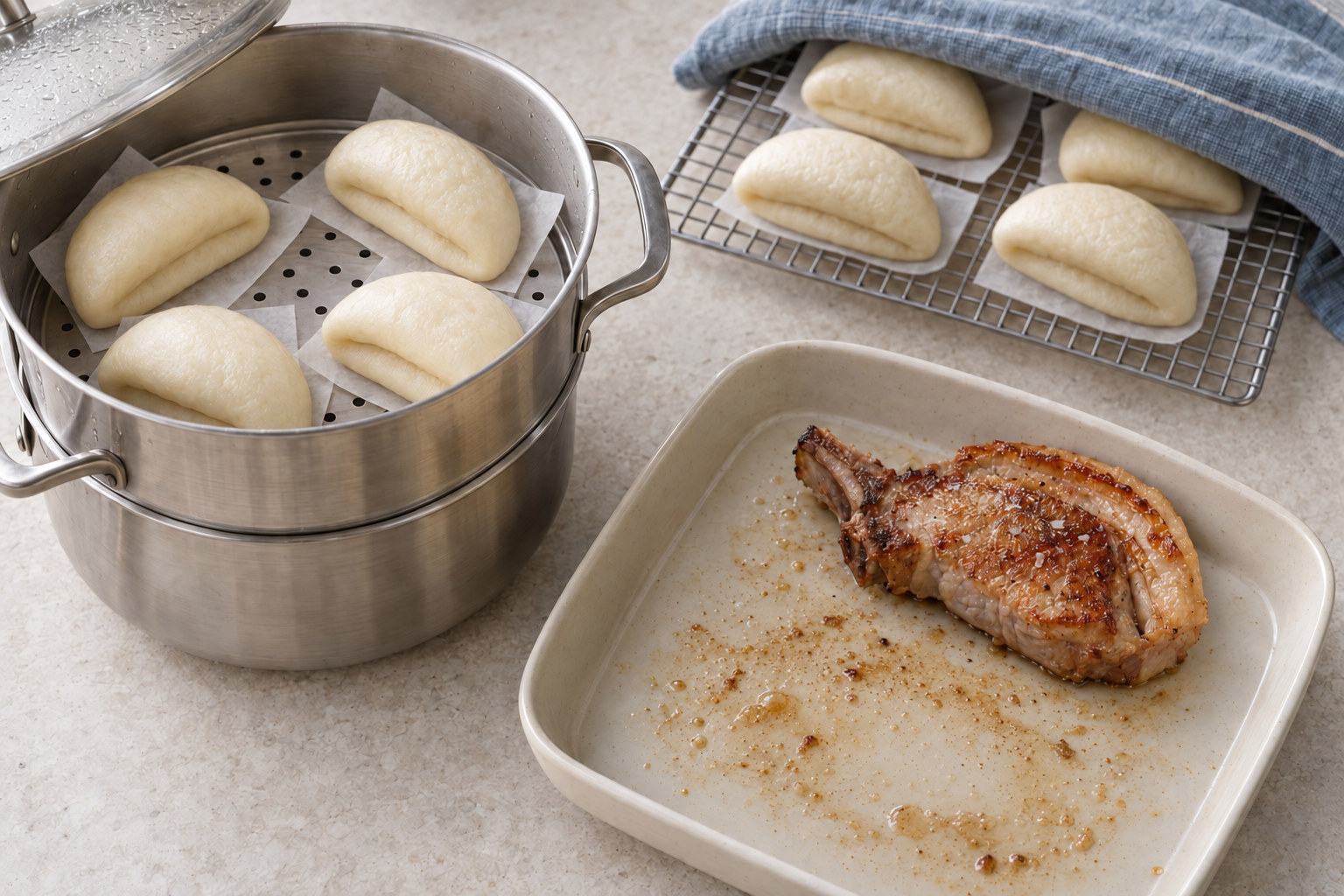
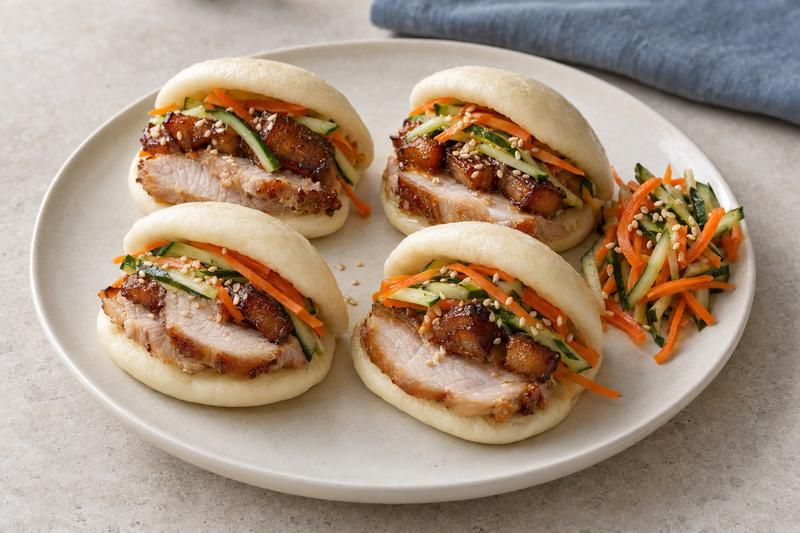
Slice and serve
After at least 5 minutes of resting, we cut the lean meat from the bone and slice it thinly. We cut the belly into smaller bite-sized pieces and divide both cuts evenly. We drain the vegetables, keeping the pickling liquid out of the meat. We open the eight bao and serve four per person, with half of all the meat, glaze and vegetables. We sprinkle with sesame seeds and serve any extra vegetables alongside.
Tips from our kitchen
- Before shaping, we check the usable diameter of the tiers; the measurement on the packaging may include the rim.
What to watch out for
- We do not leave the fully proved second batch in the warm while the first batch cooks, or lift the lid as soon as we turn off the heat.
How we serve it
- We serve four filled bao per person. For two people, we serve them all at once; for four, we serve two batches of two buns per person. We serve any extra vegetables alongside.
Ingredient swaps
rice vinegar
the same volume of cider vinegar The glaze and vegetables will taste fruitier; we add no extra sugar.
Ingredient notes
- Karrekrone combines a lean pork chop with belly. We prepare one piece for two people and two for four.
- We remove any tough rind and divide the cooked meat between the diners.
During preparation
- We keep the prepared meat covered in the fridge until we need it in the method. After handling raw meat, we wash our hands, knife and chopping board; we put cooked meat on clean equipment.
- We insert the thermometer probe from the side into the thickest part of the meat, avoiding bone and fat. We check each chop separately and leave it to rest after cooking as directed in the method.
Our inspiration
We create the pocket for the filling as we shape these bao. A thin layer of oil between the folded surfaces keeps them from sticking, so we can open each steamed bun like a pocket. We add the meat and vegetables only when serving. This shape lets us bring together soft bread, glossy ginger glaze and crunchy vegetables that are not cooked with the dough.
Similar recipes
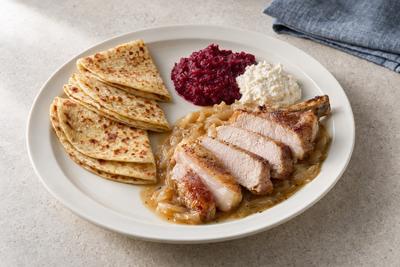
Recipe for 4 people
The time includes both rises and the slow braising of the belly, which overlap. We steam and serve sixteen bao in two batches of eight; the total time runs until the second batch is served.
Step-by-step method
Before we start
We start braising the belly first, then make the dough half an hour later. We steam the first eight bao before frying the lean chops, and briefly reheat them while the first cooked piece rests. If the second piece is not yet cooked, we fill the first eight buns with the first rested piece and half the belly, glaze and vegetables, and finish the second piece for the second eight buns. We start steaming the second batch of bao as soon as the steamer is free, before serving the first batch, without waiting for the second chop to finish cooking.
Prepare the belly for braising
We place the two pieces of Karrekrone on the chopping board in turn. We separate the fattier belly from the lean chop along the natural seam, keeping the knife close to any bone without cutting through it. We leave the bone attached to the lean part if possible, then cover and refrigerate it. We peel the onion, garlic and ginger. We cut the belly into 3 cm pieces and gently fry it for 5 minutes in a 20 cm / 3 l casserole. We pour off the excess fat, add the finely chopped onion and soften it for 3 minutes, stirring. We add the grated ginger and garlic, then after a minute pour in 450 ml water and the soy sauce. We cover and braise very gently for 90–150 minutes. We turn the pieces every half-hour and add enough of the reserved 250 ml water to keep the liquid between a third and halfway up the meat.
The belly is easy to pierce when ready; we keep the lean meat in the fridge until needed.
Make the dough and leave it to rise
Once the belly has been braising for 30 minutes, we mix the flour, yeast, baking powder, 16 g sugar and ¼ teaspoon salt. We pour in the lukewarm milk, no warmer than 35 °C, and knead by hand for 8–10 minutes. We cover and rest for 10 minutes, knead for another minute, then leave to rise at room temperature for 45–75 minutes, until roughly doubled in volume. We do not add oil to the dough; we use it only on the folds later.
The dough is smooth and elastic; we judge the proving time by how much it has grown.
Pickle the vegetables and shape the bao
We wash the cucumbers and peel the carrots. We remove the soft centres of the cucumbers and cut both vegetables into thin matchsticks 4 cm long. We mix them with 45 ml vinegar, 4 ½ teaspoons sugar and ¼ teaspoon salt, then cover and refrigerate for at least 20 minutes. We dry-toast the sesame seeds for 1–2 minutes and set them aside. We briefly knock back the risen dough and divide it into sixteen equal pieces of about 42 g. We roll them into ovals measuring about 6.5 × 11 cm and 5–6 mm thick. We brush each surface very lightly with some of the tablespoon oil set aside for the folds, fold each oval in half and place it on its own 8 × 8 cm square of baking paper.
Oil remains inside the fold so the cooked buns can be opened.
Prove the bao and finish the belly
We place four bao in each of the two steamer tiers, each with a usable diameter of at least 24 cm, leaving gaps of at least 2.5 cm before proving. We cover and leave to rise for 20–35 minutes, until their volume has increased by about half. We leave the other eight shaped bao to prove on a tray in the same way, then cover and refrigerate them to prevent over-proving while the first batch cooks. We lift the tender belly out of its juices, skim the fat from the surface and simmer the juices for 5–10 minutes to reduce them to about 200 ml. We add the honey and 20 ml vinegar, cook for a minute and return the belly. We keep it covered just below boiling point; we only start cooking the lean meat once the buns are ready and the belly is tender.
The bao are puffier but still hold their shape and remain separate.
Steam the bao first, then finish the meat
We steam the first eight bao before starting to fry the lean meat. We pour water into the base pot; the level must be at least 3 cm below the bottom tier. We fit both tiers, each holding four bao, and the lid. We gradually bring up steam over a medium heat, then steam for 12 minutes over a gentler heat. Halfway through, we carefully swap the tiers; if the steam is slow to build up again, we add 1–2 minutes. We turn off the heat and leave for 5 minutes without opening the lid. We transfer the bao to a wire rack and cover with a clean, lightly dampened tea towel for no longer than 60 minutes. While cooking the meat, we keep the water covered over a low heat just below boiling point, ready to reheat the bao straight away at the end. We preheat the oven to 170 °C. We pat the lean meat dry and season with ½ teaspoon salt. We heat a teaspoon oil in each of two 28 cm frying pans at the same time. We fry the meat for 2 minutes on each broad side, then cook any fat edge for another 2–3 minutes. We check the temperature in the centre of each lean piece separately, away from the bone, while it is still in the hot pan. We remove any piece that has already reached at least 63 °C and let it rest straight away; we transfer the others to a roasting dish and finish them in the oven at 170 °C: we start checking again after 6 minutes, allowing about 6–25 minutes depending on the actual thickness. We remove each piece only when its centre reaches at least 63 °C away from the bone, then leave it to rest for 5–8 minutes. We continue cooking any thicker piece, checking its temperature every 4 minutes. We keep the other elements warm. While the first cooked lean piece rests, we heat the steamer water until gentle steam rises again. We return the first eight cooked bao for 3–5 minutes until hot and soft inside. If the second piece of meat is not yet ready, we do not wait for it: we serve the first eight bao with the first rested piece as described in the next step. We top up with hot water as needed, always keeping a 3 cm gap below the tier.
Slice the meat and fill the bao in two batches
After at least 5 minutes of resting, we cut the cooked lean meat from the bone and slice it. We cut the belly into bite-sized pieces. If both chops are ready, we divide the lean meat in half for the two batches of bao. If only the first is ready, we use all of it in the first eight buns and finish cooking the second chop for the second eight. We divide the belly, glaze, drained vegetables and sesame seeds equally between the two servings, keeping the pickling liquid out of the glaze. We remove the first eight reheated bao from the steamer and cover them. Immediately, before filling and serving the first batch, we put the second eight proved bao from the fridge into the tiers. The water in the pot is still hot; we top it up with hot water as needed, keeping it at least 3 cm below the bottom tier. Over a gentle heat, we bring up a steady steam again and steam for 12 minutes from that point. Halfway through, we carefully swap the tiers, as with the first batch; if the steam is slow to build up again, we add 1–2 minutes. We then turn off the heat and leave them to rest under the lid for 5 minutes. Meanwhile, we fill the first eight buns with the filling set aside for the first serving, and serve two per person. If both chops are already cooked, we keep the meat for the second batch covered in the remaining glaze at no less than 63 °C for no longer than 25 minutes. If the second chop is still cooking, we leave its share of the belly covered in the remaining glaze off the heat, then reheat it until hot while that chop rests. We then add the rested lean meat; the same maximum holding time of 25 minutes applies to this filling. The second eight buns are already steaming; we do not wait for the first batch to be eaten. If the second chop is ready after the buns, we put the second eight cooked buns on a wire rack under a lightly dampened tea towel and briefly reheat them in steam while that chop rests, just as we did with the first batch. We do not leave cooked bao waiting like this for more than 60 minutes. We fill the second eight buns with the hot meat, remaining belly, glaze, vegetables and sesame seeds, then serve another two per person.