
Italian-inspired cuisine · Italian-inspired cuisine
Cocoa ravioli with wild boar ragù, root vegetable purée and wine sauce
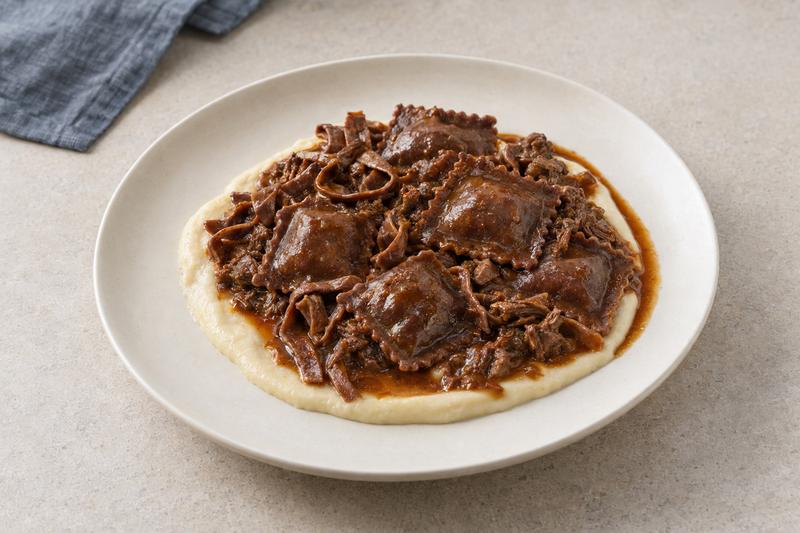
We fill dark cocoa ravioli with a slow-cooked wild boar and red wine ragù. The slightly bitter pasta is complemented by a sweet parsley root and parsnip purée and the wine-rich braising juices. We set aside a free day for this special meal, taking time to roll and fill the pasta by hand.
The time includes 170–220 minutes of braising, 60–120 minutes of cooling and chilling the filling, and making the ravioli by hand. We prepare the dough and purée alongside the cooling and filling stages.
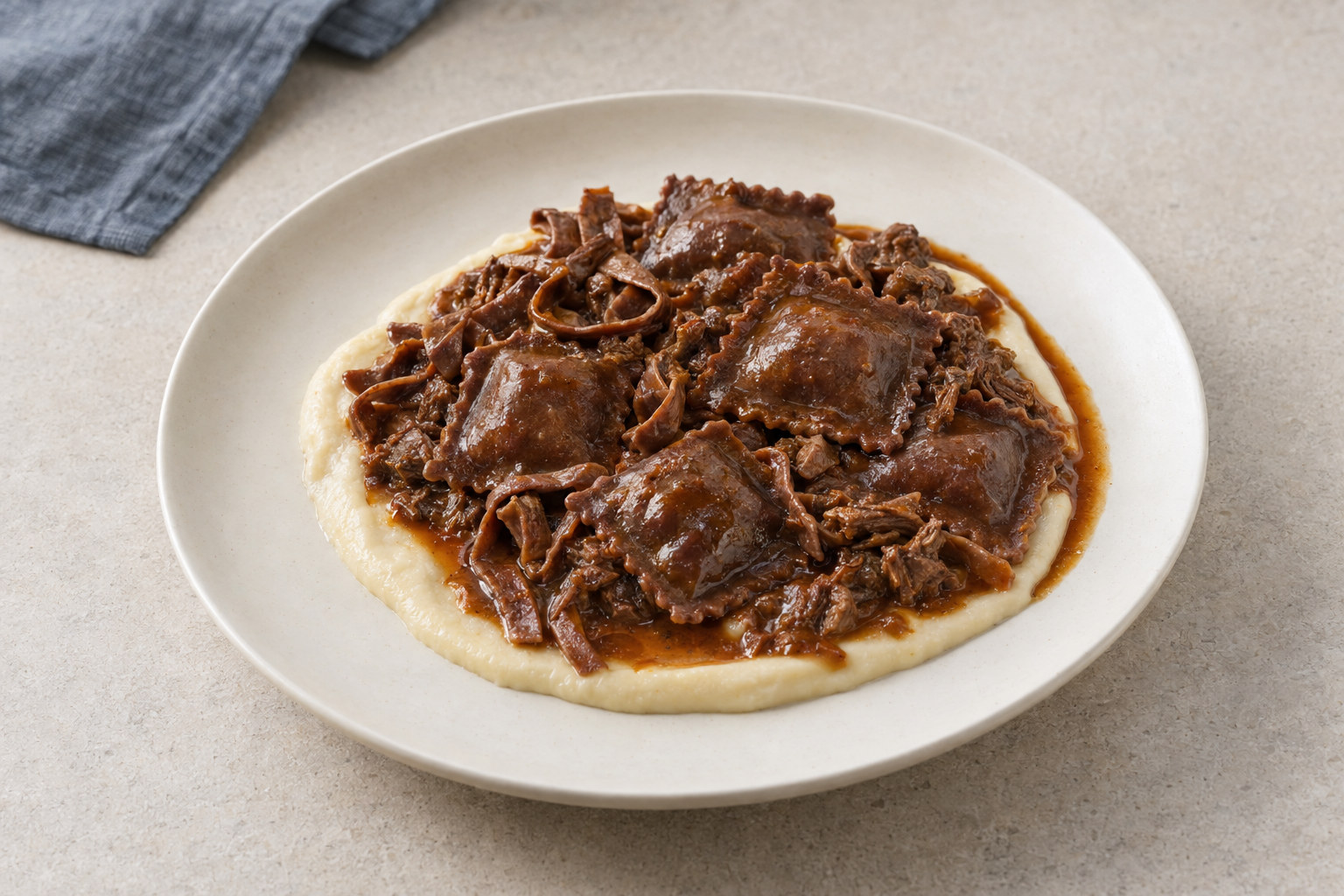
Unsweetened cocoa gives the egg pasta a gentle bitterness that pairs with the wild boar and wine. The buttery parsley root and parsnip purée adds softness and natural sweetness.
Step-by-step method
What you will need
- heavy 20 cm / 3 l saucepan with a lid
- pasta machine or rolling pin, pastry wheel and fine sieve
- 20 × 15 cm metal dish, separate 20 × 15 cm dish for the sauce and 15 × 10 cm dish for leftover filling, cooling bath with sealed ice packs
- 2 wide saucepans, each 5 l, with an internal diameter of at least 26 cm
- 1 tray, 40 × 30 cm, a 1.5 l / 14 cm saucepan for the purée and a 12 cm saucepan for the sauce
- hand blender, 4 hob rings with room for two wide saucepans and two narrow saucepans
- kitchen scales, probe thermometer and separate chopping boards for meat and vegetables
Before we start
Once the meat is tender, we separate the filling and wine sauce and cool them at the same time. We rest the dough while they cool. As we fill the ravioli, we cook the parsley root and parsnip for the purée and reheat and reduce the wine sauce. On the other hob rings, we start heating both covered pans of water for the ravioli. We cook the pasta only when the purée and sauce are ready. While the pasta cooks, we take the wine sauce off the heat and stir in the butter.
Cut and brown the meat
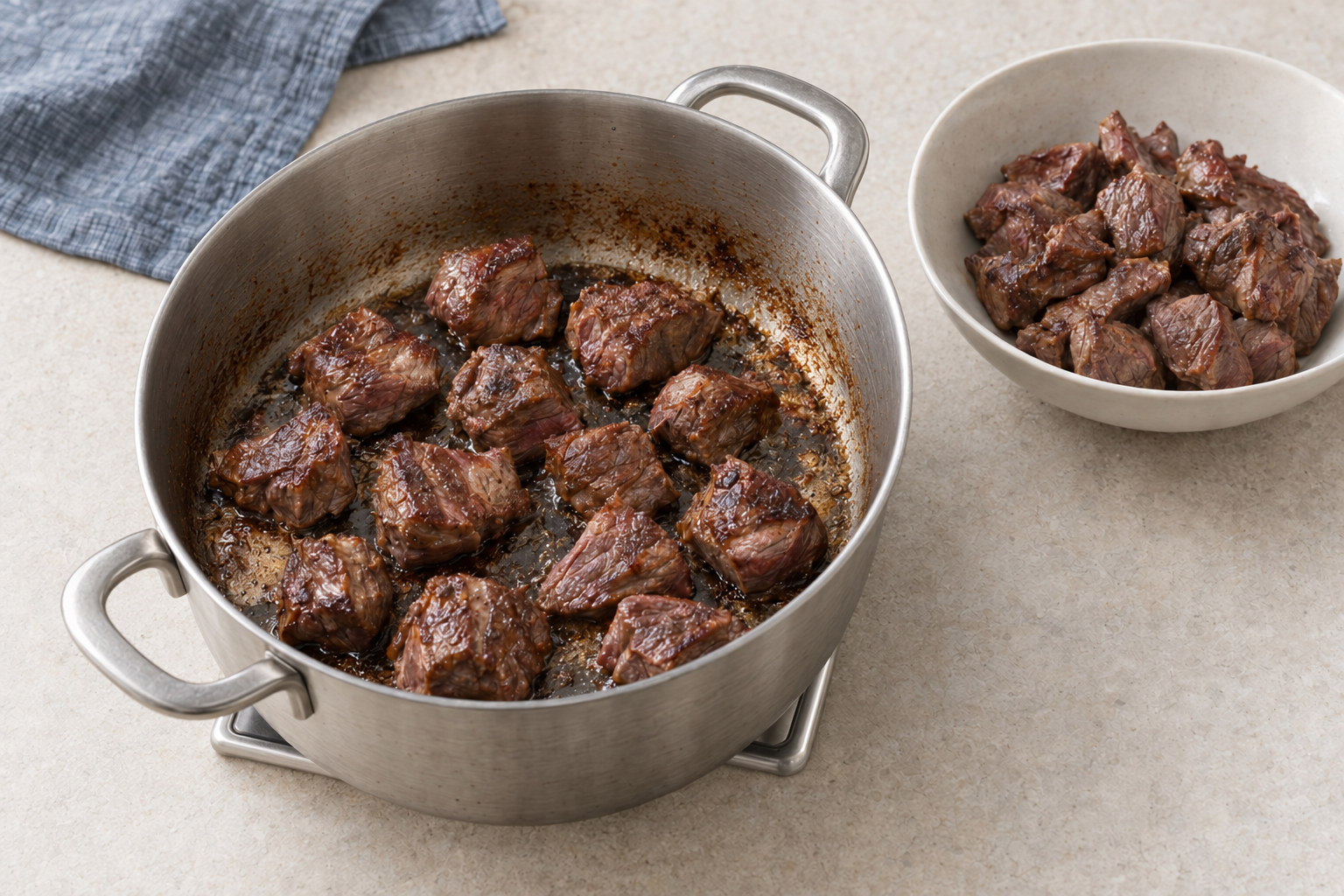
We cut the prepared meat into 3 cm cubes, pat dry and season with most of the measured salt and the pepper. We set aside 1 tsp of oil for the onion, then divide the rest between 2 batches of meat, about 180 g each. We brown each batch for 4–6 minutes over a medium-high heat, transferring the browned meat to a bowl.
The meat browns in a single layer, without water pooling in the pan.
Make the ragù base
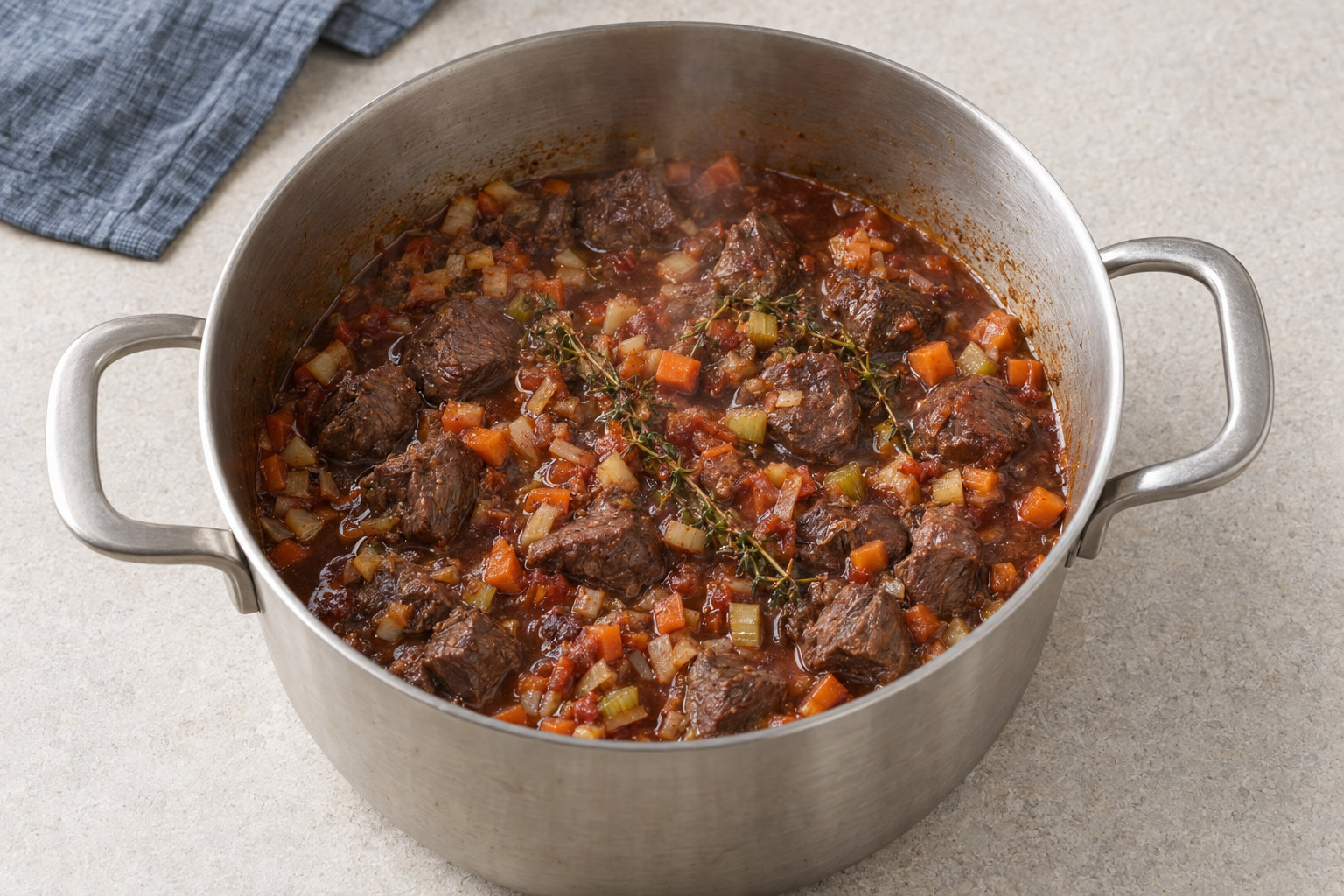
We peel the onion and carrot and wash the celery. We finely chop the onion and finely dice the carrot and celery. We cook the onion in the reserved oil for 7–9 minutes, stirring. We add the carrot, celery, tomato purée and thyme and cook for 3 minutes. We pour in the wine and let it reduce for 3 minutes, then return the meat and its juices and add all the stock.
Slowly braise the meat
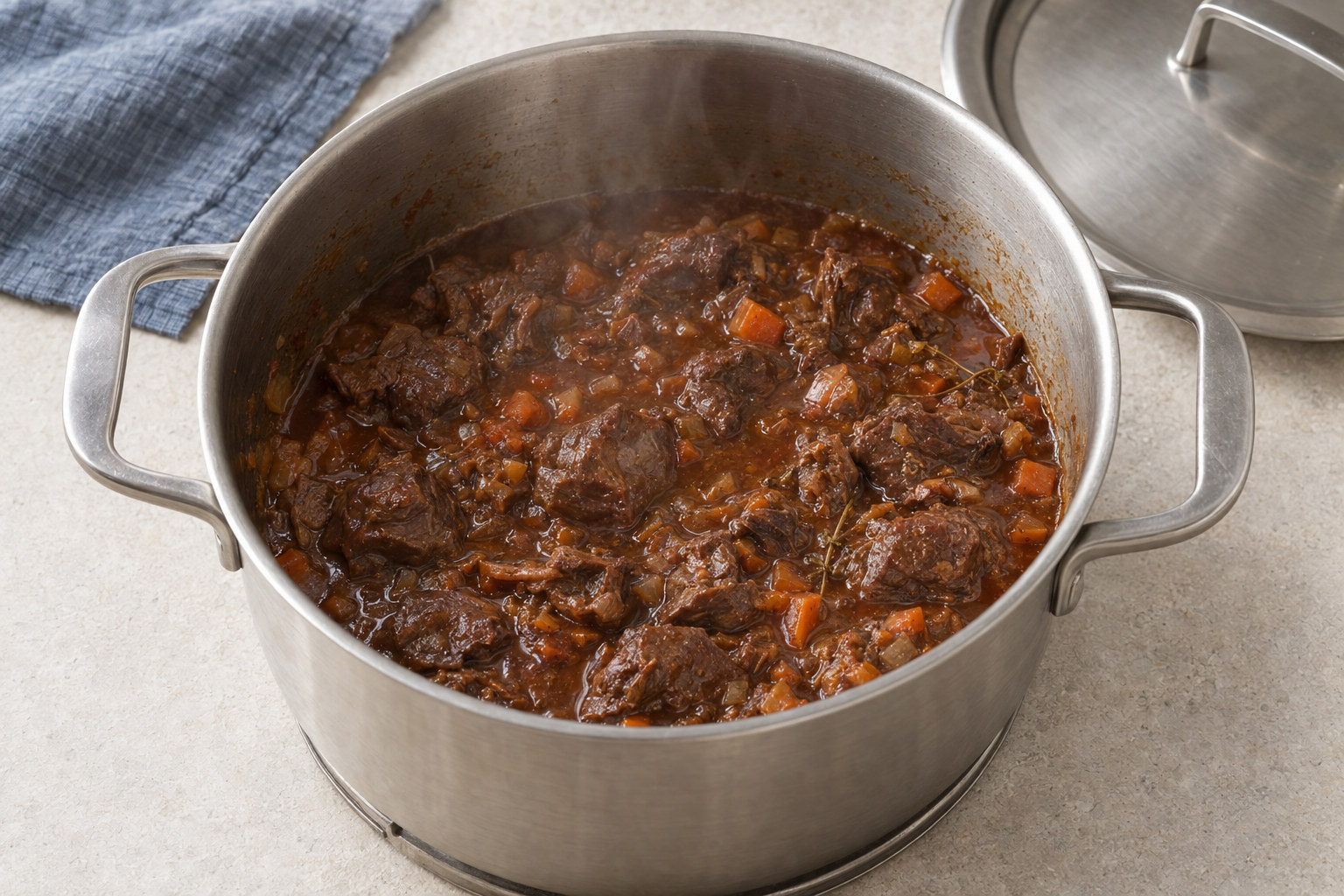
We bring to a very gentle simmer, cover tightly and braise for about 170–220 minutes. Every 35 minutes, we stir and check the bottom of the pan. If too much liquid is evaporating, we add water in 30 ml amounts. We check that the thickest pieces of meat have reached at least 74 °C inside. We also check for tenderness: a cube must pull apart easily into strands with a fork. If the meat is still tough, we continue braising over a low heat.
The liquid bubbles gently; a vigorous boil will not make the meat tender any faster.
Separate the filling and sauce
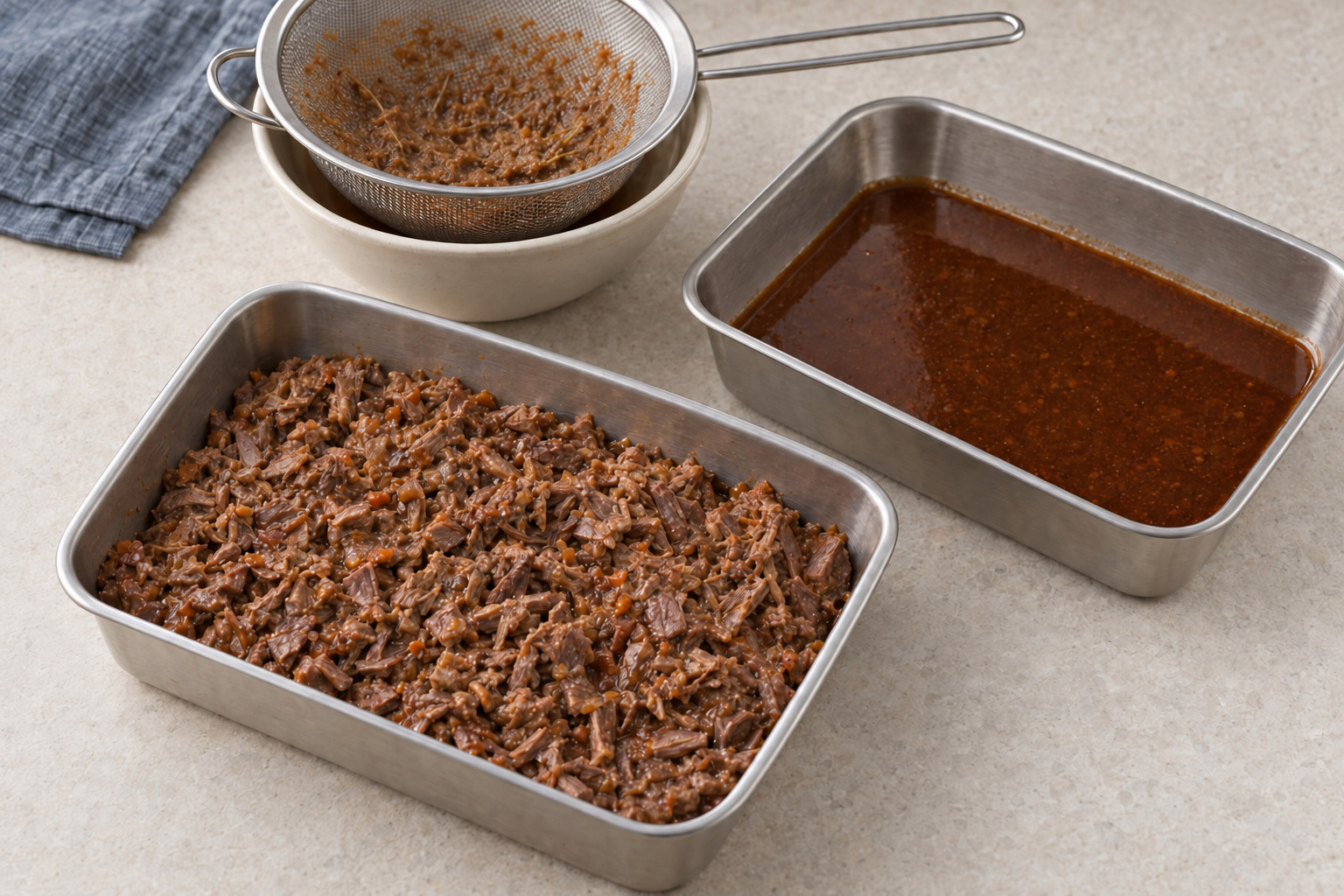
We lift out the meat and chop it into pieces no larger than 3 mm. We remove the thyme stalks. We blend the vegetables with the braising liquid and press through a fine sieve, removing only tough fibres. We mix just enough of this base into the meat to bind the filling without any loose liquid, no more than 50 g. We pour the rest of the base into a separate shallow metal dish for the wine sauce. We cool the sauce alongside the filling, following the method below. We keep it in the fridge at no more than 5 °C and reheat it only once at the end. We taste the filling, season with the remaining salt as needed and spread it in a metal dish in a layer no more than 2 cm deep. We cool it for 30 minutes in a bath of cold water and sealed ice packs, then for 30–90 minutes in a fridge at no more than 5 °C, until the centre also reaches this temperature. We keep the water in the cooling bath below the rim of the dish and replace it as soon as it warms up; it must not get into the food.
Make the cocoa dough
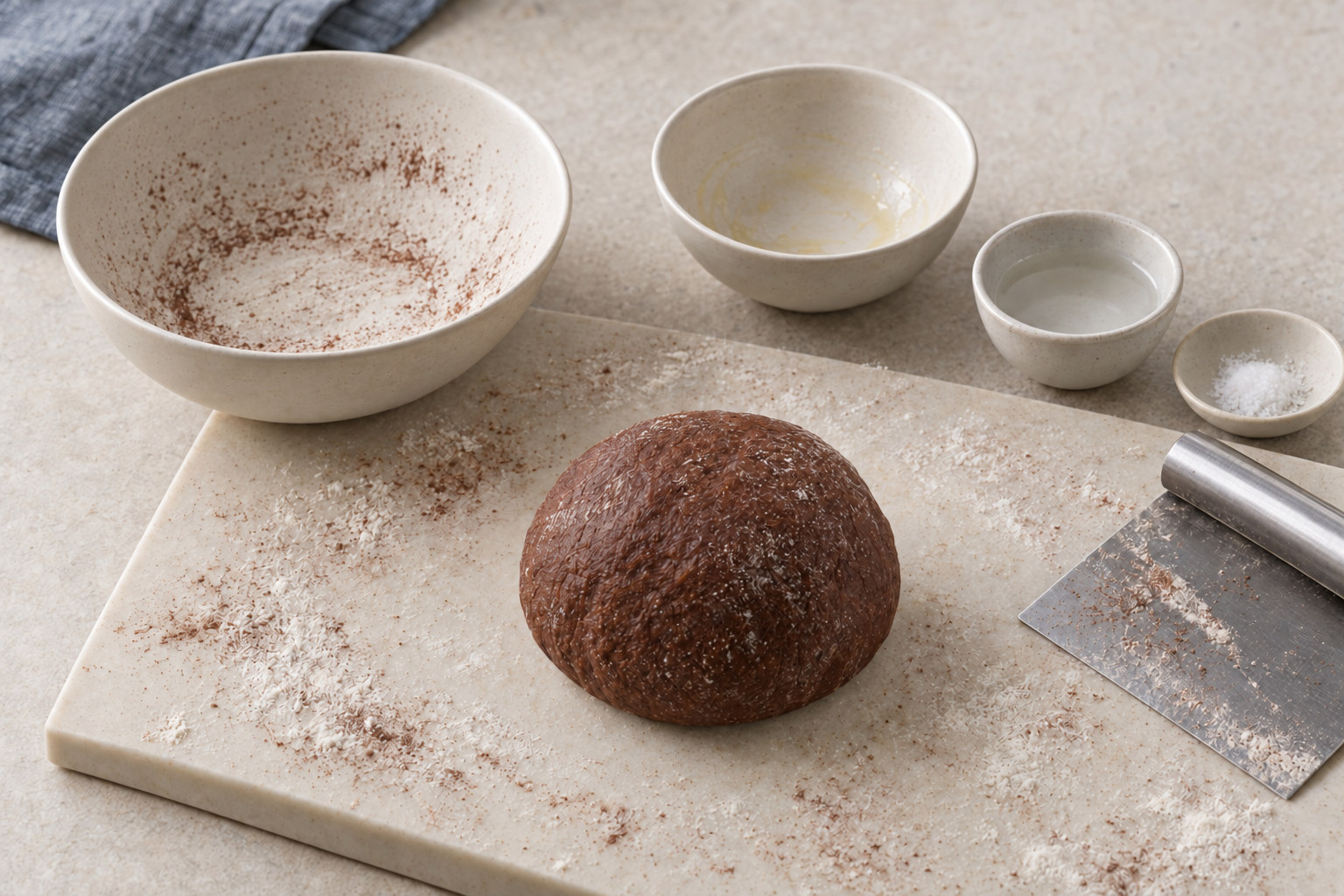
We sift the 00 flour, cocoa and salt for the dough. We mix in the eggs and knead for 8–10 minutes until the dough is smooth and firm. Only as needed, we add the water for the dough drop by drop so it comes together without becoming sticky. We wrap it and leave to rest in the fridge for 30 minutes.
The cocoa is evenly distributed, and the dough neither cracks nor sticks to our hands.
Roll and fill the pasta
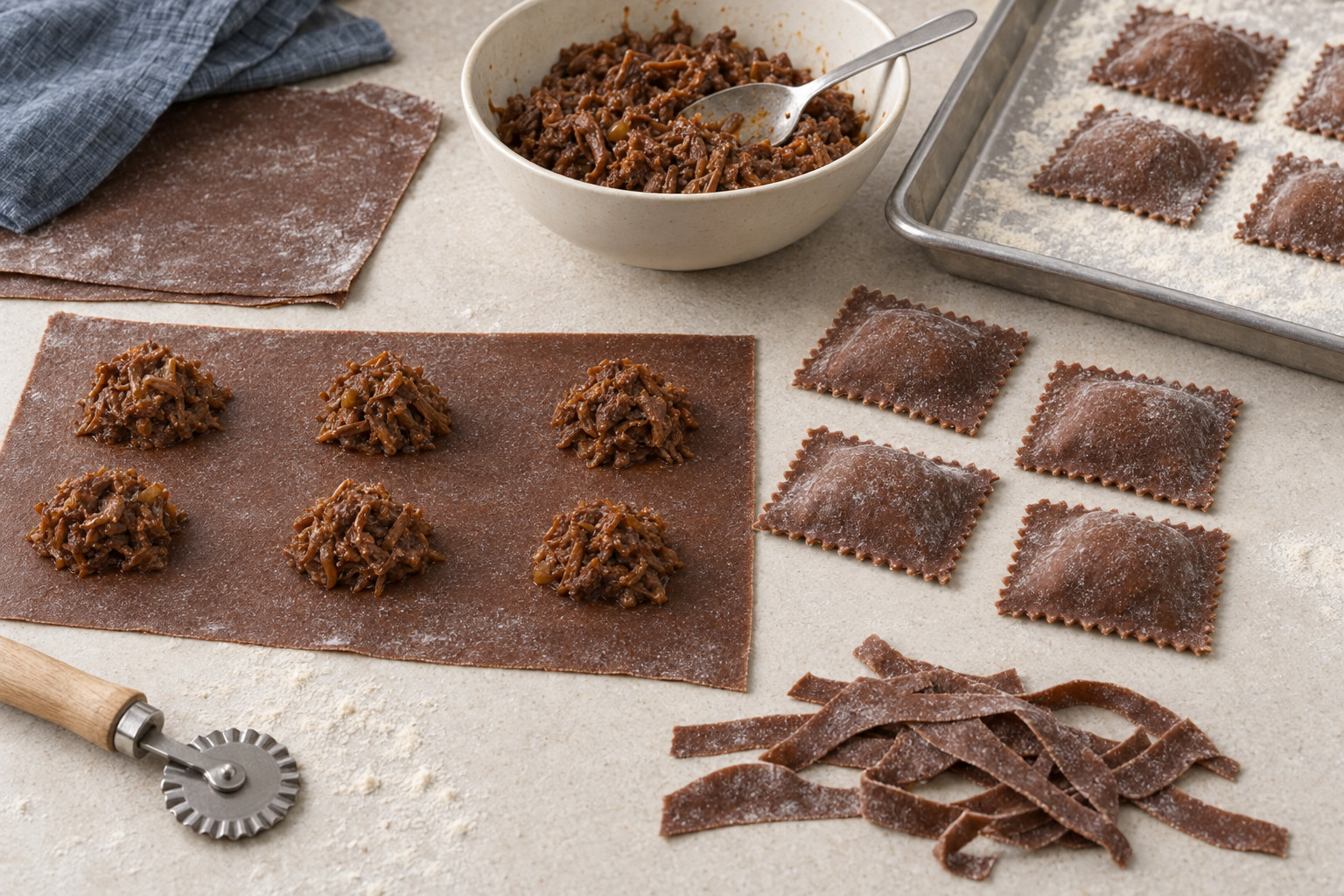
We roll out the dough a little at a time to 0.8–1 mm thick, keeping the rest covered. We make 24 square ravioli measuring 6 × 6 cm, each formed from two layers of dough. We place small mounds of filling on the lower strip with their centres about 7 cm apart, distributing the filling evenly. We leave a clean border at least 8 mm wide around each mound and lightly moisten it with clean water if needed. We cover with the second strip, press out the air and press the seams together. We cut into the stated squares with a pastry wheel. We gather and reroll the trimmings once. We cut any small scraps left over into pasta strips and cook them with the ravioli. We arrange the ravioli in a single layer on floured trays, moving each completed tray straight to the fridge. We keep any remaining filling in a small bowl in the fridge and reheat it once in the sauce at the end.
Make the vegetable purée and wine sauce
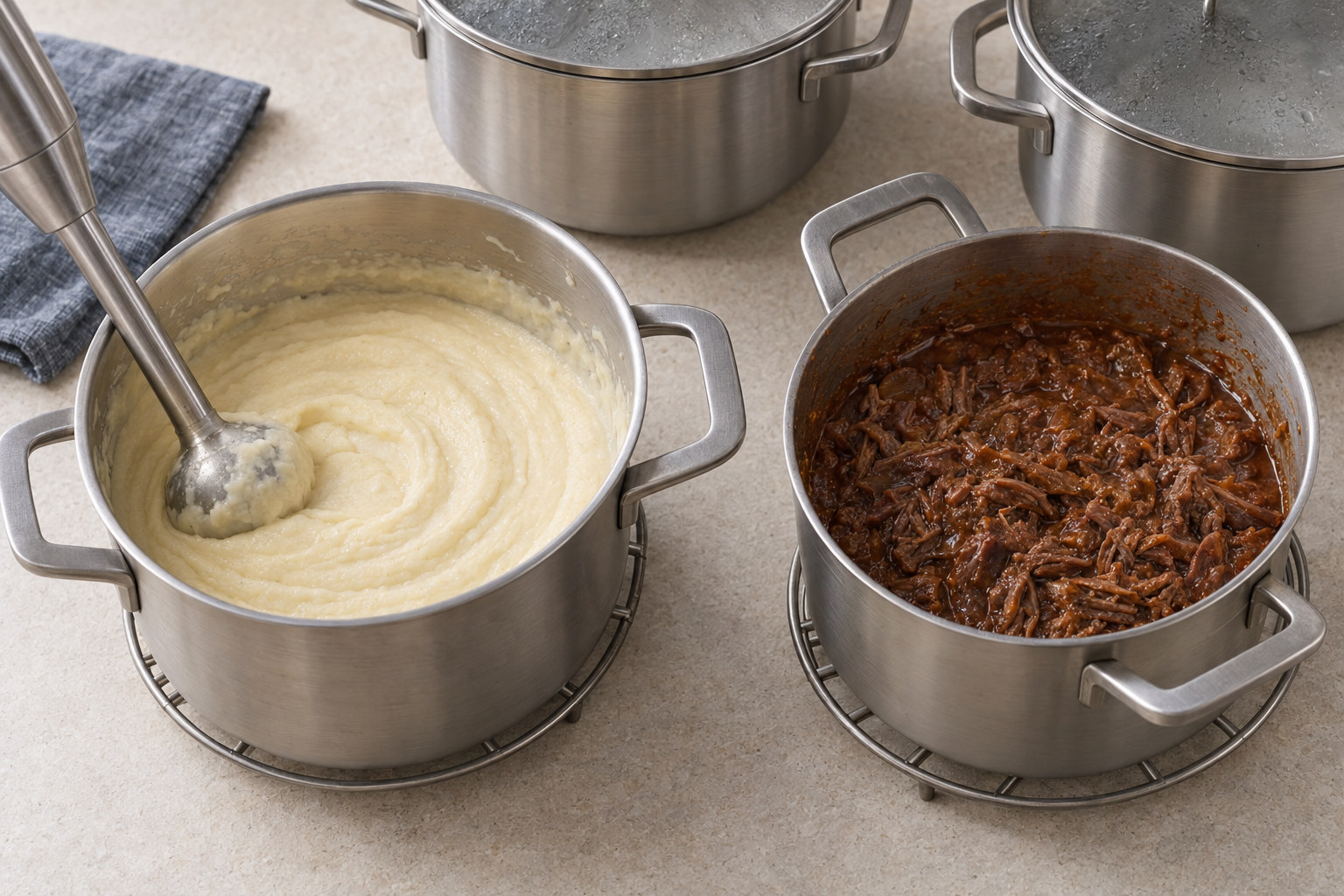
When we start cooking the root vegetables, we pour 3 l of water into each of the two large saucepans. We divide the salt for the ravioli between them, cover and heat on the other hob rings. We peel the parsley root and parsnip and cut into 1 cm cubes. In a saucepan, we bring them to a gentle boil with the milk, the water for the root vegetables and the salt for the purée. We cover and cook for 20–25 minutes until tender, stirring several times. We drain, reserving the liquid. We blend the vegetables with the butter for the purée, returning just enough liquid for the purée to hold on a spoon. Before we put the ravioli in the water, we heat the purée to 80 °C, take it off the heat and keep it covered for no more than 15 minutes. At the same time, on another hob ring, we reheat the cold wine sauce and any leftover filling once to at least 74 °C. We then simmer uncovered for 5–8 minutes as needed to thicken the sauce. We keep it covered and hot over the lowest heat until the ravioli are cooked, for no more than 15 minutes.
The sweet root vegetable purée complements the cocoa and wine; it is not watery.
Cook the ravioli and finish the sauce
We carefully lower 12 ravioli into the boiling salted water in each of the two prepared saucepans. Once the water returns to a gentle boil, we cook for 4–6 minutes, adding the strips made from the trimmings for the last 2–3 minutes. We check that the filling of the largest raviolo has reached at least 74 °C and that the seam is cooked through. We cook for a further 1–2 minutes if needed. We take the wine sauce from the previous step off the heat and stir in the cold butter for the sauce.
A vigorous boil would tear the seams. We measure the temperature in the filling, not just the surrounding pasta.
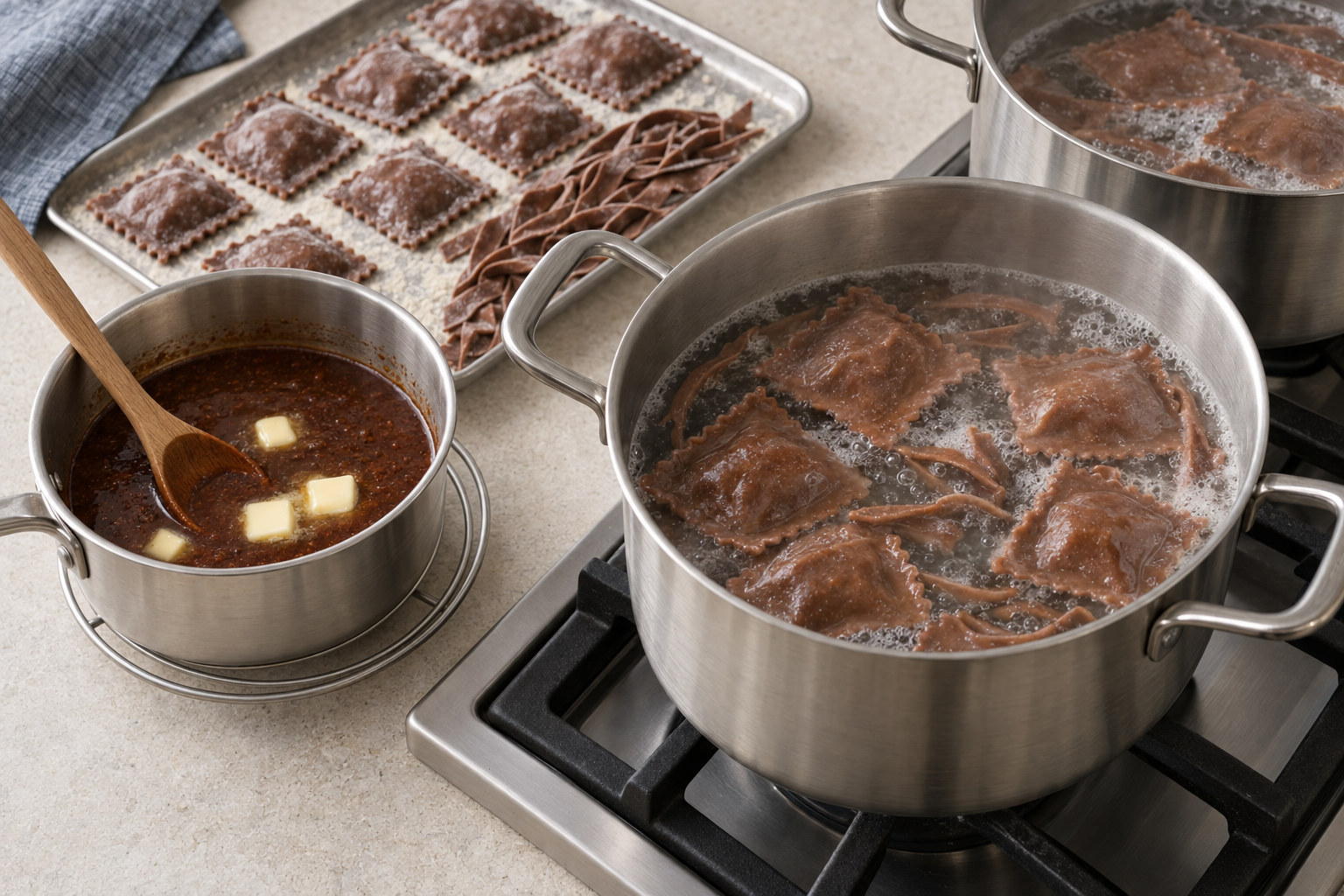
Plate up and serve
We lift out the ravioli and pasta strips with a slotted ladle. We cut the butter for the ravioli into small pieces and add it to the hot pasta. On each plate, we place parsley root and parsnip purée, 12 ravioli and an equal share of pasta strips. We add the wine sauce, including any leftover ragù.
We serve immediately, without leaving the fresh pasta sitting in the water.
Tips from our kitchen
- We fill the ravioli with a cold filling free of loose juices and press out the air before sealing.
- We keep the cocoa dough covered and add the measured water as needed, not all at once.
What to watch out for
- We do not overfill the ravioli. We refrigerate any leftover filling and reheat it in the wine sauce at the end. We cut small scraps of dough into pasta strips.
How we serve it
- We lift out the ravioli and pasta strips with a slotted ladle. We cut the butter for the ravioli into small pieces and add it to the hot pasta. On each plate, we place parsley root and parsnip purée, 12 ravioli and an equal share of pasta strips. We add the wine sauce, including any leftover ragù.
During preparation
- We use a clean probe to check the temperature in the thickest pieces of meat and, at the end, inside the ravioli filling. We keep raw meat, its chopping board and used utensils separate from cooked food.
Our inspiration
Cocoa and game also meet in the Tuscan dish cinghiale in dolceforte, where wild boar can be paired with dark chocolate, raisins, pine nuts and vinegar. Our ravioli take a gently bitter note from this idea: we work unsweetened cocoa straight into the dough.
Similar recipes
Recipe for 4 people
Step-by-step method
Before we start
Once the meat is tender, we separate the filling and wine sauce and cool them at the same time. We rest the dough while they cool. As we fill the ravioli, we cook the parsley root and parsnip for the purée and reheat and reduce the wine sauce. On the other hob rings, we start heating both covered pans of water for the ravioli. We cook the pasta only when the purée and sauce are ready. While the pasta cooks, we take the wine sauce off the heat and stir in the butter.
Cut and brown the meat
We cut the prepared meat into 3 cm cubes, pat dry and season with most of the measured salt and the pepper. We set aside 1 tsp of oil for the onion, then divide the rest between 4 batches of meat, about 180 g each. We brown each batch for 4–6 minutes over a medium-high heat, transferring the browned meat to a bowl.
The meat browns in a single layer, without water pooling in the pan.
Make the ragù base
We peel the onions and carrot and wash the celery. We finely chop the onions and finely dice the carrot and celery. We cook the onions in the reserved oil for 7–9 minutes, stirring. We add the carrot, celery, tomato purée and thyme and cook for 3 minutes. We pour in the wine and let it reduce for 3 minutes, then return the meat and its juices and add all the stock.
Slowly braise the meat
We bring to a very gentle simmer, cover tightly and braise for about 170–220 minutes. Every 35 minutes, we stir and check the bottom of the pan. If too much liquid is evaporating, we add water in 30 ml amounts. We check that the thickest pieces of meat have reached at least 74 °C inside. We also check for tenderness: a cube must pull apart easily into strands with a fork. If the meat is still tough, we continue braising over a low heat.
The liquid bubbles gently; a vigorous boil will not make the meat tender any faster.
Separate the filling and sauce
We lift out the meat and chop it into pieces no larger than 3 mm. We remove the thyme stalks. We blend the vegetables with the braising liquid and press through a fine sieve, removing only tough fibres. We mix just enough of this base into the meat to bind the filling without any loose liquid, no more than 90 g. We pour the rest of the base into a separate shallow metal dish for the wine sauce. We cool the sauce alongside the filling, following the method below. We keep it in the fridge at no more than 5 °C and reheat it only once at the end. We taste the filling, season with the remaining salt as needed and spread it in a metal dish in a layer no more than 2 cm deep. We cool it for 30 minutes in a bath of cold water and sealed ice packs, then for 30–90 minutes in a fridge at no more than 5 °C, until the centre also reaches this temperature. We keep the water in the cooling bath below the rim of the dish and replace it as soon as it warms up; it must not get into the food.
Make the cocoa dough
We sift the 00 flour, cocoa and salt for the dough. We mix in the eggs and knead for 8–10 minutes until the dough is smooth and firm. Only as needed, we add the water for the dough drop by drop so it comes together without becoming sticky. We wrap it and leave to rest in the fridge for 30 minutes.
The cocoa is evenly distributed, and the dough neither cracks nor sticks to our hands.
Roll and fill the pasta
We roll out the dough a little at a time to 0.8–1 mm thick, keeping the rest covered. We make 48 square ravioli measuring 6 × 6 cm, each formed from two layers of dough. We place small mounds of filling on the lower strip with their centres about 7 cm apart, distributing the filling evenly. We leave a clean border at least 8 mm wide around each mound and lightly moisten it with clean water if needed. We cover with the second strip, press out the air and press the seams together. We cut into the stated squares with a pastry wheel. We gather and reroll the trimmings once. We cut any small scraps left over into pasta strips and cook them with the ravioli. We arrange the ravioli in a single layer on floured trays, moving each completed tray straight to the fridge. We keep any remaining filling in a small bowl in the fridge and reheat it once in the sauce at the end.
Make the vegetable purée and wine sauce
When we start cooking the root vegetables, we pour 4.5 l of water into each of the two large saucepans. We divide the salt for the ravioli between them, cover and heat on the other hob rings. We peel the parsley root and parsnip and cut into 1 cm cubes. In a saucepan, we bring them to a gentle boil with the milk, the water for the root vegetables and the salt for the purée. We cover and cook for 20–25 minutes until tender, stirring several times. We drain, reserving the liquid. We blend the vegetables with the butter for the purée, returning just enough liquid for the purée to hold on a spoon. Before we put the ravioli in the water, we heat the purée to 80 °C, take it off the heat and keep it covered for no more than 15 minutes. At the same time, on another hob ring, we reheat the cold wine sauce and any leftover filling once to at least 74 °C. We then simmer uncovered for 5–8 minutes as needed to thicken the sauce. We keep it covered and hot over the lowest heat until the ravioli are cooked, for no more than 15 minutes.
The sweet root vegetable purée complements the cocoa and wine; it is not watery.
Cook the ravioli and finish the sauce
We carefully lower 24 ravioli into the boiling salted water in each of the two prepared saucepans. Once the water returns to a gentle boil, we cook for 4–6 minutes, adding the strips made from the trimmings for the last 2–3 minutes. We check that the filling of the largest raviolo has reached at least 74 °C and that the seam is cooked through. We cook for a further 1–2 minutes if needed. We take the wine sauce from the previous step off the heat and stir in the cold butter for the sauce.
A vigorous boil would tear the seams. We measure the temperature in the filling, not just the surrounding pasta.
Plate up and serve
We lift out the ravioli and pasta strips with a slotted ladle. We cut the butter for the ravioli into small pieces and add it to the hot pasta. On each plate, we place parsley root and parsnip purée, 12 ravioli and an equal share of pasta strips. We add the wine sauce, including any leftover ragù.
We serve immediately, without leaving the fresh pasta sitting in the water.