
Czech Republic · Czech Republic
Wild boar ragù with prunes and potato dumplings
We slowly braise the wild boar in red wine with thyme and sweet prunes until tender. Alongside the dark gravy, we serve small potato dumplings, which we pan-fry in butter after boiling. We set aside a leisurely day for this lunch, giving ourselves time for both the slow braise and homemade side dish.
The time includes 165–215 minutes of braising, cooking and chilling the potatoes at the same time, shaping the dumplings by hand and boiling them in two batches. We allow about another 15 minutes to pan-fry and transfer them.
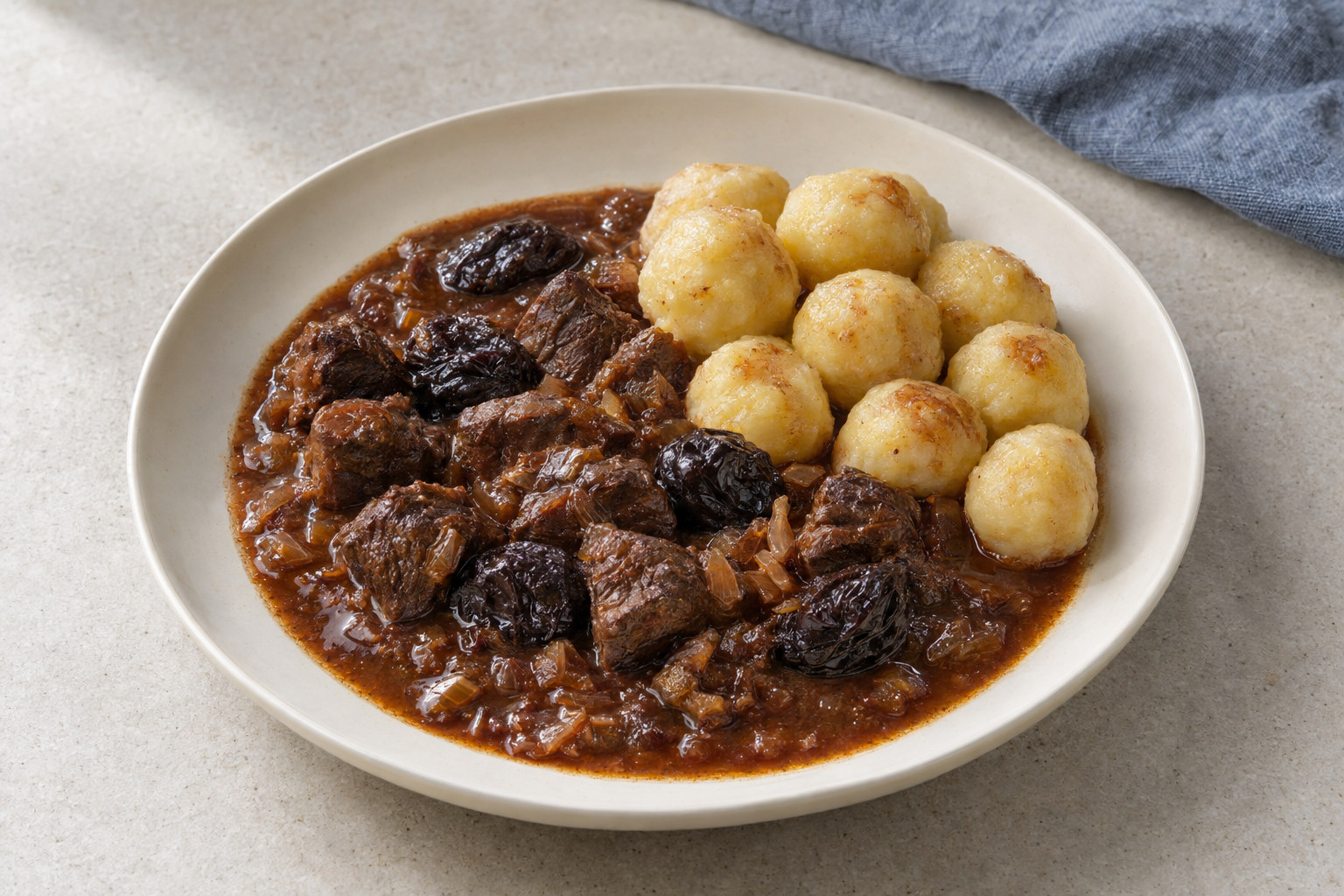
Wine and a little red wine vinegar balance the sweetness of the prunes; dumplings pan-fried in butter soften the bold wild boar ragù.
Step-by-step method
What you will need
- heavy 20 cm / 3-litre pot with lid
- 2-litre pot for the potatoes and a wide 4-litre pot for the dumplings
- potato ricer, wide tray and slotted spoon
- shallow covered 25 × 25 cm oven dish and oven
- 2 hob rings
- kitchen scales, probe thermometer and separate boards for meat and vegetables
- 28 cm non-stick frying pan with a flat base at least 24 cm wide
Before we start
We cook the potatoes during the first hour of braising and cool them in a thin layer. We mix the dough only once the meat is tender; the ragù can wait while we finish the side dish. We boil the dumplings first, then pan-fry them in two batches. We keep the first fried batch briefly in a warm oven.
Cut and brown the meat
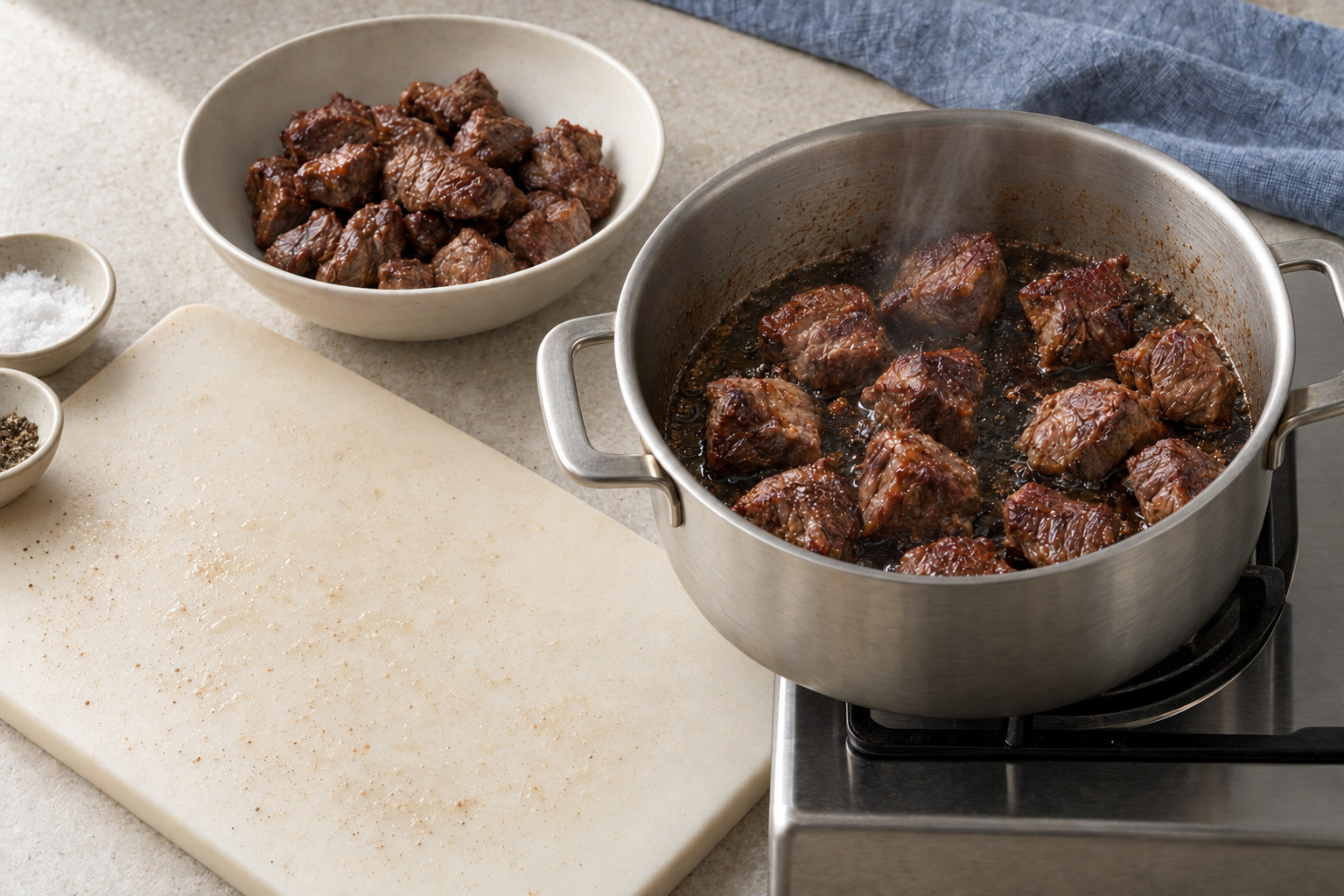
We cut the trimmed meat into 3 cm cubes and pat it dry. We season with most of the salt for the meat and pepper. We set aside 1 teaspoon of the oil for the onion. We divide the rest between 2 batches of about 225 g meat. We brown each batch for 4–6 minutes over medium-high heat and transfer the browned meat to a bowl.
We brown the meat in one layer so water does not pool in the pot.
Prepare the wine base
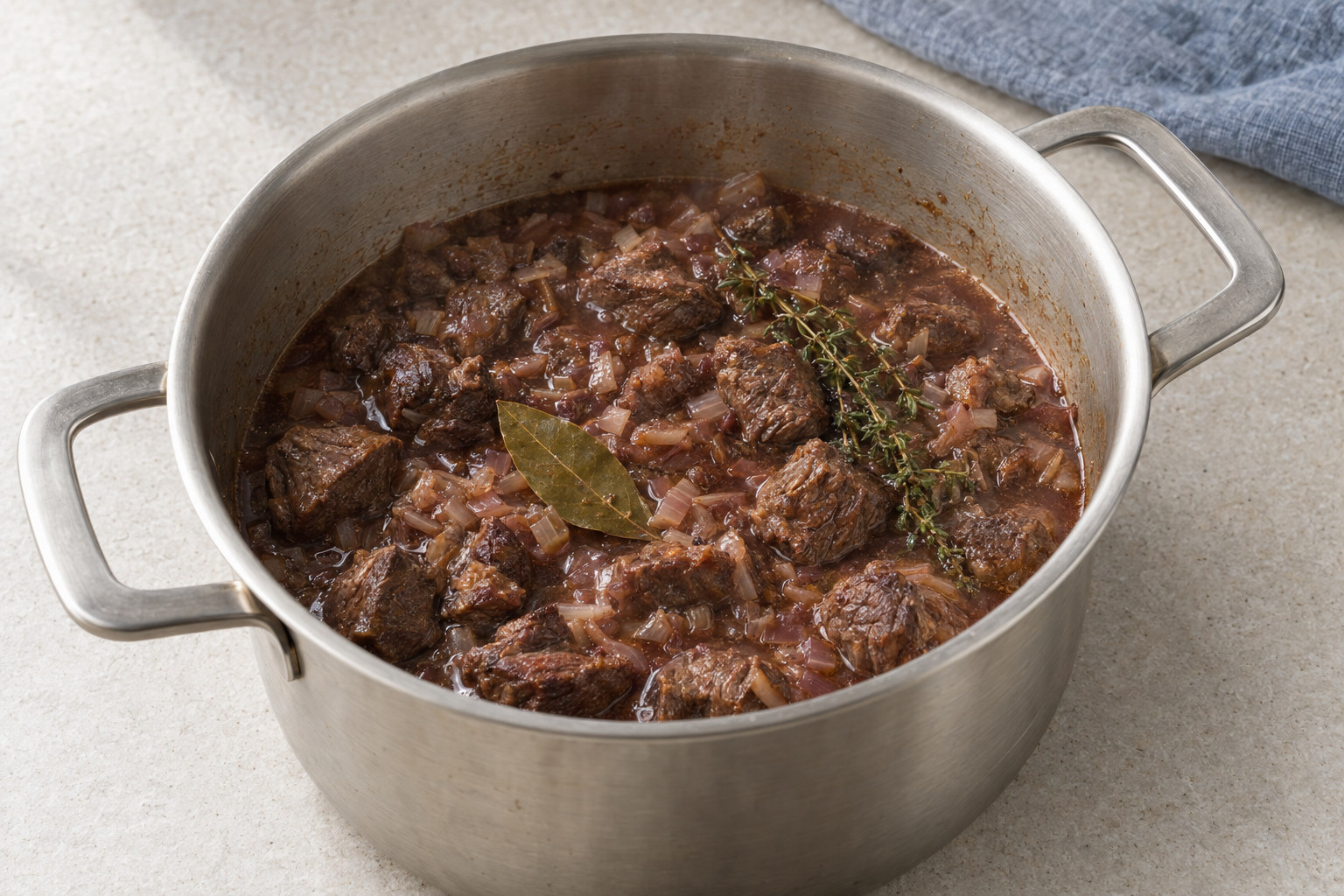
We peel and finely chop the onion. We stir and cook it in the reserved oil for 7–9 minutes. We pour in the wine and let it reduce for 3 minutes. We add the bay leaf and thyme, return the meat with its juices and pour in all the stock.
Braise the meat until tender
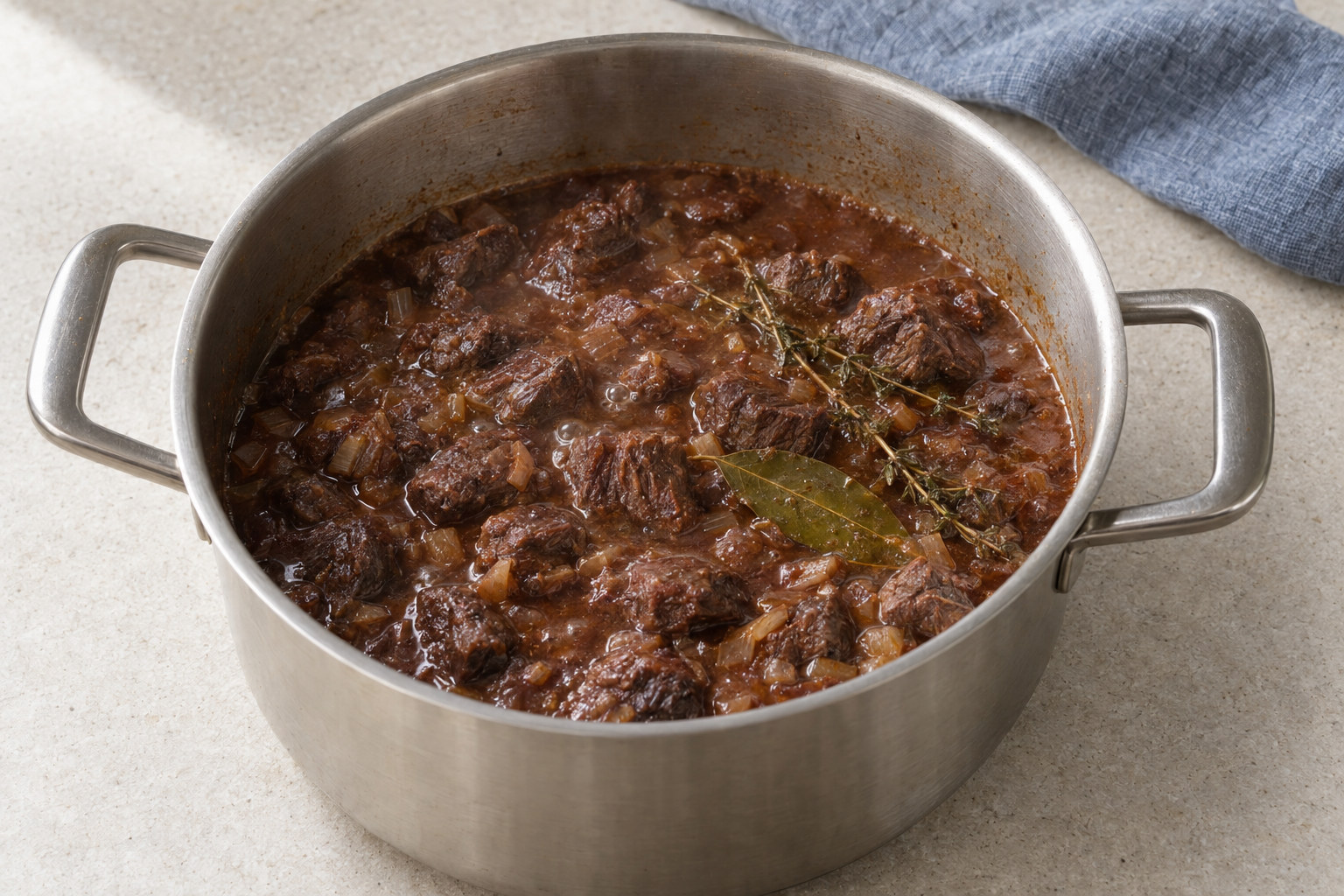
We bring the liquid to a very gentle simmer, cover tightly and braise for about 165–215 minutes. Every 35 minutes, we stir and check the bottom of the pot. If the gravy is drying out, we add water 30 ml at a time. We check that the thickest pieces have reached at least 74 °C. We also test with a fork that a cube pulls apart easily into fibres. If the meat is still tough, we continue braising.
The liquid should bubble only gently. A vigorous boil will not tenderise the meat faster.
Cook and chill the potatoes
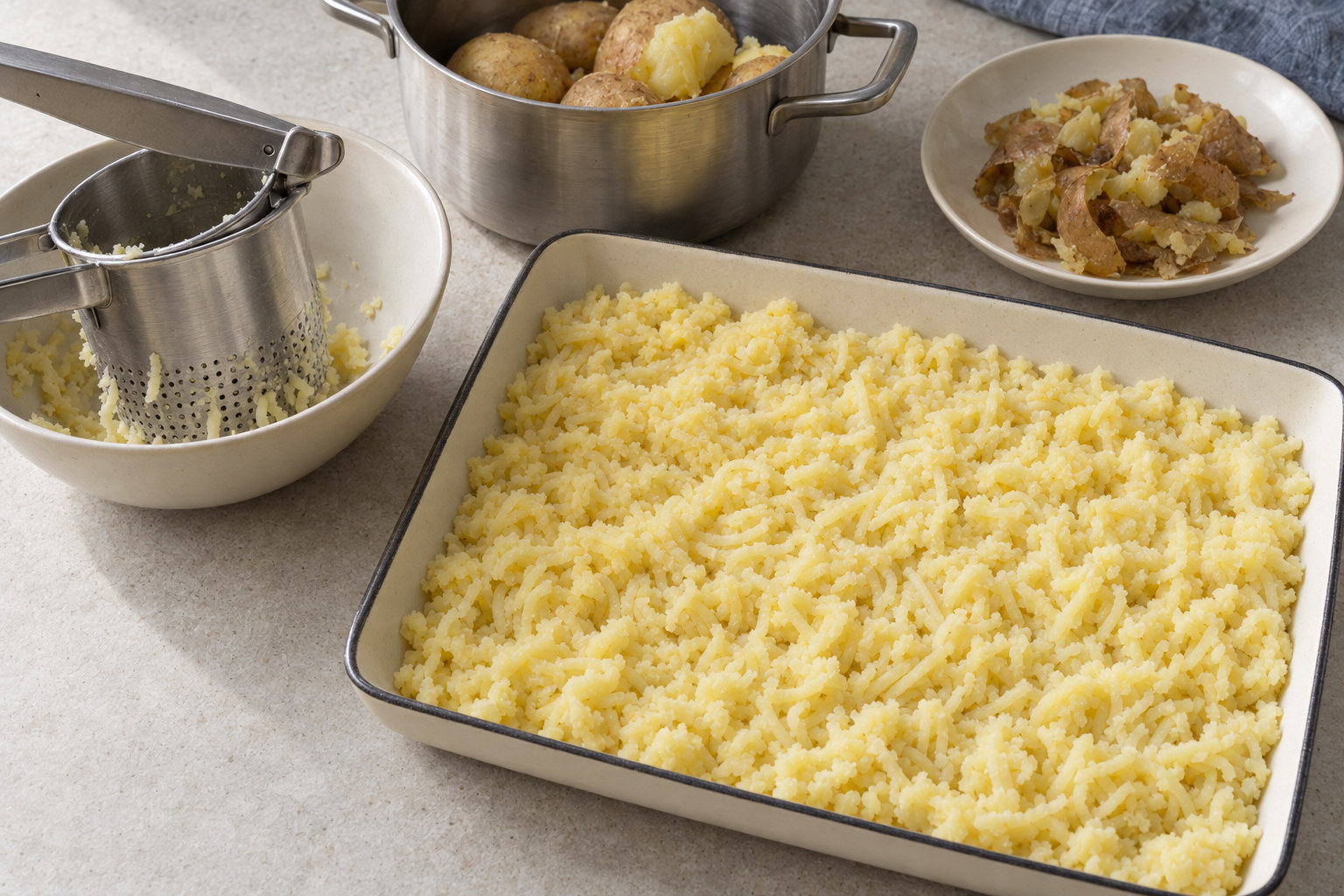
We wash the potatoes thoroughly, put them in a pot and cover them with water. We cook them in their skins for 25–35 minutes until tender. We drain, carefully peel and rice them onto a wide tray in a layer no deeper than 2 cm. We let the steam escape for 20–30 minutes, then put them in the fridge at no more than 5 °C until completely cold, usually 45–75 minutes.
Cold floury potatoes make a dough that keeps its shape when formed.
Finish the ragù and shape the dumplings
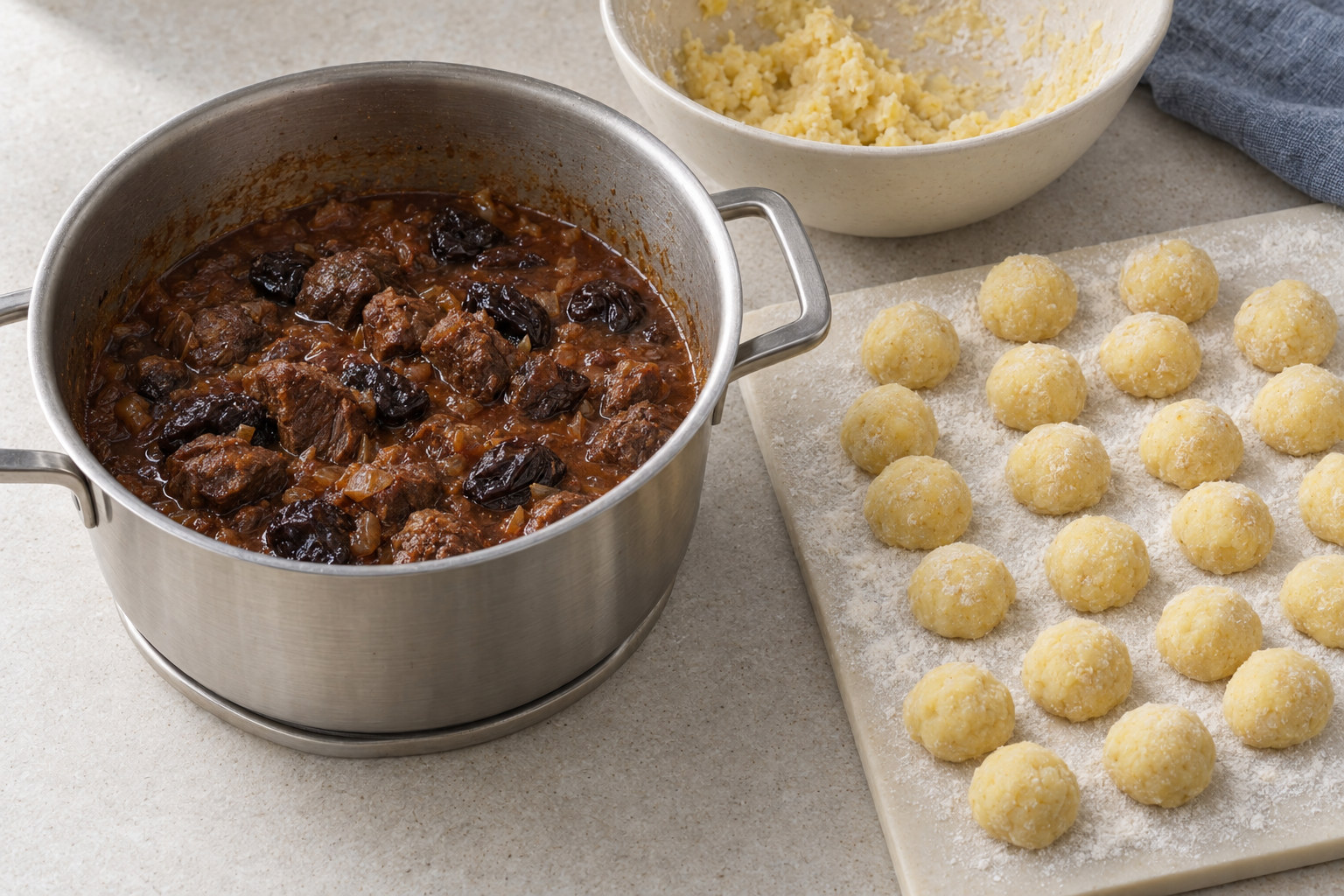
We add the halved prunes and vinegar to the tender meat and simmer gently for 10 minutes. We remove the bay leaf and thyme stalks. We season with as much of the remaining salt as needed and keep the ragù covered and hot over the lowest heat. We quickly bring the cold potatoes together with the coarse flour, semolina, egg and salt to make a dough. Using the flour for dusting, we divide all the dough into 24 equal pieces. We roll them into dumplings about 3–3.5 cm across.
We do not knead the dough for long or leave it standing after mixing.
Boil and pan-fry the dumplings
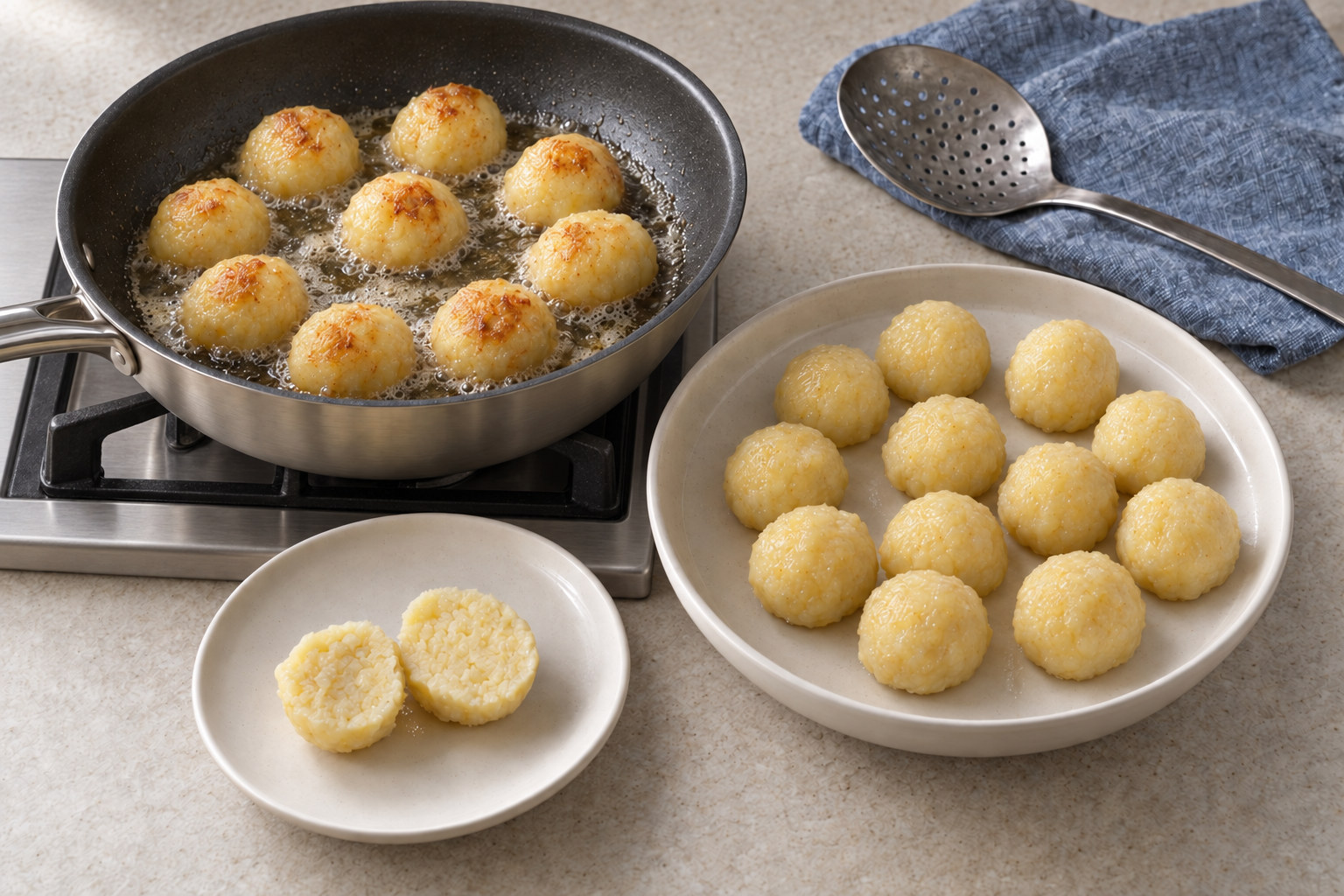
In the wide pot, we bring the water and dumpling salt to a gentle simmer. We cook two batches of 12 dumplings, each for about 8–12 minutes from when the gentle simmer resumes. We cut one open to check that no raw floury layer remains inside. We lift the dumplings out with a slotted spoon, drain them well and spread them in one layer on a wide tray. After both batches are cooked, we take the pot of water off the heat. On the free hob ring, we heat the non-stick pan. We fry the first half of the dumplings in one layer in half the butter over a medium heat for about 4–6 minutes. We turn them carefully until golden patches form. We do not let the butter darken. We keep the fried dumplings in the oven at 90 °C. We fry the remaining half in the rest of the butter in the same way. Meanwhile, we keep the ragù hot on the second hob ring.
Serve with the dumplings
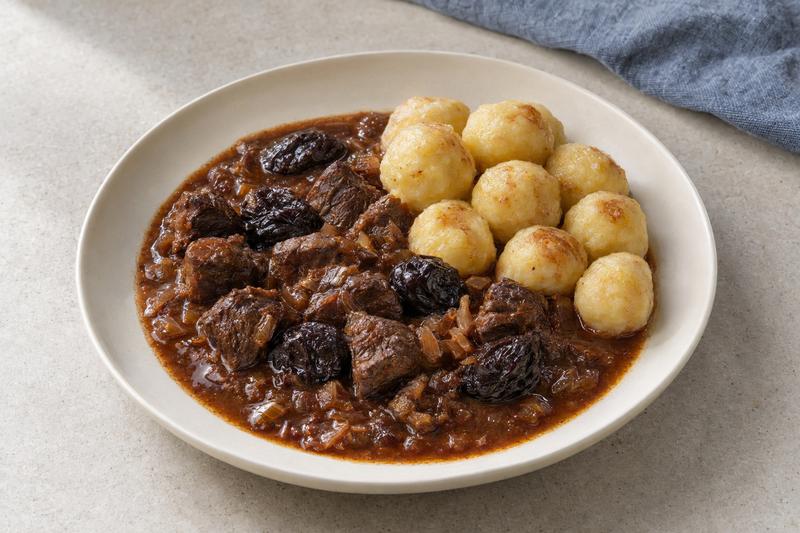
We put 12 dumplings and an equal share of meat, prunes and sauce on each plate. We serve as soon as the second batch of dumplings is fried.
Tips from our kitchen
- We work quickly with the cold floury potatoes. We cook the shaped dumplings straight away.
- The prunes sweeten the sauce. We add the red wine vinegar towards the end to freshen its flavour.
What to watch out for
- We work the potato dough quickly and do not knead it for long. Before lifting out a batch, we cut one dumpling open to check that no raw floury layer remains inside.
How we serve it
- We put 12 dumplings and an equal share of meat, prunes and sauce on each plate. We serve as soon as the second batch of dumplings is fried.
During preparation
- We measure the temperature with a clean probe in the thickest pieces. We keep raw meat, its board and used utensils separate from the finished meal.
Our inspiration
Potato dumplings and Italian gnocchi share one rule: we bring the dough together only briefly. Kneading it for too long can make the cooked dumplings firmer, which suits the tender meat less well. For our ragù, we want a side dish that is soft inside and lightly browned on the outside in the buttery pan.
Similar recipes
Recipe for 4 people
Step-by-step method
Before we start
We cook the potatoes during the first hour of braising and cool them in a thin layer. We mix the dough only once the meat is tender; the ragù can wait while we finish the side dish. We boil the dumplings first, then pan-fry them in two batches. We keep the first fried batch briefly in a warm oven.
Cut and brown the meat
We cut the trimmed meat into 3 cm cubes and pat it dry. We season with most of the salt for the meat and pepper. We set aside 1 teaspoon of the oil for the onion. We divide the rest between 4 batches of about 225 g meat. We brown each batch for 4–6 minutes over medium-high heat and transfer the browned meat to a bowl.
We brown the meat in one layer so water does not pool in the pot.
Prepare the wine base
We peel and finely chop the onions. We stir and cook them in the reserved oil for 7–9 minutes. We pour in the wine and let it reduce for 3 minutes. We add the bay leaves and thyme, return the meat with its juices and pour in all the stock.
Braise the meat until tender
We bring the liquid to a very gentle simmer, cover tightly and braise for about 165–215 minutes. Every 35 minutes, we stir and check the bottom of the pot. If the gravy is drying out, we add water 30 ml at a time. We check that the thickest pieces have reached at least 74 °C. We also test with a fork that a cube pulls apart easily into fibres. If the meat is still tough, we continue braising.
The liquid should bubble only gently. A vigorous boil will not tenderise the meat faster.
Cook and chill the potatoes
We wash the potatoes thoroughly, put them in a pot and cover them with water. We cook them in their skins for 25–35 minutes until tender. We drain, carefully peel and rice them onto a wide tray in a layer no deeper than 2 cm. We let the steam escape for 20–30 minutes, then put them in the fridge at no more than 5 °C until completely cold, usually 45–75 minutes.
Cold floury potatoes make a dough that keeps its shape when formed.
Finish the ragù and shape the dumplings
We add the halved prunes and vinegar to the tender meat and simmer gently for 10 minutes. We remove the bay leaves and thyme stalks. We season with as much of the remaining salt as needed and keep the ragù covered and hot over the lowest heat. We quickly bring the cold potatoes together with the coarse flour, semolina, eggs and salt to make a dough. Using the flour for dusting, we divide all the dough into 48 equal pieces. We roll them into dumplings about 3–3.5 cm across.
We do not knead the dough for long or leave it standing after mixing.
Boil and pan-fry the dumplings
In the wide pot, we bring the water and dumpling salt to a gentle simmer. We cook two batches of 24 dumplings, each for about 8–12 minutes from when the gentle simmer resumes. We cut one open to check that no raw floury layer remains inside. We lift the dumplings out with a slotted spoon, drain them well and spread them in one layer on a wide tray. After both batches are cooked, we take the pot of water off the heat. On the free hob ring, we heat the non-stick pan. We fry the first half of the dumplings in one layer in half the butter over a medium heat for about 4–6 minutes. We turn them carefully until golden patches form. We do not let the butter darken. We keep the fried dumplings in the oven at 90 °C. We fry the remaining half in the rest of the butter in the same way. Meanwhile, we keep the ragù hot on the second hob ring.
Serve with the dumplings
We put 12 dumplings and an equal share of meat, prunes and sauce on each plate. We serve as soon as the second batch of dumplings is fried.