
Central Europe · Central Europe
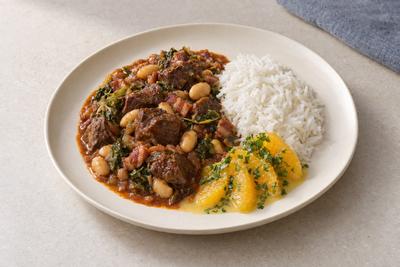
Paprika-braised wild boar with rice and roasted peppers
Sweet ground paprika scents the onion gravy, while roasted red peppers add soft, sweet strips. With slow-braised wild boar, garlic and caraway, we make a hearty lunch and serve it with rice. We let the pot simmer gently for several hours until the meat pulls apart easily with a fork.
Braising usually takes 160–215 minutes. We roast the peppers alongside it and cook the rice only before serving.
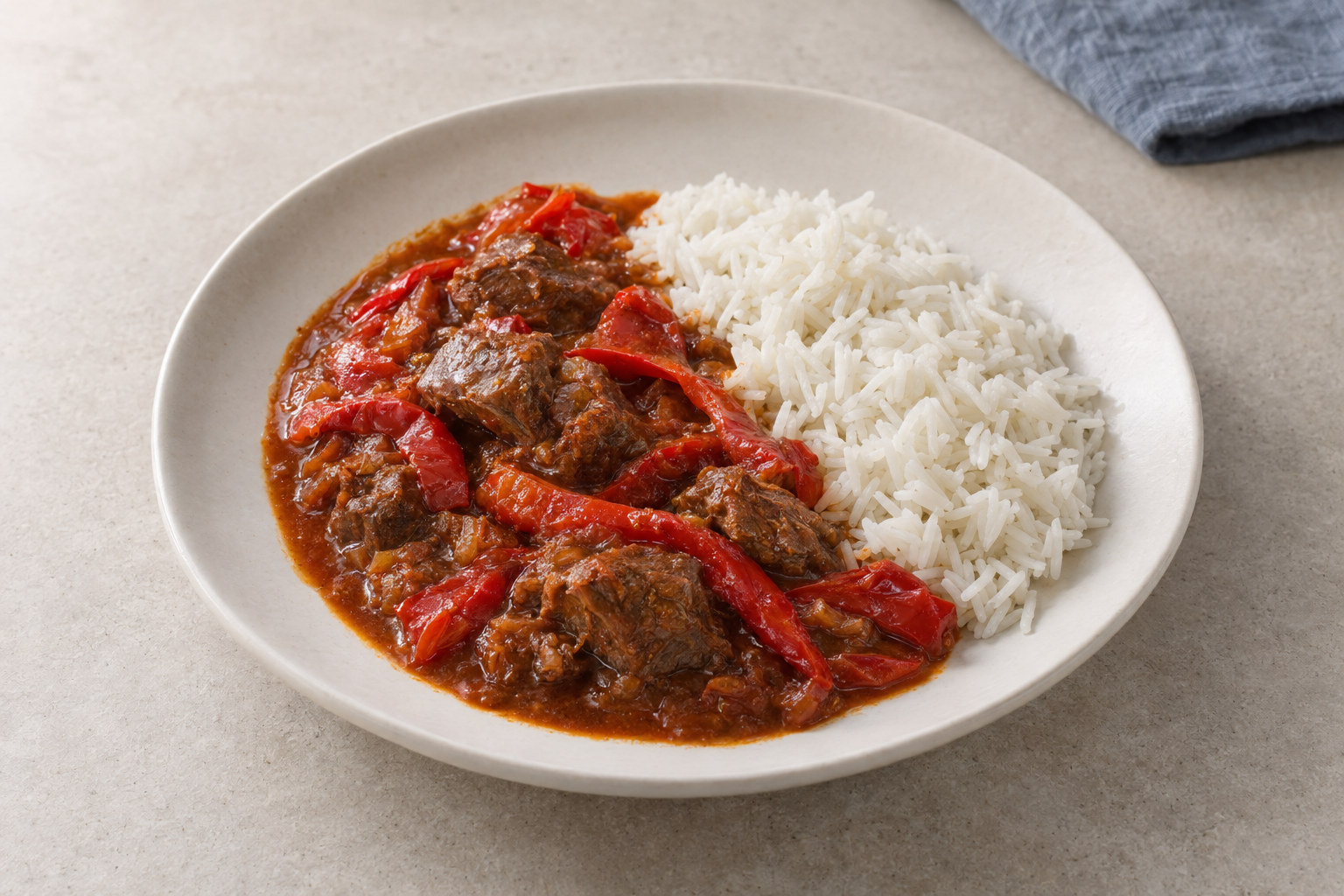
Sweet paprika, garlic and caraway infuse the onion gravy; the roasted red peppers stay tender and distinctly sweet.
Step-by-step method
What you will need
- heavy 20 cm / 3-litre pot with lid
- 30 × 30 cm baking tray, oven and covered bowl
- 1.5-litre pot for rice
- 2 hob rings
- kitchen scales, probe thermometer and separate boards for meat and vegetables
Before we start
We start roasting the peppers after about 120 minutes of braising. Once peeled, we add them only when the meat is tender. We cook the rice in the final half-hour, when the ragù is almost ready.
Cut and brown the meat
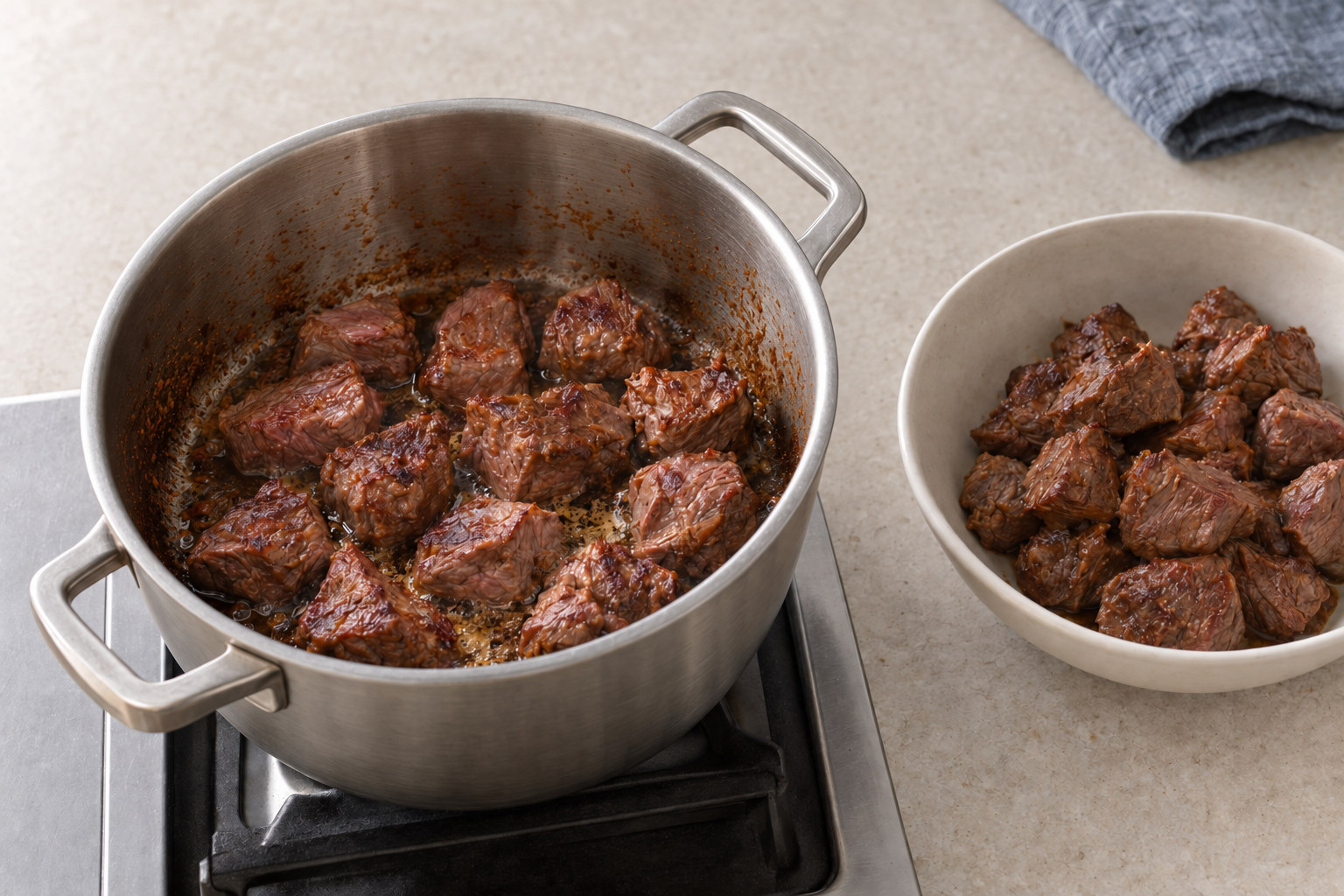
We cut the trimmed meat into 3 cm cubes and pat it dry. We season with most of the salt for the meat and pepper. We set aside 1 teaspoon of the oil for the onion. We divide the rest between 2 batches of about 225 g meat. We brown each batch for 4–6 minutes over medium-high heat and transfer the browned meat to a bowl.
We brown the meat in one layer so water does not pool in the pot.
Make the paprika base
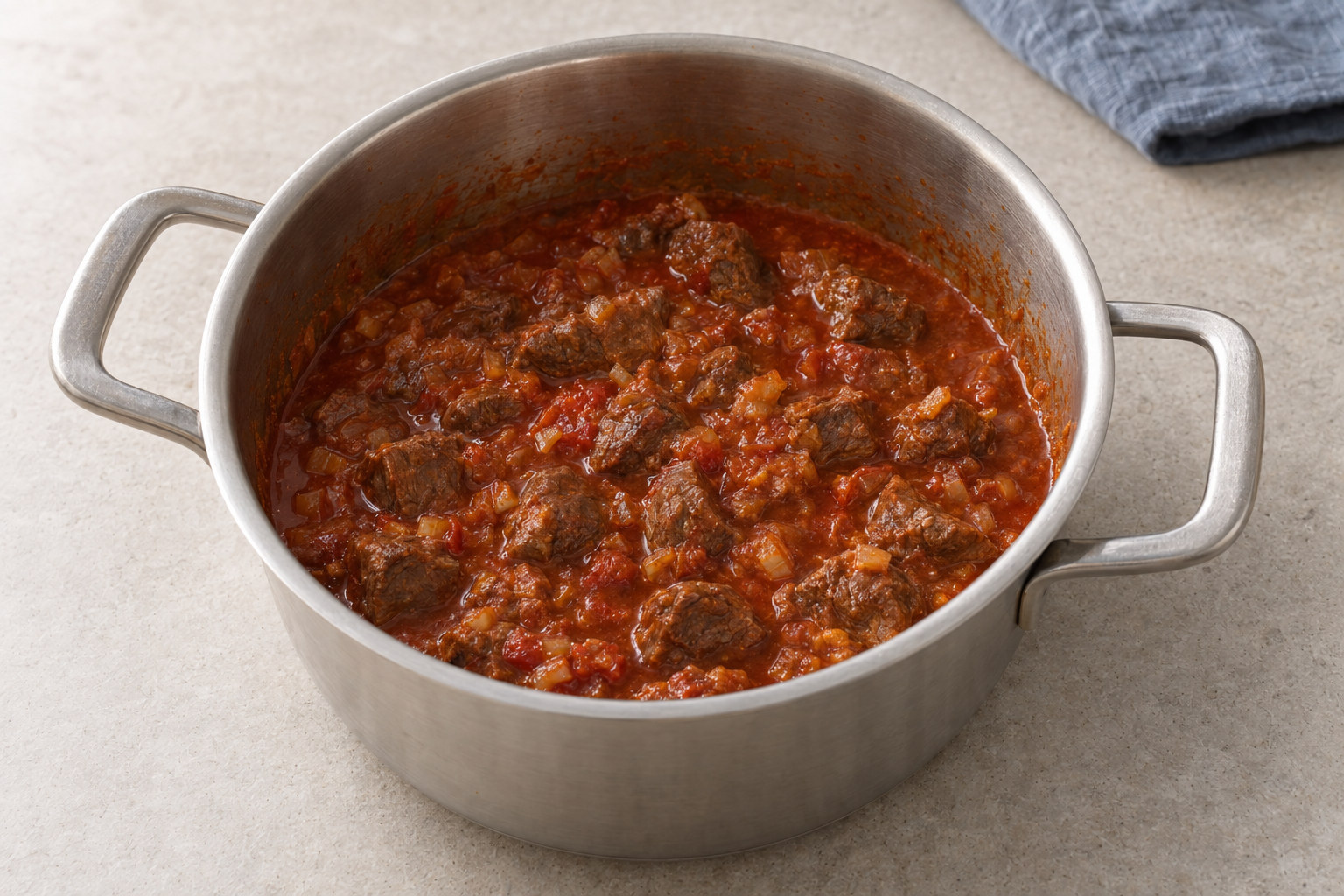
We peel and finely chop the onion and garlic. We fry the onion, stirring in the reserved oil for 7–9 minutes. We add the finely chopped garlic, caraway and tomato purée and fry for 1 minute. We take the pot off the hob, stir in the ground paprika and immediately pour in all the stock. We return the meat and its juices.
The paprika disperses in the stock without turning bitter.
Braise the meat until tender
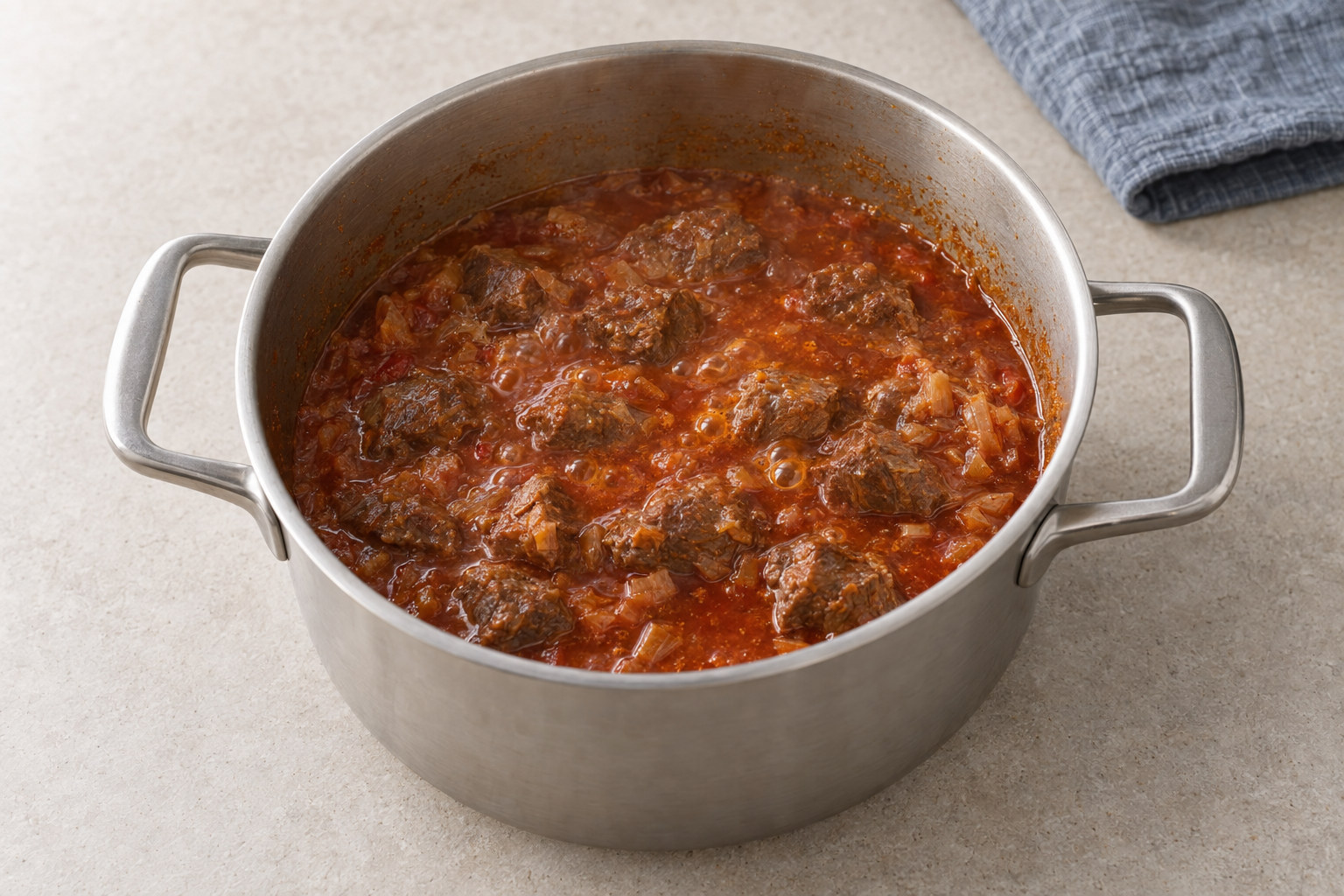
We bring to a very gentle simmer, cover tightly and braise for about 160–215 minutes. Every 35 minutes we stir and check the bottom. If the gravy is drying out, we add water 30 ml at a time. We check that the thickest pieces reach at least 74 °C. With a fork, we also check that a cube pulls apart into fibres easily. If the meat is still tough, we keep braising.
The liquid should bubble only gently. A vigorous boil will not tenderise the meat faster.
Roast and peel the peppers
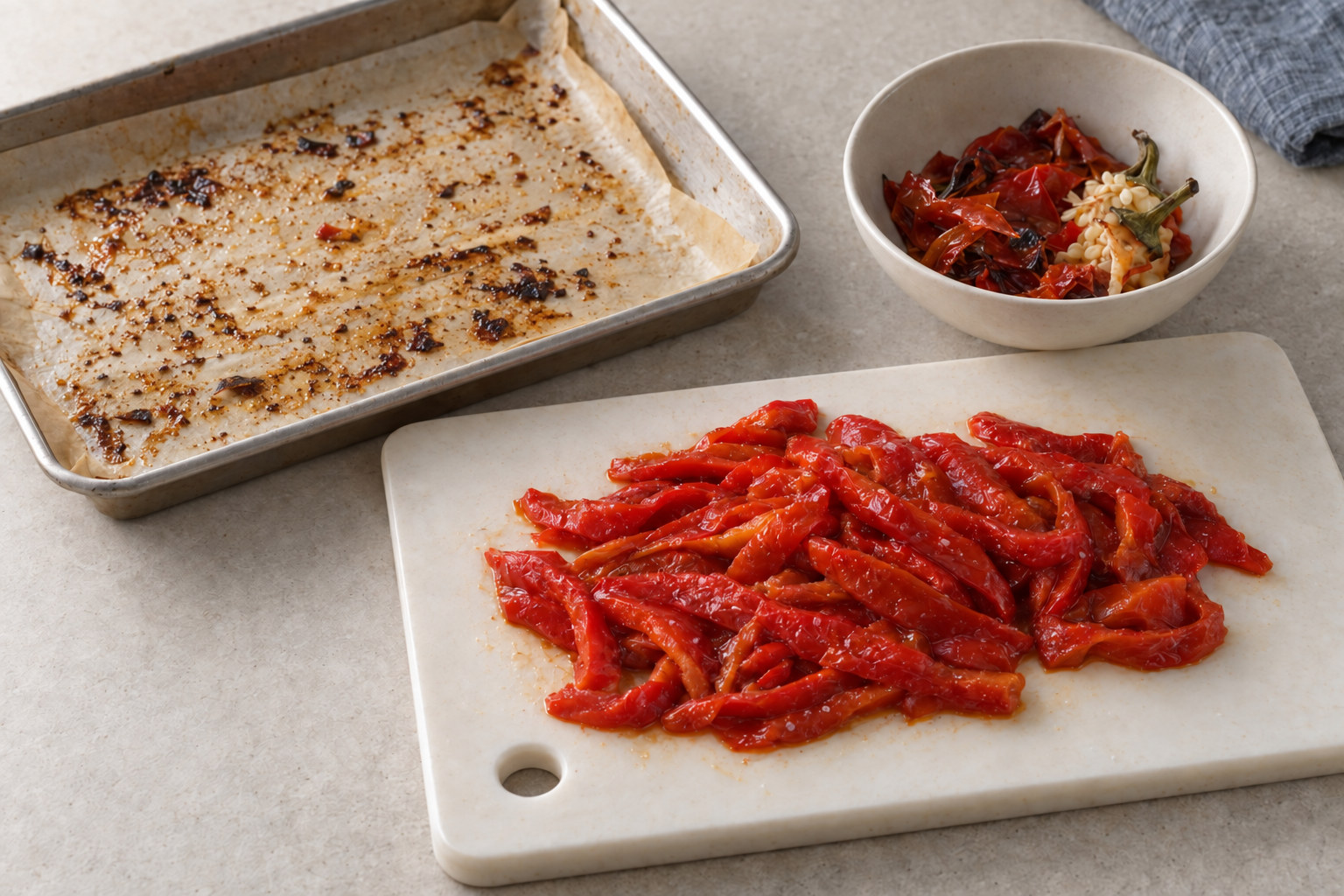
We pat the washed whole red peppers dry, brush them with the oil for the peppers and roast at 220 °C for 25–35 minutes. We turn them once. When the skins blister and darken in places, we transfer the peppers to a covered bowl for 10 minutes. We peel them and remove the cores and seeds. We cut the flesh into wide strips and toss with the salt for the peppers.
The flesh should be soft and sweet, not dried out.
Cook the rice
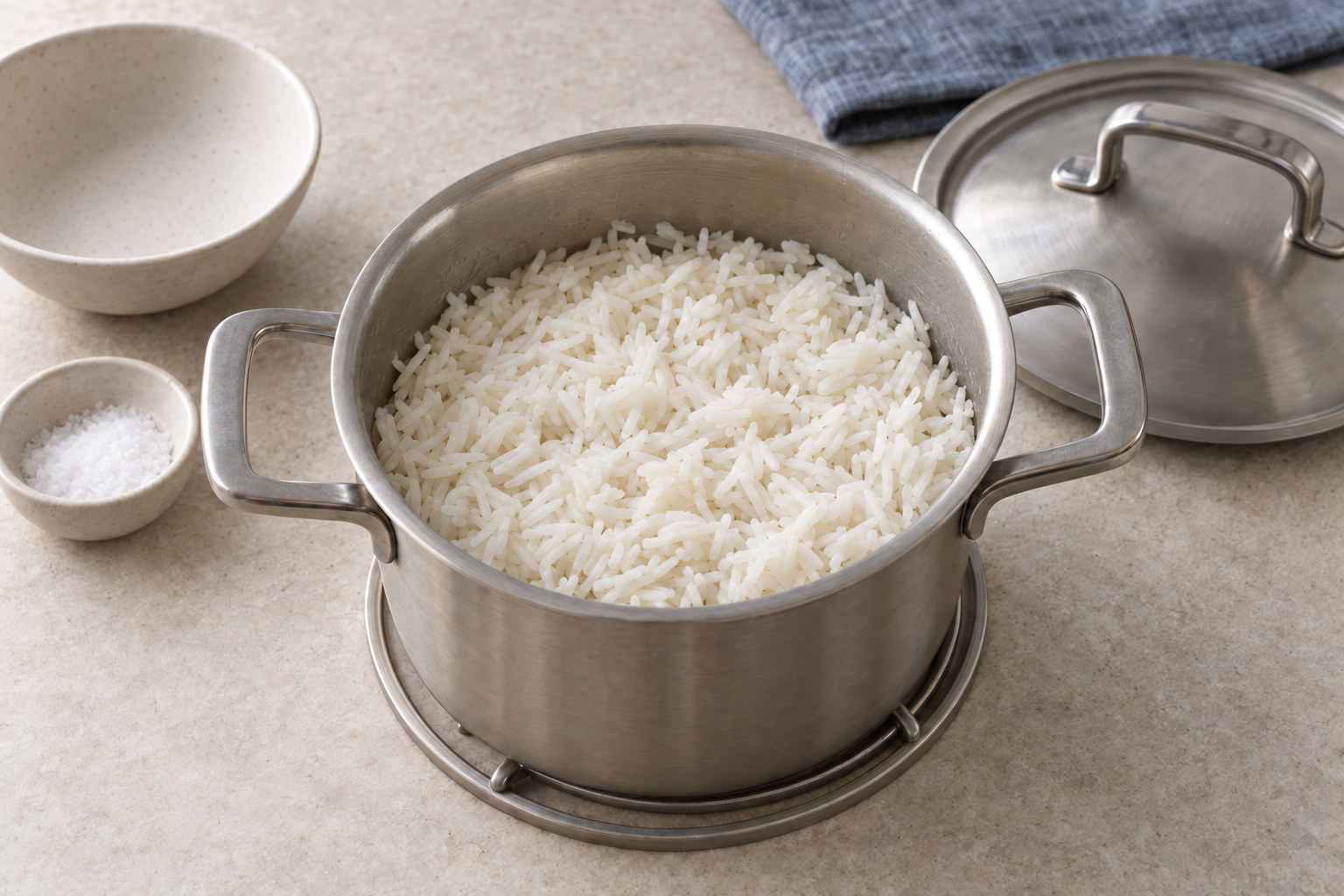
We rinse the rice in a sieve and let it drain thoroughly. We bring it to a boil in a pot with 230 ml water and the salt for the rice. We cover, cook over the lowest heat for 12–15 minutes and let it finish off the hob for 10 minutes. We do not lift the lid during cooking.
The grains are tender and no free water remains at the bottom.
Add the peppers and serve
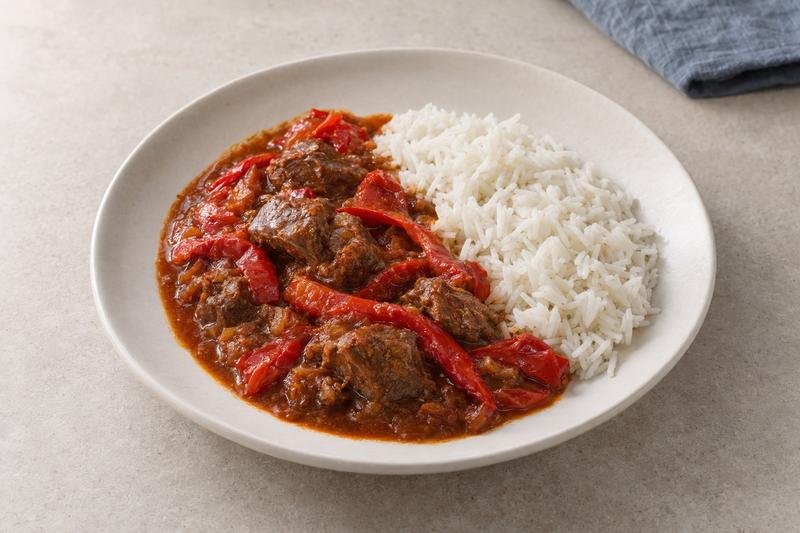
If the sauce is thin, we cook it uncovered for 5–10 minutes before adding the peppers so it thickens by evaporation. Then we stir the pepper strips into the tender meat and warm through for 3–5 minutes. We taste and add as much of the remaining salt reserved for the meat as needed. We divide the ragù and rice between 2 plates and serve.
The rice catches the gravy and the pepper strips remain intact.
Tips from our kitchen
- We pour the stock over the ground paprika immediately after adding it so it does not burn and turn bitter.
- We let the roasted peppers steam briefly under a lid. Their skins then peel off easily.
What to watch out for
- We add the pepper strips only when the meat is tender. If the sauce is thin, we reduce it before adding them so the peppers do not fall apart during further cooking.
How we serve it
- We serve the ragù with roasted pepper strips and rice.
During preparation
- We measure the temperature with a clean probe in the thickest pieces. We keep raw meat, its board and used utensils separate from the finished meal.
Our inspiration
Hank Shaw, a cook with experience at The Horn of Africa restaurant in Madison, reminds us in his game pörkölt that we choose paprika by smell too: it should be fragrant and brightly coloured. Paprika and onion also form the flavour base of our stew. Separately roasted red peppers give it its own character and remain in broad strips on the plate.
Similar recipes
Recipe for 4 people
Step-by-step method
Before we start
We start roasting the peppers after about 120 minutes of braising. Once peeled, we add them only when the meat is tender. We cook the rice in the final half-hour, when the ragù is almost ready.
Cut and brown the meat
We cut the trimmed meat into 3 cm cubes and pat it dry. We season with most of the salt for the meat and pepper. We set aside 1 teaspoon of the oil for the onion. We divide the rest between 4 batches of about 225 g meat. We brown each batch for 4–6 minutes over medium-high heat and transfer the browned meat to a bowl.
We brown the meat in one layer so water does not pool in the pot.
Make the paprika base
We peel and finely chop the onion and garlic. We fry the onion, stirring in the reserved oil for 7–9 minutes. We add the finely chopped garlic, caraway and tomato purée and fry for 1 minute. We take the pot off the hob, stir in the ground paprika and immediately pour in all the stock. We return the meat and its juices.
The paprika disperses in the stock without turning bitter.
Braise the meat until tender
We bring to a very gentle simmer, cover tightly and braise for about 160–215 minutes. Every 35 minutes we stir and check the bottom. If the gravy is drying out, we add water 30 ml at a time. We check that the thickest pieces reach at least 74 °C. With a fork, we also check that a cube pulls apart into fibres easily. If the meat is still tough, we keep braising.
The liquid should bubble only gently. A vigorous boil will not tenderise the meat faster.
Roast and peel the peppers
We pat the washed whole red peppers dry, brush them with the oil for the peppers and roast at 220 °C for 25–35 minutes. We turn them once. When the skins blister and darken in places, we transfer the peppers to a covered bowl for 10 minutes. We peel them and remove the cores and seeds. We cut the flesh into wide strips and toss with the salt for the peppers.
The flesh should be soft and sweet, not dried out.
Cook the rice
We rinse the rice in a sieve and let it drain thoroughly. We bring it to a boil in a pot with 430 ml water and the salt for the rice. We cover, cook over the lowest heat for 12–15 minutes and let it finish off the hob for 10 minutes. We do not lift the lid during cooking.
The grains are tender and no free water remains at the bottom.
Add the peppers and serve
If the sauce is thin, we cook it uncovered for 5–10 minutes before adding the peppers so it thickens by evaporation. Then we stir the pepper strips into the tender meat and warm through for 3–5 minutes. We taste and add as much of the remaining salt reserved for the meat as needed. We divide the ragù and rice between 4 plates and serve.
The rice catches the gravy and the pepper strips remain intact.