
Boxxi original cuisine · European home cooking
Crisp-skinned cod on crushed potatoes with peas
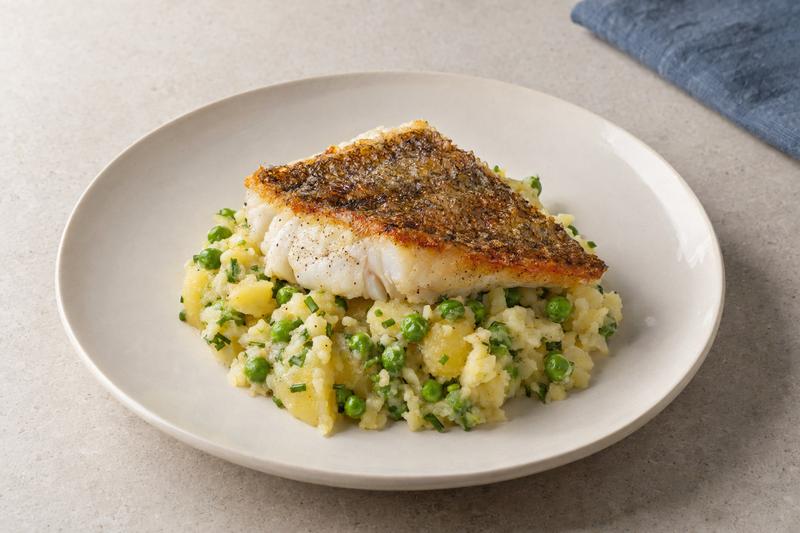
We sear cod loin, the thicker back section of the fillet, until its skin is golden and the flesh stays moist. We set it on buttery crushed potatoes with peas, lemon and chives. We leave distinct pieces in the side dish to contrast with the tender flakes of fish.
We start searing the fish only when the side dish is ready and covered.
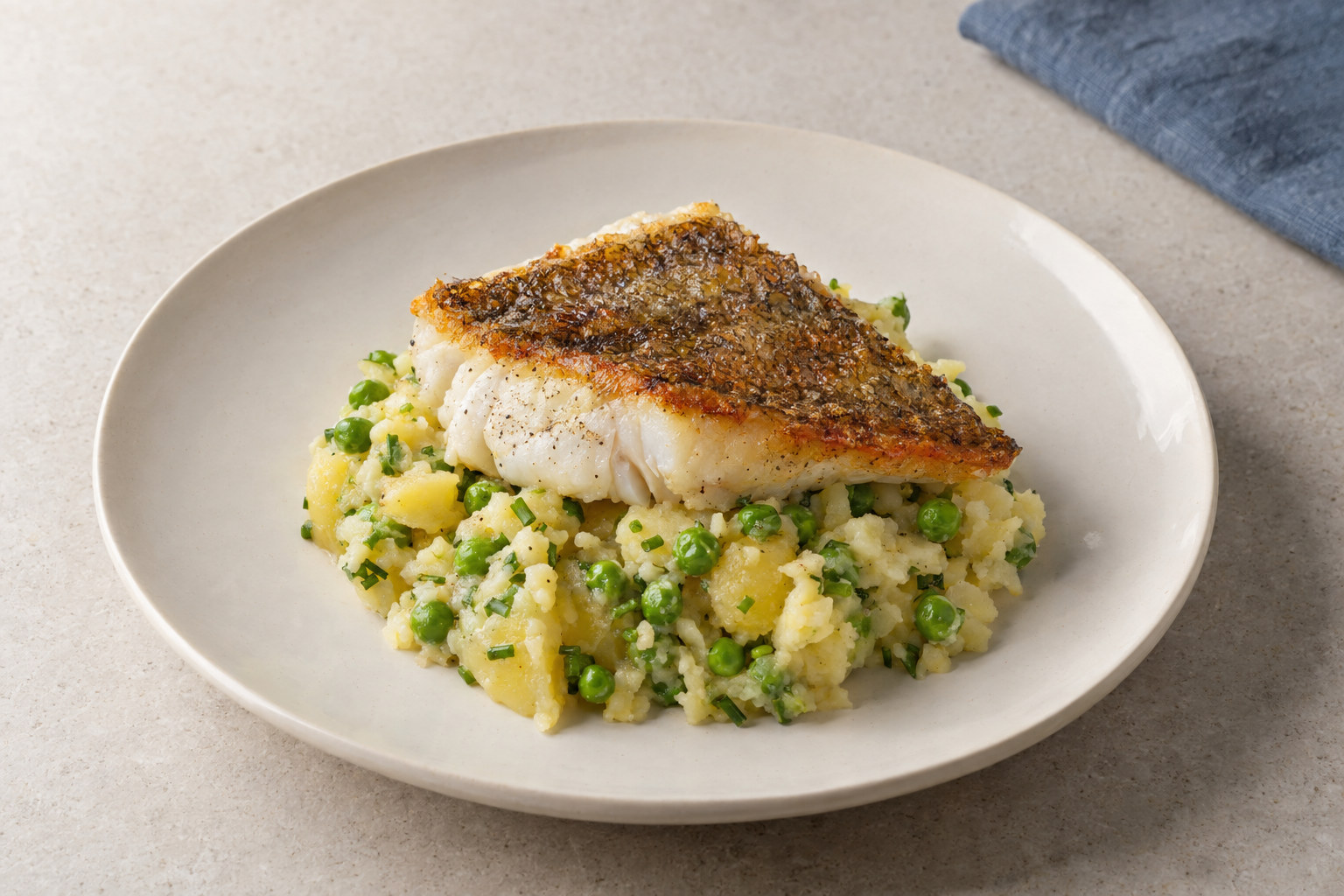
Sweet peas and buttery potatoes complement the delicate cod with its crisp skin. Lemon juice and fresh chives brighten the side dish.
Step-by-step method
What you will need
- kitchen scales
- knife, chopping board and fish-bone tweezers
- probe thermometer
- 3 l pot with a lid
- potato masher
- 26 cm non-stick frying pan
- fish slice
Before we start
While the potatoes cook, we dry the fish and chop the chives.
Cook the potatoes with peas
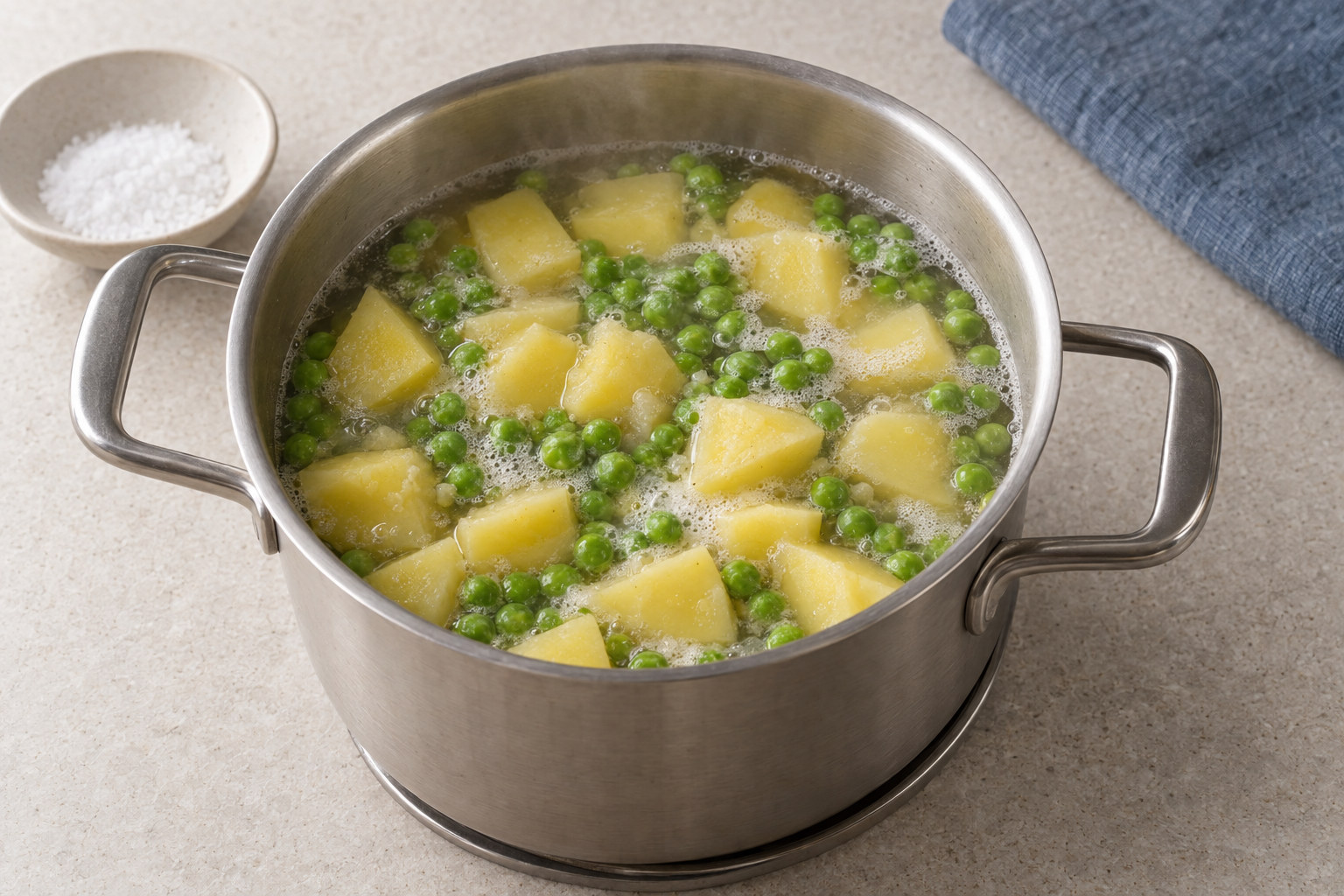
We peel the potatoes and cut them into 3 cm pieces. We cover them with water, add one teaspoon of salt and cook for 18–22 minutes, until a knife passes through without resistance. We add the peas for the last 3 minutes of cooking.
The potato is tender in the centre and the peas are still bright green.
Crush the potatoes
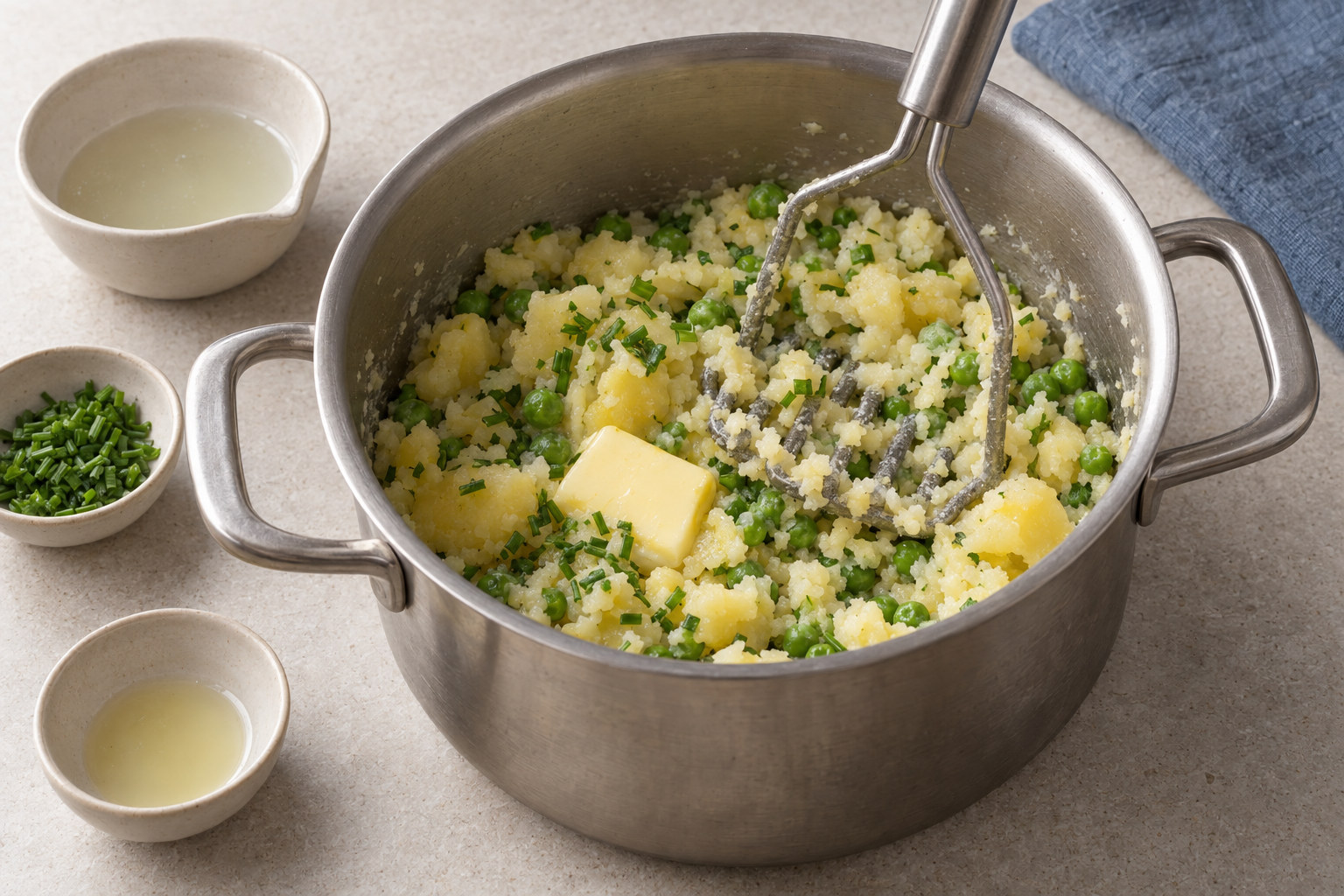
We wash, dry and chop the chives. Before draining, we reserve 30 ml of the cooking water. We drain the potatoes and peas, add two tablespoons of butter and the reserved water, and crush a few times. We stir in the lemon juice and chopped chives. We keep the side dish covered.
We leave distinct potato pieces and some whole peas in the side dish.
Sear the cod skin-side down
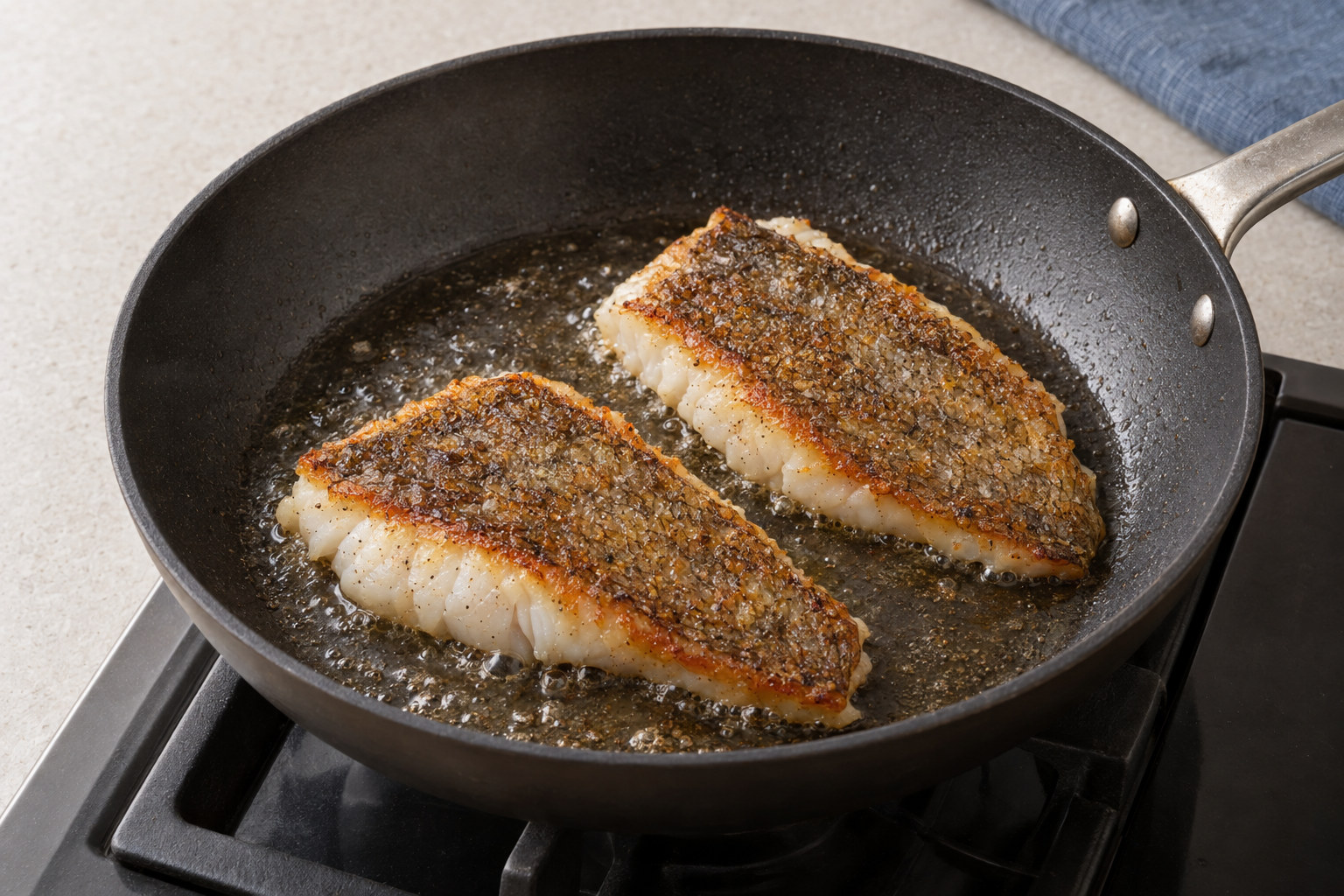
We pat the two fish portions dry, especially the skin, and season with a quarter teaspoon of salt. If we plan to finish with Icelandic salt, we reduce that regular salt by one small pinch; this does not change the salt for the side dish. We heat two teaspoons of oil in a 26 cm non-stick pan over a medium-high heat. We put the fish in skin-side down and gently hold it with a fish slice for 15 seconds. We sear without moving it for 4–5 minutes, turn it and cook over a lower heat for 3–4 minutes. We check each portion at its thickest point: the flesh must no longer be translucent and must flake easily with a fork. We cook a thicker piece briefly for longer over a low heat.
The skin is golden brown and releases from the pan; the fish remains moist inside.
Serve skin-side up
We divide the side dish between two warm plates and set one portion of cod on each, skin-side up. We serve at once. We do not pour lemon juice or pan liquid over the skin. If finishing with Icelandic salt, we taste the cooked fish together with the side dish. Just before serving, we scatter one small pinch of Saltverk Icelandic flaky salt smoked over birch wood over the fish to replace the regular salt we held back at the start. If a mouthful is already salty enough, we add no more salt.
Tips from our kitchen
- We hold the skin down only at the start of searing. After that we do not press on the fish.
What to watch out for
- Wet skin steams in the pan and turns rubbery.
How we serve it
- We divide the crushed potatoes and peas among the plates and set the cod on top, skin side up. We serve at once so the skin stays crisp.
Ingredient swaps
peas
broccoli in small florets: 160 g for 2 servings, 280 g for 4; we cook it with the potatoes for the last 5 minutes The side dish will be less sweet; we leave some of the small florets intact.
Ingredient notes
- We use two or four 150 g portions of skin-on cod loin, the back section of the fillet. We need 300 g for 2 servings and 600 g for 4.
During preparation
- We keep the fish in the fridge until needed. We inspect it and pull out any remaining bones with tweezers. After handling raw fish, we wash our hands, board and utensils. We cook the fish until the flesh is no longer translucent even in the thickest part and flakes easily with a fork.
Our inspiration
The part of the cod fillet we use affects its cooking time. The thicker back loin needs longer to heat through than the thin tail end. With a thicker portion, we allow the skin to turn golden while the flesh cooks all the way to the centre; the surface colour alone cannot tell us when it is done.
Similar recipes
Recipe for 4 people
We sear all four portions at once in two pans; the side dish waits covered.
Step-by-step method
Before we start
We take the potatoes off the heat and use the two freed-up hob rings for the fish.
Cook the potatoes with peas
We peel the potatoes, cut them into 3 cm pieces and cover them with water. We add the salt set aside for the potatoes and cook for 20–25 minutes. We add the peas for the last 3 minutes of cooking.
The potato is tender in the centre and the peas are still bright green.
Crush the potatoes
We wash, dry and chop the chives. We reserve 50 ml of the cooking water and drain the potatoes and peas. We crush them with three tablespoons of butter and the reserved water. We stir in the lemon juice and finely chopped chives. While searing the fish, we keep the side dish warm under the lid.
We leave distinct potato pieces and some whole peas in the side dish.
Sear the cod skin-side down
We pat all four fish portions thoroughly dry and season with half a teaspoon of salt. If we plan to finish with Icelandic salt, we reduce that regular salt by two small pinches; this does not change the salt for the side dish. We heat two 26 cm non-stick pans. In each, we put two teaspoons of oil and two fish portions, skin-side down. At the start, we hold the fish gently with a fish slice for 15 seconds, then sear for 4–5 minutes. We turn the fish and cook over a lower heat for 3–4 minutes. We check each portion at its thickest point: the flesh must no longer be translucent and must flake easily with a fork. We continue briefly as needed for the thickness. We cook in both pans at the same time.
The skin is golden brown and releases from the pan; the fish remains moist inside.
Serve skin-side up
We divide the potatoes among four warmed plates. We transfer the fish portions from both pans at the same time, set them on top skin-side up and serve immediately. If finishing with Icelandic salt, we taste the cooked fish together with the side dish. Just before serving, we scatter two small pinches of Saltverk Icelandic flaky salt smoked over birch wood over the fish to replace the regular salt we held back at the start. If a mouthful is already salty enough, we add no more salt.