
Contemporary European · Inspired by Norwegian ingredients, our own home-style version
Norwegian salmon skewers with pea couscous
We thread juicy cubes of Norwegian salmon onto skewers with sweet red pepper. Alongside them, we serve fluffy pea couscous scented with lemon and fresh parsley. We prepare the couscous while the skewers bake, bringing this colourful fish supper together.
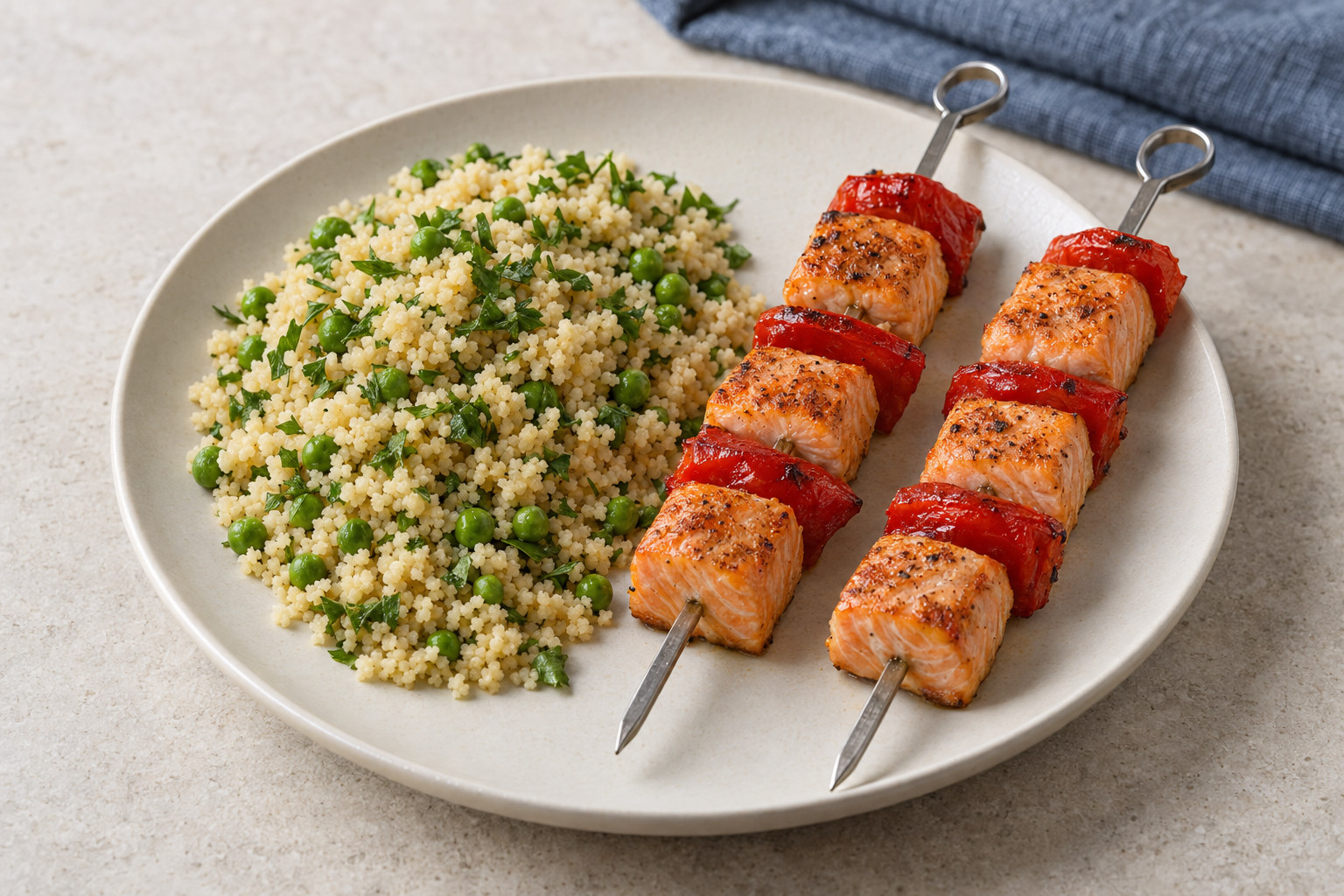
Sweet roasted pepper complements the rich flavour of Norwegian salmon. The pea couscous is light and fluffy, with tangy lemon and fresh parsley.
Step-by-step method
What you will need
- 4 metal skewers, about 25 cm long
- 30 × 40 cm baking tray lined with baking paper
- oven
- 1.5 litre bowl with a lid
- 1.5 litre saucepan
- thermometer
Before we start
We preheat the oven while chopping. We heat the couscous water as we assemble the skewers, then finish the peas and couscous while the fish bakes.
Prepare the fish and vegetables
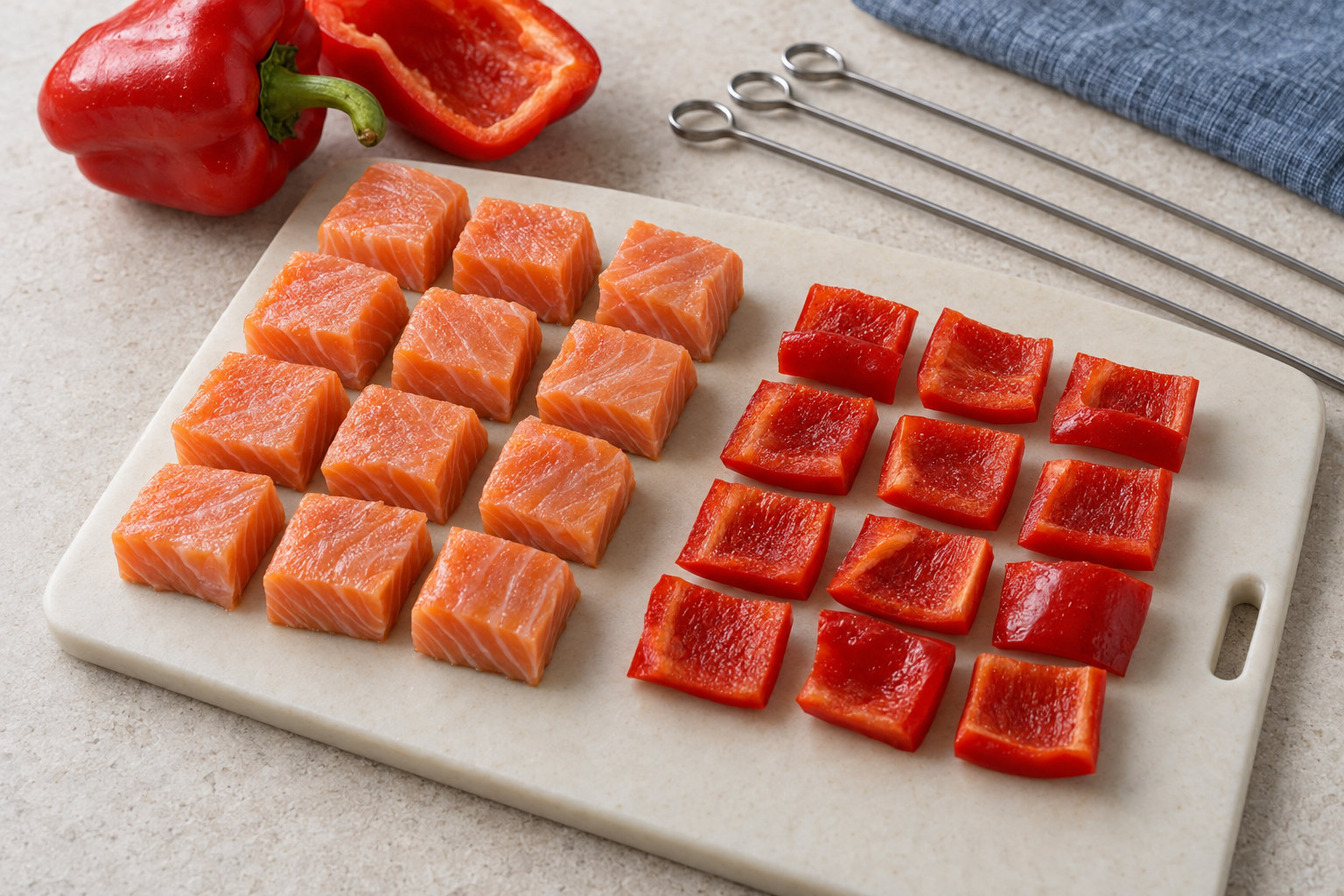
We remove the skin from the salmon and use tweezers to pull out any pin bones. We cut the fish into 12 roughly equal cubes, about 2.5–3 cm across. We wash the pepper, remove the stalk and seeds and cut into 12 squares in total. We preheat the oven to 200 °C using conventional top and bottom heat.
Similar-sized cubes cook evenly.
Assemble the skewers
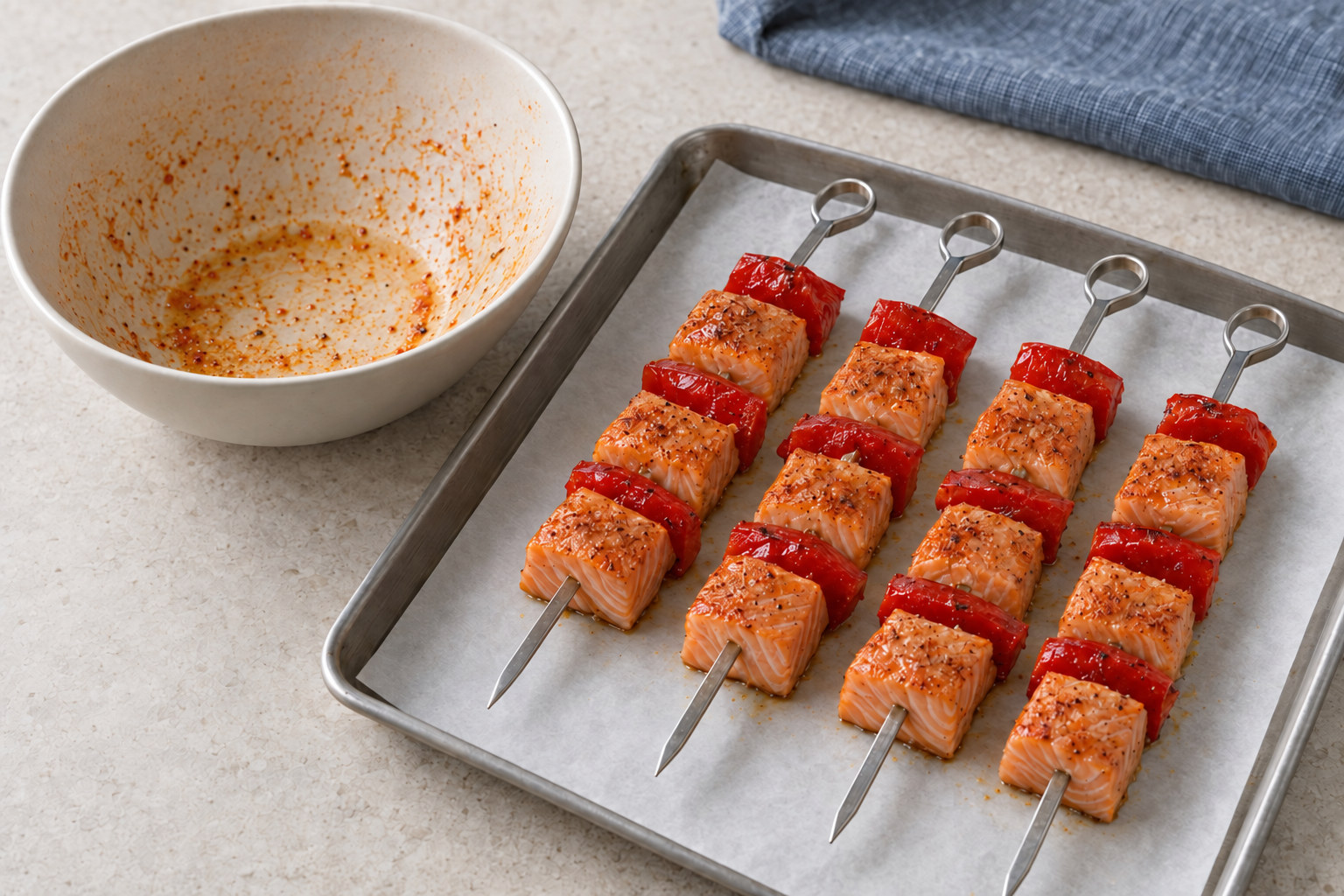
We toss the fish and red pepper with two teaspoons of oil, ¼ teaspoon of salt, the sweet paprika and ground pepper. If using the Icelandic finishing salt, we reduce this quantity of ordinary salt for the skewers by one small pinch; the salt for the accompaniment stays the same. We thread 3 cubes of fish and 3 pieces of pepper alternately onto each of four skewers, leaving a little space between them. As we thread the skewers, we start heating 220 ml water with ¼ teaspoon of salt in the saucepan.
The skewer goes through the centre of each cube without tearing the fish.
Bake the fish
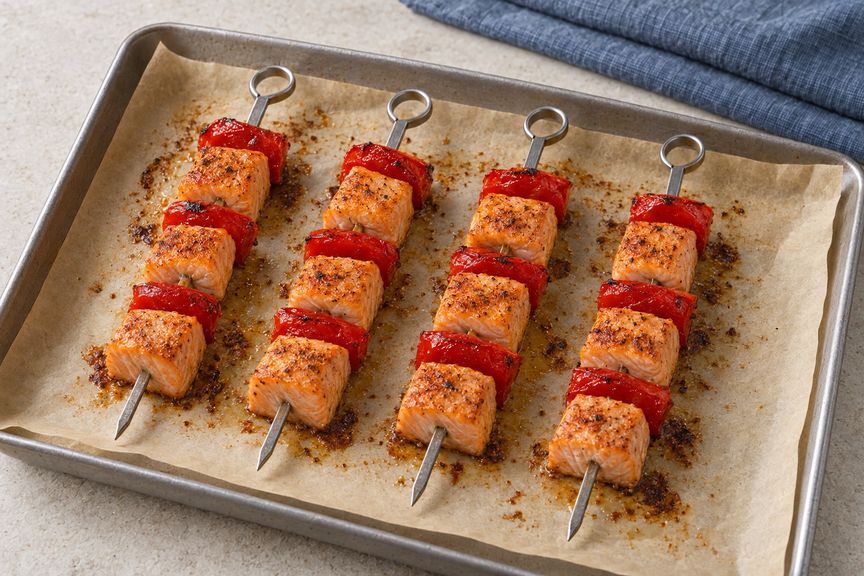
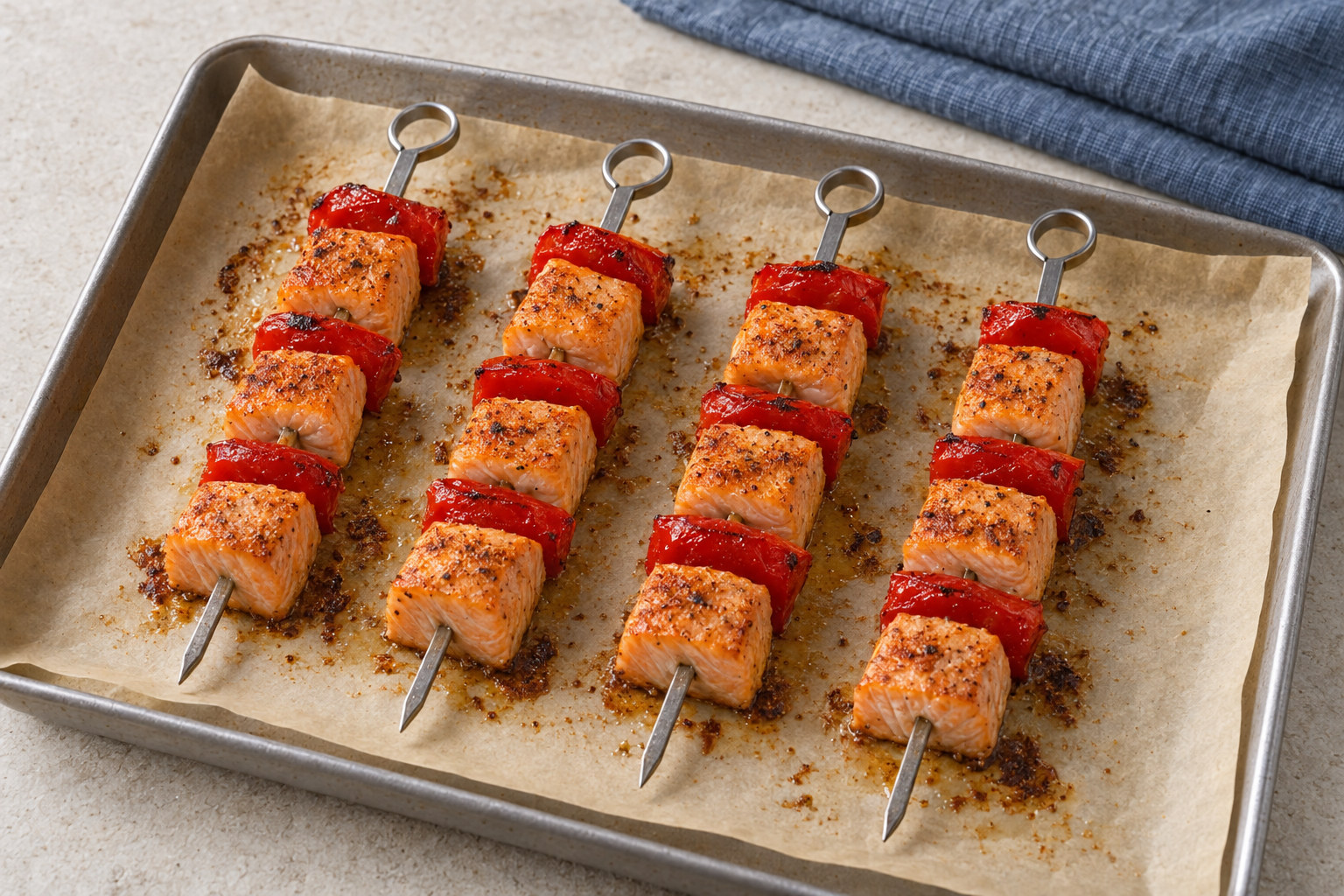
We arrange the skewers in a single layer on the baking tray and bake for 10–14 minutes, turning halfway through. We check that the thickest cube has reached 63 °C, then take them out.
The fish flakes apart and is still moist in the centre.
Soak the couscous
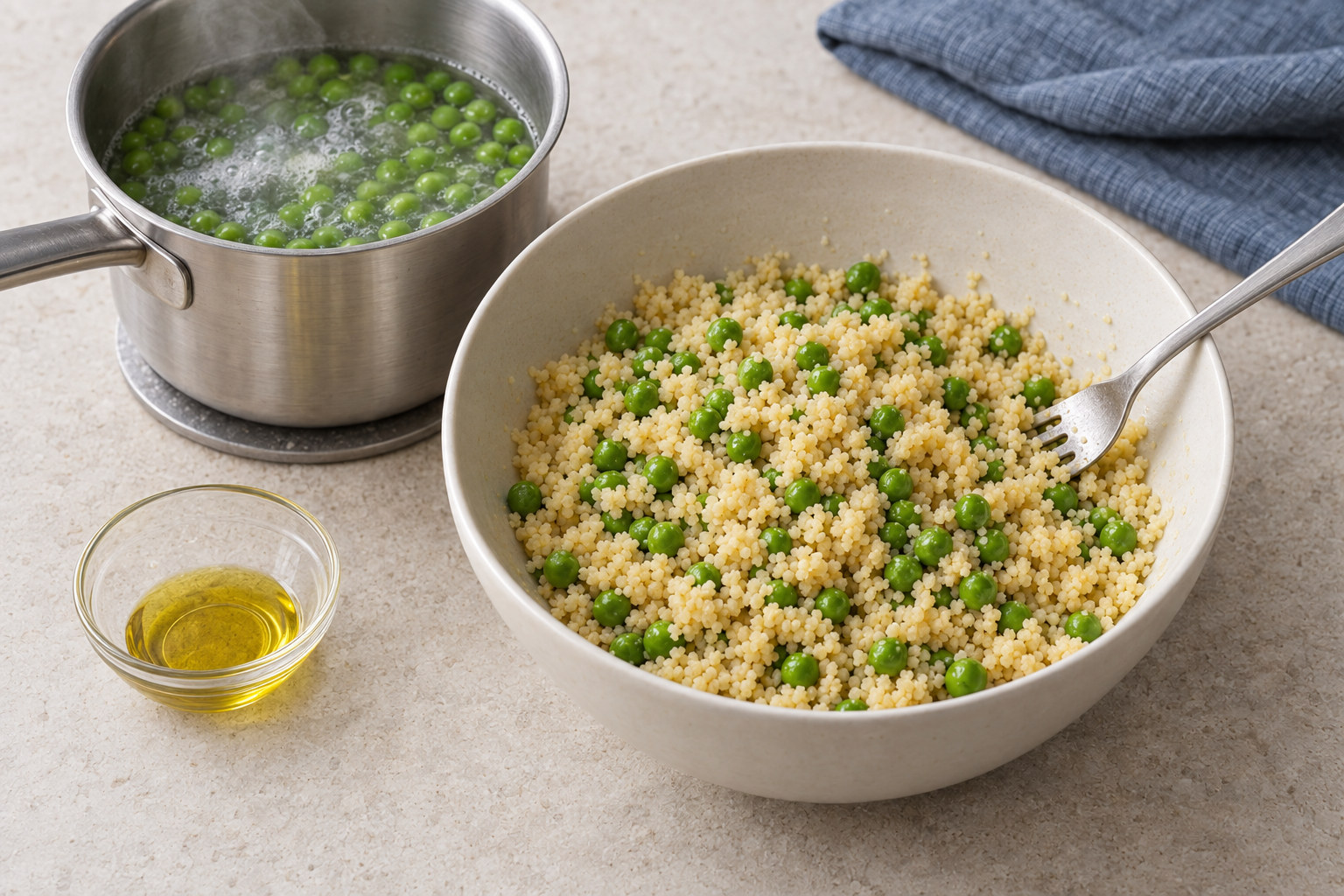
As soon as the skewers are in the oven, we add 120 g peas to the prepared boiling water and cook for 3 minutes once it returns to the boil. In the bowl, we mix 140 g couscous with two teaspoons of oil, add the peas and all the hot water, cover and leave for 8 minutes. We then fluff it up with a fork.
The grains are tender and separate, with no water pooling in the bottom of the bowl.
Finish the plates
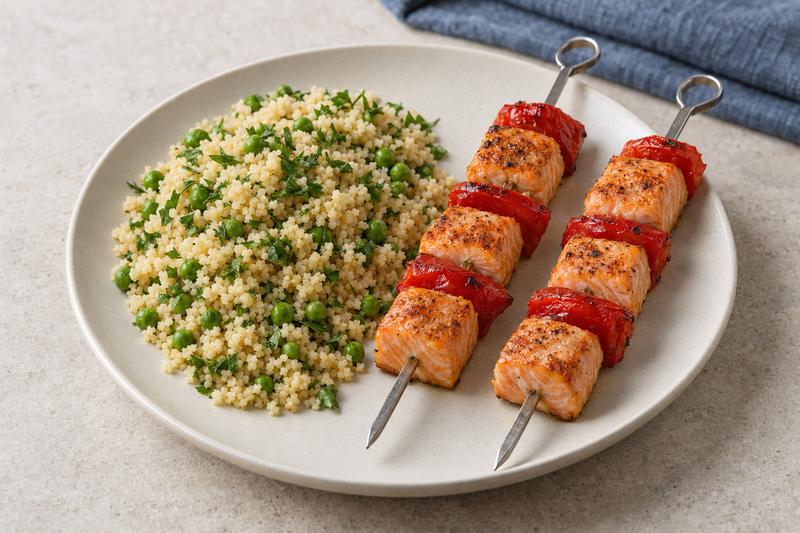
We rinse, dry and chop the parsley. We stir the lemon juice and chopped parsley into the couscous, divide it between two plates and add two skewers to each. If we reduced the ordinary salt during preparation, we taste a mouthful of salmon skewer with couscous. If needed, we share one small pinch of Saltverk birch-smoked Icelandic sea salt flakes between the skewers. If the mouthful is salty enough, we leave out the finishing salt.
Tips from our kitchen
- We can use metal skewers straight away; there is no need to soak them.
- We use ordinary instant wheat couscous and check that it is tender and fluffy after soaking.
What to watch out for
- We avoid cutting the fish into tiny pieces, which would dry out before the pepper cooks.
- We do not pack the skewers too tightly; we leave small gaps between the pieces so they cook evenly.
How we serve it
- The couscous makes a complete accompaniment; we serve the skewers straight away while the fish is juicy.
Ingredient swaps
couscous
The same dry weight of fine bulgur (cracked wheat). We cook it separately according to the packet instructions. We follow the bulgur packet for the water quantity and cooking time, rather than using the water ratio given for couscous. We start the bulgur early enough for it to be ready with the fish. We cook the peas separately, drain them and stir them into the cooked bulgur with the oil, lemon juice and parsley intended for the accompaniment.
pepper
The same weight of courgette, cut into 1 cm half-moons A milder flavour; the courgette will release more liquid.
Ingredient notes
- From a larger pack, we use 300 g for two servings or 600 g for four.
- We use one 300 g pack for two servings, or two packs for four.
- From the set, we use one 300 g pack for two servings or two packs for four.
During preparation
- We use separate utensils for raw fish and cooked food.
Our inspiration
Fish skewers are ideal when we want to cook fish and vegetables together. We alternate salmon cubes with red pepper so each mouthful combines fish with something sweet. Meanwhile, the couscous soaks as the skewers bake. We briefly boil the peas in the water used to soak the couscous, finishing the accompaniment without needing an extra pan for the vegetables.
Similar recipes
Recipe for 4 people
Step-by-step method
Before we start
We preheat the oven while chopping. We heat the couscous water as we assemble the skewers, then finish the peas and couscous while the fish bakes.
Prepare the fish and vegetables
We remove the skin from the salmon and use tweezers to pull out any pin bones. We cut the fish into 24 roughly equal cubes, about 2.5–3 cm across. We wash both peppers, remove the stalks and seeds and cut into 24 squares in total. We preheat the oven to 200 °C using conventional top and bottom heat.
Similar-sized cubes cook evenly.
Assemble the skewers
We toss the fish and red pepper with one and a half tablespoons of oil, ½ teaspoon of salt and the spices. If using the Icelandic finishing salt, we reduce this quantity of ordinary salt for the skewers by two small pinches; the salt for the accompaniment stays the same. We prepare eight skewers, threading 3 cubes of fish and 3 pieces of pepper onto each, with a small gap between the pieces. As we thread the skewers, we start heating 440 ml water with ½ teaspoon of salt in the saucepan.
The skewer goes through the centre of each cube without tearing the fish.
Bake the fish
We spread the eight skewers out on the large baking tray so they do not touch and bake for 12–16 minutes, turning halfway through. We check for 63 °C in pieces from both the centre and the edges of the tray.
The fish flakes apart and is still moist in the centre.
Soak the couscous
As soon as the skewers are in the oven, we add 240 g peas to the prepared boiling water and cook for 3 minutes once it returns to the boil. In the bowl, we mix 280 g couscous with one and a half tablespoons of oil, add the peas and all the hot water, cover and leave for 8–10 minutes. We then fluff it up with a fork.
The grains are tender and separate, with no water pooling in the bottom of the bowl.
Finish the plates
We rinse, dry and chop the parsley. We stir the lemon juice and chopped parsley into the couscous, divide it between four plates and add two skewers to each. If we reduced the ordinary salt during preparation, we taste a mouthful of salmon skewer with couscous. If needed, we share two small pinches of Saltverk birch-smoked Icelandic sea salt flakes between the skewers. If the mouthful is salty enough, we leave out the finishing salt.