
An original recipe · European-inspired
Pulled pork croquettes with apple purée
Beneath a thin, crisp coating is a moist filling of cooked pulled pork and thick béchamel. Tangy apple purée and a radish salad bring freshness to every rich mouthful. We allow plenty of time for preparation, including several hours to chill the filling.
The stated time includes evaporating the excess meat juices, cooking the thick base, the water bath, at least 3 hours in the fridge and 20 minutes of chilling after coating. After briefly frying in three batches, we finish all the croquettes together in the oven, checking the temperature in the centre. If the cold filling will not hold its shape and has to be cooked again, we allow for the full cooling and chilling time again.
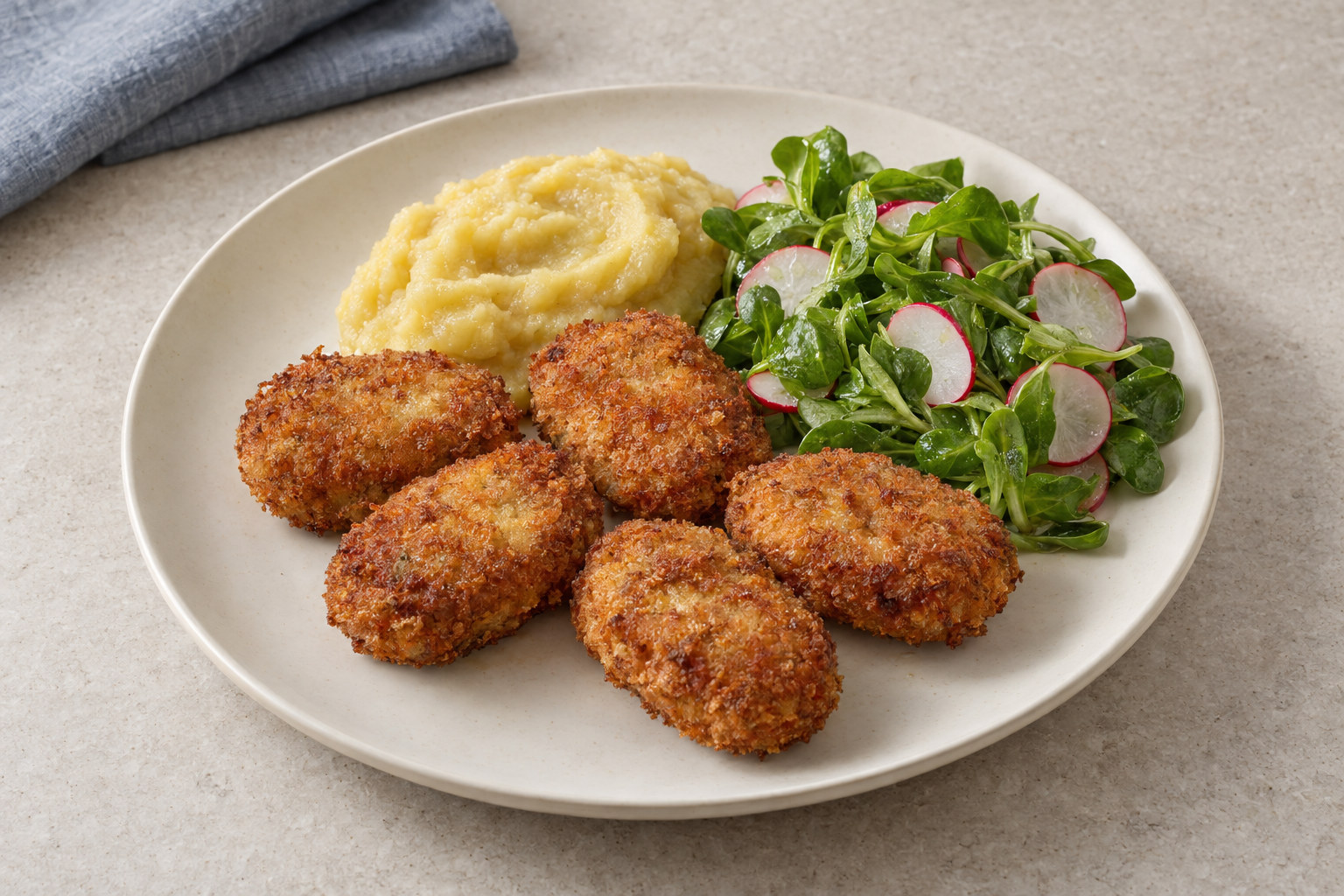
Golden breadcrumbs give way with a crunch to a soft meat filling with mustard and chives. Smooth, tart apples and peppery radishes lighten the buttery base.
Step-by-step method
What you will need
- kitchen scales
- knife and chopping board
- probe thermometer
- 24 cm non-stick frying pan
- 2 l saucepan
- whisk and sturdy spatula
- shallow 25 × 20 cm metal dish
- larger container for a cold water bath
- fridge
- hand blender
- 1 l saucepan for the purée
- three bowls for coating
- tray that fits in the fridge
- deep saucepan with an internal diameter of 20 cm, a flat base at least 18 cm across and a capacity of at least 4 l
- thermometer suitable for hot oil
- slotted ladle
- oven
- fine ovenproof wire rack over a 40 × 30 cm baking tray
- two hob rings
Before we start
We prepare the filling well in advance, or the day before. We make the purée during the 20-minute chill after coating the croquettes. We briefly fry the 12 small, flat croquettes in three batches of 4; the first batch waits outside the oven for about 8–12 minutes. We then finish them all together in the oven and serve straight away.
Evaporate the excess juices and make the béchamel
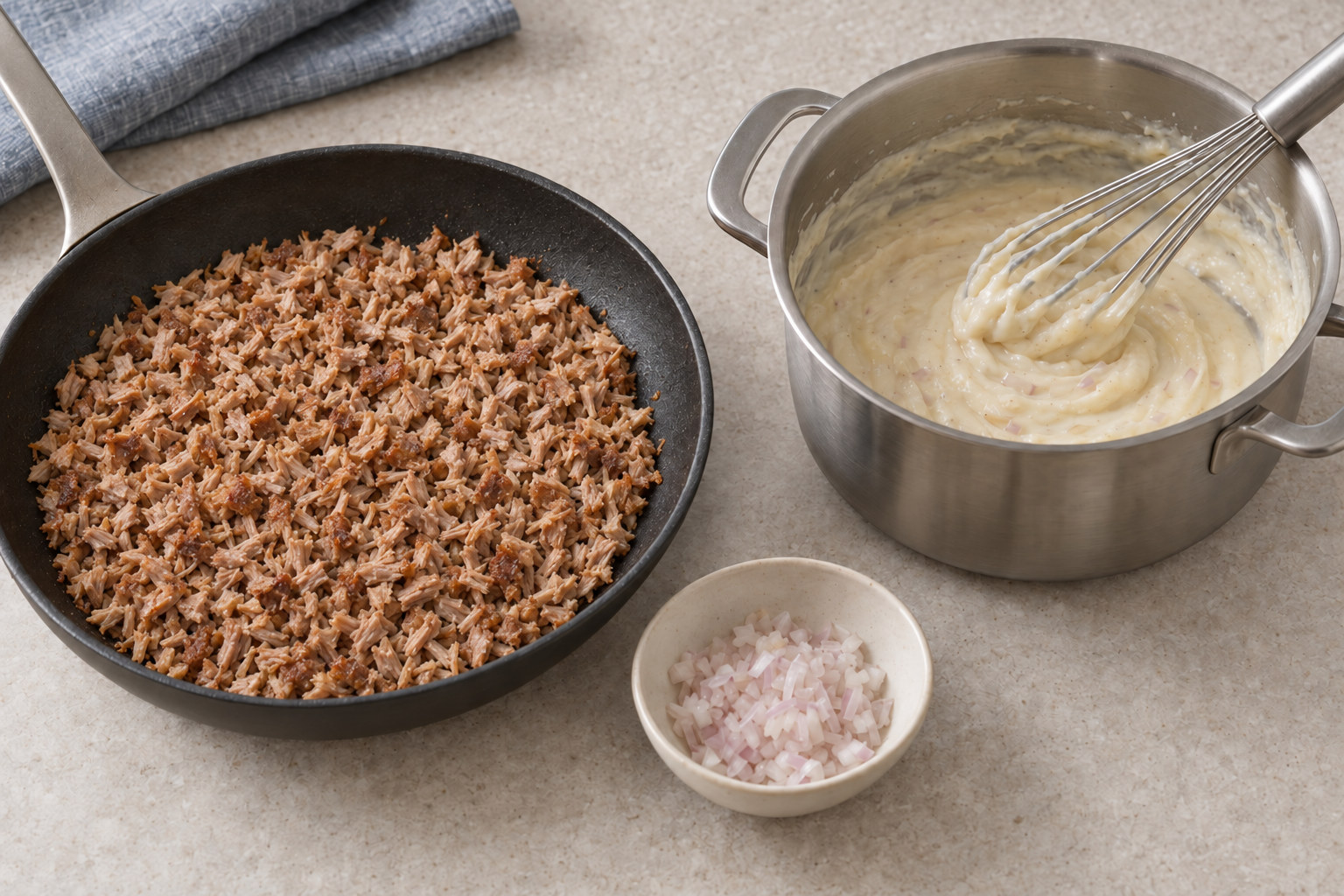
Before heating, we use clean utensils to mix the meat with its own juices and weigh out 250 g, leaving the remaining 250 g from the pack covered in the fridge. We cut the strands to no more than 1 cm long. In a 24 cm non-stick frying pan over a medium heat, we stir for about 5–8 minutes to evaporate only the loose, watery juices. When we tilt the pan, no watery juice should pool at the side; the strands should remain moist, and a slight sheen of fat is fine. As soon as the watery juices have evaporated, we take the meat off the heat; if there are none to begin with, we simply warm it briefly. We peel and finely chop the shallot. In a 2 l saucepan, we soften the finely chopped shallot in 30 g of butter for 4–5 minutes. We stir in 45 g of flour, cook for a minute, then gradually whisk in 220 ml of milk. Once it first starts bubbling, we cook over a low heat for 7–8 minutes, stirring thoroughly.
The béchamel is a smooth, thick paste that pulls away from the sides; after we draw the spatula through it, the base stays visible for a few seconds. No loose, watery juices run out of the meat.
Combine and chill the filling
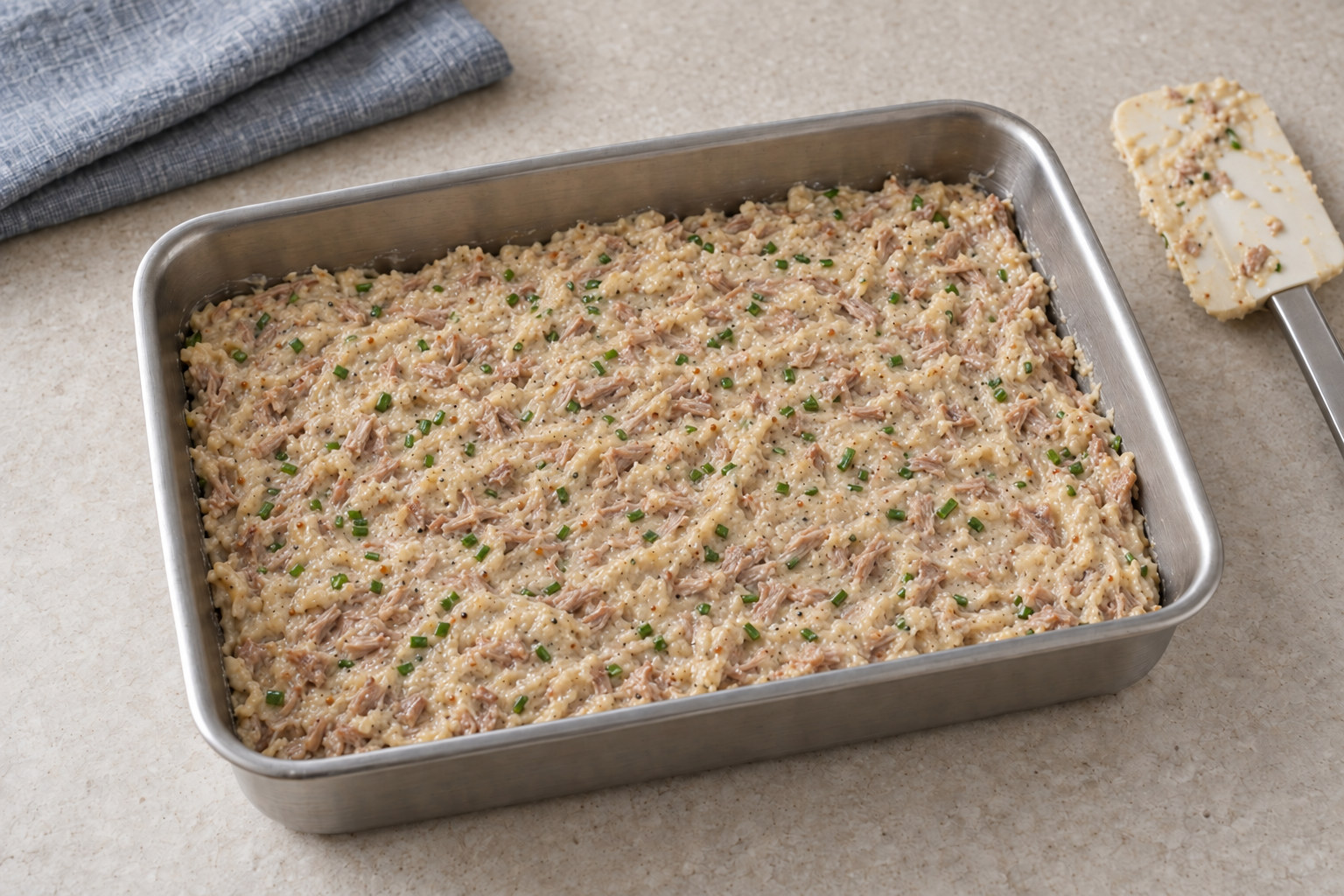
We wash, dry and chop the chives. We stir all the meat from the pan, 2 teaspoons of mustard, the chopped chives and pepper into the béchamel. We stir over a low heat for a further 4–6 minutes; the mixture should reach at least 74 °C and be thick enough that a channel about 3 cm wide stays open for at least 5 seconds after we draw the spatula through it. If it still flows back together or releases water, we continue stirring and evaporating in 2-minute intervals; once the paste is ready, we avoid drying it out further. We spread the mixture in a 25 × 20 cm metal dish in a layer no more than 2 cm deep. We stand the dish in a cold water bath for 15 minutes, replacing the water with fresh cold water after 7–8 minutes. No water must get into the food. We then immediately cover the dish and refrigerate for at least 3 hours, until the temperature in the centre falls to no more than 5 °C.
We can scoop up the cold mixture as a firm mound. Warm mixture needs more chilling; mixture chilled to no more than 5 °C that still spreads needs to be cooked again to the stated thickness, then cooled and chilled again from the beginning. We do not add raw flour.
Shape small, flat croquettes
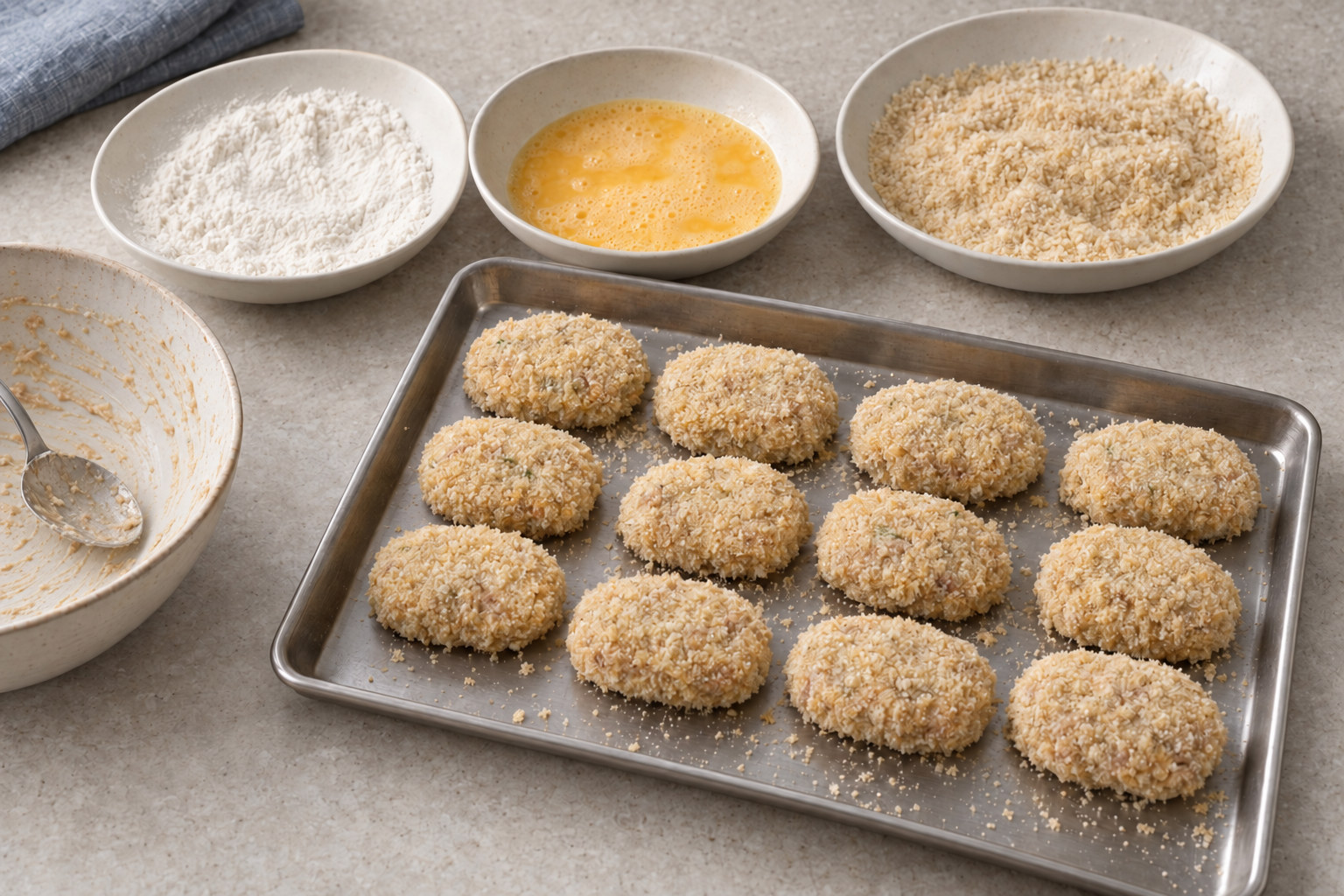
We divide the cold filling into 12 equal portions. We shape short, flat ovals about 6 × 4.5 cm, no more than 2 cm thick in the middle. We can adjust the length and width slightly, but must not exceed the stated thickness. We coat each croquette in the flour for coating, beaten egg and breadcrumbs, then once more in a thin layer of egg and breadcrumbs. We seal the ends and sides completely without making the coating unnecessarily thick; even after coating, each croquette should measure no more than 7 × 5 cm in length and width. We place them in a single layer on a tray and chill for 20 minutes. We discard any flour, egg and breadcrumbs left after coating.
Make the purée while the croquettes chill
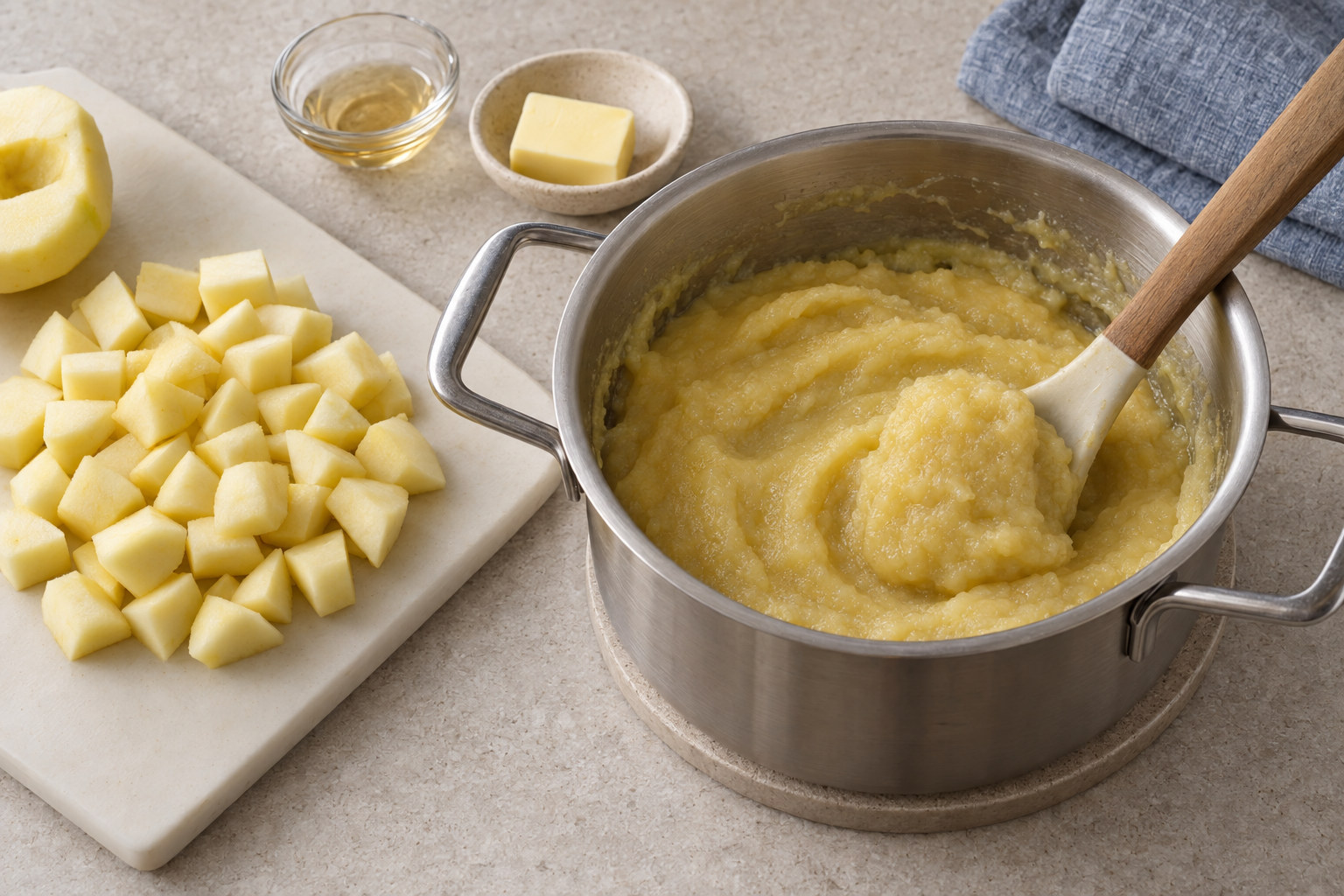
We peel and core the apples and cut them into 1 cm cubes. We put them in a saucepan with 40 ml of water, cover and cook gently for 12–18 minutes until soft. We uncover and let any excess water evaporate for a further 2–3 minutes. We blend with two teaspoons of butter and 10 ml of cider vinegar. We cover and set aside briefly, then reheat the purée while the croquettes finish in the oven. At the same time, we preheat the oven to 180 °C, conventional heat, and set a wire rack over a baking tray.
The purée is smooth and holds on a spoon.
Fry briefly and finish together in the oven
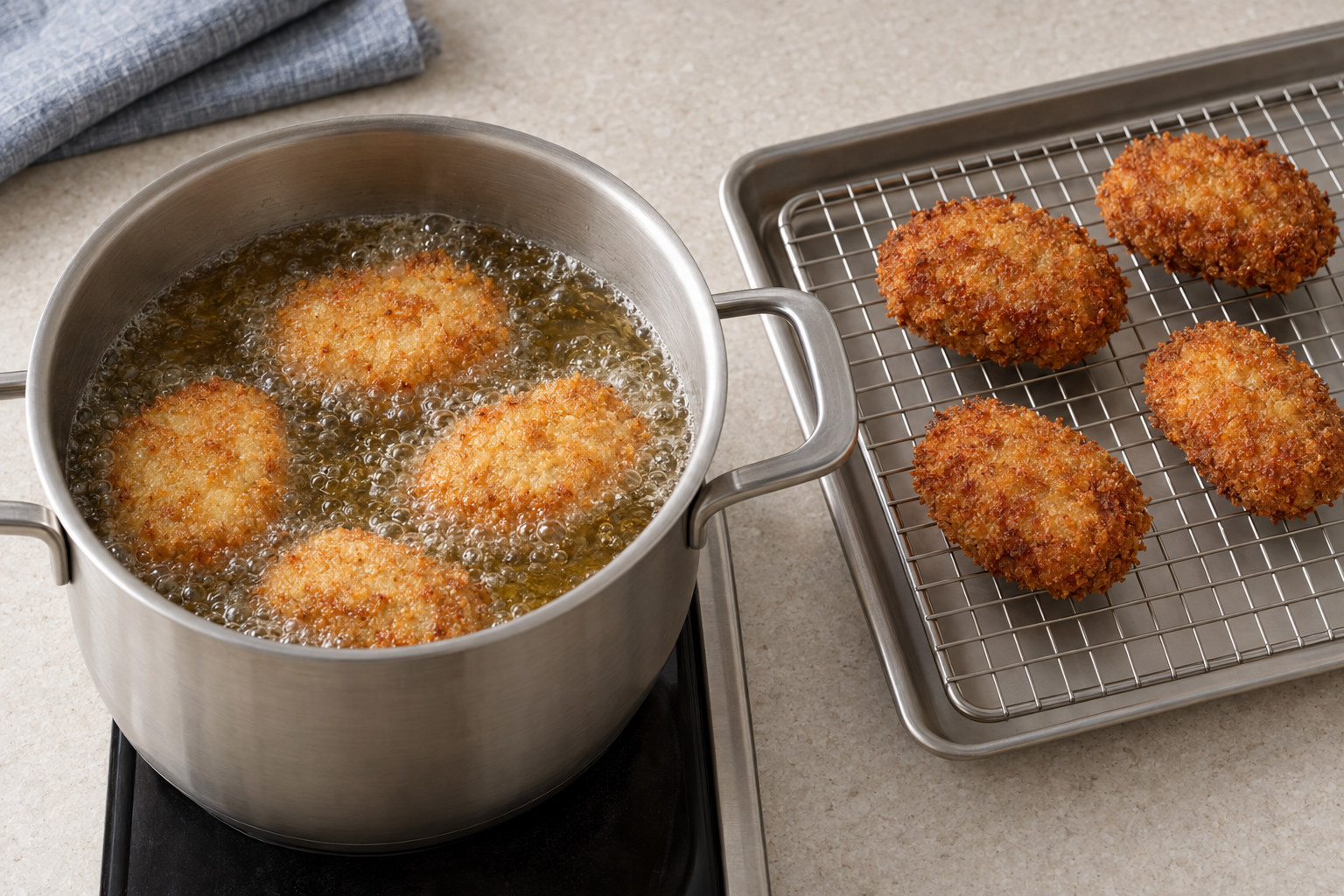
In a deep saucepan with an internal diameter of 20 cm, a flat base at least 18 cm across and a capacity of at least 4 l, we heat 1200 ml of oil to 175 °C. We lower in 4 cold croquettes at a time without overlapping, leaving the others in the fridge. We fry for about 2–3 minutes in total, turning carefully once, and lift them out while still pale golden; the centres will finish cooking in the oven. We return the oil to 175 °C before each of the three batches. We let the croquettes drain briefly, then arrange them on the rack over the tray with gaps of at least 1 cm. We leave the first batch outside the oven only until we finish frying, about 8–12 minutes. We then place the whole tray in the middle of the oven and finish all the croquettes together for about 6–12 minutes. From minute 6, we check the temperature in the centre of the largest croquette from each of the first and last batches, as well as other thicker pieces; each of these must reach at least 74 °C in the centre. If the coating is already turning golden but the centres are not ready, we reduce the oven temperature to 160 °C and continue, checking every 2 minutes.
The finished croquettes are golden, intact and crisp.
Reheat the purée and serve with the salad
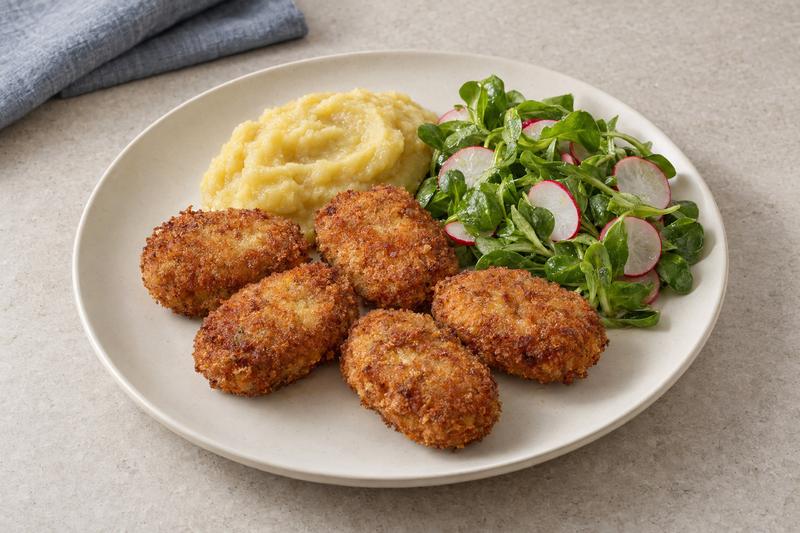
While the croquettes finish baking, we reheat the purée on the second hob ring, stirring. We wash and dry the lamb’s lettuce and radishes, then thinly slice the radishes. Just before serving, we toss the salad with two teaspoons of olive oil and 10 ml of lemon juice. We divide the purée and salad evenly between the plates and add six croquettes to each portion.
We place the croquettes beside the purée so the coating does not turn soggy underneath. Once heated through, we take them out of the oven and serve immediately.
Tips from our kitchen
- We can make the filling the day before, still keeping within 48 hours of opening the product.
- The filling must be thick enough and chilled right through to hold its shape. We evaporate any excess meat juices before combining it with the béchamel.
- We fry the croquettes only until lightly golden, then heat the centres thoroughly in the oven so the coating does not get too dark.
What to watch out for
- If the filling still spreads after chilling to 5 °C, further chilling will not help. We need to cook it again.
- We shape the croquettes no more than 2 cm thick. Depending on the saucepan size, we fry four or eight at a time, as described in the method.
- We dress the salad and place the croquettes beside the purée only when ready to serve.
How we serve it
- We serve six small croquettes per person with warm apple purée and a lamb’s lettuce and radish salad. We place the croquettes beside the purée to keep their coating crisp.
Ingredient swaps
lamb’s lettuce
the same amount of rocket The salad will have a more pronounced peppery flavour.
hand blender
fine metal sieve and spoon We press the soft apples through the sieve; this takes a few extra minutes.
During preparation
- We use meat that has already been cooked. We take out the amount we need with clean utensils and keep the rest covered at no more than 5 °C; once opened, we use it within 48 hours as stated on the pack.
- When reheating at the end, we check that the centre of the filling also reaches at least 74 °C. The time is a guide; a cold centre needs further heating.
- We cool the filling in shallow containers and do not leave it on the worktop for hours. The oil must not come more than halfway up the saucepan; we use dry utensils.
Our inspiration
Michael Bremner, who founded the restaurant 64 Degrees in Brighton, makes his lobster croquettes from a thick mixture chilled until firm. It is this way of preparing the filling that inspired us. We add pulled pork to our croquettes and serve them with tangy apple purée. Beneath the golden coating, the soft meat filling pairs beautifully with the fruit.
Similar recipes
Recipe for 4 people
Step-by-step method
Before we start
We prepare the filling well in advance, or the day before. We make the purée during the 20-minute chill after coating the croquettes. We briefly fry the 24 small, flat croquettes in three batches of 8; the first batch waits outside the oven for about 8–12 minutes. We then finish them all together in the oven and serve straight away.
Evaporate the excess juices and make the béchamel
Before heating, we use clean utensils to mix the meat with its own juices and weigh out 500 g, using the whole 500 g pack. We cut the strands to no more than 1 cm long. In a 28 cm non-stick frying pan over a medium heat, we stir for about 8–12 minutes to evaporate only the loose, watery juices. When we tilt the pan, no watery juice should pool at the side; the strands should remain moist, and a slight sheen of fat is fine. As soon as the watery juices have evaporated, we take the meat off the heat; if there are none to begin with, we simply warm it briefly. We peel and finely chop the shallots. In a 3 l saucepan, we soften the finely chopped shallots in 55 g of butter for 5–6 minutes. We stir in 85 g of flour, cook for a minute, then gradually whisk in 420 ml of milk. Once it first starts bubbling, we cook over a low heat for 8–10 minutes, stirring thoroughly.
The béchamel is a smooth, thick paste that pulls away from the sides; after we draw the spatula through it, the base stays visible for a few seconds. No loose, watery juices run out of the meat.
Combine and chill the filling
We wash, dry and chop the chives. We stir all the meat from the pan, 1 tablespoon of mustard, the chopped chives and pepper into the béchamel. We stir over a low heat for a further 6–8 minutes; the mixture should reach at least 74 °C and be thick enough that a channel about 3 cm wide stays open for at least 5 seconds after we draw the spatula through it. If it still flows back together or releases water, we continue stirring and evaporating in 2-minute intervals; once the paste is ready, we avoid drying it out further. We spread the mixture in two 25 × 20 cm metal dishes in a layer no more than 2 cm deep. We stand the dishes in two cold water baths for 15 minutes, replacing the water in both with fresh cold water after 7–8 minutes. No water must get into the food. We then immediately cover the dishes and refrigerate for at least 3 hours, until the temperature in the centre falls to no more than 5 °C.
We can scoop up the cold mixture as a firm mound. Warm mixture needs more chilling; mixture chilled to no more than 5 °C that still spreads needs to be cooked again to the stated thickness, then cooled and chilled again from the beginning. We do not add raw flour.
Shape small, flat croquettes
We divide the cold filling into 24 equal portions. We shape short, flat ovals about 6 × 4.5 cm, no more than 2 cm thick in the middle. We can adjust the length and width slightly, but must not exceed the stated thickness. We coat each croquette in the flour for coating, beaten egg and breadcrumbs, then once more in a thin layer of egg and breadcrumbs. We seal the ends and sides completely without making the coating unnecessarily thick; even after coating, each croquette should measure no more than 7 × 5 cm in length and width. We place them in a single layer on a tray and chill for 20 minutes. We discard any flour, egg and breadcrumbs left after coating.
Make the purée while the croquettes chill
We peel and core the apples and cut them into 1 cm cubes. We put them in a saucepan with 65 ml of water, cover and cook gently for 12–18 minutes until soft. We uncover and let any excess water evaporate for a further 2–3 minutes. We blend with one and a half tablespoons of butter and 15 ml of cider vinegar. We cover and set aside briefly, then reheat the purée while the croquettes finish in the oven. At the same time, we preheat the oven to 180 °C, conventional heat, and set a wire rack over a baking tray.
The purée is smooth and holds on a spoon.
Fry briefly and finish together in the oven
In a deep saucepan with an internal diameter of 28 cm, a flat base at least 26 cm across and a capacity of at least 8 l, we heat 2400 ml of oil to 175 °C. We lower in 8 cold croquettes at a time without overlapping, leaving the others in the fridge. We fry for about 2–3 minutes in total, turning carefully once, and lift them out while still pale golden; the centres will finish cooking in the oven. We return the oil to 175 °C before each of the three batches. We let the croquettes drain briefly, then arrange them on the rack over the tray with gaps of at least 1 cm. We leave the first batch outside the oven only until we finish frying, about 8–12 minutes. We then place the whole tray in the middle of the oven and finish all the croquettes together for about 6–12 minutes. From minute 6, we check the temperature in the centre of the largest croquette from each of the first and last batches, as well as other thicker pieces; each of these must reach at least 74 °C in the centre. If the coating is already turning golden but the centres are not ready, we reduce the oven temperature to 160 °C and continue, checking every 2 minutes.
The finished croquettes are golden, intact and crisp.
Reheat the purée and serve with the salad
While the croquettes finish baking, we reheat the purée on the second hob ring, stirring. We wash and dry the lamb’s lettuce and radishes, then thinly slice the radishes. Just before serving, we toss the salad with one and a half tablespoons of olive oil and 20 ml of lemon juice. We divide the purée and salad evenly between the plates and add six croquettes to each portion.
We place the croquettes beside the purée so the coating does not turn soggy underneath. Once heated through, we take them out of the oven and serve immediately.