
Asian inspiration · Inspired by steamed bao buns
Homemade bao with pulled pork, cucumber and peanuts
We open up soft steamed bao and fill them with warm pork flavoured with ginger. Tangy cucumber, spring onion and roasted peanuts add freshness and crunch. The meat is already cooked; here, we take our time over the homemade yeasted buns.
The time includes up to 90 minutes for the first rise, 45 minutes for the final prove and one batch of steaming. In a cool kitchen, we allow longer for the dough to reach the right volume.
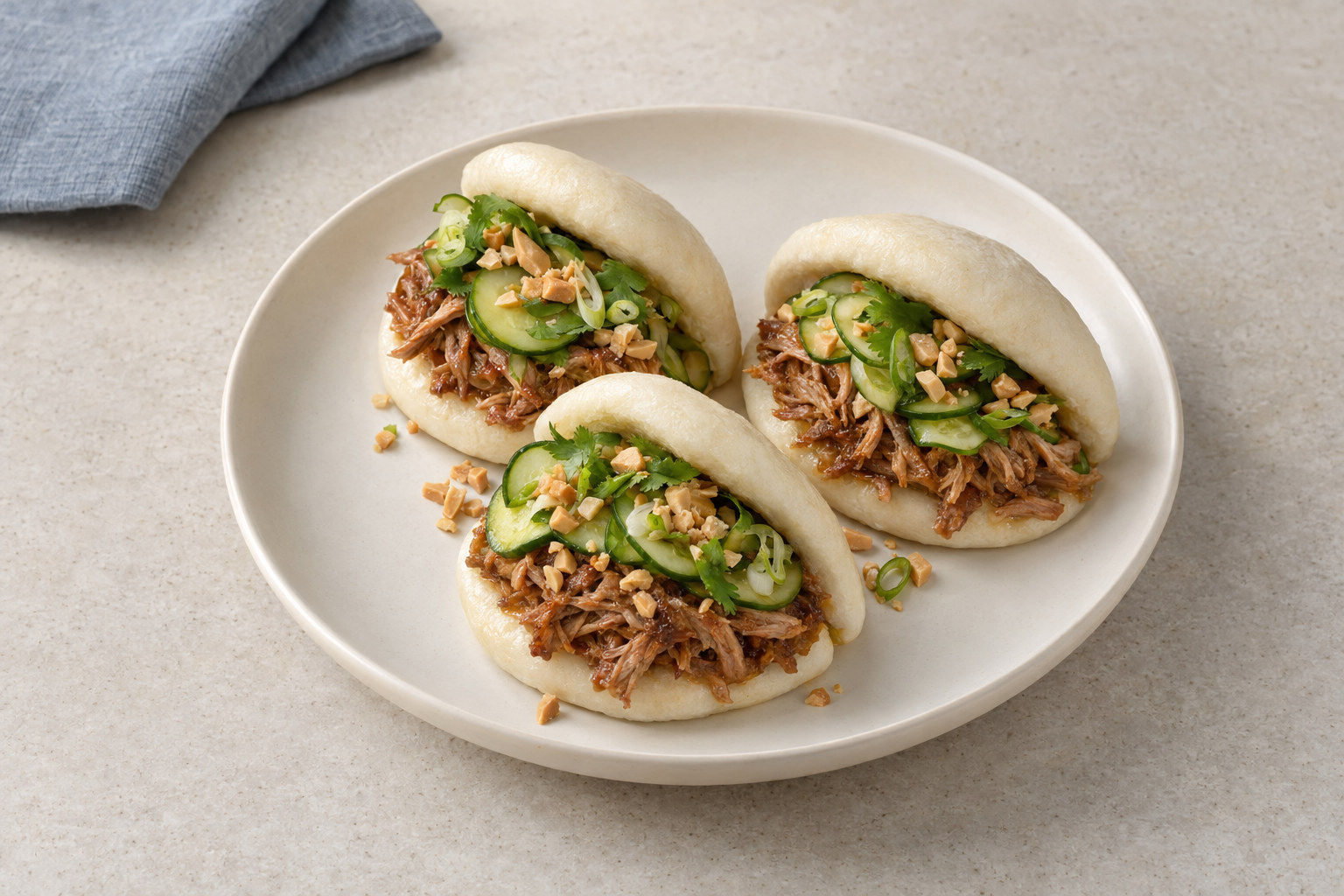
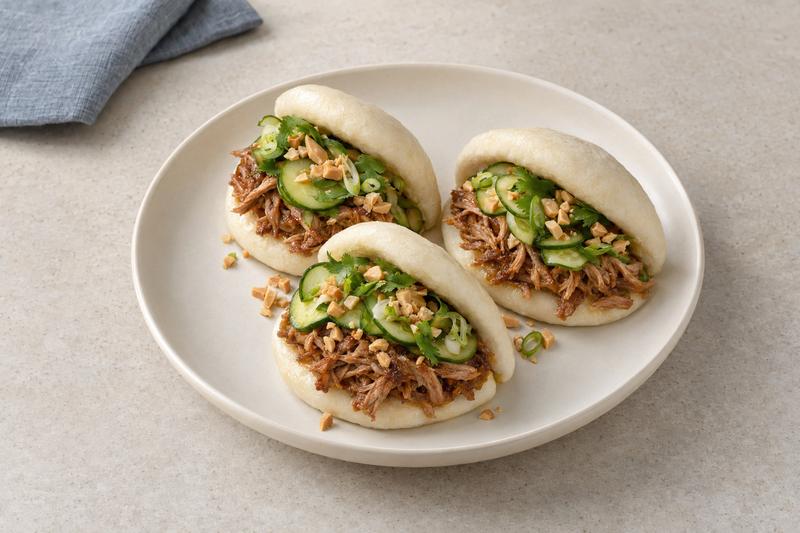
Lightly sweet, fluffy bao are complemented by ginger-scented pork and tangy pickled cucumber. Roasted peanuts add crunch between the soft bun and tender strands of pork.
Step-by-step method
What you will need
- kitchen scales
- knife and chopping board
- probe thermometer
- bowl and tea towel
- rolling pin
- baking paper and scissors
- two-tier steamer with a 30 cm internal diameter
- saucepan to fit the steamer
- fine grater
- 26 cm frying pan
Before we start
The steamer holds six bao: three on each tier. We reheat the meat during the final minutes of steaming.
Make the dough
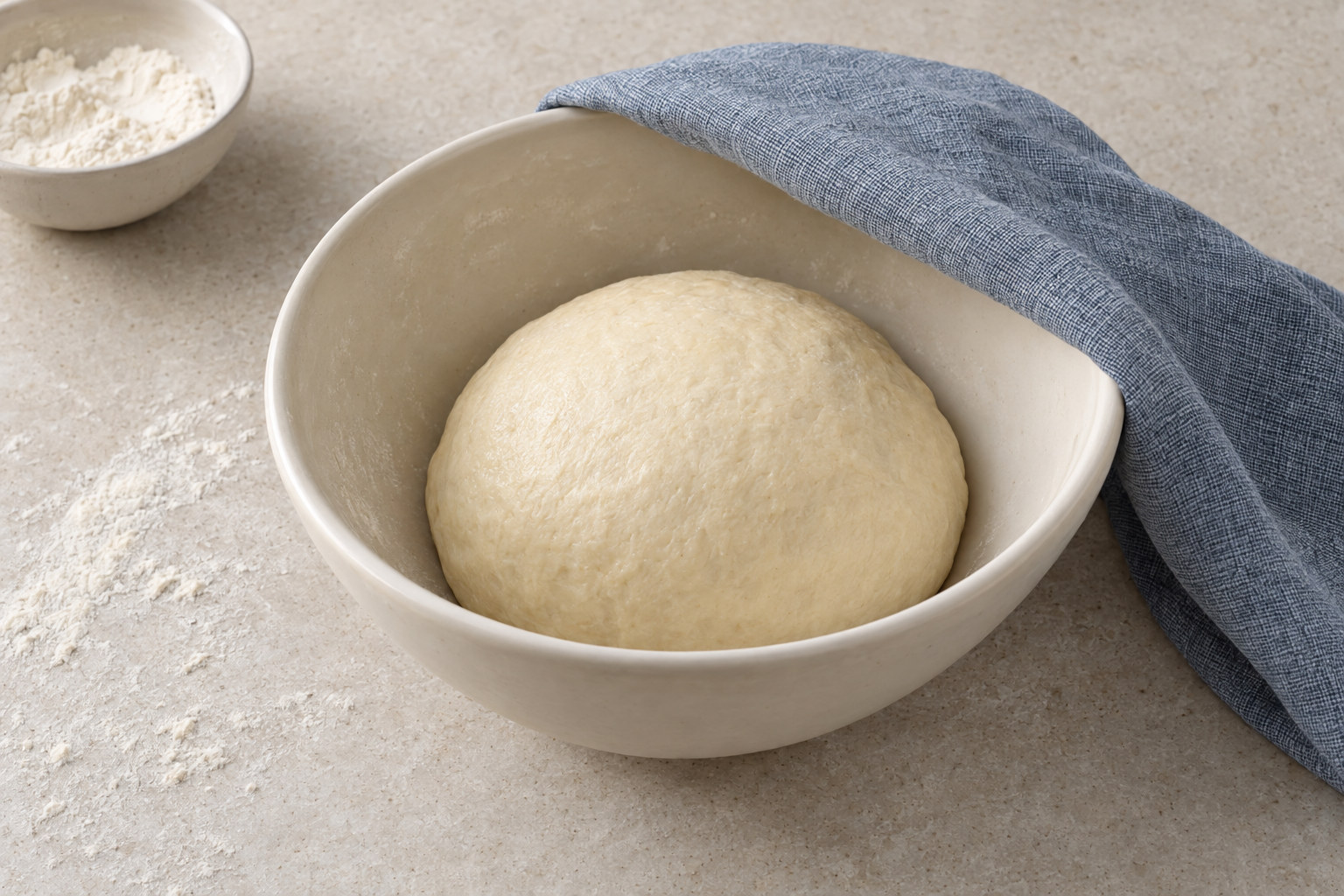
We mix the flour for the dough with the sugar, yeast and salt. We pour in 110 ml lukewarm water and two teaspoons of oil. We knead for 10–12 minutes until the dough is smooth and elastic; it may be sticky for the first few minutes. We cover it in the bowl and leave it to rise at room temperature for 60–90 minutes, until roughly doubled in size.
The dough holds its shape and does not tear straight away when gently stretched.
Pickle the cucumber
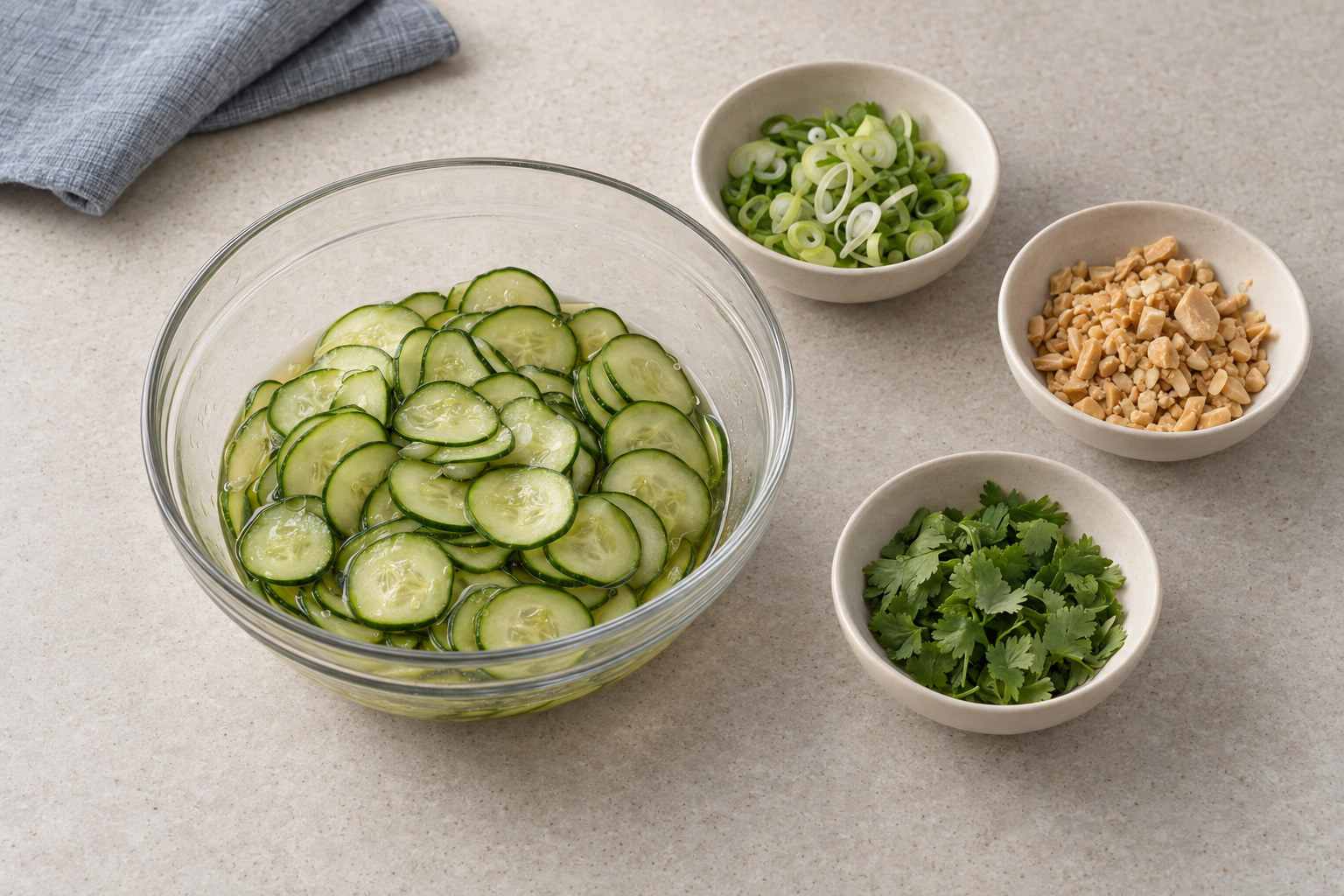
We wash and dry the cucumber, spring onion and coriander. We cut the cucumber into 2 mm rounds. We mix the 20 ml vinegar, one and a half teaspoons of sugar and a pinch of salt allocated to the cucumber, then add the cucumber and put it in the fridge. We thinly slice the spring onion, chop the peanuts and pick the coriander leaves.
After 20 minutes, the cucumber softens slightly but still has a crunch. We drain the released liquid before filling the buns.
Shape the folded bao
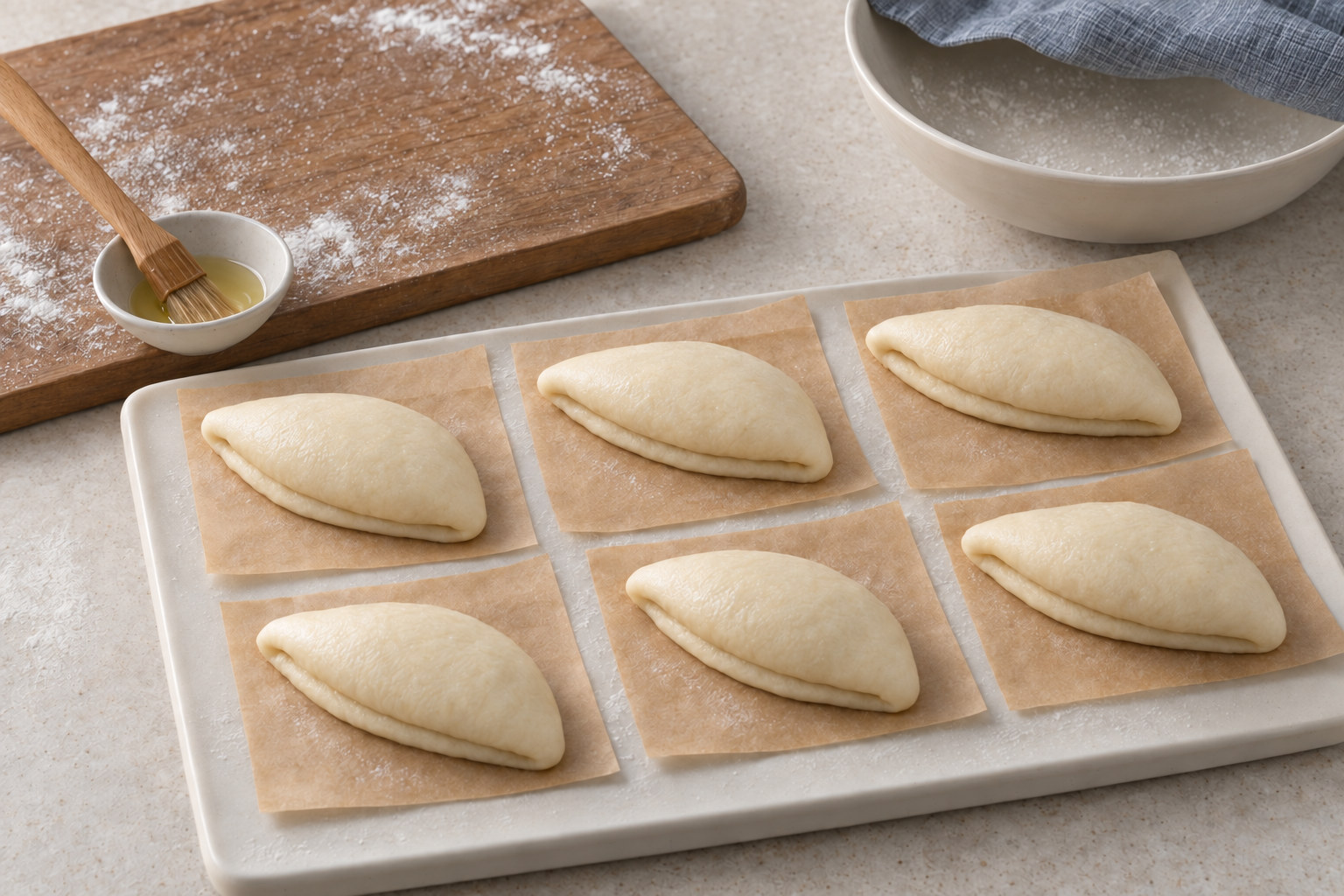
We cut 6 squares of baking paper, about 10 × 10 cm. We divide the risen dough into 6 equal pieces, about 56 g each. We lightly dust the work surface with the flour reserved for dusting and roll out ovals about 9 × 13 cm and 4–5 mm thick. We brush the surfaces with the remaining teaspoon of oil, fold them in half and put each one on its own piece of paper. We cover and leave to prove for another 30–45 minutes.
The bao have visibly expanded, and a light fingertip indentation springs back slowly. The oil prevents the inner surfaces from sticking together.
Steam the bao
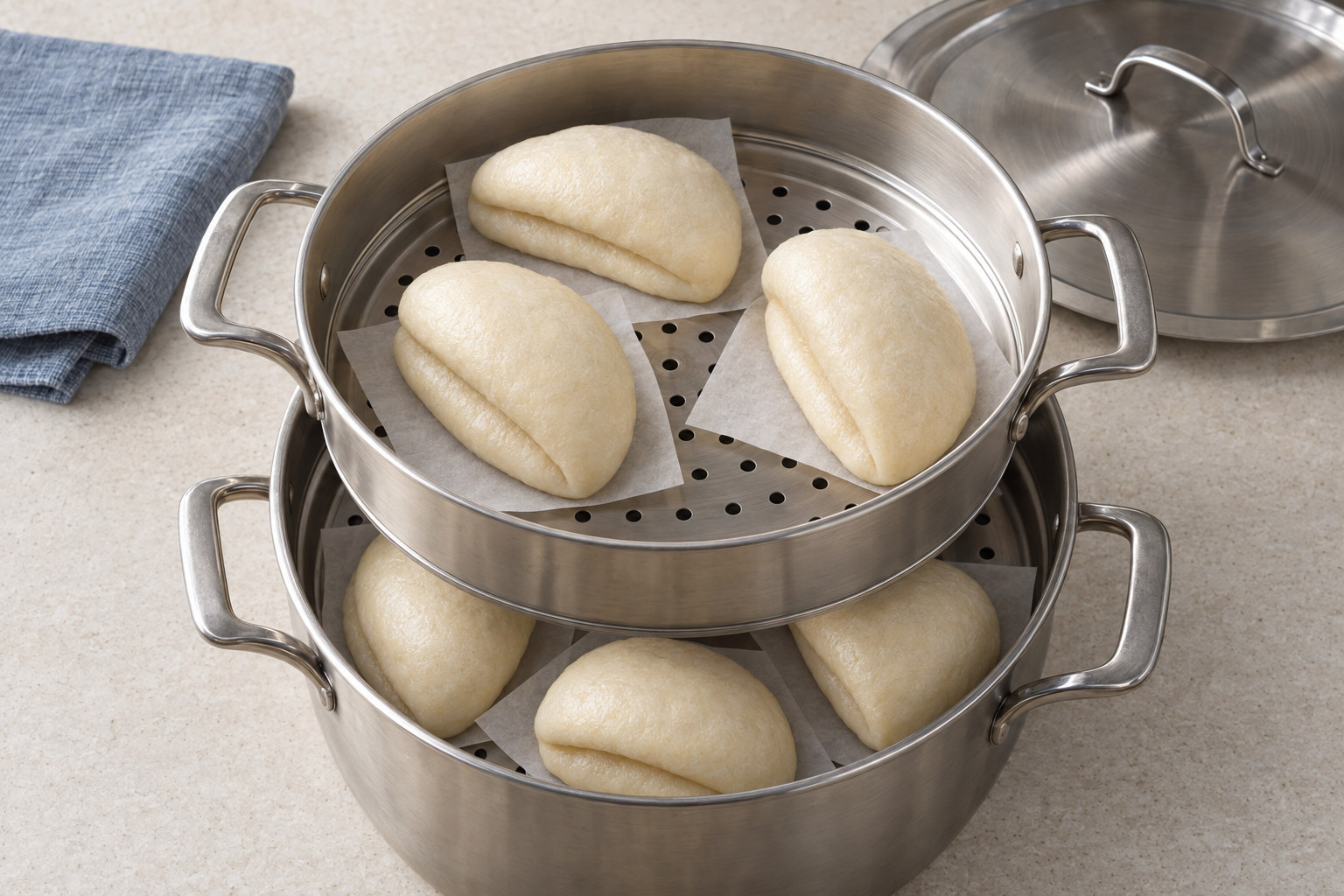
We pour 1500 ml water into the saucepan and bring it to the boil. The level stays below the base of the steamer. We arrange three bao on each of the two tiers, which have a 30 cm internal diameter, leaving gaps of at least 2 cm; the paper must not overlap. We cover and steam for 10–12 minutes over steadily boiling water. We turn off the heat and leave the lid on for 5 minutes. We lift the lid away from us so the hot steam escapes at the back.
The surface is smooth and the dough is fluffy inside, without a gummy strip.
Reheat the meat filling
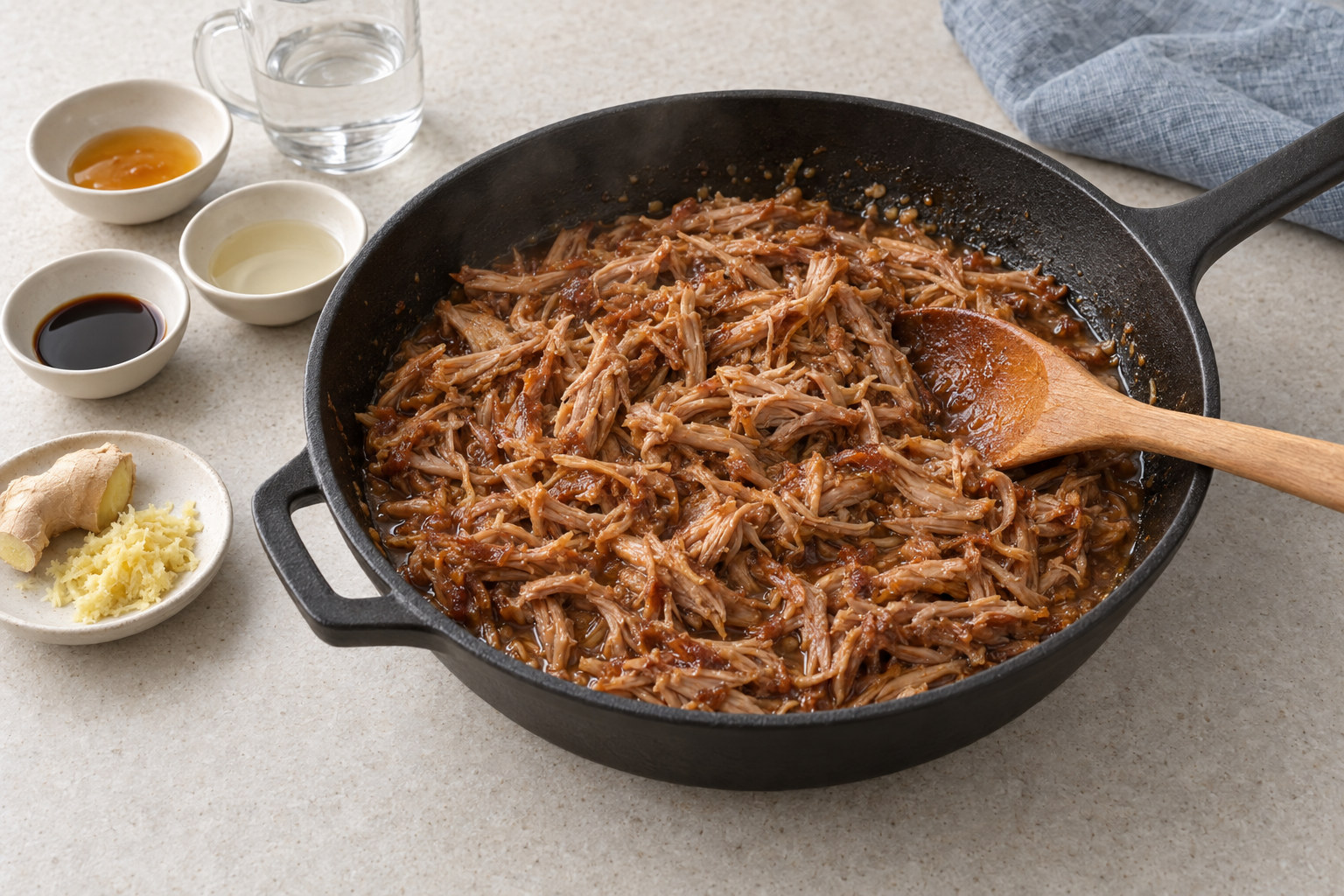
We peel and finely grate the ginger. While the bao are steaming, we put the meat in a 26 cm frying pan. We add the finely grated ginger, honey, soy sauce, vinegar allocated to the meat and 35 ml water. We reheat over a medium heat for 4–6 minutes, stirring occasionally, until the meat reaches at least 74 °C at the centre. We take it off the heat and cover briefly.
The juices lightly coat the strands of meat; we do not reduce them to a thick, salty syrup.
Fill the bao and serve
We carefully open the bao and fill each with an equal share of meat, cucumber, spring onion, peanuts and coriander. We serve three bao per person, with any remaining cucumber alongside. We remove the paper bases before serving.
We fill the bao just before serving.
Tips from our kitchen
- We leave the dough to rise until it has expanded enough. This takes longer in a cool kitchen.
- We keep the paper squares separate so steam can circulate between them.
- We can replace the steamer with a sufficiently large steaming insert and lid; smaller inserts mean more batches and a longer total time.
What to watch out for
- We do not open the lid during steaming or for the first five minutes afterwards.
- We do not overfill the bao with wet filling. We do not arrange the paper bases in a continuous layer in the steamer, as this would block the steam.
How we serve it
- We serve three freshly filled bao per person, with the remaining pickled cucumber alongside. We remove the paper bases before serving.
Ingredient swaps
rice vinegar
the same amount of cider vinegar The filling and cucumber will have a fruitier flavour.
peanuts
the same amount of unsalted roasted sunflower seeds The filling will stay crunchy, but its nutty flavour will change. We check the seed packaging for possible traces of allergens.
During preparation
- We use ready-cooked meat. We take out the amount needed with clean utensils and keep the rest covered in the fridge at no more than 5 °C. Once opened, we use it within 48 hours, as stated on the packaging.
- We reheat the filling to at least 74 °C, including at the centre. If the centre is still cold, we continue heating for longer than the time given in the recipe.
Our inspiration
Fluffy bao are lovely to pick up and bite into, enjoying the soft dough and juicy filling together. To help the buns open easily after steaming, we brush the dough with a thin layer of oil before folding it. We add the meat and cucumber only once the pocket is cooked. That way, the bun stays light and the cucumber keeps its freshness.
Similar recipes
Recipe for 4 people
The time includes up to 90 minutes for the first rise, 45 minutes for the final prove and two batches of steaming. In a cool kitchen, we allow longer for the dough to reach the right volume.
Step-by-step method
Before we start
The steamer holds six bao: three on each tier. We cook twelve in two batches, reheating the meat only during the second batch.
Make the dough
We mix the flour for the dough with the sugar, yeast and salt. We pour in 220 ml lukewarm water and four teaspoons of oil. We knead for 10–12 minutes until the dough is smooth and elastic; it may be sticky for the first few minutes. We cover it in the bowl and leave it to rise at room temperature for 60–90 minutes, until roughly doubled in size.
The dough holds its shape and does not tear straight away when gently stretched.
Pickle the cucumber
We wash and dry the cucumber, spring onion and coriander. We cut the cucumber into 2 mm rounds. We mix the 35 ml vinegar, two and a half teaspoons of sugar and two pinches of salt allocated to the cucumber, then add the cucumber and put it in the fridge. We thinly slice the spring onion, chop the peanuts and pick the coriander leaves.
After 20 minutes, the cucumber softens slightly but still has a crunch. We drain the released liquid before filling the buns.
Shape the folded bao
We cut 12 squares of baking paper, about 10 × 10 cm. We divide the risen dough into 12 equal pieces, about 56 g each. We lightly dust the work surface with the flour reserved for dusting and roll out ovals about 9 × 13 cm and 4–5 mm thick. We brush the surfaces with the remaining two teaspoons of oil, fold them in half and put each one on its own piece of paper. We cover and leave to prove for another 30–45 minutes.
The bao have visibly expanded, and a light fingertip indentation springs back slowly. The oil prevents the inner surfaces from sticking together.
Steam the bao
We pour 2000 ml water into the saucepan and bring it to the boil. The level stays below the base of the steamer. We arrange three bao on each of the two tiers, which have a 30 cm internal diameter, leaving gaps of at least 2 cm; the paper must not overlap. We cover and steam for 10–12 minutes over steadily boiling water. We turn off the heat and leave the lid on for 5 minutes. We move the first six bao under a clean, dry tea towel. We steam the second six in the same way, keeping the waiting dough covered in a cooler part of the kitchen. We check the water level before the second batch.
The surface is smooth and the dough is fluffy inside, without a gummy strip.
Reheat the meat filling
We peel and finely grate the ginger. While the last batch of bao is steaming, we divide the meat between two frying pans, 300 g in each. We add the finely grated ginger, honey, soy sauce, vinegar allocated to the meat and 60 ml water, dividing everything equally between the pans. We reheat over a medium heat for 4–6 minutes, stirring occasionally, until the meat reaches at least 74 °C at the centre. We take the pans off the heat and cover briefly.
The juices lightly coat the strands of meat; we do not reduce them to a thick, salty syrup.
Fill the bao and serve
We carefully open the bao and fill each with an equal share of meat, cucumber, spring onion, peanuts and coriander. We serve three bao per person, with any remaining cucumber alongside. The first batch waits no longer than it takes to cook the second; if it has dried out, we return it to the steam for 1 minute before filling. We remove the paper bases before serving.
We fill the bao just before serving.