
Boxxi original · British-inspired
Pressed pork knuckle with quick piccalilli and roast potatoes
This time we turn pork knuckle into a cold terrine: a clean slice reveals pieces of meat, parsley and a delicate clear jelly. We serve it with tangy mustard piccalilli and hot roast potatoes. We start the day before so the terrine can set firmly overnight.
We start the day before. The terrine needs at least 12 hours in the refrigerator; we roast the potatoes just before serving. Even with a longer overnight rest, we stay within 48 hours of opening the meat.
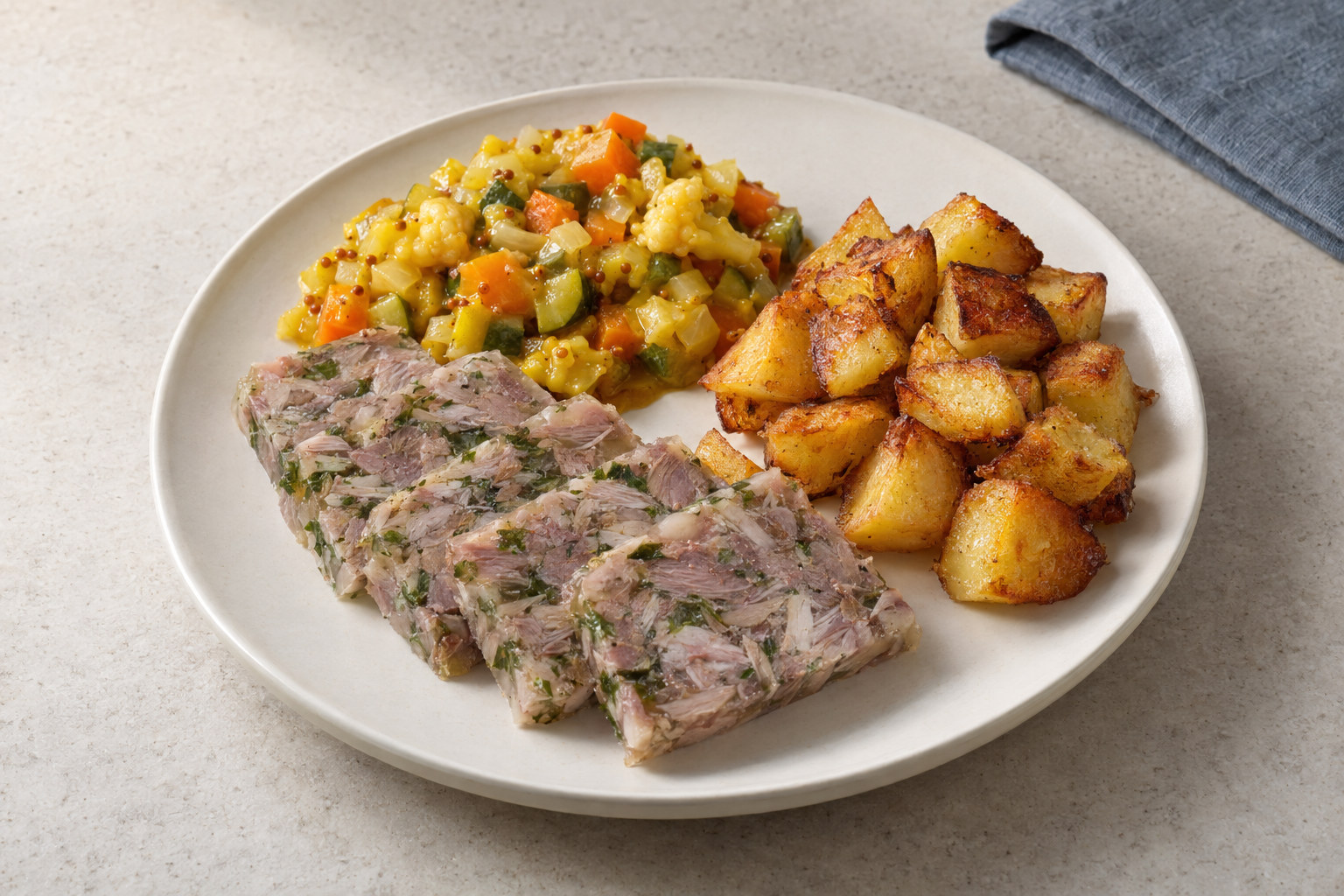
Juicy cold slices of pork in a light jelly meet crisp, tangy mustard vegetables and potatoes with golden roasted edges.
Step-by-step method
What you will need
- kitchen scales
- knife and chopping board
- meat thermometer
- oven
- 25 × 20 cm roasting dish
- foil
- one shallow 1-litre food container with a base about 20 × 10 cm
- small shallow dish for any excess
- cling film
- flat lid or food-safe board for weighting
- clean 500 g weight for each container
- refrigerator at no more than 4 °C with a free shelf
- 2 l saucepan
- 1 litre saucepan
- shallow dish for the piccalilli
- whisk
- colander
- 40 × 30 cm tray
Before we start
On day one we make both the terrine and piccalilli. On day two we only roast the potatoes and slice the terrine just before serving. We chill it in a shallow container, with any excess in another shallow dish.
Warm and pick the pork knuckle
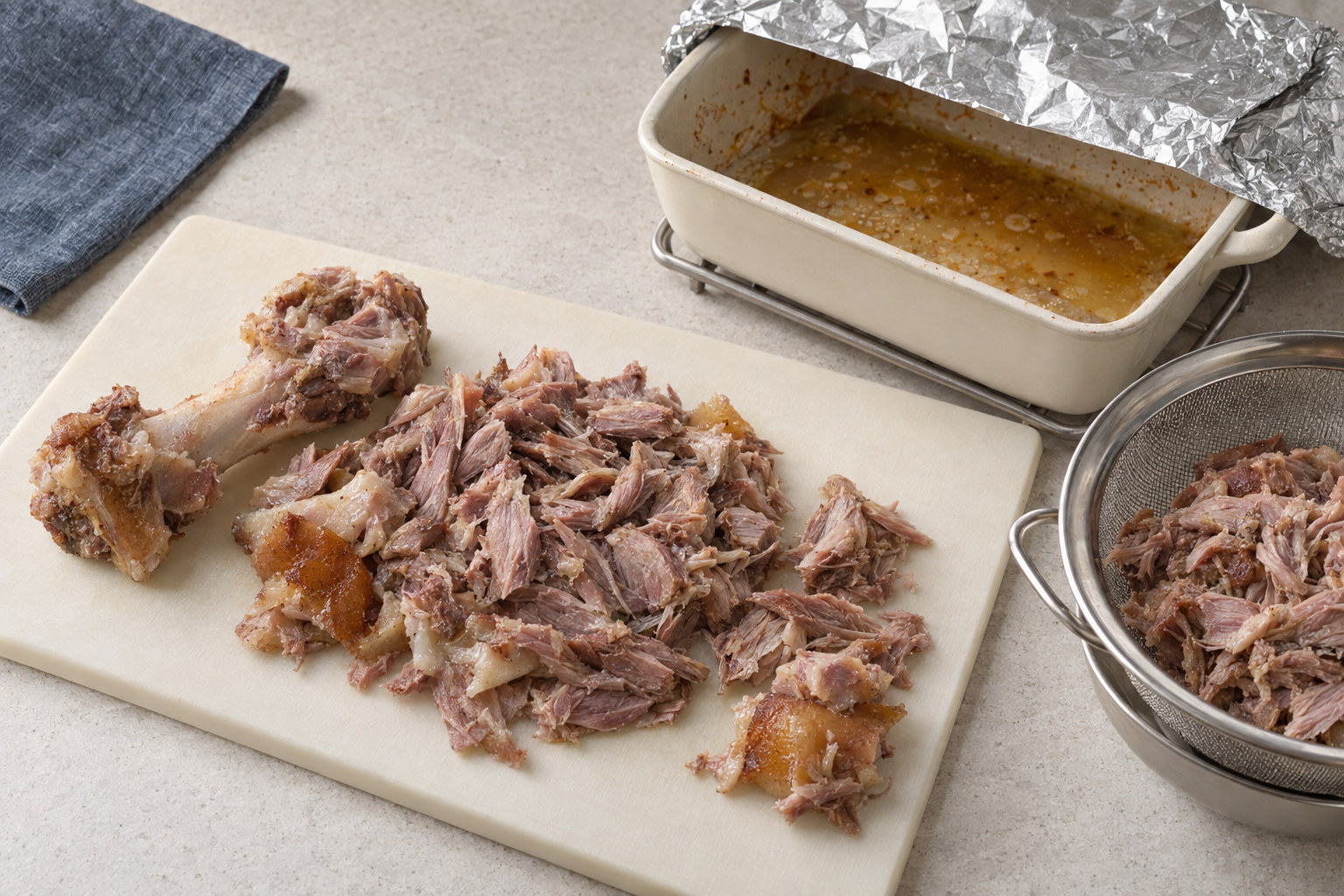
The day before serving, we preheat the oven to 180 °C with top and bottom heat. We remove the pork knuckle from its packaging, place it in a roasting dish, add 40 ml water and cover with foil. After 15–20 minutes we check the meat temperature near the bone without touching the bone with the probe; if below 74 °C, we continue in 5-minute intervals. We do not brown the skin. We let it cool for 5 minutes, then use clean utensils to separate the meat from the bones and remove the skin, tough cartilage and large pieces of fat. We briefly drain the meat in a colander and use all of it in the terrine. We continue while it is still slightly warm, not cold from the refrigerator. We keep the roasting juices separate and do not add them to the jelly.
Make the jelly and fill the mould
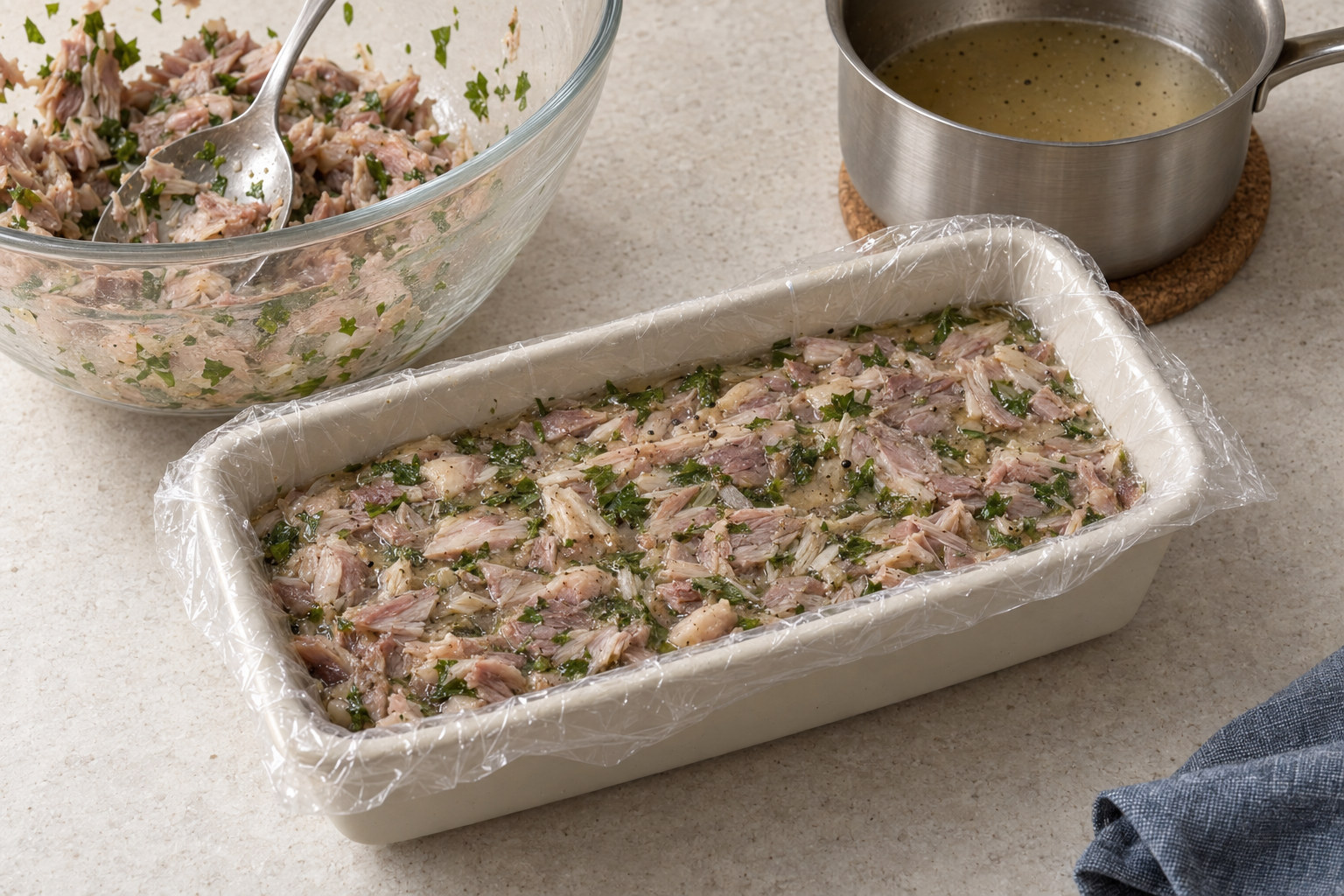
We wash, dry and chop the parsley. Of the 160 ml water for the jelly, we bring 50 ml to the boil and take it off the heat. Stirring constantly, we sprinkle in 6 g Natura clear gelatine and let it dissolve fully; we do not boil it again. We add the remaining 110 ml cold water, lemon juice and pepper. We cut the still-warm meat into 1–2 cm pieces and mix it with the chopped parsley. We immediately combine it with the lukewarm liquid jelly so the jelly does not set in lumps. We line one shallow rectangular container with a base about 20 × 10 cm with cling film. We put in the meat and jelly, press out air pockets with a spoon and level the surface. The layer must be no deeper than 4 cm; we put any excess in another small shallow dish.
The jelly fills the spaces between the meat.
Weight and chill the terrine
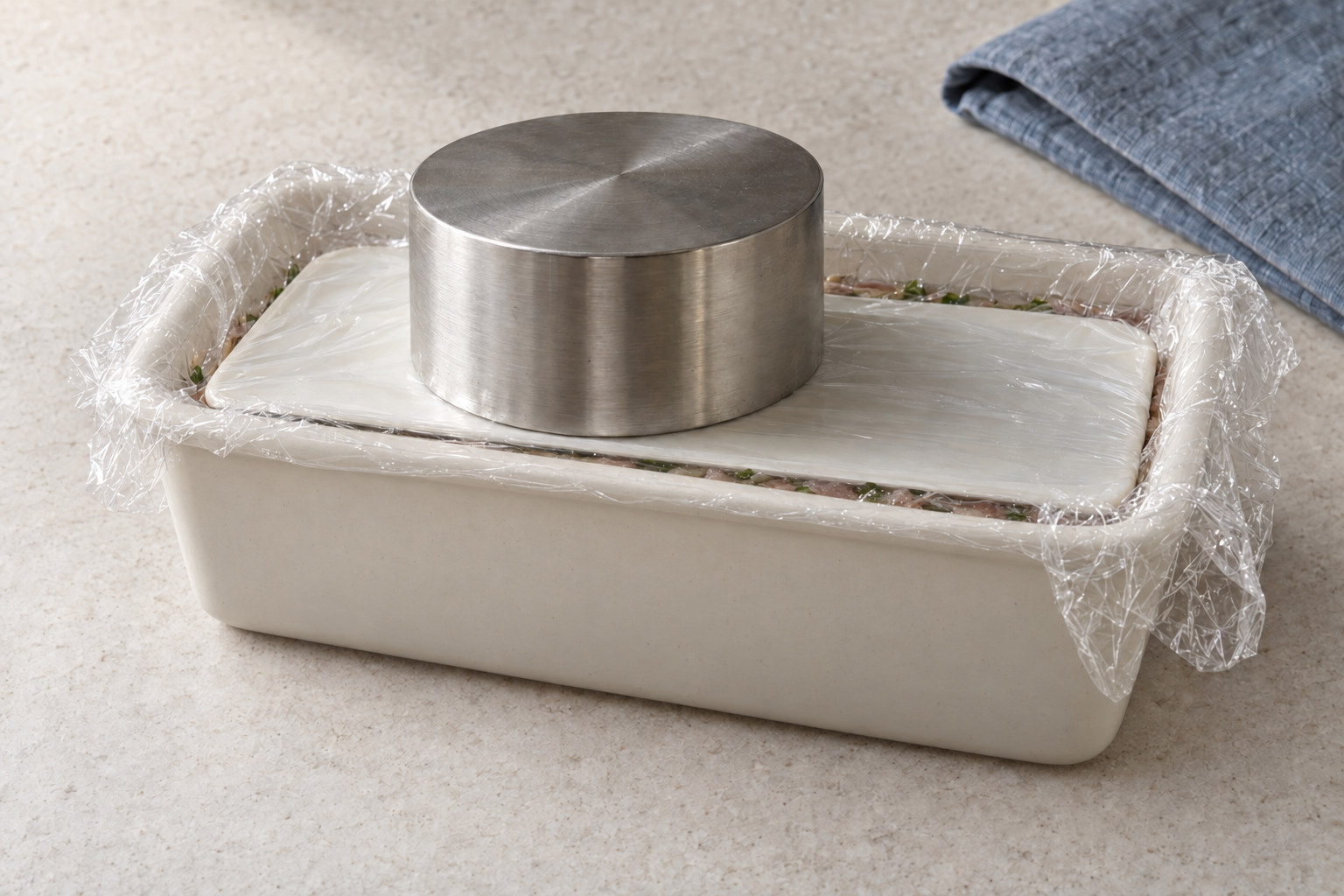
We cover the surface with cling film, add a flat food-safe board or lid that fits inside and lightly weight it with about 500 g. We let it cool for no more than 15 minutes until it is no longer steaming heavily, then put it in a refrigerator at no more than 4 °C. It must be chilled within 2 hours of finishing the meat in the oven. We chill for at least 12 hours, leaving space around the container for cold air to circulate.
Once chilled, the terrine holds a clean slice and the jelly fills the spaces between the meat.
Make quick piccalilli
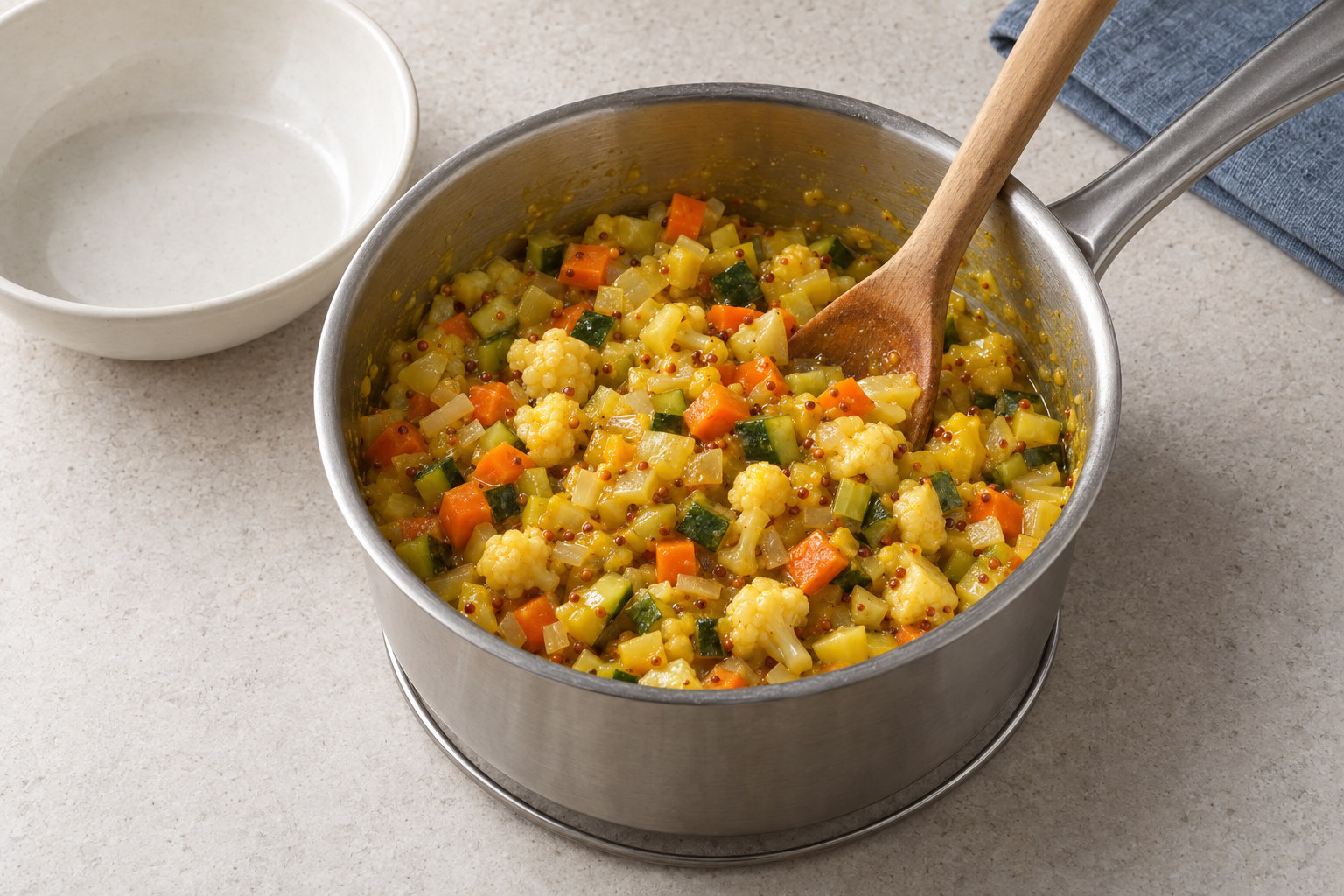
We wash the cauliflower and cucumber and peel the carrot and onion. We remove the watery cucumber seeds. We break the cauliflower into 8 mm florets, cut the carrot and cucumber into 5 mm dice and finely chop the onion. We boil the carrot in plenty of water for 2 minutes, add the cauliflower for another 1 minute and drain everything. In a small saucepan we bring the vinegar, 30 ml water, sugar and mustard seeds to a gentle boil and cook for 2 minutes. We mix the mustard, turmeric and starch with the remaining 10 ml cold water, pour it in and cook for 1 minute, stirring. We add all the vegetables, including the raw cucumber and onion, stir, spread in a shallow dish and, after a brief cooling, cover and refrigerate. We serve it the following day with the terrine.
The vegetables stay crisp and the yellow mustard sauce clings to the small pieces. We serve piccalilli as a fresh side dish; we do not preserve it in jars.
Bake the potatoes
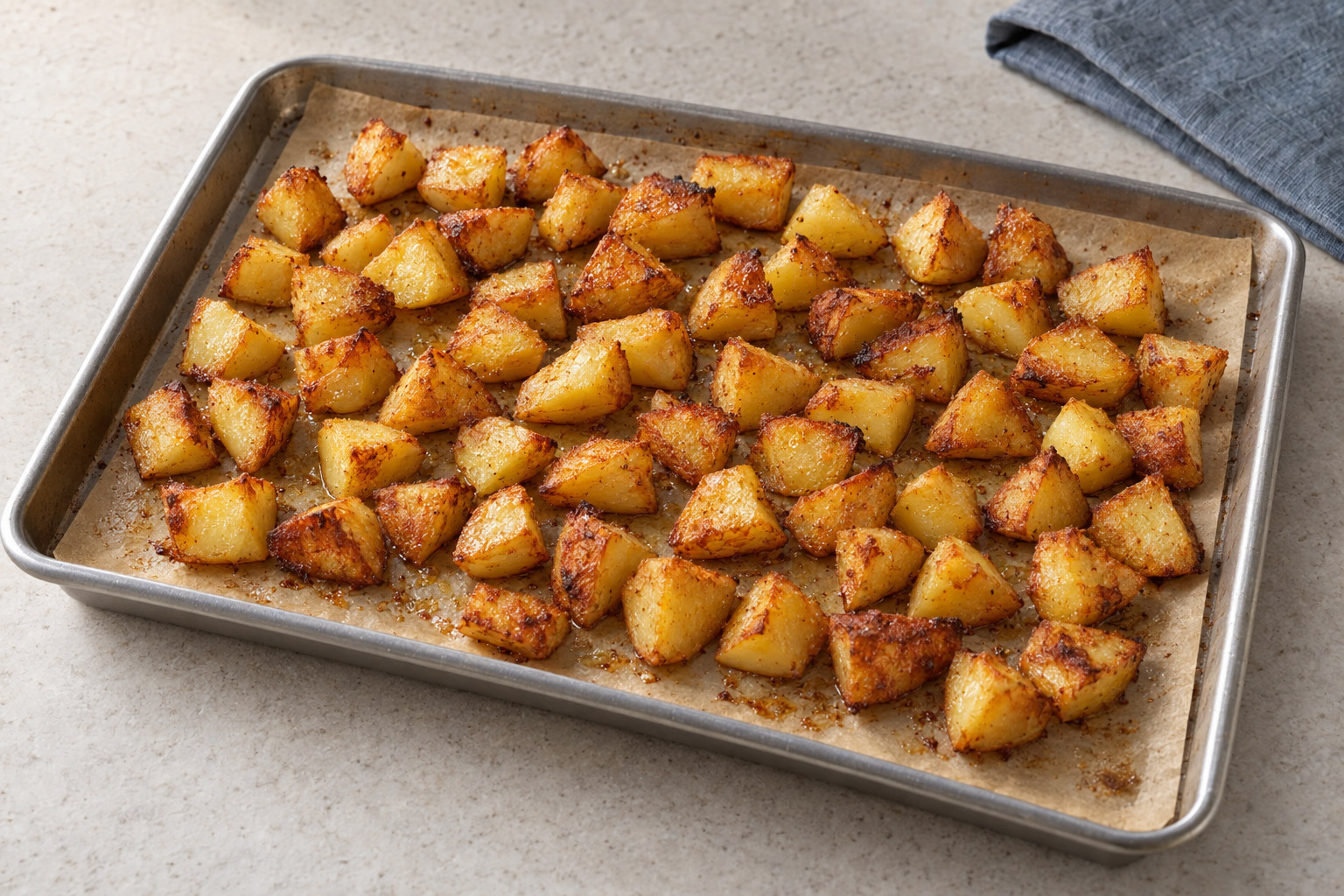
The next day, before serving, we preheat the oven to 210 °C with top and bottom heat. We peel the potatoes and cut them into 2 cm dice, then toss with one tablespoon oil and two pinches salt. We spread them in a single layer on a 40 × 30 cm baking tray. We roast for 30–40 minutes until tender and golden, turning halfway through. Meanwhile, we keep the terrine and piccalilli refrigerated.
The potatoes have golden edges and tender centres.
Slice the terrine and serve
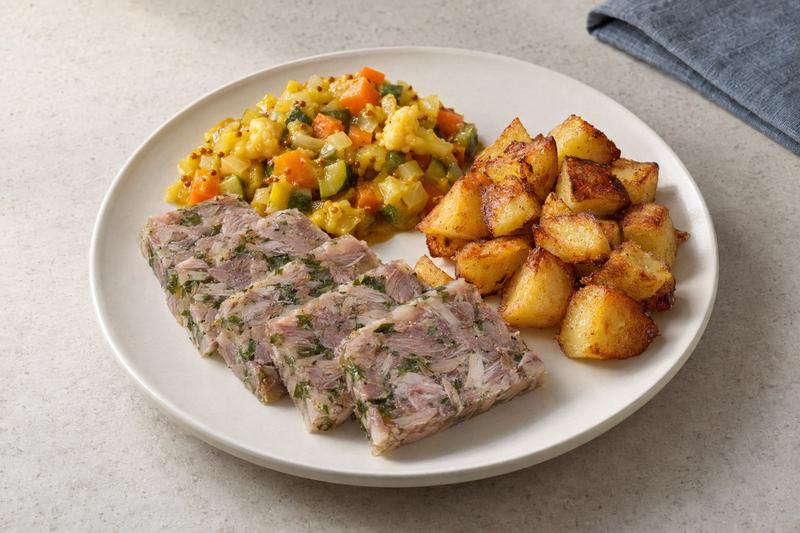
We turn out the terrine, remove the cling film and use a sharp knife to cut it into 12 roughly equal slices. We divide the contents of one container between two people, usually 6 slices each; we divide any contents of the small dish equally. We put the cold terrine on 2 plates, with warm potatoes and chilled piccalilli beside it. We do not put the potatoes on the jelly, where their heat would melt it.
Tips from our kitchen
- We clear space in the refrigerator for the shallow container and its weight in advance. We do not put the terrine in a deep bowl, where it would cool slowly.
- We choose gelatine by the stated setting ratio; cake glaze and instant gelatine setting agents behave differently.
What to watch out for
- We do not add an unmeasured amount of roasting juices or extra water to the measured jelly.
- We do not put the terrine on a hot plate or cover it with potatoes; the jelly would soften.
How we serve it
- We usually divide the cold terrine into six slices per person and add piccalilli. We place the hot roast potatoes beside it so they do not melt the jelly.
Ingredient swaps
Dijon mustard
the same amount of smooth full-fat mustard The piccalilli will be milder and, depending on the brand, sweeter; we add no more sugar.
Natura gelatine
use clear gelatine with a setting ratio of 20 g per 550–600 ml We do not automatically use the same number of grams with a different setting strength; we follow the maker’s instructions for a firm meat aspic.
Ingredient notes
- We use a knuckle that has already been boiled and then roasted. Once we heat it through thoroughly, it needs no further long cooking.
- We share one 750 g pack between two people. After heating, we remove the meat from the bone.
- The product contains 1.4 g of salt per 100 g and wheat flour in the fried onion. We add no more salt to the meat and do not reduce the roasting juices into a salty sauce.
During preparation
- We use a product that has already been cooked. Once opened, we keep it at or below 5 °C and use it within 48 hours, following the manufacturer’s instructions.
- We heat the knuckle without its retail packaging at 180 °C, following the manufacturer’s instructions. After 15–20 minutes, we measure the temperature in the meaty part beside the bone without touching the bone with the probe; if it is below 74 °C, we continue heating in 5-minute increments. When preparing two packs, we check both pieces.
- We account for wheat from the fried onion in the product. Even with a naturally gluten-free side, we therefore do not treat this as a gluten-free meal.
- We prepare the terrine a day ahead, cool it quickly in a shallow layer and refrigerate it within 2 hours of finishing the meat in the oven. We keep it at no more than 4 °C and serve the following day, still within 48 hours of opening the product. We do not preserve the vegetables; we refrigerate them too.
Our inspiration
Galton Blackiston, who co-founded Morston Hall in Norfolk, began by selling cakes, bread and jams at the market in Rye, England, in 1979. He serves piccalilli, vegetables in a tangy mustard sauce, with his pork knuckle terrine. The pairing inspired our own version using ready-cooked knuckle. We accompany the cold meat with quick piccalilli and keep the hot potatoes alongside so the delicate jelly holds its shape.
Similar recipes
Recipe for 4 people
Step-by-step method
Before we start
On day one we make both the terrine and piccalilli. On day two we only roast the potatoes and slice the terrine just before serving. For four portions, we chill two shallow containers and roast the potatoes on two oven levels, swapping the trays.
Warm and pick the pork knuckle
The day before serving, we preheat the oven to 180 °C with top and bottom heat. We remove both pork knuckles from their packaging, place them in a roasting dish, add 70 ml water and cover with foil. After 15–20 minutes we check the meat temperature near the bone in both pieces without touching the bone with the probe; if below 74 °C, we continue in 5-minute intervals. We do not brown the skin. We let them cool for 5 minutes, then use clean utensils to separate the meat from the bones and remove the skin, tough cartilage and large pieces of fat. We briefly drain the meat in a colander and use all of it in the terrines. We continue while it is still slightly warm, not cold from the refrigerator. We keep the roasting juices separate and do not add them to the jelly.
Make the jelly and fill the mould
We wash, dry and chop the parsley. Of the 320 ml water for the jelly, we bring 100 ml to the boil and take it off the heat. Stirring constantly, we sprinkle in 12 g Natura clear gelatine and let it dissolve fully; we do not boil it again. We add the remaining 220 ml cold water, lemon juice and pepper. We cut the still-warm meat into 1–2 cm pieces and mix it with the chopped parsley. We immediately combine it with the lukewarm liquid jelly so the jelly does not set in lumps. We line two matching shallow rectangular containers, each with a base about 20 × 10 cm, with cling film. We divide the meat and jelly evenly between them, press out air pockets with a spoon and level the surface. The layer must be no deeper than 4 cm; we put any excess in another small shallow dish.
The jelly fills the spaces between the meat.
Weight and chill the terrine
We cover each surface with cling film, add a flat food-safe board or lid that fits inside and lightly weight each container with about 500 g. We let them cool for no more than 15 minutes until they are no longer steaming heavily, then put them in a refrigerator at no more than 4 °C. The terrines must be chilled within 2 hours of finishing the meat in the oven. We chill for at least 12 hours. We place both containers side by side with a gap, not stacked.
Once chilled, the terrine holds a clean slice and the jelly fills the spaces between the meat.
Make quick piccalilli
We wash the cauliflower and cucumber and peel the carrot and onion. We remove the watery cucumber seeds. We break the cauliflower into 8 mm florets, cut the carrot and cucumber into 5 mm dice and finely chop the onion. We boil the carrot in plenty of water for 2 minutes, add the cauliflower for another 1 minute and drain everything. In a small saucepan we bring the vinegar, 55 ml water, sugar and mustard seeds to a gentle boil and cook for 2 minutes. We mix the mustard, turmeric and starch with the remaining 15 ml cold water, pour it in and cook for 1 minute, stirring. We add all the vegetables, including the raw cucumber and onion, stir, spread in a shallow dish and, after a brief cooling, cover and refrigerate. We serve it the following day with the terrine.
The vegetables stay crisp and the yellow mustard sauce clings to the small pieces. We serve piccalilli as a fresh side dish; we do not preserve it in jars.
Bake the potatoes
The next day, before serving, we preheat the oven to 210 °C with top and bottom heat. We peel the potatoes and cut them into 2 cm dice, then toss with two tablespoons oil and ¼ teaspoon salt. We spread them in a single layer on two 40 × 30 cm baking trays. We roast for 35–45 minutes until tender and golden, turning them and swapping the top and bottom trays halfway through. Meanwhile, we keep the terrine and piccalilli refrigerated.
The potatoes have golden edges and tender centres.
Slice the terrine and serve
We turn out both terrines, remove the cling film and use a sharp knife to cut each into 12 roughly equal slices. We divide the contents of each container between two people, usually 6 slices each; we divide any contents of the small dish equally. We put the cold terrine on 4 plates, with warm potatoes and chilled piccalilli beside it. We do not put the potatoes on the jelly, where their heat would melt it.