
From the Boxxi kitchen · Czech and Central European inspiration
Pork knuckle with bread dumplings, red cabbage and beer gravy
A piece of pork knuckle, soft bread dumpling and tangy red cabbage come together in one mouthful with a delicate beer gravy. The meat is already cooked, but we make the dumpling ourselves and cook it wrapped in a tea towel. This is a lunch for when we want to set the table and linger over our meal.
We allow 30 minutes for the bread to soak and 30 minutes to cook the dumpling. We prepare the cabbage and gravy at the same time. We start preheating the oven during the last 15 minutes of soaking; the knuckle may need longer to heat through to the bone.
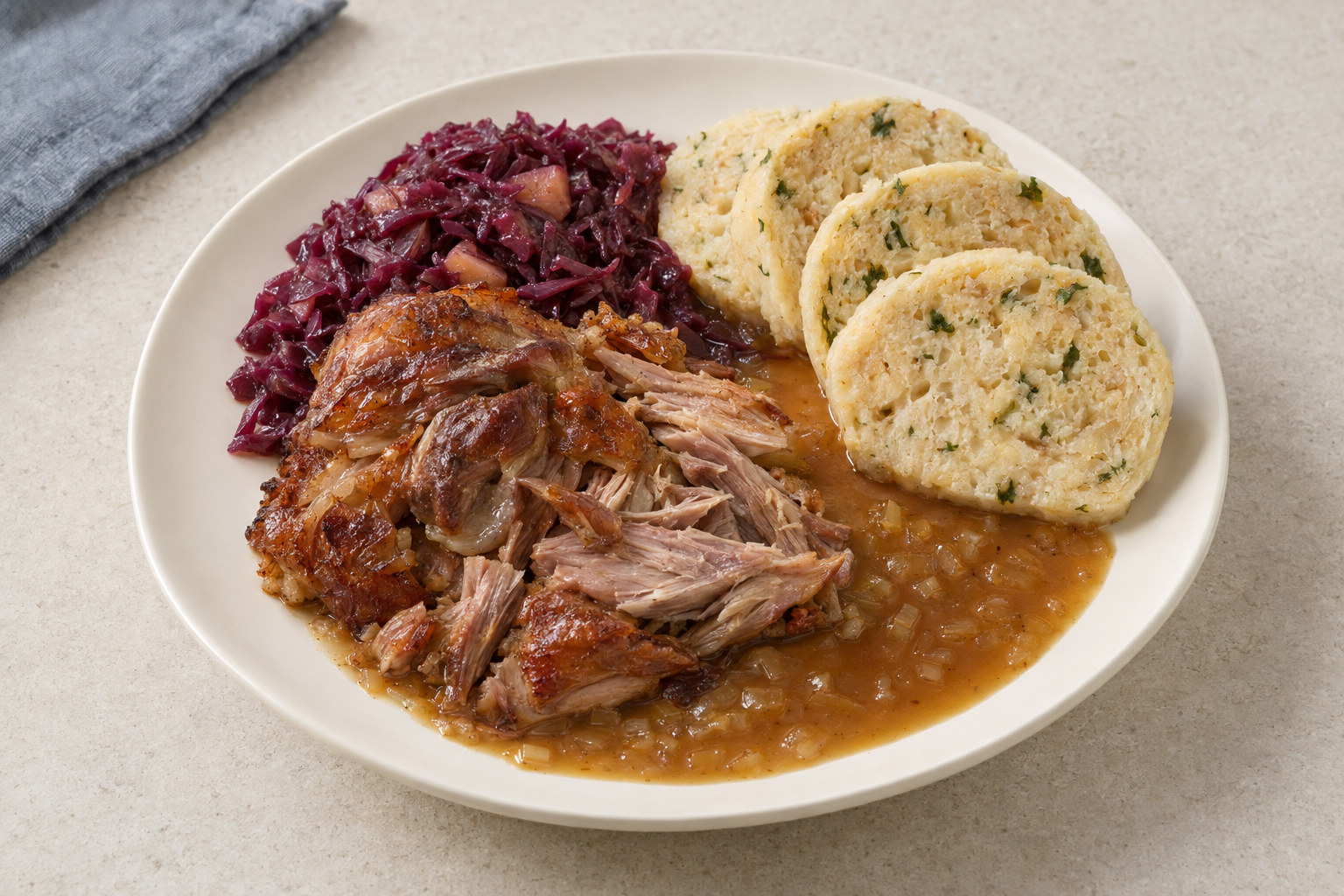
Juicy pork is complemented by an airy bread dumpling, tangy cabbage and a slightly bitter onion gravy with beer.
Step-by-step method
What you will need
- kitchen scales
- knife and chopping board
- probe thermometer
- oven
- 25 × 20 cm roasting tin
- foil
- wide 6-litre saucepan, at least 28 cm in diameter
- 2-litre pan with a lid
- 1-litre saucepan
- one cotton tea towel for cooking and one dry tea towel
- kitchen string
- whisk
- bowl
- kettle for extra hot water
Before we start
We prepare the cabbage while the bread soaks. At the end of the soaking time, we put the meat into the preheated oven and only then heat the dumpling water, giving the meat a head start of about 10–15 minutes. We make the gravy on a second hob ring while the dumpling cooks. If the dumpling has to wait, we keep it in a clean, dry tea towel; before slicing, we can return it, still wrapped in the towel, to gently boiling water for 3 minutes.
Soak the bread in milk and eggs
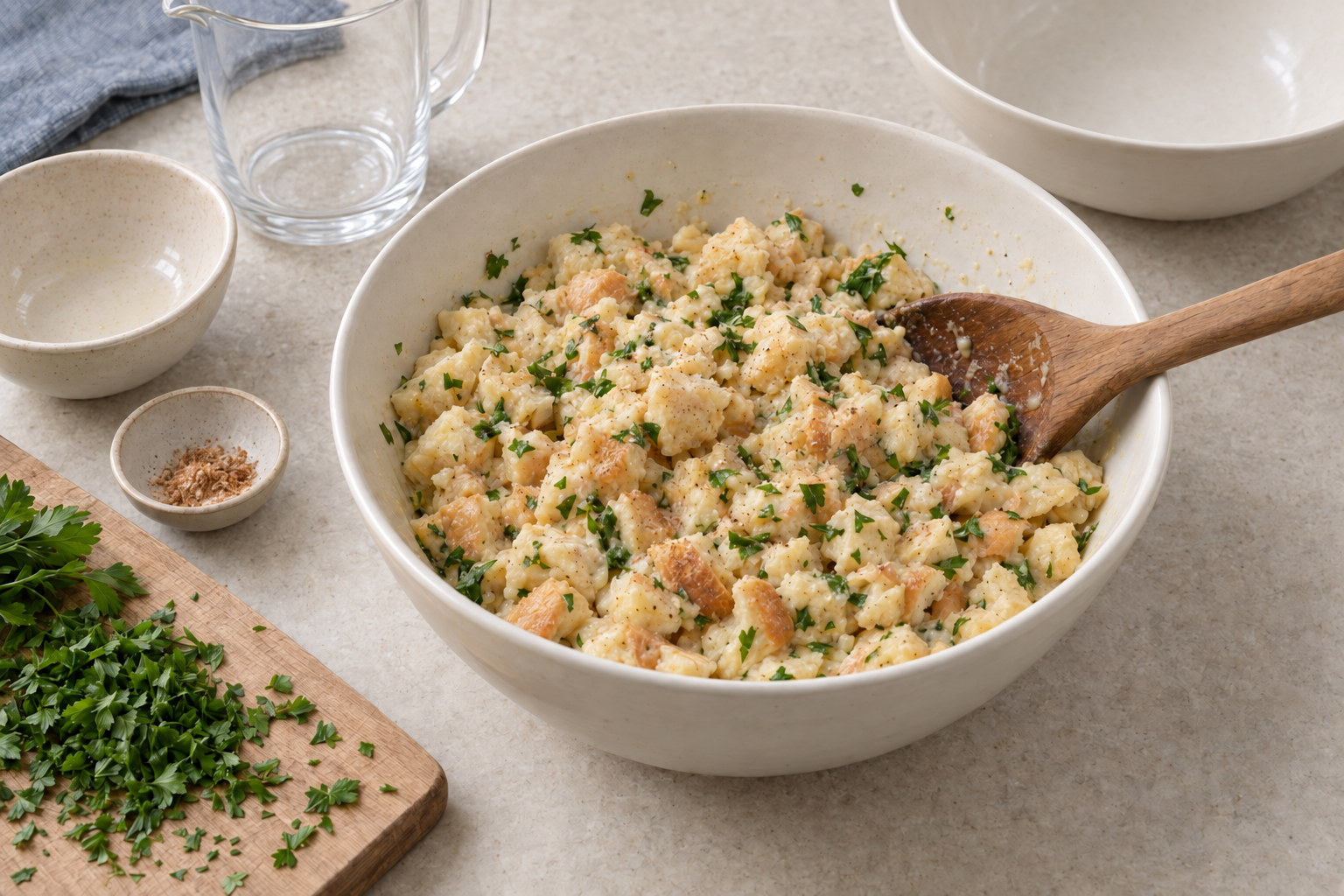
We wash, dry and chop the parsley. We cut the dry bread rolls into 1 cm cubes. In a bowl, we beat the eggs with 180 ml milk and the nutmeg. We pour over the bread, stir in the chopped parsley and leave to soak for 30 minutes, gently stirring again after 15 minutes. We do not add salt because the bread and meat already contain it. Meanwhile, we prepare the cabbage.
The cubes soften inside and the mixture holds together, with no large pool of milk left at the bottom.
Braise the red cabbage
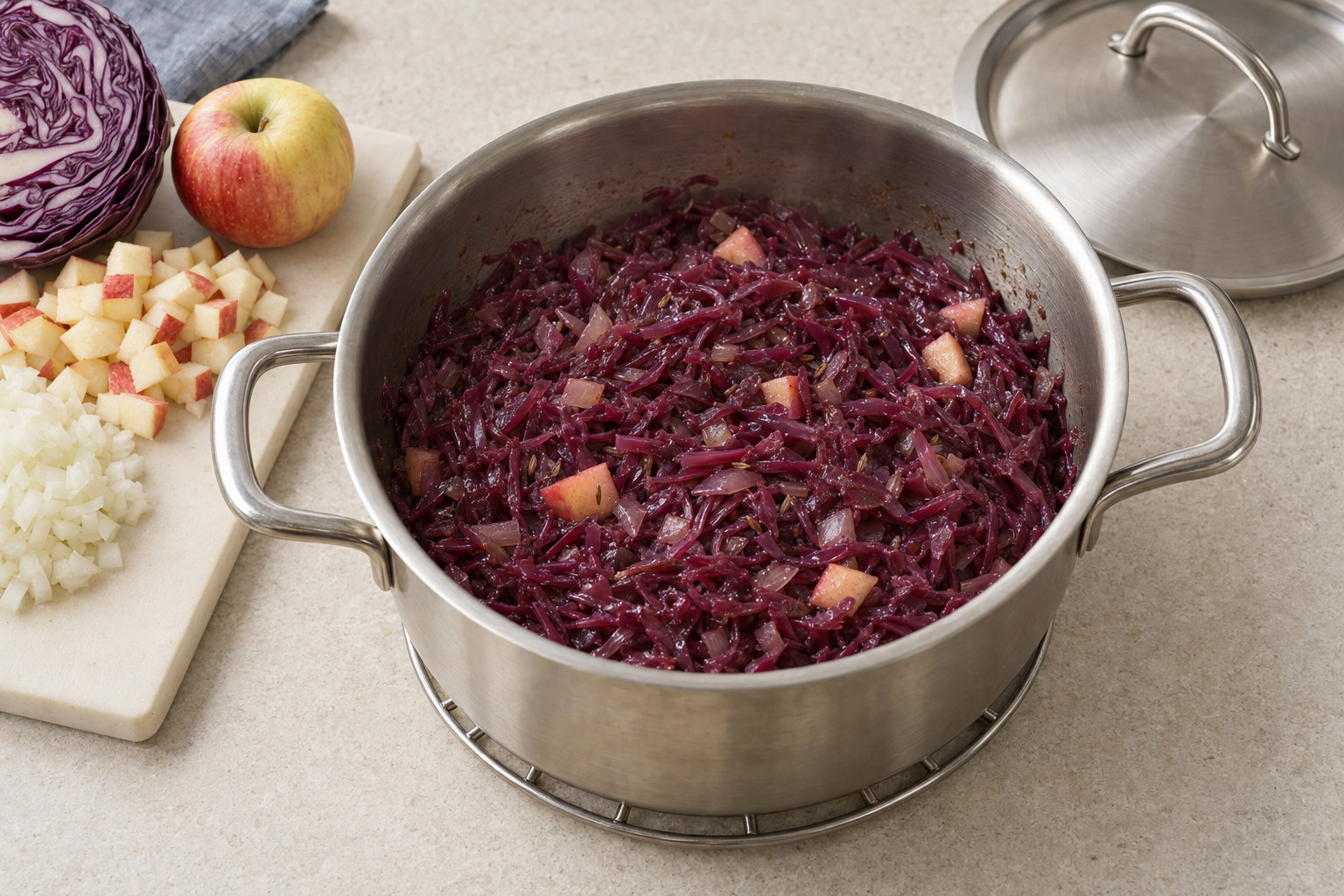
We wash the cabbage and apple and peel the onion. We remove the cabbage core and core the apple. We shred the cabbage into 2 mm strips, finely chop the onion and cut the apple into 5 mm cubes. We soften the onion in two teaspoons of butter for 4 minutes. We add the cabbage, apple, caraway, a pinch of salt and 100 ml water. We cover and braise gently for 25–30 minutes. Finally, we stir in 15 ml vinegar and cook uncovered for 2–3 minutes to evaporate any excess liquid. We take the cooked cabbage off the heat and leave it covered.
The cabbage is tender but still in distinct strips, with no watery liquid at the bottom.
Reheat the pork knuckle
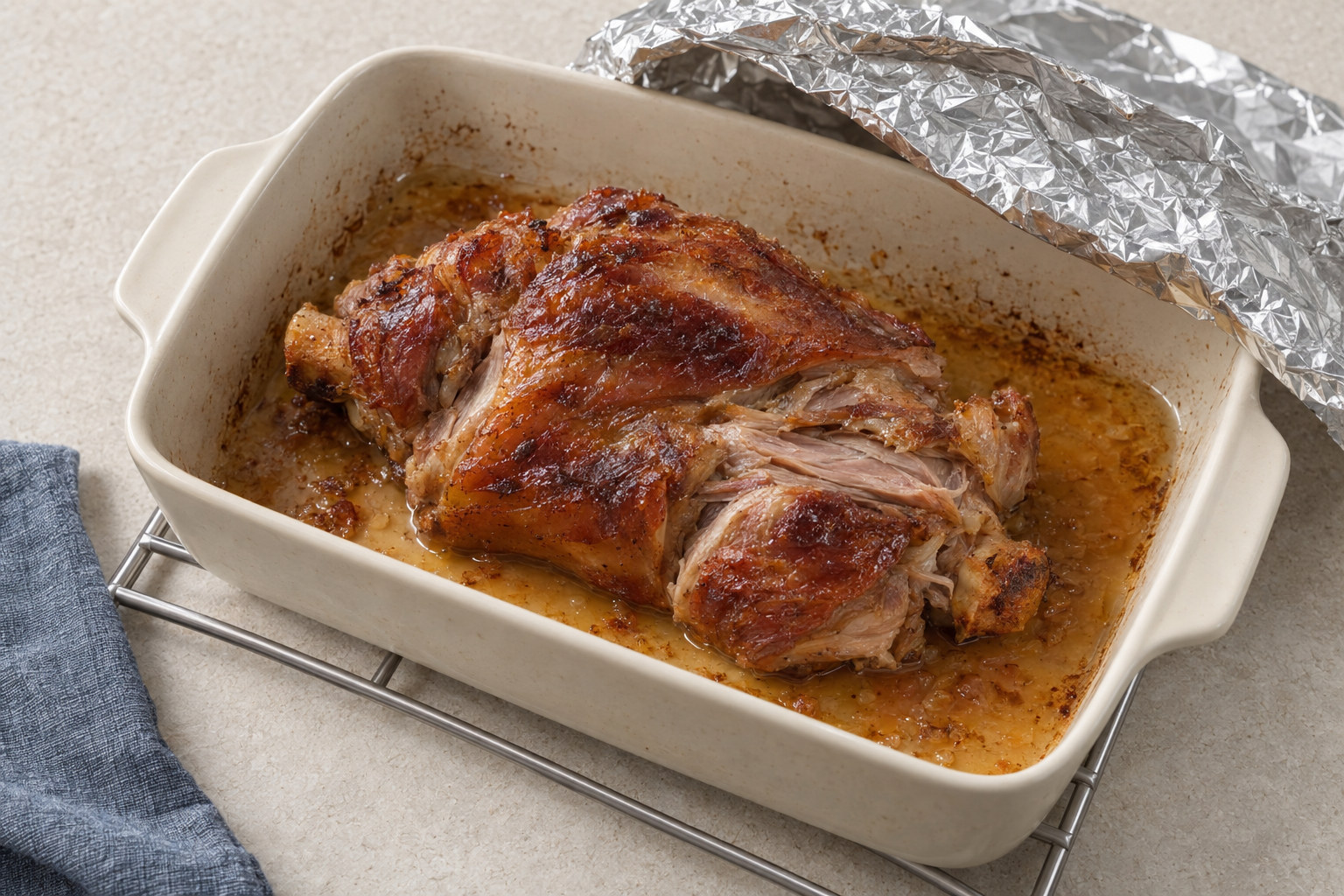
At the end of the bread soaking time, before heating the dumpling water, we put the knuckle without its packaging into the oven preheated to 180 °C. We add 40 ml water to the tin and cover loosely with foil. After 15–20 minutes, we check the temperature in the meaty part near the bone; it must reach at least 74 °C. If the centre is cooler, we continue in 5-minute intervals. We can keep the reheated meat covered briefly in the oven at 90 °C until the dumpling is almost ready. Before serving, we uncover the meat, raise the oven to 220 °C and brown the surface for about 5 minutes. If the cooked dumpling has to wait, we keep it wrapped in a clean, dry tea towel.
Wrap and cook the dumpling
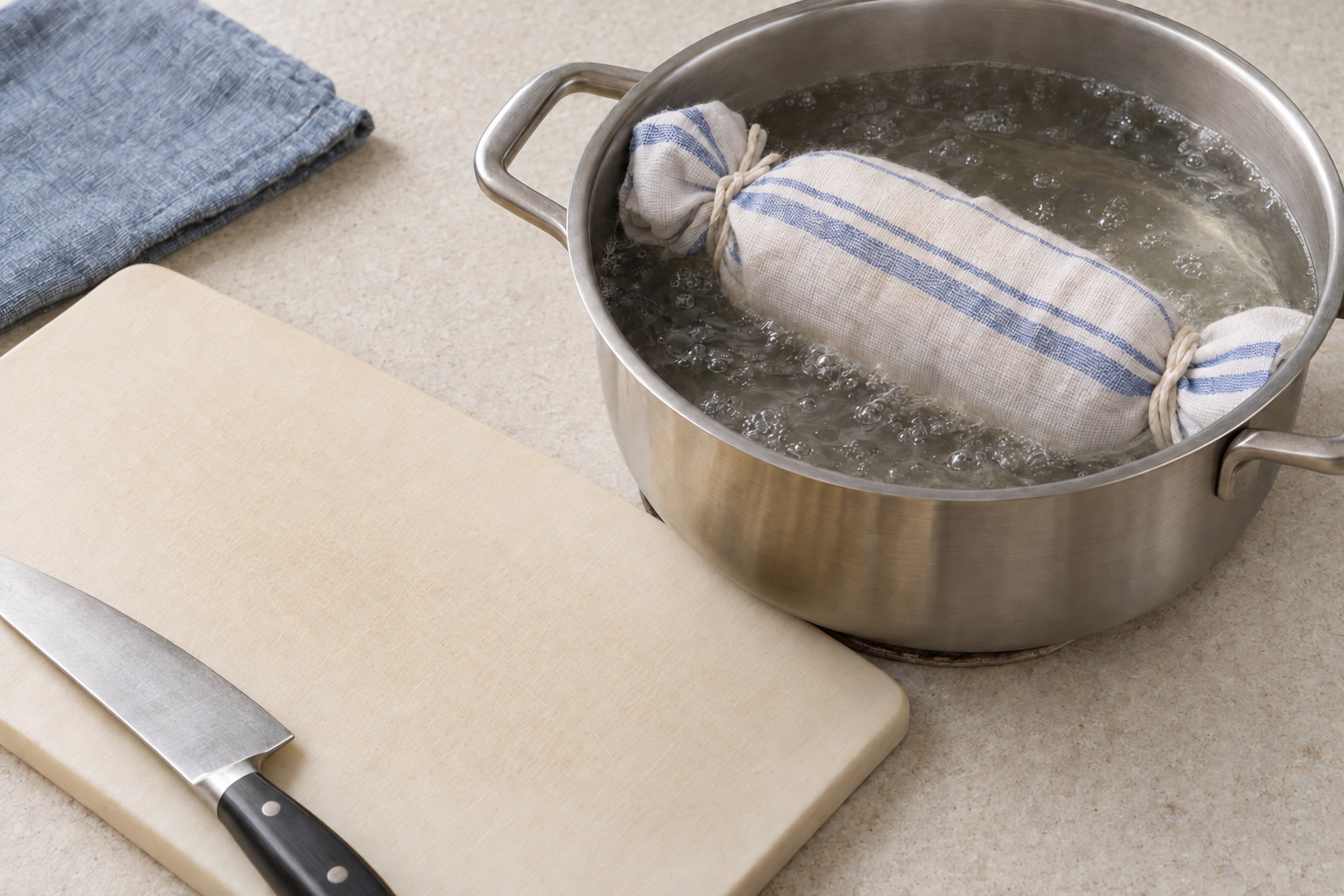
We bring plenty of water to a gentle boil in a wide saucepan. We dampen one clean cotton tea towel and wring it out well. We shape the mixture into one log, about 20 cm long and 6 cm thick. We wrap it in the towel and tie the ends with string just beyond the dough, leaving a little room in the wrapping for expansion. We lower it into the water. If needed, we add hot water from the kettle so the dumpling is mostly submerged. We keep the water level at least 2.5 cm below the rim of the saucepan. We cover and simmer gently for 30 minutes, turning halfway through. After lifting it out, we leave it to stand for 3 minutes, unwrap and check that the centre is firm with no liquid egg; the thermometer should read at least 74 °C. If the centre is undercooked, we wrap it again and return it to the water for 5 minutes.
The dumpling holds its shape, with an open texture when sliced; the bread cubes are bound together, not soggy.
Make the beer gravy
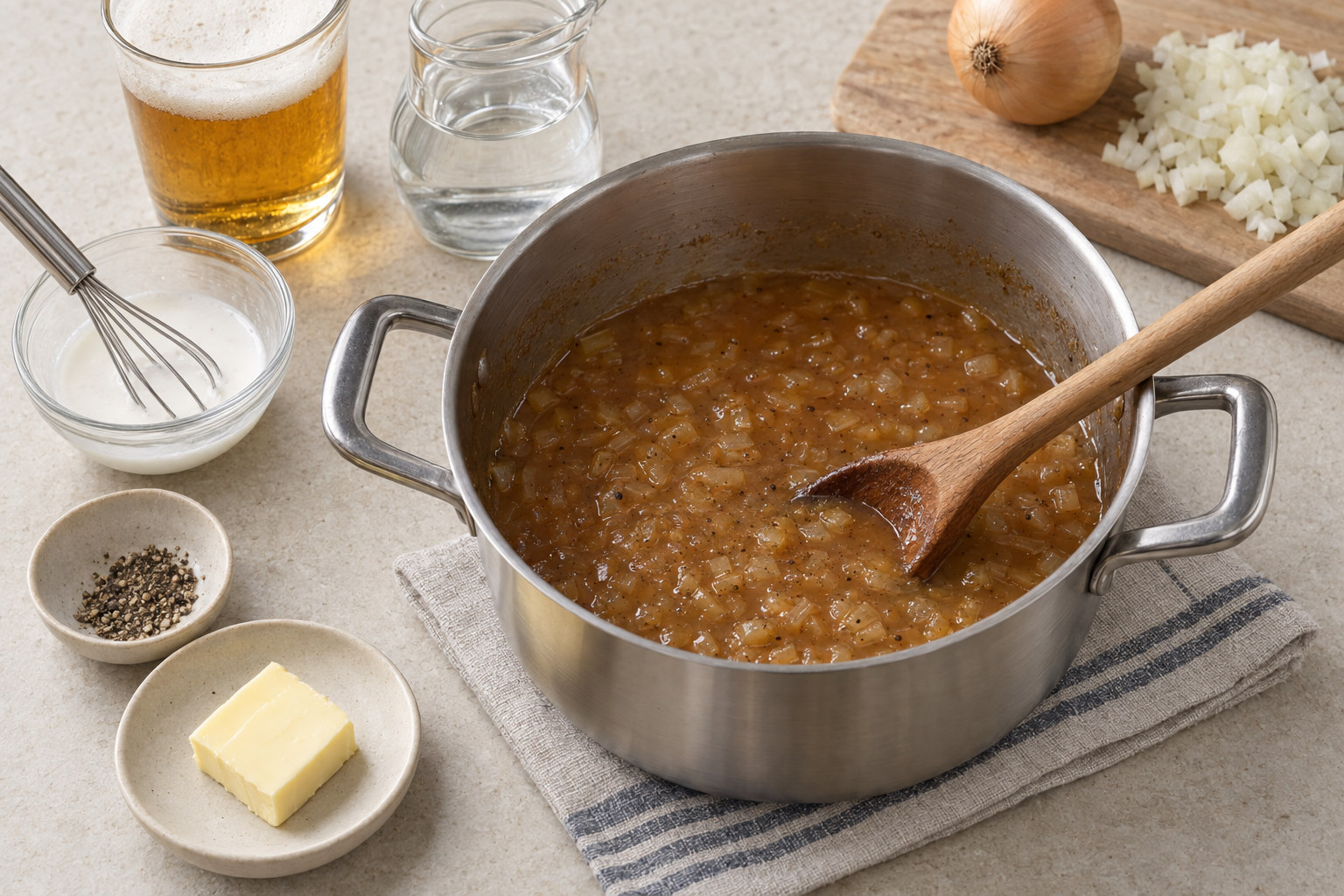
We peel and finely chop the onion for the gravy, then fry it in a teaspoon of oil for 5–6 minutes until golden. We add 150 ml beer and 80 ml water. We simmer gently for 6–8 minutes, until the raw beer smell has gone and about 170 ml liquid including the onion remains. We mix the cornflour with the remaining 20 ml cold water, pour it in and simmer for 1 minute. We take the pan off the heat, add the pepper and whisk in two teaspoons of cold butter. We do not add the knuckle’s roasting juices or any more salt to the gravy.
The gravy is lightly thickened and glossy, with a gentle bitterness from the beer, rather than thick or salty.
Slice the dumpling and serve
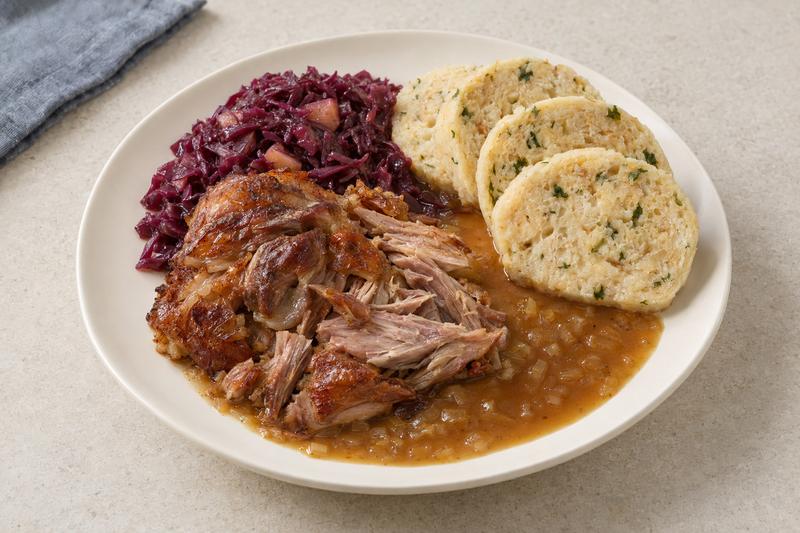
We remove the bone and tough cartilage from the knuckle and divide all the meat into 2 portions. We cut the dumpling log into 8 slices, about 2.5 cm thick, serving 4 slices per person. We briefly reheat the cabbage in a covered pan. We put the dumpling, cabbage and meat on warmed plates and pour the beer gravy beside the dumpling.
We serve everything warm; the gravy lightly moistens the dumpling without making it soggy.
Tips from our kitchen
- We use dry bread rolls. Fresh, soft rolls would absorb less milk and give the dough a different texture.
- We slice the dumpling with a sharp serrated knife or thread so we do not squash it.
What to watch out for
- We do not wrap the dough tightly into a rigid cylinder; we leave it a little room to expand as it cooks.
- We do not reduce the beer to a syrup or use a strongly bitter IPA.
How we serve it
- We put the meat taken off the bone, red cabbage and four slices of bread dumpling per person on warmed plates. We pour the beer gravy beside the dumpling and serve straight away.
Ingredient swaps
pale beer
the same volume of mild non-alcoholic pale beer The malty note remains; we check the barley content and actual alcohol level on the label.
dry bread roll
the same weight of dry plain white crescent-shaped bread rolls, without toppings We keep the same cube size and soaking time.
Ingredient notes
- We are using a knuckle that has already been cooked and then roasted. Once it is thoroughly reheated, it needs no further lengthy cooking.
- We divide one 750 g pack between two people. After reheating, we take the meat off the bone.
- We allow for 1.4 g salt per 100 g of product and wheat flour in the fried onions. We add no more salt to the meat and do not reduce the roasting juices into a salty sauce.
During preparation
- We use a ready-cooked product. After opening, we keep it at no more than 5 °C and use within 48 hours, following the manufacturer’s instructions.
- We reheat the knuckle without its retail packaging at 180 °C, following the manufacturer’s instructions. After 15–20 minutes, we measure the temperature in the meaty part near the bone without letting the probe touch it; if it is below 74 °C, we continue reheating in 5-minute intervals. When preparing two packs, we check both pieces.
- The product contains wheat from the fried onions. Even a version with a naturally gluten-free side is therefore not a gluten-free dish.
Our inspiration
We make the bread dumpling with bread rolls, milk and eggs, without any proving. Wrapped in a tea towel, the cubes bind into a log and remain clearly visible when sliced. The pairing of pork knuckle and beer was inspired by William Drabble, who worked at London’s Francatelli restaurant. In his recipe, beer forms the base of a glaze; we make a delicate beer gravy that soaks into the dumpling. We add red cabbage with apple alongside.
Similar recipes
Recipe for 4 people
Step-by-step method
Before we start
We prepare the cabbage while the bread soaks. At the end of the soaking time, we put the meat into the preheated oven and only then heat the dumpling water, giving the meat a head start of about 10–15 minutes. We make the gravy on a second hob ring while the dumpling cooks. If the dumpling has to wait, we keep it in a clean, dry tea towel; before slicing, we can return it, still wrapped in the towel, to gently boiling water for 3 minutes.
Soak the bread in milk and eggs
We wash, dry and chop the parsley. We cut the dry bread rolls into 1 cm cubes. In a bowl, we beat the eggs with 340 ml milk and the nutmeg. We pour over the bread, stir in the chopped parsley and leave to soak for 30 minutes, gently stirring again after 15 minutes. We do not add salt because the bread and meat already contain it. Meanwhile, we prepare the cabbage.
The cubes soften inside and the mixture holds together, with no large pool of milk left at the bottom.
Braise the red cabbage
We wash the cabbage and apple and peel the onion. We remove the cabbage core and core the apple. We shred the cabbage into 2 mm strips, finely chop the onion and cut the apple into 5 mm cubes. We soften the onion in a tablespoon of butter for 4 minutes. We add the cabbage, apple, caraway, two pinches of salt and 170 ml water. We cover and braise gently for 25–30 minutes. Finally, we stir in 30 ml vinegar and cook uncovered for 2–3 minutes to evaporate any excess liquid. We take the cooked cabbage off the heat and leave it covered.
The cabbage is tender but still in distinct strips, with no watery liquid at the bottom.
Reheat the pork knuckle
At the end of the bread soaking time, before heating the dumpling water, we put the knuckles without their packaging into the oven preheated to 180 °C. We add 70 ml water to the tin and cover loosely with foil. After 15–20 minutes, we check the temperature in the meaty part near the bone in both pieces; it must reach at least 74 °C. If the centre is cooler, we continue in 5-minute intervals. We can keep the reheated meat covered briefly in the oven at 90 °C until the dumplings are almost ready. Before serving, we uncover the meat, raise the oven to 220 °C and brown the surface for about 5 minutes. If the cooked dumplings have to wait, we keep them wrapped in clean, dry tea towels.
Wrap and cook the dumpling
We bring plenty of water to a gentle boil in a wide saucepan. We dampen two clean cotton tea towels and wring them out well. We shape the mixture into two equal logs, each about 20 cm long and 6 cm thick. We wrap each log in one towel and tie the ends with string just beyond the dough, leaving a little room in the wrapping for expansion. We lower them into the water. If needed, we add hot water from the kettle so the dumplings are mostly submerged. We keep the water level at least 2.5 cm below the rim of the saucepan. We cover and simmer gently for 30 minutes, turning halfway through. After lifting them out, we leave them to stand for 3 minutes, unwrap and check that both centres are firm with no liquid egg; the thermometer should read at least 74 °C. If a centre is undercooked, we wrap it again and return it to the water for 5 minutes.
The dumpling holds its shape, with an open texture when sliced; the bread cubes are bound together, not soggy.
Make the beer gravy
We peel and finely chop the onion for the gravy, then fry it in two teaspoons of oil for 5–6 minutes until golden. We add 250 ml beer and 140 ml water. We simmer gently for 6–8 minutes, until the raw beer smell has gone and about 290 ml liquid including the onion remains. We mix the cornflour with the remaining 30 ml cold water, pour it in and simmer for 1 minute. We take the pan off the heat, add the pepper and whisk in one and a half tablespoons of cold butter. We do not add the knuckles’ roasting juices or any more salt to the gravy.
The gravy is lightly thickened and glossy, with a gentle bitterness from the beer, rather than thick or salty.
Slice the dumpling and serve
We remove the bones and tough cartilage from both knuckles and divide all the meat into 4 portions. We cut each dumpling log into 8 slices, about 2.5 cm thick, serving 4 slices per person. We briefly reheat the cabbage in a covered pan. We put the dumpling, cabbage and meat on warmed plates and pour the beer gravy beside the dumpling.
We serve everything warm; the gravy lightly moistens the dumpling without making it soggy.