
Moroccan inspiration · Our individual pastillas
Duck pastillas with almonds and orange salad
Beneath golden, crisp pastry lies duck with almonds, apricots and fragrant spices. We bake a small pastilla for each person and serve it with a juicy orange and fennel salad. Ready-cooked shredded duck saves us work on the meat, leaving time to devote to the delicate layers of filo.
We prepare the salad while the pastillas bake. If the filling takes longer to heat through, we bake them for longer, until the centres reach the required temperature.
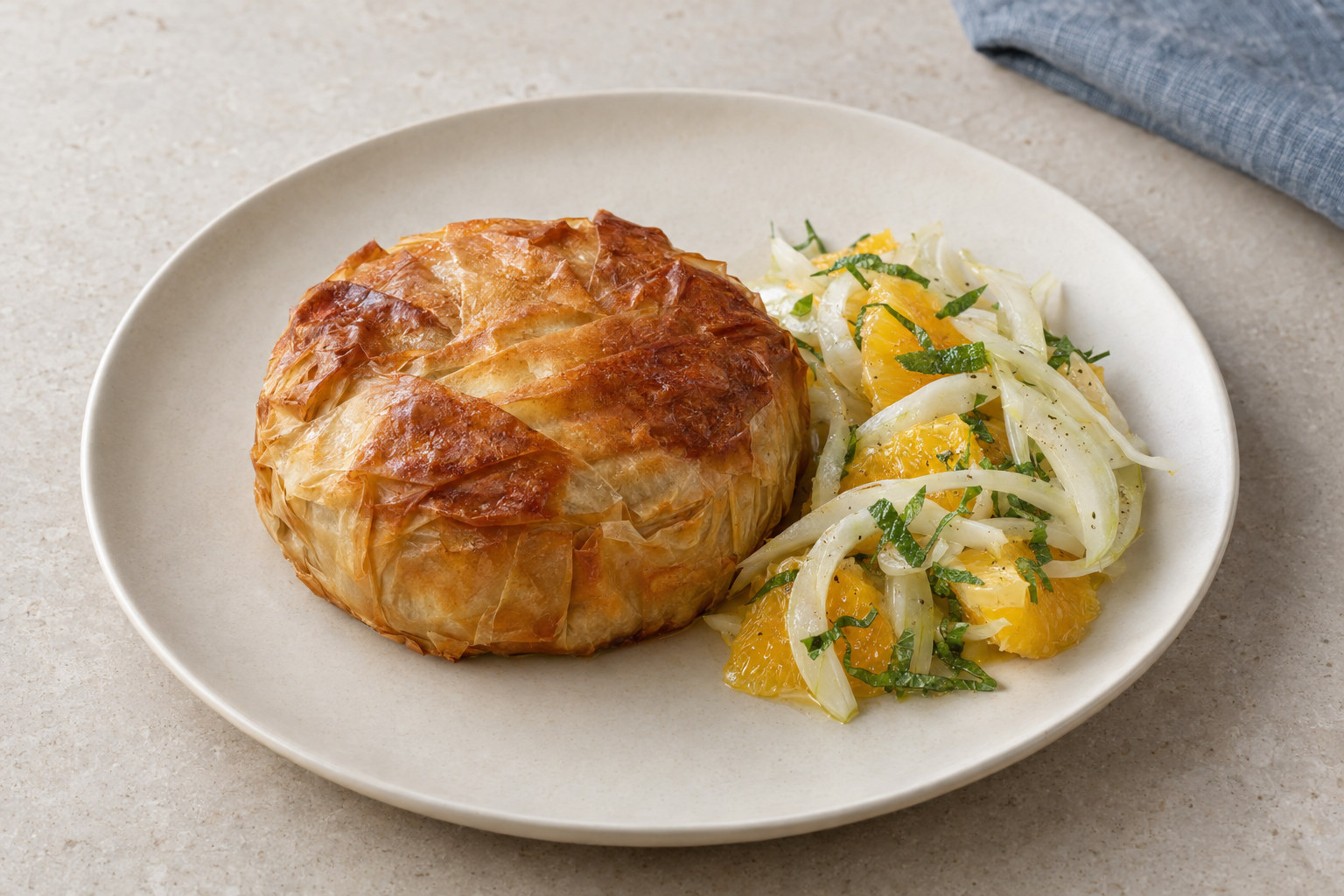
Beneath the crisp layers of pastry, we find moist duck, gently sweet apricots and crunchy almonds. Orange and fennel lighten the spiced filling.
Step-by-step method
What you will need
- kitchen scales
- knife and chopping board
- probe thermometer
- deep 26 cm frying pan with a lid
- metal tray
- 2 metal tins, 12 × 3 cm
- oven
- 40 × 30 cm baking tray
- 0.5 l saucepan
- pastry brush
- dry tea towel
- foil
- salad bowl
Before we start
We finish the filling first. While it cools, we prepare the tins, filo and butter. The filled pastillas go straight into the oven, and we dress the salad just before serving.
Toast the almonds and prepare the onion base
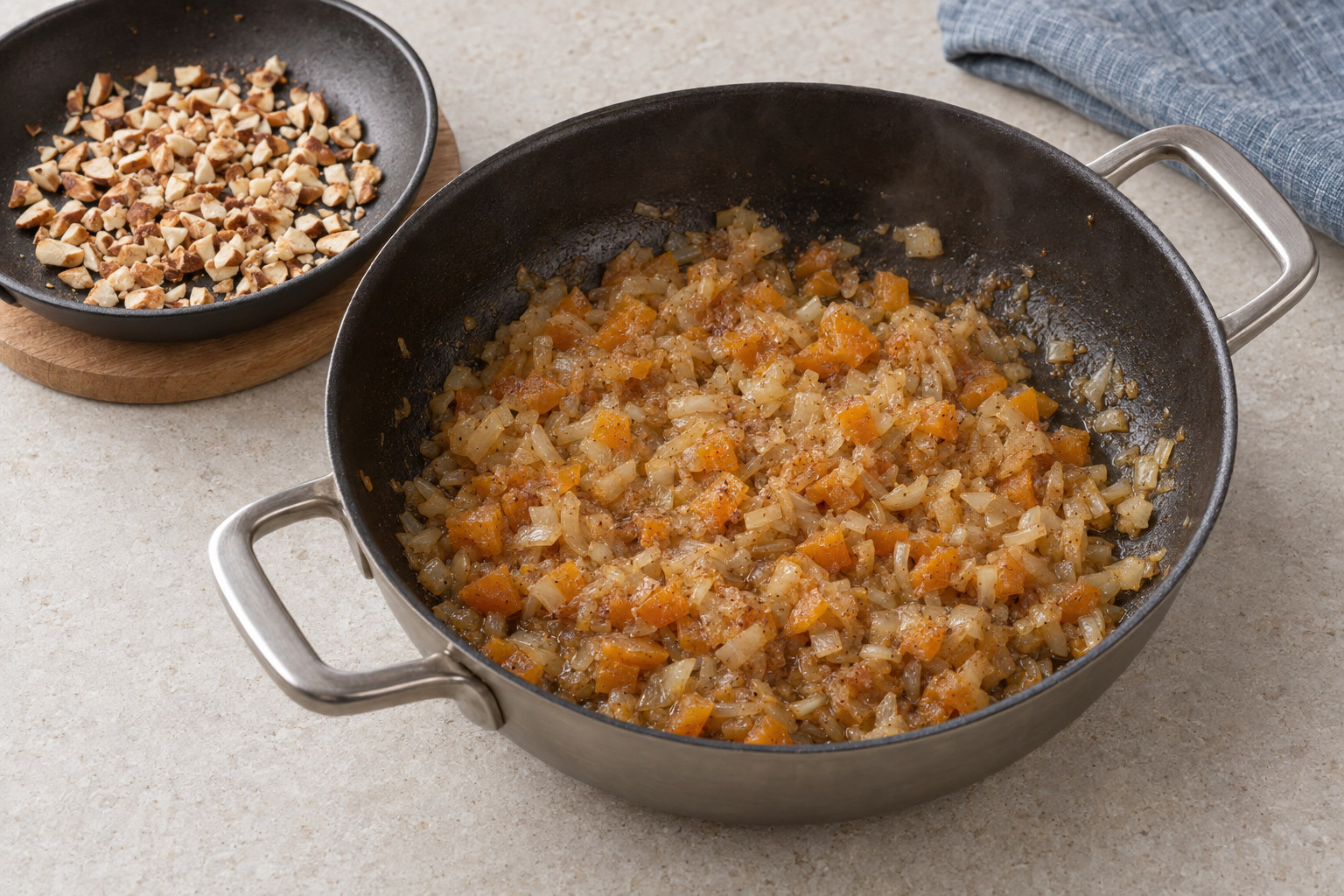
We dry-toast the almonds in a frying pan over a medium heat for 2–3 minutes, tip them out and, once cool, chop them into 3–5 mm pieces. We peel the onion. In a deep frying pan, we heat two teaspoons of oil and soften the finely chopped onion for 6–8 minutes. We add the coriander, cinnamon and ginger, stir for 30 seconds, then add the apricots cut into 5 mm dice and 50 ml of water. We simmer gently with the lid on for 5 minutes, then uncovered for another 2–3 minutes.
The onion is soft and there is no liquid pooling at the bottom; the spices are fragrant and have not burnt.
Finish and cool the filling
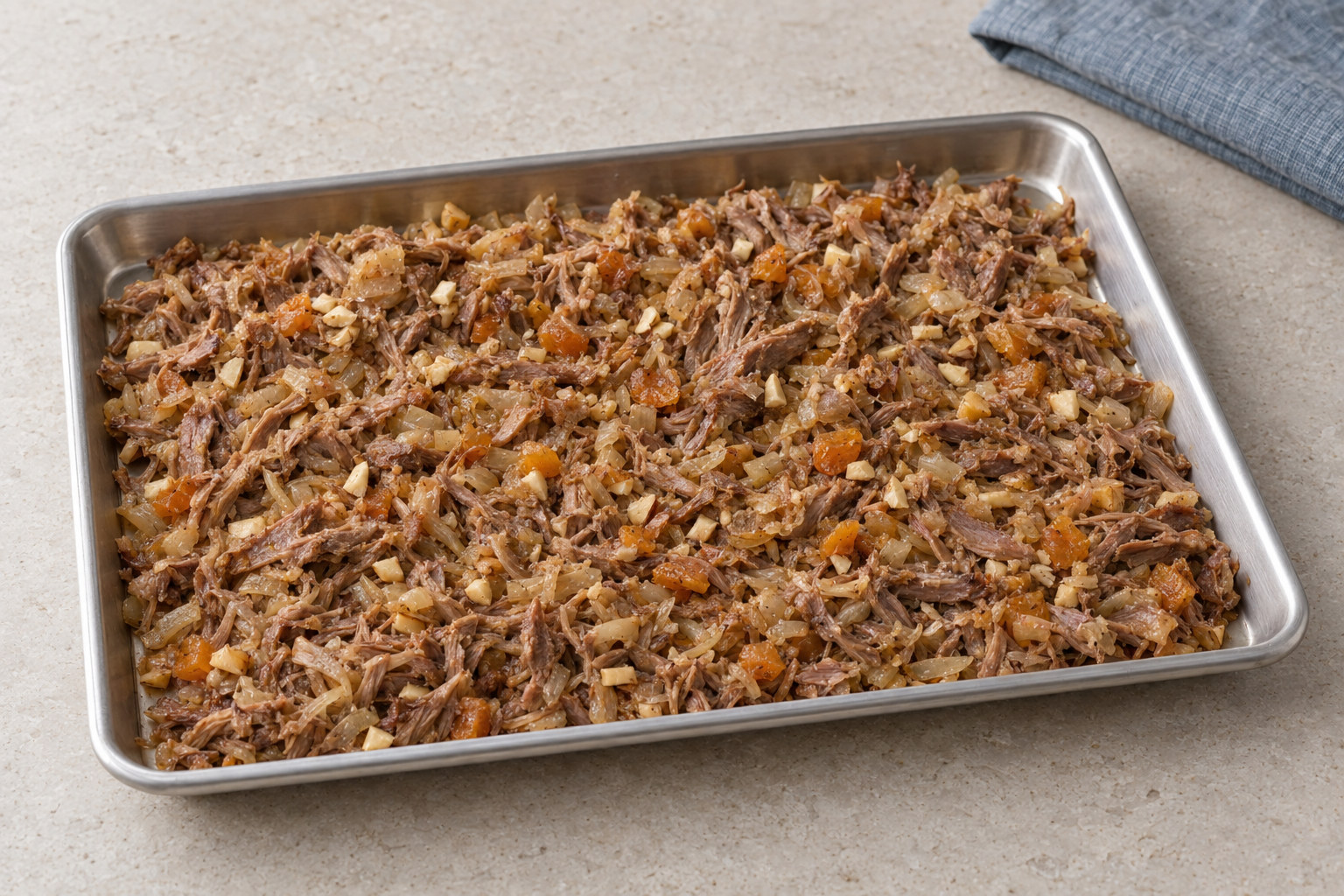
We add 250 g of duck and reheat it over a medium heat for 4–5 minutes, stirring as we go. We check for 74 °C in several places and heat it for longer if needed. We stir in the almonds and 10 ml of lemon juice without adding any more salt. We spread the filling on a metal tray in a layer no more than 2 cm deep and leave it for 20–25 minutes until lukewarm, turning it over after 10 minutes. We start preheating the oven to 190 °C, conventional heat.
The filling is moist, but no juice drips from it. It is no longer steaming when we fill the pastry.
Line the tins and close the pastillas
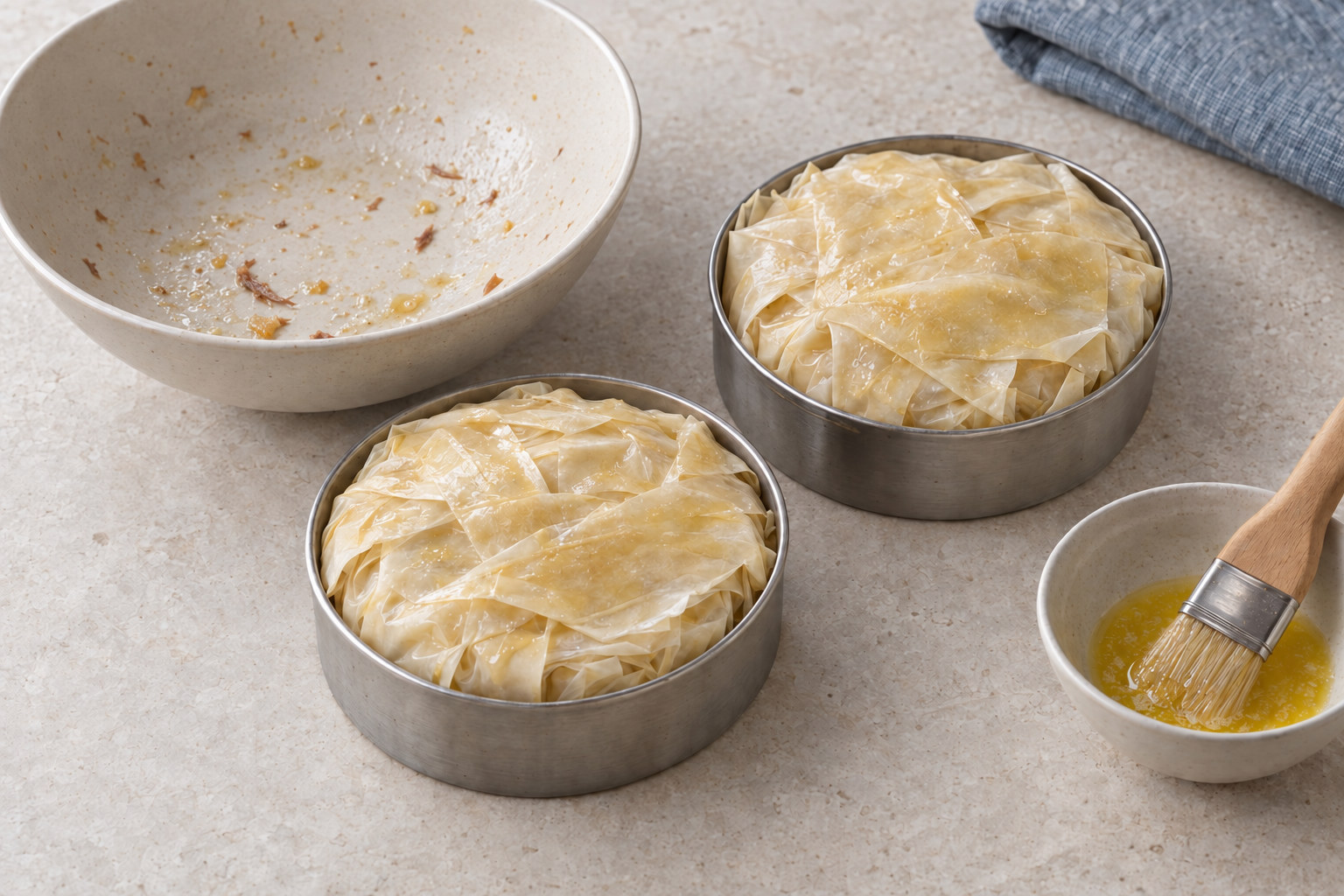
We melt a tablespoon and a half of butter. We brush 2 shallow metal tins, 12 cm in diameter and 3 cm deep, with a thin layer of melted butter, reserving the rest for brushing the layers and tops. We divide the filo into 2 portions of 50 g and cover it with a dry tea towel. We line each tin with at least two thin layers, approximately 26 × 26 cm, laid across each other. We brush each layer with butter and use the trimmings as an extra inner layer. We divide the filling evenly and gently level it to no more than 3 cm deep. We fold the overhanging pastry across itself to close the top and brush with the remaining butter.
The pastry surrounds the filling on every side, the seams overlap and there are no open holes in the filo.
Bake the pastillas
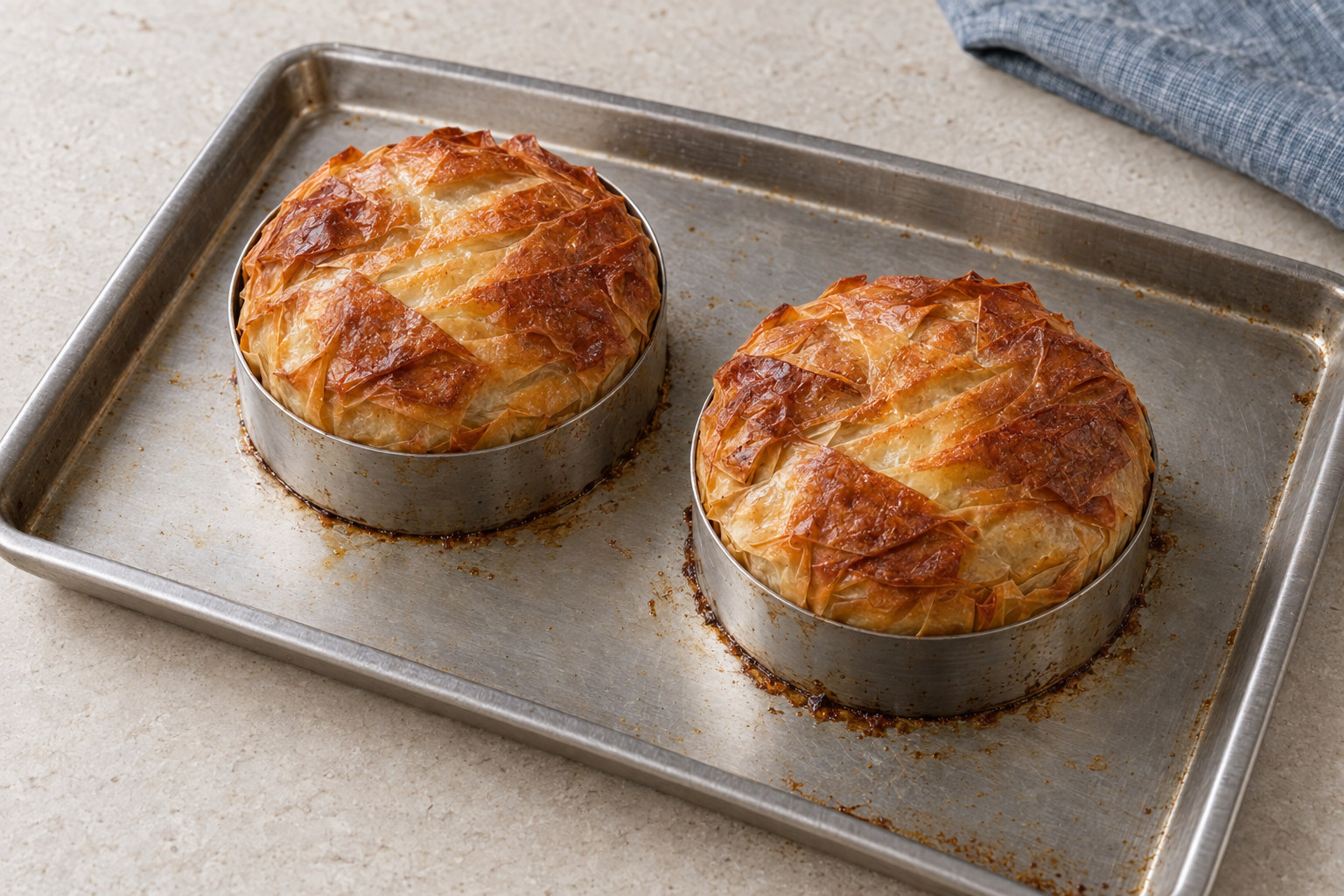
We place the tins on one 40 × 30 cm baking tray with gaps between them. We bake in the centre of the oven for 25–35 minutes. From 25 minutes onwards, we check the colour and use a thin probe thermometer to check the centre of both pastillas: they must reach at least 74 °C. If the pastry is already golden but the filling is cooler, we cover loosely with foil and continue baking in 5-minute intervals. Once baked, we leave them to stand for 5 minutes, then carefully remove them from the tins.
The tops and sides are golden and crisp.
Prepare the salad and serve
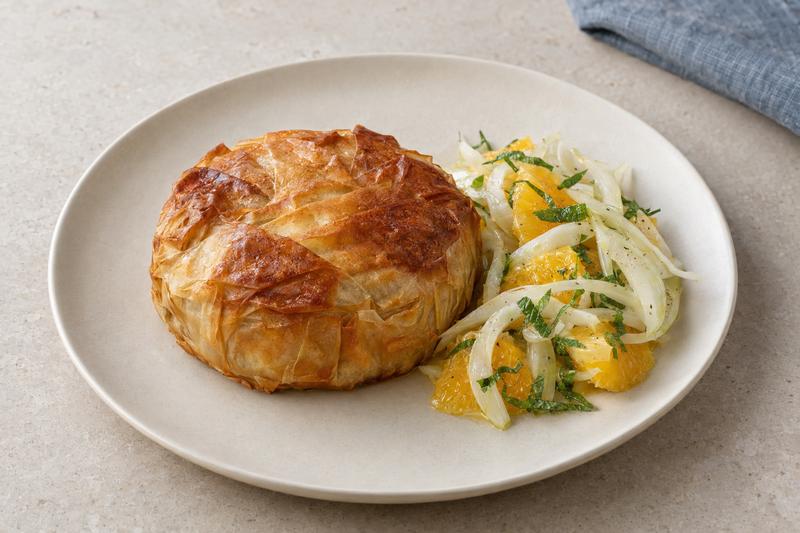
We wash and dry the fennel and mint. We remove the tough core from the fennel. We peel the oranges and remove the white membranes. While the pastillas bake, we slice the fennel 1–2 mm thick and cut the orange flesh into bite-sized pieces. We mix the oil, vinegar and a pinch of salt. Just before serving, we toss the dressing with the fennel, orange and finely sliced mint. We place each pastilla on a plate with an equal share of salad, making 2 portions in total. We keep the salad beside the pastry so that the juice does not make it soggy.
The apricots sweeten the filling; we add no further sugar.
Tips from our kitchen
- We uncover only the filo we need for the tin we are working on, so that the remaining sheets do not dry out.
- We use very thin filo sheets, large enough for two crossed layers to cover the entire tin with enough overhang to close the top.
What to watch out for
- We do not put hot or wet filling into the filo; steam and juices would damage the base.
- We brush the butter on in a thin, even layer. Dry folds break, while pools of butter weigh the pastry down.
How we serve it
- We serve one warm pastilla per person. We place the orange salad with fennel and mint alongside it, so that the juice does not soften the crisp pastry.
Ingredient swaps
unsulphured dried apricots
the same weight of soft raisins The filling will be slightly sweeter and less tangy; we keep the lemon juice.
filo
we keep the thin filo pastry We do not replace filo with puff pastry: it would need a different quantity, folding method and baking method.
Ingredient notes
- We use duck that is already cooked and shredded, with 1.5 g of salt per 100 g. We do not add any more salt to the meat.
- We only reheat the ready-cooked shredded meat; it cannot give us crisp skin.
- We allow for a 500 g pack.
During preparation
- We take out the amount we need with clean utensils. We keep the rest covered at up to 5 °C and use it within 48 hours of opening, following the product instructions.
- We reheat the meat in a frying pan over a medium heat for 4–5 minutes, following the manufacturer's instructions and stirring as we go. We check that the finished dish reaches at least 74 °C even in its coldest part; if it is cooler, we continue heating.
- We cool the filling in a thin layer only until lukewarm, then assemble and bake the pastillas straight away. If we need to pause, we refrigerate the filling within 2 hours of cooking; we then also use the centre temperature to judge the baking time.
Our inspiration
A celebratory pastilla can begin with duck that is already roasted. Its charm then comes from bringing together spiced filling, dried fruit and thin layers of pastry that crack delicately beneath a fork. We fill our little pies with apricots and almonds, serving the juicy orange salad alongside so that the filo stays crisp.
Similar recipes
Recipe for 4 people
Step-by-step method
Before we start
We reheat the meat in two frying pans. Four 12 cm tins fit on one 40 × 30 cm baking tray in two rows; we leave gaps between them and bake on one oven shelf.
Toast the almonds and prepare the onion base
We dry-toast the almonds in a frying pan over a medium heat for 2–3 minutes, tip them out and, once cool, chop them into 3–5 mm pieces. We peel the onions. In a deep frying pan, we heat a tablespoon of oil and soften the finely chopped onions for 6–8 minutes. We add the coriander, cinnamon and ginger, stir for 30 seconds, then add the apricots cut into 5 mm dice and 80 ml of water. We simmer gently with the lid on for 5 minutes, then uncovered for another 2–3 minutes.
The onions are soft and there is no liquid pooling at the bottom; the spices are fragrant and have not burnt.
Finish and cool the filling
We divide the onion base between two frying pans and add 250 g of duck to each. We reheat both at the same time over a medium heat for 4–5 minutes, stirring and checking for 74 °C in both batches; we continue heating if needed. We stir half the almonds and 10 ml of lemon juice into each pan, without adding salt. We spread the filling on two metal trays in a layer no more than 2 cm deep and leave it for 25–30 minutes until lukewarm, turning it over after 10 minutes. We preheat the oven to 190 °C, conventional heat.
The filling is moist, but no juice drips from it. It is no longer steaming when we fill the pastry.
Line the tins and close the pastillas
We melt three tablespoons of butter. We brush 4 shallow metal tins, 12 cm in diameter and 3 cm deep, with a thin layer of melted butter, reserving the rest for brushing the layers and tops. We divide the filo into 4 portions of 50 g and cover it with a dry tea towel. We line each tin with at least two thin layers, approximately 26 × 26 cm, laid across each other. We brush each layer with butter and use the trimmings as an extra inner layer. We divide the filling evenly and gently level it to no more than 3 cm deep. We fold the overhanging pastry across itself to close the top and brush with the remaining butter.
The pastry surrounds the filling on every side, the seams overlap and there are no open holes in the filo.
Bake the pastillas
We place the tins on one 40 × 30 cm baking tray with gaps between them. We bake in the centre of the oven for 30–40 minutes. From 30 minutes onwards, we check the colour and use a thin probe thermometer to check the centre of each pastilla: it must reach at least 74 °C. If the pastry is already golden but the filling is cooler, we cover loosely with foil and continue baking in 5-minute intervals. Once baked, we leave them to stand for 5 minutes, then carefully remove them from the tins.
The tops and sides are golden and crisp.
Prepare the salad and serve
We wash and dry the fennel and mint. We remove the tough cores from the fennel bulbs. We peel the oranges and remove the white membranes. While the pastillas bake, we slice the fennel 1–2 mm thick and cut the orange flesh into bite-sized pieces. We mix the oil, vinegar and two pinches of salt. Just before serving, we toss the dressing with the fennel, orange and finely sliced mint. We place each pastilla on a plate with an equal share of salad, making 4 portions in total. We keep the salad beside the pastry so that the juice does not make it soggy.
The apricots sweeten the filling; we add no further sugar.