
Boxxi kitchen · Japanese noodles, inspired by citrus
Duck with soba noodles and orange-ginger sauce
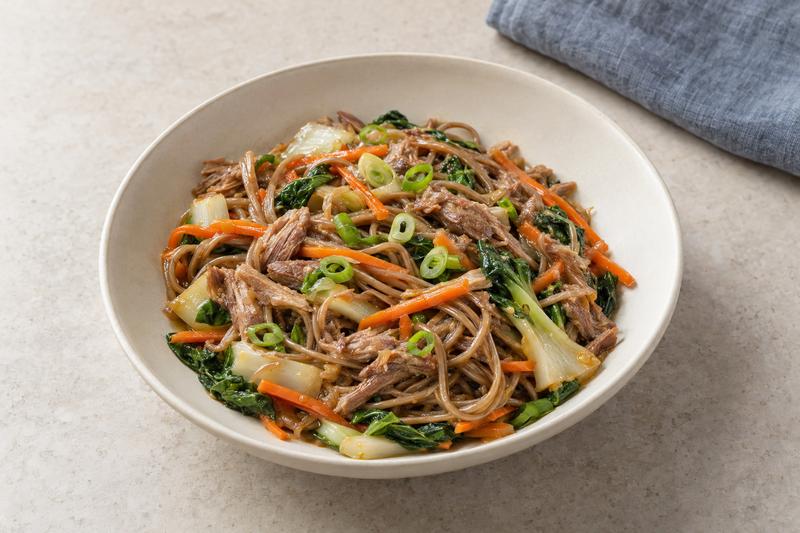
Orange and ginger sauce coats soba noodles and pieces of pulled duck. We keep the carrot and pak choi pleasantly crisp, bringing tender meat, soft noodles and crunchy vegetables together. With ready-cooked duck, two servings take about 45 minutes.
We drain the noodles just before tossing them with the sauce.
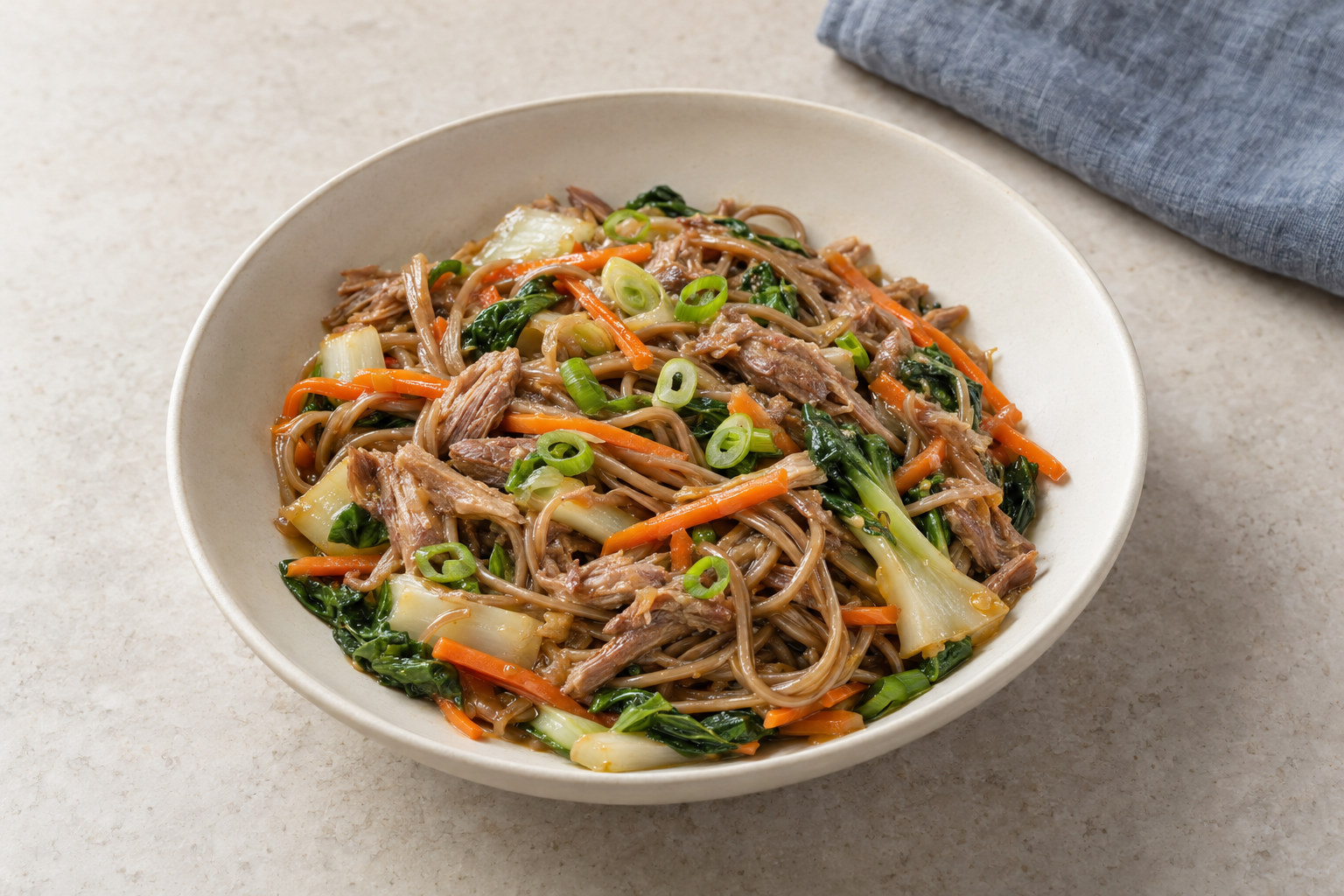
Springy noodles with a pronounced buckwheat flavour accompany juicy duck, fresh ginger and a gentle citrus tang.
Step-by-step method
What you will need
- kitchen scales
- knife and chopping board
- probe thermometer
- deep 28 cm frying pan
- 4 litre saucepan
- 1 litre saucepan
- colander
- kitchen tongs
- bowl with a lid
Before we start
We use two hob rings for the meat and vegetables and the noodle water. We take the pan of vegetables off the heat, then briefly simmer the sauce in a small pan on the freed hob ring.
Prepare the vegetables and sauce
We peel the carrot, ginger and garlic. We wash the pak choi and spring onion, then leave to drain. We cut the carrot into strips about 3 mm thick and 5 cm long. We slice the white pak choi stems crosswise into 1 cm strips and the leaves into 3 cm pieces; we keep them separate. We slice the spring onion into rings, separating the white and green parts. We finely grate the ginger and garlic. We stir the juice, 40 ml water, vinegar and soy sauce together in a small saucepan. In a separate bowl, we mix the cornflour with 15 ml cold water.
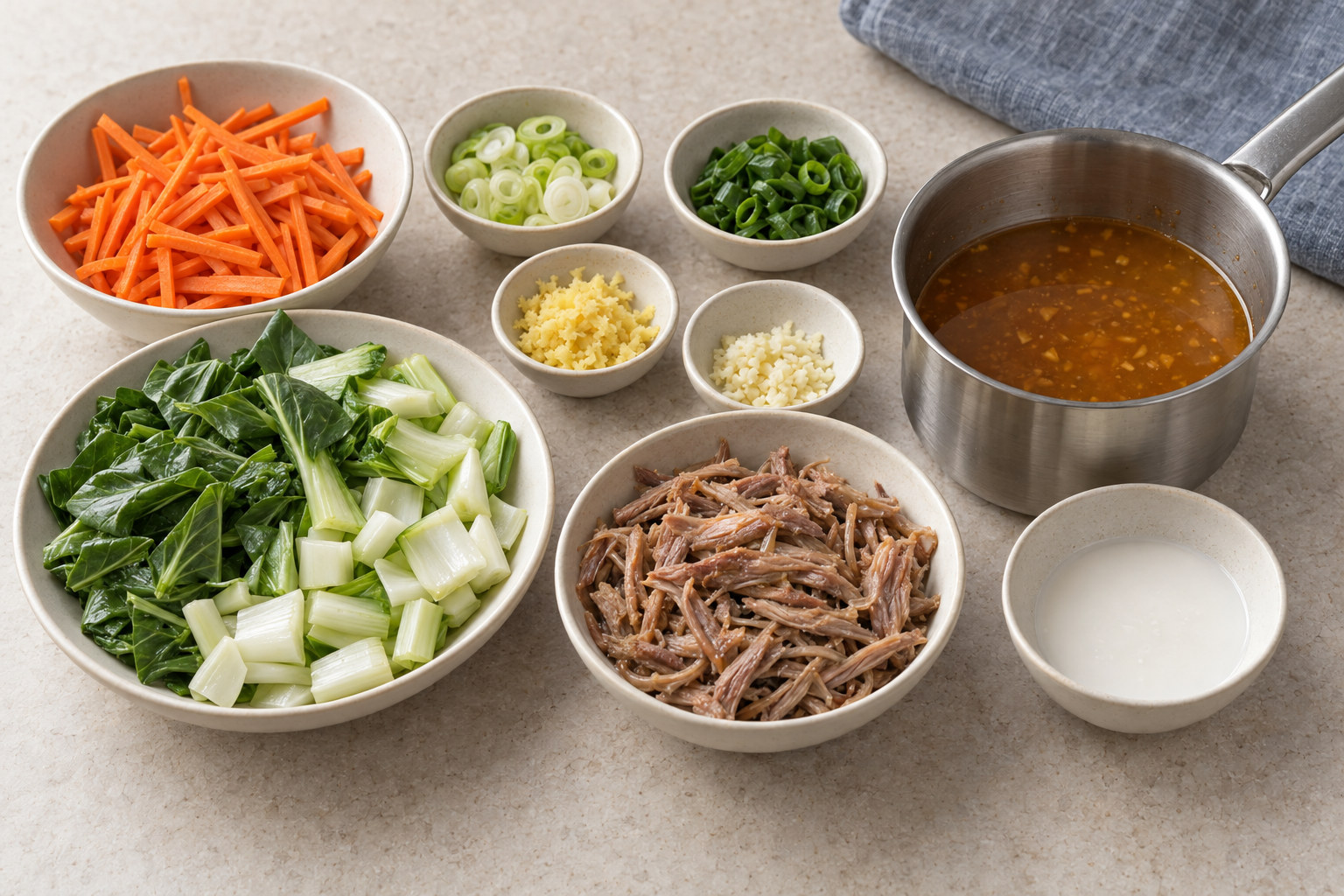
Heat the duck through
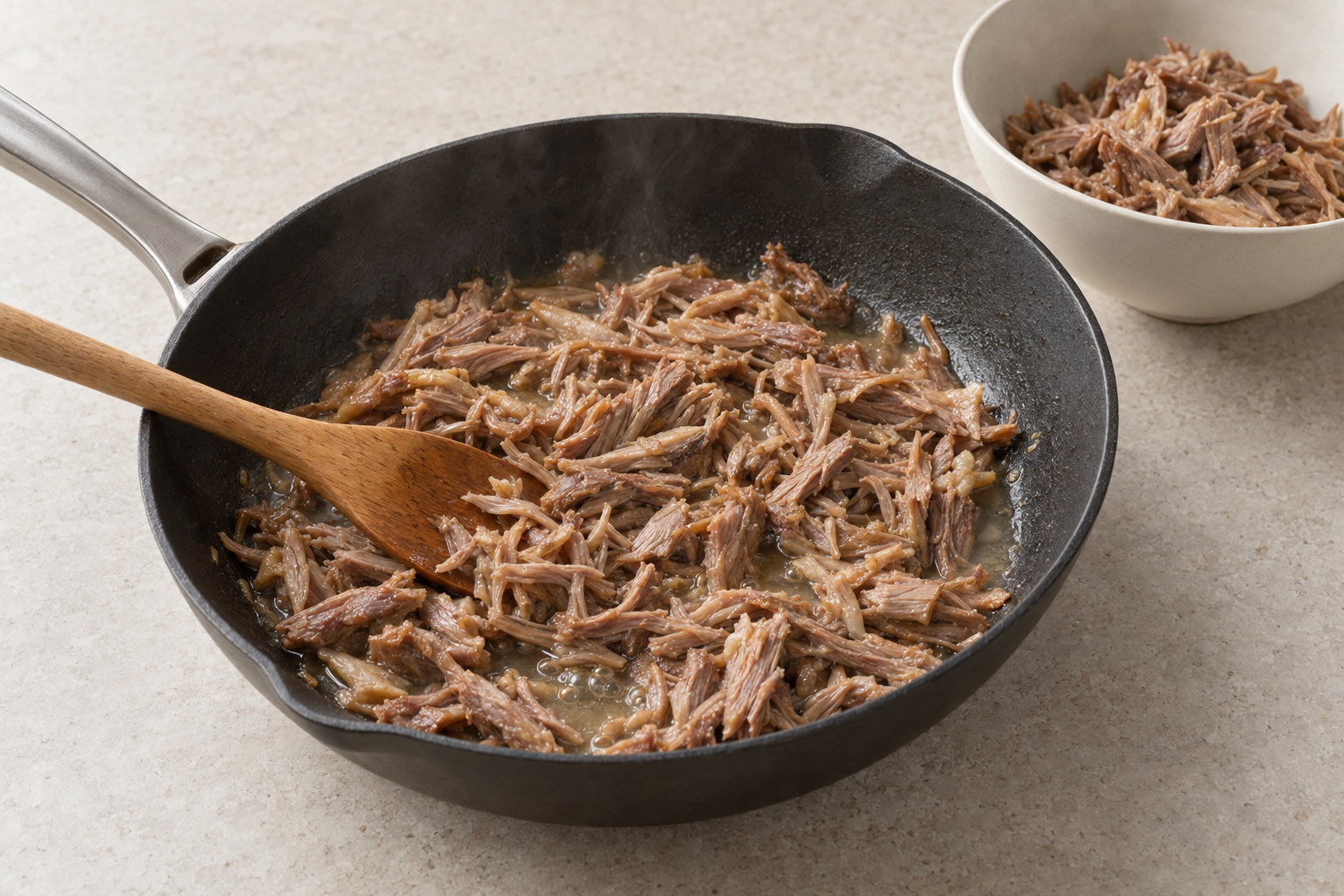
We heat 250 g duck with 20 ml water in a deep 28 cm frying pan over a medium heat for 4–5 minutes, stirring. We check that it reaches at least 74 °C; if not, we continue heating in one-minute increments. We transfer the meat and juices to a bowl and cover.
We keep the meat moist and separate the strands; we do not let the edges become tough and dry.
Stir-fry the vegetables briefly
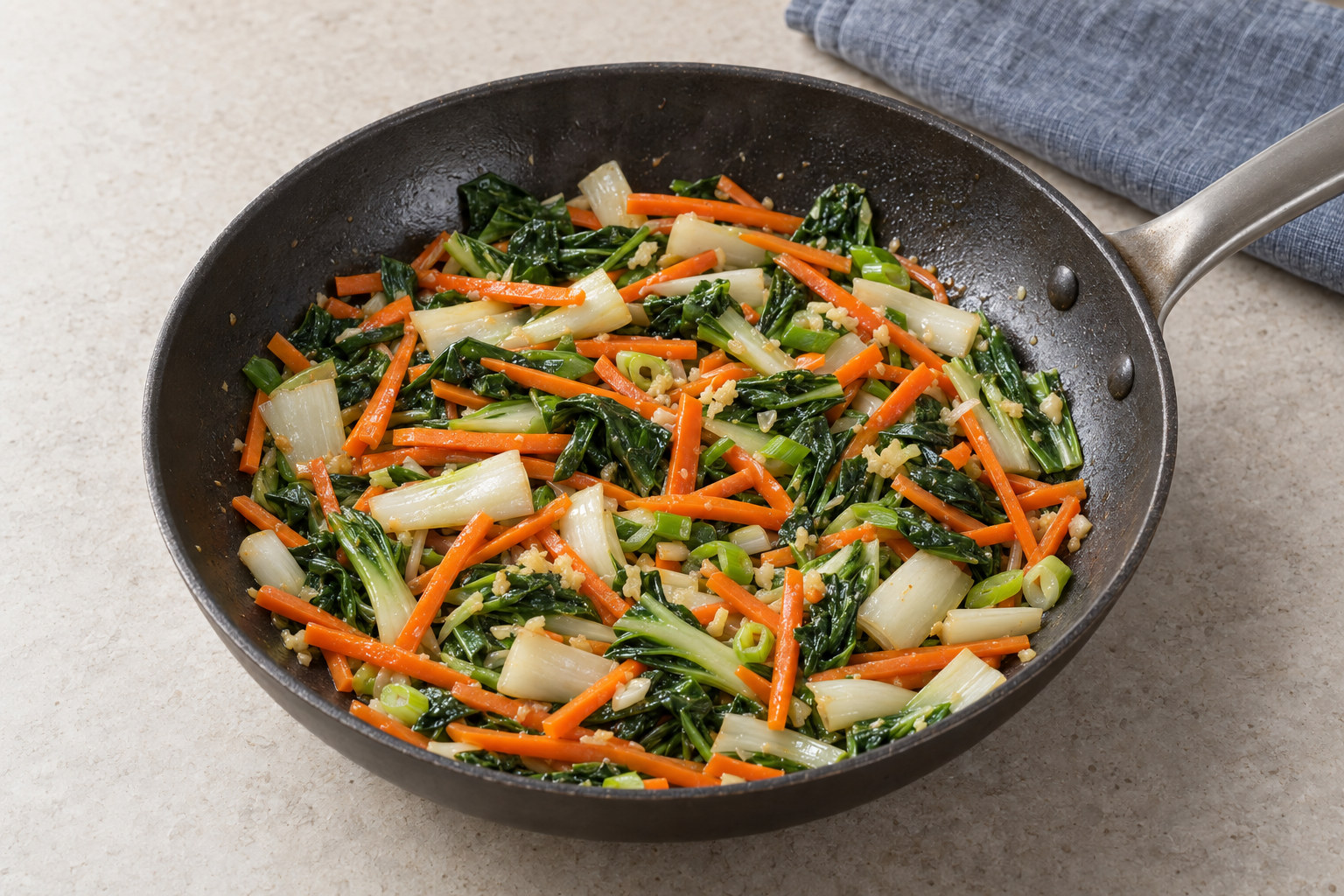
We add 2 teaspoons of oil to the pan. We stir-fry the carrot over a medium-high heat for 3 minutes. We add the pak choi stems and white spring onion, and cook for another 2 minutes. We stir in the ginger and garlic and cook for 30 seconds, then we add the leaves and cook for 1 minute. We take the pan off the heat so the vegetables do not soften while the noodles cook.
The stems and carrot stay slightly crisp, the leaves just wilt and the garlic does not brown.
Cook the soba and thicken the sauce
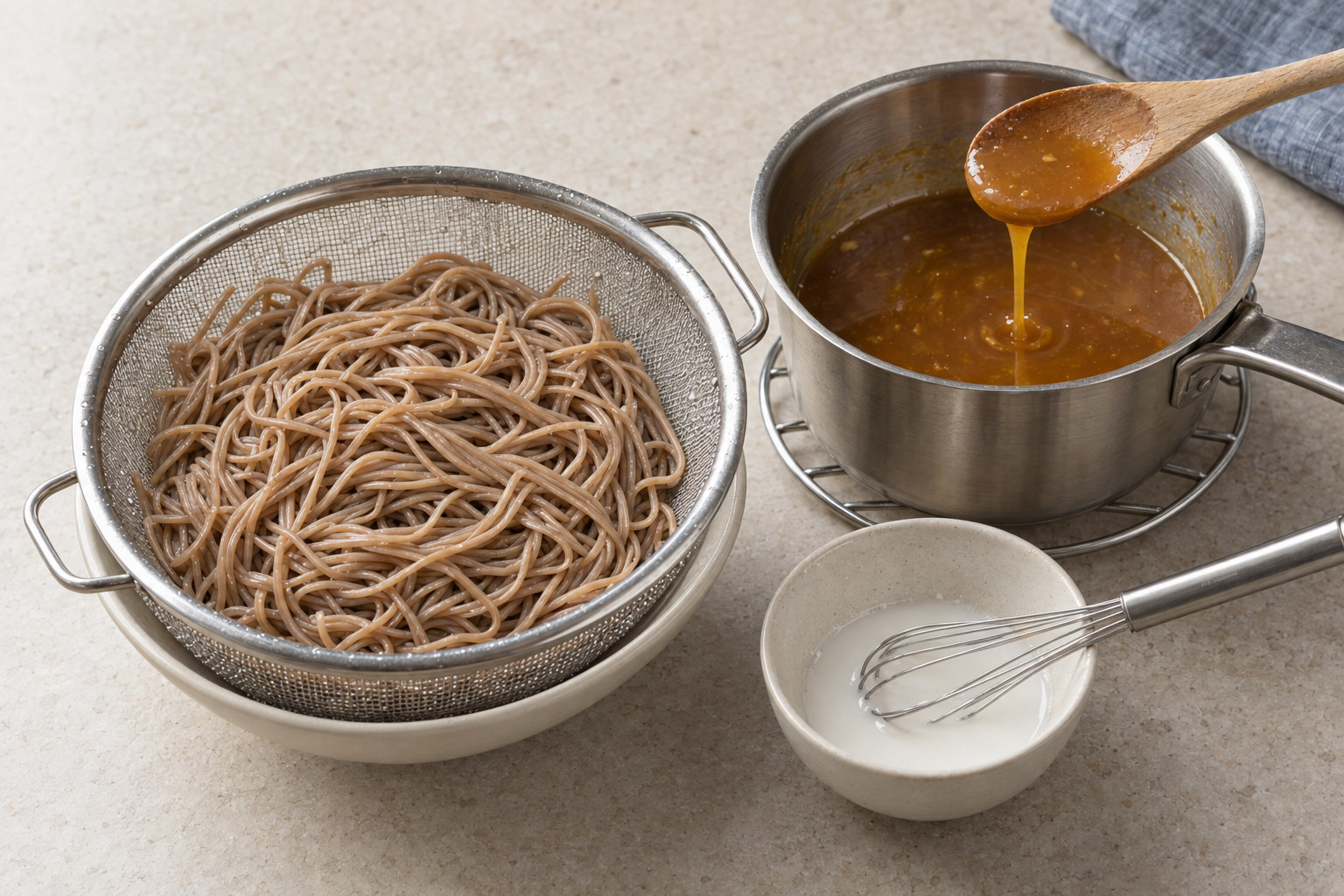
We bring plenty of water to the boil in a saucepan. We cook the soba according to the packet, usually for 4–6 minutes. Meanwhile, we bring the sauce in the small saucepan to a gentle boil and cook for 2 minutes. We stir the cornflour mixture again, pour it into the sauce and cook for 1 minute, stirring. We drain the noodles, rinse briefly under cold drinking water and leave to drain thoroughly for 30 seconds.
The sauce lightly coats a spoon; the noodles remain separate and springy.
Toss together and serve
We return the meat and its juices to the vegetables, then add the soba and all the sauce. We toss gently with tongs over a medium heat for 2–3 minutes until piping hot; we check that the meat reaches 74 °C again. We do not let the sauce reduce for too long. We divide between two bowls and top with the green spring onion rings.
The sauce coats the noodles in a thin, glossy layer, with no large puddle left at the bottom of the bowl.
Tips from our kitchen
- We use unseasoned rice vinegar, not a pre-sweetened sushi seasoning.
- We cook the noodles according to their packet and rinse them briefly; we shake off the water well in the colander.
What to watch out for
- We measure the soy sauce rather than pouring it in by eye: the duck is already salted.
- We mix the cornflour with cold water first to prevent lumps.
How we serve it
- We serve the noodles, duck and vegetables straight away in bowls, topped with the green spring onion. We divide the sauce evenly between the servings.
Ingredient swaps
soba noodles
the same amount of dried wheat noodles The flavour will be milder, without the buckwheat note; we follow the cooking time on the packet.
pak choi
the same weight of Chinese cabbage We add the thicker white parts before the leaves, as we do with pak choi.
Ingredient notes
- We use cooked, pulled duck seasoned with 1.5 g salt per 100 g. We do not add more salt to the meat.
- We only heat the ready-cooked pulled meat through; it will not develop crisp skin.
- The pack weighs 500 g.
During preparation
- We remove the amount needed with clean utensils. We cover the remainder and refrigerate at no more than 5 °C; we follow the packet and use within 48 hours of opening.
- We heat the meat in a pan over a medium heat for 4–5 minutes, stirring, as directed by the manufacturer. We check that the finished dish reaches at least 74 °C at its coolest point; we continue heating if it is cooler.
Our inspiration
Orange juice brings fruity sweetness and acidity to the duck, while fresh ginger adds fragrance and a gentle warmth. Buckwheat soba brings an earthier note. A light, glossy sauce ties everything together, while the carrot and pak choi retain some bite. It is a change of pace when we fancy duck prepared a little differently.
Similar recipes
Recipe for 4 people
Step-by-step method
Before we start
We prepare the meat and vegetables on two hob rings, then take the pans off the heat. We use the freed hob rings to cook the noodles and sauce, then return both pans to heat. Two hob rings are enough.
Prepare the vegetables and sauce
We peel the carrot, ginger and garlic. We wash the pak choi and spring onion, then leave to drain. We cut the carrot into strips about 3 mm thick and 5 cm long. We slice the white pak choi stems crosswise into 1 cm strips and the leaves into 3 cm pieces; we keep them separate. We slice the spring onion into rings, separating the white and green parts. We finely grate the ginger and garlic. We stir the juice, 70 ml water, vinegar and soy sauce together in a small saucepan. In a separate bowl, we mix the cornflour with 25 ml cold water.
Heat the duck through
We divide the duck between two deep 28 cm frying pans, 250 g in each, and divide the water between them. We heat both pans over a medium heat for 4–5 minutes, stirring. We check that both batches reach at least 74 °C; if needed, we continue heating in one-minute increments. We transfer the meat and juices to a bowl and cover.
We keep the meat moist and separate the strands; we do not let the edges become tough and dry.
Stir-fry the vegetables briefly
We add 2 teaspoons of oil and half the carrot to each pan. We stir-fry over a medium-high heat for 3 minutes. We add half the pak choi stems and white spring onion to each pan and cook for another 2 minutes. We divide the ginger and garlic between the pans and cook for 30 seconds. We add the leaves and cook for 1 minute. We turn off the heat so the vegetables do not soften while the noodles cook.
The stems and carrot stay slightly crisp, the leaves just wilt and the garlic does not brown.
Cook the soba and thicken the sauce
We bring plenty of water to the boil in a saucepan. We cook the soba according to the packet, usually for 4–6 minutes. Meanwhile, we bring the sauce in the small saucepan to a gentle boil and cook for 2 minutes. We stir the cornflour mixture again, pour it into the sauce and cook for 1 minute, stirring. We drain the noodles, rinse briefly under cold drinking water and leave to drain thoroughly for 30 seconds.
The sauce lightly coats a spoon; the noodles remain separate and springy.
Toss together and serve
We return half the meat and its juices, noodles and sauce to each pan. We heat both pans over a medium heat for 3–4 minutes, gently tossing with tongs. We check that the meat in both batches reaches 74 °C again. We divide between four bowls and finish with the green spring onion.
The sauce coats the noodles in a thin, glossy layer, with no large puddle left at the bottom of the bowl.