
From the Boxxi kitchen · European and Japanese inspiration
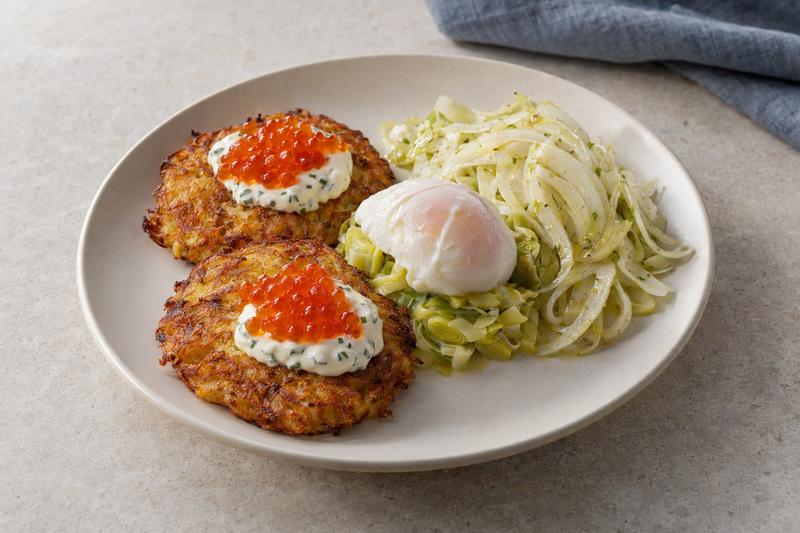
Rösti with buttery leeks, a poached egg and salmon roe
We serve golden rösti with buttery leeks and a poached egg with a soft yolk. We spoon lemon cream and cold salmon roe onto the edges of the potato cakes, with fennel salad alongside for a refreshing crunch.
We fry four rösti in two batches, then finish them in the oven together. We cook the eggs at the end.
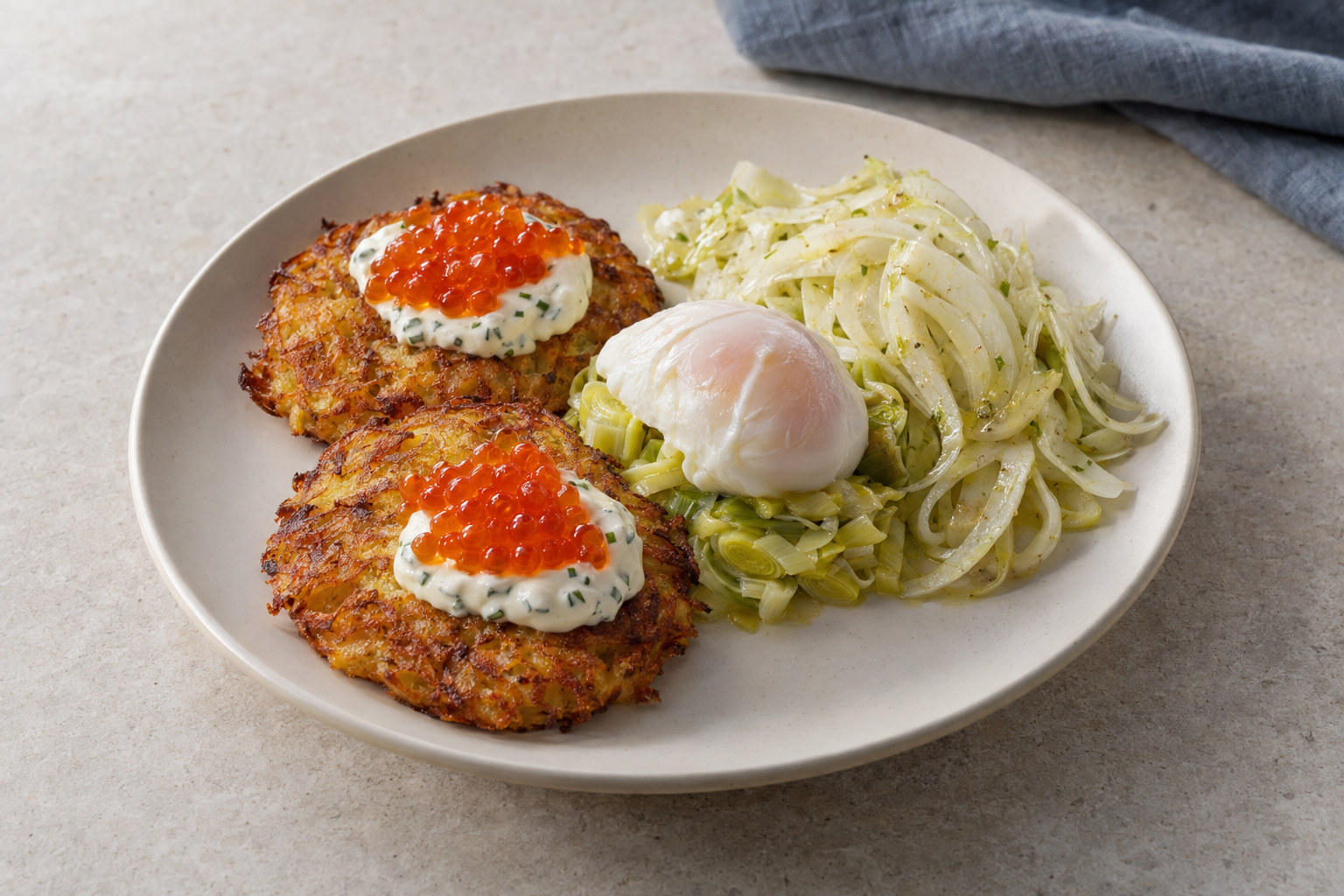
Golden potatoes, sweet leeks and a soft egg yolk are complemented by salty roe, lemon cream and fresh fennel.
Step-by-step method
What you will need
- kitchen scales
- knife and chopping board
- clean tea towel and grater
- 20 cm saucepan
- 28 cm frying pan with a flat base at least 24 cm across
- deep 24 cm saucepan holding at least 3 litres
- 40 × 30 cm baking tray with a wire rack
- slotted spoon and cup
- two hob rings
- oven
Before we start
We cook the leeks first, then use the freed hob ring to heat the egg poaching water so it is ready as the rösti finish baking. We reheat the leeks on the ring freed by the frying pan.
Prepare the lemon cream, salad and leeks
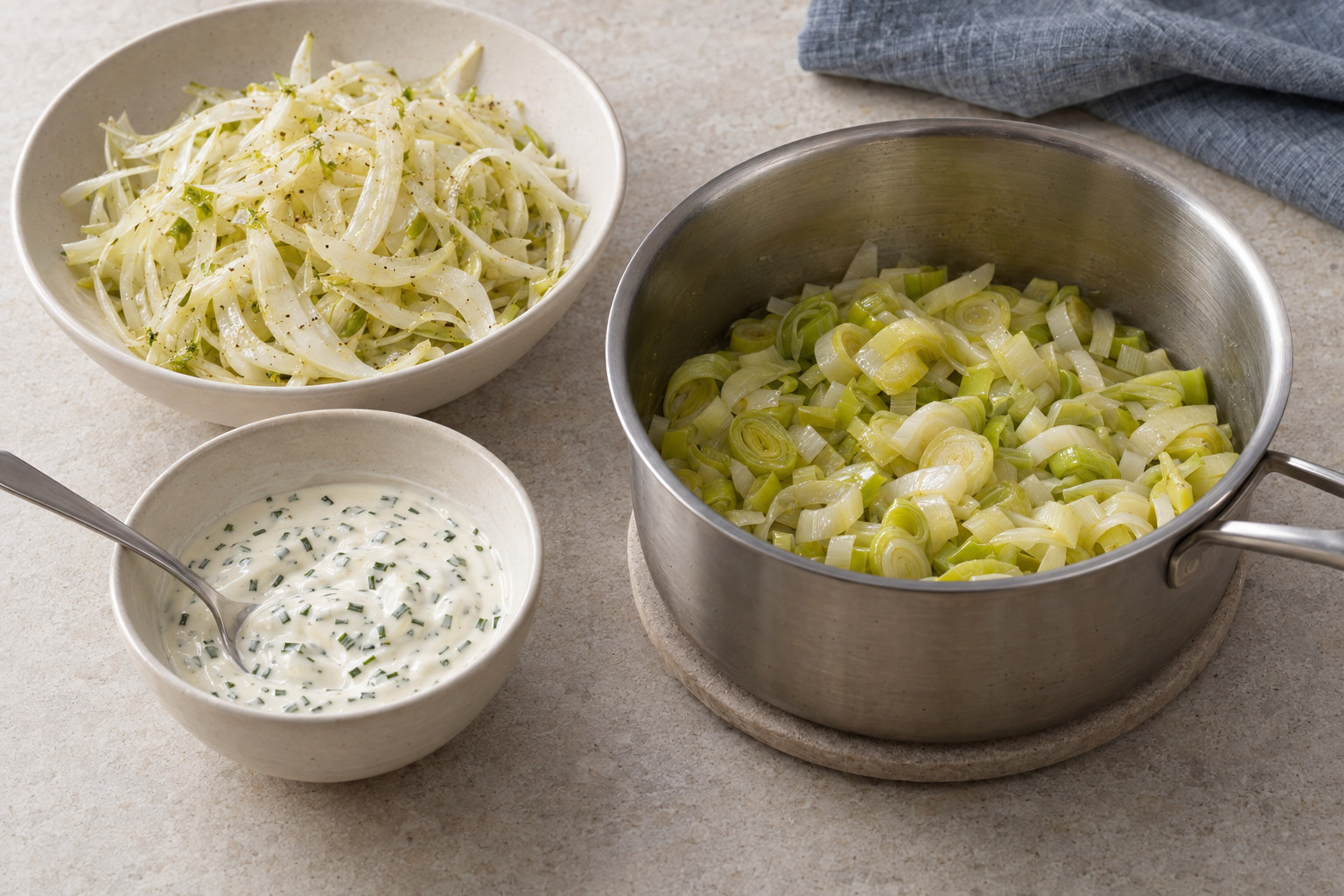
We split the leek lengthways, rinse between the layers and cut into half-centimetre pieces. We wash the fennel and cut out the tough core. We wash, dry and finely chop the chives. We mix the crème fraîche with a teaspoon of lemon juice and the chives and return it to the fridge. We slice the fennel very thinly and toss it with the lemon juice, oil and salt for the salad. In a 20 cm saucepan, we soften the prepared leek in two teaspoons of butter for 3 minutes. We add two tablespoons of water and 1 pinch of salt, cover and cook gently for 6–8 minutes. We uncover and cook off the excess water for 2 minutes, then take off the heat and cover again.
The leeks are soft but still in distinct strips, with no liquid pooling at the bottom.
Shape the rösti
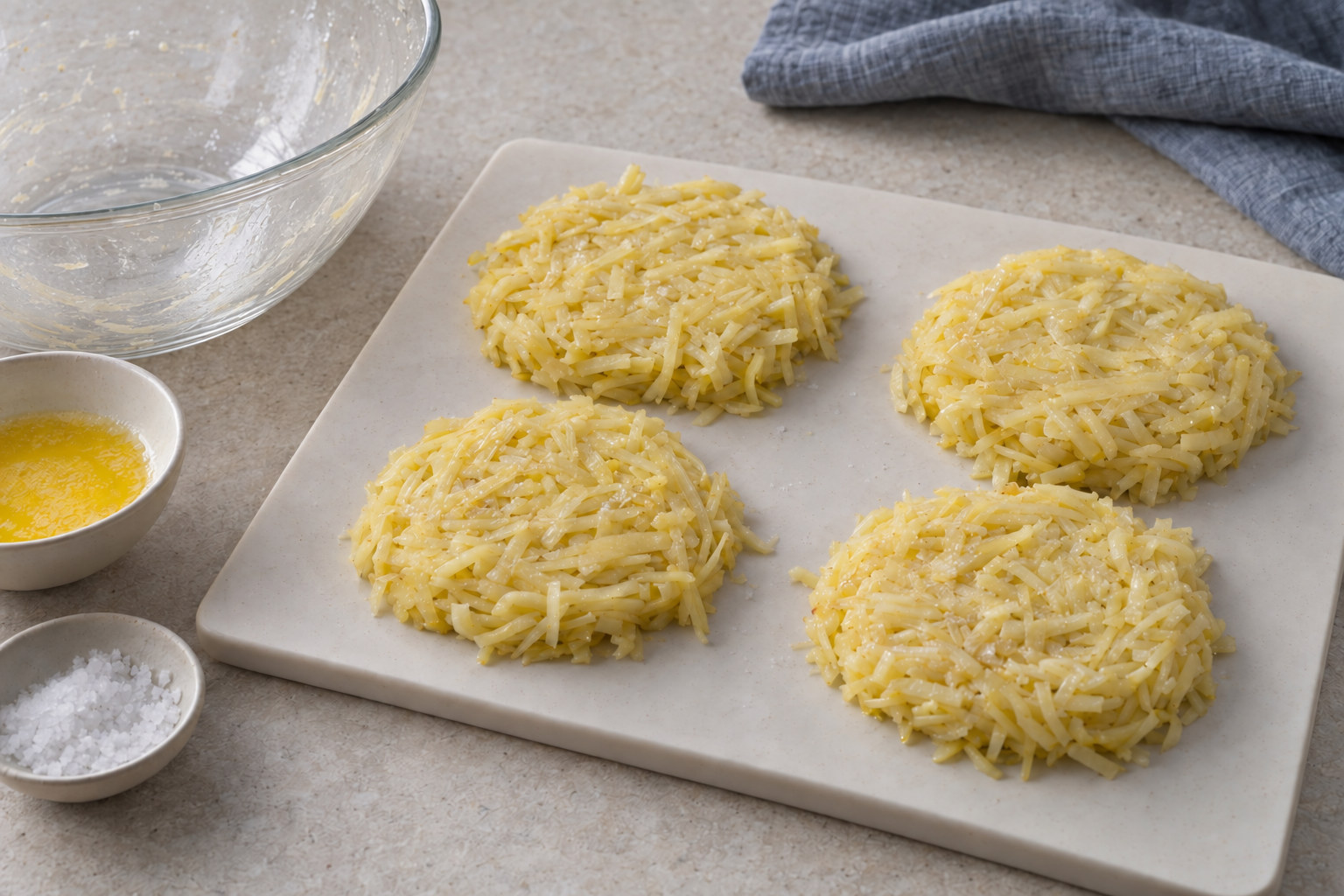
We preheat the oven to 180 °C. We peel and coarsely grate the potatoes, squeeze them firmly in a clean tea towel and discard the liquid. We immediately stir in the melted butter and ¼ teaspoon of salt. We divide all the mixture into four equal portions and press firmly into patties 11 cm across and no more than 1.2 cm thick.
The potato shreds hold together when pressed, with no liquid underneath.
Fry the rösti and finish them together in the oven
We heat two teaspoons of oil in a 28 cm frying pan with a flat 24 cm base. We fry two rösti over a medium heat for 3 minutes on each side, then transfer them to a wire rack set over a baking tray. We repeat with the remaining oil and two rösti. We then bake all four together for 15–20 minutes. While frying the first batch, we put a saucepan with 1.8 litres of egg poaching water on the second ring to heat; the leeks stay covered for now.
We check one rösti with a thin skewer and taste a little from the edge. The potato must be tender in the centre too.

Poach the eggs and reheat the leeks
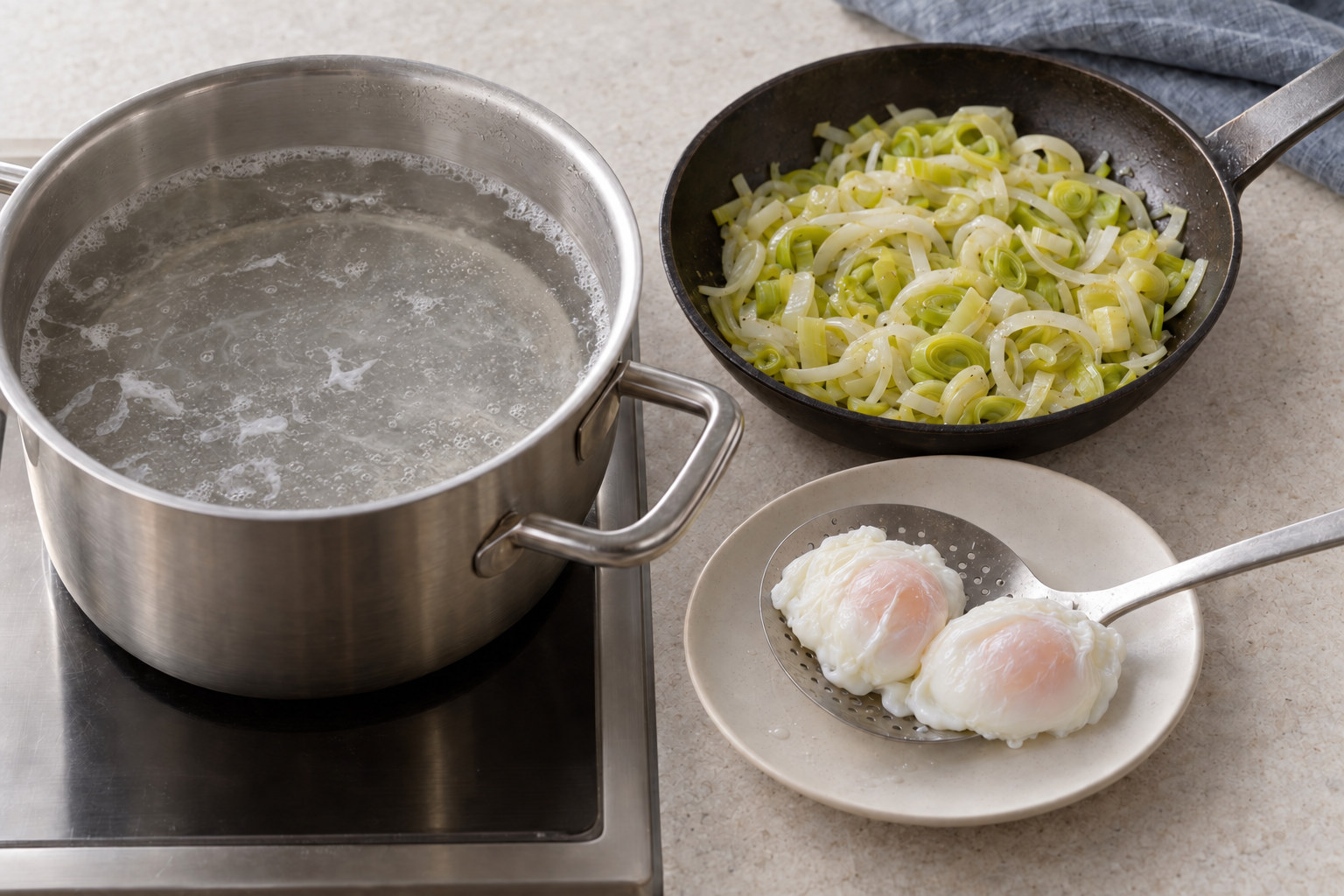
When the rösti are almost tender, with about 6 minutes to go, we add the vinegar to the hot water and reduce the heat to just below boiling. We crack the eggs into a cup one at a time and slip each gently into a different part of the water from just above the surface. Without swirling the water, we cook gently for 3–4 minutes until the whites are firm. Meanwhile, on the ring freed by frying the rösti, we reheat the leeks, stirring, for 3–4 minutes. We lift out the eggs with a slotted spoon and leave them to drain.
The whites are set and the yolks remain creamy to slightly runny. The water does not bubble vigorously, which would tear the eggs apart.
Serve straight away
We put two rösti, half the leeks and one egg on each plate. We spoon the lemon cream around the edges of the rösti and add the roe on top. We arrange Keta roe in clusters or Gorbuša roe in a thinner layer, without stirring either into the yolk. We serve all the fennel alongside.
Tips from our kitchen
- If the egg poaching water is ready early, we keep it covered and heat it again before adding the eggs.
What to watch out for
- Potato cakes that are too thick can be golden outside but still raw in the middle.
- We do not leave the cooked eggs waiting for the potatoes to finish.
How we serve it
- We serve the rösti with buttery leeks, a poached egg and fennel salad. We add the lemon cream and cold roe to the potato cakes just before serving.
Ingredient notes
- Keta has larger, firmer orange roe, around 5 mm or more across. We nestle these larger pearls in individual teaspoonfuls of cold lemon cream.
- Gorbuša has smaller orange roe. We spread the smaller pearls more thinly over the cream and do not stir them into the hot leeks.
During preparation
- We keep the roe chilled at 0–4 °C as directed on the pack and use a clean teaspoon to serve it. The roe is ready to eat; we add it at the end without cooking it. We store any leftovers from the opened pack separately, following the manufacturer’s instructions.
Our inspiration
A golden crust does not always mean a potato cake is cooked through. Chef Galton Blackiston, former co-owner and head chef of Morston Hall in Norfolk, combines pan-frying with oven cooking for his potato and celeriac rösti. We follow the same technique for our smaller potato cakes. Serving them with buttery leeks, a poached egg and salmon roe is our own combination.
Similar recipes
Recipe for 4 people
We fry eight rösti in two batches, using both pans at once, then finish them on two trays in the oven.
Step-by-step method
Before we start
We take the leeks off the heat before frying the rösti: the two frying pans occupy two rings while the water heats on the third. The rösti finish together in the oven, freeing a ring for reheating the leeks.
Prepare the lemon cream, salad and leeks
We split the leek lengthways, rinse between the layers and cut into half-centimetre pieces. We wash the fennel and cut out the tough core. We wash, dry and finely chop the chives. We mix the cream with two teaspoons of lemon juice and the chives and keep chilled. We toss thin slices of fennel with the lemon juice, oil and salt for the salad. In a 24 cm saucepan, we soften the prepared leek in one and a half tablespoons of butter for 4 minutes. We pour in 60 ml water, add two pinches of salt, cover and cook gently for 8–10 minutes. We uncover and cook off the excess liquid for 2 minutes, then take off the heat and cover again.
The leeks are soft but still in distinct strips, with no liquid pooling at the bottom.
Shape the rösti
We preheat the fan oven to 170 °C. We peel and coarsely grate the potatoes and squeeze them firmly in a tea towel in small batches. We discard the liquid and stir two tablespoons of melted butter and ½ teaspoon of salt into the potatoes. We divide the mixture into eight equal portions and press into patties 11 cm across and no more than 1.2 cm thick.
The potato shreds hold together when pressed, with no liquid underneath.
Fry the rösti and finish them together in the oven
We divide half the oil between two 28 cm frying pans and heat it. We put two rösti in each pan and fry for 3 minutes on each side. We transfer them to wire racks over two baking trays and repeat with the remaining oil and four rösti. We place four on each tray, without overlapping. We finish them together in the oven for 18–22 minutes, swapping the trays halfway through. While frying the first batch, we bring 2.5 litres of egg poaching water to the boil on the third ring.
We check one rösti with a thin skewer and taste a little from the edge. The potato must be tender in the centre too.
Poach the eggs and reheat the leeks
About 6 minutes before the rösti are ready, we add the vinegar to the water in the wide saucepan. We crack the four eggs into a cup one at a time and slip them into four separate places in the water, just below boiling, without swirling it. We cook gently for 3–4 minutes, judging by the firmness of the whites. At the same time, we reheat the leeks for 3–4 minutes on one of the rings freed by the frying pans. We lift out the eggs and leave to drain.
The whites are set and the yolks remain creamy to slightly runny. The water does not bubble vigorously, which would tear the eggs apart.
Serve straight away
We put two rösti, a quarter of the leeks and one egg on each of four plates. We spoon the cream around the edges of the potato cakes and add the cold roe: Keta in clusters or Gorbuša spread more thinly. We divide the fennel between the plates, placing it alongside, and serve straight away.