
From the Boxxi kitchen · European and Japanese inspiration
Homemade tagliolini with pea purée and salmon roe
We coat delicate homemade tagliolini in glossy lemon butter and twirl them onto a smooth green pea purée. Cold salmon roe adds a salty accent and a gentle pop, a pleasing contrast to the soft pasta.
The timing includes 30 minutes for the dough to rest; we start heating the water while rolling it out.
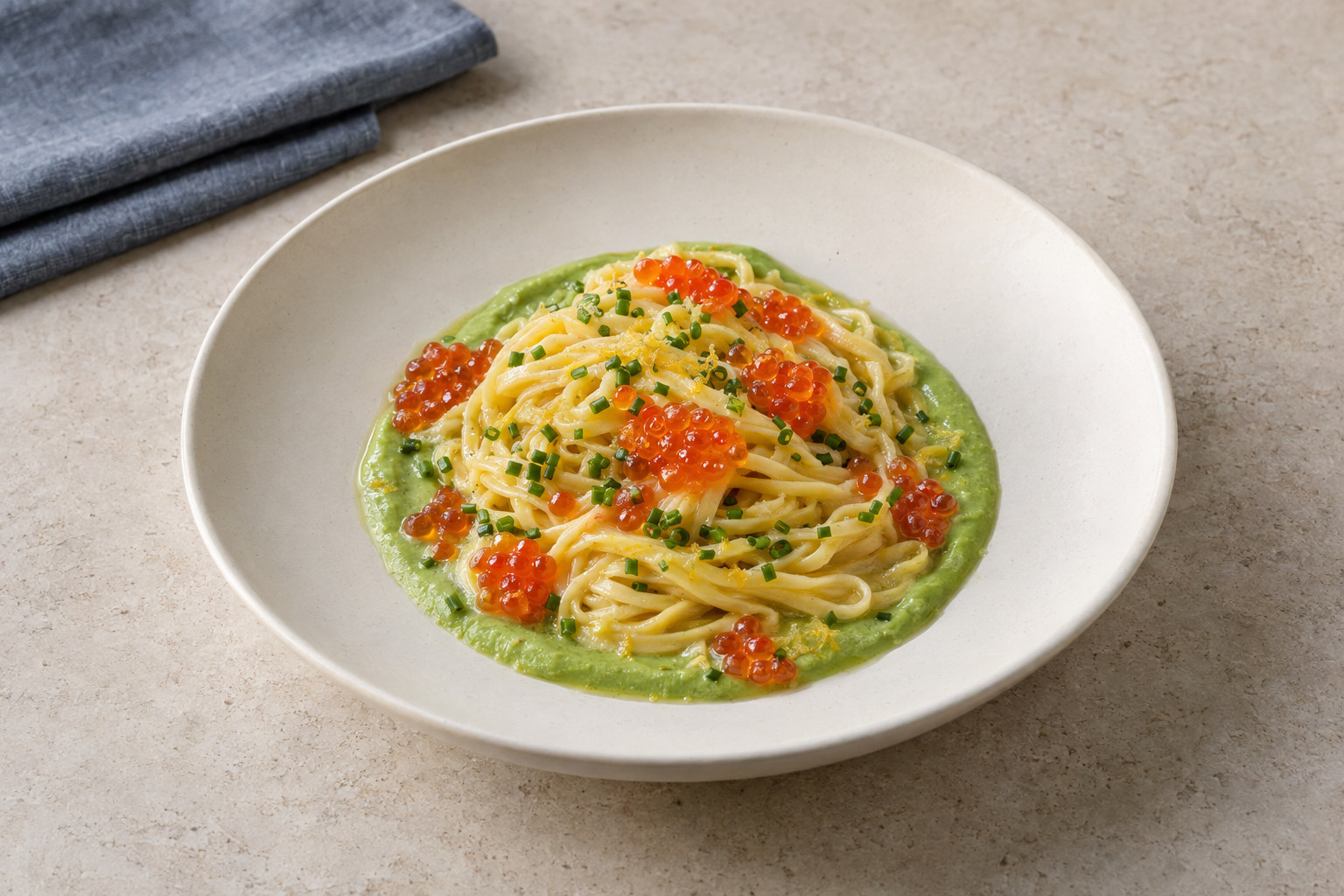
Lemon zest perfumes sweet peas and delicate egg pasta; butter rounds out the flavours and salmon roe adds saltiness.
Step-by-step method
What you will need
- kitchen scales
- knife and chopping board
- pasta machine and rolling pin
- 40 × 30 cm tray
- saucepan holding at least 5 l
- 1.5 l saucepan
- deep 28 cm frying pan
- blender and fine sieve
- tongs
- three hob rings
- oven
- clean, dry tea towel
Before we start
While the dough rests, we prepare the finishing ingredients. We start heating the water while rolling the pasta, cook the peas only when we reach the last sheet, and combine the butter with starchy water while the pasta briefly boils.
Make the dough
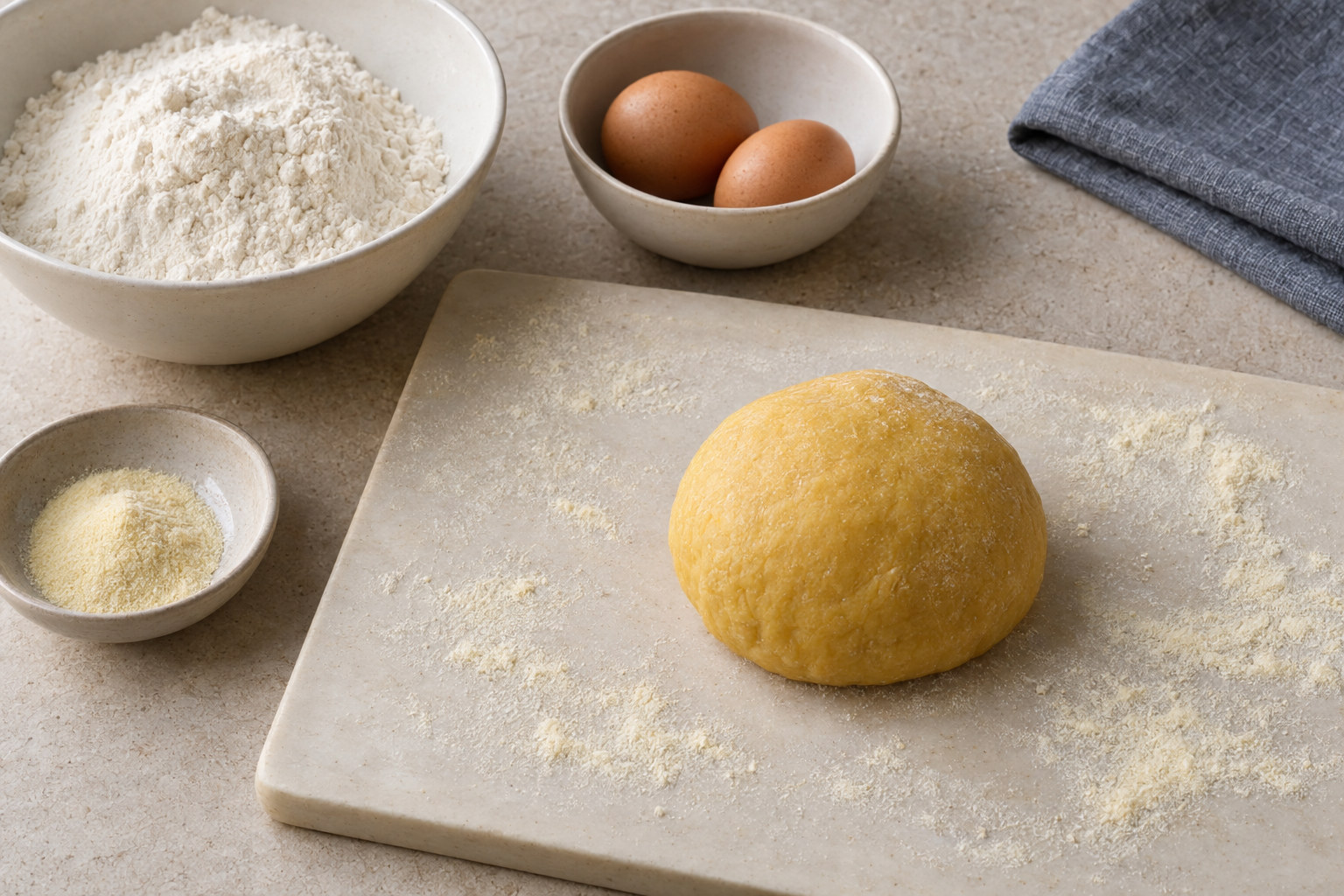
We combine the flour and eggs and knead for 8–10 minutes to make a firm, smooth dough. Only if it is still crumbly after a few minutes do we work in a few drops of water. We wrap it and leave to rest for 30 minutes.
The dough is elastic, holds together when pressed and does not stick to our fingers.
Roll and cut the pasta
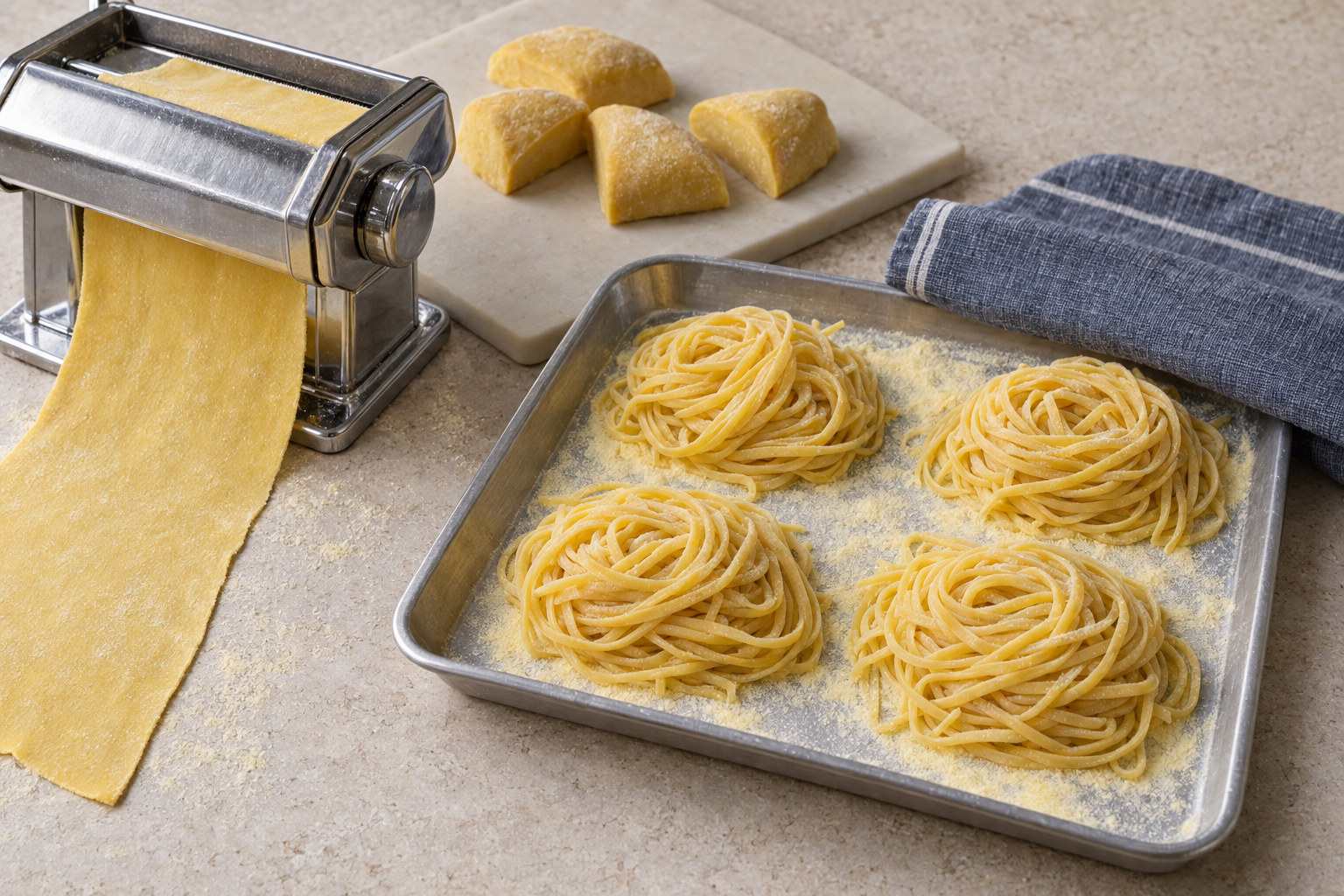
We divide the dough into four pieces. One at a time, we pass them through the machine, starting at the widest setting and working down to a sheet about 0.8–1 mm thick; we keep the other pieces covered. We cut the sheets to 25–30 cm lengths, dust lightly with semolina and leave to dry for 5 minutes. We cut into 2–3 mm strands and arrange them loosely in four small nests on the dusted tray, without pressing them together. While rolling, we start heating a pan of water for the pasta. We lightly cover the nests with a dry tea towel. As we roll the final sheet, we turn the oven on to 60 °C and put the plates inside.
The sheets feel dry but remain flexible. The strands stay separate; we cook them within 15 minutes of cutting the final portion.
Make the pea purée
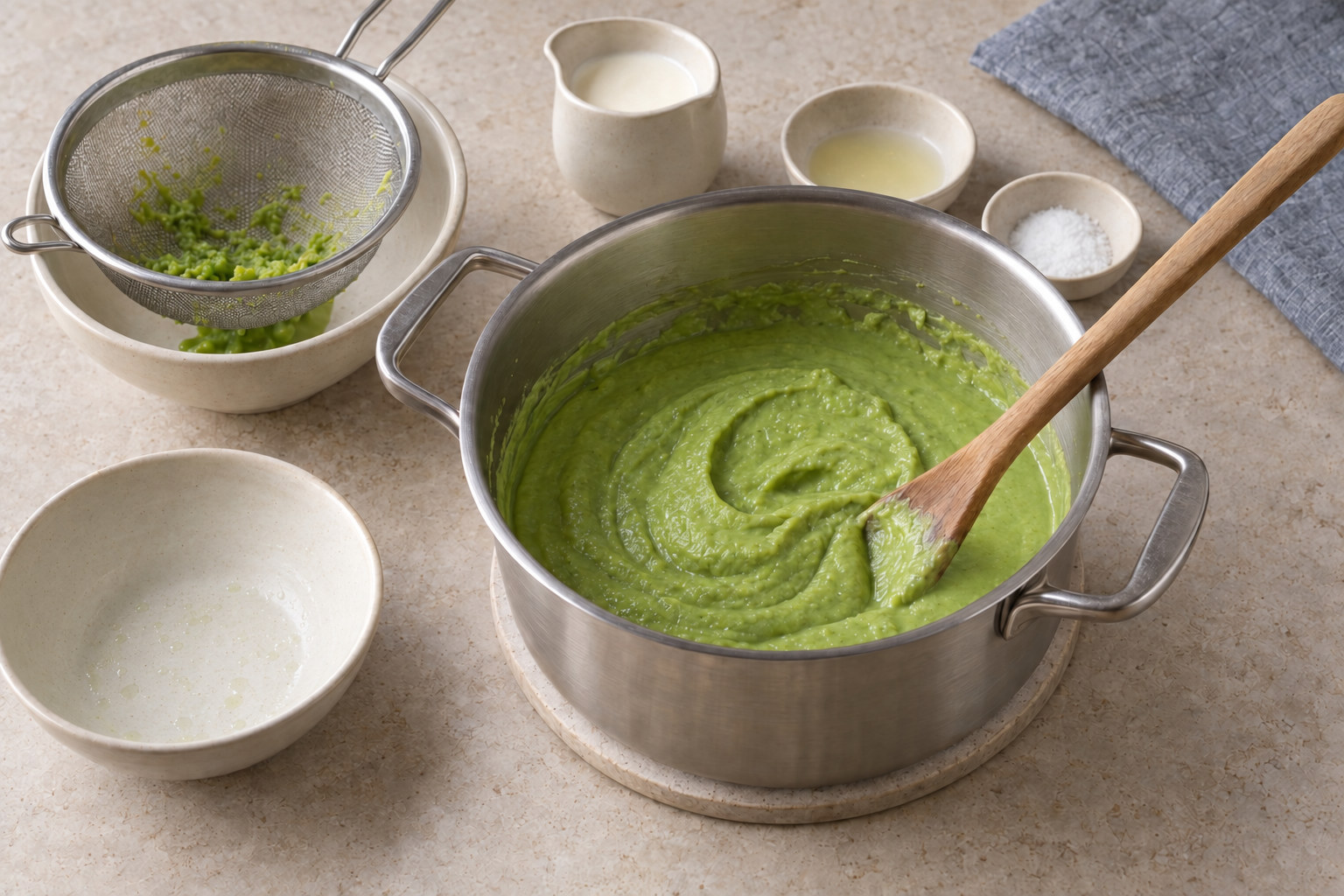
Before cutting the final sheet, we bring plenty of water to the boil in a 1.5 l saucepan. Once the water returns to the boil after adding the peas, we cook them for 3 minutes. We reserve 60 ml of water and drain the rest. We blend the peas with the cream, salt and initially 30 ml of the reserved water; we add the rest a tablespoon at a time, only until we have a thick purée. We pass it through a fine sieve, stir in a teaspoon of lemon juice and return it to the saucepan. We keep it hot over the lowest heat for no more than 10 minutes, stirring occasionally. The plates are already warming in the oven.
The purée falls in a smooth, soft wave; it is not watery.
Cook the pasta and make the lemon butter
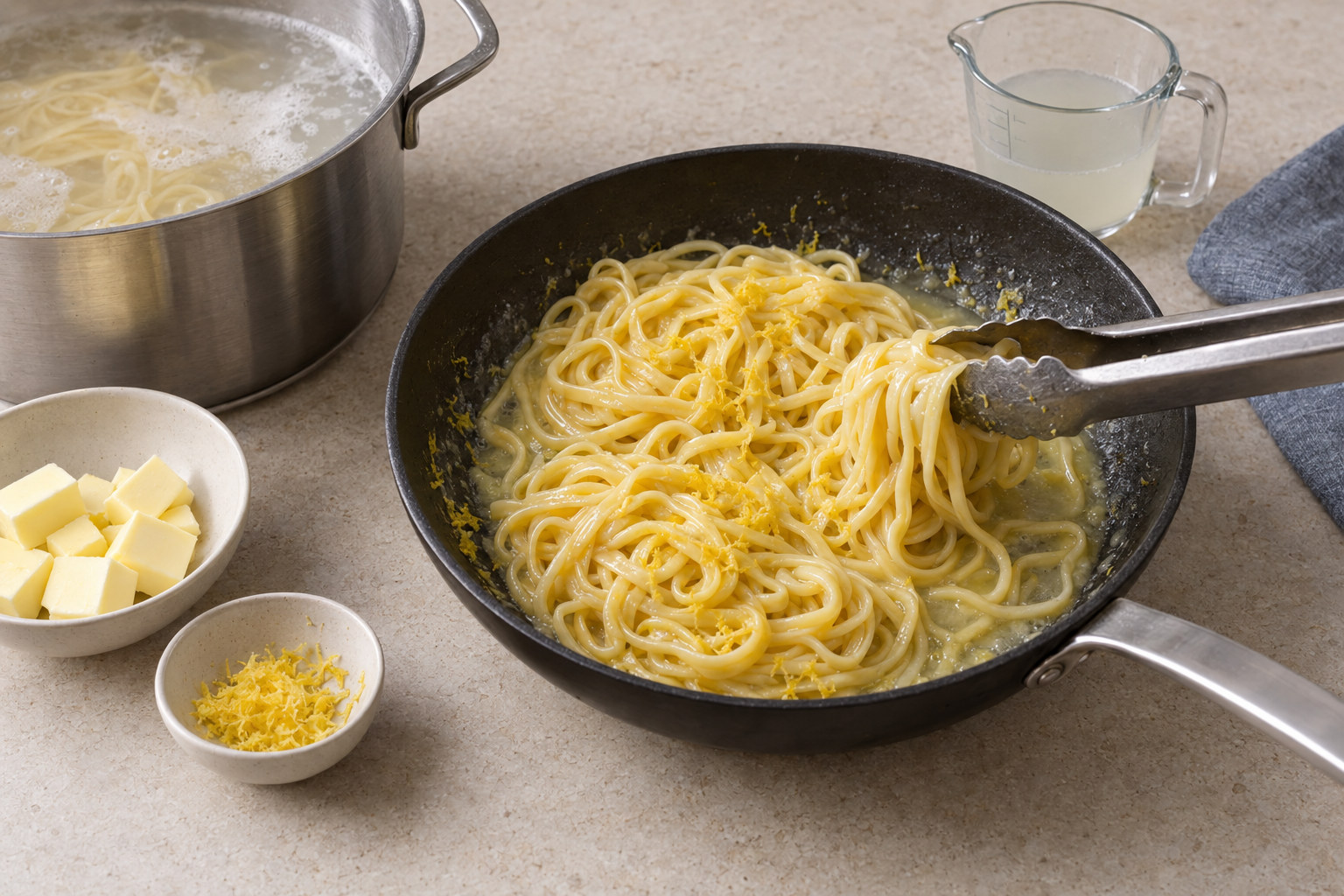
We wash the lemon thoroughly and grate only the yellow part of the zest. We add two teaspoons of salt to the pasta water and lower all four nests into the gently boiling water. We ease them apart carefully and cook for 2–3 minutes, depending on their thickness. After a minute, we reserve 120 ml of starchy water. In a deep 28 cm frying pan, we combine 60 ml of it with two teaspoons of lemon juice. Over a gentle heat, we stir in the cold butter a cube at a time, without letting it boil hard. We transfer the pasta to the pan with tongs, add the zest and toss for 20–30 seconds. We add more water a tablespoon at a time only if needed; we do not use the rest.
The pasta has no floury centre and the sauce coats it glossily. There must not be a large puddle in the bottom of the pan.
Finish the plates
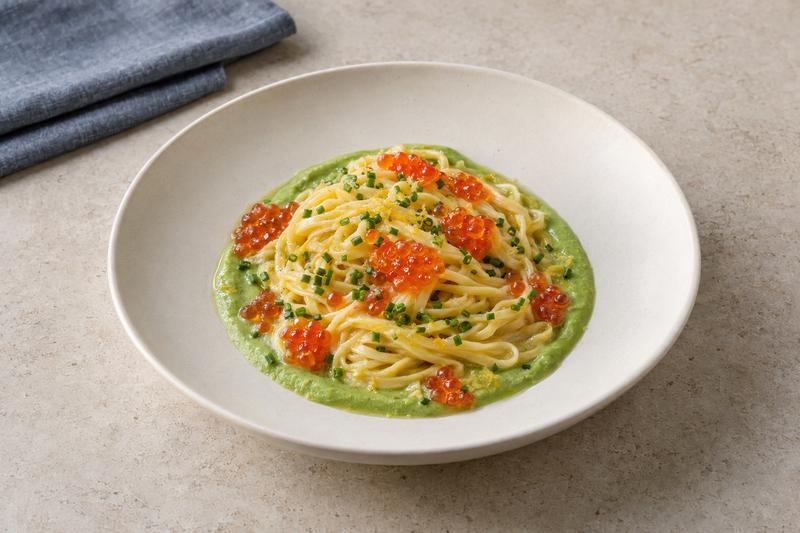
We wash, dry and finely chop the chives. We divide the purée between two warmed plates and twirl the pasta on top. We add the chives and, only once away from the hob, the cold roe: larger chum salmon roe in a few small mounds on the purée beside the pasta, or pink salmon roe in a thin, irregular band. We serve immediately.
Tips from our kitchen
- With the pasta machine, we judge the actual thickness of the dough; numbered settings vary between brands.
What to watch out for
- We do not press the pasta into tight, damp nests.
- We add water to the purée and emulsion gradually; we may not need all the reserved water.
How we serve it
- We twirl the tagliolini coated in lemon butter onto the pea purée and add chives. We add the cold roe only once the food is plated, then serve straight away.
Ingredient notes
- Chum salmon (keta) has larger, firmer orange roe, around 5 mm or more in size. We arrange the larger roe in small clusters on the purée around the pasta, never in the hot pan.
- Pink salmon (gorbusha) has smaller orange roe. The smaller roe makes a thinner band around the pasta; we do not stir it into the sauce.
During preparation
- We keep the roe chilled at 0–4 °C according to the pack and use a clean spoon to serve it. It is ready to eat; we add it at the very end and do not cook it. We store any unused roe from the opened pack separately, following the manufacturer’s instructions.
Our inspiration
When making pasta at home, even the half-hour when we leave the dough alone has its part to play. After resting, we roll and cut it into fine tagliolini; their narrow shape stands out against the smooth pea purée. This dish brings together three different textures: springy pasta, velvety purée and whole beads of roe. The lemon butter only lightly coats the pasta, so the contrasts remain distinct in every mouthful.
Similar recipes
Recipe for 4 people
We roll out eight pieces of dough one after another, but cook all the pasta in one suitably large saucepan.
Step-by-step method
Before we start
We prepare all the servings together in a large saucepan and frying pan. We finish the pea purée only when we reach the last pasta sheets, so it does not wait through all the rolling; the plates will already be warm.
Make the dough
We combine the flour and eggs and knead for 10–12 minutes. If the dough is crumbly, we add the prepared water only a drop at a time. We wrap the smooth, firm dough and leave to rest for 30 minutes.
The dough is elastic, holds together when pressed and does not stick to our fingers.
Roll and cut the pasta
We divide the dough into eight pieces. We roll each through the machine to 0.8–1 mm, cut the sheets to 25–30 cm lengths and dust lightly with semolina. We keep the rest of the dough covered. After drying for 5 minutes, we cut into 2–3 mm strands and arrange loosely in eight nests on two trays. During the second half of rolling, we start heating plenty of water for the pasta. We lightly cover the nests with dry tea towels. In the final stage of rolling, we turn the oven on to 60 °C and put all four plates inside.
The sheets feel dry but remain flexible. The strands stay separate; we cook them within 15 minutes of cutting the final portion.
Make the pea purée
Before cutting the final two sheets, we bring plenty of water to the boil in a 2 l saucepan and boil the peas for 3 minutes. We reserve 100 ml of water and drain the rest. We blend the peas with the cream, salt and initially 60 ml of the reserved water, adding more gradually only as needed for the consistency. We pass through a sieve, add two teaspoons of lemon juice and keep in the saucepan over the lowest heat for no more than 10 minutes before serving. The plates are already warming at 60 °C.
The purée falls in a smooth, soft wave; it is not watery.
Cook the pasta and make the lemon butter
We wash the lemon thoroughly and grate only the yellow part of the zest. We lower all eight loose nests into a generous amount of gently boiling water with 3 teaspoons of salt, ease them apart gently and cook for 2–3 minutes. After a minute, we reserve 180 ml of water. In a deep 32 cm frying pan, we combine 100 ml of it with a tablespoon of lemon juice and gradually stir in the cold butter over a low heat. We transfer the cooked pasta to the pan, add the zest and briefly toss together, adding the reserved water a tablespoon at a time if needed. We handle the pan gently and do not squash the pasta.
The pasta has no floury centre and the sauce coats it glossily. There must not be a large puddle in the bottom of the pan.
Finish the plates
We wash, dry and finely chop the chives. We divide all the purée and pasta between four warmed plates. We sprinkle with chives and add roe to each serving: chum salmon roe in larger, separate clusters, or pink salmon roe spread more evenly over the purée around the pasta. We do not return the dish to the heat and serve straight away.