
French technique, original composition · European cuisine; our own take on salmon quenelles
Salmon quenelles with velouté, potatoes and peas
We serve four delicate salmon quenelles per person with a light dill and lemon sauce, potatoes and peas. We shape them with two spoons from a chilled mixture of Norwegian salmon, egg white and cream. Gentle cooking keeps their surface smooth, while a homemade stock-based sauce brings out the flavour of the fish.
This allows time to make the stock, chill the farce and poach all the quenelles at once. If the farce warms up, we chill it for longer.
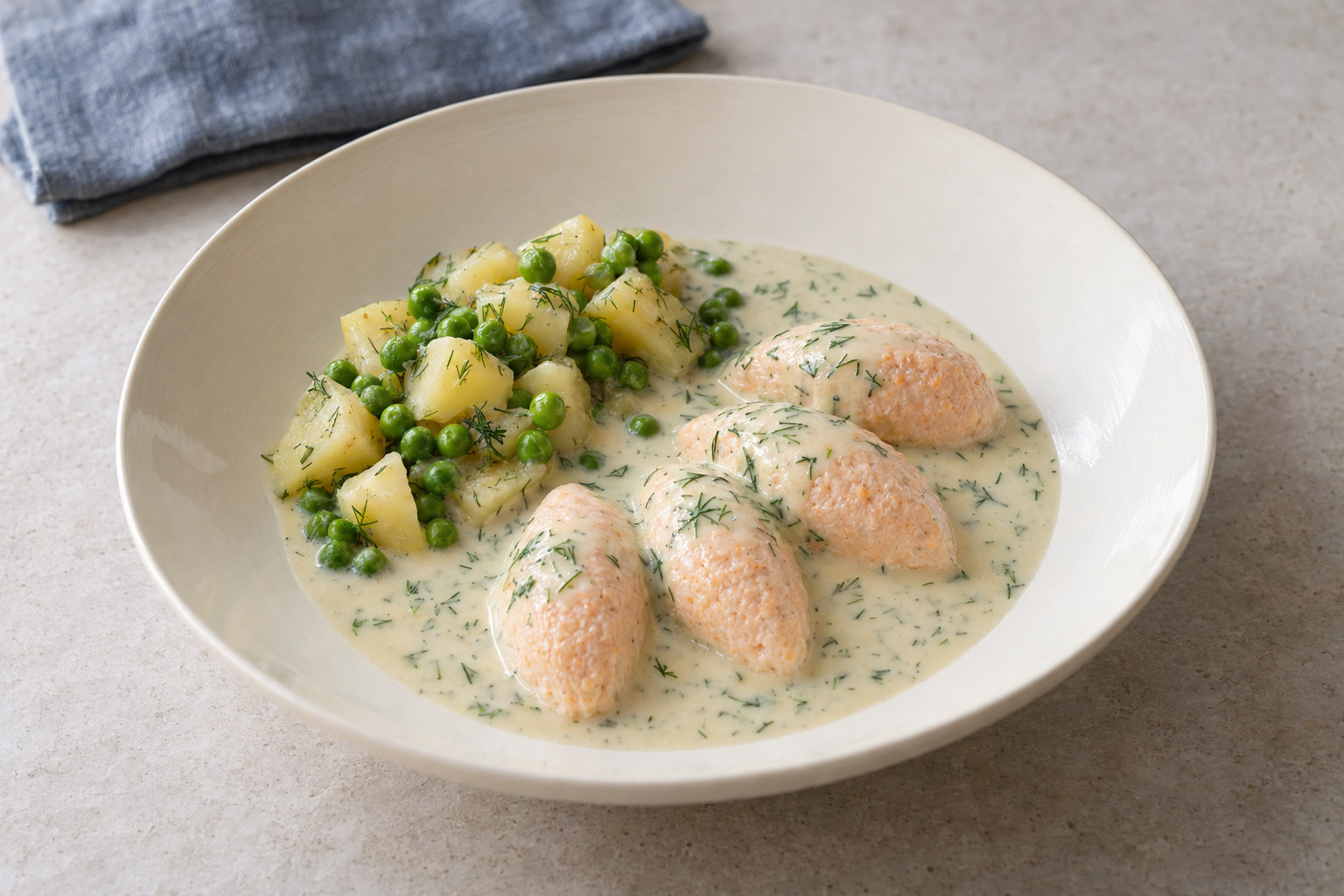
Delicate fish quenelles, buttery salmon sauce with lemon and dill, and sweet peas.
Step-by-step method
What you will need
- 4 l stock pot
- fine sieve, measuring jug and 2 l heatproof bowl
- food processor with blade and chilled bowl
- two tablespoons
- 24 cm / 3 l wide lidded pan for poaching
- 3 l saucepan for the potatoes
- 1.5 l saucepan for the sauce
- whisk
- two hob rings
- oven and covered heatproof dish for keeping the side warm
- thermometer
- chopping board and knife
Before we start
While the stock cooks, we chill the food processor and prepare the vegetables. We leave the farce to chill. Meanwhile, we cook the side and make the sauce. We keep the side warm briefly in the oven at 80 °C and the sauce over the lowest heat; we poach all the large quenelles together in a wide pan.
Make the salmon stock
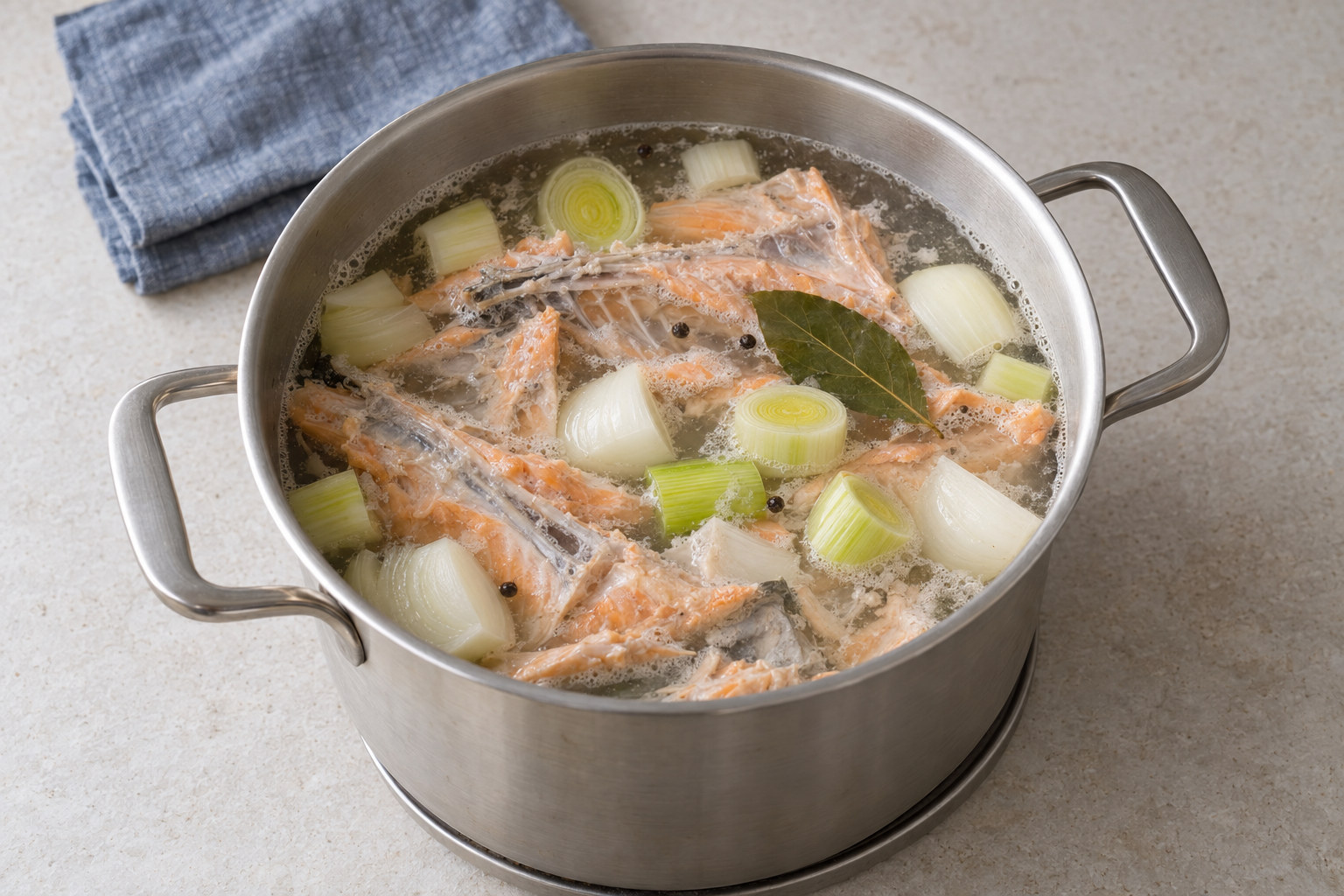
We peel the onion. We rinse the sand thoroughly from between the layers of the white part of the leek. We arrange 700 g of cleaned salmon frame, cut into pieces, in a 4 l pot. We add 1200 ml cold water, half a small onion roughly chopped, a quarter of a small leek, 1 bay leaf and 3 peppercorns. We keep the bones submerged, adding a little water if needed. We heat the stock slowly, skim off the foam and simmer very gently with the lid ajar for 25 minutes. We prepare the remaining ingredients while it cooks.
The surface should barely move; a rolling boil can break up the flesh, disperse the fat and spoil the flavour.
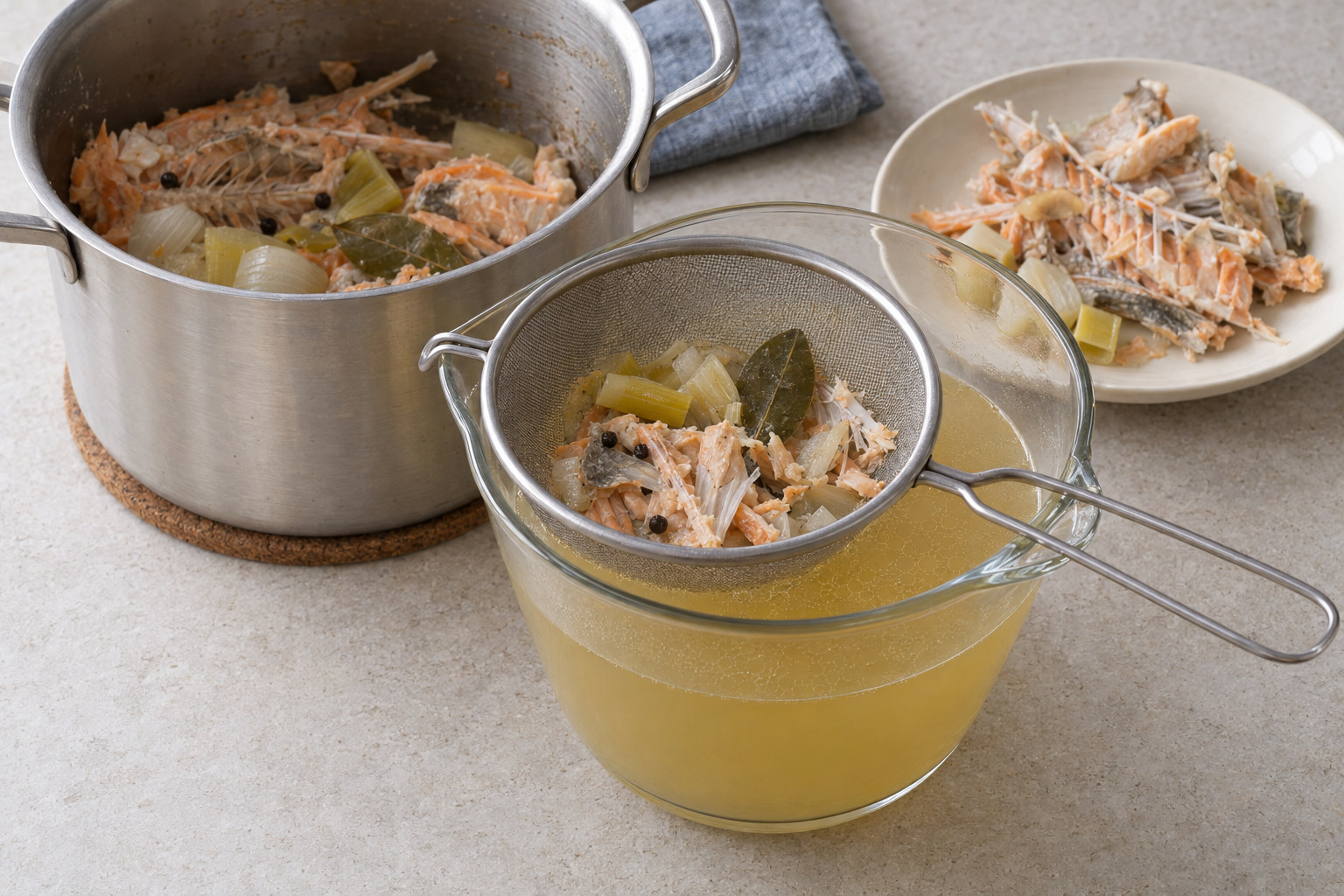
Strain and measure the stock
We strain the stock through a fine sieve without pressing the bones. We skim off the fat and measure 800 ml; if there is less, we top it up with hot water. We keep any extra stock for another use. We pick any flesh from the frame and remove every bone carefully. We set the flesh aside to add to the sauce later.
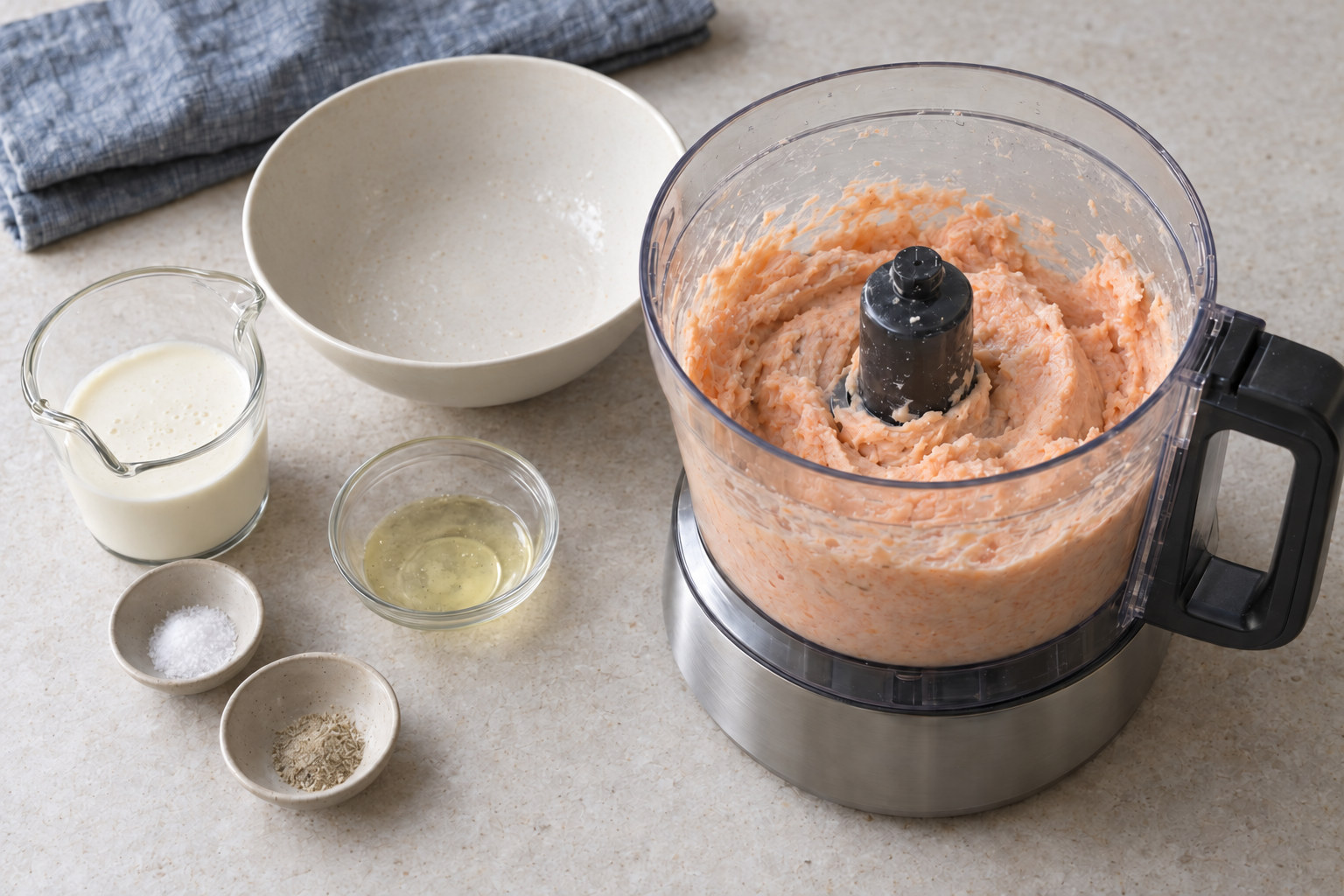
Make the chilled fish farce
We chill the processor bowl and blade in the fridge for 15 minutes. We remove the skin and any bones from the salmon, cut the chilled flesh into pieces and briefly blend it with the salt and white pepper. We blend in one egg white, then add the 60 ml cold cream in stages. We blend only briefly so the mixture does not warm above 10 °C; we return it to the fridge if needed. The finished farce should be smooth and thick, holding a groove made with a spoon. We cover and chill for 20 minutes.
We use raw fillet; cooked flesh from the frame would not bind in the same way. We keep the mixture chilled throughout.
Make the side and velouté
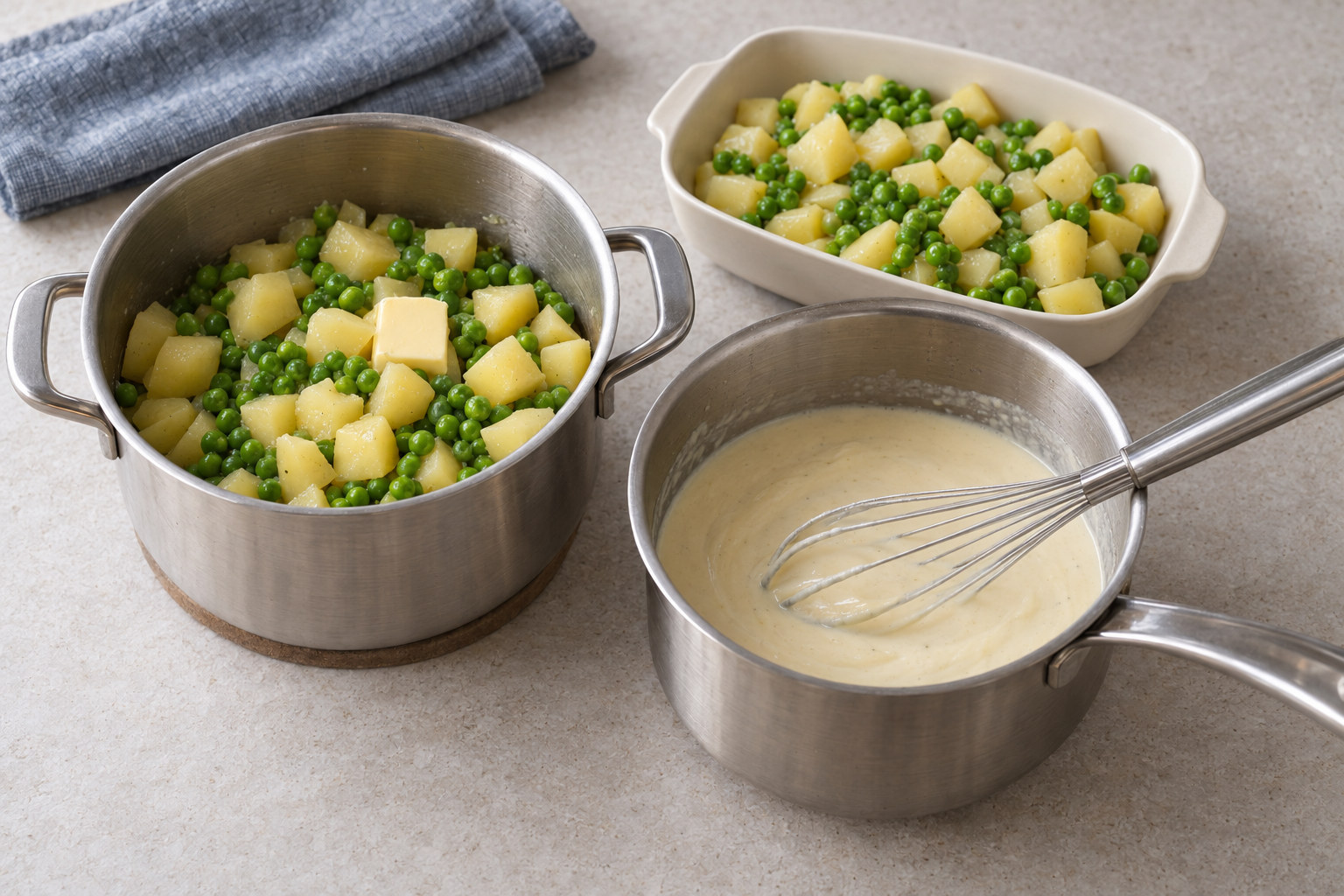
We heat the oven to 80 °C. We peel the potatoes. While the farce chills, we cook the potatoes, cut into 2 cm cubes, in plenty of water with 1½ teaspoons of salt for about 15 minutes. We add the peas for the final 5 minutes, or follow a longer cooking time on the packet. We drain and toss with 2 teaspoons of butter. In a separate saucepan, we melt 1½ tablespoons of butter with 20 g flour and stir for 2 minutes without letting it brown. We take the pan off the heat and gradually whisk in 400 ml stock. We return it to the hob and simmer gently for 10 minutes. We add 40 ml cream and ¼ teaspoon salt. We cover the side and keep it in the oven at 80 °C for about 15 minutes. We add any picked salmon flesh to the sauce. We keep the sauce above 70 °C for a further 2 minutes. Then we hold it above 63 °C over the lowest heat without boiling, freeing the second hob ring for poaching.
The sauce lightly coats a spoon, with no lumps or raw-flour taste; the roux remains pale.
Shape and poach the quenelles
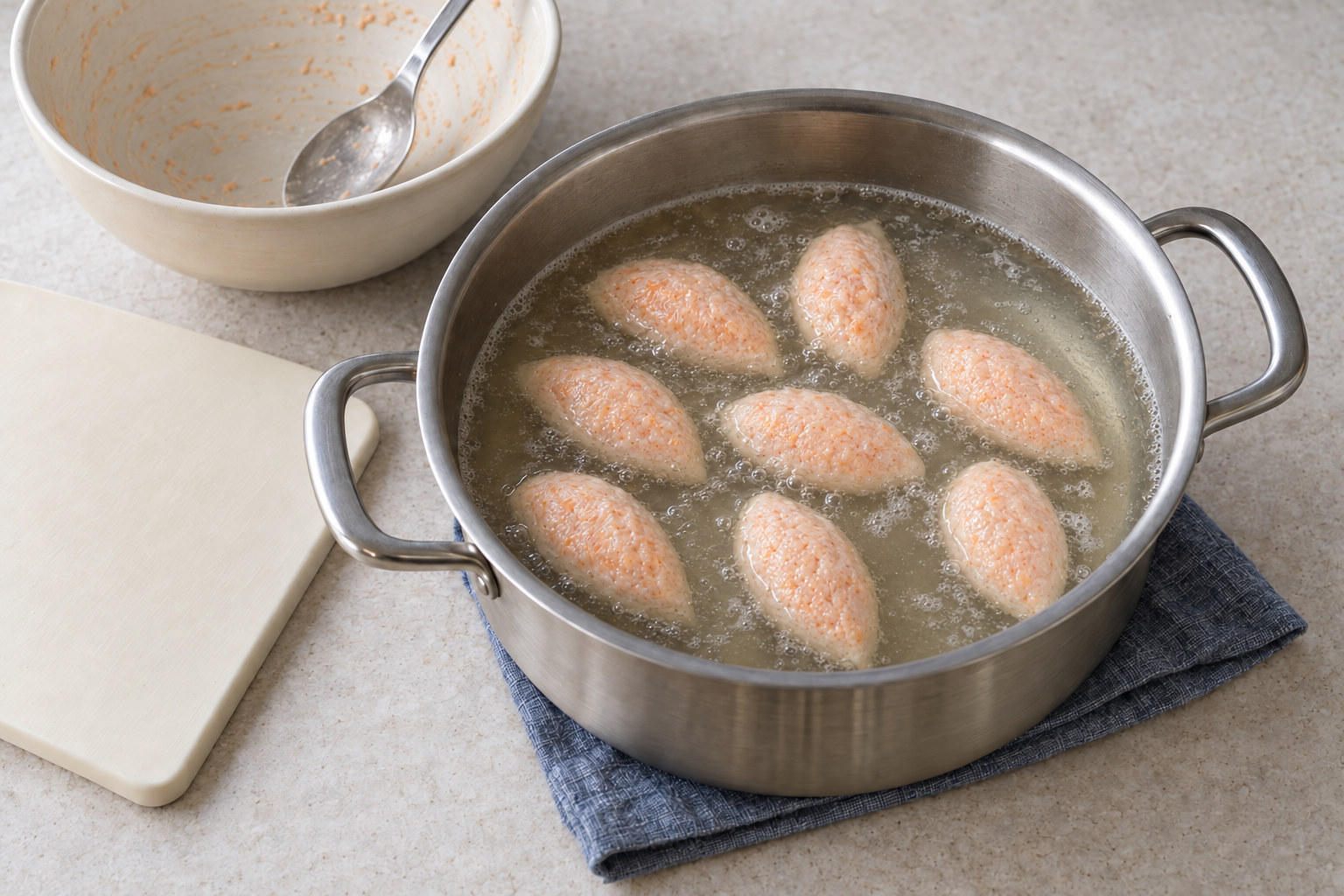
In a wide 24 cm pan, we combine the remaining 400 ml stock with 500 ml water and ½ teaspoon salt. We heat it to 85–90 °C. We dip two spoons in the warm liquid and use them to shape the chilled farce into 8 oblong quenelles, no more than 2.5 cm thick. We arrange them in a single layer with small gaps. We poach all the quenelles together, covered, for about 7–10 minutes, turning them carefully halfway through. The liquid must not boil. The centre of the largest quenelle must reach at least 70 °C for 2 minutes; we poach longer if needed. We lift the cooked quenelles out with a slotted spoon and let them drain; we do not add the poaching liquid to the sauce.
The liquid trembles gently without bubbling hard. Quenelles floating to the surface does not prove they are safely cooked through.
Finish and serve
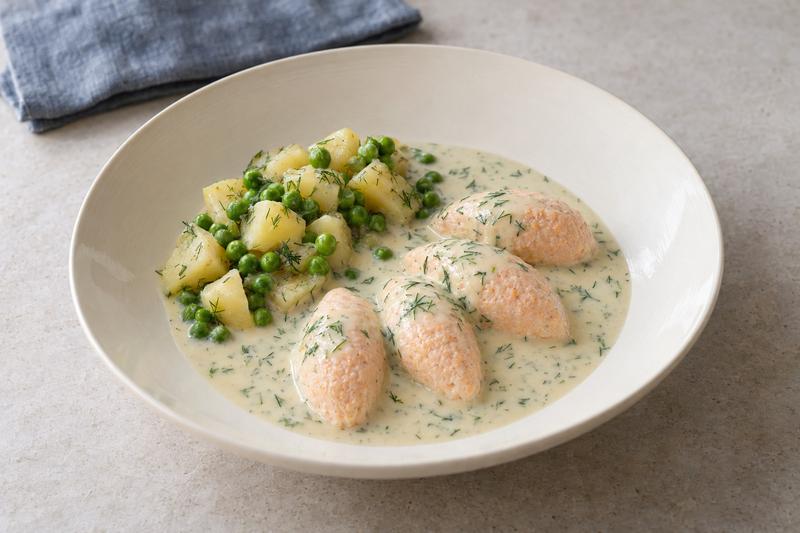
We rinse the dill and leave it to drain. We remove the thick stems and chop it finely. We take the sauce off the heat and stir in 10 ml lemon juice and 2 tablespoons chopped dill. We divide the potatoes and peas between two warmed, deep plates, add four quenelles to each and spoon over the sauce. We serve straight away.
The quenelles are tender and hold together; the sauce remains pourable.
Tips from our kitchen
- We blend the farce only until smooth, then stop so it does not warm up.
- We chill the farce thoroughly before shaping so the quenelles hold their shape.
- We cook the quenelles until they reach the required temperature inside; timing or floating to the surface alone is not enough.
What to watch out for
- We use raw fillet for the chilled farce; any cooked flesh picked from the frame can be added to the sauce instead.
- We do not let the poaching liquid boil hard, or the surface of the quenelles may split.
- We keep the roux pale so it does not overpower the flavour of the fish.
How we serve it
- We use warmed, deep plates and spoon the sauce around the quenelles so their shape remains visible.
Ingredient swaps
Chopped dill
The same number of tablespoons of finely chopped chives The flavour will be milder and less aniseed-like.
Peas, 150 / 300 g
The same amount of small broccoli florets Cook with the potatoes for the final 5–6 minutes, until tender.
Ingredient notes
- The stock frame is sold in packs of at least 700 g. We use one pack for two portions or two for four. We carefully remove any bones from the picked flesh.
- We use one 300 g pack of Norwegian salmon for two portions, or two packs for four.
During preparation
- We strain the stock carefully and check all the picked flesh for bones. We divide any stock kept for later into shallow containers, cool it quickly and refrigerate at 5 °C or below within 1–2 hours; use within 48 hours or freeze. We reheat it thoroughly once only. We use separate clean utensils for raw fish and cooked food. We keep the raw farce in the fridge and do not leave it on the worktop unnecessarily. The quenelles contain raw fish and egg white: the centre must reach at least 70 °C for 2 minutes. We check with a clean probe; floating to the surface is not proof that they are cooked through.
Our inspiration
We shape a light mixture of fish, egg white and cream into oblong quenelles using two spoons. A smooth sauce suits their delicate texture. Its structure was inspired by British chef Galton Blackiston, who spent many years at Morston Hall in Norfolk. His fennel velouté combines butter, flour, stock and cream. We make a salmon stock and finish the sauce with dill and lemon to complement the mild flavour of the quenelles.
Similar recipes

Recipe for 4 people
Step-by-step method
Before we start
While the stock cooks, we chill the food processor and prepare the vegetables. We leave the farce to chill. Meanwhile, we cook the side and make the sauce. We keep the side warm briefly in the oven at 80 °C and the sauce over the lowest heat; we poach all the large quenelles together in a wide pan.
Make the salmon stock
We peel the onion. We rinse the sand thoroughly from between the layers of the white part of the leek. We arrange 1400 g of cleaned salmon frame, cut into pieces, in a 6 l pot. We add 2400 ml cold water, one small onion roughly chopped, half a small leek, 2 bay leaves and 6 peppercorns. We keep the bones submerged, adding a little water if needed. We heat the stock slowly, skim off the foam and simmer very gently with the lid ajar for 25 minutes. We prepare the remaining ingredients while it cooks.
The surface should barely move; a rolling boil can break up the flesh, disperse the fat and spoil the flavour.
Strain and measure the stock
We strain the stock through a fine sieve without pressing the bones. We skim off the fat and measure 1600 ml; if there is less, we top it up with hot water. We keep any extra stock for another use. We pick any flesh from the frame and remove every bone carefully. We set the flesh aside to add to the sauce later.
Make the chilled fish farce
We chill the processor bowl and blade in the fridge for 15 minutes. We remove the skin and any bones from the salmon, cut all the flesh into pieces and process it in two batches. We briefly blend half the fish, salt and white pepper in each batch, add one egg white, then gradually add 60 ml cold cream. We blend only briefly so the mixture does not warm above 10 °C; we return it to the fridge if needed. The finished farce should be smooth and thick, holding a groove made with a spoon. We combine the batches, cover and chill for 20 minutes.
We use raw fillet; cooked flesh from the frame would not bind in the same way. We keep the mixture chilled throughout.
Make the side and velouté
We heat the oven to 80 °C. We peel the potatoes. While the farce chills, we cook the potatoes, cut into 2 cm cubes, in plenty of water with 3 teaspoons of salt for about 15 minutes. We add the peas for the final 5 minutes, or follow a longer cooking time on the packet. We drain and toss with 1½ tablespoons of butter. In a separate saucepan, we melt 3 tablespoons of butter with 40 g flour and stir for 2 minutes without letting it brown. We take the pan off the heat and gradually whisk in 800 ml stock. We return it to the hob and simmer gently for 10 minutes. We add 80 ml cream and ½ teaspoon salt. We cover the side and keep it in the oven at 80 °C for about 15 minutes. We add any picked salmon flesh to the sauce. We keep the sauce above 70 °C for a further 2 minutes. Then we hold it above 63 °C over the lowest heat without boiling, freeing the second hob ring for poaching.
The sauce lightly coats a spoon, with no lumps or raw-flour taste; the roux remains pale.
Shape and poach the quenelles
In a wide 30 cm pan, we combine the remaining 800 ml stock with 1 l water and 1 teaspoon salt. We heat it to 85–90 °C. We dip two spoons in the warm liquid and use them to shape the chilled farce into 16 oblong quenelles, no more than 2.5 cm thick. We arrange them in a single layer with small gaps. We poach all the quenelles together, covered, for about 7–10 minutes, turning them carefully halfway through. The liquid must not boil. The centre of the largest quenelle must reach at least 70 °C for 2 minutes; we poach longer if needed. We lift the cooked quenelles out with a slotted spoon and let them drain; we do not add the poaching liquid to the sauce.
The liquid trembles gently without bubbling hard. Quenelles floating to the surface does not prove they are safely cooked through.
Finish and serve
We rinse the dill and leave it to drain. We remove the thick stems and chop it finely. We take the sauce off the heat and stir in 20 ml lemon juice and 4 tablespoons chopped dill. We divide the potatoes and peas between four warmed, deep plates, add four quenelles to each and spoon over the sauce. We serve straight away.
The quenelles are tender and hold together; the sauce remains pourable.