
South Indian inspiration · Kerala, India – our take on fish curry with sockeye salmon
Kerala-inspired coconut curry with sockeye salmon pieces
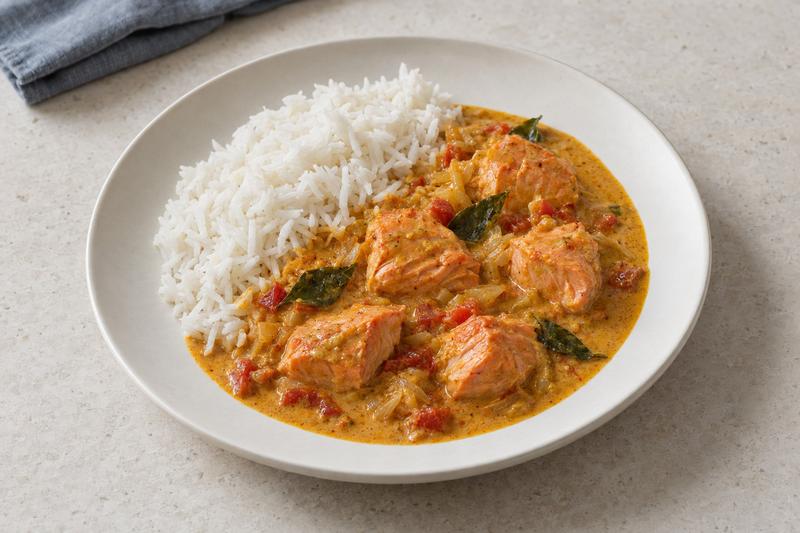
This golden coconut curry is fragrant with ginger, coriander and curry leaves. Tomato and the fruity tang of tamarind accompany the richly flavoured sockeye salmon pieces, keeping the coconut light on the palate. With fluffy basmati alongside, we make an aromatic fish lunch inspired by southern India.
We prepare the rice alongside the sauce and add the fish at the very end.
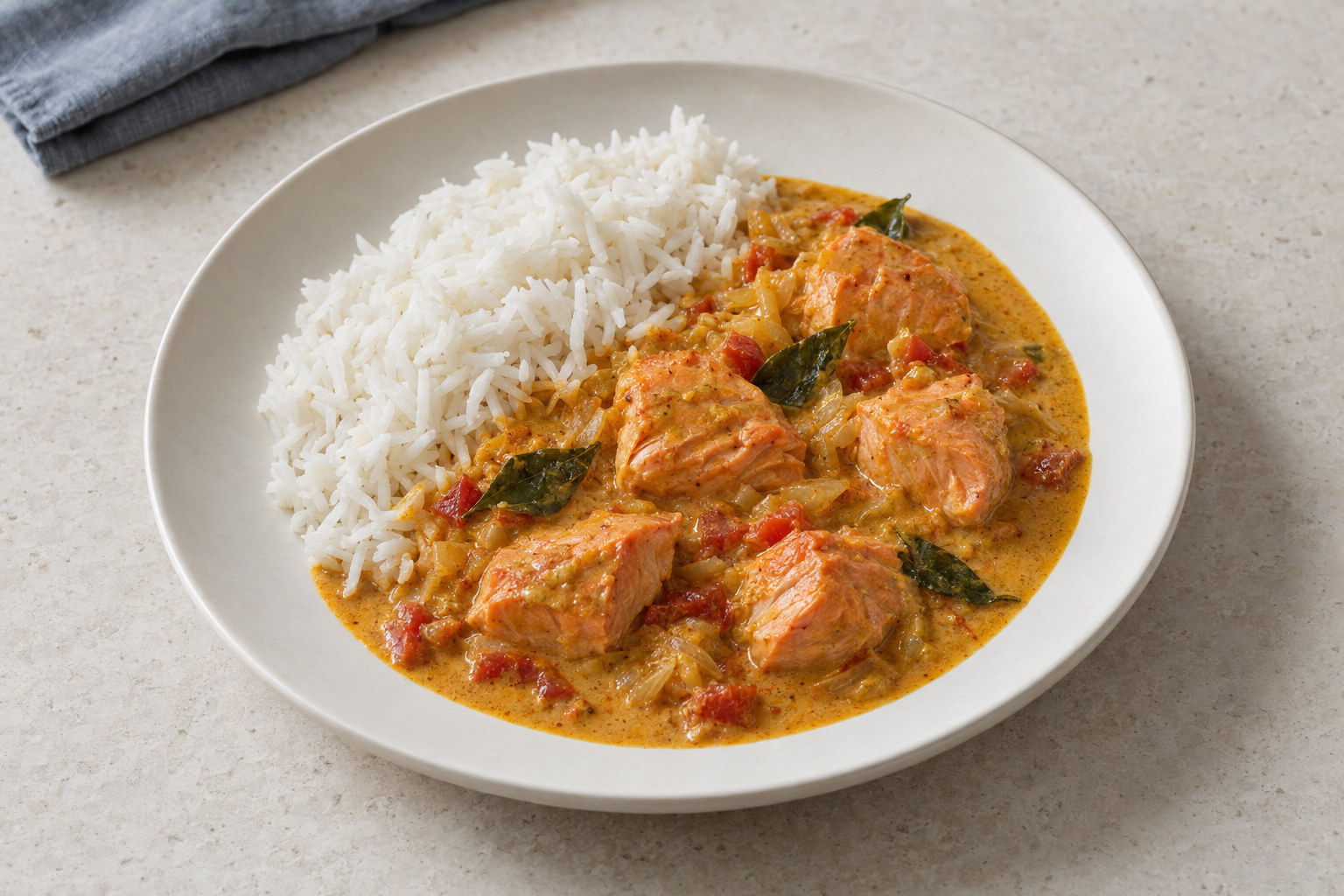
Mild coconut, ginger and the fruity tang of tamarind complement the boldly flavoured sockeye salmon.
Step-by-step method
What you will need
- wide 26 cm saucepan, at least 3 litres, with a lid
- 1.5-litre saucepan for the rice
- two hob rings
- grater
- wide spatula
- thermometer
Before we start
We start the rice as we fry the onion. We finish cooking the sauce before adding the fish; the sockeye salmon goes in during the rice’s ten-minute rest. We add smaller pieces later so they do not dry out.
Prepare the curry base
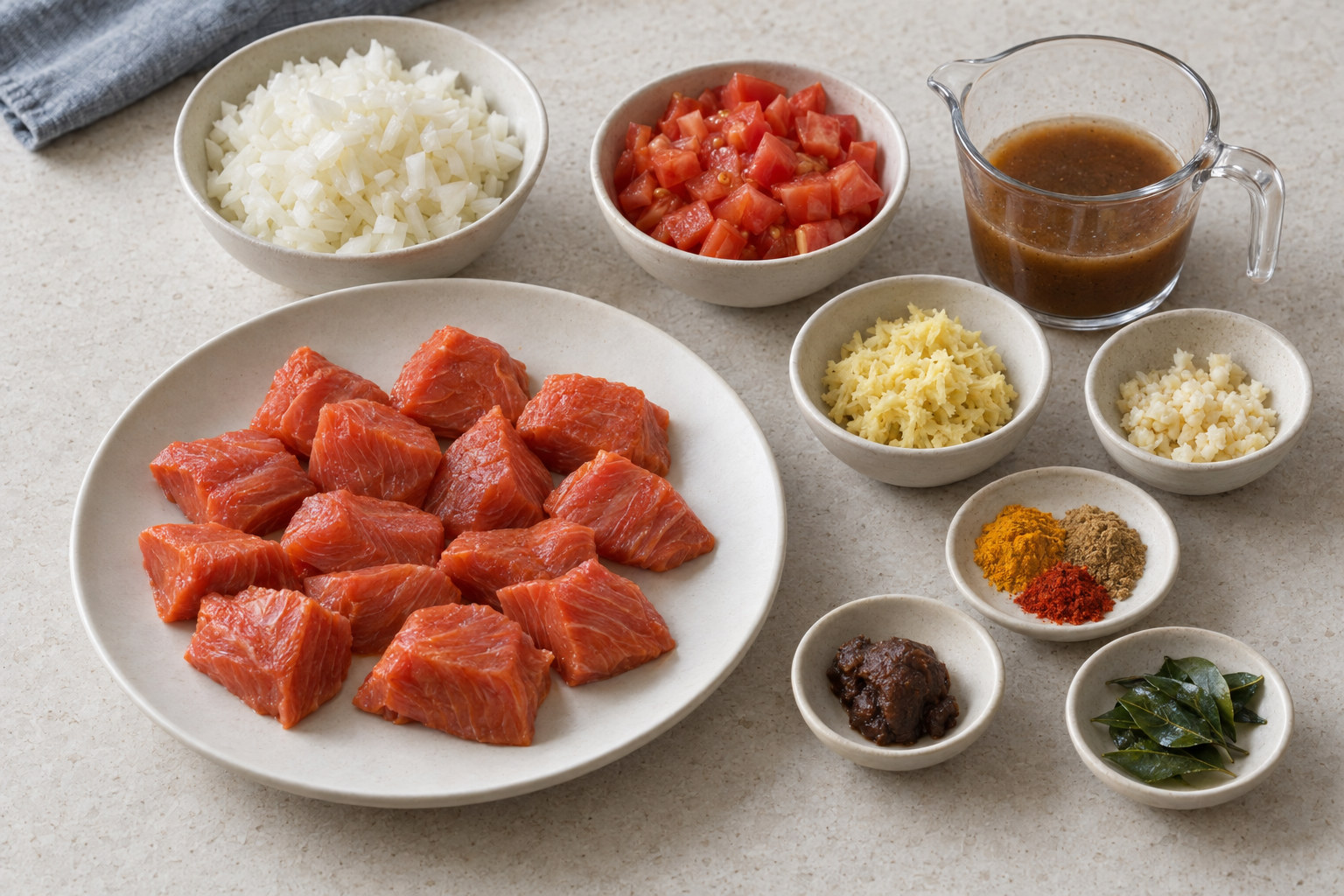
We remove any skin and small bones from the sockeye salmon pieces, pat them dry and keep them chilled. We sort them by thickness, cutting down larger pieces if needed so none is thicker than about 2.5 cm. We leave small pieces as they are. We peel the onion, garlic and ginger and wash the tomato. We finely chop the onion, dice the tomato and grate the ginger and garlic. We strip the curry leaves from their stems and stir 10 g tamarind into 80 ml water.
The fish remains in separate pieces. The tamarind is mixed smoothly, with no firm lumps.
Fry the spices until fragrant
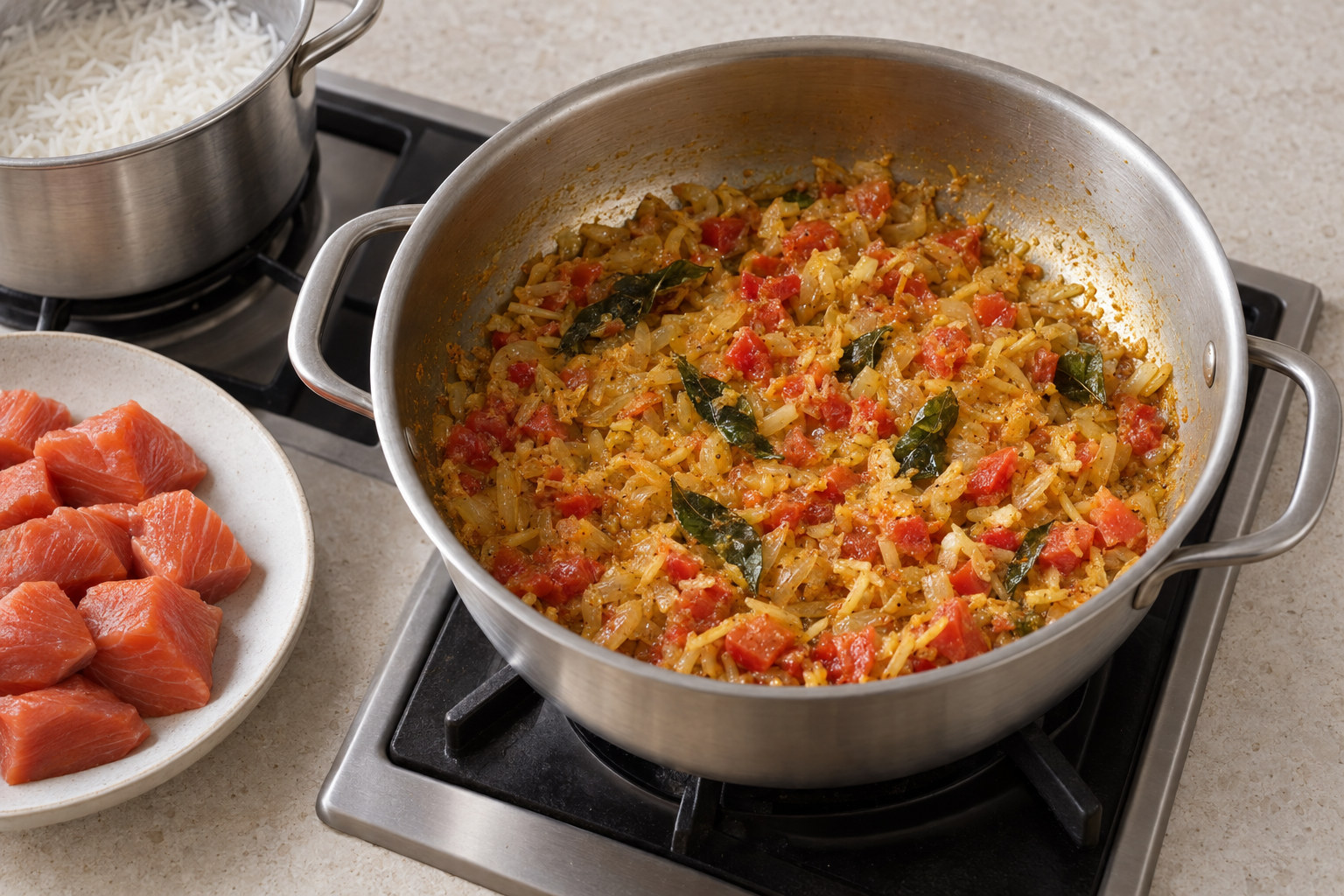
We fry the onion in a tablespoon of oil for 5 minutes. We add the garlic, ginger and curry leaves and stir for 1 minute. We add the coriander, turmeric and chilli, followed by the tomato after 20 seconds, then stir for 3 minutes. As soon as we start frying the onion, we also put 140 g basmati rice on to heat with 230 ml water and a pinch of salt; we finish cooking the rice as described in the next step.
The spices are fragrant but do not turn brown.
Finish cooking the sauce and rice
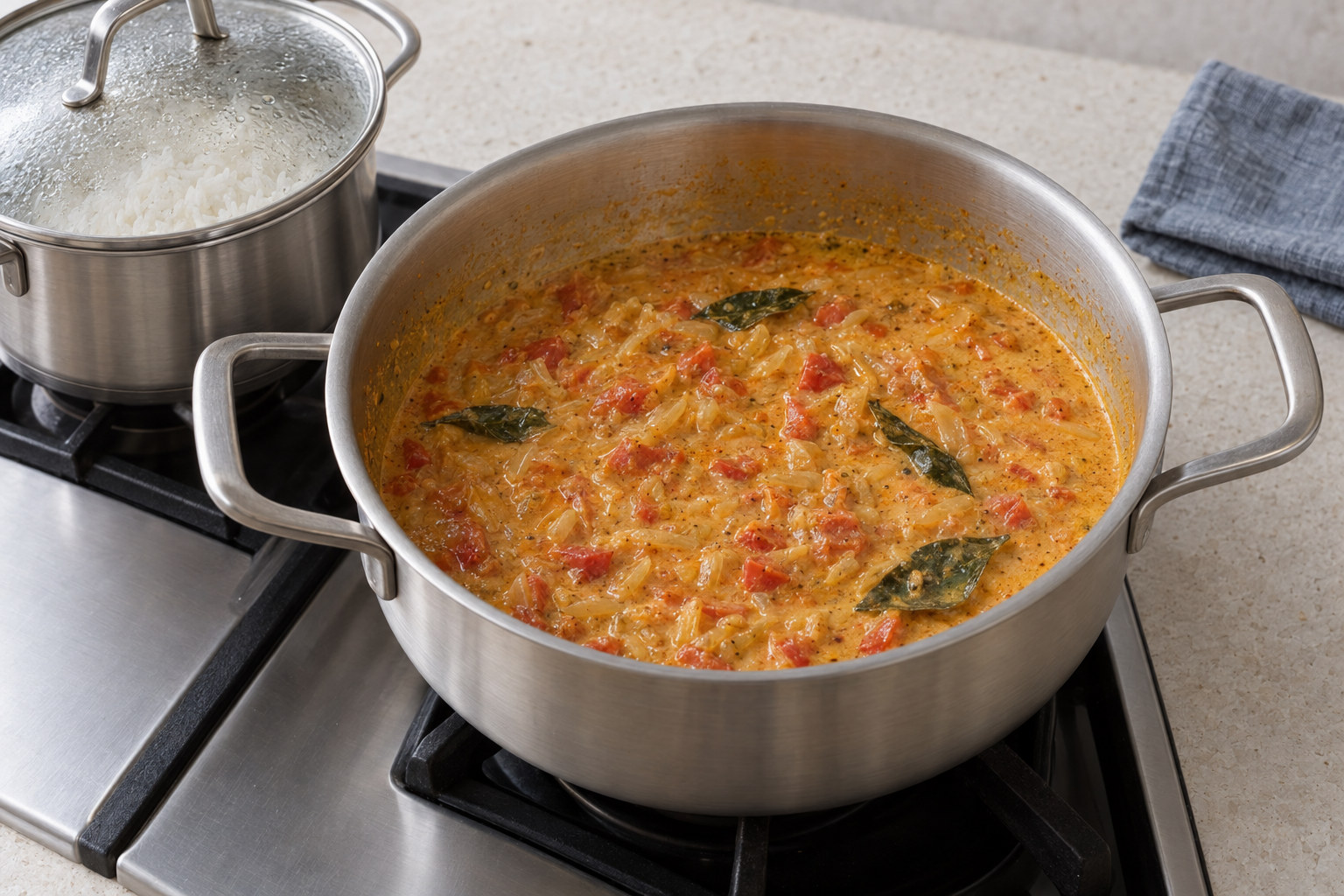
We add the tamarind water, all 300 ml coconut milk and ½ teaspoon of salt to the pan. We simmer very gently, uncovered, for 8–10 minutes until the sauce lightly coats a spoon. Before adding the fish, we can briefly take the sauce off the heat. We bring the rice we started heating in the previous step to the boil under a lid, cook over the lowest heat for 12 minutes and leave it off the hob for 10 minutes to finish steaming.
Gently cook the fish
After the rice has rested for the first 3 minutes, we bring the sauce back to a very gentle simmer. We arrange the thicker sockeye salmon pieces in a single layer first, adding thin trimmings after 2 minutes. We cover and cook gently, usually for 4–7 minutes in total, depending on thickness. We check that the centre of the thickest piece reaches 63 °C, removing smaller pieces earlier if they are already cooked. We do not turn the fish or break it up with a wooden spoon; we simply move the pan gently.
The pieces hold together and the sauce bubbles only gently.
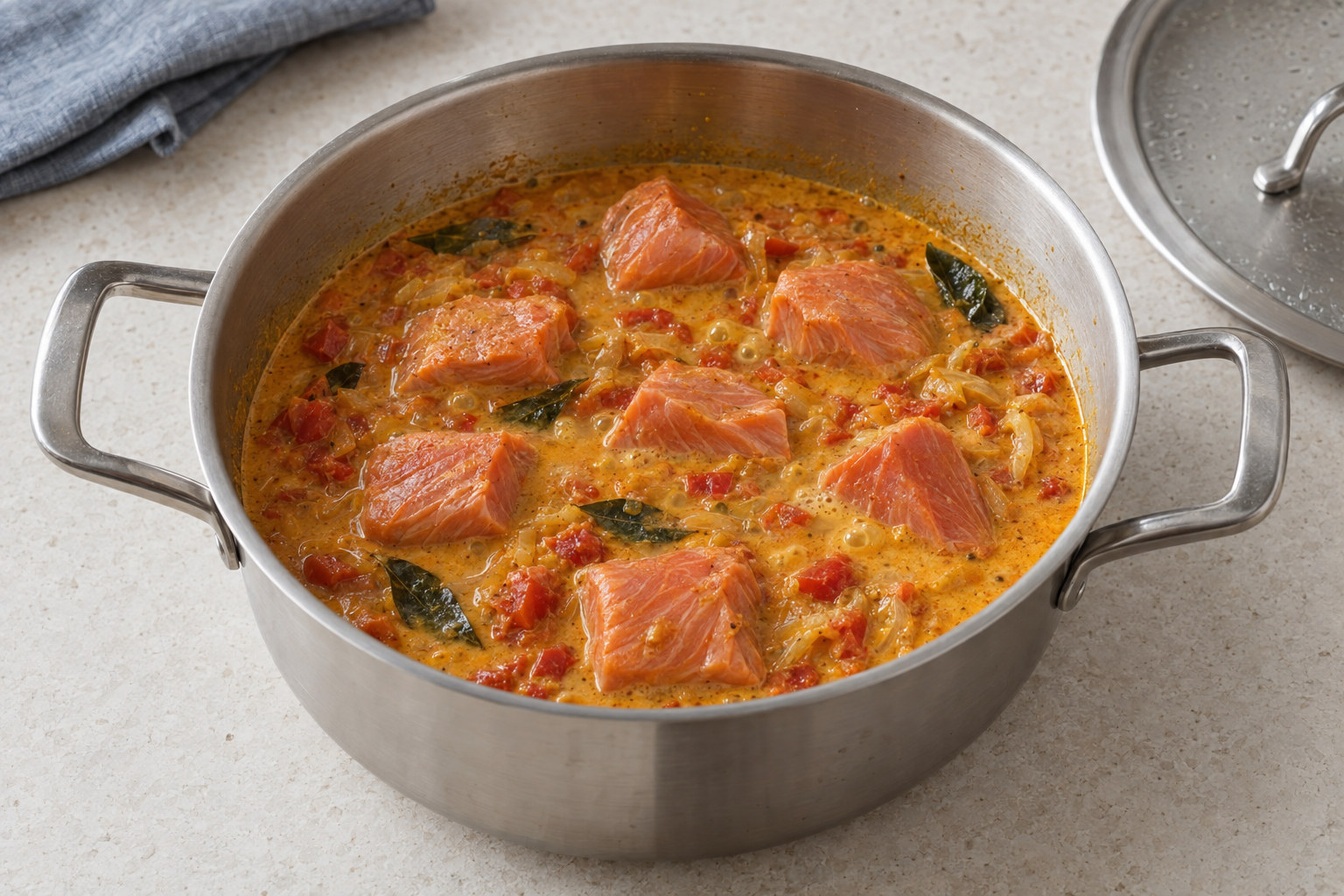
Plate the fish and serve
We fluff the rice and divide it between two plates. Using a slotted spoon, we lift out the intact sockeye salmon pieces and divide them between the plates, then pour over the sauce. If we removed smaller pieces earlier, we add them straight to the plates. We set aside any tough curry leaves as we eat. We serve immediately.
Tips from our kitchen
- We use ordinary unsweetened tamarind paste; a highly concentrated extract would make the sauce too sour.
- We look for curry leaves in specialist Asian shops. If we cannot find them, we leave them out rather than replacing them with curry powder.
What to watch out for
- We keep the sauce at a gentle simmer so the fish does not fall apart and the coconut milk does not split.
How we serve it
- We serve with basmati rice to soak up the coconut sauce.
Ingredient swaps
Curry leaves
Omit without replacing The home version will be less aromatic; lemon leaves are not the same ingredient.
Tamarind paste
2 teaspoons of lime juice for two servings or 4 teaspoons for four, added after cooking This gives a different, fresher acidity rather than the same flavour.
Sockeye salmon pieces
The same purchased weight of keta salmon steaks; we remove the skin and bones and cut the flesh into pieces of similar thickness The flavour will be milder and the colour paler. We keep the sauce and rice the same, cooking the fish briefly and judging the time by its thickness and centre temperature.
Ingredient notes
- Sockeye salmon pieces come in 200 g packs. We open two packs for two servings and three for four, using the amount listed in the ingredients.
- We can use keta salmon steaks instead of sockeye. We remove the skin and bones, then cut the flesh into pieces of similar thickness. We adjust the cooking time to their thickness.
During preparation
- We check the prepared fish and remove any small bones. We keep it in the fridge before cooking and use clean, separate utensils.
Our inspiration
In Kerala in southern India, fish curries bring together coconut milk and the tang of tamarind. Mild coconut rounds out the spices, while tamarind adds a fruity sourness. For our home-cooked version, we use ready-made coconut milk and pieces of sockeye salmon. We add the fish to the finished sauce at the very end and serve basmati alongside to enjoy every spoonful of the fragrant sauce.
Similar recipes

Recipe for 4 people
Step-by-step method
Before we start
We start the rice as we fry the onion. We finish cooking the sauce before adding the fish; the sockeye salmon goes in during the rice’s ten-minute rest. We add smaller pieces later so they do not dry out.
Prepare the curry base
We remove any skin and small bones from the sockeye salmon pieces, pat them dry and keep them chilled. We sort them by thickness, cutting down larger pieces if needed so none is thicker than about 2.5 cm. We leave small pieces as they are. We peel the onions, garlic and ginger and wash the tomatoes. We finely chop the onions, dice the tomatoes and grate the ginger and garlic. We strip the curry leaves from their stems and stir 20 g tamarind into 140 ml water.
The fish remains in separate pieces. The tamarind is mixed smoothly, with no firm lumps.
Fry the spices until fragrant
We fry the onions in two tablespoons of oil for 7 minutes, then add the garlic, ginger and curry leaves for a minute. We fry the ground spices for 20 seconds until fragrant, add the tomatoes and stir for 4 minutes. As soon as we start frying the onions, we also put 280 g basmati rice on to heat with 460 ml water and ¼ teaspoon of salt; we finish cooking the rice as described in the next step.
The spices are fragrant but do not turn brown.
Finish cooking the sauce and rice
We add the tamarind water, all 600 ml coconut milk and 1 teaspoon of salt to the pan. We simmer very gently, uncovered, for 10–12 minutes until the sauce lightly coats a spoon. Before adding the fish, we can briefly take the sauce off the heat. We bring the rice we started heating in the previous step to the boil under a lid, cook over the lowest heat for 12–14 minutes and leave it off the hob for 10 minutes to finish steaming.
Gently cook the fish
After the rice has rested for the first 3 minutes, we bring the sauce back to a very gentle simmer. We arrange the thicker sockeye salmon pieces in a single layer first, adding thin trimmings after 2 minutes. We cover and cook gently, usually for 4–7 minutes in total, depending on thickness. We check that the centre of the thickest piece reaches 63 °C, removing smaller pieces earlier if they are already cooked. We do not turn the fish or break it up with a wooden spoon; we simply move the pan gently.
The pieces hold together and the sauce bubbles only gently.
Plate the fish and serve
We fluff the rice and divide it between four plates. Using a slotted spoon, we lift out the intact sockeye salmon pieces and divide them between the plates, then pour over the sauce. If we removed smaller pieces earlier, we add them straight to the plates. We set aside any tough curry leaves as we eat. We serve immediately.