
Bengali inspiration · Bengal – our own combination of shorshe-style salmon and paratha
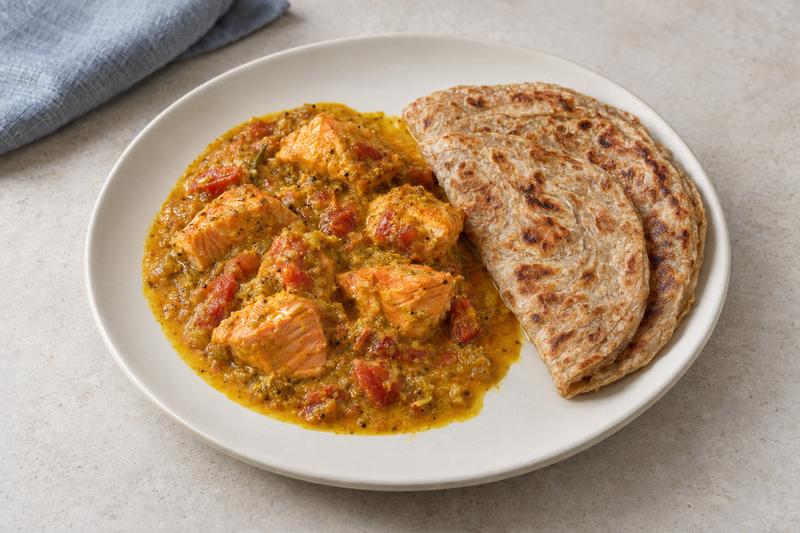
Sockeye salmon pieces in a Bengali-inspired mustard sauce with homemade paratha
Gently pungent mustard, tomato and ginger give sockeye salmon a bold sauce to scoop up with warm flatbread. We make the parathas from scratch: we brush them with ghee, fold them and cook until brown blisters form. We serve each person two flatbreads and a portion of fish, cooked only briefly in the sauce.
The time includes 30 minutes for soaking the mustard and resting the dough, another 10 minutes for resting the flatbreads, and cooking tasks done in parallel.
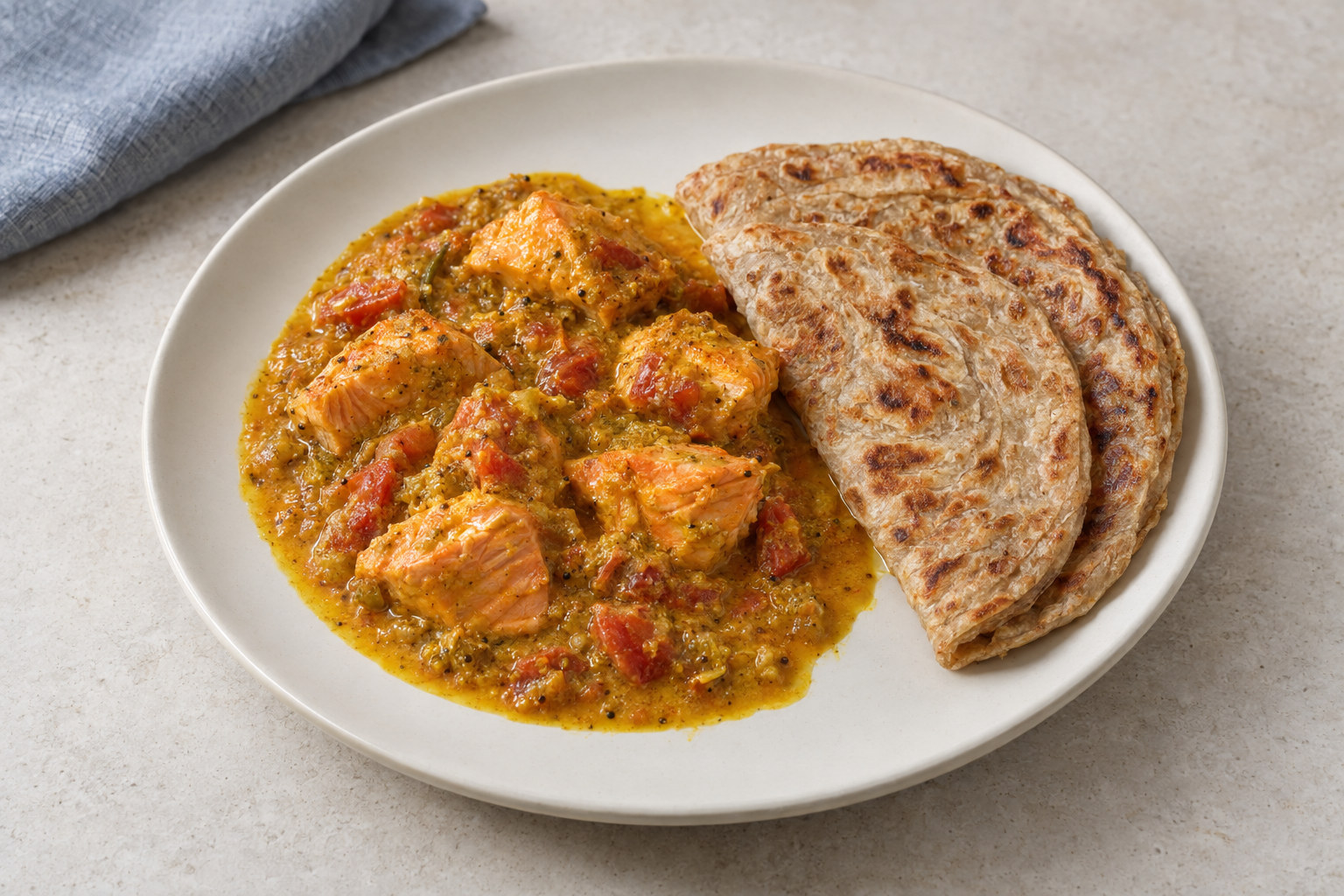
The rich flavour of sockeye salmon meets gentle mustard heat, tomatoes and the buttery layers of warm flatbread.
Step-by-step method
What you will need
- mortar and pestle or small blender
- wide 26 cm / 3 l saucepan with a lid
- 24 cm frying pan for flatbreads
- two hob rings
- rolling pin
- clean tea towel
- thermometer
Before we start
We soak the mustard before making the dough. We finish the sauce without the fish and roll out the flatbreads in advance. We add the sockeye salmon to the sauce only after cooking half the flatbreads; we finish the other half while the fish cooks briefly.
Soak the mustard and make the dough
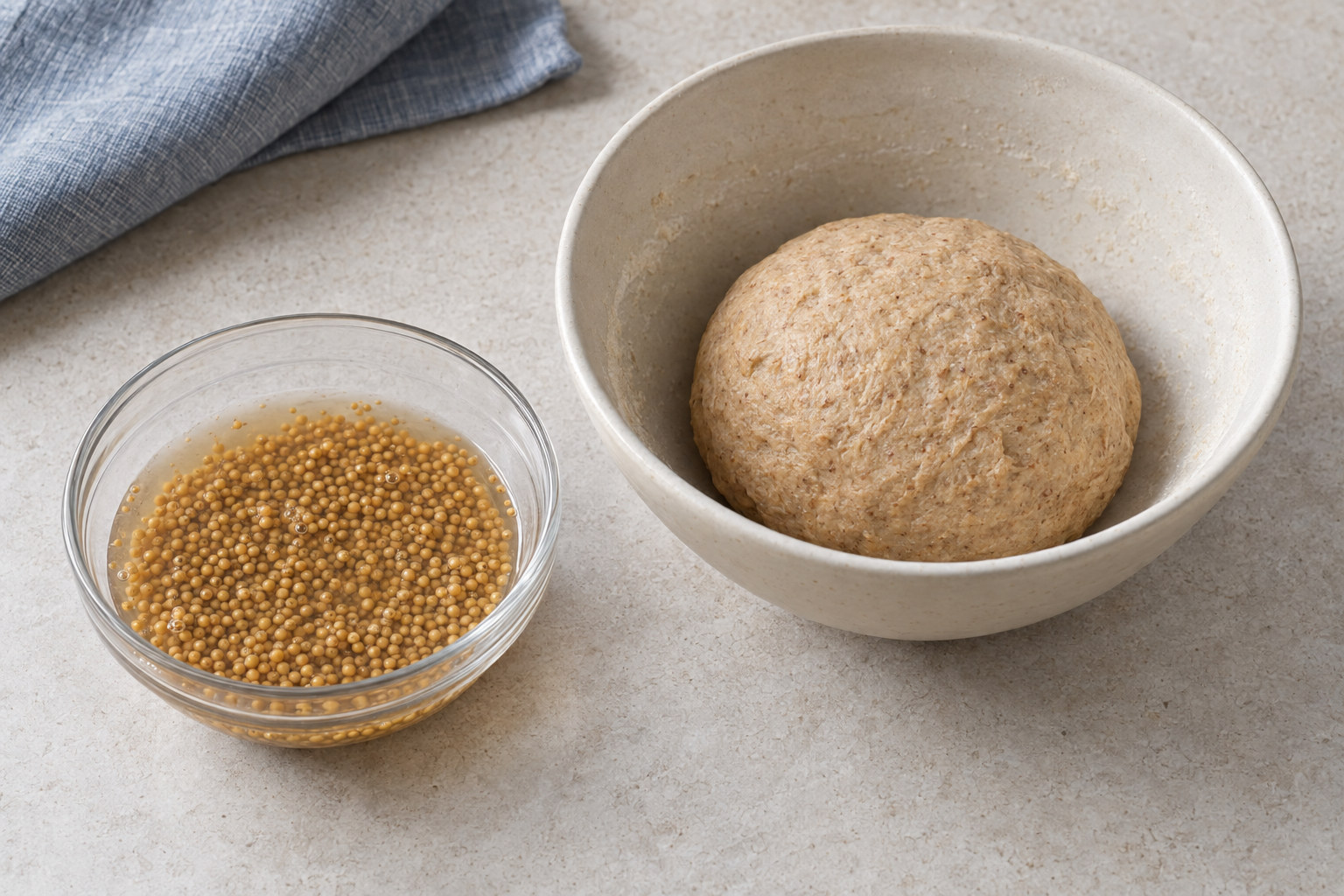
We cover 15 g mustard seeds with water and leave them to soak for 30 minutes. We make a dough with 180 g flour, 120 ml water, ¼ teaspoon salt and one teaspoon ghee, adding the water gradually according to how much the flour absorbs. We knead for 7 minutes, then cover the dough and rest it for 30 minutes.
The dough is soft and springy; the seeds absorb water and blend smoothly.
Make the mustard paste and prepare the fish
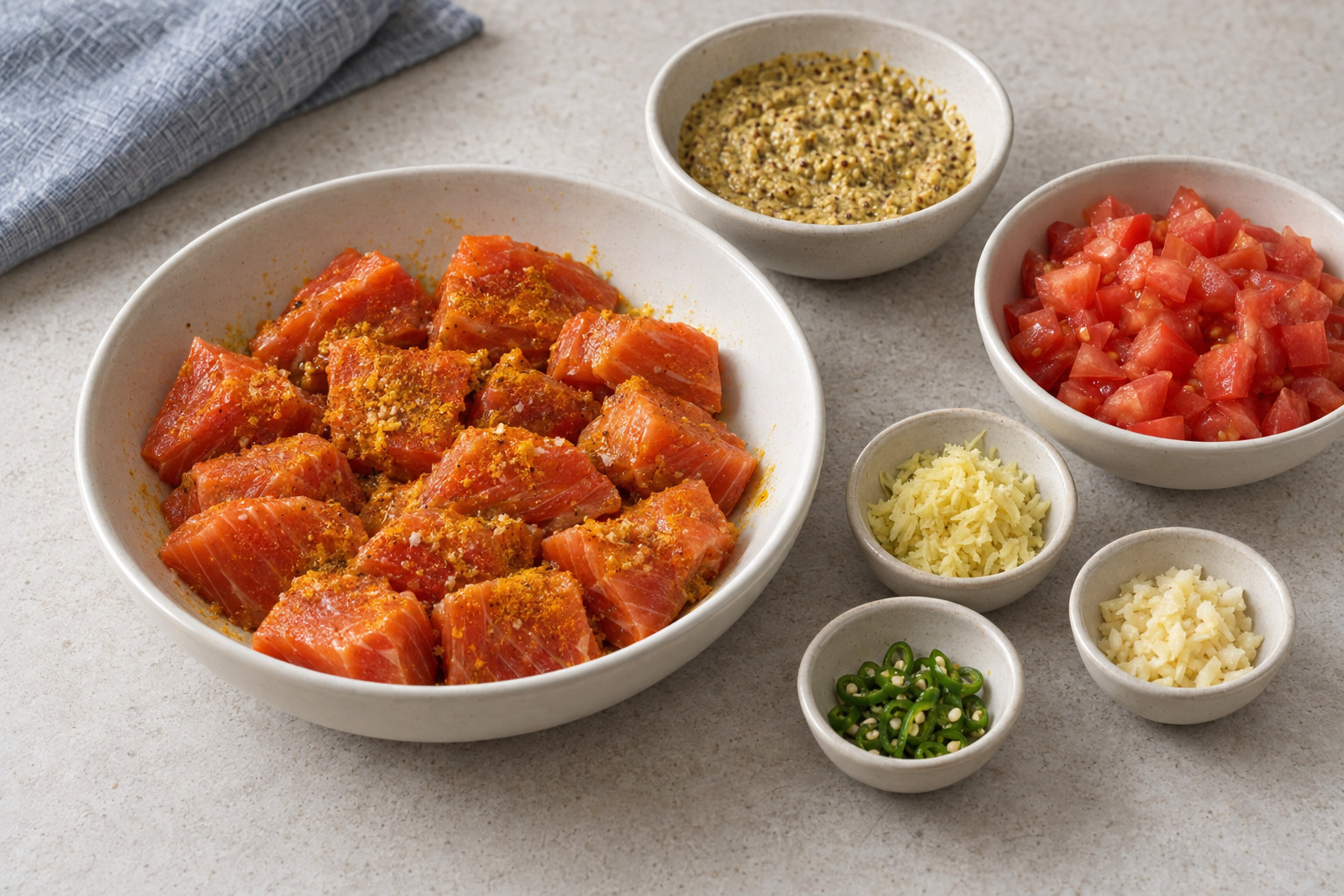
We wash the chilli and remove its stalk. We drain the mustard seeds and discard their soaking water. With a mortar and pestle or small blender, we grind the seeds with 40 ml fresh water and the chilli to a fine paste. We pat dry 300 g prepared sockeye salmon pieces and check for bones. We leave small pieces whole and cut very thick ones to no more than 2.5 cm thick. We gently toss them with ¼ teaspoon salt and half the turmeric, then keep them chilled. We wash and chop the tomato, peel and grate the ginger and garlic.
Layer the parathas
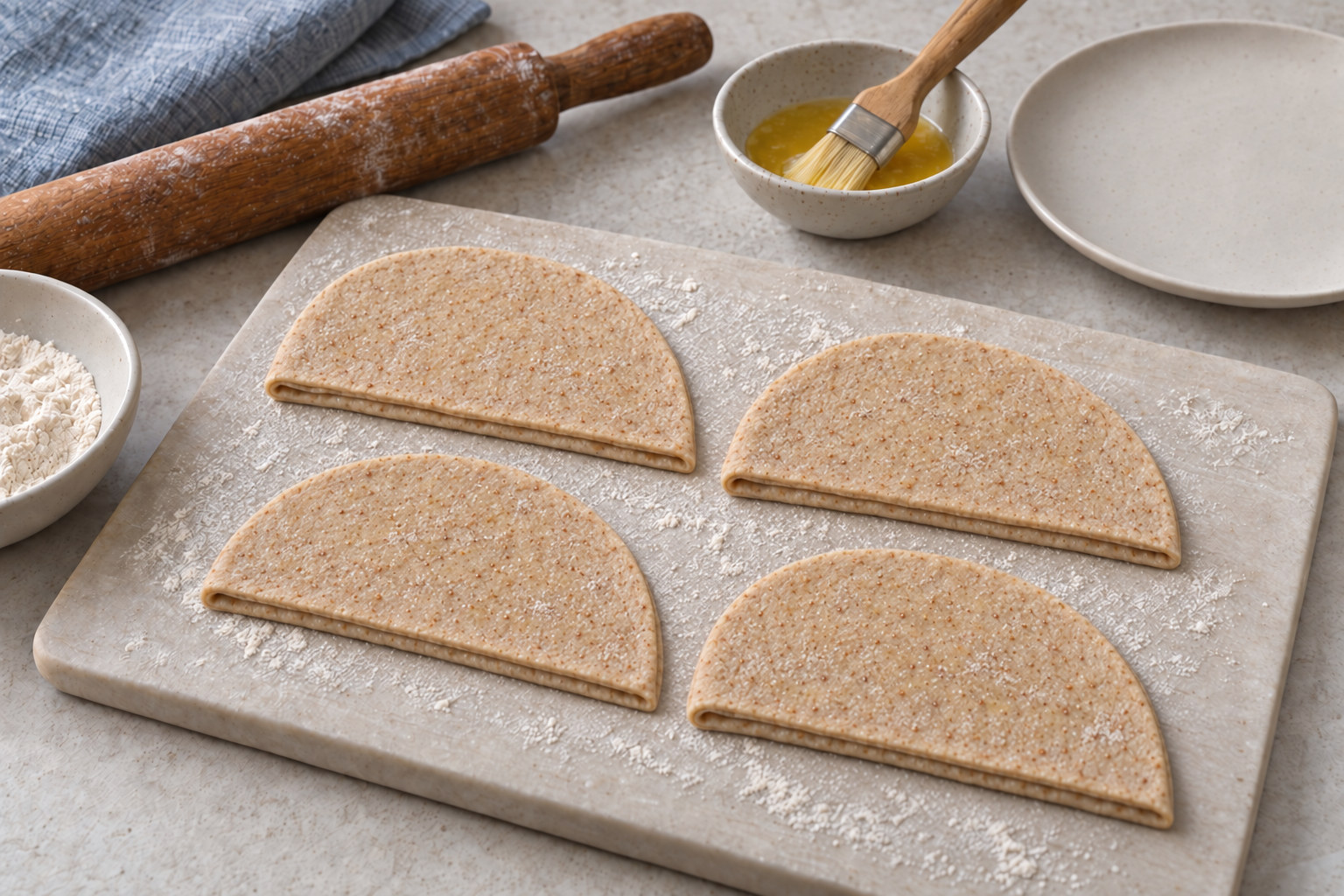
We divide the dough into four balls. With a little dusting flour, we roll each into a circle about 16 cm across, brush it thinly with ghee and fold it once in half to make a semicircle. We use two teaspoons of ghee in total for brushing all the flatbreads. We let them rest for 10 minutes, then carefully roll them to 3 mm thick, keeping the semicircular shape. We reserve the remaining tablespoon of ghee for cooking.
We do not press the dough too hard when folding so the layers stay separate.
Finish the sauce, then cook the fish
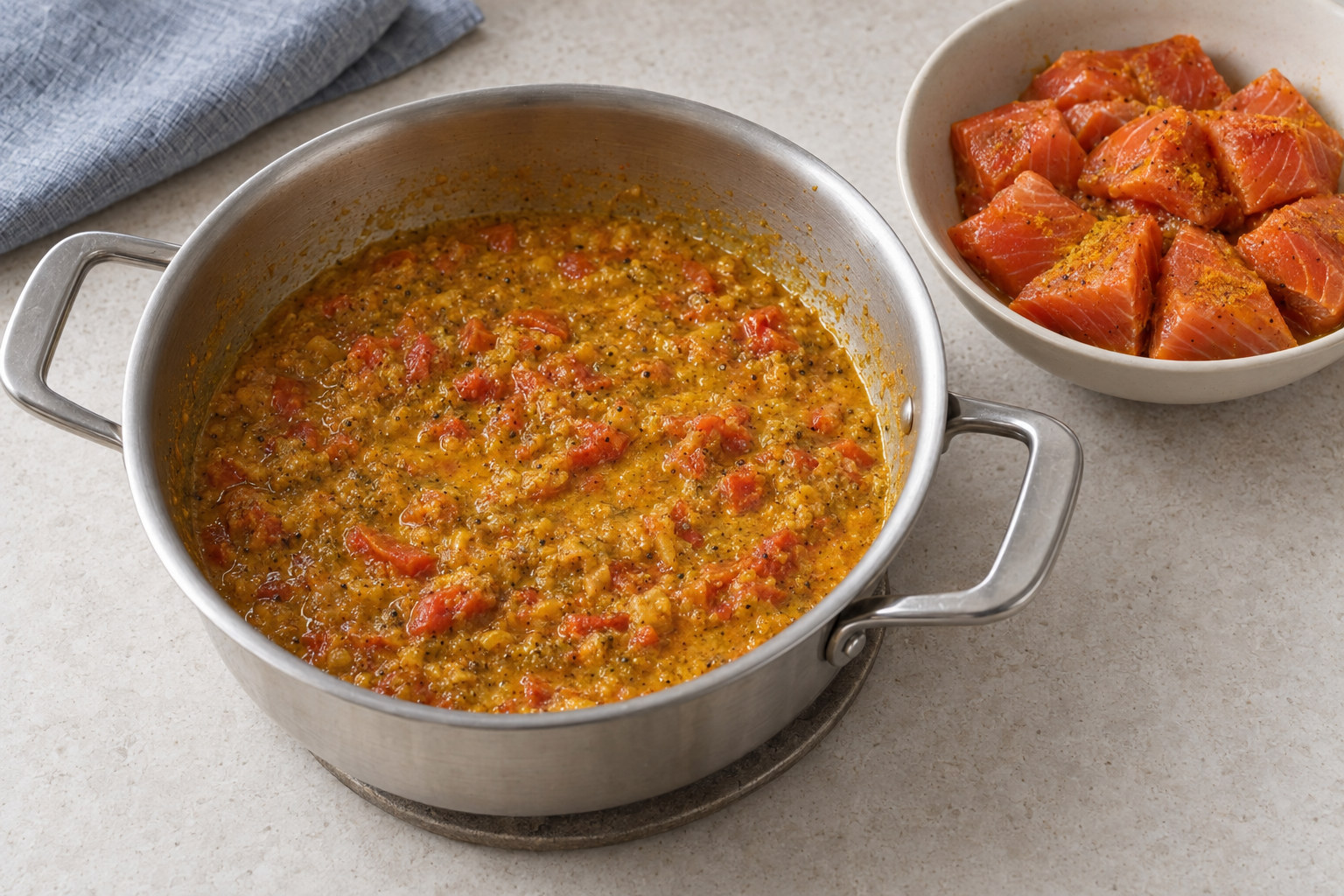
We cook the garlic and ginger in one and a half tablespoons of oil for 1 minute until fragrant. We add the tomato, the remaining half of the turmeric and ¼ teaspoon salt reserved for the sauce, and cook for 5 minutes. We stir in the mustard paste and 120 ml water and simmer very gently, uncovered, for 4–5 minutes until the sauce lightly coats a spoon. At this point, we can take it off the heat while it is still free of fish. After cooking half the flatbreads as described in step 5, we reheat the sauce and lay the thicker sockeye salmon pieces in it in a single layer; we add thin offcuts after 2 minutes. We briefly finish cooking the fish under a lid, about 4–7 minutes in total, until the thickest piece reaches 63 °C. We do not turn or press the fish; we only move the pan gently. We lift out smaller pieces as soon as they are done.
Cook the flatbreads and serve
Once the sauce is ready without the fish, we heat one frying pan over a medium-high heat. We cook the four flatbreads one at a time. We cook the first side for about 1 minute, turn it and brush the surface with a little ghee; we divide the reserved tablespoon between all four flatbreads and cook for another 1–2 minutes, turning as needed. After the first two flatbreads are done, we put the fish into the hot sauce as described in the previous step. We cook the remaining flatbreads while the fish finishes; we keep the cooked ones warm in a clean tea towel for about 5–10 minutes. We serve two flatbreads and an equal share of whole sockeye salmon pieces with sauce to each person. We transfer the fish with a wide spoon and serve immediately.
The flatbread is cooked through and layered.
Tips from our kitchen
- We use white mustard seeds; dark ones would give a sharper and often more bitter flavour.
- We spread the ghee thinly between layers so it does not leak out when we roll the dough.
What to watch out for
- We do not replace freshly ground seeds with ready-made table mustard.
- We roll the flatbreads thinly so they cook through and do not stay raw beneath a brown surface.
How we serve it
- We scoop up the sauce with warm parathas. We transfer the individual sockeye salmon pieces to plates with a wide spoon so they do not break apart.
Ingredient swaps
Ghee
The same amount of rapeseed oil The flatbreads will taste less buttery, but we can still layer them.
Green chilli
Half the quantity, with the seeds removed A milder heat; omitting the chilli entirely gives a very mild sauce.
Sockeye salmon pieces, 300 / 600 g of product
The same sale weight of chum salmon. We remove the skin and bones during preparation and cut the flesh into pieces of similar thickness. The flavour will be milder and the colour lighter. We keep the same sauce and side dish; we cook the fish briefly, guided by its thickness and internal temperature.
Ingredient notes
- The sockeye salmon pieces come in 200 g packs. We open two packs for two servings or three for four servings, then use the amount listed in the ingredients.
- We can use chum salmon steaks instead of sockeye. We remove the skin and bones and cut the flesh into pieces of similar thickness. We adjust the cooking time to their thickness.
During preparation
- We inspect the prepared fish and remove any remaining bones. We keep it in the fridge before cooking and use separate, clean utensils.
Our inspiration
Mustard gives the sauce a pleasant pungency, while tomato and ginger round it out enough to stand alongside the bold flavour of sockeye salmon. We enjoy it best scooped up with a piece of warm flatbread. For layering the paratha, we took inspiration from Indian chef Ranveer Brar, creator of the culinary concept at Dubai restaurant Kashkan. His kneaded dough is also brushed with ghee, folded and rolled again. The mustard sauce with fish and this way of serving them together are our own combination.
Similar recipes
Recipe for 4 people
We cook eight flatbreads in two pans; the timing includes the dough rests.
Step-by-step method
Before we start
We soak the mustard before making the dough. We finish the sauce without the fish and roll out the flatbreads in advance. We add the sockeye salmon to the sauce only after cooking half the flatbreads; we finish the other half while the fish cooks briefly.
Soak the mustard and make the dough
We cover 30 g mustard seeds with water and leave them to soak for 30 minutes. We make a dough with 360 g flour, 240 ml water, ½ teaspoon salt and two teaspoons ghee, adding the water gradually according to how much the flour absorbs. We knead for 10 minutes, then cover the dough and rest it for 30 minutes.
The dough is soft and springy; the seeds absorb water and blend smoothly.
Make the mustard paste and prepare the fish
We wash the chillies and remove their stalks. We drain the mustard seeds and discard their soaking water. With a mortar and pestle or small blender, we grind the seeds with 80 ml fresh water and the chillies to a fine paste. We pat dry 600 g prepared sockeye salmon pieces and check for bones. We leave small pieces whole and cut very thick ones to no more than 2.5 cm thick. We gently toss them with ½ teaspoon salt and half the turmeric, then keep them chilled. We wash and chop the tomatoes, peel and grate the ginger and garlic.
Layer the parathas
We divide the dough into eight balls. With a little dusting flour, we roll each into a circle about 16 cm across, brush it thinly with ghee and fold it once in half to make a semicircle. We use four teaspoons of ghee in total for brushing all the flatbreads and no more than 25 g flour for dusting. We let them rest for 10 minutes, then carefully roll them to 3 mm thick, keeping the semicircular shape. We reserve the remaining two tablespoons of ghee for cooking.
We do not press the dough too hard when folding so the layers stay separate.
Finish the sauce, then cook the fish
We cook the garlic and ginger in three tablespoons of oil for 1 minute until fragrant. We add the tomatoes, the remaining half of the turmeric and ½ teaspoon salt reserved for the sauce, and cook for 7 minutes. We stir in the mustard paste and 220 ml water and simmer very gently, uncovered, for 4–5 minutes until the sauce lightly coats a spoon. At this point, we can take it off the heat while it is still free of fish. After cooking half the flatbreads as described in step 5, we reheat the sauce and lay the thicker sockeye salmon pieces in it in a single layer; we add thin offcuts after 2 minutes. We briefly finish cooking the fish under a lid, about 4–7 minutes in total, until the thickest piece reaches 63 °C. We do not turn or press the fish; we only move the pan gently. We lift out smaller pieces as soon as they are done.
Cook the flatbreads and serve
Once the sauce is ready without the fish, we heat two frying pans over a medium-high heat. We cook the eight flatbreads in four batches, with one flatbread in each pan. We cook the first side for about 1 minute, turn it and brush the surface with a little ghee; we divide the reserved two tablespoons between all eight flatbreads and cook for another 1–2 minutes, turning as needed. After the first two batches, or four flatbreads, are done, we put the fish into the hot sauce as described in the previous step. We cook the remaining flatbreads while the fish finishes; we keep the cooked ones warm in a clean tea towel for about 5–10 minutes. We serve two flatbreads and an equal share of whole sockeye salmon pieces with sauce to each person. We transfer the fish with a wide spoon and serve immediately.
The flatbread is cooked through and layered.