
Japanese · Hokkaido – our adaptation of chanchan-yaki with sockeye salmon pieces
Sockeye salmon parcels with cabbage and miso, chanchan-yaki style
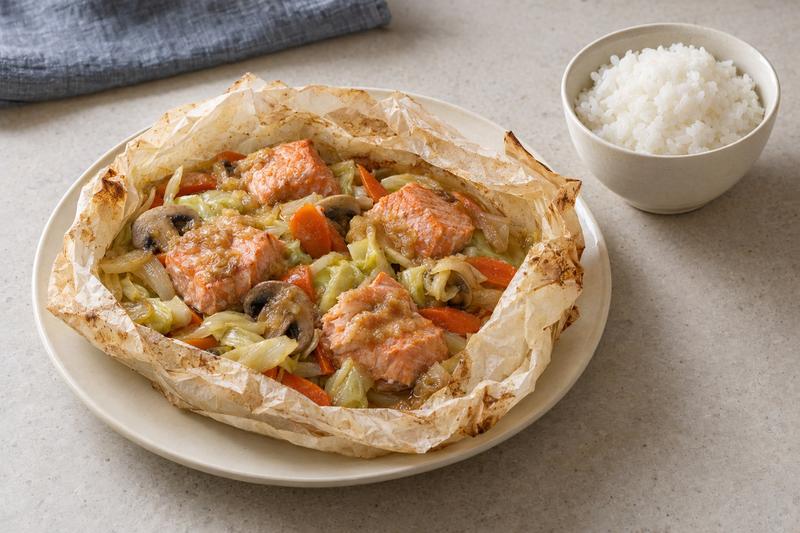
When we open the parcel, we smell butter and gently sweet miso. Beneath the sockeye pieces, we find tender cabbage, carrot and mushrooms that catch the fish juices. We prepare a bowl of white rice on the side and serve dinner straight from the opened baking paper.
We allow time to soak the rice, pre-cook the vegetables and briefly bake the fish.
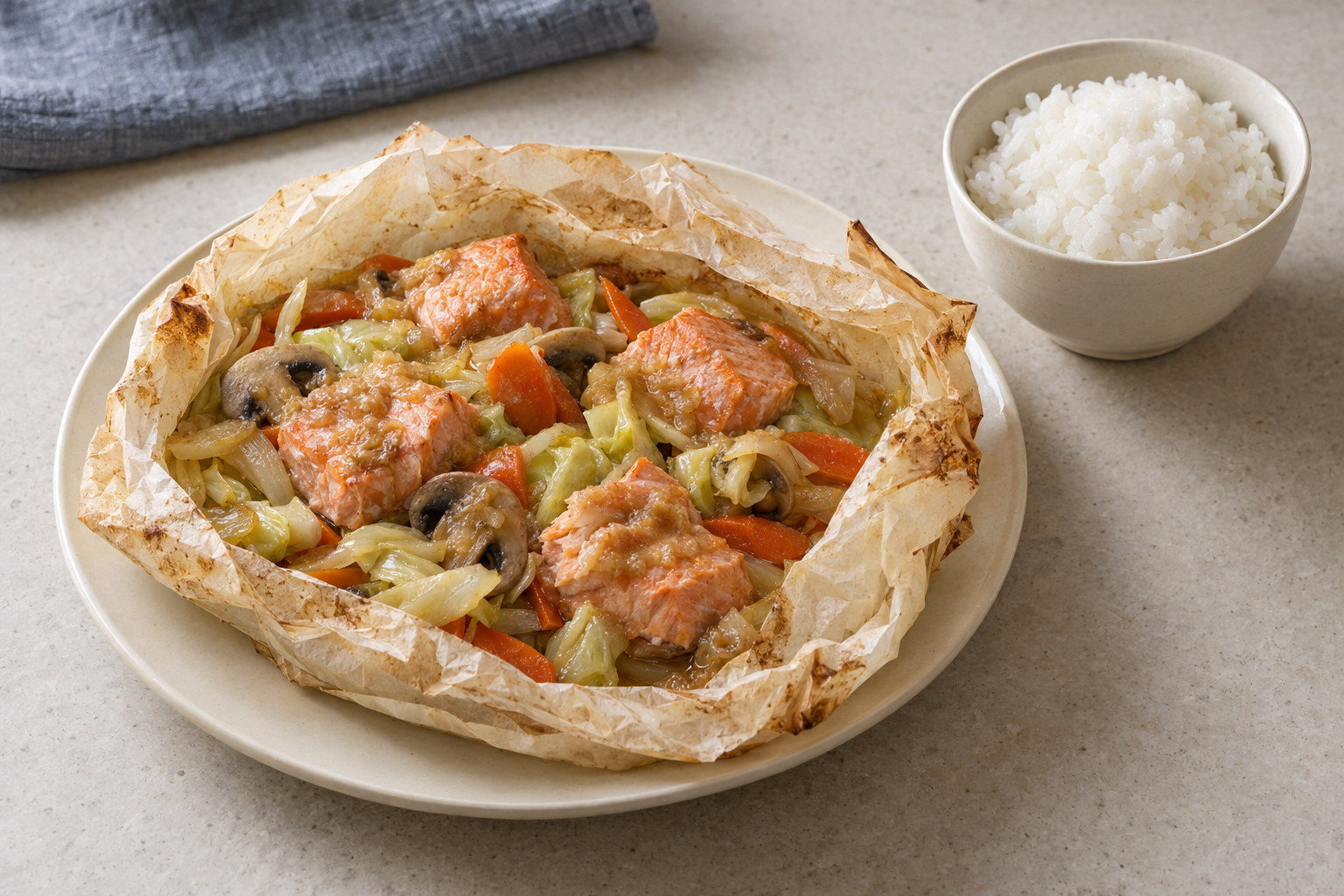
Sweetish cabbage and butter balance the bold flavour of sockeye, while we use the salty miso sparingly.
Step-by-step method
What you will need
- 30 × 40 cm baking tray
- baking paper and foil, sheets at least 35 × 40 cm
- 1.5-litre saucepan with a lid
- conventional oven with top and bottom heat
- wide 26 cm / 3-litre saucepan with a lid
- thermometer
- two cooking zones
Before we start
We soak the rice while cutting the vegetables. We start cooking it as the vegetables begin to braise; the parcels go into the oven only when the rice is resting for 10 minutes. We place the sockeye on the softened vegetables and keep the pieces whole.
Cut the vegetables and mix the sauce
We rinse 140 g rice in several changes of cold water, drain it, cover with 170 ml fresh water and leave to soak for at least 15 minutes. We preheat the conventional oven to 190 °C. We wash the cabbage, peel the onion and carrot, and clean the mushrooms. We remove the cabbage core and cut the leaves into 2 cm squares, the onion into thin wedges, the carrot into very thin slices and the mushrooms into quarters. We mix 30 g miso, 25 ml mirin and 1 teaspoon sugar. We pat dry 300 g prepared sockeye pieces, check for pin bones and keep them chilled; we leave smaller pieces whole and cut any very thick ones to no more than 2.5 cm thick.
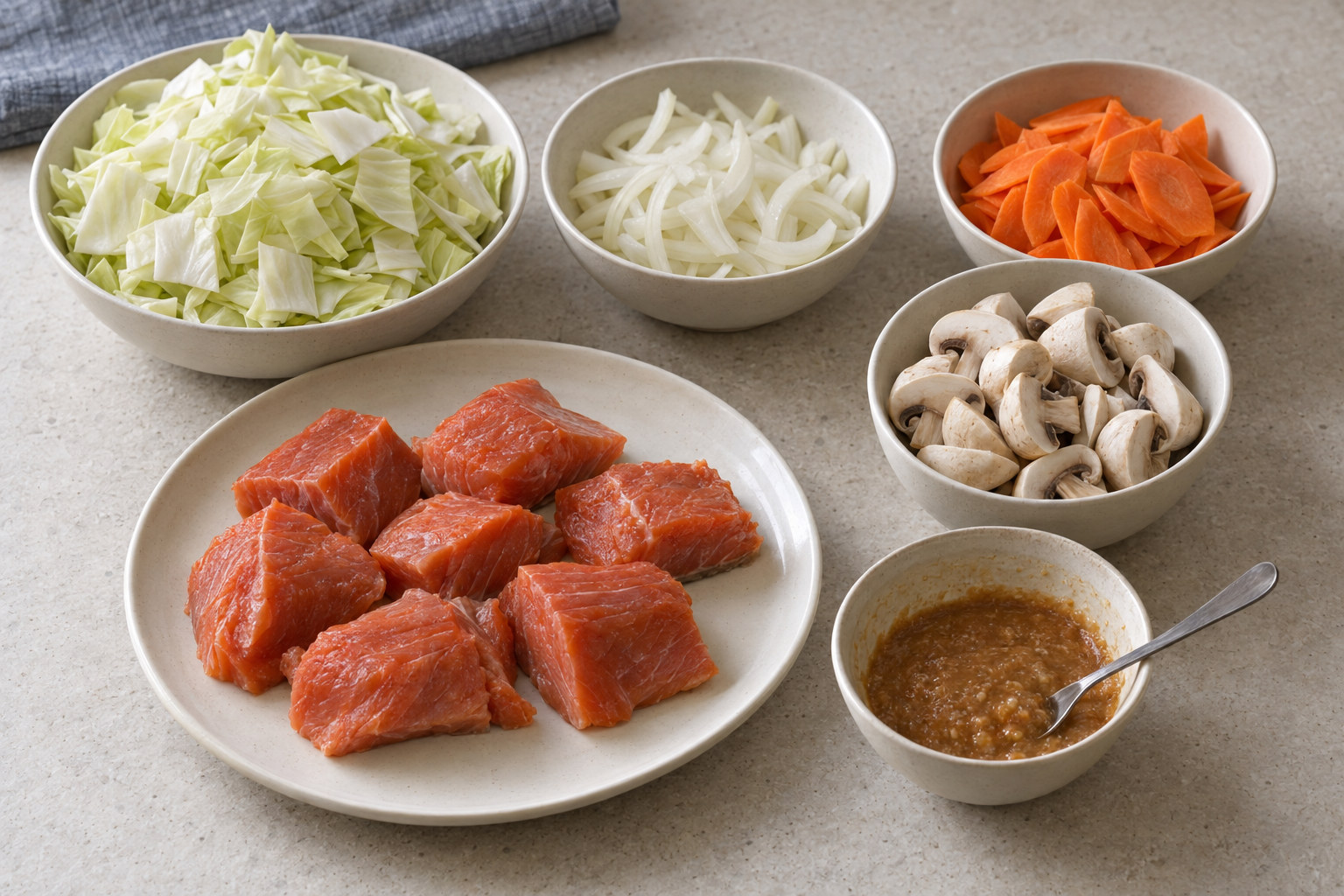
Braise the vegetables and assemble the parcels
We melt 1½ tablespoons butter in a wide pan. We soften the onion for 2 minutes, add the remaining vegetables and 80 ml water, cover and braise gently for 8–10 minutes until almost tender. We uncover and, if needed, evaporate any excess water for 1–2 minutes. As soon as we start braising the vegetables, we cook the soaked rice as described in step 4. We prepare two sheets of foil lined with baking paper. We divide the vegetables and buttery juices between them, then place 150 g prepared sockeye pieces in a single layer in each parcel. We group pieces of a similar thickness together. We spoon the miso mixture over the top and seal carefully, leaving room for steam. We assemble the parcels just before baking.
The carrot offers very little resistance when pierced before we add the fish. The fish pieces do not overlap.
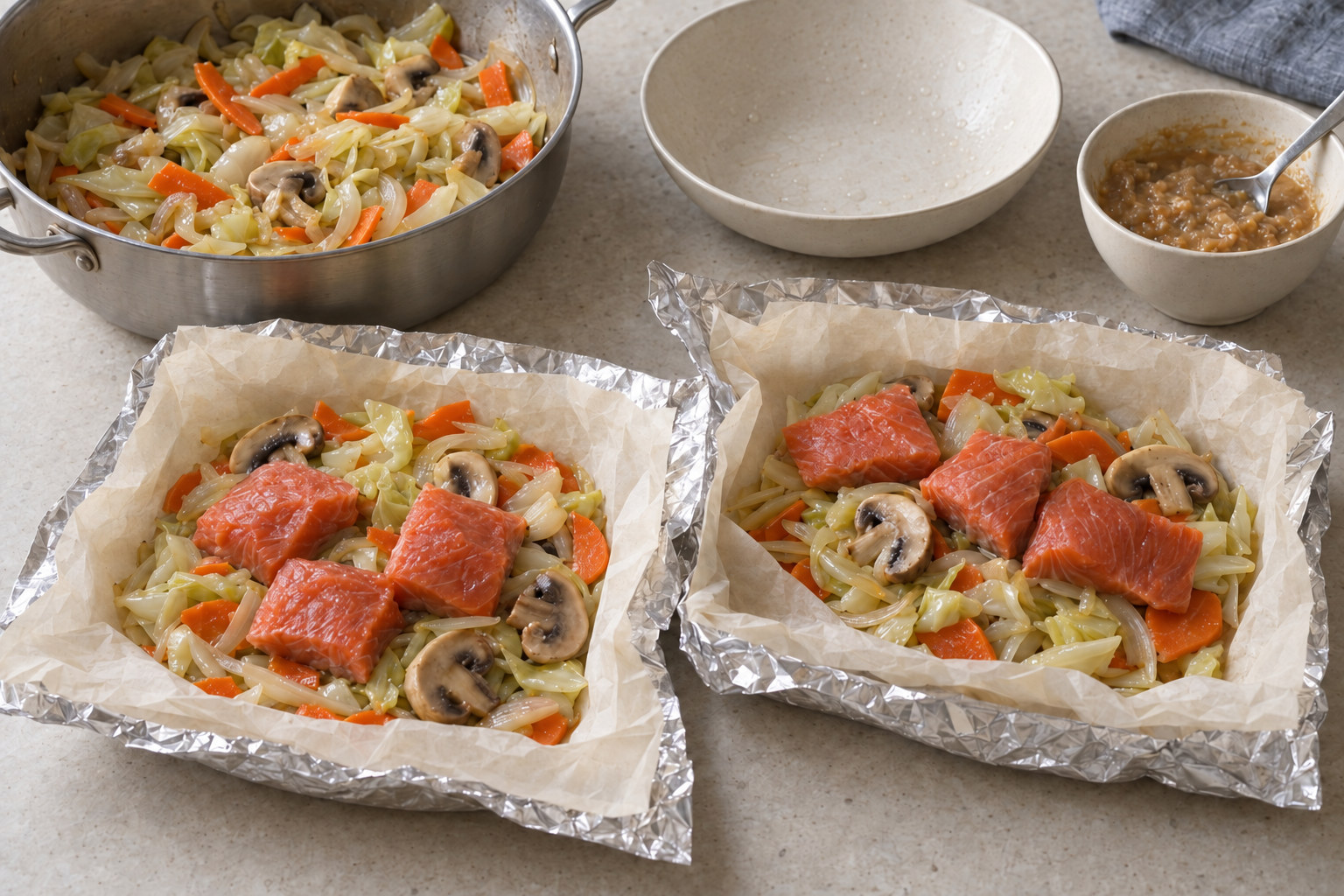
Bake the fish in the parcels
As we take the rice off the heat for its 10-minute rest, we place the parcels on one tray in the preheated oven. We bake briefly, roughly 6–10 minutes depending on the thickness of the fish. From minute 5, we carefully check the thinner pieces, opening each parcel away from our face. We check that the thickest piece in each parcel reaches 63 °C and remove it when ready. If needed, we seal the parcel again and continue in 1–2 minute increments. The vegetables are already nearly tender, so we finish cooking according to the fish.
The fish pieces hold their shape. We do not extend the cooking just for colour; a deep red colour does not mean the fish is raw.
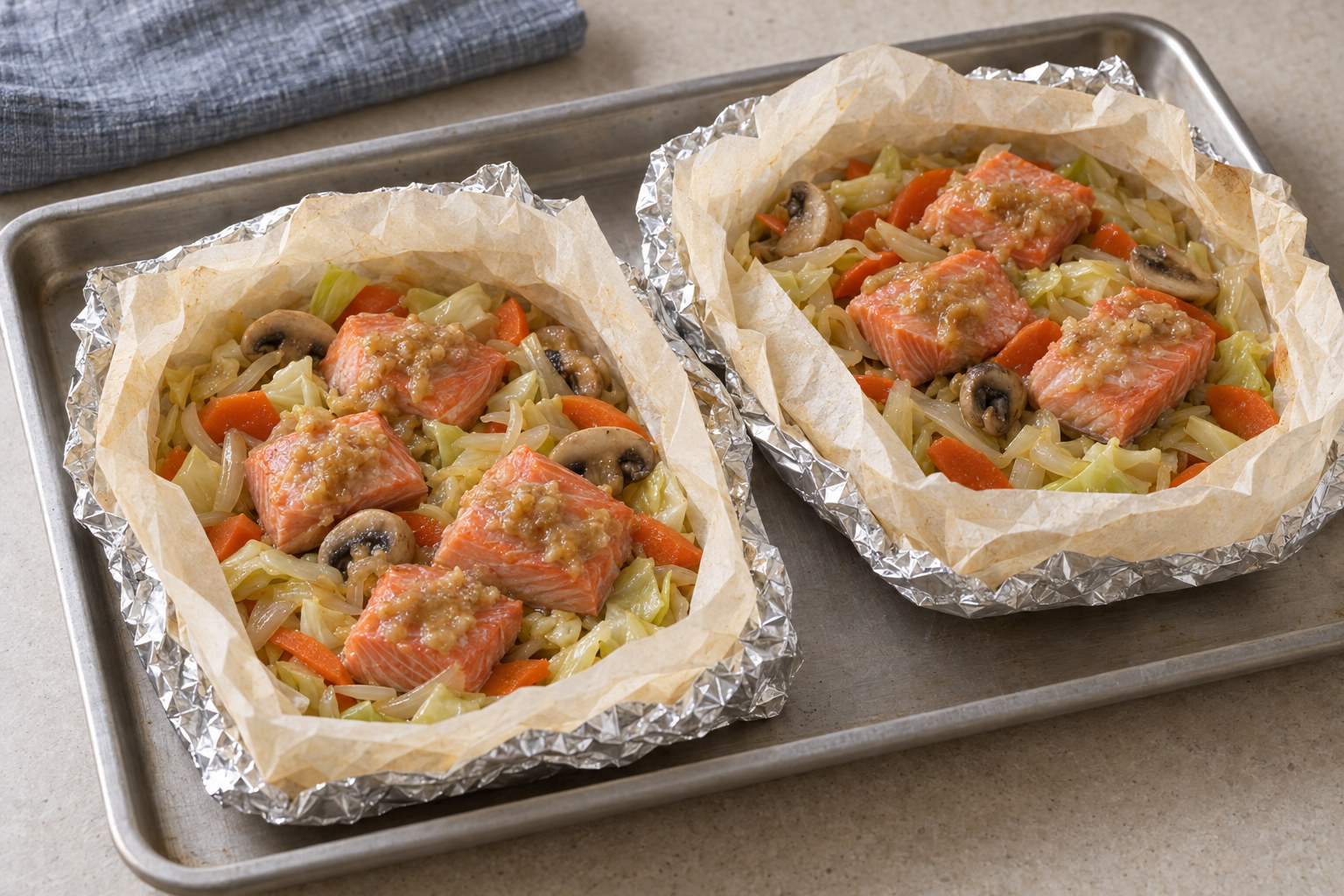
Cook the rice
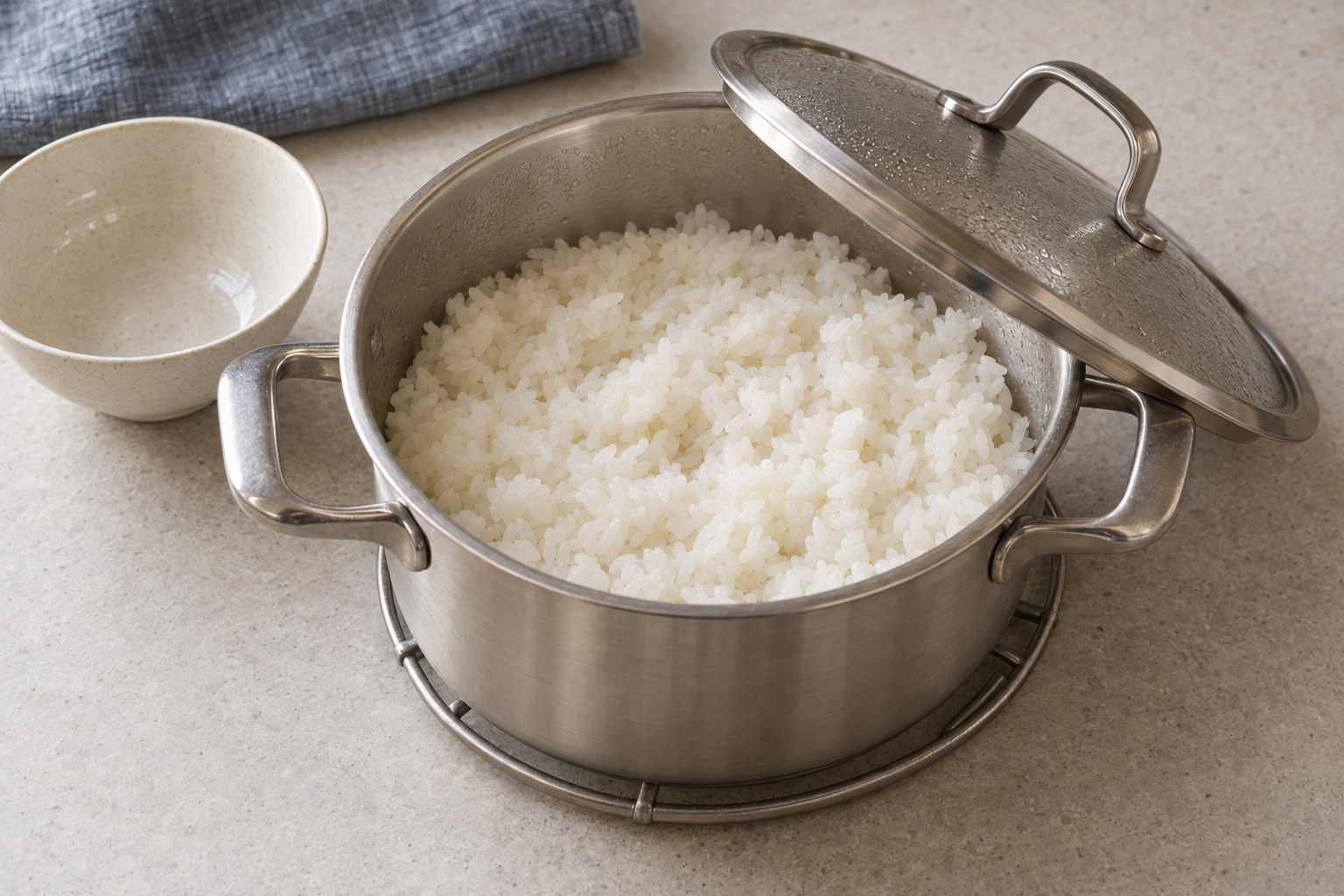
We start cooking the rice as soon as we begin braising the vegetables in step 2. We bring the soaked rice and its soaking water to the boil under a lid, cook it on the lowest heat for 12 minutes and leave it to stand off the heat for 10 minutes. At that point, we put the parcels in the oven. We do not add salt; the miso seasons the dish. If any parcel needs a few minutes longer, we keep the rice covered.
Serve with the cooking juices
We carefully open the parcels and serve them in the paper with two bowls of rice. We do not stir the fish into the vegetables; we leave the pieces on top and spoon the juices from the bottom around them. We serve at once.
Tips from our kitchen
- We line the foil with baking paper so the salty miso does not touch the metal directly.
- We add no extra salt; the miso flavours the dish.
What to watch out for
- We do not place raw fish on firm vegetables; the sockeye pieces need much less cooking.
- We seal the edges carefully so the steam stays inside the parcel.
How we serve it
- We serve the parcels open in their paper with a bowl of rice; we take care to avoid the steam when opening.
Ingredient swaps
Mirin
for 2 servings, an extra 20 ml water and 1 slightly rounded teaspoon sugar (about 5 g); for 4 servings, 40 ml water and 2 slightly rounded teaspoons sugar (about 10 g) A less complex flavour; an option without added alcohol.
Button mushrooms
the same weight of oyster mushrooms, torn into small pieces A firmer mushroom texture.
sockeye salmon pieces, 300 / 600 g product weight
the same purchased weight of chum salmon. We remove the skin and bones and cut the flesh into pieces of a similar thickness. The flavour will be milder and the colour paler. We keep the sauce and side dishes the same; we cook the fish briefly and judge the time by its thickness and core temperature.
Ingredient notes
- Sockeye pieces are sold in 200 g packs. For two servings, we open two packs; for four, three. We use the quantities listed in the ingredients.
- We can use chum salmon steaks instead of sockeye. We remove the skin and bones and cut the flesh into pieces of a similar thickness. We adjust the cooking time to their thickness.
During preparation
- We inspect the prepared fish and remove any remaining pin bones. We keep it refrigerated before cooking and use clean, separate utensils. We open the parcels away from ourselves to avoid steam burns.
Our inspiration
Chanchan-yaki is traditionally associated with fishing communities around Ishikari in Hokkaido. Several explanations of the name are told: one evokes quick cooking, another a father at the stove, and another the sound of a spatula striking an iron plate. The dish brings together salmon, vegetables and miso. Here, we use baking-paper parcels instead of a hotplate and pre-cook the vegetables so the sockeye pieces need only a short time in the oven.
Similar recipes
Recipe for 4 people
Step-by-step method
Before we start
We soak the rice while cutting the vegetables. We start cooking it as the vegetables begin to braise; the parcels go into the oven only when the rice is resting for 10 minutes. We place the sockeye on the softened vegetables and keep the pieces whole.
Cut the vegetables and mix the sauce
We rinse 280 g rice in several changes of cold water, drain it, cover with 340 ml fresh water and leave to soak for at least 15 minutes. We preheat the fan oven to 180 °C. We wash the cabbage, peel the onions and carrots, and clean the mushrooms. We remove the cabbage core and cut the leaves into 2 cm squares, the onions into thin wedges, the carrots into very thin slices and the mushrooms into quarters. We mix 60 g miso, 50 ml mirin and 2½ teaspoons sugar. We pat dry 600 g prepared sockeye pieces, check for pin bones and keep them chilled; we leave smaller pieces whole and cut any very thick ones to no more than 2.5 cm thick.
Braise the vegetables and assemble the parcels
We melt 3 tablespoons butter in a wide pan. We soften the onion for 2 minutes, add the remaining vegetables and 140 ml water, cover and braise gently for 10–12 minutes until almost tender. We uncover and, if needed, evaporate any excess water for 1–2 minutes. As soon as we start braising the vegetables, we cook the soaked rice as described in step 4. We prepare four sheets of foil lined with baking paper. We divide the vegetables and buttery juices between them, then place 150 g prepared sockeye pieces in a single layer in each parcel. We group pieces of a similar thickness together. We spoon the miso mixture over the top and seal carefully, leaving room for steam. We assemble the parcels just before baking.
The carrot offers very little resistance when pierced before we add the fish. The fish pieces do not overlap.
Bake the fish in the parcels
As we take the rice off the heat for its 10-minute rest, we place the parcels on two trays in the preheated oven. We bake briefly, roughly 6–10 minutes depending on the thickness of the fish. From minute 5, we carefully check the thinner pieces, opening each parcel away from our face. We check that the thickest piece in each parcel reaches 63 °C and remove it when ready. If needed, we seal the parcel again and continue in 1–2 minute increments. The vegetables are already nearly tender, so we finish cooking according to the fish.
The fish pieces hold their shape. We do not extend the cooking just for colour; a deep red colour does not mean the fish is raw.
Cook the rice
We start cooking the rice as soon as we begin braising the vegetables in step 2. We bring the soaked rice and its soaking water to the boil under a lid, cook it on the lowest heat for 12–14 minutes and leave it to stand off the heat for 10 minutes. At that point, we put the parcels in the oven. We do not add salt; the miso seasons the dish. If any parcel needs a few minutes longer, we keep the rice covered.
Serve with the cooking juices
We carefully open the parcels and serve them in the paper with four bowls of rice. We do not stir the fish into the vegetables; we leave the pieces on top and spoon the juices from the bottom around them. We serve at once.