
French-German inspiration · French-German inspiration
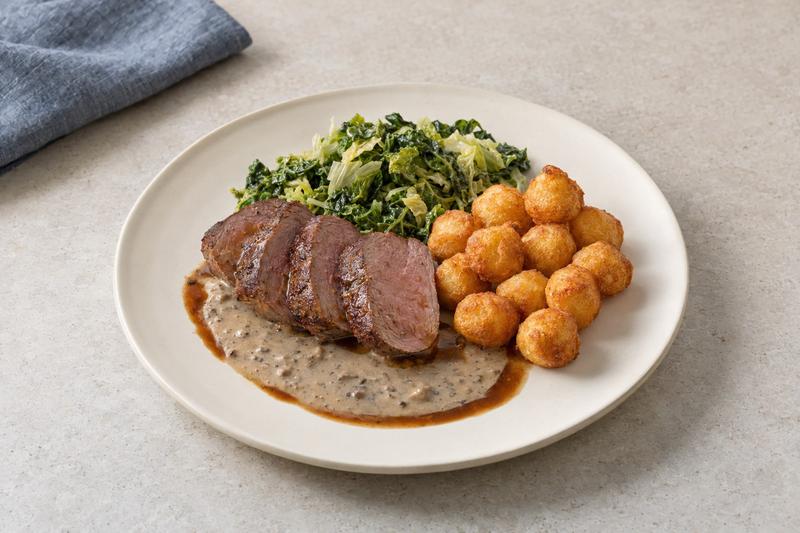
Roe deer saddle with mushroom sauce, cabbage and pommes dauphine
This time, we serve roe deer saddle with pommes dauphine: golden fried potato puffs with a light centre beneath a thin crust. They add a pleasing crunch beside smooth mushroom sauce and buttery cabbage, making this celebratory plate a treat for side-dish lovers too.
Allow time to make and chill the dough, fry the puffs in batches, roast the meat alongside and let it rest.
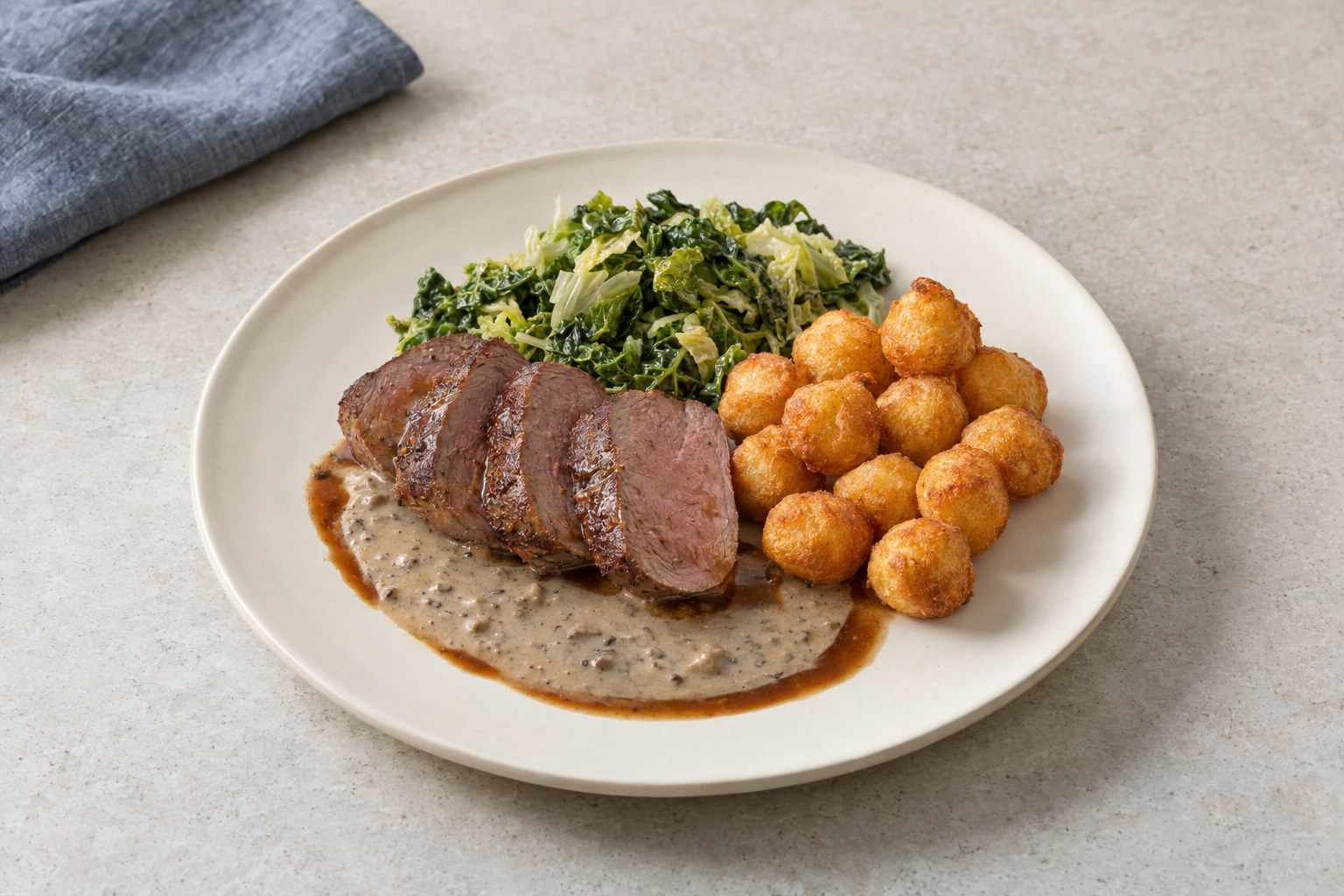
Earthy mushrooms and buttery cabbage complement the delicate roe deer saddle. The dauphine have a crisp outside and a light potato centre.
Step-by-step method
What you will need
- kitchen scales
- probe thermometer with a thin probe
- knife and separate chopping boards
- measuring jug
- 26 cm frying pan
- 20 × 15 cm roasting dish
- 2 l saucepan for the potatoes
- 3 l saucepan for the cabbage
- 0.75 l saucepan for the dough
- 1 l saucepan for the mushrooms
- frying pan with an internal diameter of 16 cm and a height of at least 15 cm
- oil thermometer
- slotted spoon and two spoons for shaping
- potato ricer
- stick blender
- sieve
- baking tray with a wire rack
- oven
Before we start
We start with the dough, sauce and cabbage. Before searing the meat, we fry the first batch of puffs and finish the rest while the saddle roasts. While the meat rests, we warm the puffs briefly in the oven and finish the sauce and cabbage.
Prepare the meat
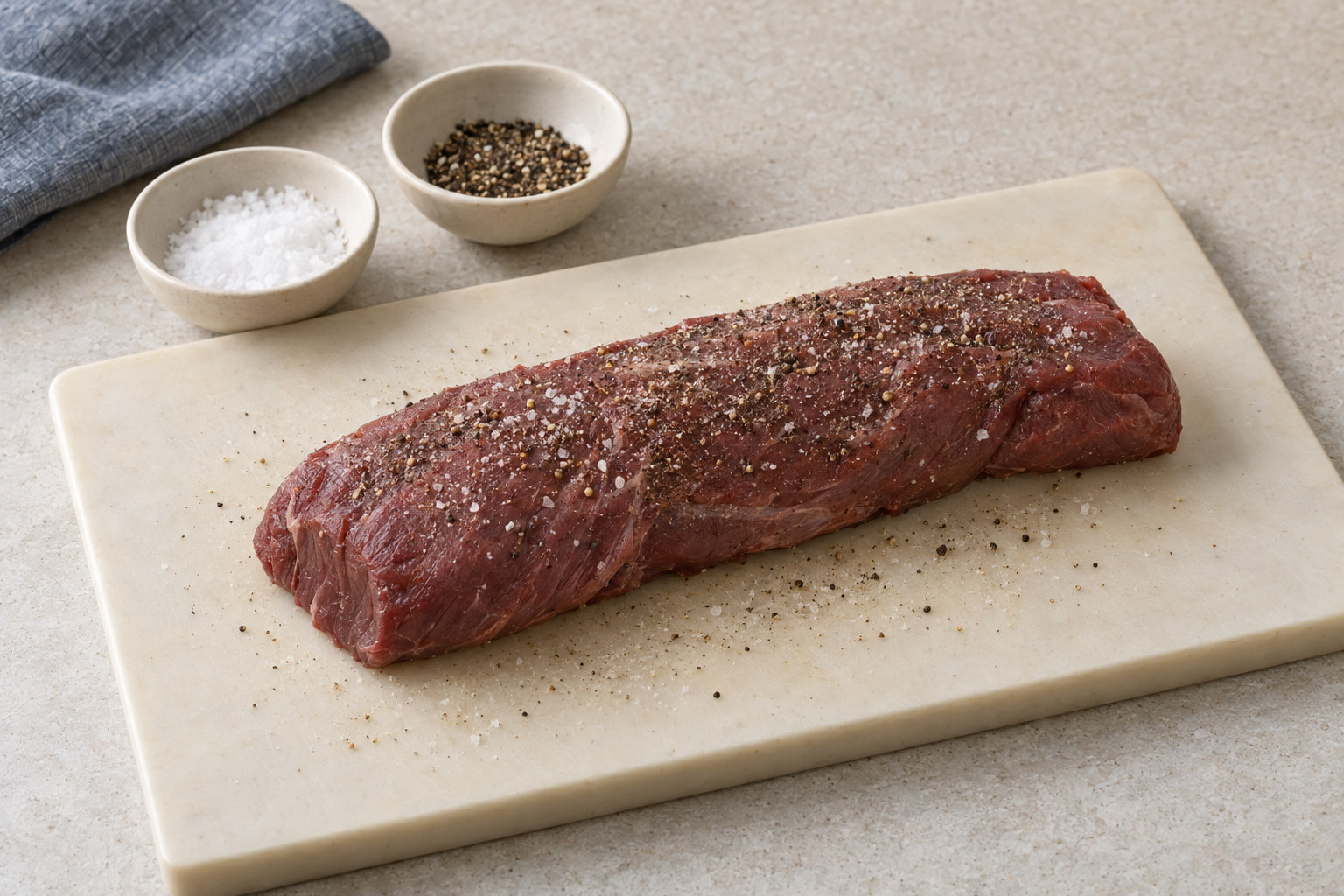
We keep the saddle in one piece weighing 360 g and 4–5 cm thick, pat it dry and season it with the salt set aside for the meat. We add pepper. Before searing the meat, we prepare the sides and fry a test puff and the first batch of dauphine as described in the following steps.
Make the potato choux dough
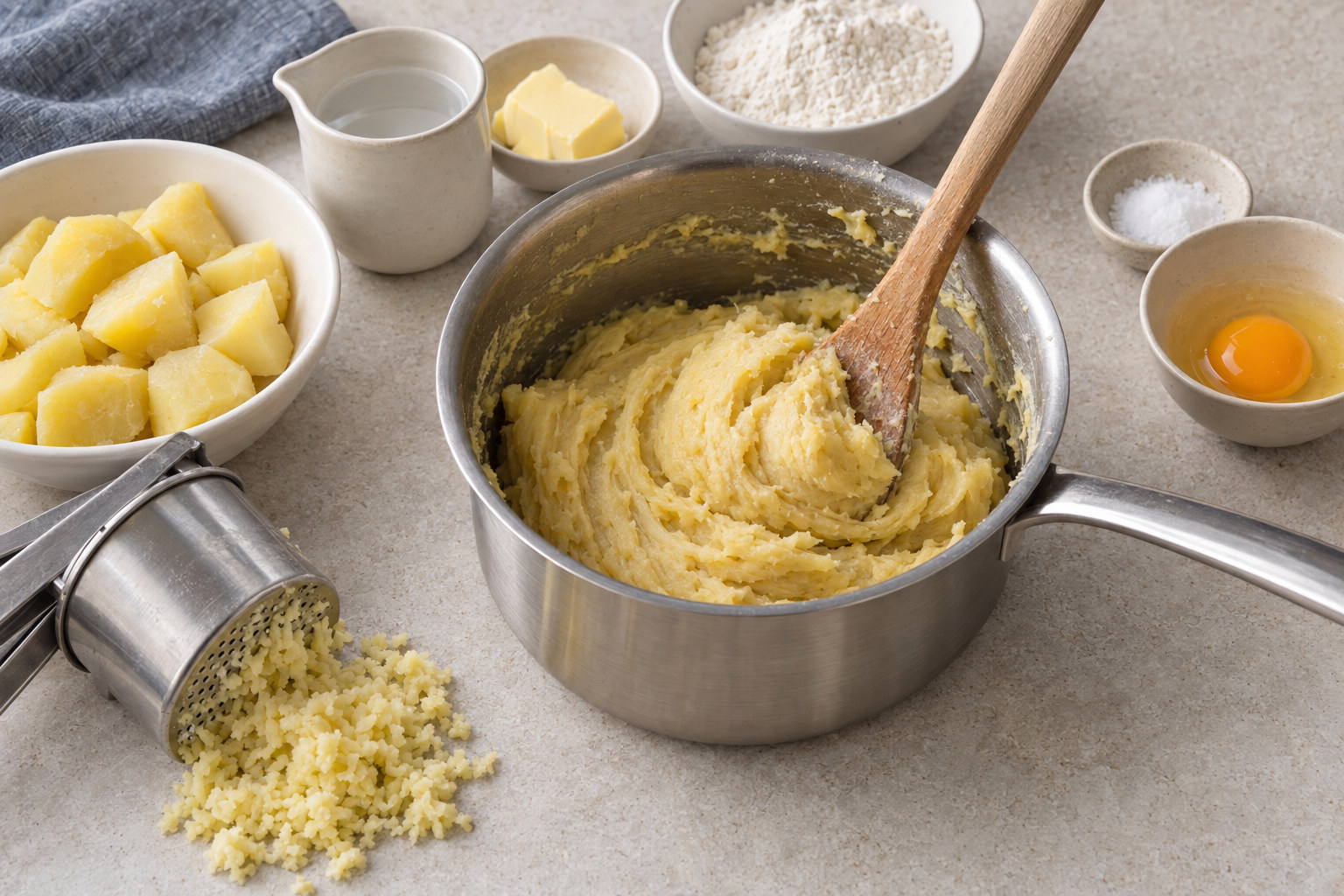
We peel the potatoes and cut them into 3 cm pieces. We boil them in plenty of water for 18–22 minutes until tender. We drain them, let them steam-dry over the lowest heat for 2 minutes, then rice them. In a saucepan, we bring the water for the dough, butter and salt to the boil. We add all the flour at once and stir for 2 minutes until the dough pulls away from the sides. We leave it to cool for 5 minutes, then gradually beat in all the whisked egg. Finally, we fold in the potatoes. Using two spoons, we shape the dough into evenly sized puffs about 3 cm long.
The dough is thick and glossy and can be scooped with spoons.
Fry the dauphine
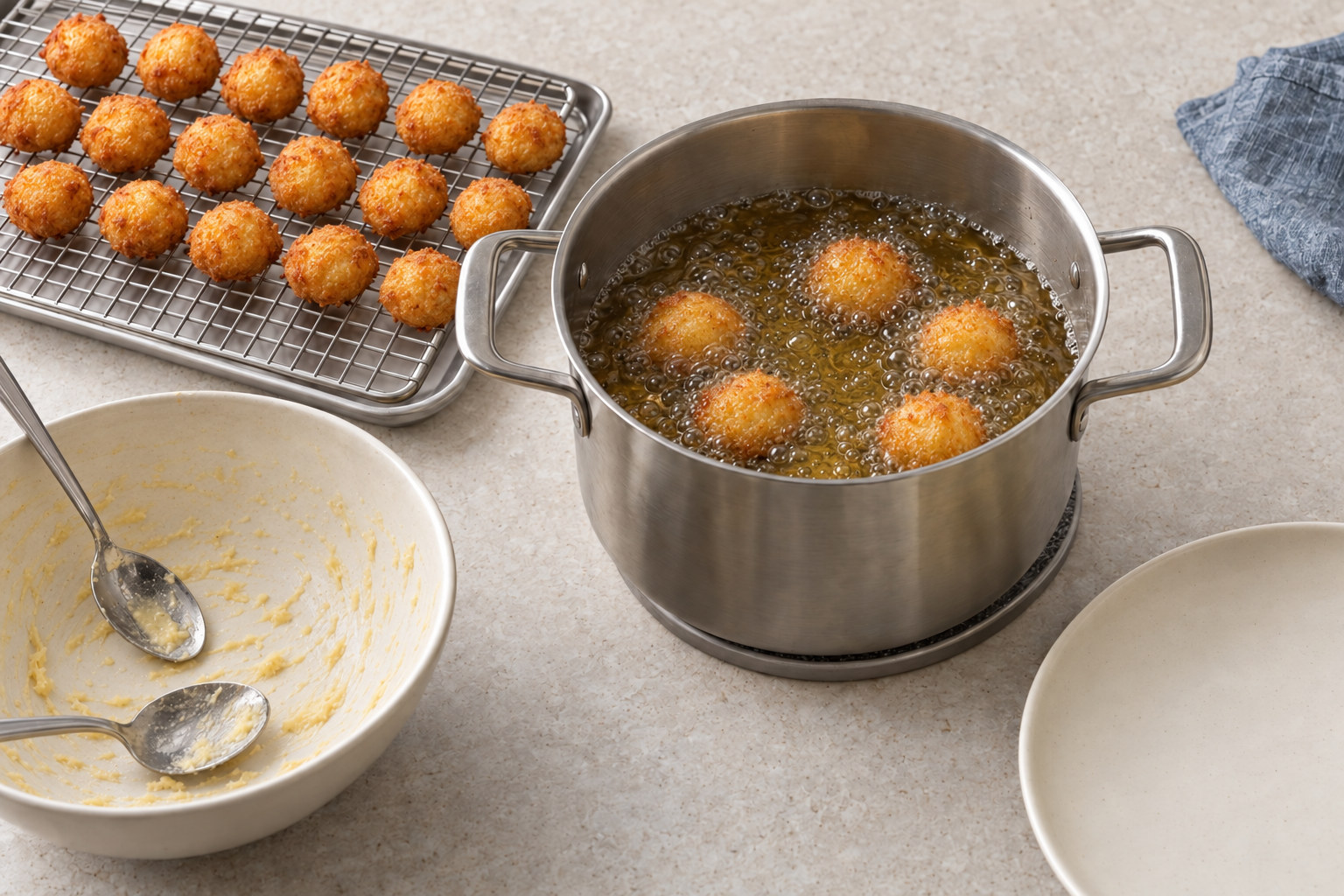
Before searing the meat, we heat the oil to 170 °C in the tall pan specified. The oil should be about 4 cm deep and reach no higher than one-third of the pan. Using two spoons, we shape one 3 cm puff, fry it for 4–6 minutes and cut it open to check for a dry, airy centre. We fry the remaining puffs in about four batches of no more than 6 at a time, for 4–6 minutes each. We let the oil return to 170 °C between batches. We fry some of the puffs before searing the meat and the rest while it roasts. We place the cooked puffs on a wire rack. While the meat rests, we warm all the puffs together in the oven at 150 °C for 5 minutes.
The puffs are light and risen, cooked through inside and crisp outside.
Make the mushroom sauce
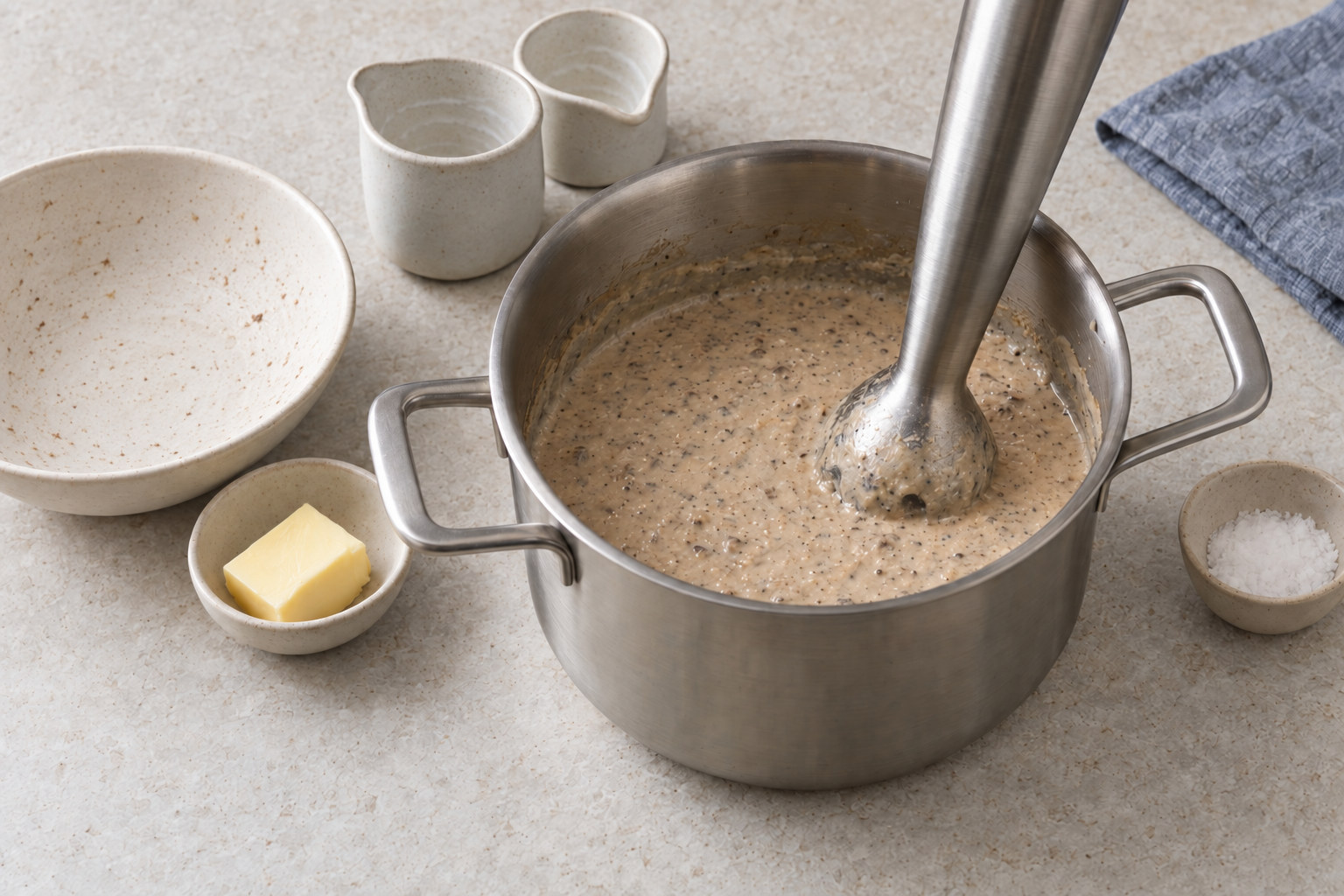
We clean and chop the mushrooms. In a saucepan, we cook them over a medium heat in half the butter set aside for the mushrooms and cabbage for 7–9 minutes, until the moisture has evaporated. We add the milk, cream and half the salt set aside for the mushrooms and cabbage, then simmer gently for 10 minutes. We blend the sauce until smooth but do not strain it. We keep it covered and reheat it, stirring, just before serving.
Cook and finish the cabbage
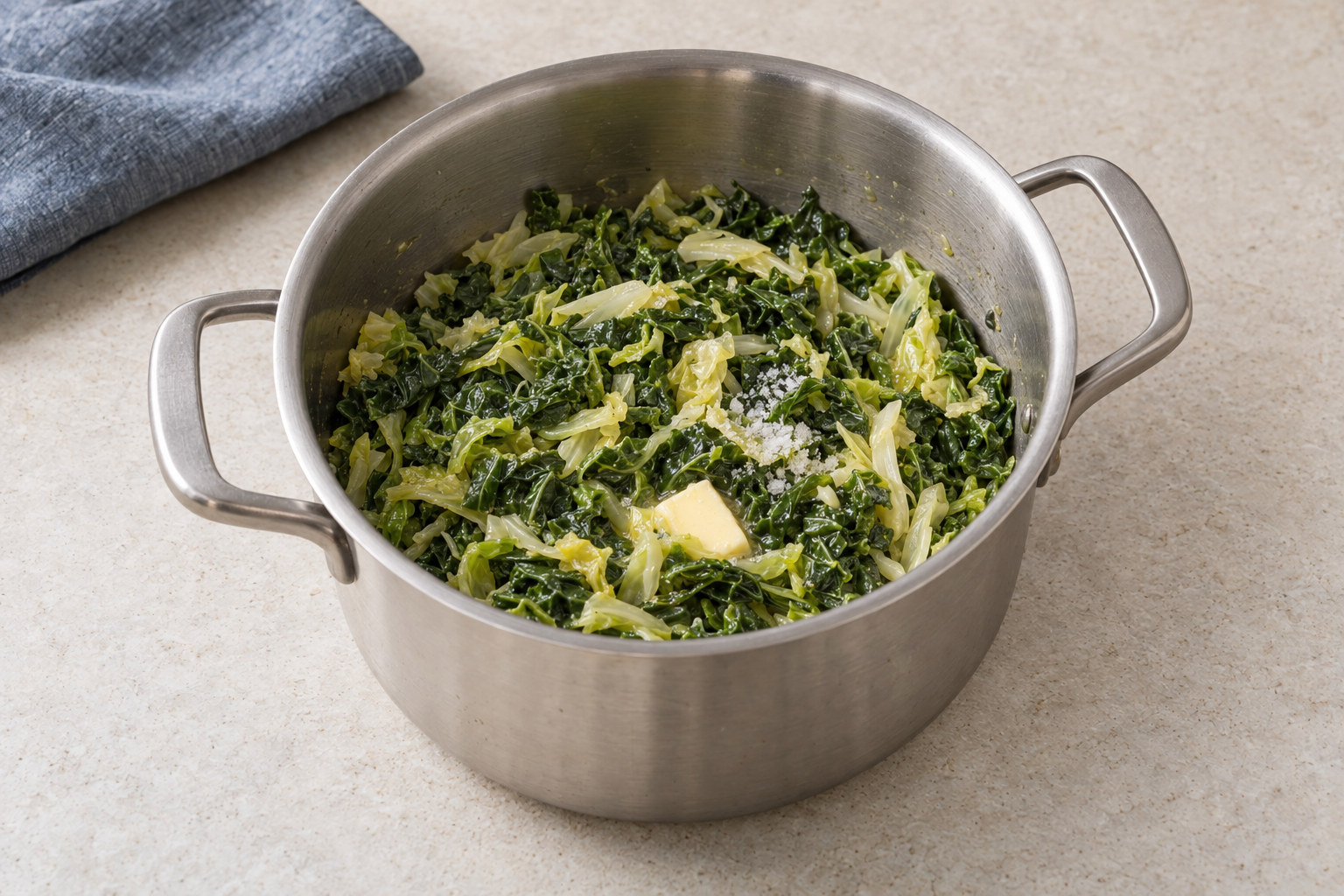
We wash the cabbage leaves and cut them into 2 cm strips. We boil them in water for 4–6 minutes until tender, then drain. Just before serving, we warm them in the same pan with the remaining butter for 2–3 minutes and stir in the remaining salt set aside for the mushrooms and cabbage.
Sear the saddle and finish it in the oven
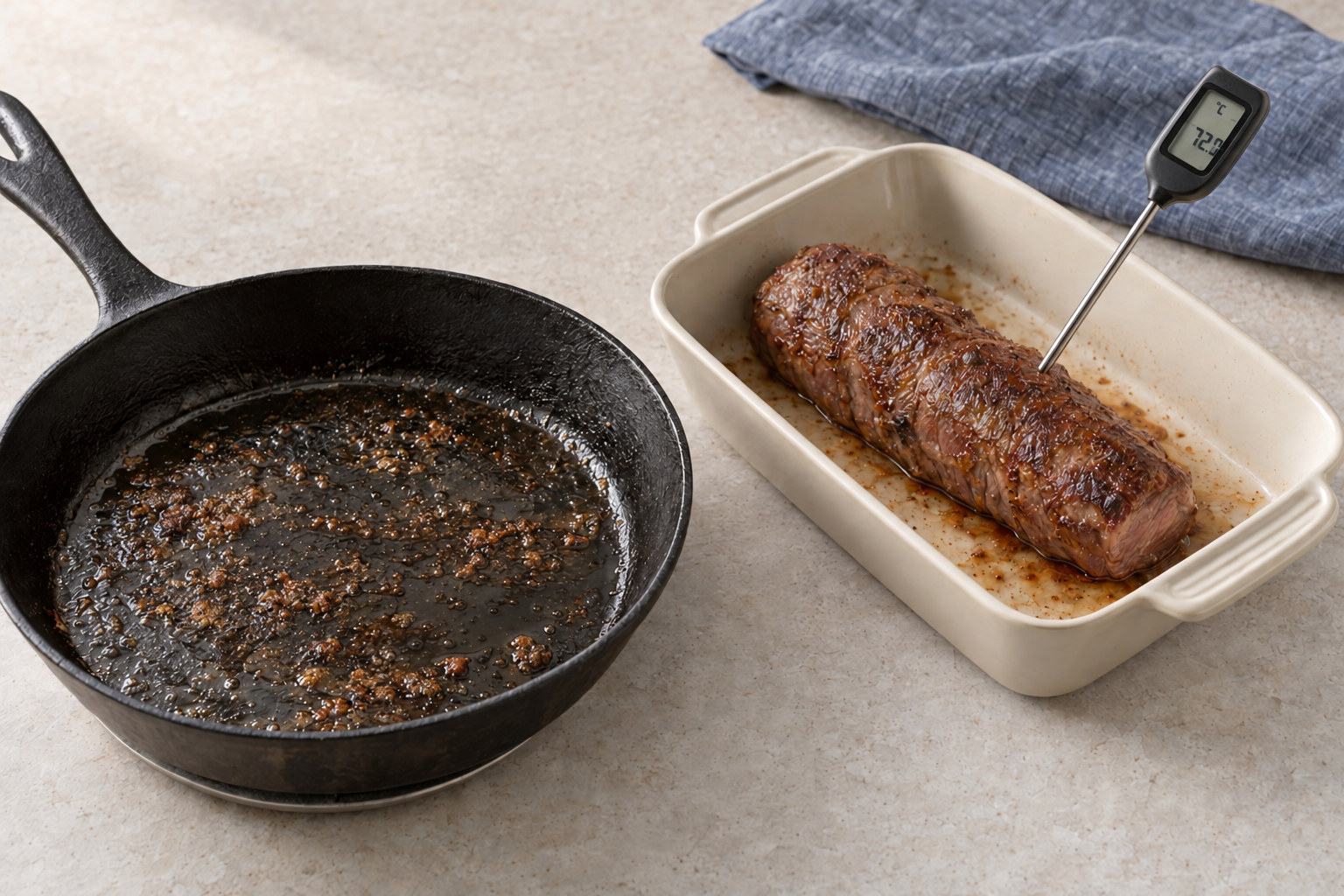
We preheat the oven to 150 °C using conventional top and bottom heat. We sear the meat in oil on all sides for 5–6 minutes. We transfer it to a roasting dish and roast for about 20–35 minutes. From 15 minutes onwards, we check the centre with a thin probe. It must reach at least 70 °C and stay at that temperature for 2 minutes. We fry the remaining puffs while the meat roasts. We rest the cooked saddle for 5 minutes. If the last batch of puffs is delayed, we leave the meat loosely covered for no more than a further 5 minutes.
The meat is browned on the outside; we check doneness with a probe, not by its pink colour or the colour of the juices.
Finish the pan jus
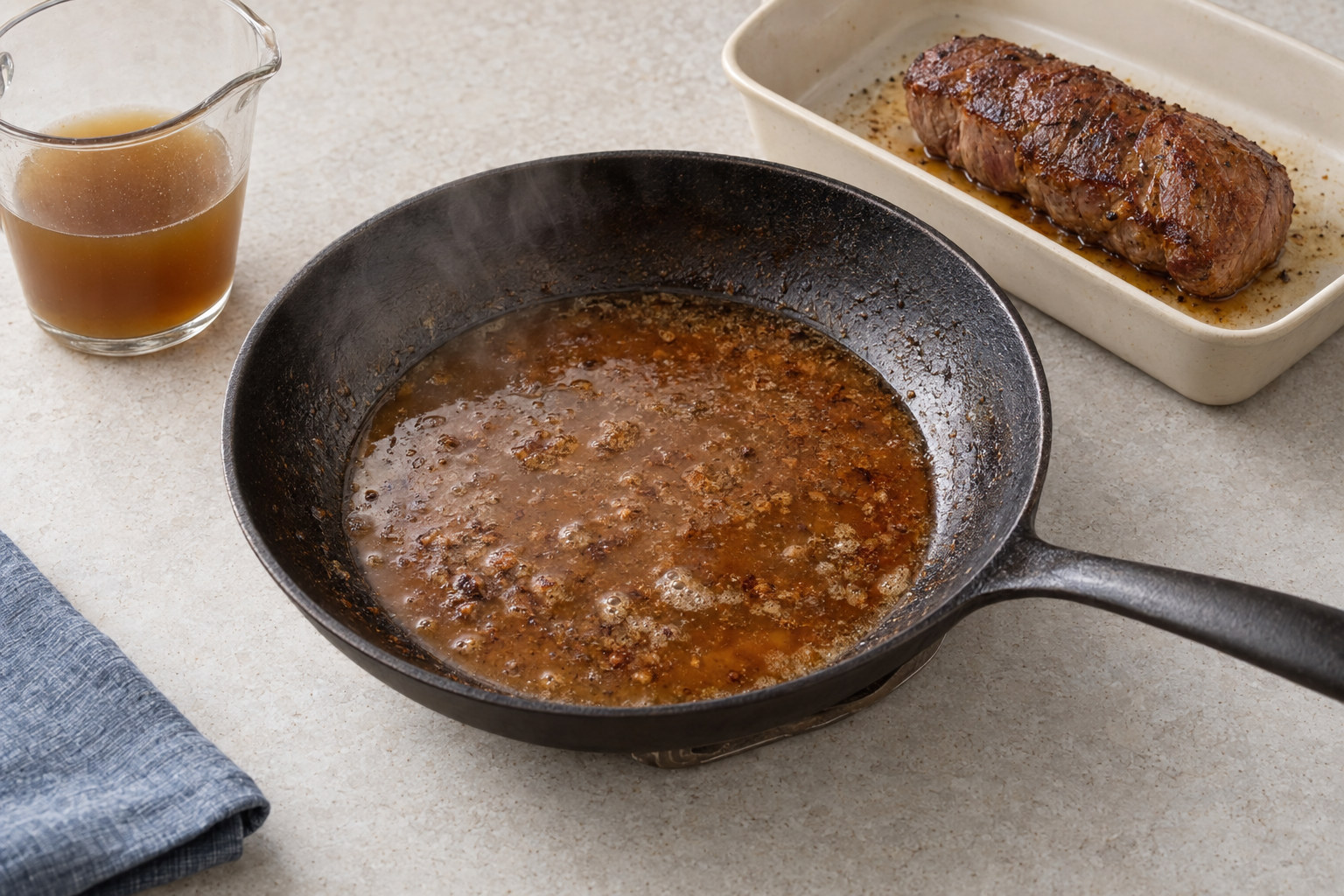
As soon as we move the meat to the oven, we pour the stock for the pan jus into the frying pan and simmer gently for 3–5 minutes to loosen the browned bits. Just before serving, we add the juices from the rested saddle and warm the sauce briefly again.
Carve and serve
We cut the meat into 2 cm slices and divide them between 2 warmed plates. We divide the puffs, cabbage and mushroom sauce evenly between the portions. We spoon a little jus over the meat and leave the dauphine without sauce.
Tips from our kitchen
- We cut the first dauphine open and check that the centre is light and dry before frying the remaining batches.
- We place the cooked puffs on a rack without covering them, so the steam can escape.
What to watch out for
- We pat the meat dry before searing and follow the stated batch sizes so every piece touches the base of the pan.
- We check the saddle with a probe. We cut open the first fried puff and check for a dry, airy centre.
How we serve it
- We serve the mushroom sauce with the meat and cabbage. We leave the dauphine free of sauce so they stay crisp.
During preparation
- We keep raw meat and its utensils separate from cooked food. We measure the temperature in the centre of the meat with a clean, thin probe.
Our inspiration
Choux pastry is familiar from French éclairs, but it also has a place alongside game. In pommes dauphine, it is combined with potato and fried in hot oil rather than baked. The small puffs expand as they fry; their light centre is what sets them apart from ordinary fried potatoes.
Similar recipes
Recipe for 4 people
Step-by-step method
Before we start
We start with the dough, sauce and cabbage. Before searing the meat, we fry the first batch of puffs and finish the rest while the saddle roasts. While the meat rests, we warm the puffs briefly in the oven and finish the sauce and cabbage.
Prepare the meat
We keep the saddle in two pieces of 360 g each and 4–5 cm thick, pat them dry and season with the salt set aside for the meat. We add pepper. Before searing the meat, we prepare the sides and fry a test puff and the first batch of dauphine as described in the following steps.
Make the potato choux dough
We peel the potatoes and cut them into 3 cm pieces. We boil them in plenty of water for 18–22 minutes until tender. We drain them, let them steam-dry over the lowest heat for 2 minutes, then rice them. In a saucepan, we bring the water for the dough, butter and salt to the boil. We add all the flour at once and stir for 2 minutes until the dough pulls away from the sides. We leave it to cool for 5 minutes, then gradually beat in the whisked eggs. Finally, we fold in the potatoes. Using two spoons, we shape the dough into evenly sized puffs about 3 cm long.
The dough is thick and glossy and can be scooped with spoons.
Fry the dauphine
Before searing the meat, we heat the oil to 170 °C in the tall pan specified. The oil should be about 4 cm deep and reach no higher than one-third of the pan. Using two spoons, we shape one 3 cm puff, fry it for 4–6 minutes and cut it open to check for a dry, airy centre. We fry the remaining puffs in about four batches of no more than 12 at a time, for 4–6 minutes each. We let the oil return to 170 °C between batches. We fry some of the puffs before searing the meat and the rest while it roasts. We place the cooked puffs on a wire rack. While the meat rests, we warm all the puffs together in the oven at 150 °C for 5 minutes.
The puffs are light and risen, cooked through inside and crisp outside.
Make the mushroom sauce
We clean and chop the mushrooms. In a saucepan, we cook them over a medium heat in half the butter set aside for the mushrooms and cabbage for 10–12 minutes, until the moisture has evaporated. We add the milk, cream and half the salt set aside for the mushrooms and cabbage, then simmer gently for 10 minutes. We blend the sauce until smooth but do not strain it. We keep it covered and reheat it, stirring, just before serving.
Cook and finish the cabbage
We wash the cabbage leaves and cut them into 2 cm strips. We boil them in water for 4–6 minutes until tender, then drain. Just before serving, we warm them in the same pan with the remaining butter for 2–3 minutes and stir in the remaining salt set aside for the mushrooms and cabbage.
Sear the saddle and finish it in the oven
We preheat the oven to 150 °C using conventional top and bottom heat. We sear the pieces one at a time in the oil for 5–6 minutes on all sides, dividing the oil between them. We transfer them to a roasting dish and roast for about 20–35 minutes. From 15 minutes onwards, we check the centre of both pieces with a thin probe. They must reach at least 70 °C and stay at that temperature for 2 minutes. We fry the remaining puffs while the meat roasts. We rest the cooked saddle for 5 minutes. If the last batch of puffs is delayed, we leave the meat loosely covered for no more than a further 5 minutes.
The meat is browned on the outside; we check doneness with a probe, not by its pink colour or the colour of the juices.
Finish the pan jus
As soon as we move the meat to the oven, we pour the stock for the pan jus into the frying pan and simmer gently for 3–5 minutes to loosen the browned bits. Just before serving, we add the juices from the rested saddle and warm the sauce briefly again.
Carve and serve
We cut the meat into 2 cm slices and divide them between 4 warmed plates. We divide the puffs, cabbage and mushroom sauce evenly between the portions. We spoon a little jus over the meat and leave the dauphine without sauce.