
Czechia · Czechia
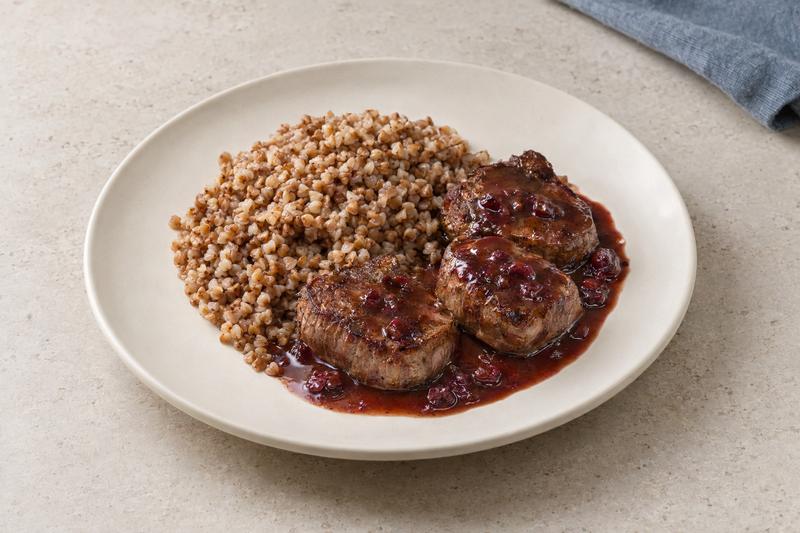
Roe deer medallions with cranberries and buckwheat
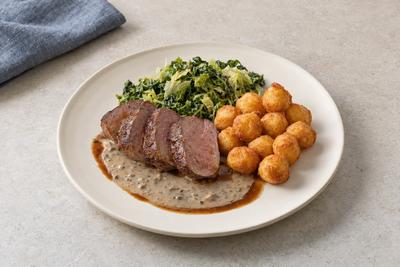
We serve seared roe deer loin medallions with a cranberry sauce finished with butter. The fluffy buckwheat catches a little of the sauce and brings its own gently nutty flavour.
We prepare the buckwheat and sauce alongside the meat; the timing also includes resting the medallions.
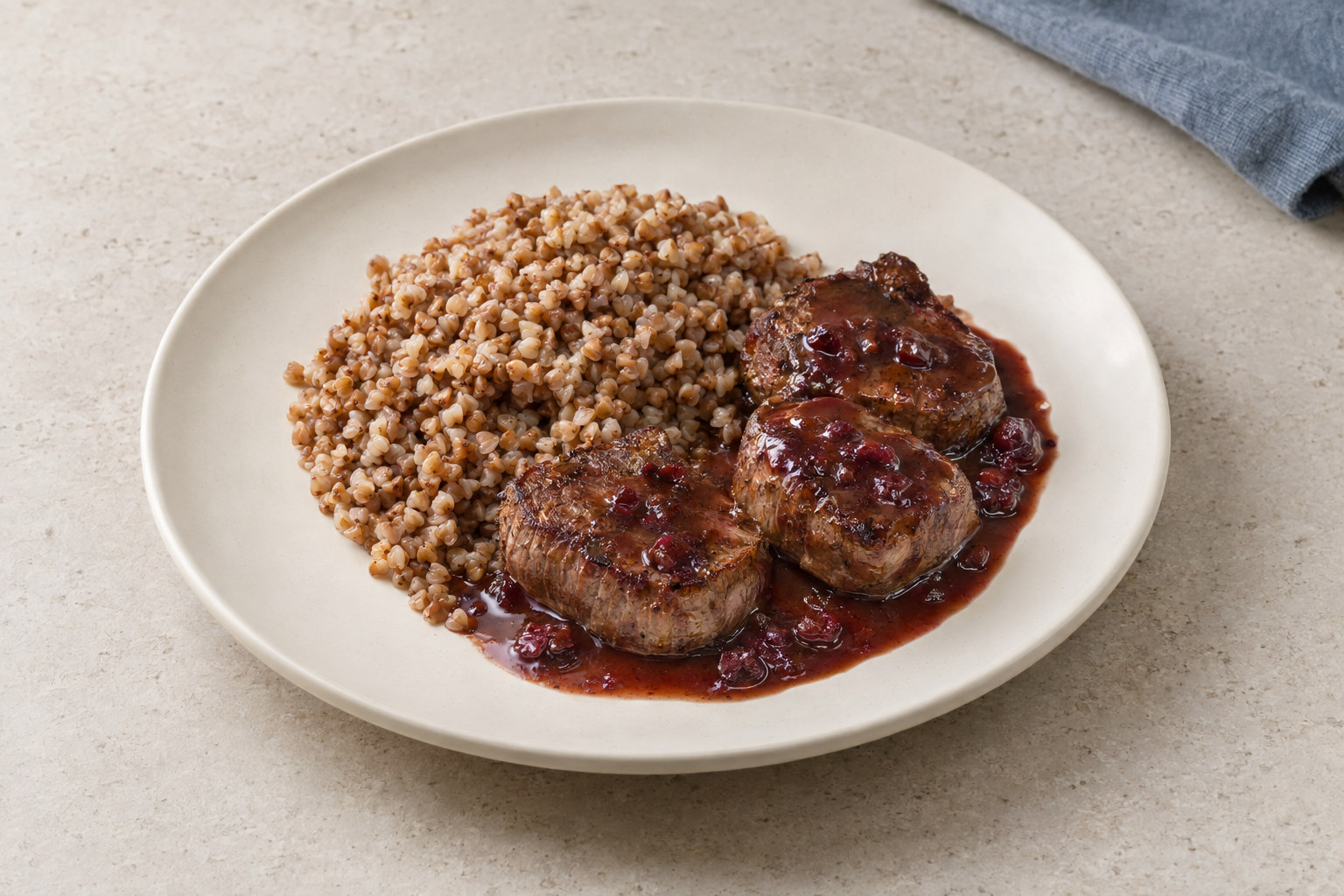
Cranberries and a splash of cider vinegar bring fruity acidity, softened by butter, while whole buckwheat grains complement the delicate roe deer meat.
Step-by-step method
What you will need
- kitchen scales
- thin-probe food thermometer
- knife and two separate chopping boards
- measuring jug
- 26 cm frying pan
- 20 × 15 cm roasting tin
- 1.5 l saucepan with a tight-fitting lid
- oven
- electric kettle
Before we start
We put the buckwheat on the hob as we sear the first batch of meat. After searing the last batch, we make the cranberry sauce, stirring in the butter only just before serving. Meanwhile, the buckwheat finishes cooking under the lid.
Prepare the meat
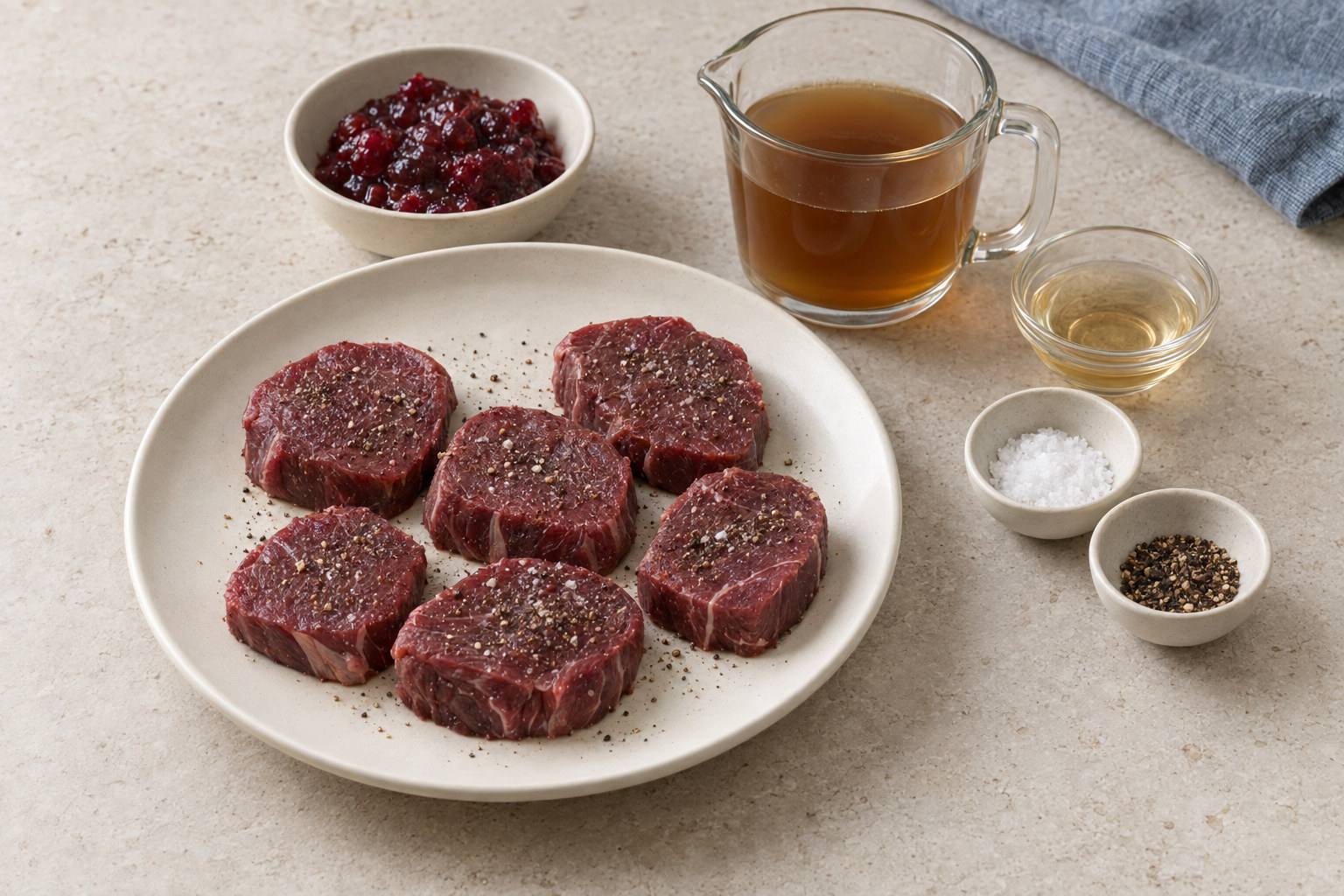
We cut the loin across the grain into medallions 2 cm thick and pat them dry. If we want to finish them with Icelandic salt, we first hold back one small pinch from the regular salt for the meat. We season the medallions with salt and pepper. We have the cranberry preserve, stock and vinegar ready.
The meat is dry and the pieces are a similar thickness.
Cook the buckwheat
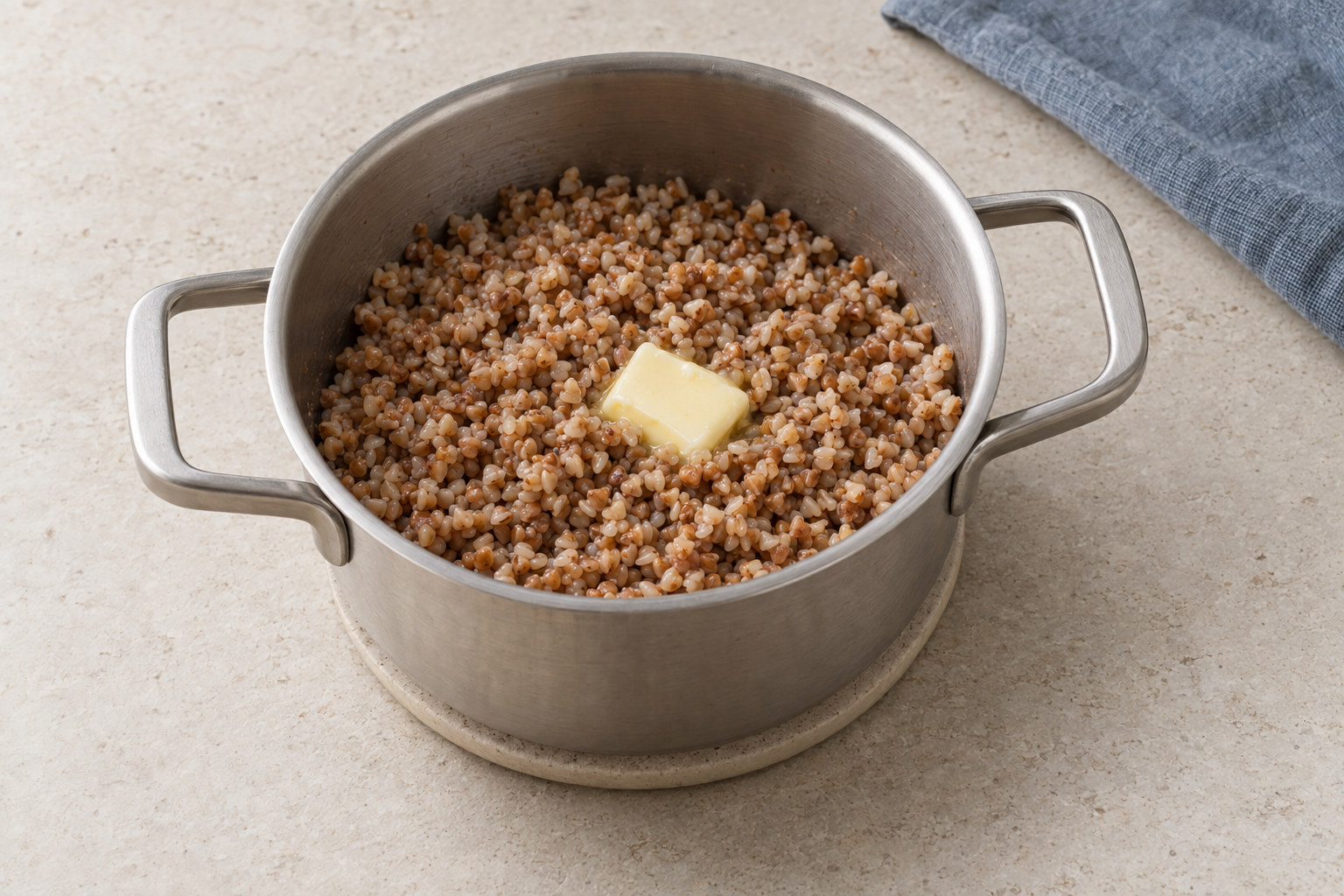
We rinse the buckwheat, add 280 ml of water and the salt, and bring to a gentle simmer. We cook gently under a lid for 7–10 minutes, then take off the heat and leave to finish cooking for 10 minutes. If the pan runs dry during cooking and the grains are still hard, we top up with water in 20 ml amounts, up to a maximum of 60 ml. We check the grains are tender, drain off any excess water and stir in the butter for the side dish.
The grains are tender but not mushy, and the bottom does not scorch.
Sear the medallions and finish in the oven if needed
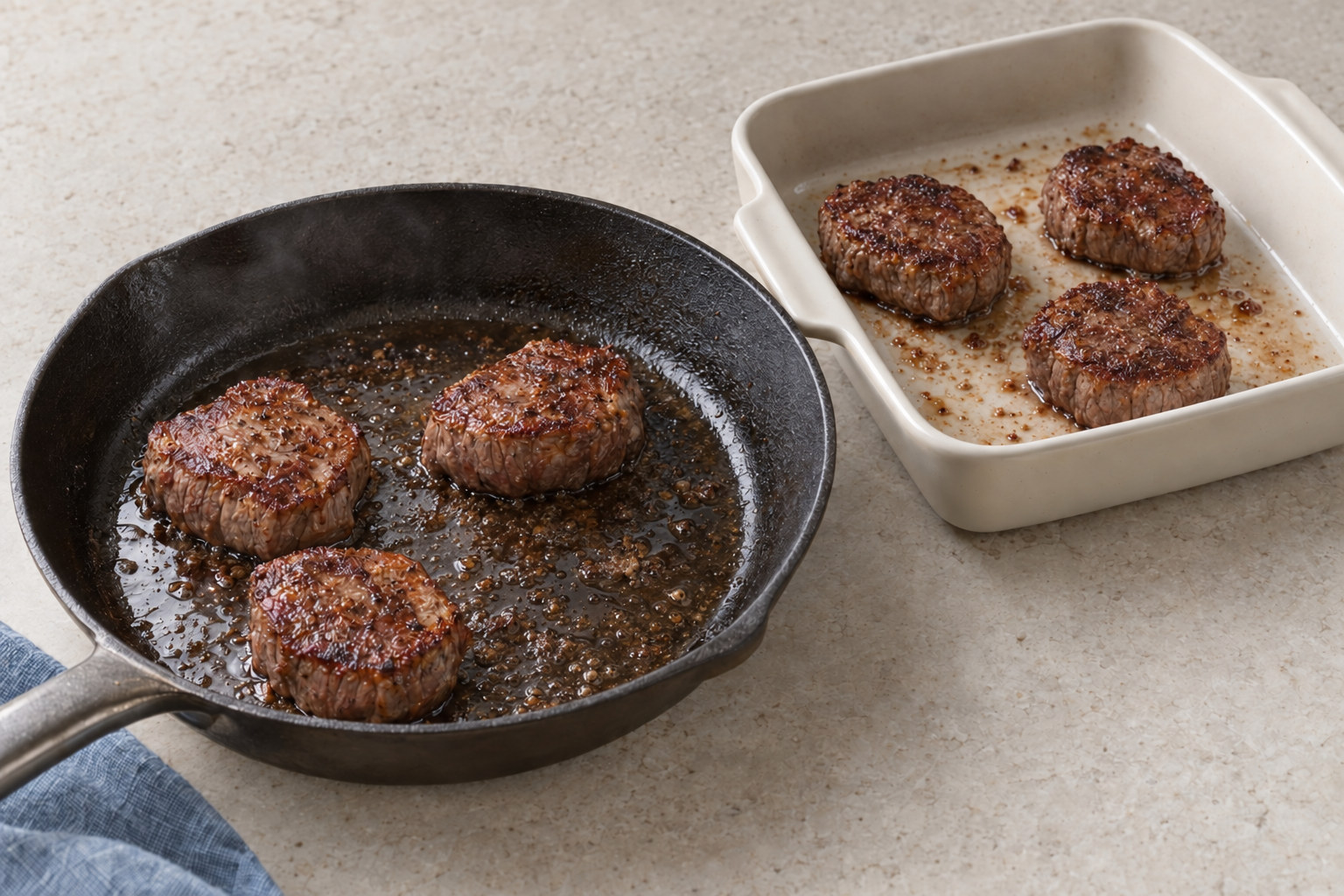
We preheat the oven to 150 °C conventional. We divide the oil between two batches of 180 g of meat each. We sear the medallions over a medium-high heat for 2 minutes on each side. After each batch, we check each piece with a thin probe: the coolest point must stay at a minimum of 70 °C for a full 2 minutes. We set cooked medallions aside to rest and arrange the others in a clean roasting tin without overlapping. After searing the final batch, we put only the medallions that need further cooking into the oven. This takes about 8–15 minutes, but we monitor each piece’s temperature from the start and remove them as they are ready. We rest each one for 3 minutes before serving.
The surface is brown, but we judge doneness with a probe, not by pinkness or the colour of the juices.
Finish the sauce
We pour the stock into the pan used for the meat and stir in the cranberry preserve and vinegar. We simmer gently for 3–5 minutes until the sauce thickens slightly. We keep it warm over the lowest heat until serving; at the end, we add the resting juices from the meat, take off the heat and stir in the butter for the sauce.
The sauce is smooth and warm; it does not scorch or separate.
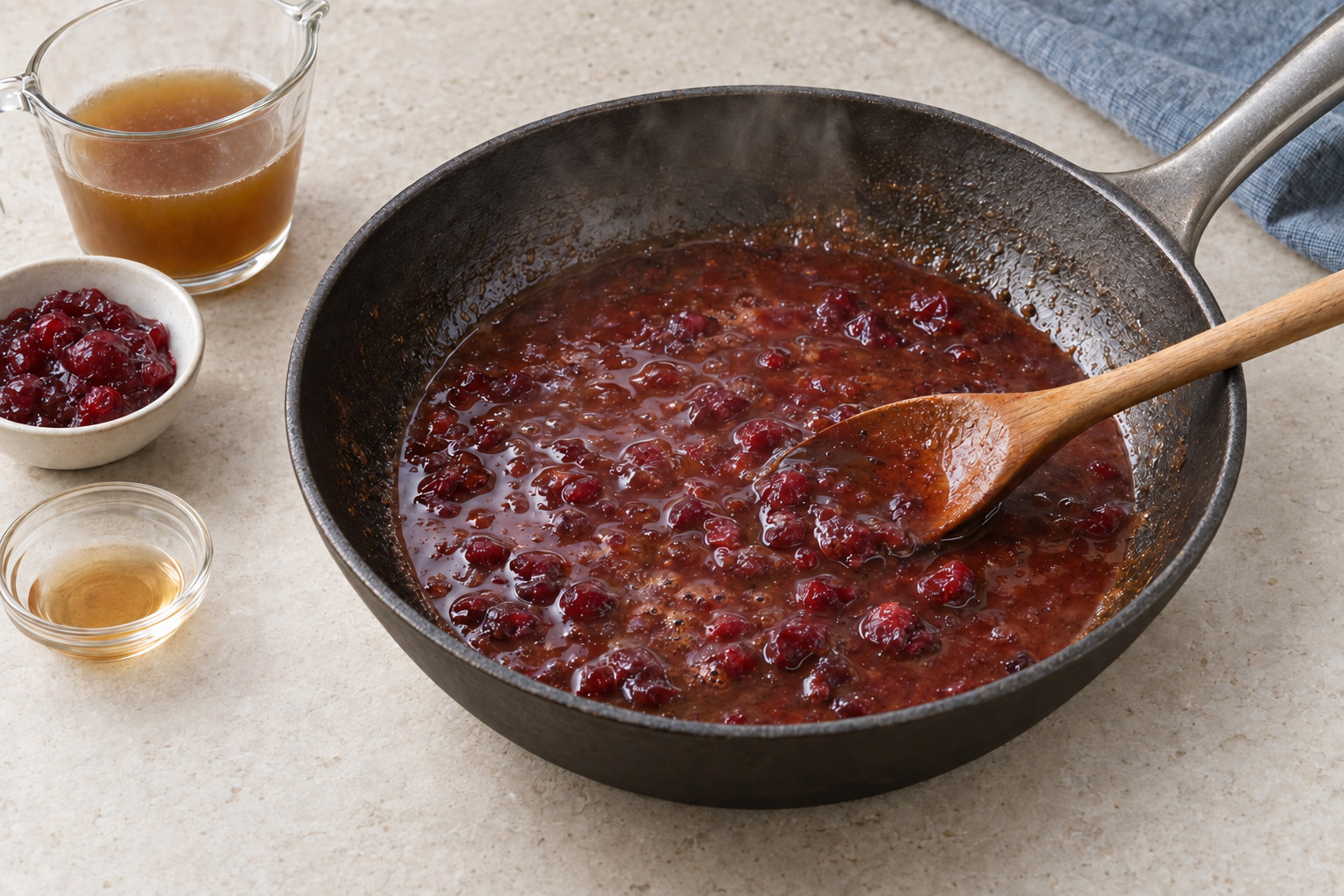
Plate up and serve
We divide the buckwheat and medallions between 2 warmed plates and spoon the cranberry sauce over the meat. If we held back some regular salt at the start, we taste a mouthful of meat with buckwheat and sauce. To taste, we divide one small pinch of Saltverk Icelandic flaky salt with Arctic thyme over the meat; if the mouthful is salty enough, we leave it out. We serve immediately.
Tips from our kitchen
- We use whole, mechanically hulled buckwheat; broken groats need a different method.
- We stir the butter into the cranberry sauce off the boil, just before serving.
What to watch out for
- We pat the meat dry and sear it in batches so every medallion sits directly on the pan’s base.
- The oven cooking time is a guide. We check the medallions with a thin probe as described in the method.
How we serve it
- We place the medallions beside the fluffy buckwheat and spoon over the cranberry sauce. We serve immediately on warmed plates.
During preparation
- We keep raw meat and utensils separate from cooked food. We measure the temperature with a clean, thin probe inside the thickest pieces of meat.
Our inspiration
Whole and broken buckwheat groats may look similar, but they behave differently in the pan. Whole grains take longer than small fragments and work well when we want a side with separate grains. Their gently nutty flavour goes beautifully with the cranberries and buttery sauce alongside roe deer medallions. Simple ingredients make a lunch that feels right for a special occasion too.
Similar recipes
Recipe for 4 people
Step-by-step method
Before we start
We put the buckwheat on the hob as we sear the first batch of meat. After searing the last batch, we make the cranberry sauce, stirring in the butter only just before serving. Meanwhile, the buckwheat finishes cooking under the lid.
Prepare the meat
We cut the loin across the grain into medallions 2 cm thick and pat them dry. If we want to finish them with Icelandic salt, we first hold back two small pinches from the regular salt for the meat. We season the medallions with salt and pepper. We have the cranberry preserve, stock and vinegar ready.
The meat is dry and the pieces are a similar thickness.
Cook the buckwheat
We rinse the buckwheat, add 520 ml of water and the salt, and bring to a gentle simmer. We cook gently under a lid for 7–10 minutes, then take off the heat and leave to finish cooking for 10 minutes. If the pan runs dry during cooking and the grains are still hard, we top up with water in 20 ml amounts, up to a maximum of 100 ml. We check the grains are tender, drain off any excess water and stir in the butter for the side dish.
The grains are tender but not mushy, and the bottom does not scorch.
Sear the medallions and finish in the oven if needed
We preheat the oven to 150 °C conventional. We divide the oil between four batches of 180 g of meat each. We sear the medallions over a medium-high heat for 2 minutes on each side. After each batch, we check each piece with a thin probe: the coolest point must stay at a minimum of 70 °C for a full 2 minutes. We set cooked medallions aside to rest and arrange the others in a clean roasting tin without overlapping. After searing the final batch, we put only the medallions that need further cooking into the oven. This takes about 8–15 minutes, but we monitor each piece’s temperature from the start and remove them as they are ready. We rest each one for 3 minutes before serving.
The surface is brown, but we judge doneness with a probe, not by pinkness or the colour of the juices.
Finish the sauce
We pour the stock into the pan used for the meat and stir in the cranberry preserve and vinegar. We simmer gently for 3–5 minutes until the sauce thickens slightly. We keep it warm over the lowest heat until serving; at the end, we add the resting juices from the meat, take off the heat and stir in the butter for the sauce.
The sauce is smooth and warm; it does not scorch or separate.
Plate up and serve
We divide the buckwheat and medallions between 4 warmed plates and spoon the cranberry sauce over the meat. If we held back some regular salt at the start, we taste a mouthful of meat with buckwheat and sauce. To taste, we divide two small pinches of Saltverk Icelandic flaky salt with Arctic thyme over the meat; if the mouthful is salty enough, we leave it out. We serve immediately.