
Central Europe · Central Europe
Walnut-crusted roe deer loin with pears and mashed potatoes
We press a buttery crust of toasted walnuts onto the roe deer loin. Golden pan-fried pears, smooth mashed potatoes and a sauce made from the meat juices complement the crisp topping.
We prepare the mash, pears and sauce alongside the meat. We also allow time for the crust mixture to cool and the loin to rest.
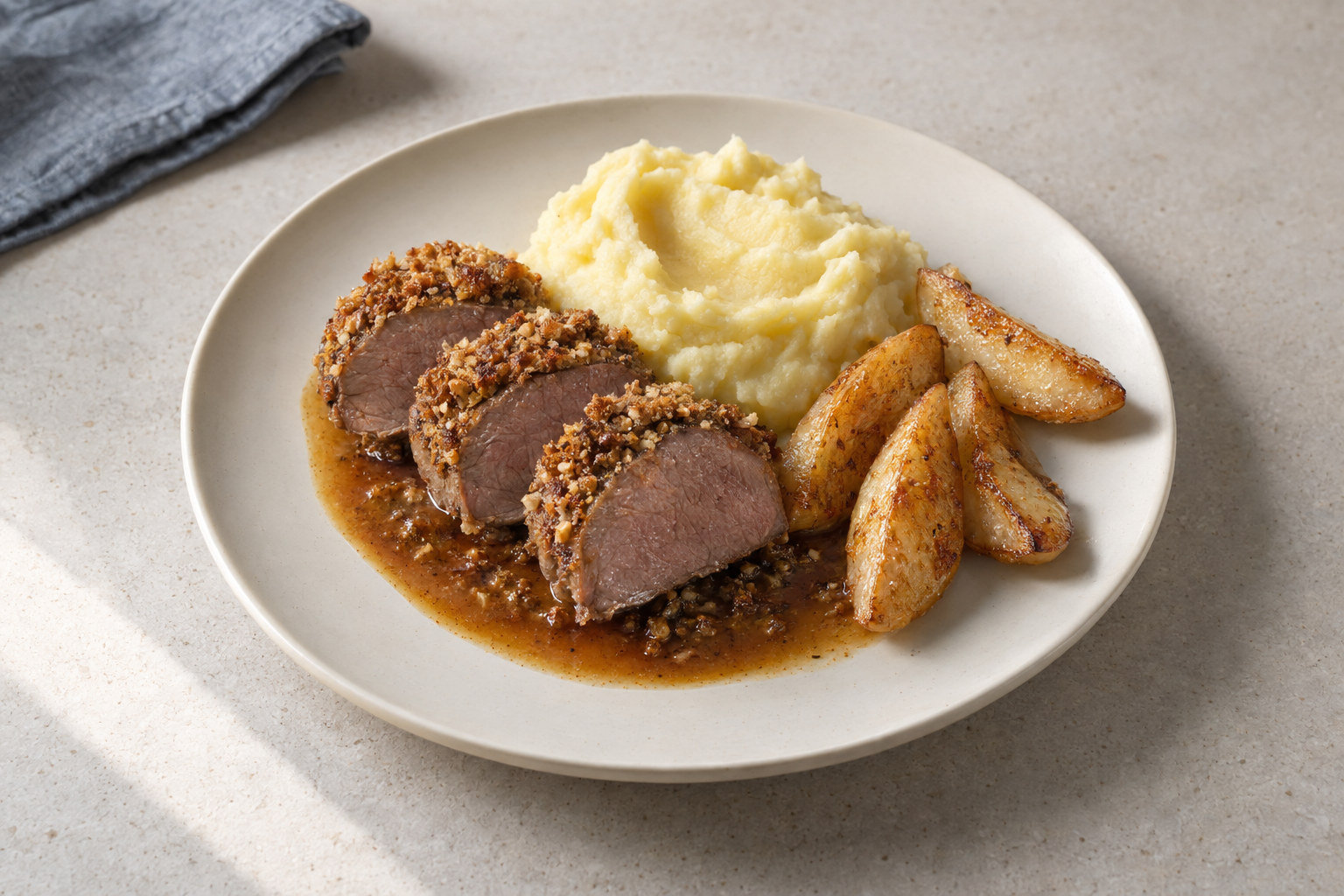
Walnuts, sweet pear and creamy mashed potatoes complement the roe deer, with a gently tangy hint of Dijon mustard beneath the crust.
Step-by-step method
What you will need
- kitchen scales
- thin-probe food thermometer
- knife and two separate chopping boards
- measuring jug
- 26 cm frying pan
- small 22 cm frying pan for the pears
- 2.5 l saucepan
- 0.5 l saucepan for the milk
- 20 × 15 cm roasting tin
- potato ricer
- oven
Before we start
We first dry-toast the nuts and breadcrumbs for the crust. We start cooking the potatoes just before searing the meat. We pan-fry the pears during the last 8 minutes of roasting; we keep the mash covered over the lowest heat and stir it several times. We make the sauce while the meat roasts and finish it as the meat rests.
Prepare the crust and meat
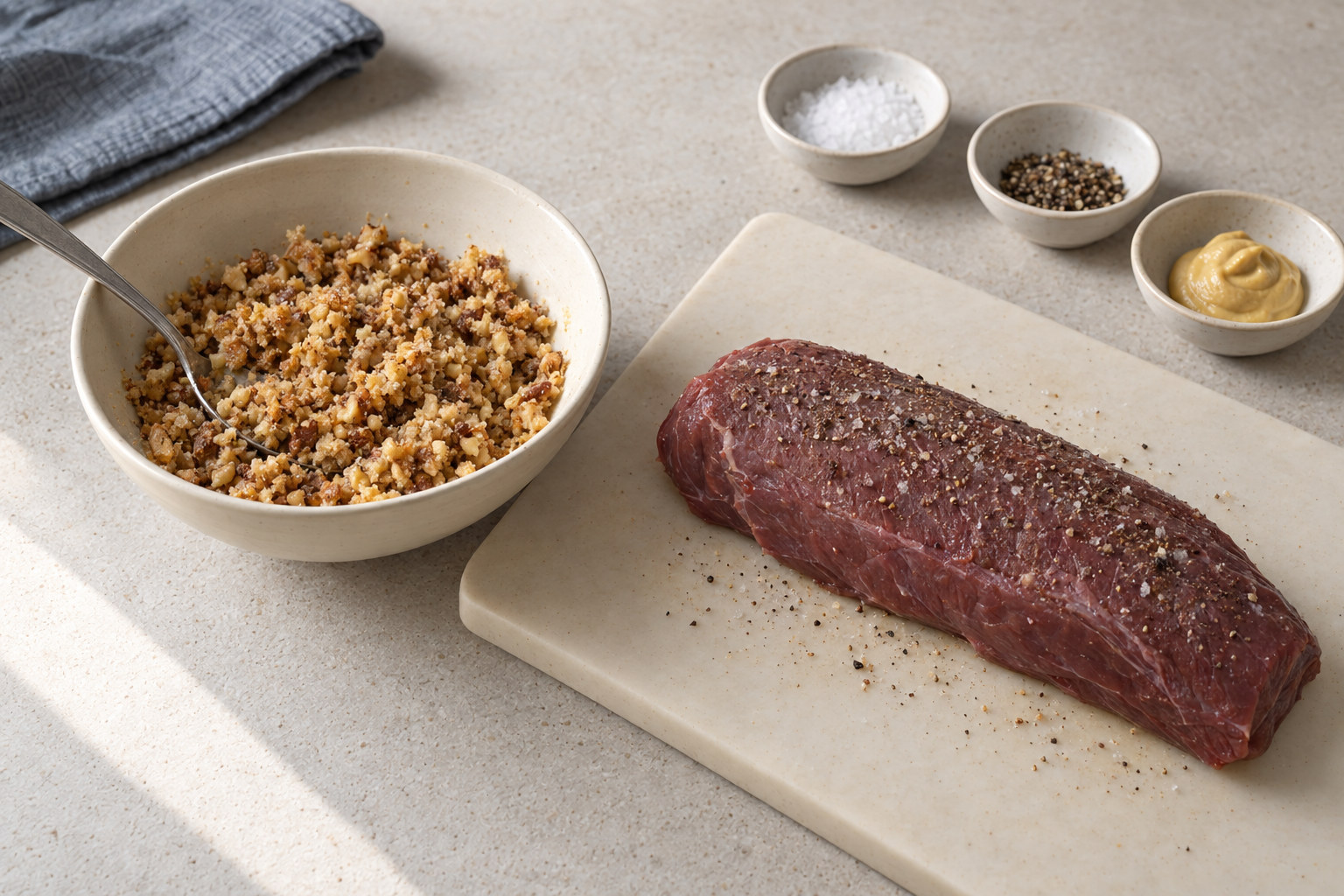
In a dry frying pan, we toast the finely chopped nuts and breadcrumbs for 2–3 minutes, stirring constantly, until lightly golden. We tip them into a bowl, leave to cool for 5 minutes and stir in the softened butter for the crust. We pat dry a single piece of loin weighing 360 g and measuring 4–5 cm thick and season with the measured salt and pepper. We set the mustard aside.
The meat is dry and of a similar thickness along its length.
Make the mashed potatoes
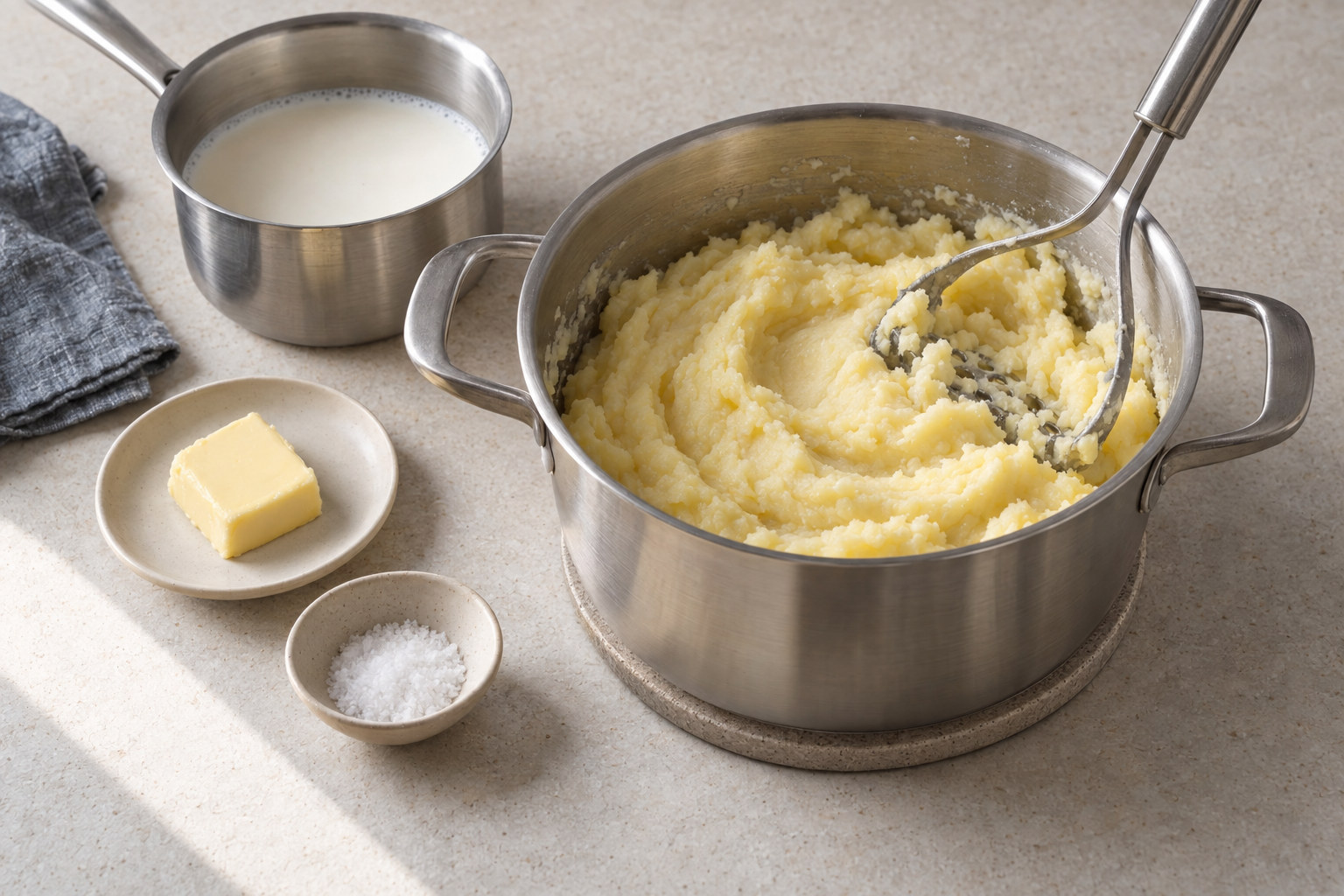
We peel the potatoes, cut them into 3 cm pieces, cover with water and bring to a gentle boil. We cook for 18–22 minutes until tender, then drain, let them steam dry for 2 minutes and pass through a potato ricer. We warm the milk in a small saucepan. We stir the butter, all the warm milk and the salt for the mash into the potatoes by hand. We cover the mash and keep it briefly over the lowest heat, stirring occasionally. We do not blend it.
The mash is smooth and soft, not gluey or elastic.
Pan-fry the pears
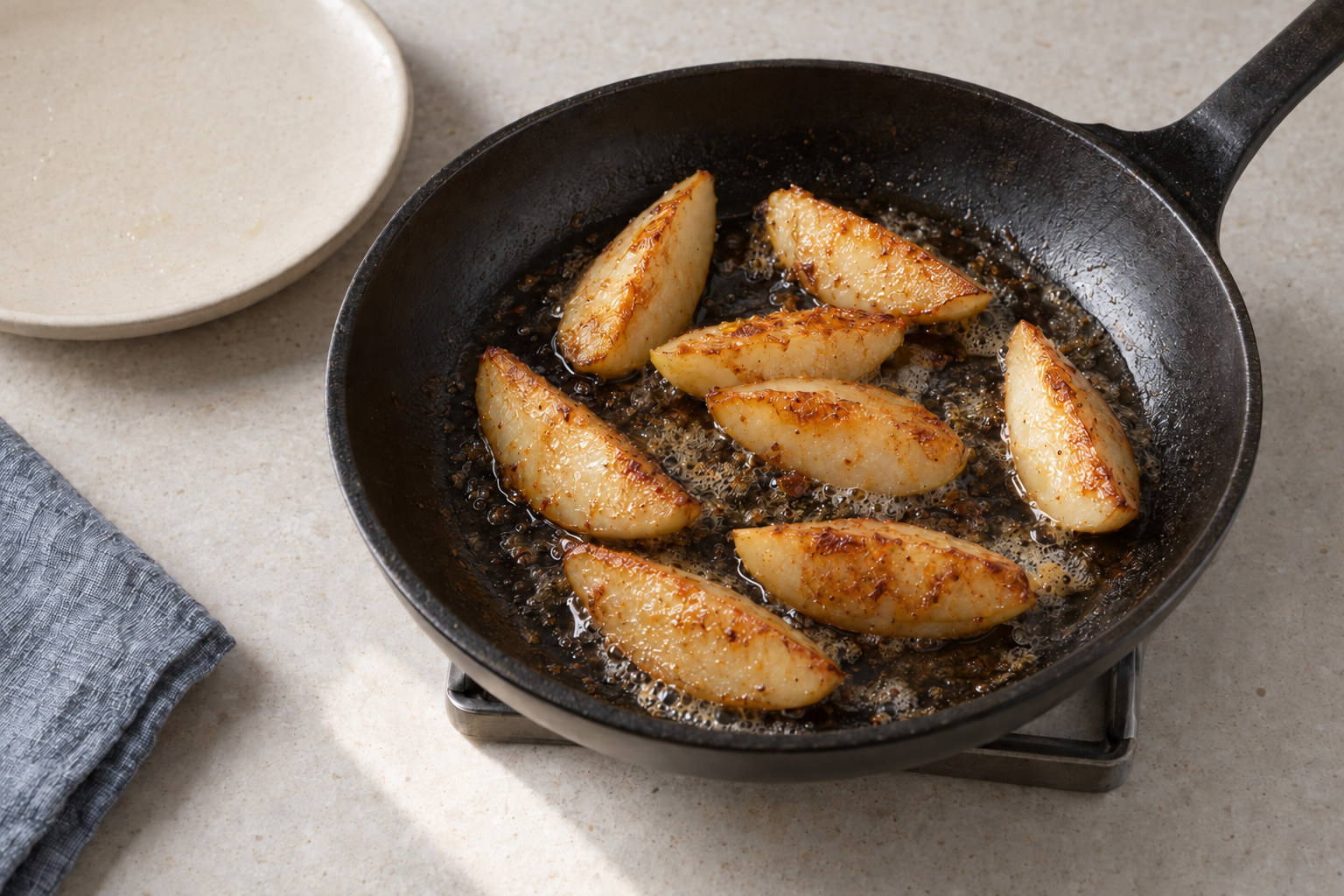
We core the pear and cut it into eighths about 2 cm thick. We arrange them in a frying pan with the butter for the pears and cook over a medium heat for 3–4 minutes on each cut side. We do this towards the end of the meat’s roasting time.
The surface is golden and the pear holds its shape rather than turning mushy.
Sear the loin and finish it in the oven
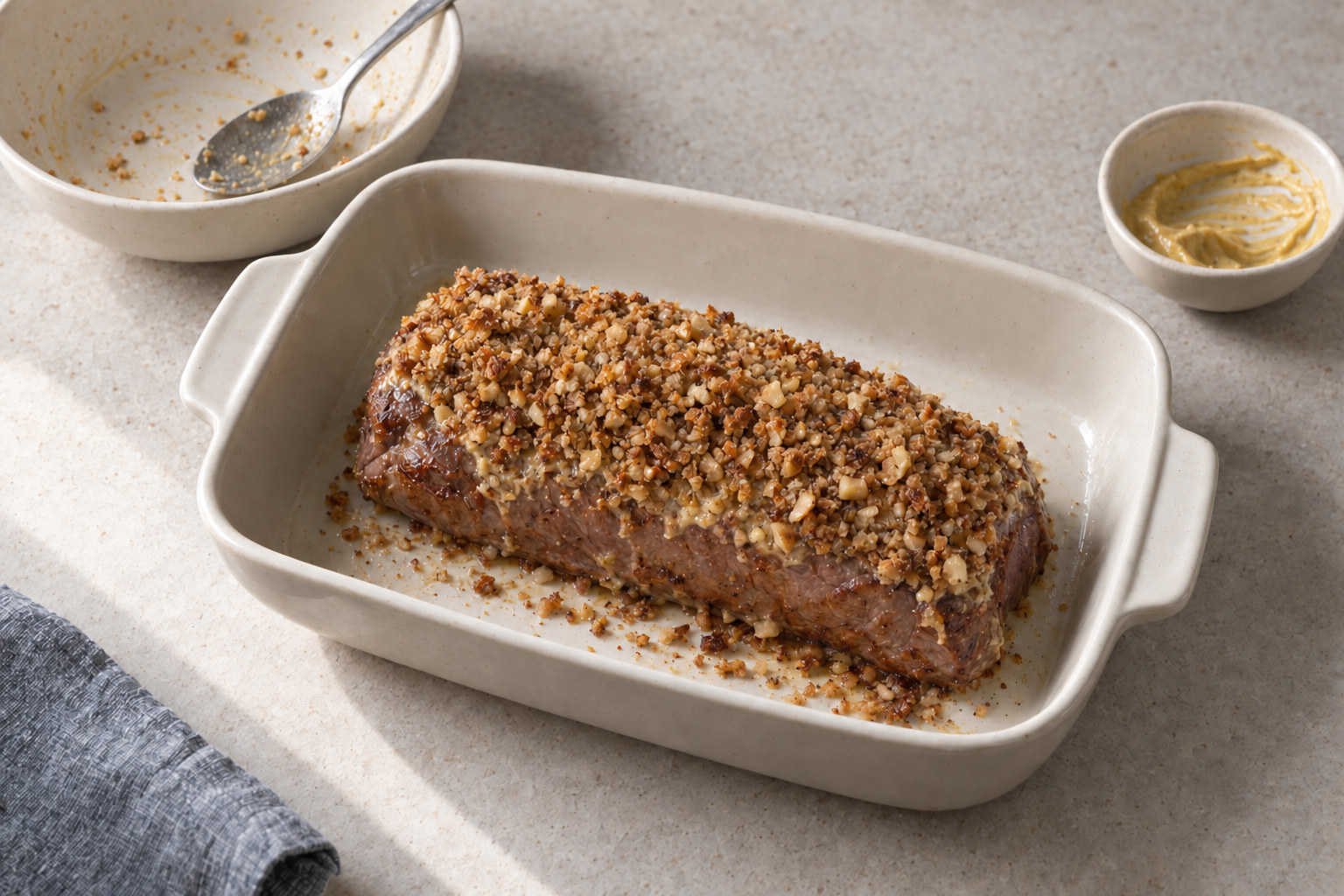
We preheat the oven to 150 °C, conventional heat. We heat the oil in a frying pan and sear the meat on all sides for a total of 5–6 minutes. We transfer it to the roasting tin. We spread mustard over the top and upper sides, then press on all the crust mixture in an even layer no more than 5 mm thick. We roast for about 20–35 minutes; from minute 15, we use a thin probe to check that the centre reaches at least 70 °C and stays at that temperature for 2 minutes. We leave the meat to rest for 5 minutes without covering the crust tightly.
The surface is browned, but we judge doneness with the thermometer probe, not by how pink the meat is or the colour of its juices.
Finish the sauce
We pour all the stock into the pan used for the meat, loosen the browned bits from the base and simmer for 4–6 minutes. We keep it over the lowest heat and add the juices from the rested meat at the end.
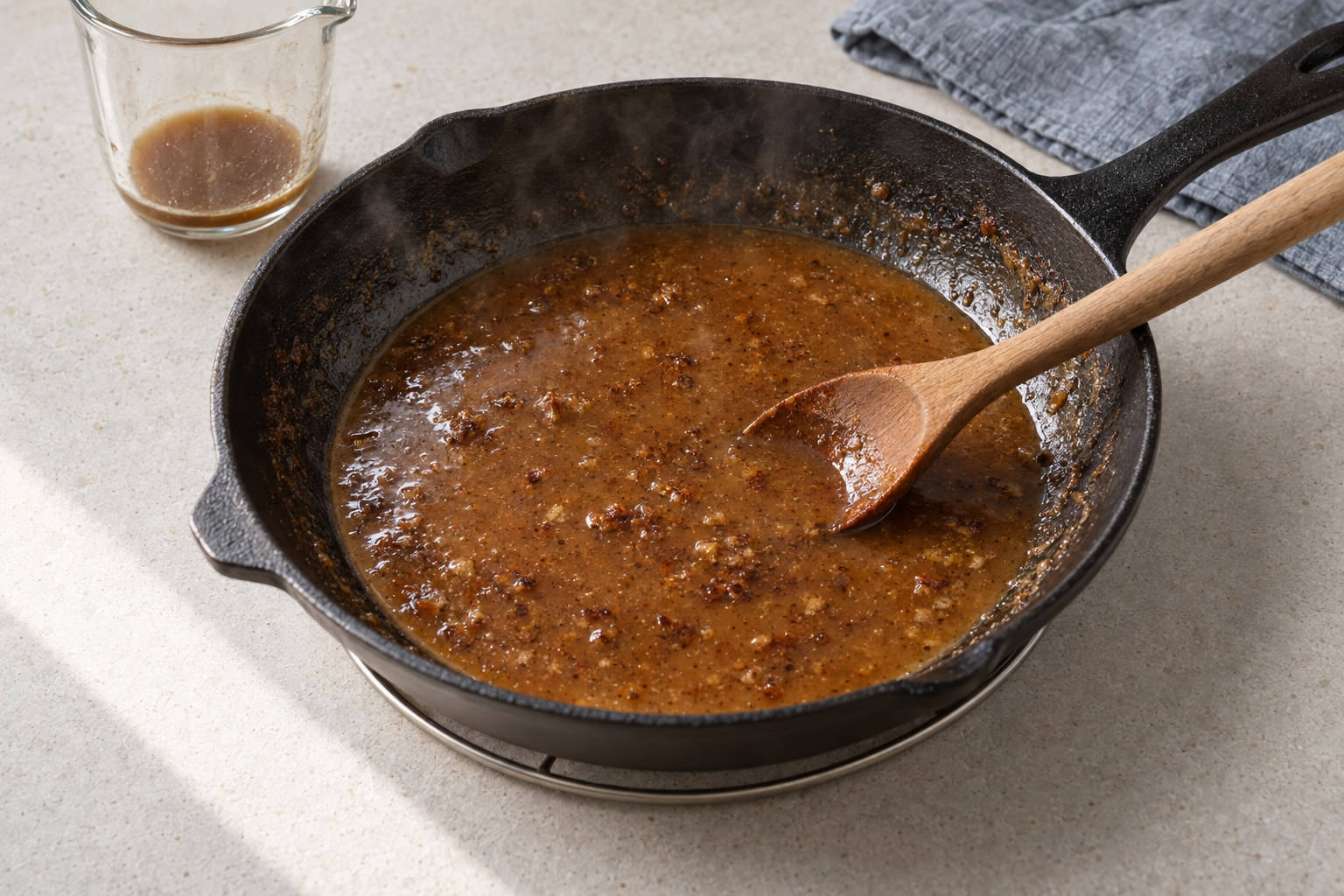
Plate up and serve
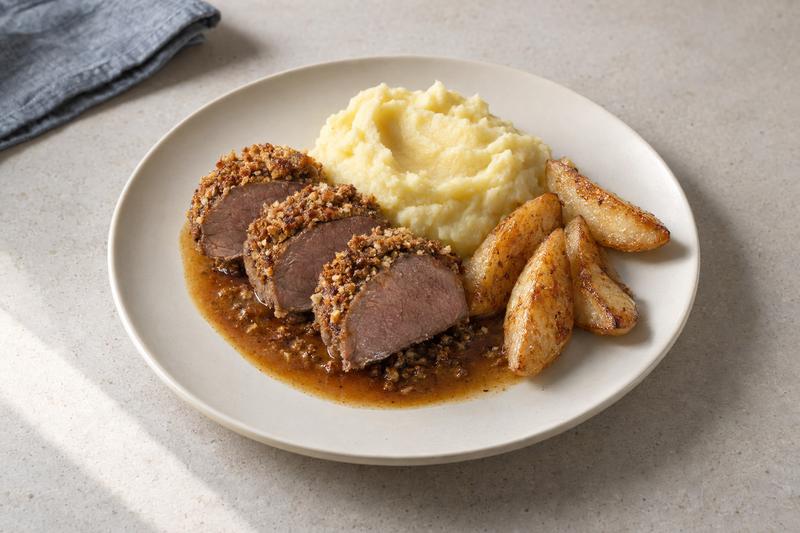
We carefully cut the loin into 2 cm slices and divide between 2 warm plates. We add all the mash and pears, then pour the sauce beneath the meat to keep the walnut crust from becoming soggy.
Tips from our kitchen
- We toast the nuts and breadcrumbs first, so the crust develops its aroma before the gentle roasting.
- We pour the sauce underneath the meat slices, not over the crust.
What to watch out for
- We pat the meat dry and sear it in the stated batches, so every piece sits directly on the base of the pan.
- We adjust the roasting time according to the temperature measured inside the loin. We do not cover the crust tightly while the meat rests.
How we serve it
- We slice the loin carefully so the crust stays on the slices. We pour the sauce beneath the meat and add the mash and pan-fried pears alongside.
During preparation
- We keep raw meat and the utensils used for it separate from cooked food. We measure the temperature in the centre of the meat with a clean, thin probe.
Our inspiration
Pears and walnuts are easy to picture in an autumn tart, but their flavours work beautifully with game too: the pear brings sweetness, the nuts aroma and crunch. In this combination of our own, we add a little Dijon mustard and smooth mashed potatoes. We might make this loin for Sunday lunch when we want to try something new alongside a familiar side dish.
Similar recipes
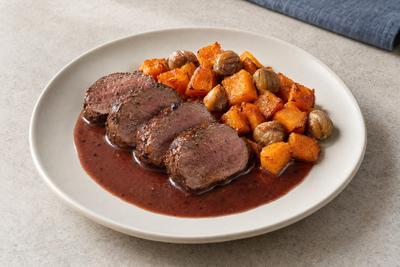
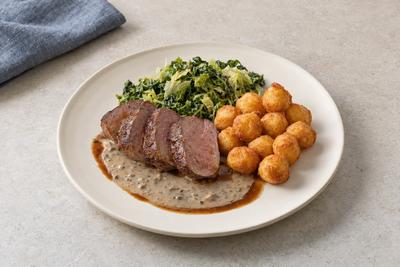
Recipe for 4 people
Step-by-step method
Before we start
We first dry-toast the nuts and breadcrumbs for the crust. We start cooking the potatoes just before searing the meat. We pan-fry the pears during the last 8 minutes of roasting; we keep the mash covered over the lowest heat and stir it several times. We make the sauce while the meat roasts and finish it as the meat rests.
Prepare the crust and meat
In a dry frying pan, we toast the finely chopped nuts and breadcrumbs for 2–3 minutes, stirring constantly, until lightly golden. We tip them into a bowl, leave to cool for 5 minutes and stir in the softened butter for the crust. We pat dry two pieces of loin weighing 360 g each and measuring 4–5 cm thick and season with the measured salt and pepper. We set the mustard aside.
The meat is dry and the pieces are of a similar thickness.
Make the mashed potatoes
We peel the potatoes, cut them into 3 cm pieces, cover with water and bring to a gentle boil. We cook for 18–22 minutes until tender, then drain, let them steam dry for 2 minutes and pass through a potato ricer. We warm the milk in a small saucepan. We stir the butter, all the warm milk and the salt for the mash into the potatoes by hand. We cover the mash and keep it briefly over the lowest heat, stirring occasionally. We do not blend it.
The mash is smooth and soft, not gluey or elastic.
Pan-fry the pears
We core the pear and cut it into eighths about 2 cm thick. We arrange them in a frying pan with the butter for the pears and cook over a medium heat for 3–4 minutes on each cut side. We do this towards the end of the meat’s roasting time.
The surface is golden and the pear holds its shape rather than turning mushy.
Sear the loin and finish it in the oven
We preheat the oven to 150 °C, conventional heat. We heat the oil in a frying pan and sear each piece separately on all sides for 5–6 minutes, dividing the oil between the two. We transfer them to the roasting tin. We spread mustard over the top and upper sides, then press on all the crust mixture in an even layer no more than 5 mm thick. We roast for about 20–35 minutes; from minute 15, we use a thin probe to check that both pieces of meat reach at least 70 °C in the centre and stay at that temperature for 2 minutes. We leave the meat to rest for 5 minutes without covering the crust tightly.
The surface is browned, but we judge doneness with the thermometer probe, not by how pink the meat is or the colour of its juices.
Finish the sauce
We pour all the stock into the pan used for the meat, loosen the browned bits from the base and simmer for 4–6 minutes. We keep it over the lowest heat and add the juices from the rested meat at the end.
Plate up and serve
We carefully cut the loin into 2 cm slices and divide between 4 warm plates. We add all the mash and pears, then pour the sauce beneath the meat to keep the walnut crust from becoming soggy.