
Italian-inspired cuisine · Italian-inspired cuisine
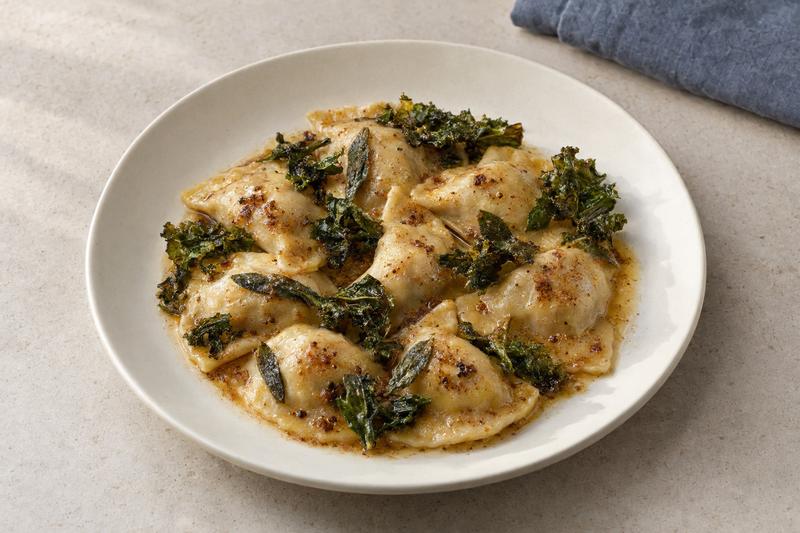
Potato ravioli with wild boar shoulder, sage butter and crisp savoy cabbage
Tender potato parcels hold wild boar shoulder that we slowly braise with wine and vegetables. Nutty sage butter brings its aroma to the plate, alongside light savoy cabbage crisps. Cooking and filling the ravioli by hand takes time, but each one brings together soft dough and a rich meat filling in a single bite.
The time includes 160–200 minutes of braising, 60–120 minutes of chilling the filling and filling the ravioli by hand.
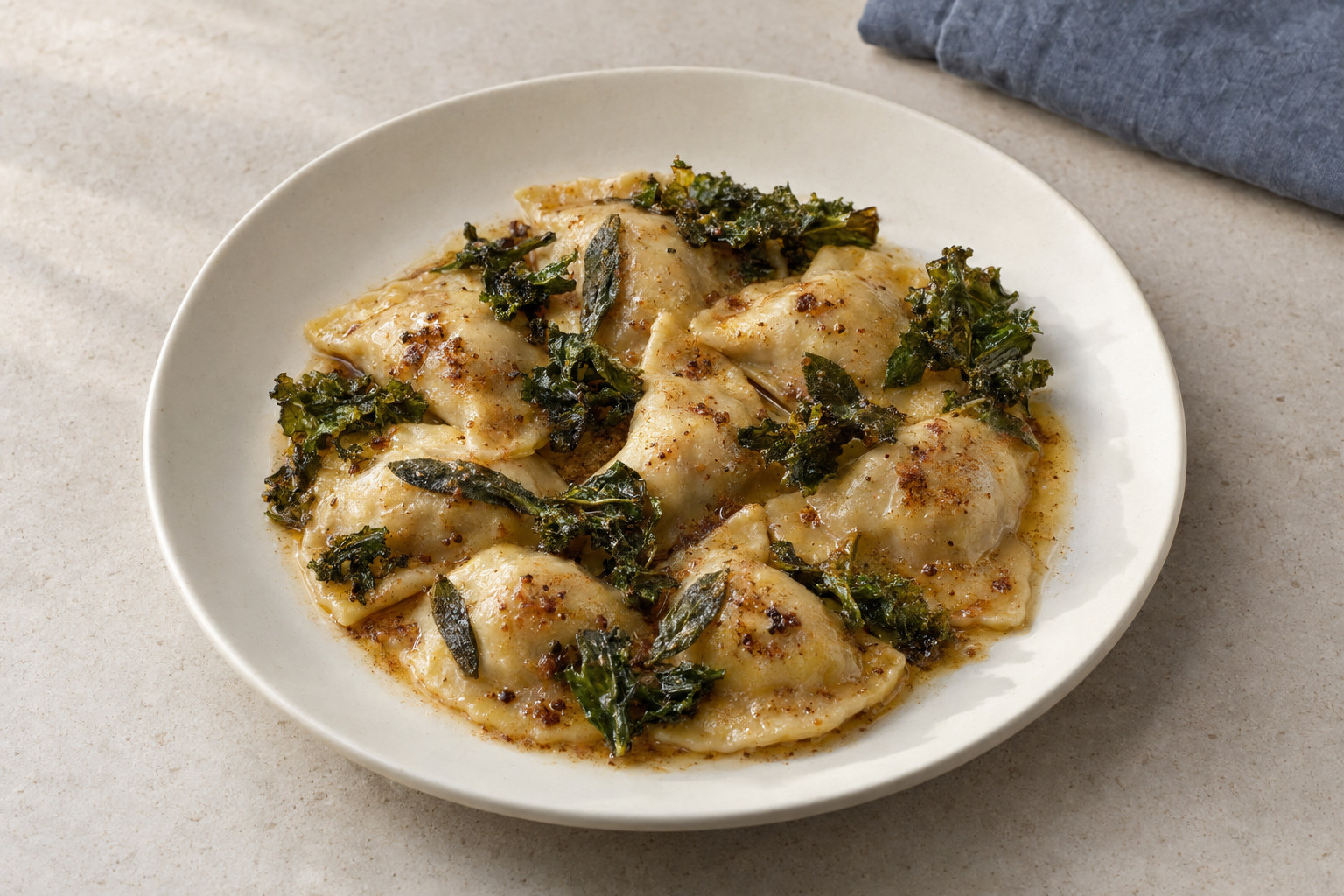
A rich wild boar filling in tender potato dough, nutty sage butter and delicate, crisp savoy cabbage leaves.
Step-by-step method
What you will need
- heavy 20 cm / 3 litre pan with a lid
- 2 wide pans for the parcels, each 5 litres with an internal diameter of at least 26 cm
- 2 litre pan for the potatoes, potato ricer, rolling pin
- 20 × 15 cm metal cooling dish, cold-water bath with sealed ice packs
- 1 baking tray, 40 × 30 cm, for the cabbage and 2 floured trays, 40 × 30 cm, for the parcels
- two small saucepans, 12–14 cm, for the butter and any remaining ragù, 4 hob rings and an oven
- kitchen scales, probe thermometer and separate chopping boards for meat and vegetables
Before we start
While the meat braises, we prepare the potatoes and savoy cabbage. We then chill the meat filling. We make the potato dough just before filling. We cook all the parcels at the same time in two wide pans. On the other hob rings, we reheat any remaining ragù and make the sage butter.
Cut and brown the shoulder
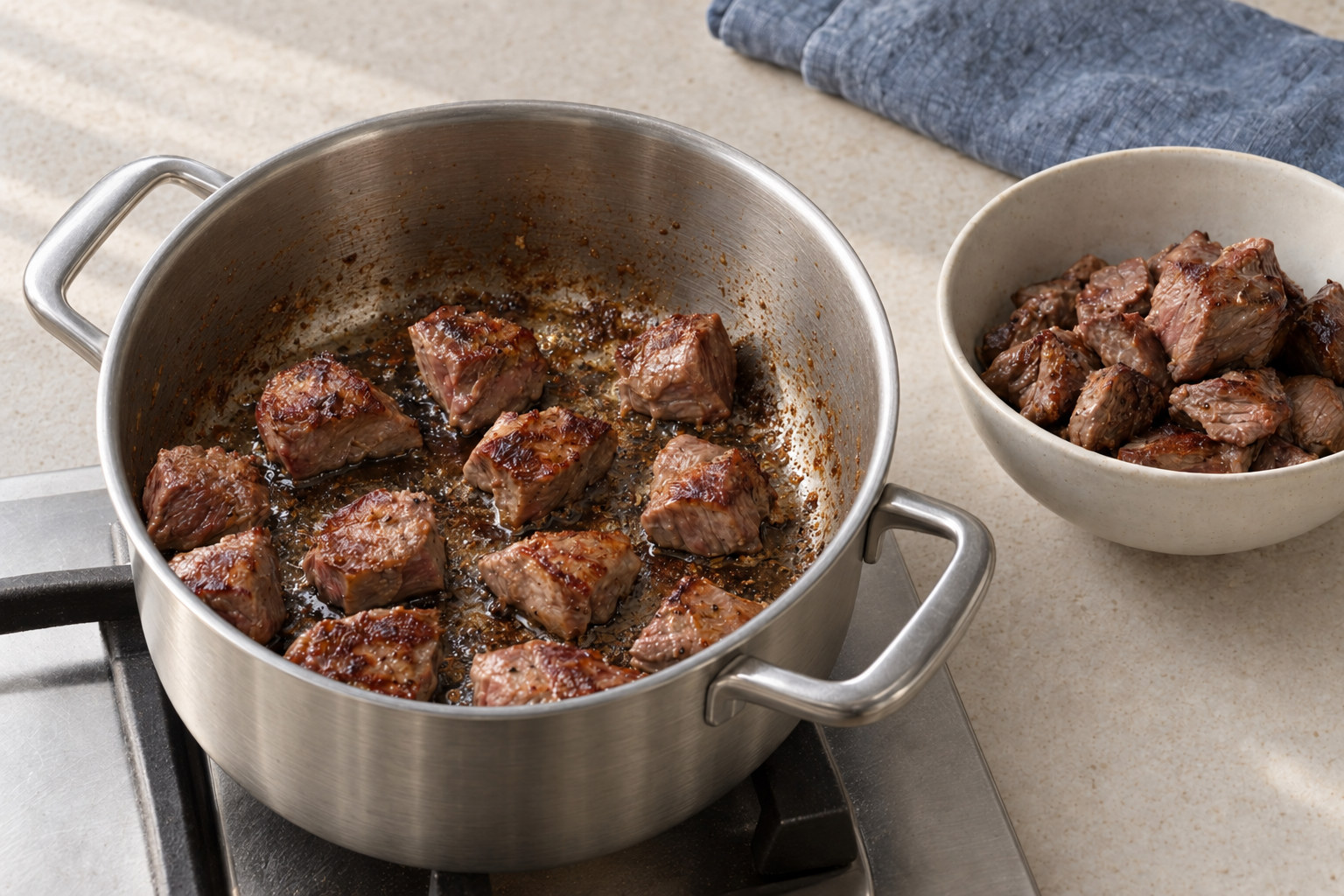
We cut the trimmed meat into 3 cm cubes and pat it dry. We season it with most of the salt set aside for the meat and the pepper. We reserve 1 tsp of the oil for the onion and divide the rest between 2 batches of meat, each about 180 g. We brown each batch for 4–6 minutes over a medium-high heat, transferring the browned meat to a bowl.
We brown the meat in a single layer so liquid does not pool in the pan.
Prepare the vegetable base
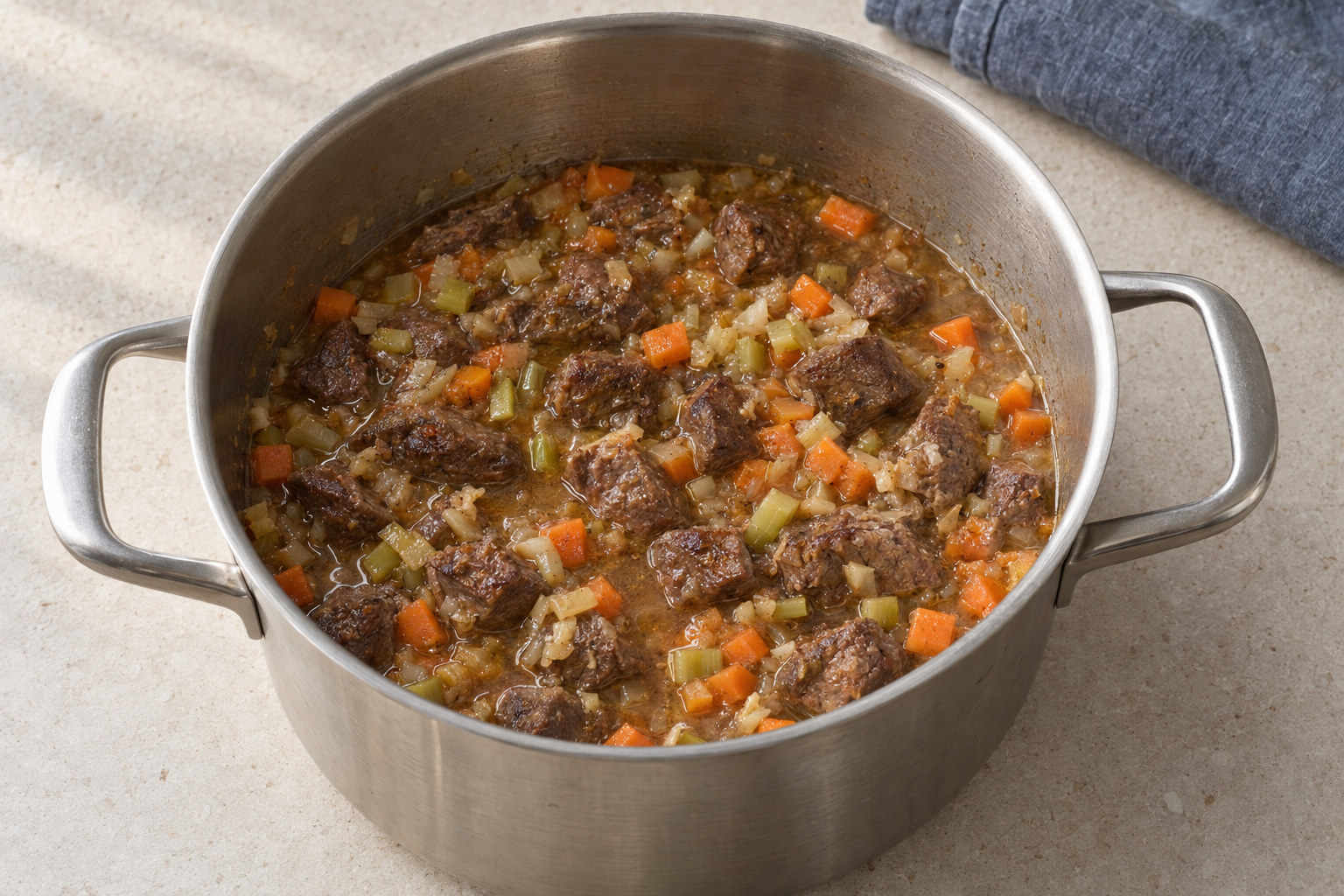
We peel and finely chop the onion and garlic. We peel the carrot, wash the celery and cut both into small dice. We cook the onion in the reserved oil for 7–9 minutes, stirring. We add the carrot, celery and garlic and cook for 3 minutes. We pour in the wine and let it reduce for 3 minutes. We return the meat and any juices from the bowl to the pan and add all the stock.
Braise the shoulder until tender
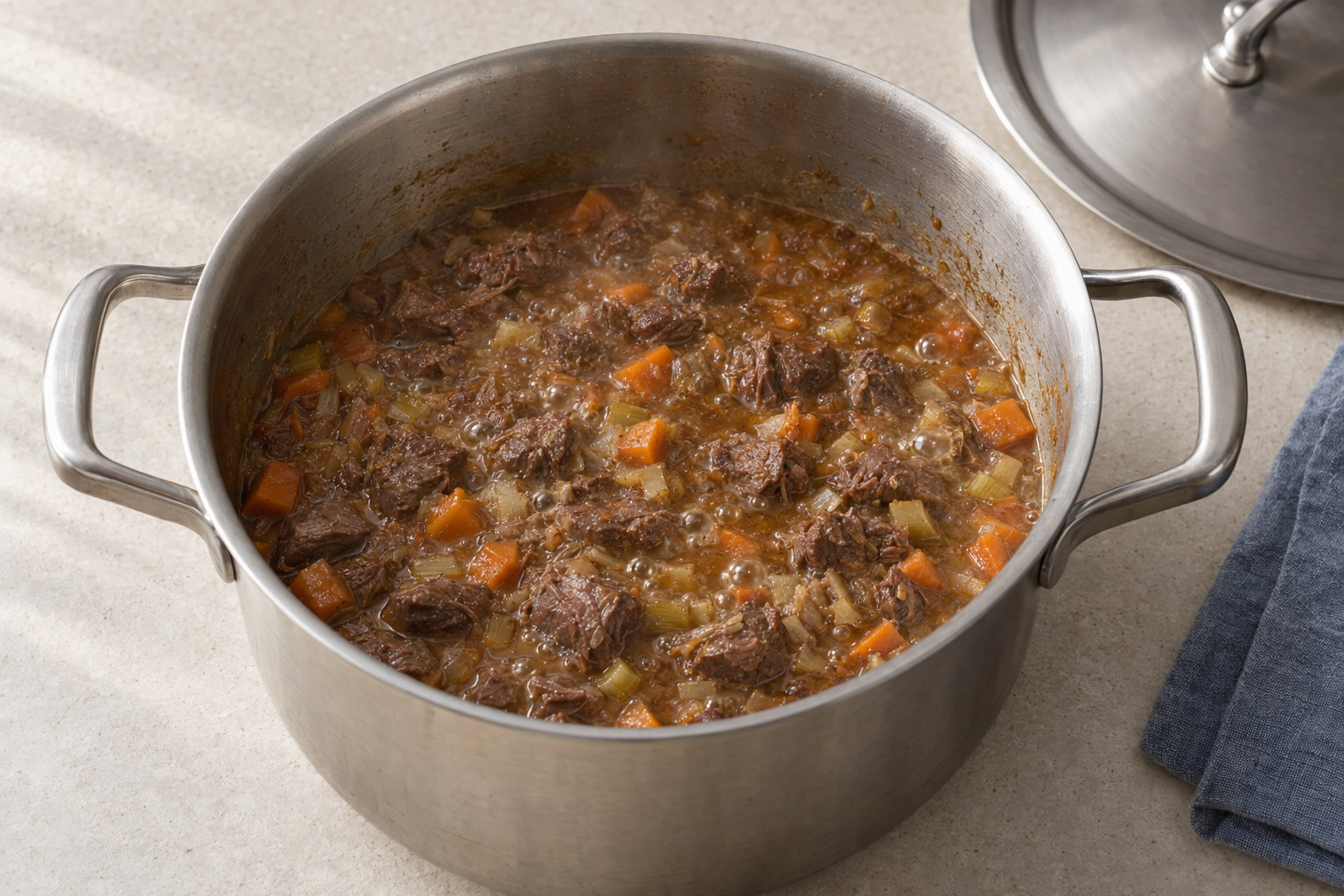
We bring the liquid to a very gentle simmer, cover tightly and braise for about 160–200 minutes. Every 35 minutes, we stir and check the bottom of the pan. If the juices are drying out, we add water in 30 ml increments. We check that the thickest pieces have reached at least 74 °C. We also test a cube with a fork: it should pull apart easily into fibres. If the meat is still tough, we keep braising it.
The juices should barely bubble. A rolling boil will not tenderise the meat any faster.
Cook the potatoes and bake the savoy cabbage
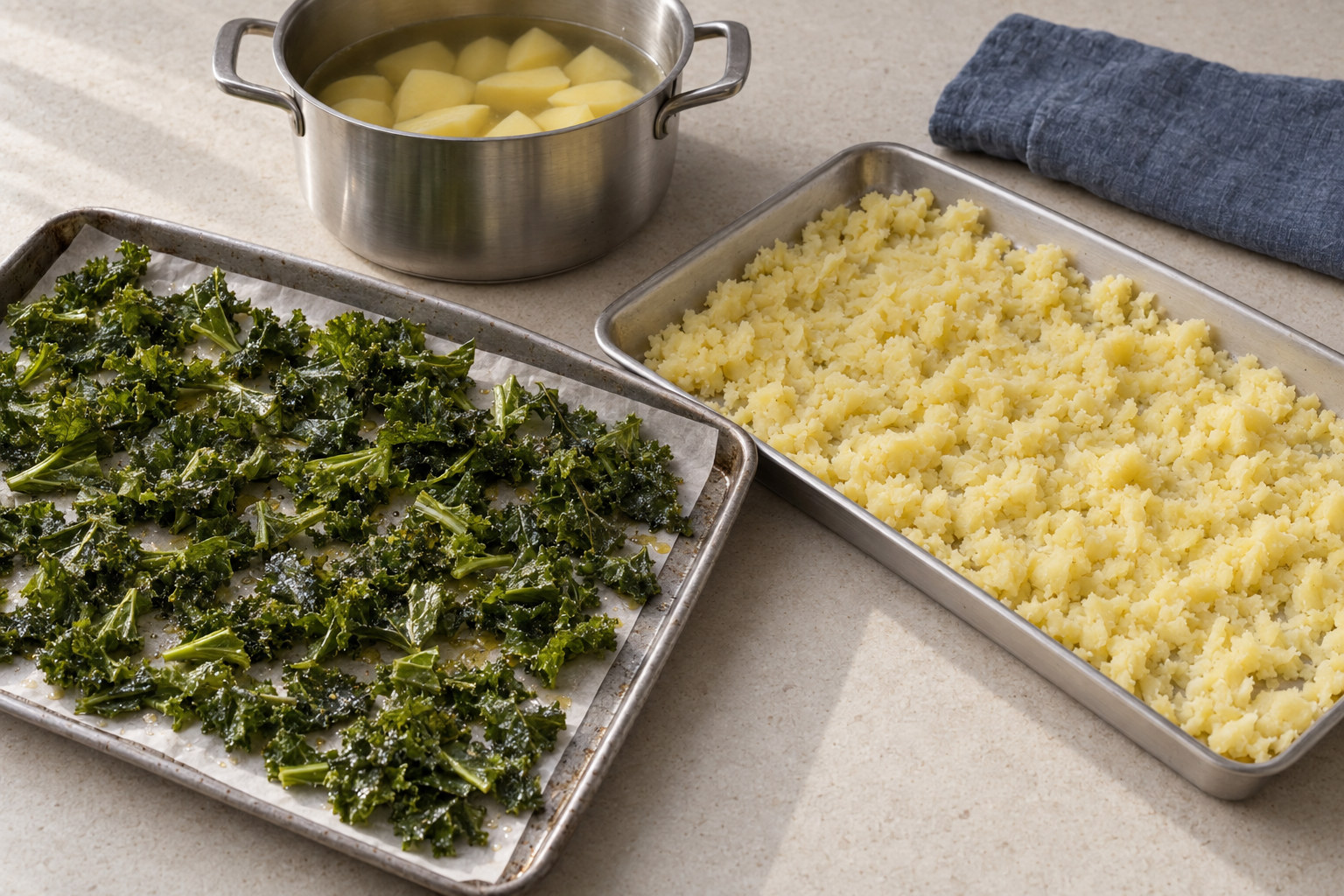
We peel the potatoes and cut them into 3 cm pieces. We cover them with water and cook for 15–20 minutes until tender. We drain them, discard the water and let the potatoes steam dry in the warm empty pan for a minute. We pass them through a ricer onto a wide tray in a thin layer. After 20 minutes, we put them in the fridge and leave them to chill. We wash the cabbage leaves, cut out the tough ribs and dry the leaves thoroughly. We tear them into pieces, toss with the oil and salt for the cabbage and spread in a single layer on 1 baking tray. We bake at 140 °C for 12–18 minutes. We leave them to cool uncovered.
The potatoes should not release water, and the cabbage should be crisp without burning.
Prepare and chill the filling
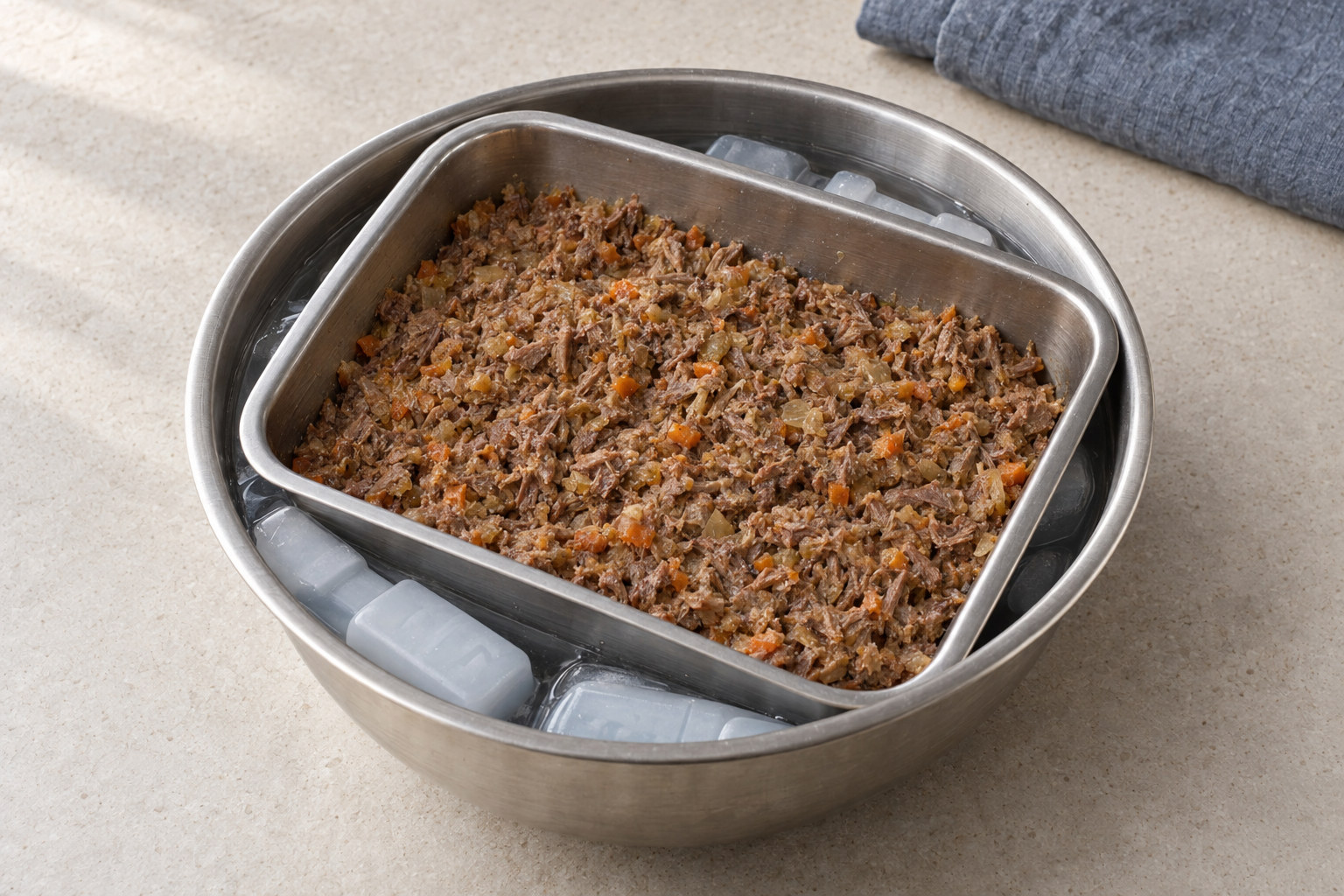
We chop the meat into pieces no larger than 3 mm. We mash the vegetables in the cooking juices and simmer uncovered for 10–15 minutes, until any loose liquid has evaporated. We stir in the meat, taste and add all or some of the remaining salt. We spread the filling in a metal dish in a layer no more than 2 cm deep. We cool it for 30 minutes in a bath of cold water and sealed ice packs. We keep the water below the rim of the dish so it cannot get into the food, and replace it when it warms up. We then move the dish to a fridge at no more than 5 °C and chill until the centre of the filling reaches that same temperature, usually another 30–90 minutes.
A teaspoon of filling holds its shape in a small mound without releasing juices.
Fill the potato parcels
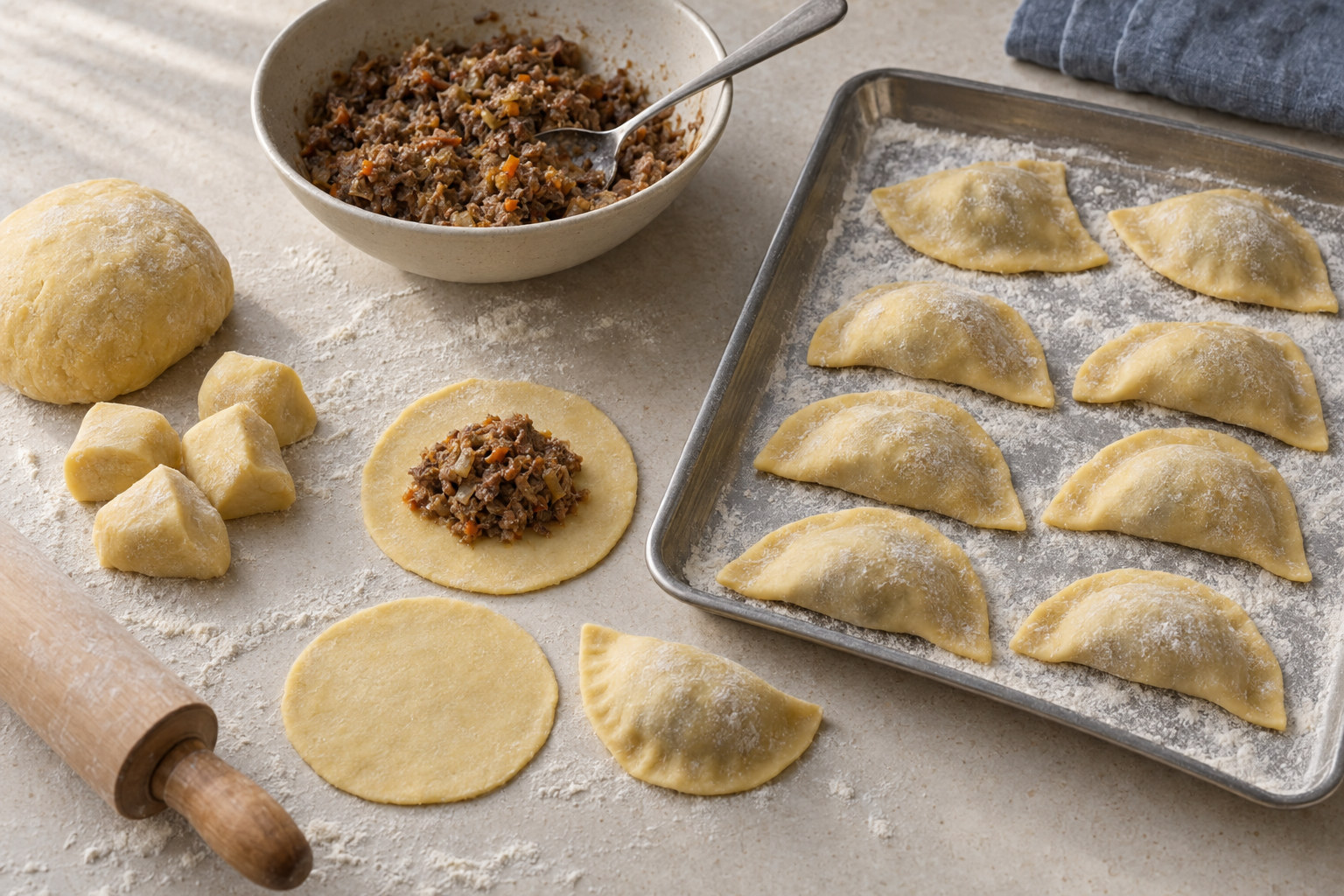
We quickly bring the cold potatoes together with the semi-coarse flour, starch, egg yolk and salt to form a dough. We knead only until combined, for no more than a minute. We divide all the dough into 16 equal pieces. Using the dusting flour, we roll each one into a circle about 10 cm across and 3–4 mm thick. We put a heaped teaspoon of filling on each circle and flatten it slightly, leaving the edge clear. We fold it into a half-moon, press out the air and seal it firmly. We leave a clean seam about 1 cm wide around each parcel. We keep the remaining filling in the fridge until serving. We place the parcels a little apart on floured trays. We put each completed tray straight in the fridge. As soon as we have shaped the whole batch, we start cooking.
Cook all the parcels
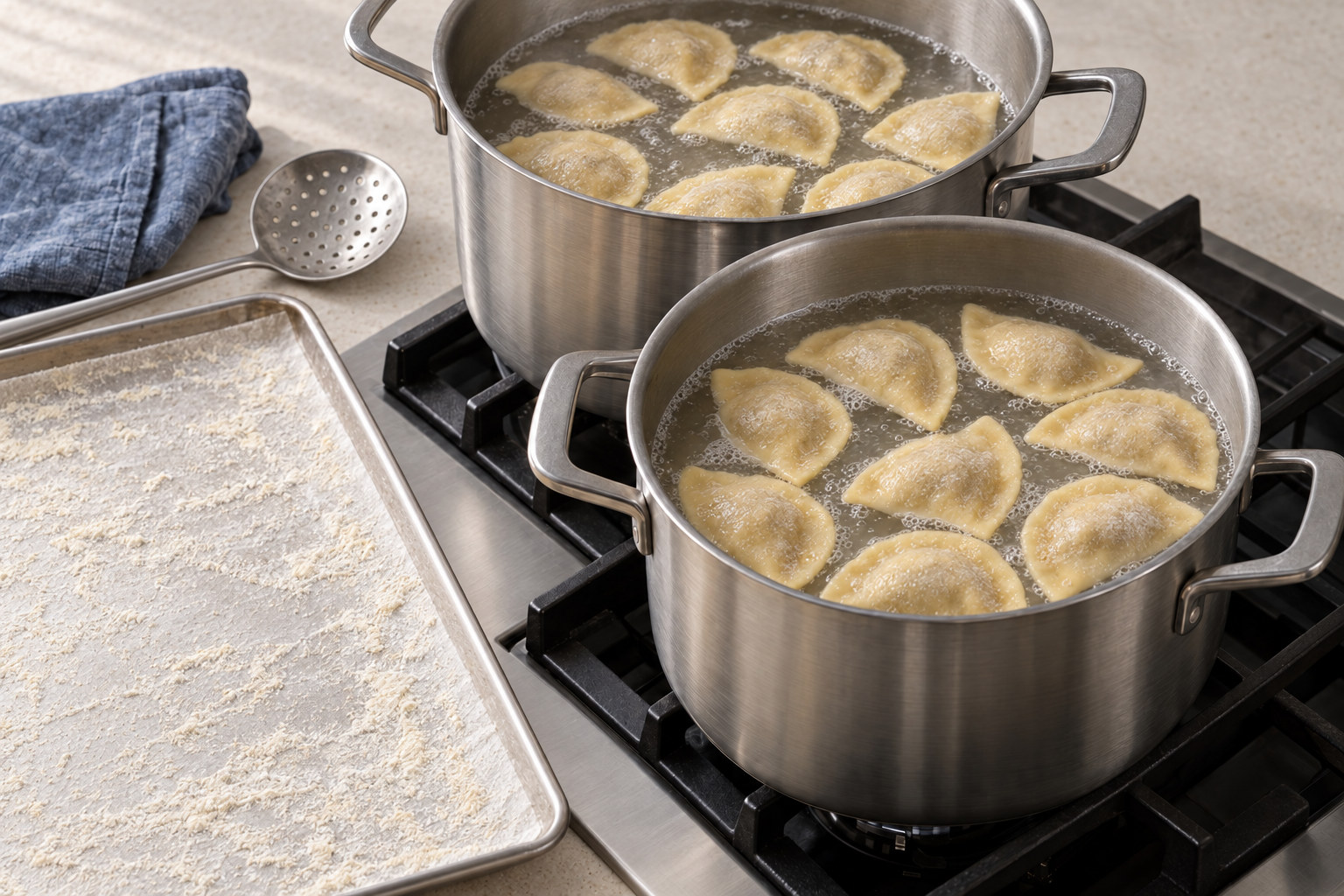
We pour 3 litres of water into each of the two pans and add half the salt for the ravioli to each. We bring it to the boil. We gently lower 8 parcels into each pan and carefully lift them off the bottom. Once the water returns to a gentle simmer, we cook them for about 6–9 minutes. We check that the filling in the largest parcel has reached at least 74 °C and that the dough is cooked through with no raw floury layer. If needed, we cook for another 1–2 minutes. Meanwhile, we reheat any remaining filling from the fridge once in a small saucepan, stirring, to at least 74 °C.
The parcels need plenty of room in the water and must not stick to the bottom.
Finish with sage butter and serve
While the parcels cook, we heat the butter with the sage for 3–4 minutes. As soon as the milk solids turn golden and smell nutty, we pour the butter into a clean bowl to stop it burning. We place eight drained parcels on each plate, adding any reheated leftover ragù underneath. We spoon over the sage butter, add the cabbage crisps and serve.
We add the cabbage crisps only once the food is on the plate, so they stay crisp.
Tips from our kitchen
- We make the potato dough just before filling and knead it only briefly.
- We reduce the filling until thick, then chill it. Loose juices or a warm filling would weaken the dough and its seams.
What to watch out for
- We keep the edges of the dough clean. As we seal the parcels, we press out any air and firmly pinch the seams so the filling stays inside during cooking.
How we serve it
- We place eight parcels on each plate, spoon over the sage butter and add the savoy cabbage crisps. We serve any remaining ragù, reheated, underneath the parcels.
During preparation
- We check the temperature in the thickest pieces with a clean probe. We keep raw meat, its chopping board and used utensils separate from cooked food.
Our inspiration
The dough for these ravioli is closer to potato gnocchi than to traditional egg pasta. Brief mixing keeps potato dough tender; longer kneading would make it no lighter. The soft casing lets the slowly braised wild boar stand out, giving us a different bite from a conventional egg-pasta raviolo.
Similar recipes
Recipe for 4 people
Step-by-step method
Before we start
While the meat braises, we prepare the potatoes and savoy cabbage. We then chill the meat filling. We make the potato dough just before filling. We cook all the parcels at the same time in two wide pans. On the other hob rings, we reheat any remaining ragù and make the sage butter.
Cut and brown the shoulder
We cut the trimmed meat into 3 cm cubes and pat it dry. We season it with most of the salt set aside for the meat and the pepper. We reserve 1 tsp of the oil for the onion and divide the rest between 4 batches of meat, each about 180 g. We brown each batch for 4–6 minutes over a medium-high heat, transferring the browned meat to a bowl.
We brown the meat in a single layer so liquid does not pool in the pan.
Prepare the vegetable base
We peel and finely chop the onion and garlic. We peel the carrot, wash the celery and cut both into small dice. We cook the onion in the reserved oil for 7–9 minutes, stirring. We add the carrot, celery and garlic and cook for 3 minutes. We pour in the wine and let it reduce for 3 minutes. We return the meat and any juices from the bowl to the pan and add all the stock.
Braise the shoulder until tender
We bring the liquid to a very gentle simmer, cover tightly and braise for about 160–200 minutes. Every 35 minutes, we stir and check the bottom of the pan. If the juices are drying out, we add water in 30 ml increments. We check that the thickest pieces have reached at least 74 °C. We also test a cube with a fork: it should pull apart easily into fibres. If the meat is still tough, we keep braising it.
The juices should barely bubble. A rolling boil will not tenderise the meat any faster.
Cook the potatoes and bake the savoy cabbage
We peel the potatoes and cut them into 3 cm pieces. We cover them with water and cook for 15–20 minutes until tender. We drain them, discard the water and let the potatoes steam dry in the warm empty pan for a minute. We pass them through a ricer onto a wide tray in a thin layer. After 20 minutes, we put them in the fridge and leave them to chill. We wash the cabbage leaves, cut out the tough ribs and dry the leaves thoroughly. We tear them into pieces, toss with the oil and salt for the cabbage and spread in a single layer on 2 baking trays. We bake at 140 °C for 12–18 minutes. Halfway through, we swap the positions of the two trays. We leave them to cool uncovered.
The potatoes should not release water, and the cabbage should be crisp without burning.
Prepare and chill the filling
We chop the meat into pieces no larger than 3 mm. We mash the vegetables in the cooking juices and simmer uncovered for 10–15 minutes, until any loose liquid has evaporated. We stir in the meat, taste and add all or some of the remaining salt. We spread the filling in a metal dish in a layer no more than 2 cm deep. We cool it for 30 minutes in a bath of cold water and sealed ice packs. We keep the water below the rim of the dish so it cannot get into the food, and replace it when it warms up. We then move the dish to a fridge at no more than 5 °C and chill until the centre of the filling reaches that same temperature, usually another 30–90 minutes.
A teaspoon of filling holds its shape in a small mound without releasing juices.
Fill the potato parcels
We quickly bring the cold potatoes together with the semi-coarse flour, starch, egg yolks and salt to form a dough. We knead only until combined, for no more than a minute. We divide all the dough into 32 equal pieces. Using the dusting flour, we roll each one into a circle about 10 cm across and 3–4 mm thick. We put a heaped teaspoon of filling on each circle and flatten it slightly, leaving the edge clear. We fold it into a half-moon, press out the air and seal it firmly. We leave a clean seam about 1 cm wide around each parcel. We keep the remaining filling in the fridge until serving. We place the parcels a little apart on floured trays. We put each completed tray straight in the fridge. As soon as we have shaped the whole batch, we start cooking.
Cook all the parcels
We pour 4.5 litres of water into each of the two pans and add half the salt for the ravioli to each. We bring it to the boil. We gently lower 16 parcels into each pan and carefully lift them off the bottom. Once the water returns to a gentle simmer, we cook them for about 6–9 minutes. We check that the filling in the largest parcel has reached at least 74 °C and that the dough is cooked through with no raw floury layer. If needed, we cook for another 1–2 minutes. Meanwhile, we reheat any remaining filling from the fridge once in a small saucepan, stirring, to at least 74 °C.
The parcels need plenty of room in the water and must not stick to the bottom.
Finish with sage butter and serve
While the parcels cook, we heat the butter with the sage for 3–4 minutes. As soon as the milk solids turn golden and smell nutty, we pour the butter into a clean bowl to stop it burning. We place eight drained parcels on each plate, adding any reheated leftover ragù underneath. We spoon over the sage butter, add the cabbage crisps and serve.
We add the cabbage crisps only once the food is on the plate, so they stay crisp.