
Yucatán, Mexico · Yucatán, Mexico
Wild boar cochinita pibil on homemade sopes with pickled onion
Orange, lime and achiote spice paste give the pulled wild boar shoulder its distinctive aroma and colour. We pile the meat onto homemade corn sopes with browned bases and soft centres, then top with pickled onion and coriander. We set aside an unhurried day for marinating, slow roasting and shaping the sopes by hand.
The time includes 2 hours of marinating, 3–4 hours of roasting, shaping the sopes and both stages of pan-cooking.
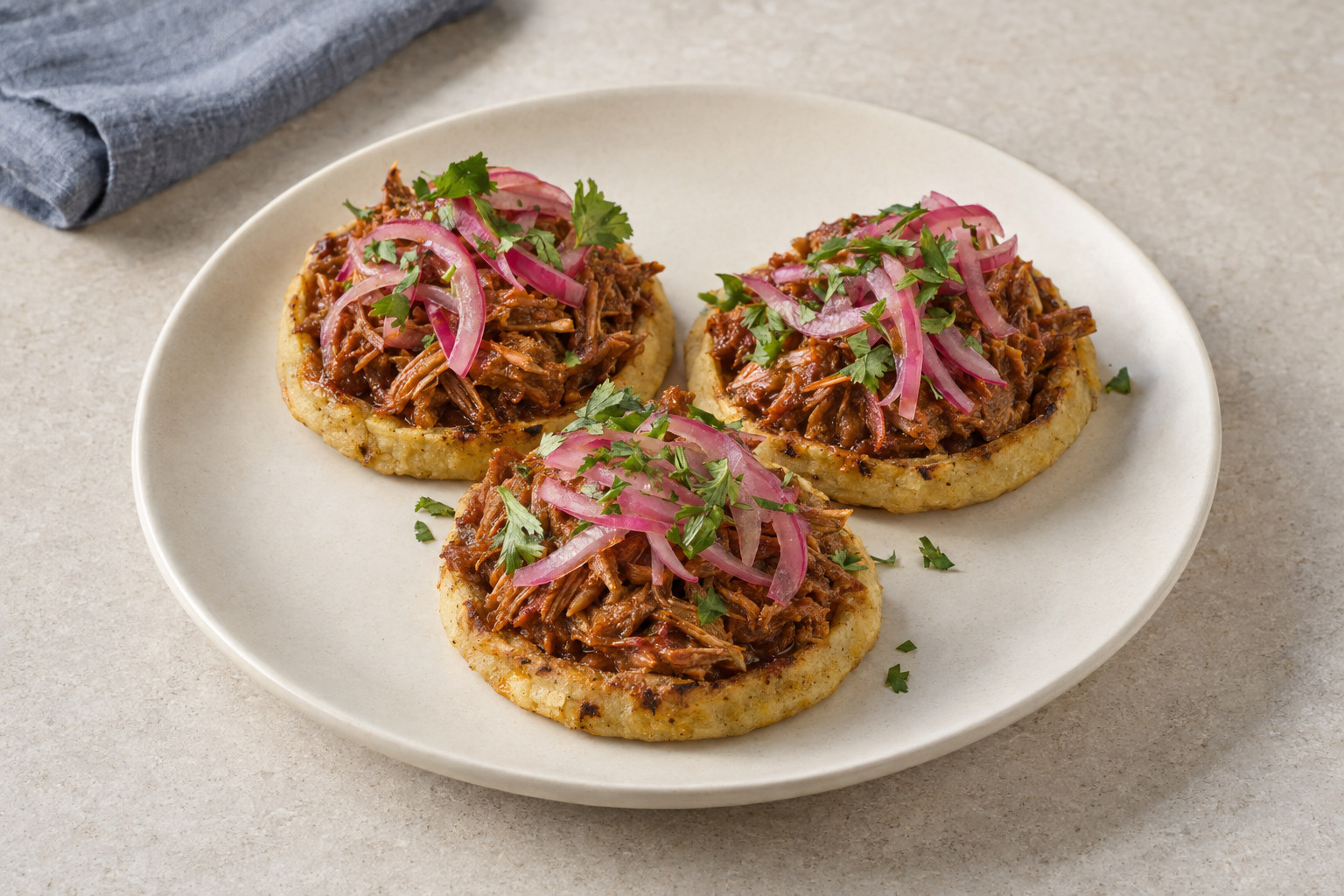
Earthy achiote, fruity citrus acidity and sweet orange infuse the tender meat; the corn cakes are complemented by the sharp tang of the onion.
Step-by-step method
What you will need
- 22 × 16 cm roasting dish with a tight-fitting lid, baking paper and oven
- 26 cm frying pan with a flat base at least 22 cm across
- rolling pin or press, two sheets of food-safe plastic and a clean tea towel
- 1 litre saucepan for the pickling liquid and 1.5 litre saucepan for the cooking juices
- baking tray with a wire rack
- 2 hob rings
- kitchen scales, probe thermometer and separate chopping boards for meat and vegetables
Before we start
While the meat marinates, we pickle the onion and put it in the fridge. We start shaping the sopes approximately 50 minutes before the meat is expected to finish roasting. We first cook all the cakes in a dry pan, then shred the meat and reduce the cooking juices. We finish the sopes in oil just before serving.
Marinate the shoulder in citrus
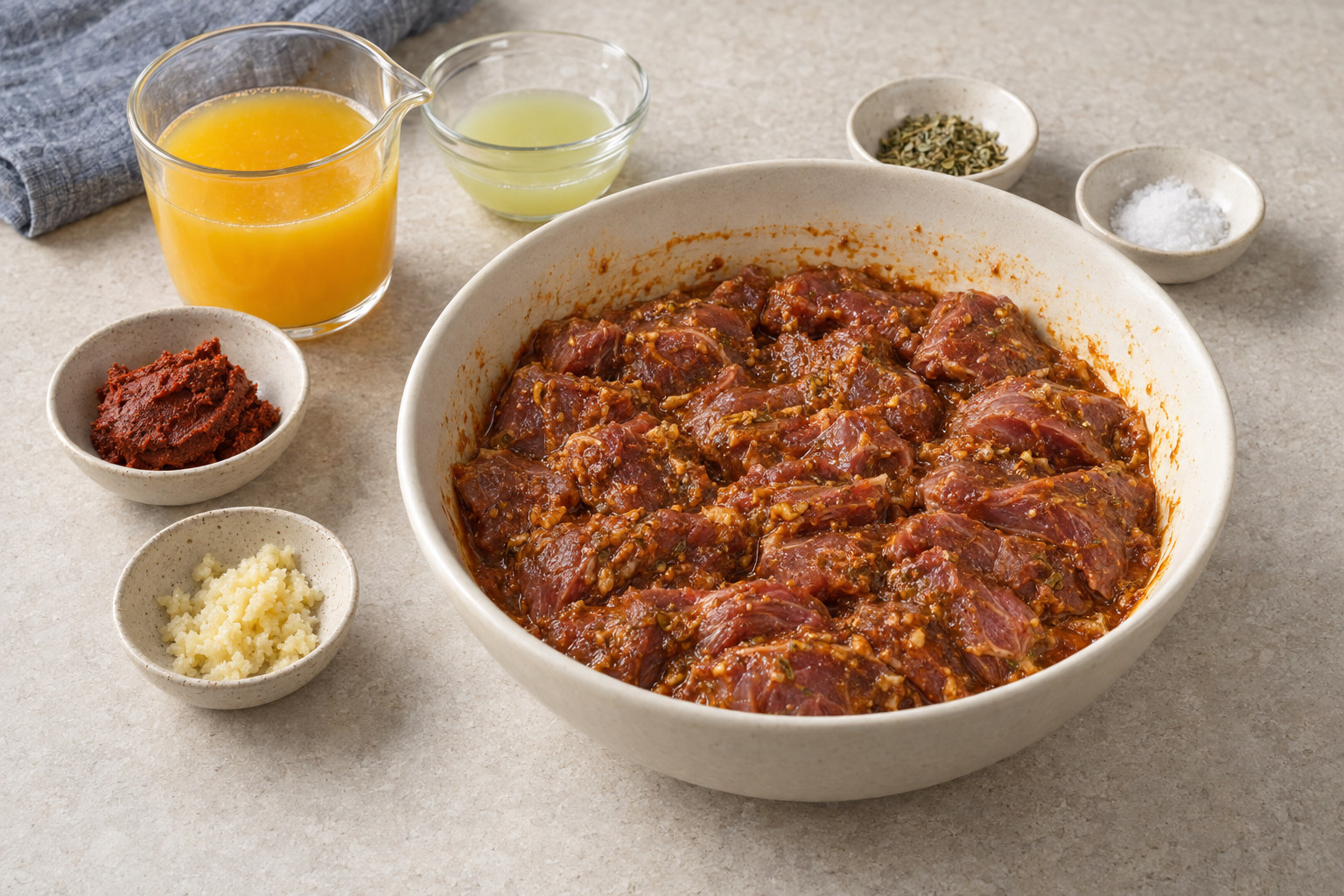
We cut the trimmed shoulder into 4–5 cm pieces. We peel and crush the garlic. We mix the achiote with the orange juice, the lime juice for the marinade, garlic, oregano and the salt for the meat. We coat the meat in the mixture, cover and marinate in the fridge for 2 hours. We use achiote paste without added chilli to keep the flavour milder.
Slow-roast the shoulder
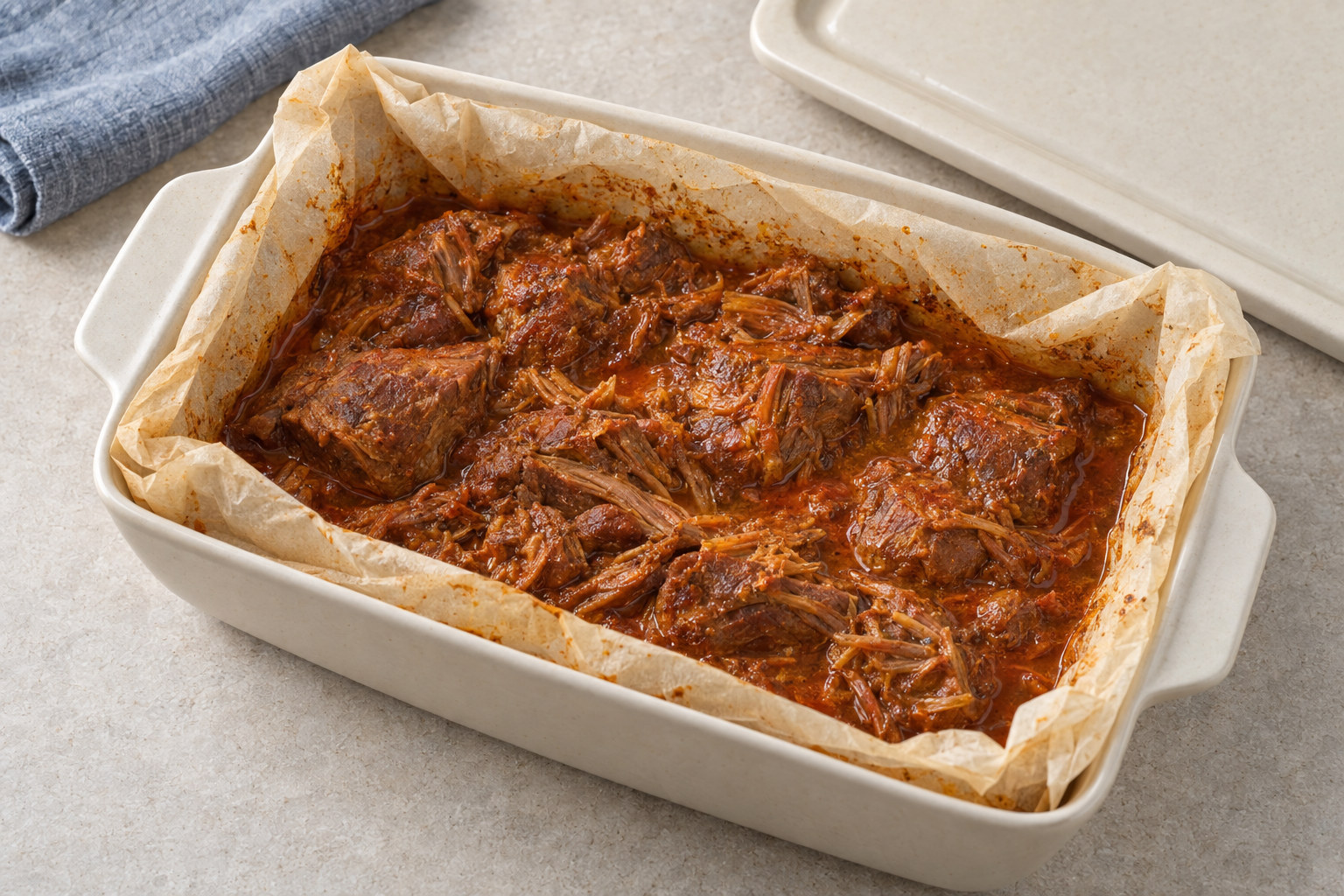
We put the meat, all the remaining marinade and 90 ml of the water for the meat into a roasting dish lined with baking paper. We fold the paper in over the meat and cover tightly. We roast at 160 °C for 3–4 hours. After 2 hours, then every 30 minutes, we check the cooking liquid. If it is drying out, we add 30 ml water from the reserve. The cooked meat reaches at least 74 °C in the centre and shreds easily with a fork.
We always keep a little liquid in the roasting dish so the marinade does not burn.
Pickle the red onion
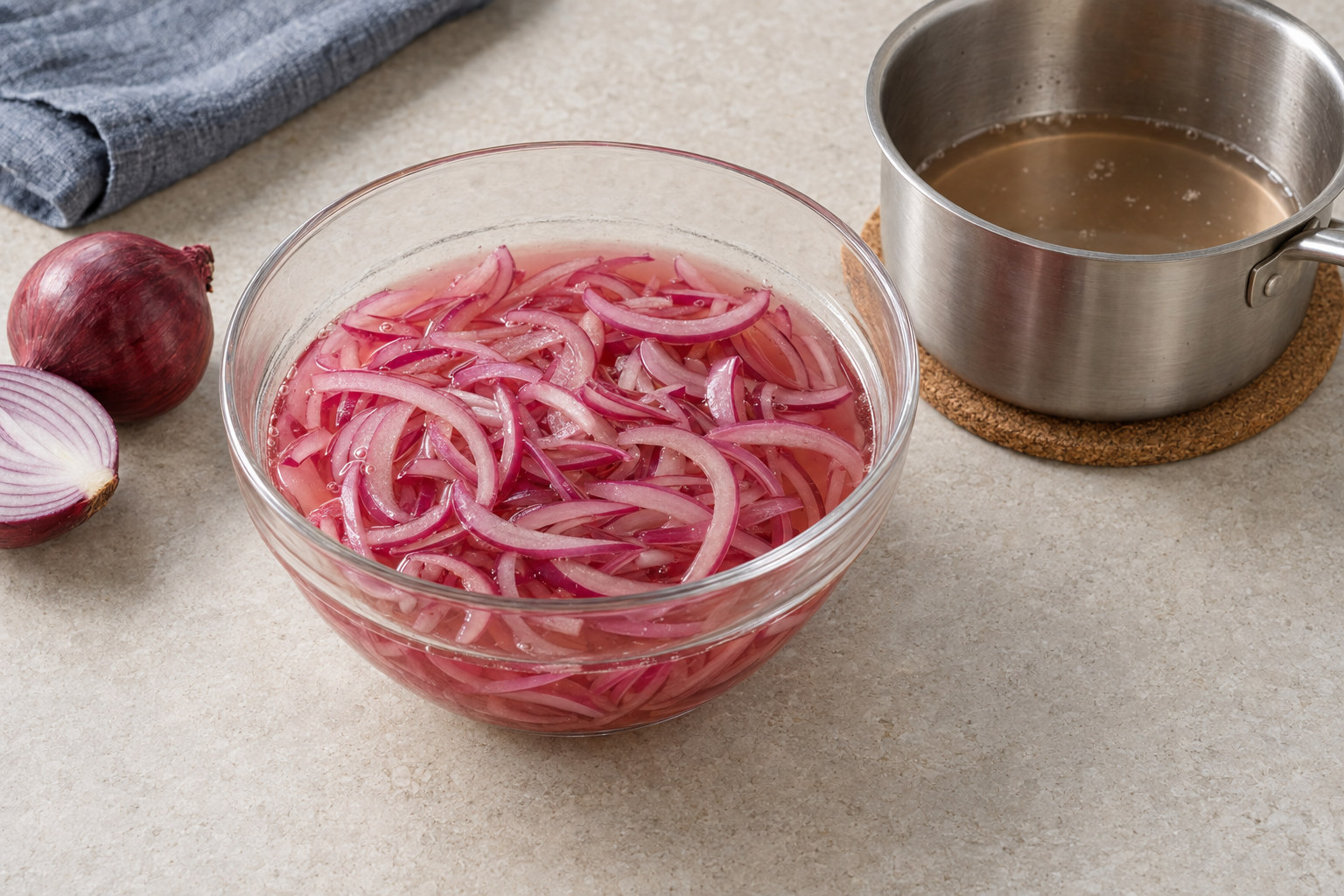
We peel the onion and slice it into thin half-moons. We boil the water, vinegar, sugar and salt for the pickling liquid for a minute and pour it over the onion. We leave it to cool and steep for 20 minutes, then refrigerate. We drain before serving and do not add the pickling liquid to the dish.
The onion is tangy and still crisp.
Make the dough and shape the sopes
We mix the masa harina with the salt for the sopes and most of the warm water for the sopes. We add the remaining warm water as we knead, keeping the reserve water aside for now. We cover and leave to rest for 15 minutes. The dough should hold together without cracking. We add the reserve water a teaspoon at a time as needed. We divide the dough into 6 equal balls. We press them between plastic sheets into cakes about 8 cm across and 7–8 mm thick. We remove the plastic before cooking.
We shape the sopes as thick little cakes, not thin tortillas.
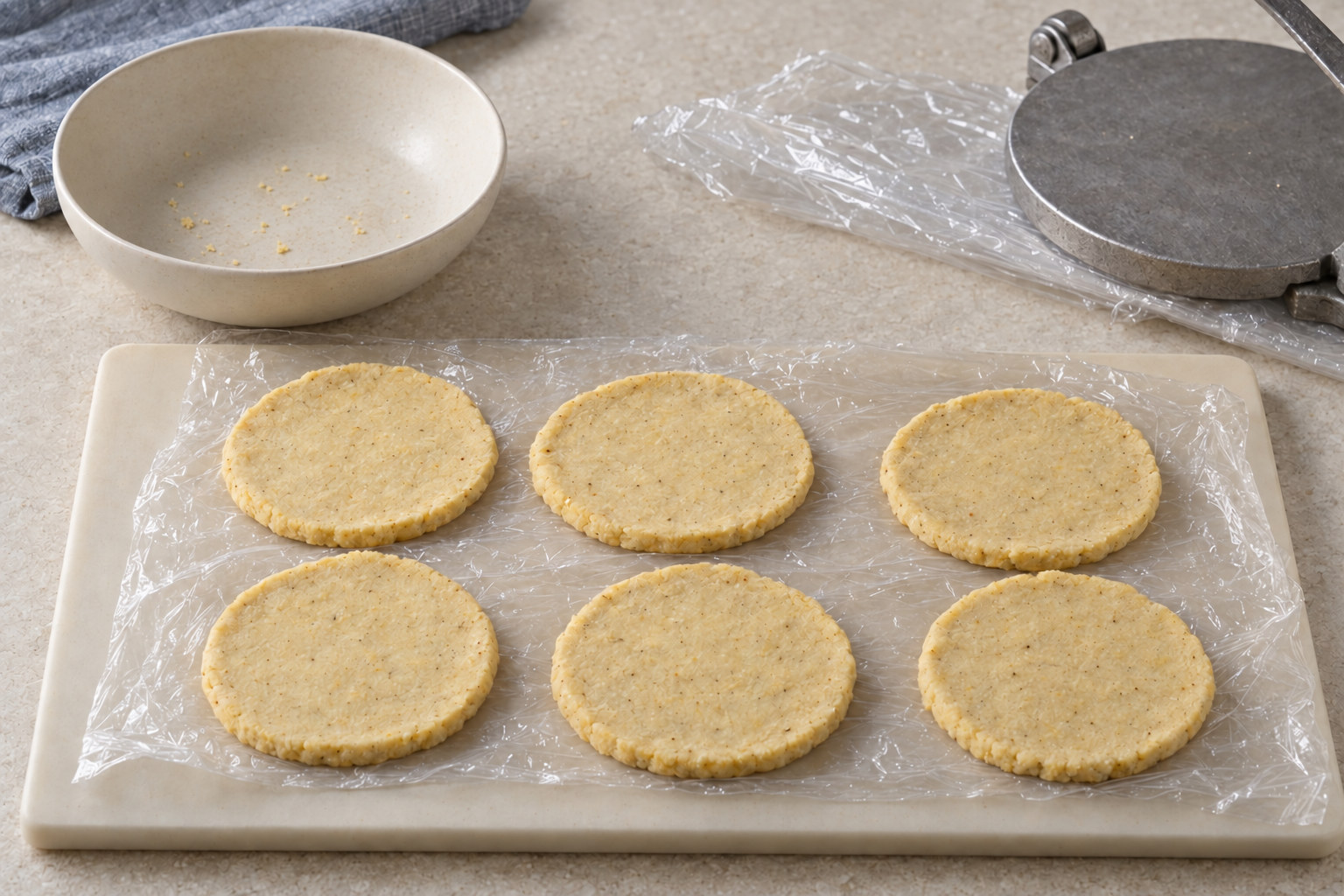
Part-cook the cakes and shape the rims
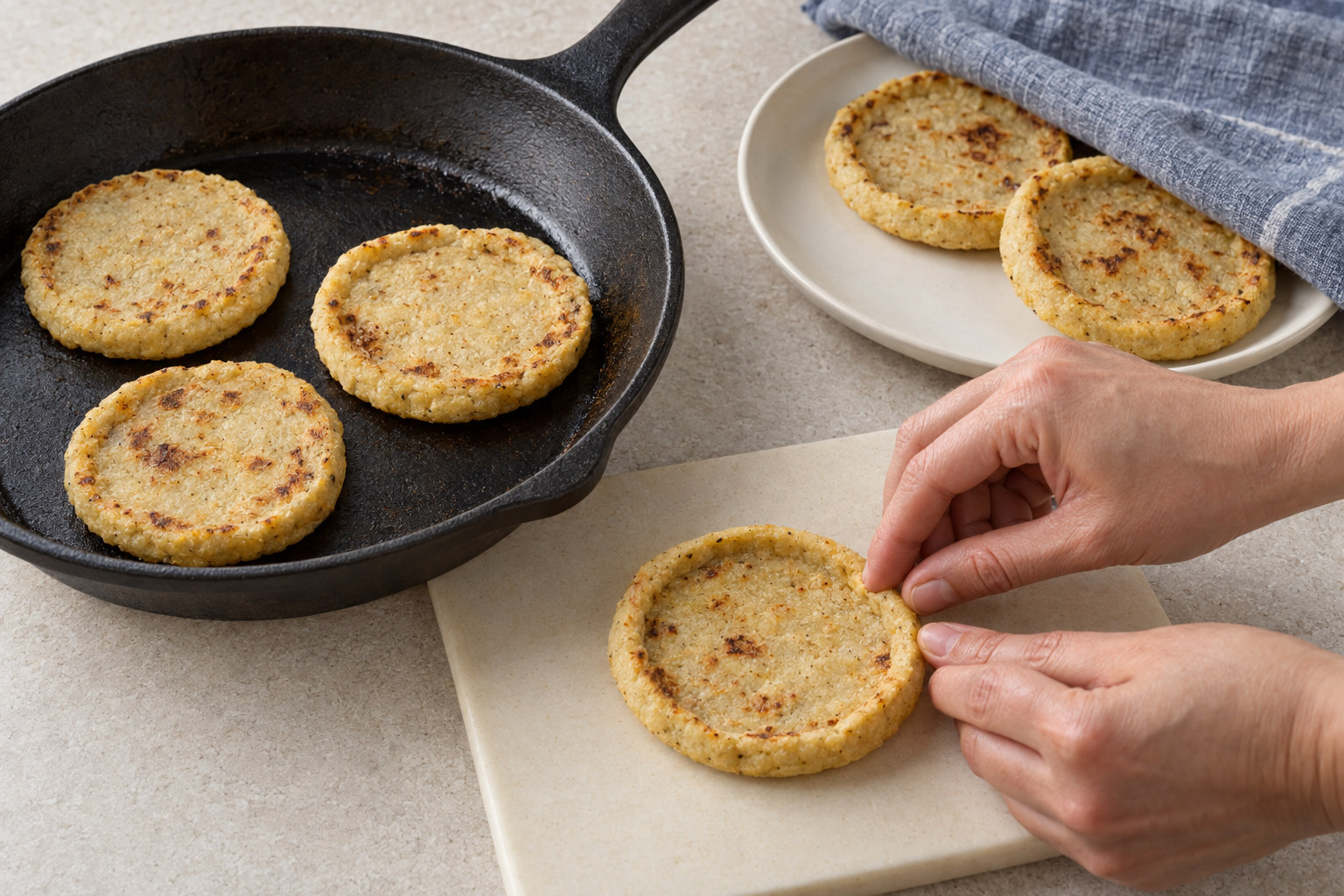
In a dry pan heated over a medium heat, we cook the cakes in 2 batches of 3, for about 45–60 seconds on each side. The surface should only firm up. We let them cool for half a minute, then use our fingers through a clean tea towel to pinch up a low rim. We cover the shaped cakes with the tea towel so they do not dry out.
The rim stays pliable and the centre is not dried out.
Shred the meat and finish cooking the sopes
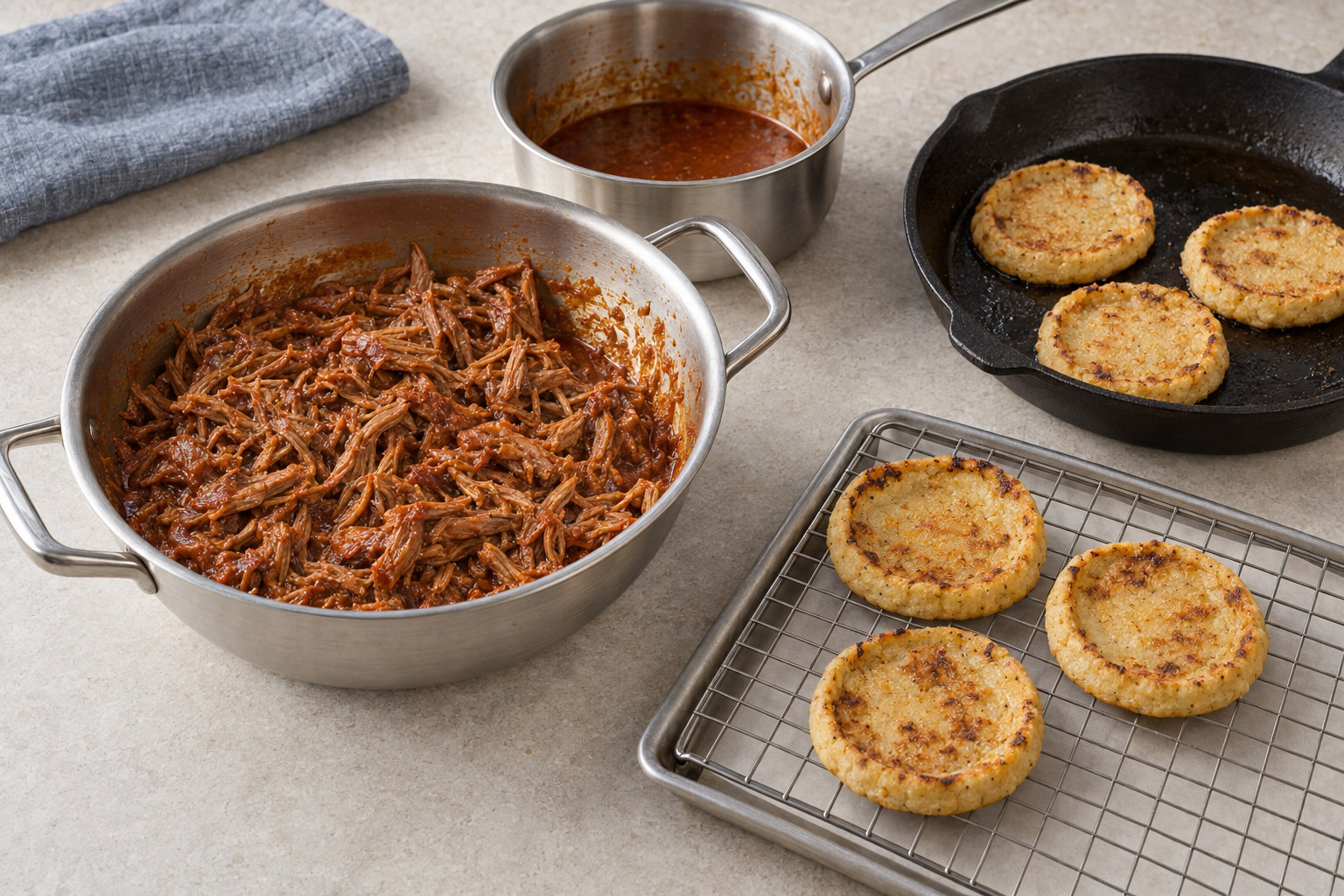
We shred the tender meat. We pour the cooking juices from the roasting dish into a saucepan and boil for 8–15 minutes, until thick enough to coat the meat. We mix with the pulled meat and keep it covered and hot. We brush both sides of the sopes with rapeseed oil and cook them in 2 batches of 3, for 2–3 minutes on each side, until the corn centres are cooked through too. We keep the cooked cakes on a wire rack in the oven at 100 °C for no more than 8 minutes.
The base is golden and the centre is soft and moist, with no raw, grainy paste.
Fill the sopes and serve
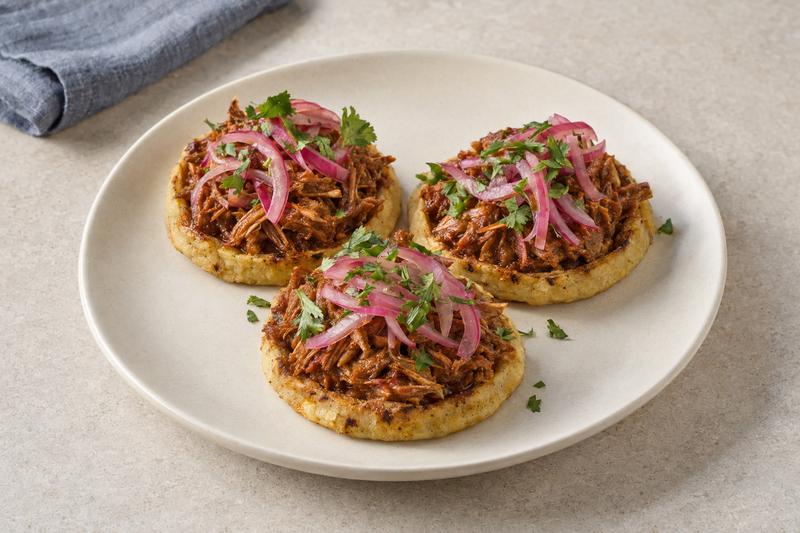
We put three sopes on each plate. We divide the meat, drained onion, chopped coriander and finishing lime juice between them. If the filling would overflow the rim, we serve the rest alongside the cakes.
Tips from our kitchen
- We use masa harina for the sopes. Ordinary maize flour and polenta are not substitutes.
- We shape the rim while the partly cooked cakes are still pliable, protecting our fingers with a tea towel.
What to watch out for
- The meat must shred easily with a fork. Before dividing it between the sopes, we mix it with the reduced cooking juices. If all the filling will not fit, we serve the rest alongside.
How we serve it
- We serve three sopes per person. We divide the meat, drained onion, chopped coriander and finishing lime juice between them. If the filling would overflow the rim, we serve the remainder alongside the sopes.
Ingredient swaps
achiote paste with no added chilli
There is no direct substitute for the flavour of achiote. We order the paste from a Mexican food supplier in Czechia. Paprika gives the meat a different colour and does not create the flavour of cochinita; using paprika would make this a different recipe.
During preparation
- We measure the temperature with a clean probe in the thickest pieces. We keep the raw meat, its chopping board and used utensils separate from cooked food.
Our inspiration
Sopes have a low rim that holds the filling like a small edible bowl. They are among the Mexican antojitos, small dishes sold at food stalls and markets. We top ours with a wild boar version of cochinita pibil, flavoured with achiote and citrus. Our inspiration came from chef Hank Shaw, who previously cooked at The Horn of Africa restaurant in Madison and also makes this Mexican dish with game.
Similar recipes
Recipe for 4 people
Step-by-step method
Before we start
While the meat marinates, we pickle the onion and put it in the fridge. We start shaping the sopes approximately 65 minutes before the meat is expected to finish roasting. We first cook all the cakes in a dry pan, then shred the meat and reduce the cooking juices. We finish the sopes in oil just before serving.
Marinate the shoulder in citrus
We cut the trimmed shoulder into 4–5 cm pieces. We peel and crush the garlic. We mix the achiote with the orange juice, the lime juice for the marinade, garlic, oregano and the salt for the meat. We coat the meat in the mixture, cover and marinate in the fridge for 2 hours. We use achiote paste without added chilli to keep the flavour milder.
Slow-roast the shoulder
We put the meat, all the remaining marinade and 140 ml of the water for the meat into a roasting dish lined with baking paper. We fold the paper in over the meat and cover tightly. We roast at 160 °C for 3–4 hours. After 2 hours, then every 30 minutes, we check the cooking liquid. If it is drying out, we add 30 ml water from the reserve. The cooked meat reaches at least 74 °C in the centre and shreds easily with a fork.
We always keep a little liquid in the roasting dish so the marinade does not burn.
Pickle the red onion
We peel the onion and slice it into thin half-moons. We boil the water, vinegar, sugar and salt for the pickling liquid for a minute and pour it over the onion. We leave it to cool and steep for 20 minutes, then refrigerate. We drain before serving and do not add the pickling liquid to the dish.
The onion is tangy and still crisp.
Make the dough and shape the sopes
We mix the masa harina with the salt for the sopes and most of the warm water for the sopes. We add the remaining warm water as we knead, keeping the reserve water aside for now. We cover and leave to rest for 15 minutes. The dough should hold together without cracking. We add the reserve water a teaspoon at a time as needed. We divide the dough into 12 equal balls. We press them between plastic sheets into cakes about 8 cm across and 7–8 mm thick. We remove the plastic before cooking.
We shape the sopes as thick little cakes, not thin tortillas.
Part-cook the cakes and shape the rims
In a dry pan heated over a medium heat, we cook the cakes in 3 batches of 4, for about 45–60 seconds on each side. The surface should only firm up. We let them cool for half a minute, then use our fingers through a clean tea towel to pinch up a low rim. We cover the shaped cakes with the tea towel so they do not dry out.
The rim stays pliable and the centre is not dried out.
Shred the meat and finish cooking the sopes
We shred the tender meat. We pour the cooking juices from the roasting dish into a saucepan and boil for 8–15 minutes, until thick enough to coat the meat. We mix with the pulled meat and keep it covered and hot. We brush both sides of the sopes with rapeseed oil and cook them in 3 batches of 4, for 2–3 minutes on each side, until the corn centres are cooked through too. We keep the cooked cakes on a wire rack in the oven at 100 °C for no more than 15 minutes.
The base is golden and the centre is soft and moist, with no raw, grainy paste.
Fill the sopes and serve
We put three sopes on each plate. We divide the meat, drained onion, chopped coriander and finishing lime juice between them. If the filling would overflow the rim, we serve the rest alongside the cakes.