
Tuscan inspiration · Tuscan inspiration
Hunter-style wild boar shoulder with tomatoes, olives and polenta
We slowly braise wild boar shoulder until tender in a tomato sauce with rosemary and white wine. Black olives add salty bites, mellowed by creamy polenta with milk and butter. We choose a day for this lunch when the pot can gently bubble away for several hours.
Braising usually takes 160–200 minutes. The total time also includes preparation, browning every batch and cooking the polenta. If the meat is still tough, we braise it for longer.
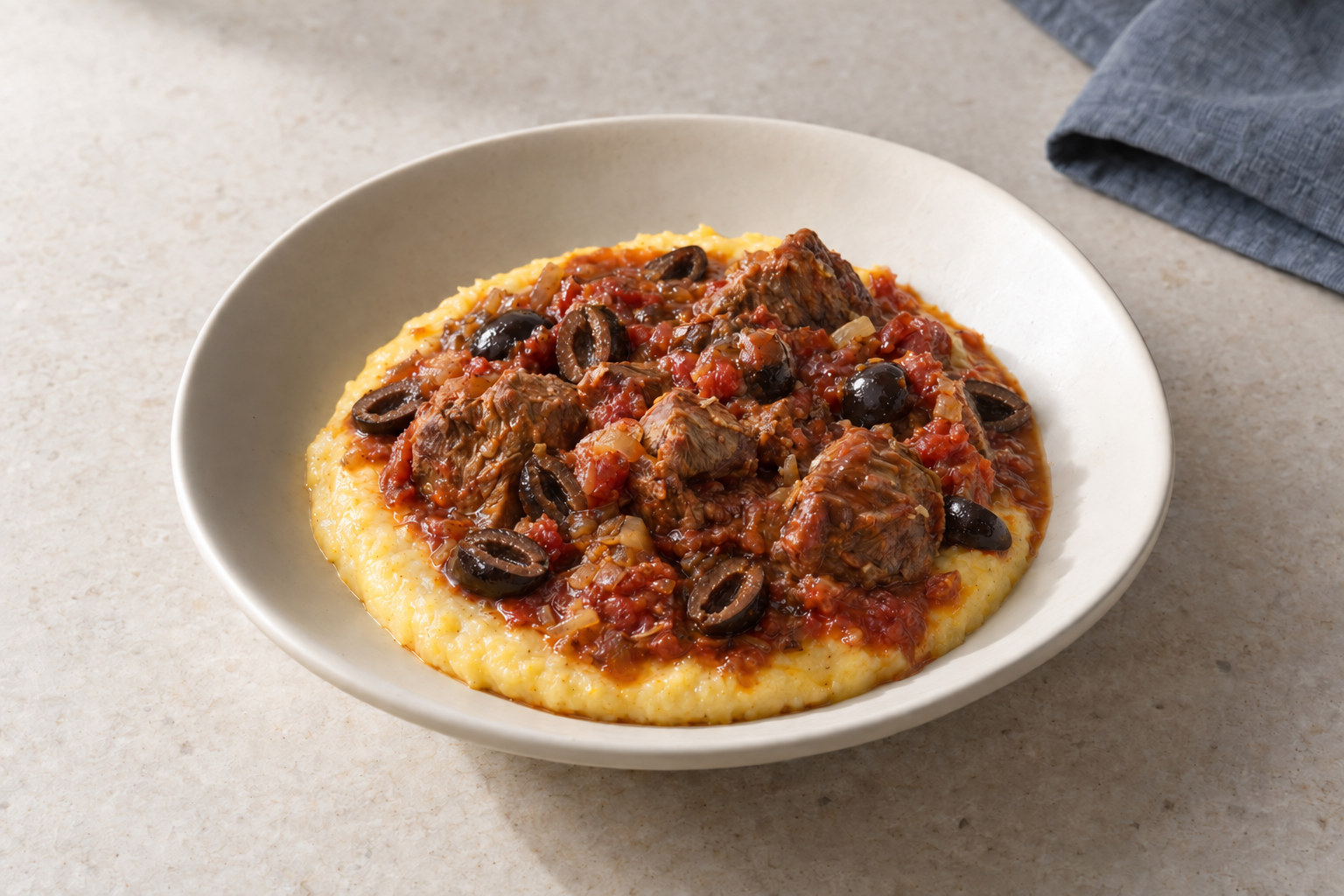
Tangy tomatoes, salty olives and rosemary accompany the wild boar shoulder; soft, buttery polenta catches the richly flavoured sauce.
Step-by-step method
What you will need
- heavy 20 cm / 3 l pot with a tight-fitting lid
- 1.5 l saucepan for the polenta, whisk
- 2 hob rings
- kitchen scales, probe thermometer and separate chopping boards for meat and vegetables
Before we start
We first braise the meat until completely tender and finish the sauce. Only then do we cook the polenta. The ragù can wait for it for a few minutes, covered over the lowest heat.
Cut and brown the meat
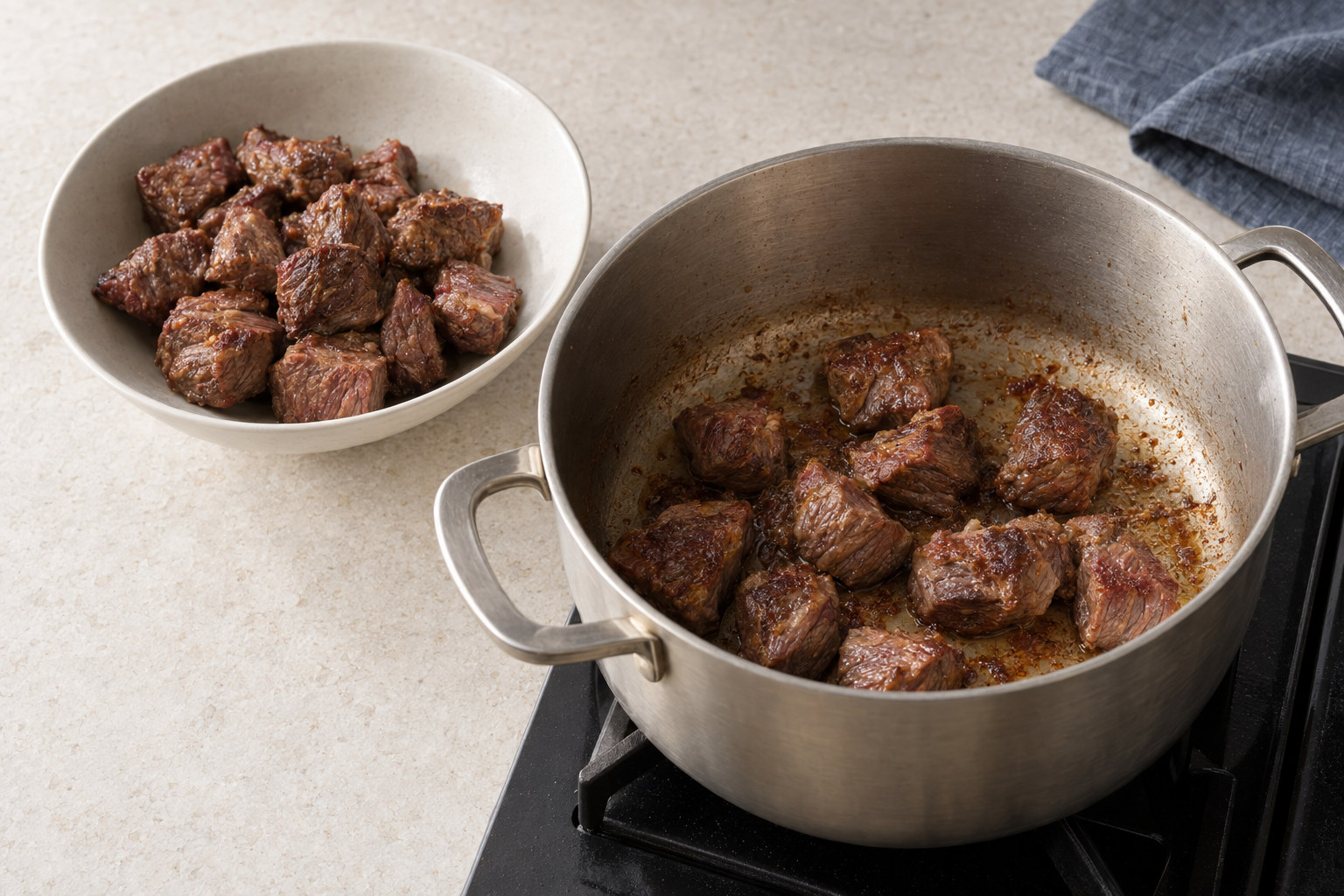
We cut the trimmed meat into 3 cm cubes and pat dry. We season with most of the salt set aside for the meat and add the pepper. We reserve one teaspoon of the oil for the onion and divide the rest between 2 batches of meat, approximately 225 g each. We brown each batch over a medium-high heat for 4–6 minutes, transferring the browned meat to a bowl.
We brown the meat in a single layer so that water does not pool in the bottom of the pot.
Prepare the tomato base
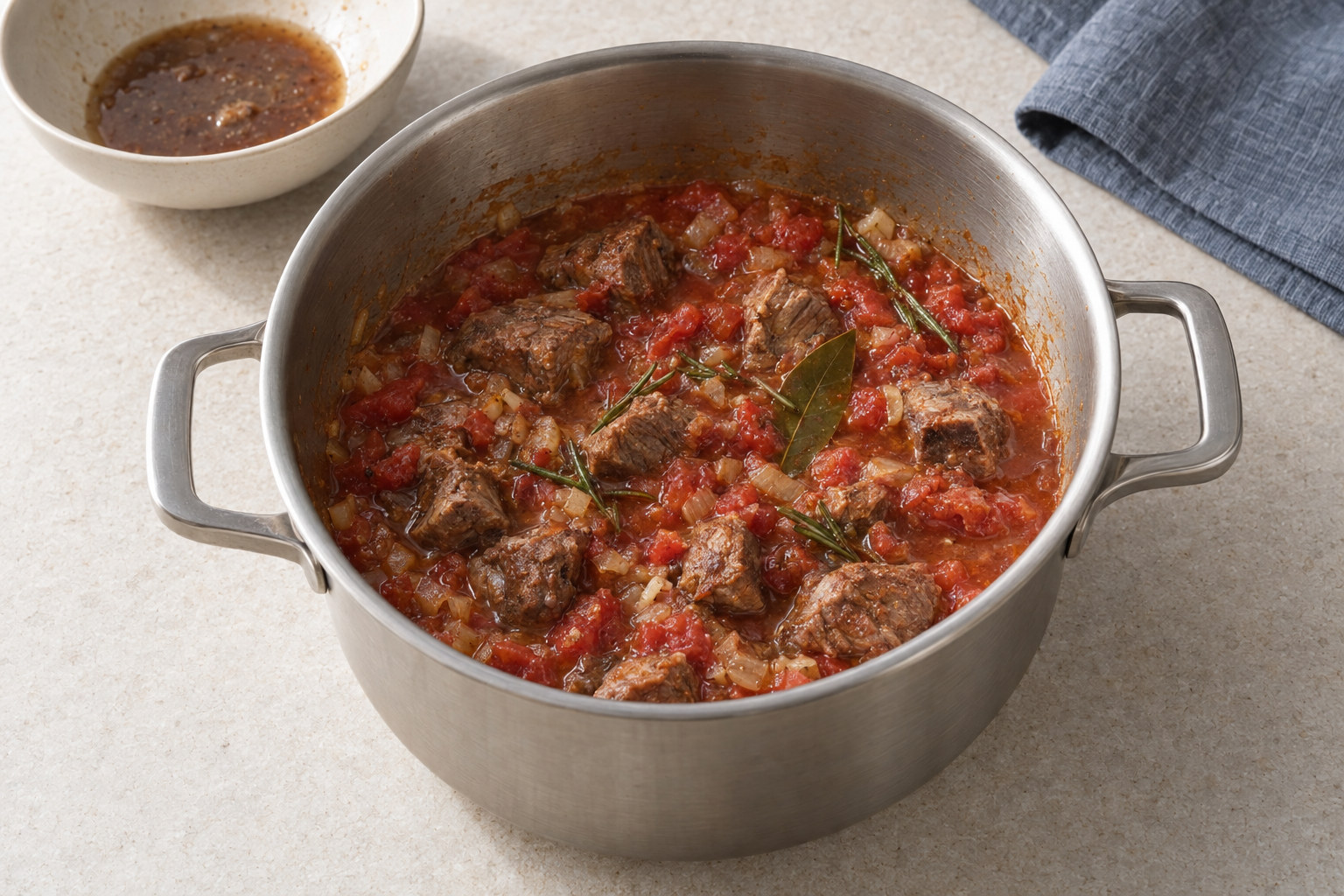
We peel and finely chop the onion and garlic. In the same pot, we fry the onion in the reserved teaspoon of oil for 7–9 minutes until golden, stirring. We add the chopped garlic and fry for 30 seconds, then pour in the wine and let it bubble away for 3 minutes. We add the tomatoes, rosemary and bay leaf, return the meat and its juices from the bowl, and pour in all the stock.
Slowly braise the shoulder
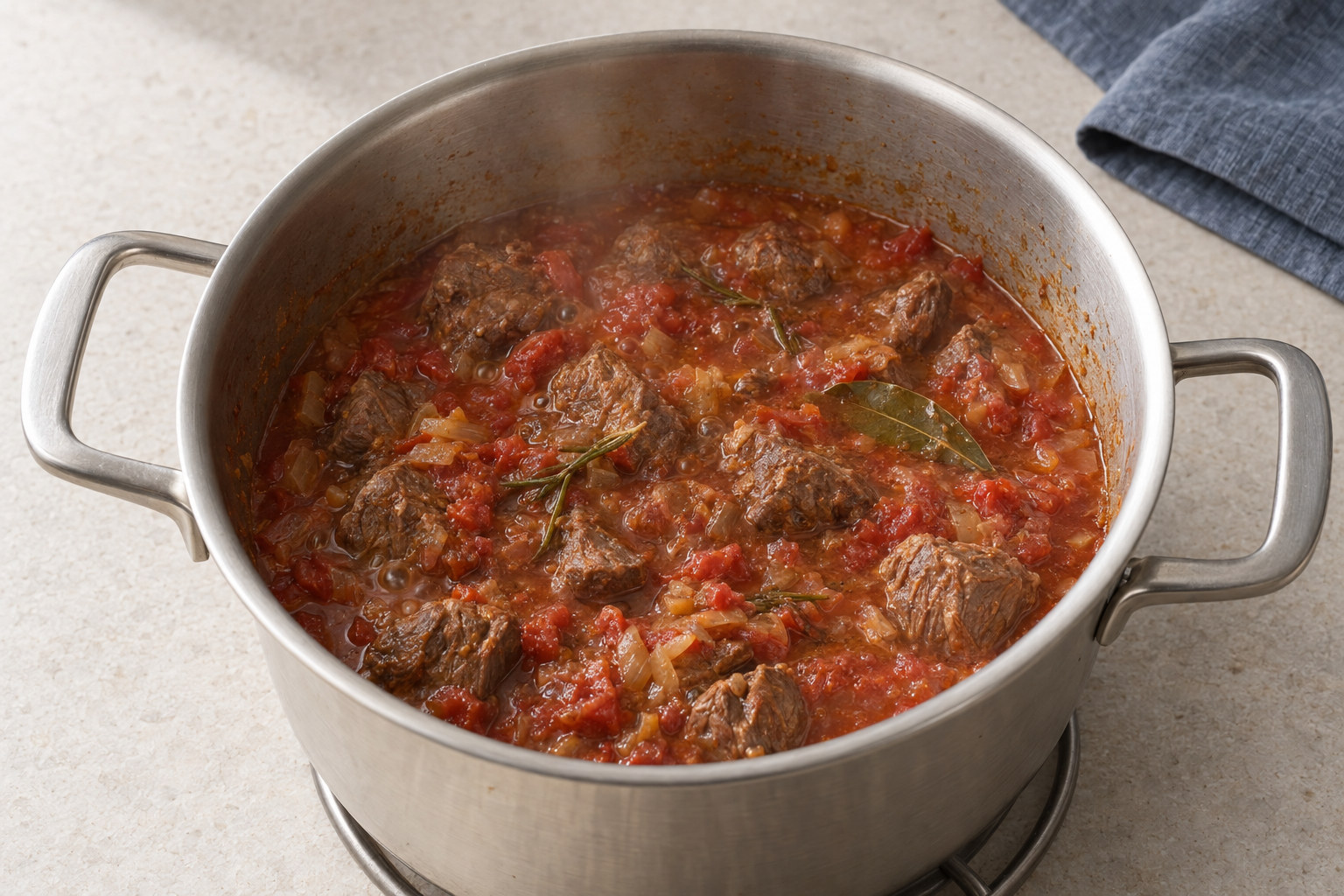
We bring to a very gentle simmer, cover tightly and braise for approximately 160–200 minutes. Every 35 minutes, we stir and check the bottom of the pot. If the sauce is drying out, we add water in 30 ml amounts. We check that the thickest pieces have reached at least 74 °C. We also use a fork to check that a cube pulls apart easily into fibres. If the meat is still tough, we keep braising.
The sauce should barely bubble. A vigorous boil will not tenderise the meat any faster.
Add the olives and finish the sauce
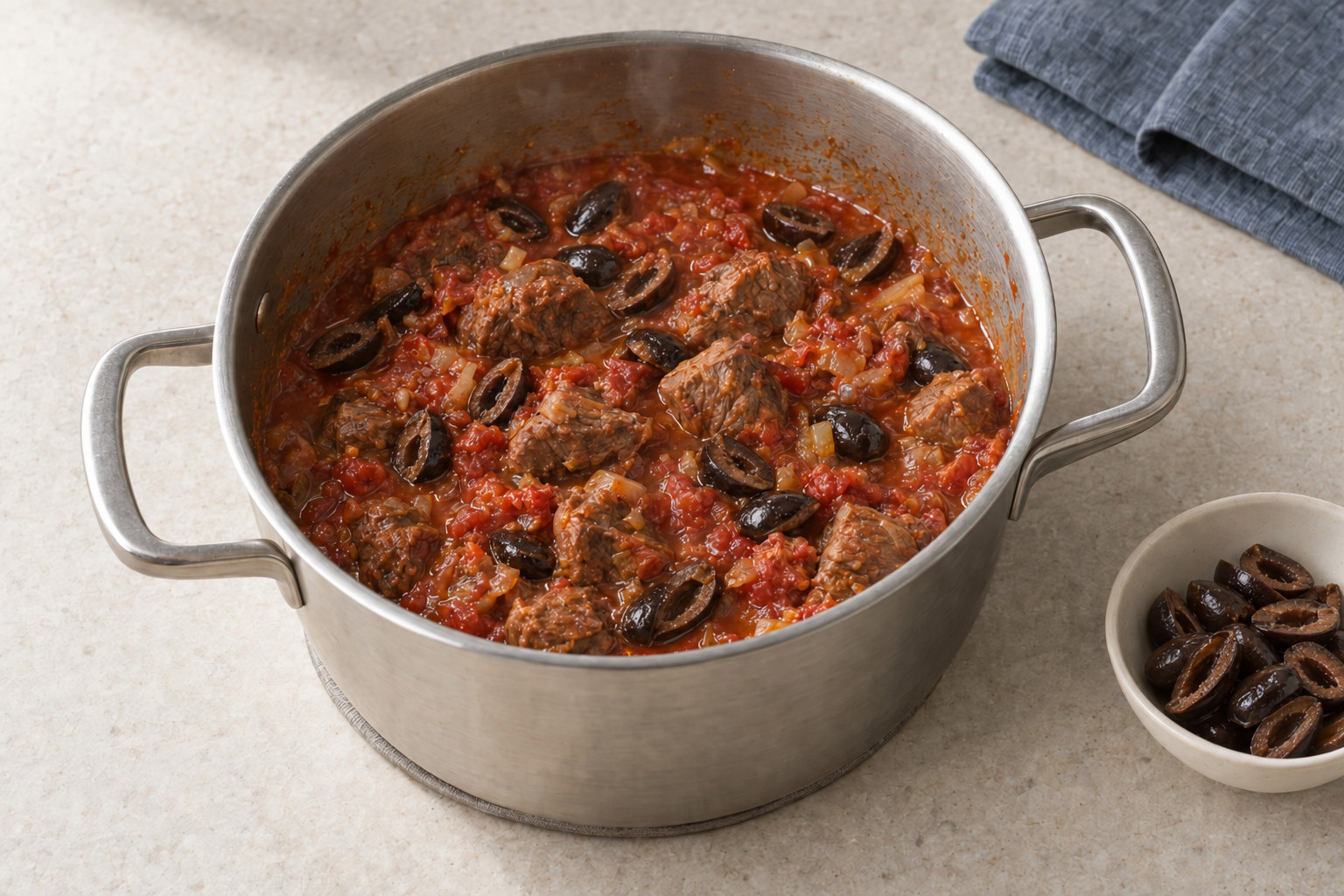
We remove the bay leaf and woody rosemary stems. We halve the olives lengthways, add them to the meat and simmer for 5 minutes. If the sauce is thin, we simmer gently, uncovered, for another 5–10 minutes to evaporate some of the liquid. We taste the sauce with the olives and add the remaining salt set aside for the meat as needed; we may not need all of it.
The sauce coats the meat and the olives retain their distinctive flavour.
Cook the creamy polenta
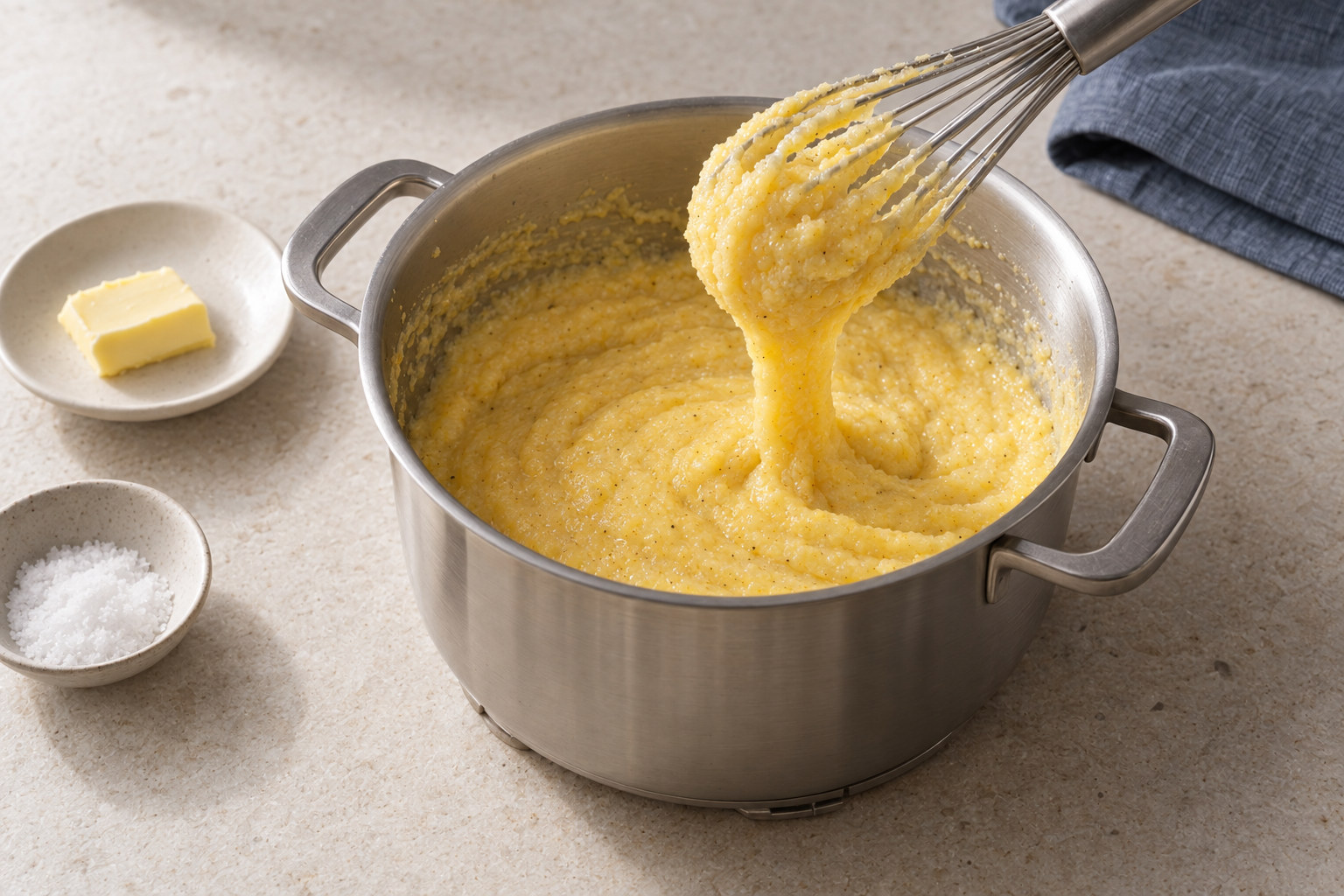
We heat the water and milk for the polenta with the salt until almost boiling. Whisking continuously, we pour in the instant polenta, choosing one with a cooking time of 3–5 minutes on the packet. We stir over a low heat for that time, then remove from the heat and stir in the butter.
The polenta flows softly from the spoon. We serve it straight away, before it sets.
Serve the ragù on the polenta
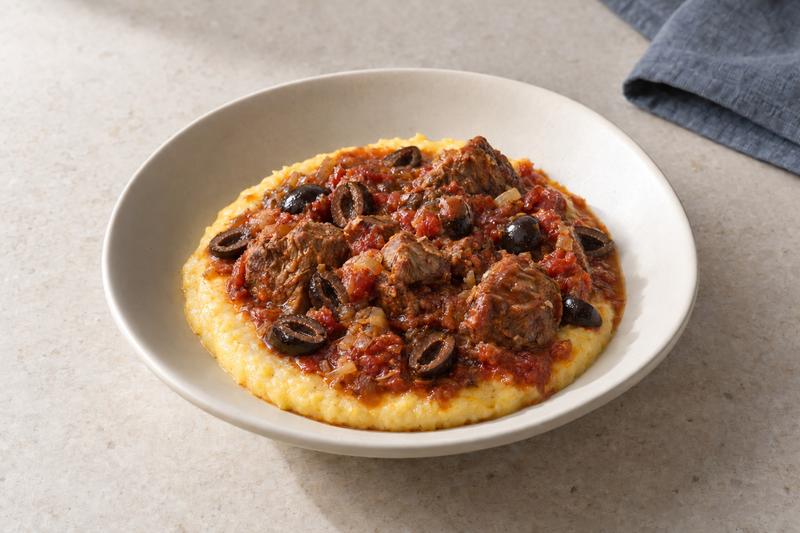
We divide the polenta between 2 warmed deep plates, top with all the meat, olives and tomato sauce, and serve.
Tips from our kitchen
- We start cooking the polenta only when the meat is tender. It would thicken if left waiting too long.
- We add the olives at the end. As they are salty, we taste the sauce before adding any more salt.
What to watch out for
- Tender cubes of meat pull apart easily with a fork. If they are still tough after the stated time, we keep braising and make the polenta later.
How we serve it
- We divide the polenta between warmed deep plates and top with all the meat, olives and tomato sauce. We serve straight away.
During preparation
- We check the temperature in the thickest pieces with a clean probe. We keep raw meat, its chopping board and used utensils separate from ready-to-eat food.
Our inspiration
Wild boar alla cacciatora takes different forms in different families: some add small tomatoes, while others leave them out altogether. We like the combination of tomatoes and black olives, which gives the braised meat a fruity tang and saltiness. Mild polenta is welcome alongside a ragù like this: it catches the sauce and makes a hearty lunch of the slowly braised wild boar shoulder.
Similar recipes
Recipe for 4 people
Step-by-step method
Before we start
We first braise the meat until completely tender and finish the sauce. Only then do we cook the polenta. The ragù can wait for it for a few minutes, covered over the lowest heat.
Cut and brown the meat
We cut the trimmed meat into 3 cm cubes and pat dry. We season with most of the salt set aside for the meat and add the pepper. We reserve one teaspoon of the oil for the onion and divide the rest between 4 batches of meat, approximately 225 g each. We brown each batch over a medium-high heat for 4–6 minutes, transferring the browned meat to a bowl.
We brown the meat in a single layer so that water does not pool in the bottom of the pot.
Prepare the tomato base
We peel and finely chop the onions and garlic. In the same pot, we fry the onions in the reserved teaspoon of oil for 7–9 minutes until golden, stirring. We add the chopped garlic and fry for 30 seconds, then pour in the wine and let it bubble away for 3 minutes. We add the tomatoes, rosemary and bay leaves, return the meat and its juices from the bowl, and pour in all the stock.
Slowly braise the shoulder
We bring to a very gentle simmer, cover tightly and braise for approximately 160–200 minutes. Every 35 minutes, we stir and check the bottom of the pot. If the sauce is drying out, we add water in 30 ml amounts. We check that the thickest pieces have reached at least 74 °C. We also use a fork to check that a cube pulls apart easily into fibres. If the meat is still tough, we keep braising.
The sauce should barely bubble. A vigorous boil will not tenderise the meat any faster.
Add the olives and finish the sauce
We remove the bay leaves and woody rosemary stems. We halve the olives lengthways, add them to the meat and simmer for 5 minutes. If the sauce is thin, we simmer gently, uncovered, for another 5–10 minutes to evaporate some of the liquid. We taste the sauce with the olives and add the remaining salt set aside for the meat as needed; we may not need all of it.
The sauce coats the meat and the olives retain their distinctive flavour.
Cook the creamy polenta
We heat the water and milk for the polenta with the salt until almost boiling. Whisking continuously, we pour in the instant polenta, choosing one with a cooking time of 3–5 minutes on the packet. We stir over a low heat for that time, then remove from the heat and stir in the butter.
The polenta flows softly from the spoon. We serve it straight away, before it sets.
Serve the ragù on the polenta
We divide the polenta between 4 warmed deep plates, top with all the meat, olives and tomato sauce, and serve.