
Contemporary European · Contemporary European
Wild boar loin with apple gel, fondant celeriac and potato mille-feuille
We serve slices of wild boar loin with creamy layered potatoes, crisp around the edges, and buttery celeriac. Small teaspoonfuls of cold apple gel complement the hot Calvados jus. We spread the preparation for this special meal over two days: the potatoes firm up overnight, ready to develop a crisp surface the following day.
We prepare this dish over two days. On the first day, we allow 60–75 minutes for baking the potatoes, time to cool them to 5 °C and at least 8 hours to press them in the fridge. Finishing the dish on the second day takes about 75–95 minutes.
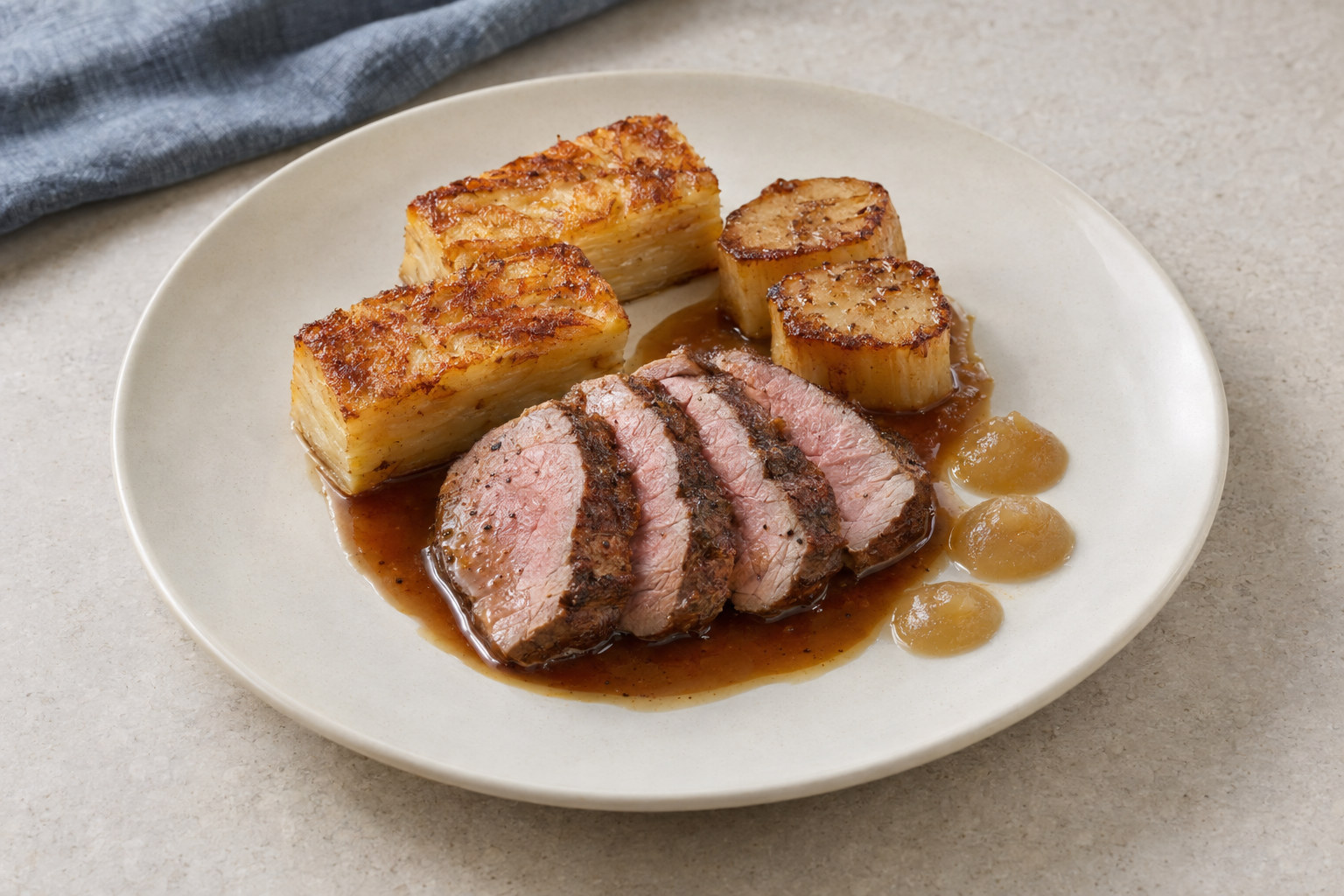
Apple runs through both the cool gel and the Calvados jus, while buttery potatoes and sweet celeriac accompany the roasted wild boar loin.
Step-by-step method
What you will need
- 20 × 12 cm metal tin, baking paper, a second identical tin and a 1–2 kg weight
- mandoline with a hand guard and digital scales accurate to 0.1 g
- container for a cooling bath and sealed ice packs
- 26 cm frying pan for the potatoes and another for the meat
- wide 20 cm saucepan with a lid for the celeriac
- small saucepan, narrow blending beaker, hand blender, baking tray and oven
- 3 hob rings
- kitchen scales, probe thermometer and separate chopping boards for meat and vegetables
Before we start
On the first day, we bake and chill the potatoes, weigh them down and make the apple gel. On the second day, we start with the celeriac. Once we have added the stock and covered it, we fry both batches of potatoes and then the meat while the celeriac braises. We finish the potatoes and meat together in the oven at 150 °C.
Bake the layered potatoes
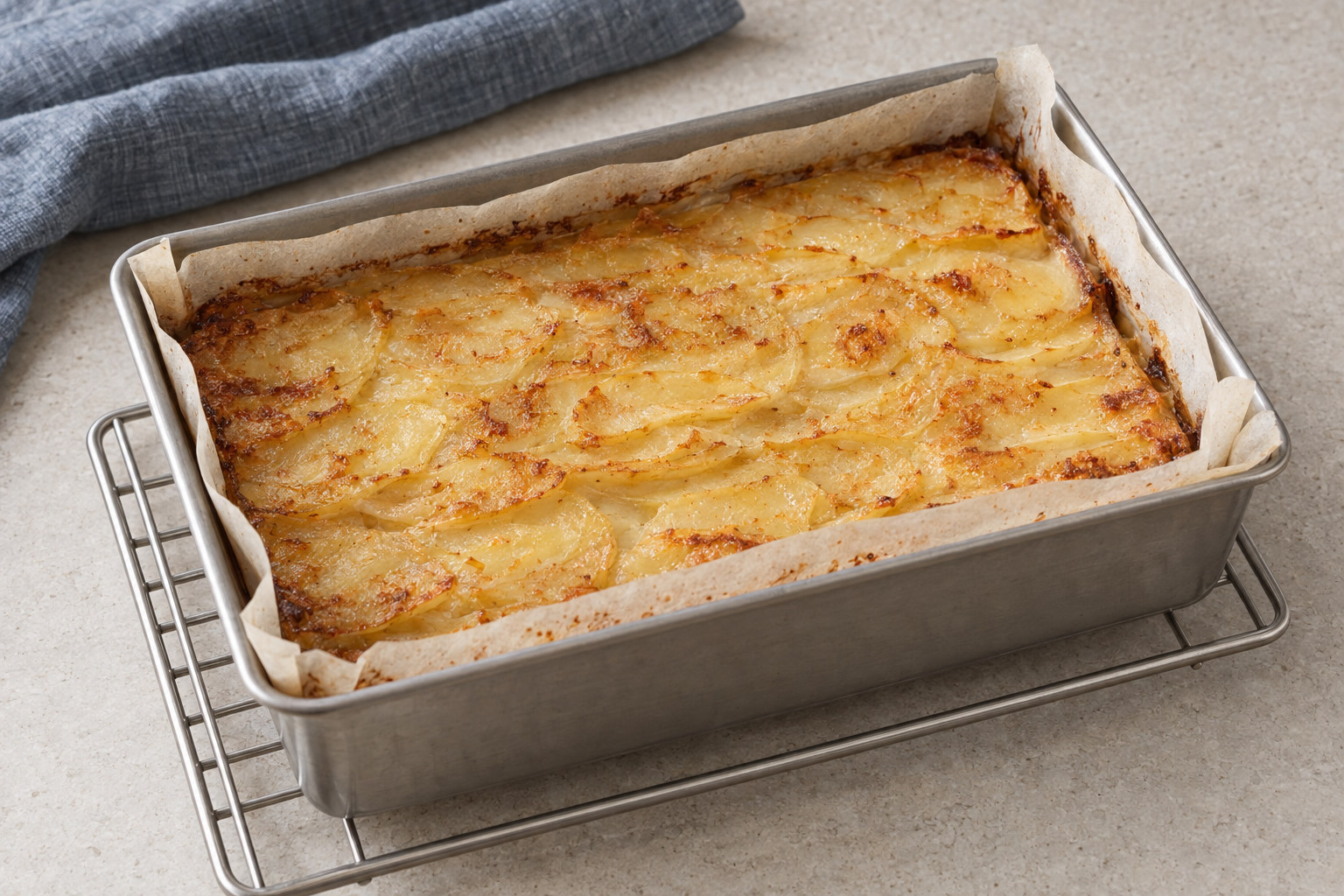
We peel the potatoes and cut them into 1.5–2 mm slices. We mix them with the cream, the salt for the potatoes and two teaspoons of the clarified butter set aside for the potatoes. We layer them, with all the liquid, in a 20 × 12 cm metal tin lined with baking paper, no more than 3 cm deep. We cover and bake at 170 °C for approximately 60–75 minutes, until a thin knife passes through every layer without resistance.
Chill the potatoes, then press them
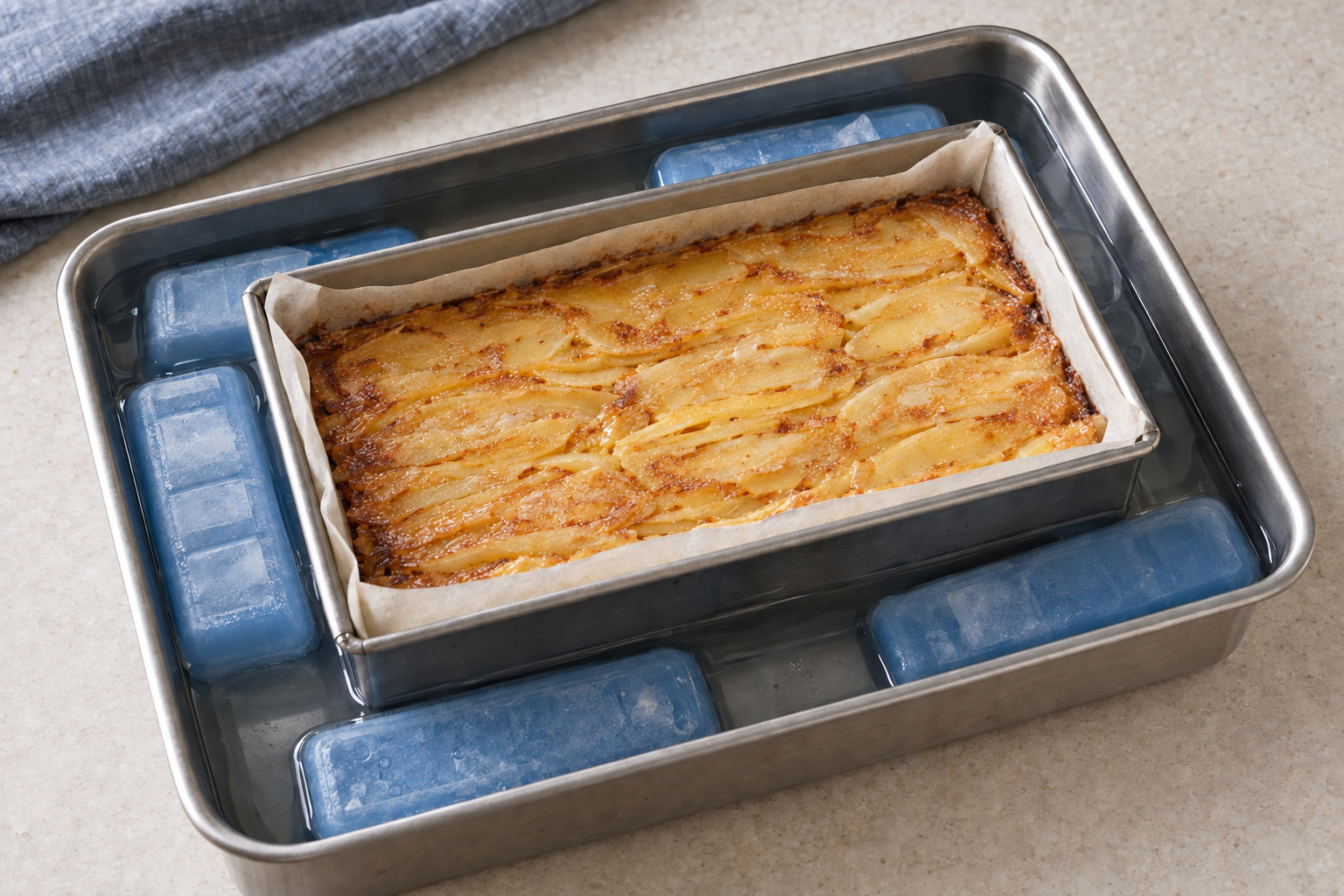
We place the metal tin in a bath of cold water with sealed ice packs. The water must not come over the rim or get into the food. We replace it as soon as it warms up. After 30 minutes in the cooling bath, we transfer the tin to a fridge at no more than 5 °C. We let the centre cool to no more than 5 °C too; this takes 1–2 hours, depending on the fridge. Only then do we cover it with paper, put the second tin and weight on top and press for at least 8 hours in the fridge. We do not weigh down the potatoes while warm, as the thick layer would hinder cooling.
The cold, firm block cuts cleanly without the layers falling apart.
Make the apple gel
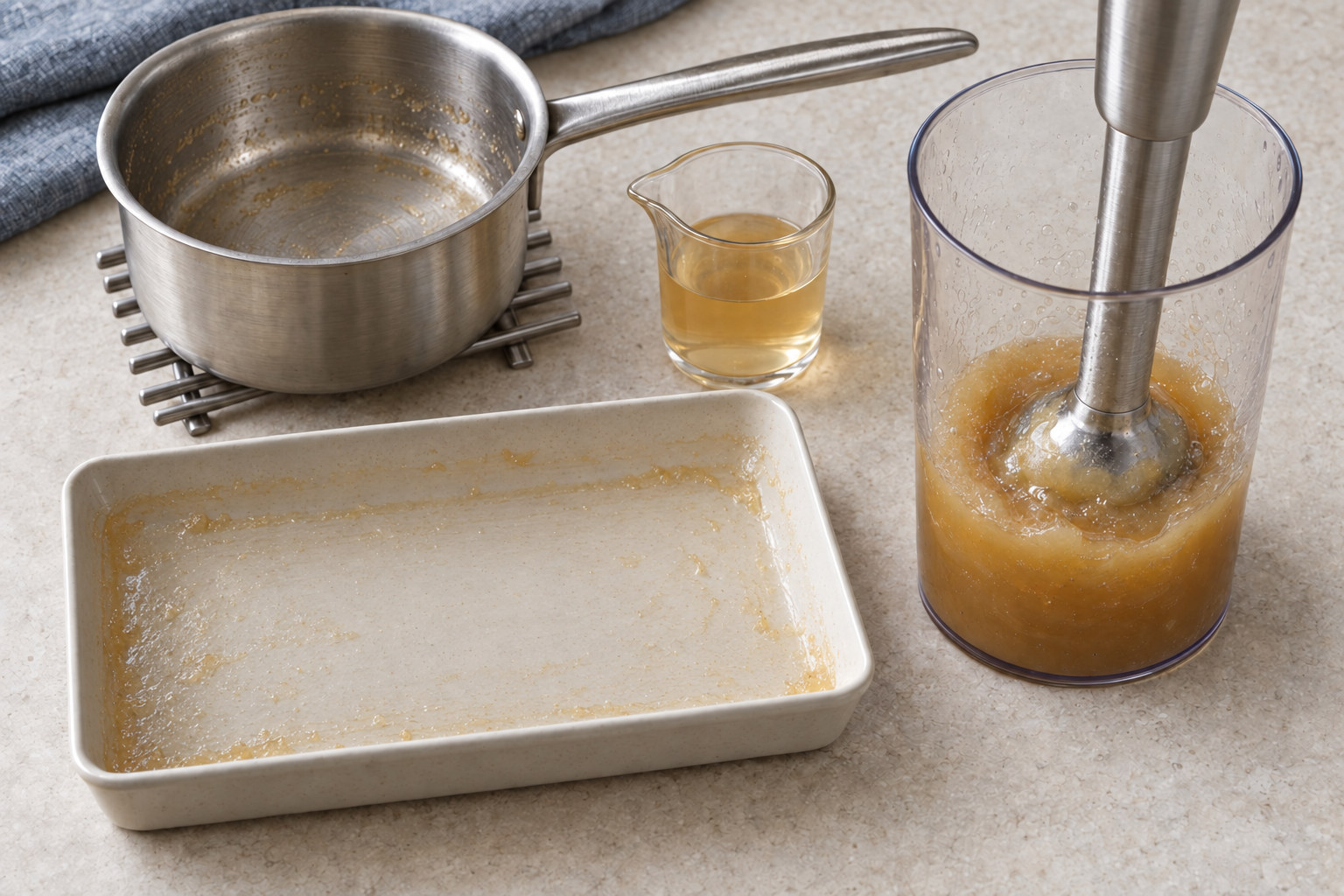
We mix 150 ml juice with 1.5 g Amylon agar and simmer gently for 3 minutes, stirring. We pour it into a shallow container. As soon as it stops steaming, we refrigerate it for at least an hour to set. We blend the cold gel until smooth in a narrow beaker. If needed, we loosen it with the reserved apple juice, a teaspoon at a time.
The gel holds a soft peak and does not release liquid.
Fry and braise the celeriac
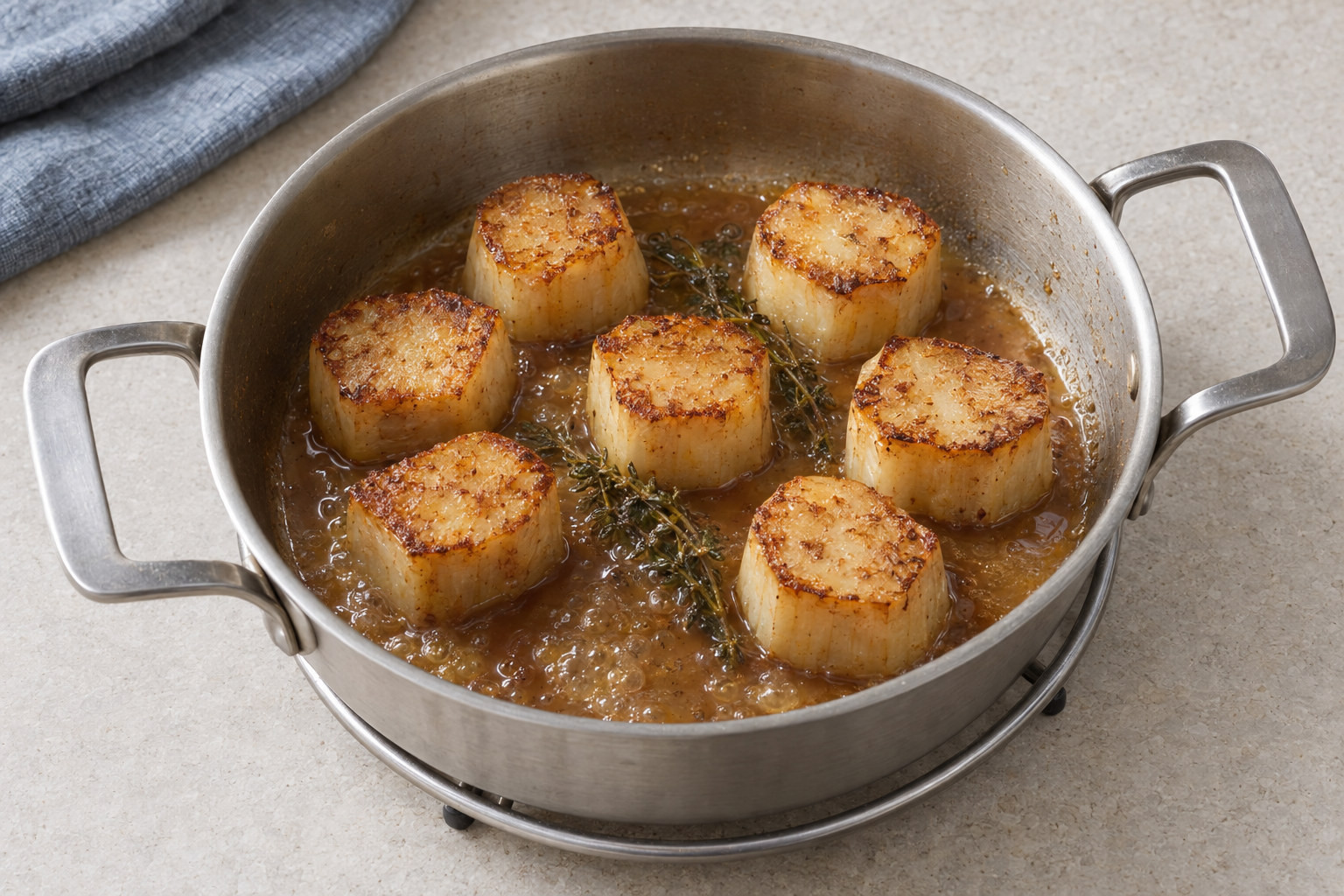
We peel the celeriac and cut it into 4 similarly sized batons, 3 cm thick. We cut the smaller edge pieces to the same thickness and use them too. We fry the cut surfaces in the clarified butter for the celeriac for 6–8 minutes. We add the vegetable stock, thyme and salt for the celeriac, cover and braise gently for 25–35 minutes until tender. If the celeriac starts to dry out, we add the reserved water in 20 ml amounts. We uncover and cook briefly to reduce the liquid until the remaining juices form a glossy glaze, then remove the thyme stems. We keep the cooked celeriac covered above 63 °C for no more than 30 minutes over a very low heat, without bubbling. We check the glaze regularly and loosen it with some of the water if it thickens.
A knife slides through the celeriac easily, and the browned surfaces stay intact.
Fry the potatoes and sear the loin
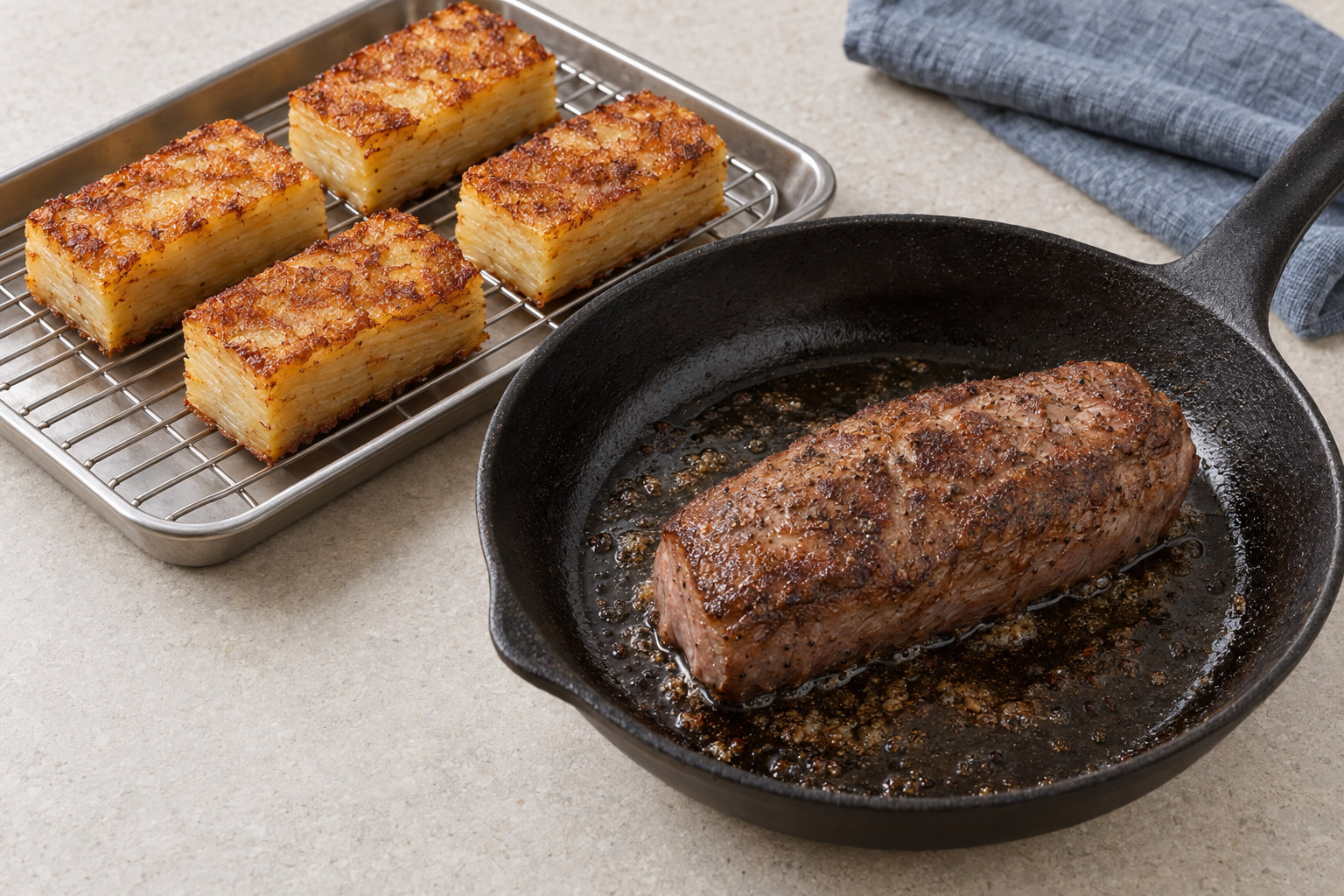
We cut the cold potato block into 4 rectangles approximately 10 × 6 cm. We fry them in the remaining clarified butter for the potatoes in two batches of 2, for 2–3 minutes on each broad side, then set them on a baking tray. We prepare the loin as one 360 g piece, 4–5 cm thick. We season with salt and pepper and sear the whole piece on all sides in the rapeseed oil for 5–6 minutes.
Finish the meat, heat the potatoes and make the jus
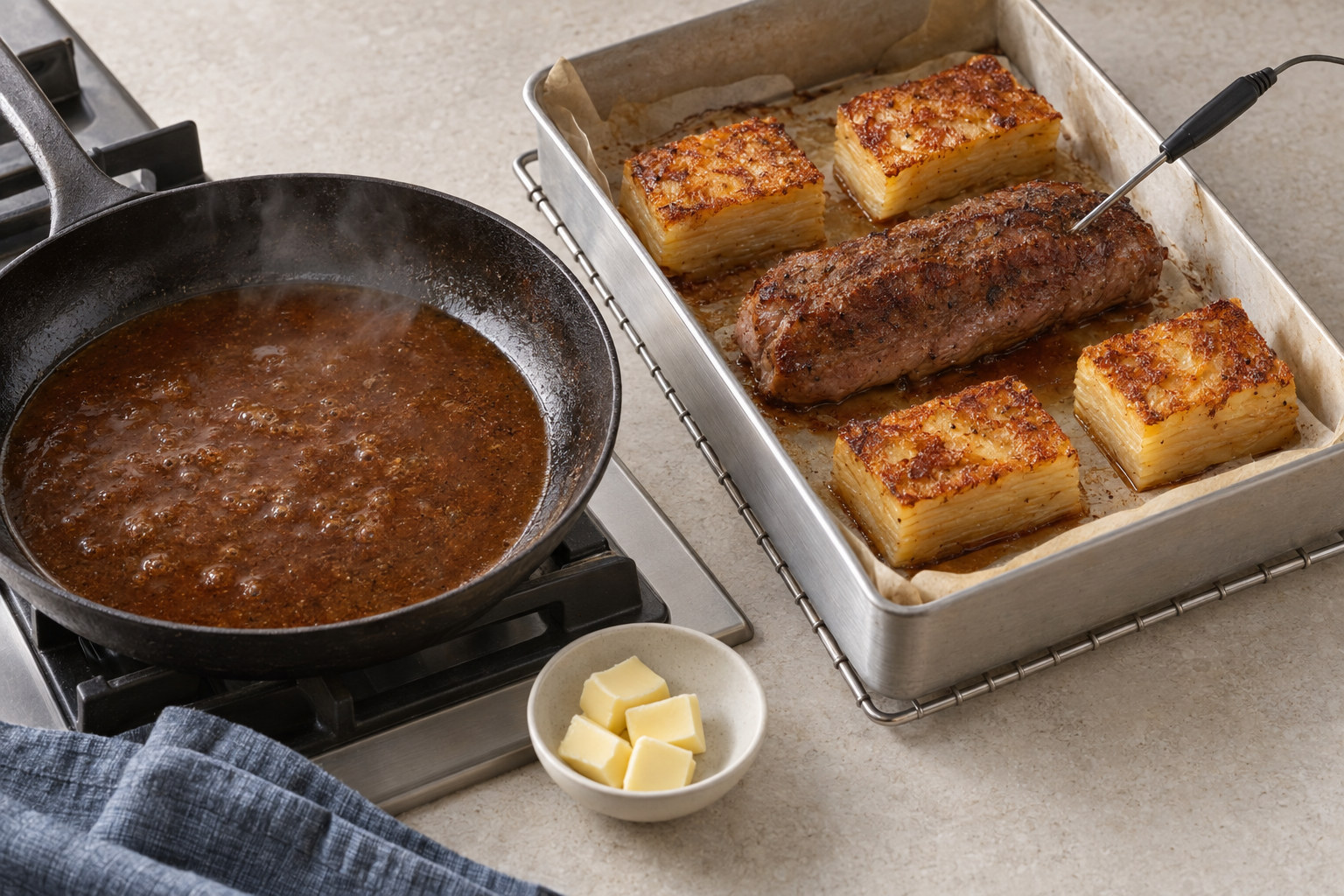
We put the meat and the tray of potatoes in the oven at 150 °C. We roast the meat for 20–35 minutes, until the centre of the piece reaches at least 74 °C. We take it out and leave to rest for 5–10 minutes. We heat the potatoes through for about 20–30 minutes, until they reach at least 74 °C in the centre. If the potatoes are ready first, we take them out of the oven and cover loosely. We leave them waiting for no more than 15 minutes without reheating. If the meat needs longer, we keep the potato tray out of the oven, then briefly reheat the potatoes in the oven until hot while the meat rests. We take the meat pan off the flame, pour in the Calvados and do not flambé it. We return the pan to a low heat, add the beef stock and simmer for 8–12 minutes to reduce the liquid. Just before serving, we add the resting juices and stir in the cold butter, keeping the sauce below boiling.
Serve with the gel
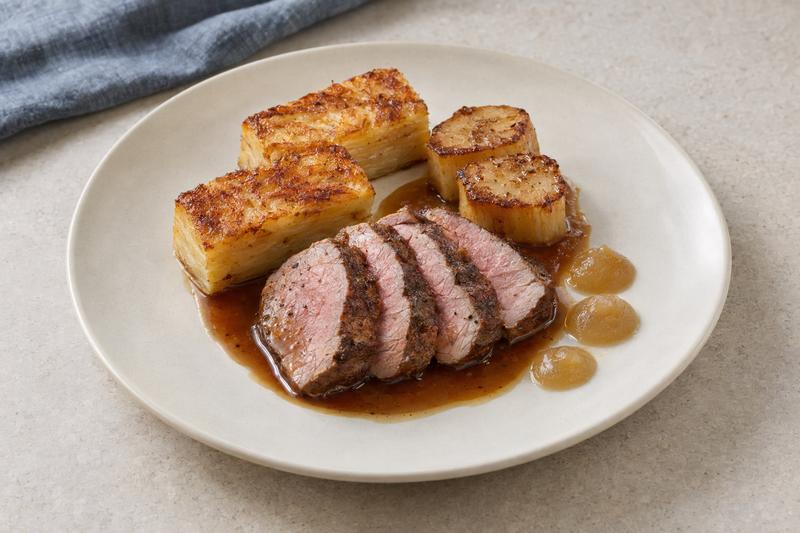
We put two potato rectangles, half of all the celeriac and sliced loin on each plate. We add the jus and small teaspoonfuls of cold apple gel, serving the rest of the gel alongside for adding as desired.
We add the gel in small amounts so it does not cover the browned surfaces of the accompaniments.
Tips from our kitchen
- We cut the pressed potatoes only when completely cold. We use the specified tin and keep to the stated layer depth, as both affect how the potatoes heat through.
- We weigh the agar on scales accurate to 0.1 g, use the stated brand and loosen the gel with only small additions of juice.
What to watch out for
- We weigh down the baked potatoes only once their centre has chilled, and cut them cold so the layers hold together.
How we serve it
- We put two potato rectangles, the appropriate share of celeriac and sliced loin on each plate. We add the jus and small teaspoonfuls of cold apple gel, serving the rest of the gel alongside for adding as desired.
During preparation
- We use a clean probe to check the thickest parts of the loin. We keep raw meat, its chopping board and used utensils separate from the finished food.
Our inspiration
Thin slices of potato can become an accompaniment we cut like a cake. Charlie Hibbert, head chef of the Ox Barn restaurant at Thyme in Britain, cools his baked potato pavé under a weight before cutting it into portions and frying them. We use the same approach to layering for our mille-feuille; the apple gel and fondant celeriac are part of our own composition.
Geoffrey Smeddle
Geoffrey Smeddle is head chef of The Peat Inn in Fife, Scotland. His recipe for game with potatoes, celeriac and chestnuts is one of the inspirations for our special-occasion plate.
Similar recipes
Recipe for 4 people
Step-by-step method
Before we start
On the first day, we bake and chill the potatoes, weigh them down and make the apple gel. On the second day, we start with the celeriac. Once we have added the stock and covered it, we fry both batches of potatoes and then the meat while the celeriac braises. We finish the potatoes and meat together in the oven at 150 °C.
Bake the layered potatoes
We peel the potatoes and cut them into 1.5–2 mm slices. We mix them with the cream, the salt for the potatoes and one and a half tablespoons of the clarified butter set aside for the potatoes. We layer them, with all the liquid, in a 24 × 20 cm metal tin lined with baking paper, no more than 3 cm deep. We cover and bake at 170 °C for approximately 60–75 minutes, until a thin knife passes through every layer without resistance.
Chill the potatoes, then press them
We place the metal tin in a bath of cold water with sealed ice packs. The water must not come over the rim or get into the food. We replace it as soon as it warms up. After 30 minutes in the cooling bath, we transfer the tin to a fridge at no more than 5 °C. We let the centre cool to no more than 5 °C too; this takes 1–2 hours, depending on the fridge. Only then do we cover it with paper, put the second tin and weight on top and press for at least 8 hours in the fridge. We do not weigh down the potatoes while warm, as the thick layer would hinder cooling.
The cold, firm block cuts cleanly without the layers falling apart.
Make the apple gel
We mix 260 ml juice with 2.6 g Amylon agar and simmer gently for 3 minutes, stirring. We pour it into a shallow container. As soon as it stops steaming, we refrigerate it for at least an hour to set. We blend the cold gel until smooth in a narrow beaker. If needed, we loosen it with the reserved apple juice, a teaspoon at a time.
The gel holds a soft peak and does not release liquid.
Fry and braise the celeriac
We peel the celeriac and cut it into 8 similarly sized batons, 3 cm thick. We cut the smaller edge pieces to the same thickness and use them too. We fry the cut surfaces in the clarified butter for the celeriac for 6–8 minutes. We add the vegetable stock, thyme and salt for the celeriac, cover and braise gently for 25–35 minutes until tender. If the celeriac starts to dry out, we add the reserved water in 20 ml amounts. We uncover and cook briefly to reduce the liquid until the remaining juices form a glossy glaze, then remove the thyme stems. We keep the cooked celeriac covered above 63 °C for no more than 30 minutes over a very low heat, without bubbling. We check the glaze regularly and loosen it with some of the water if it thickens.
A knife slides through the celeriac easily, and the browned surfaces stay intact.
Fry the potatoes and sear the loin
We cut the cold potato block into 8 rectangles approximately 10 × 6 cm. We fry them in the remaining clarified butter for the potatoes in two batches of 4, for 2–3 minutes on each broad side, then set them on a baking tray. We prepare the loin as two 360 g pieces, 4–5 cm thick. We season with salt and pepper and sear each piece separately on all sides in the rapeseed oil for 5–6 minutes.
Finish the meat, heat the potatoes and make the jus
We put the meat and the tray of potatoes in the oven at 150 °C. We roast the meat for 20–35 minutes, until the centre of each piece reaches at least 74 °C. We take each piece out as it is ready and leave to rest for 5–10 minutes. We heat the potatoes through for about 20–30 minutes, until they reach at least 74 °C in the centre. If the potatoes are ready first, we take them out of the oven and cover loosely. We leave them waiting for no more than 15 minutes without reheating. If the meat needs longer, we keep the potato tray out of the oven, then briefly reheat the potatoes in the oven until hot while the meat rests. We take the meat pan off the flame, pour in the Calvados and do not flambé it. We return the pan to a low heat, add the beef stock and simmer for 8–12 minutes to reduce the liquid. Just before serving, we add the resting juices and stir in the cold butter, keeping the sauce below boiling.
Serve with the gel
We put two potato rectangles, a quarter of all the celeriac and sliced loin on each plate. We add the jus and small teaspoonfuls of cold apple gel, serving the rest of the gel alongside for adding as desired.
We add the gel in small amounts so it does not cover the browned surfaces of the accompaniments.