
Japanese-inspired · Japanese-inspired
Wild boar tonkatsu with crisp cabbage, rice and plum sauce
A slice of wild boar loin sits beneath a light, crisp panko coating. We add rice, fresh thin shreds of cabbage and a separate bowl of plum sauce with ginger. We can dip each bite in the sweet and sour sauce while the rest of the coating stays crisp.
The time allows for 2 frying batches and any finishing in the oven.
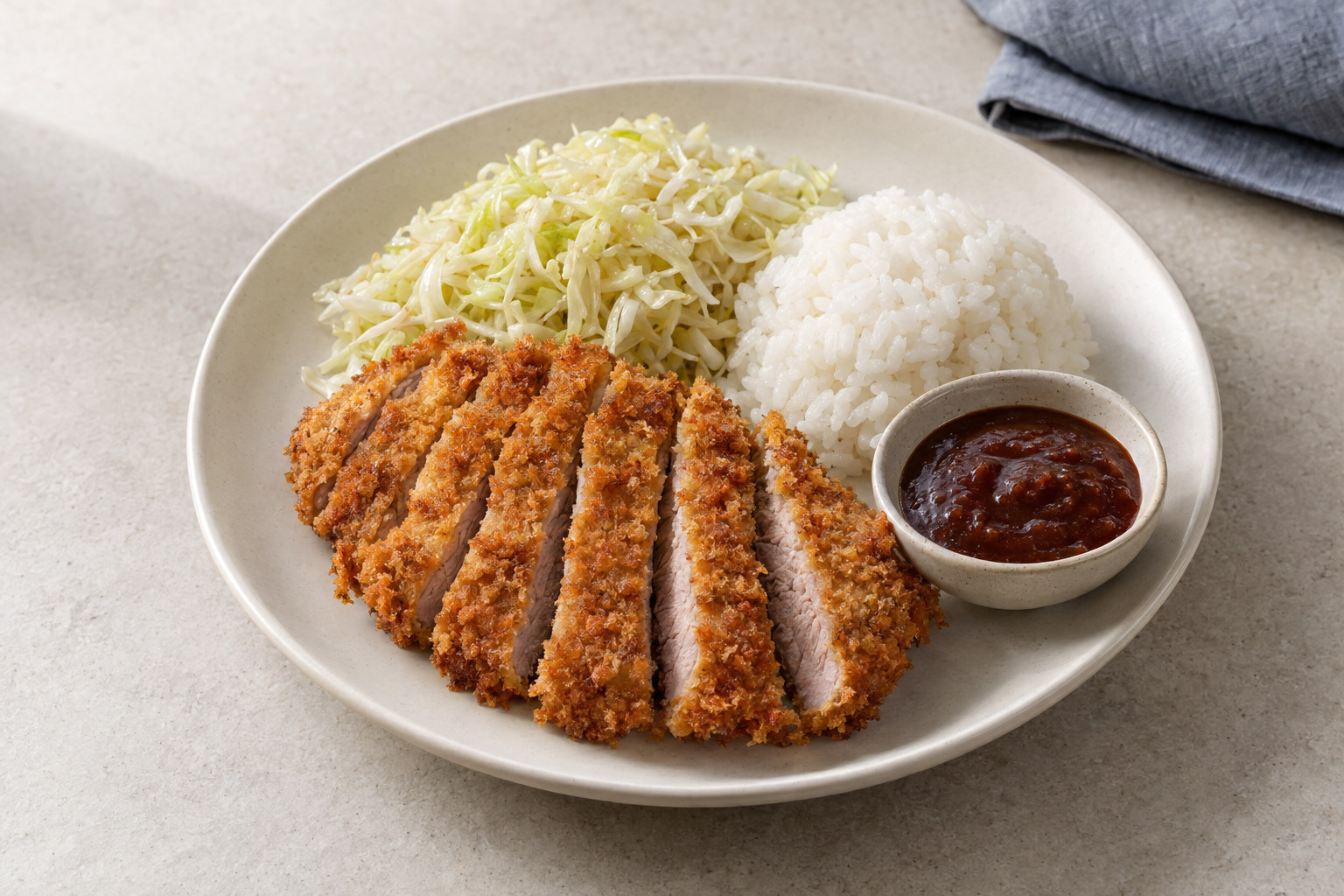
Crisp panko, sweet and sour plum preserve sauce with ginger and cool cabbage bring out the wild boar; mild rice balances the flavours.
Step-by-step method
What you will need
- 28 cm deep frying pan with a flat base at least 24 cm across
- oil thermometer
- 30 × 30 cm baking tray with a metal rack, oven
- 1.5-litre saucepan for rice and a small saucepan for sauce
- 2 hob burners
- kitchen scales, probe thermometer and separate boards for meat and vegetables
Before we start
We first prepare the cabbage and plum sauce. After coating the meat, we cook the rice and leave it covered to finish. We then fry the cutlets one at a time, keeping the rice covered in its saucepan. Depending on the measured temperature, we serve the cutlets at once or finish them in the oven. We never stack them.
Prepare the cabbage and plum sauce
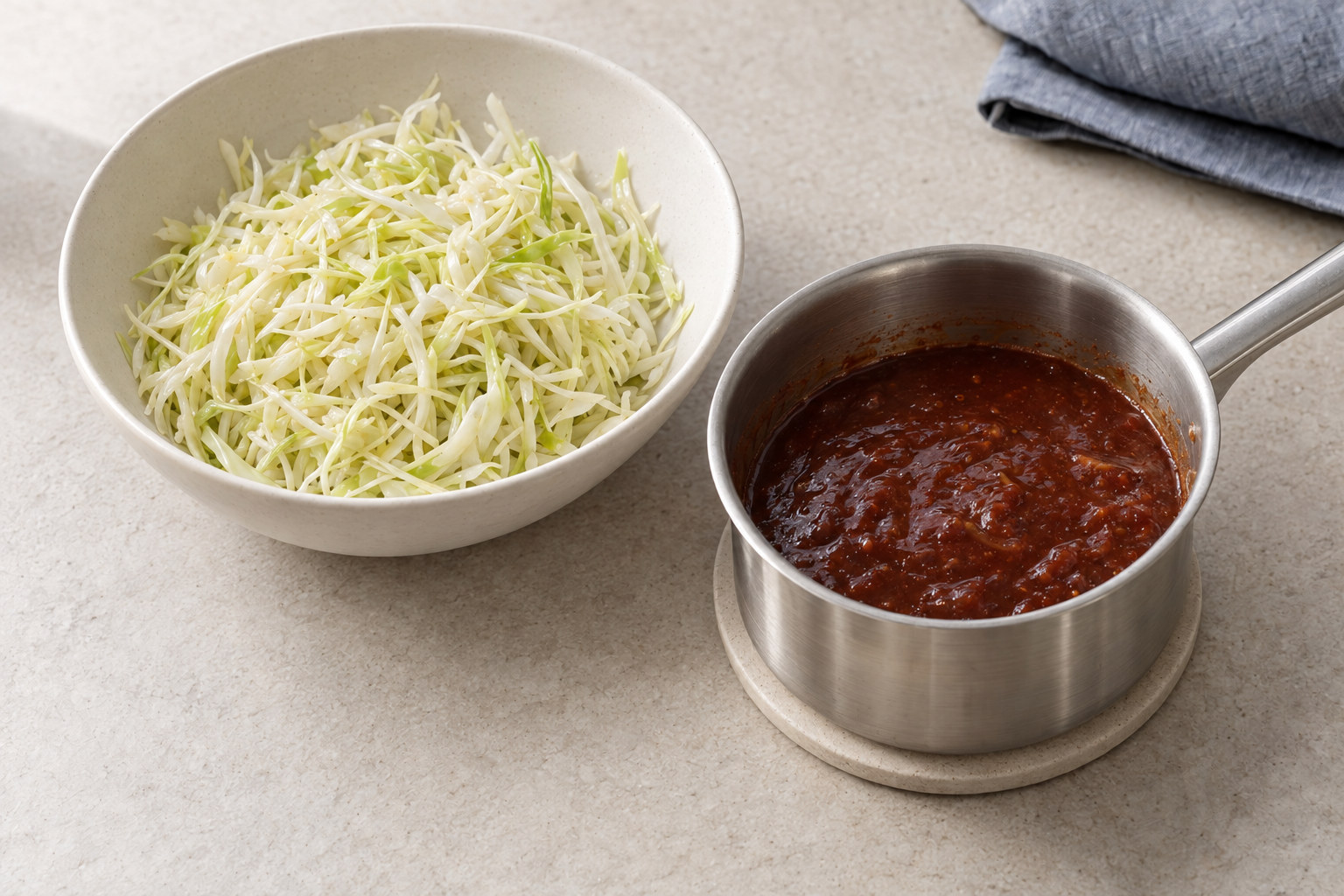
We remove the tough core from the cabbage and shred it very finely. We toss it with the rice vinegar, oil and salt for the salad and chill it. We peel and finely grate the ginger. We put the plum preserve, tomato purée, soy sauce, cider vinegar, water for the sauce and ginger into a small saucepan. We cook for 3–5 minutes until they come together into a smooth sauce, then take it off the heat.
The sweet and sour sauce needs no more salt.
Prepare and coat the cutlets
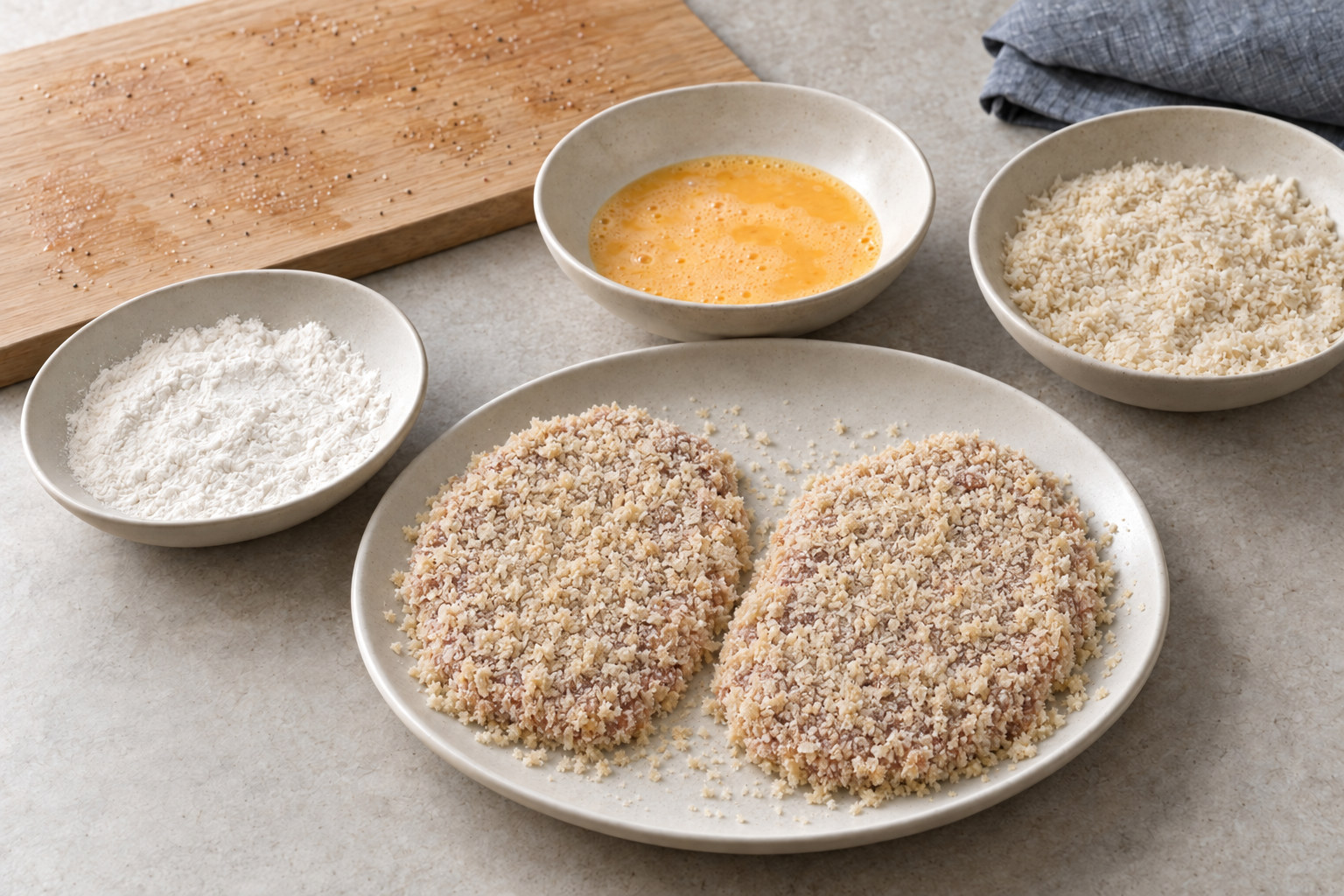
We divide the meat into 2 equal slices. If necessary, we cut into the side of thicker slices and open them like a book, without cutting all the way through. Between two sheets of paper, we gently flatten the meat to 1–1.2 cm thick. We remove the paper, pat the meat dry and season with salt and pepper. We coat it in flour and shake off the excess. Then we coat it in beaten eggs and panko, pressing the crumbs on lightly. We discard any coating ingredients left after contact with the raw meat.
The coating forms a thin, continuous layer.
Cook the rice
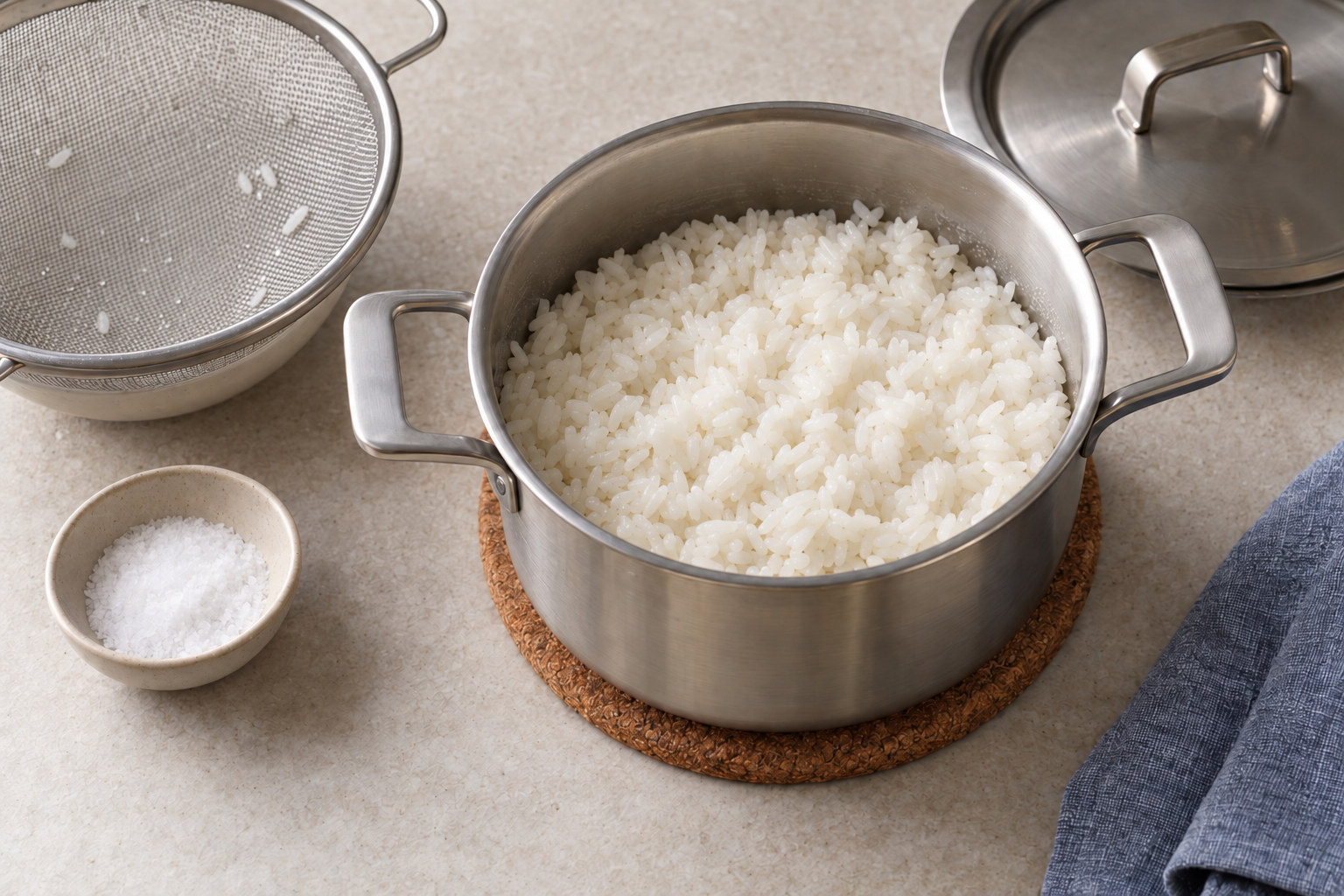
We rinse the rice in a sieve and drain it thoroughly. We bring it to the boil in a saucepan with 210 ml water and the salt for the rice. We cover and cook over the lowest heat for 12–15 minutes without lifting the lid. We take it off the heat and leave it covered for 10 minutes.
The grains are tender and no free water remains at the bottom.
Fry the cutlets one at a time
We preheat the oven to 150 °C and heat the oil in the pan to 170 °C. We fry the 2 cutlets one at a time, each for about 2 minutes on one side and 2 minutes on the other, until pale golden. Between batches, we bring the oil back to 170 °C and remove loose crumbs that are darkening. We set the cutlets in a single layer on a rack above the baking tray. Immediately after frying, we check each cutlet with a probe inserted from the side into the centre of the meat. It is done at a minimum of 74 °C. We move any pieces below that temperature straight to the oven and finish them as described in the next step. Oven finishing can take place while we fry later batches.
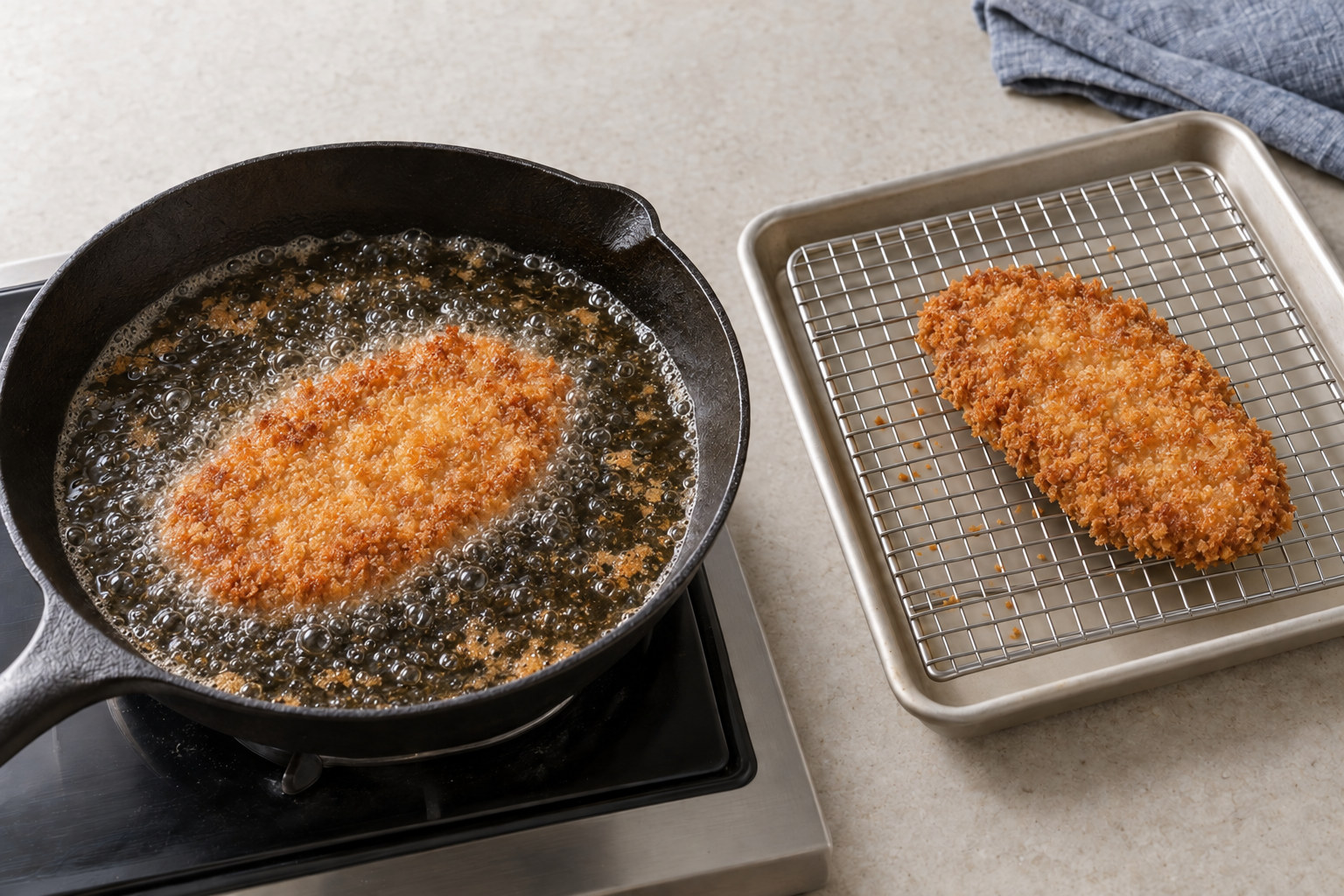
Finish the cutlets and serve
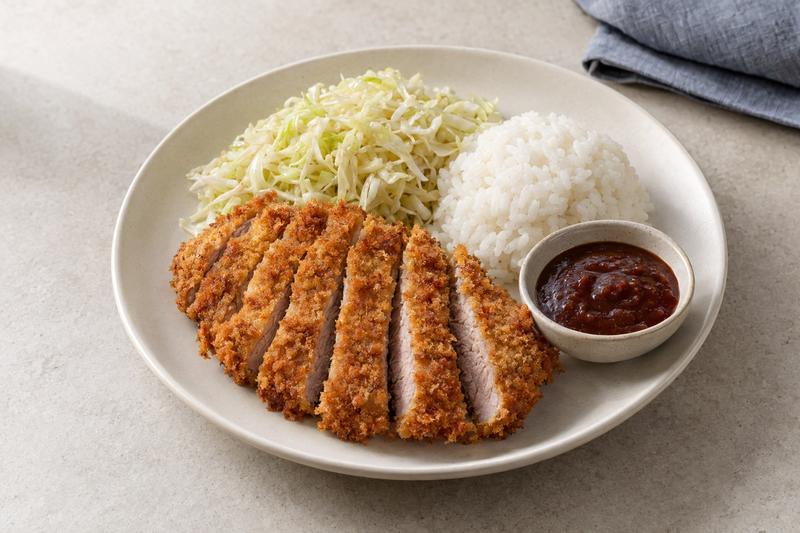
On the rack above the baking tray, we finish in the oven only cutlets that have not yet reached at least 74 °C at the centre after frying. This may take about 5–10 minutes, but we check the temperature from the start with a probe inserted from the side into the centre of the meat. We remove each piece as soon as its centre reads at least 74 °C. We do not return finished cutlets to the oven and serve them as they are ready so they do not wait for the others. We briefly warm the sauce. We put one cutlet sliced into strips on each plate and add rice and cabbage. We drizzle lemon juice over the cabbage and serve the plum sauce beside the cutlet.
We do not pour sauce over the cutlets, so the coating stays crisp.
Tips from our kitchen
- We skim loose panko crumbs from the oil between batches so they do not burn and turn bitter.
- We do not stack the fried cutlets. We serve the sauce alongside to keep the coating crisp.
What to watch out for
- A golden coating does not mean the meat is done. We check each cutlet immediately after frying with a probe inserted from the side into its centre. We finish in the oven only the pieces that have not yet reached the target temperature.
How we serve it
- We serve the finished cutlets as they are ready so they do not wait for the others. We put one cutlet, sliced into strips, on each plate and add rice and cabbage drizzled with lemon juice. We serve the warm plum sauce beside the cutlet.
During preparation
- We measure with a clean probe in the thickest part of each cutlet. We keep raw meat, the chopping board and its utensils separate from the finished food.
Our inspiration
The name tonkatsu joins the Japanese word for pork with a word borrowed from the English “cutlet”. Finely sliced cabbage traditionally accompanies the cutlet, its fresh crunch working well with the fried coating. Our variation uses wild boar loin and our own sauce made from plum preserve.
Similar recipes
Recipe for 4 people
The time allows for 4 frying batches and any finishing in the oven.
Step-by-step method
Before we start
We first prepare the cabbage and plum sauce. After coating the meat, we cook the rice and leave it covered to finish. We then fry the cutlets one at a time, keeping the rice covered in its saucepan. Depending on the measured temperature, we serve the cutlets at once or finish them in the oven. We never stack them.
Prepare the cabbage and plum sauce
We remove the tough core from the cabbage and shred it very finely. We toss it with the rice vinegar, oil and salt for the salad and chill it. We peel and finely grate the ginger. We put the plum preserve, tomato purée, soy sauce, cider vinegar, water for the sauce and ginger into a small saucepan. We cook for 3–5 minutes until they come together into a smooth sauce, then take it off the heat.
The sweet and sour sauce needs no more salt.
Prepare and coat the cutlets
We divide the meat into 4 equal slices. If necessary, we cut into the side of thicker slices and open them like a book, without cutting all the way through. Between two sheets of paper, we gently flatten the meat to 1–1.2 cm thick. We remove the paper, pat the meat dry and season with salt and pepper. We coat it in flour and shake off the excess. Then we coat it in beaten eggs and panko, pressing the crumbs on lightly. We discard any coating ingredients left after contact with the raw meat.
The coating forms a thin, continuous layer.
Cook the rice
We rinse the rice in a sieve and drain it thoroughly. We bring it to the boil in a saucepan with 400 ml water and the salt for the rice. We cover and cook over the lowest heat for 12–15 minutes without lifting the lid. We take it off the heat and leave it covered for 10 minutes.
The grains are tender and no free water remains at the bottom.
Fry the cutlets one at a time
We preheat the oven to 150 °C and heat the oil in the pan to 170 °C. We fry the 4 cutlets one at a time, each for about 2 minutes on one side and 2 minutes on the other, until pale golden. Between batches, we bring the oil back to 170 °C and remove loose crumbs that are darkening. We set the cutlets in a single layer on a rack above the baking tray. Immediately after frying, we check each cutlet with a probe inserted from the side into the centre of the meat. It is done at a minimum of 74 °C. We move any pieces below that temperature straight to the oven and finish them as described in the next step. Oven finishing can take place while we fry later batches.
Finish the cutlets and serve
On the rack above the baking tray, we finish in the oven only cutlets that have not yet reached at least 74 °C at the centre after frying. This may take about 5–10 minutes, but we check the temperature from the start with a probe inserted from the side into the centre of the meat. We remove each piece as soon as its centre reads at least 74 °C. We do not return finished cutlets to the oven and serve them as they are ready so they do not wait for the others. We briefly warm the sauce. We put one cutlet sliced into strips on each plate and add rice and cabbage. We drizzle lemon juice over the cabbage and serve the plum sauce beside the cutlet.
We do not pour sauce over the cutlets, so the coating stays crisp.