
Czechia · Czechia
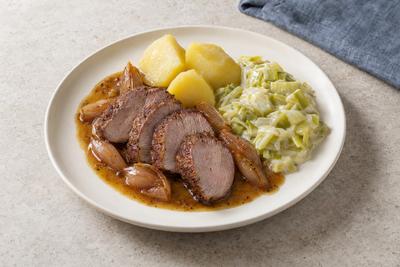
Wild boar medallions with mustard sauce, green beans and potatoes
We serve seared wild boar loin medallions with a creamy sauce gently sharpened with Dijon mustard. We add buttery green beans and potatoes, perfect for mopping up the sauce. A few familiar ingredients make a hearty lunch that lets the flavour of the game shine.
The time includes preparing the ingredients, cooking the sides and finishing the medallions in the oven if needed.
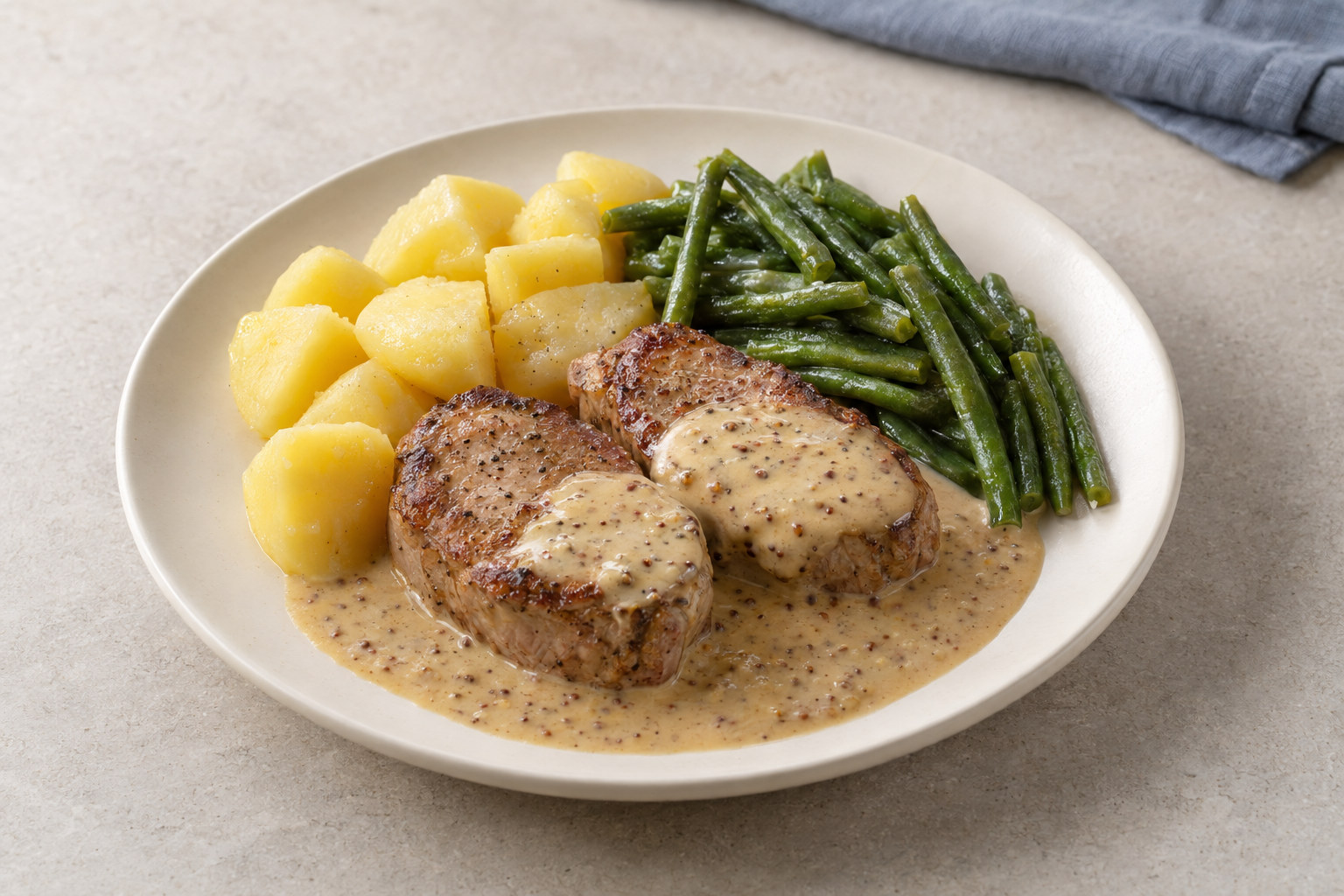
Cream rounds out the gently sharp mustard and the browned meat juices; buttery green beans and potatoes complete the seared wild boar loin.
Step-by-step method
What you will need
- 28–30 cm frying pan with a usable flat base at least 24 cm wide
- 20 × 15 cm roasting tin and oven
- 2-litre saucepan for the potatoes and a second 2-litre saucepan for the beans
- 3 cooking zones
- kitchen scales, probe thermometer and separate chopping boards for meat and vegetables
- colander, clean warm plate for the cooked meat and foil
Before we start
We cook the potatoes and beans separately before searing the meat. We cool and drain the beans, and keep the potatoes covered in a warm pan. If needed, we finish the seared medallions in the oven while making the sauce in the frying pan. Finally, we heat the beans in butter and serve straight away.
Cook the potatoes and prepare the beans
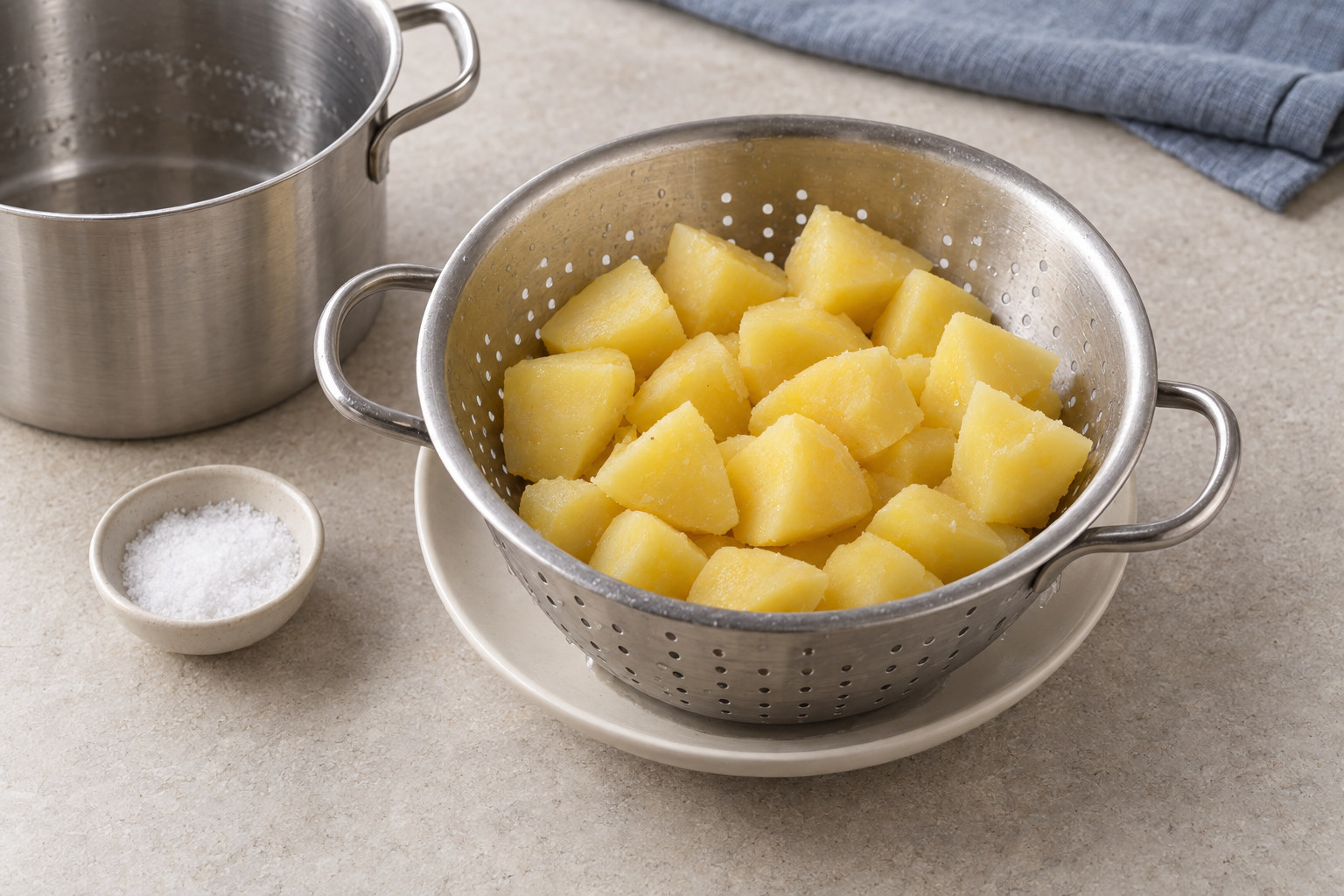
We peel the potatoes and cut them into evenly sized pieces about 3 cm across. We cover them with water and add the salt intended for cooking them. We bring them to a gentle boil and cook for 15–20 minutes until tender. While the potatoes cook, we bring water to the boil in a second pan and add the salt intended for the beans. We wash the beans, trim the ends and cook them for 6–8 minutes from the moment the water returns to the boil, until tender. We drain them, briefly cool them under cold running water and leave them to drain thoroughly. We do not add the butter yet. We drain the tender potatoes and discard the water. We return them to the warm pan, cover and set aside while we prepare the meat.
A knife passes through the centre of a potato without resistance, but the potatoes are not falling apart.
Sear the medallions
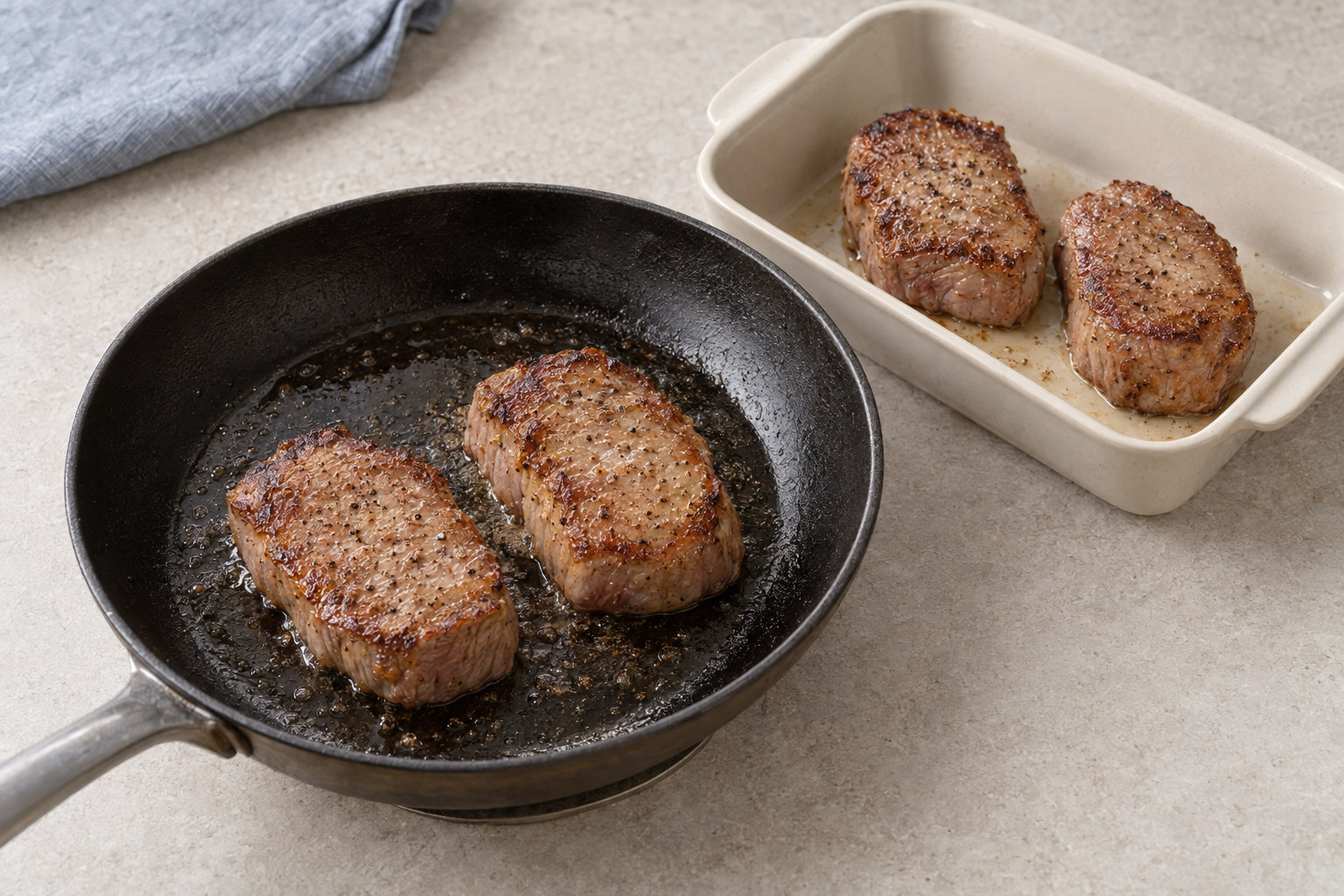
We heat the oven to 150 °C. We cut the loin across the grain into 4 medallions, each 90 g and about 2 cm thick. We pat them dry, season with salt and pepper, and use a frying pan large enough to hold all four with space between them. We heat all the oil in the hot pan and sear all four medallions in one batch for about 2 minutes on each broad side. While they are still in the pan, we check the temperature inside each piece. We transfer any that have already reached at least 74 °C to a clean warm plate and cover loosely with foil. We put the remaining pieces in the roasting tin and place it in the oven.
Medallions of an even thickness cook evenly; we leave space between the pieces.
Finish the meat and make the sauce
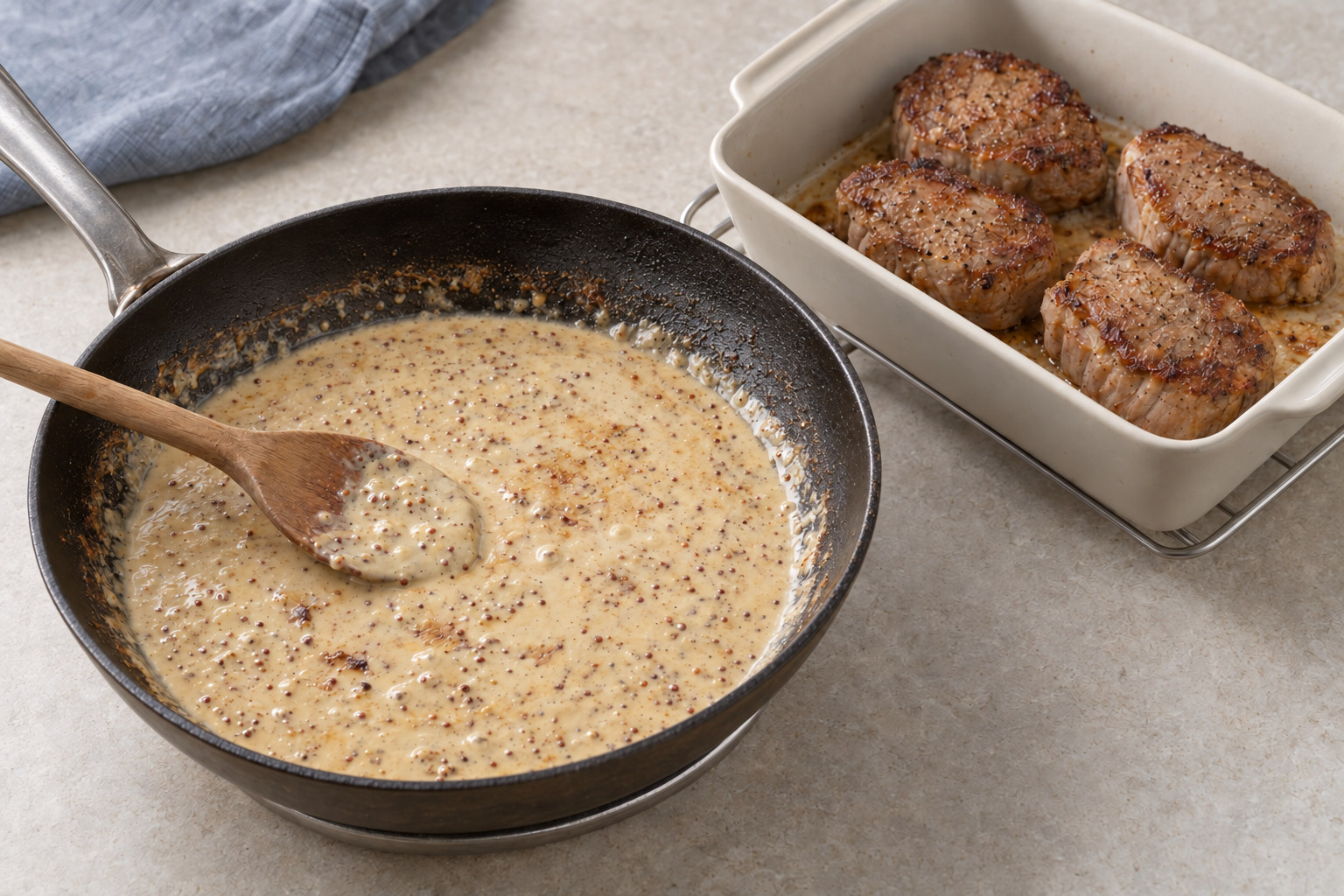
We start checking the medallions in the oven as soon as they go in. We allow roughly 8–15 minutes, but individual pieces may be ready sooner. We remove each one as soon as its centre reaches at least 74 °C and place it on a clean warm plate under loose foil. If every piece has already reached at least 74 °C in the pan, we skip the oven. After the final batch is seared, we pour all the stock into the pan, scrape up the browned bits and simmer for 3 minutes so some of the liquid evaporates. We stir in the mustard and cream and simmer gently for 2–3 minutes. We make the sauce while the meat finishes in the oven or rests briefly on the plate. As soon as the last piece of meat is ready, we heat the beans as described in the next step. We keep the sauce over the lowest heat until serving, stirring occasionally. Finally, we pour the juices from beneath the meat into the sauce. We do not return cooked meat to the oven or leave it to rest again.
The sauce remains pourable and lightly coats a spoon.
Heat the beans in butter
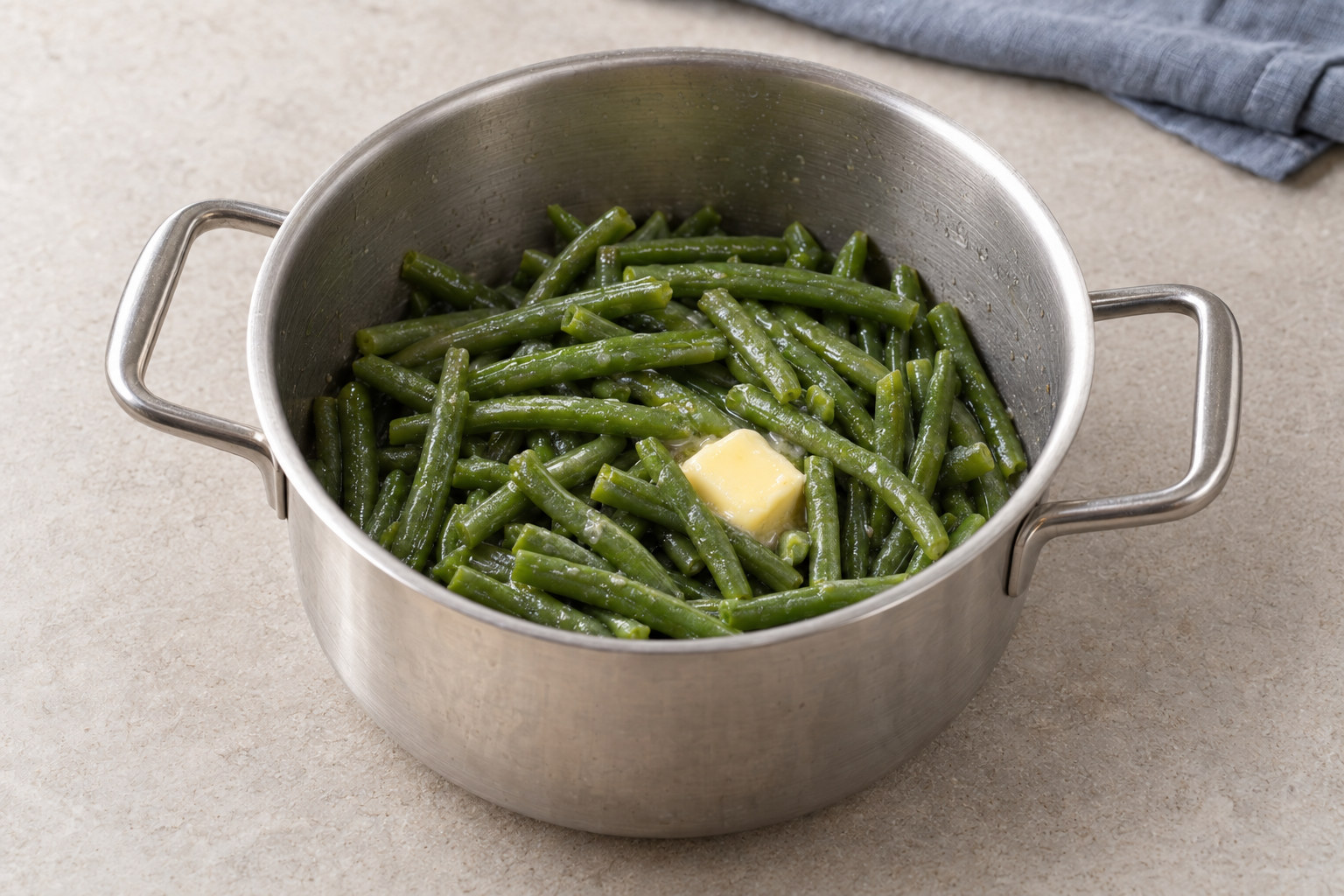
We melt the butter for the beans in their saucepan. We add the drained, cooked beans and heat them through over a medium heat, stirring. While finishing the sauce, we also check the potatoes and, if needed, warm them briefly over a low heat in the covered pan. We finish the sauce at the same time and serve straight away.
The beans are hot and glossy once tossed with the butter.
Serve
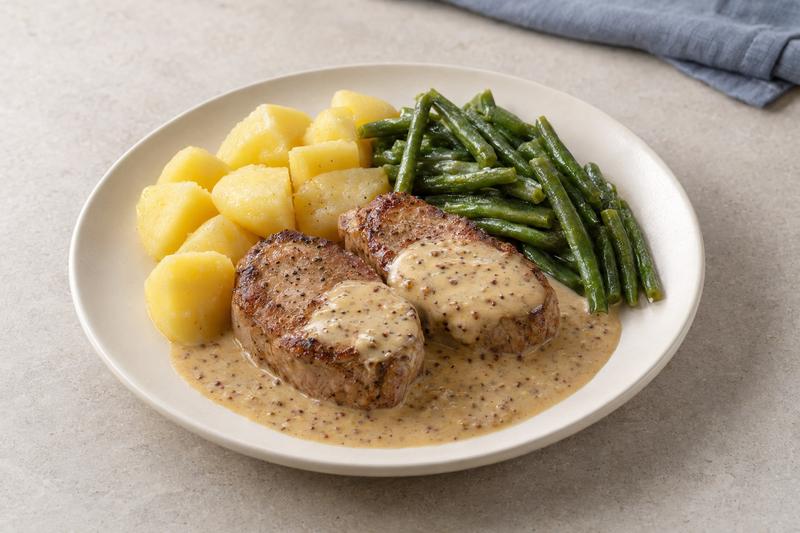
We place two medallions on each of 2 warm plates. We divide the potatoes and beans evenly between the servings, spoon the mustard sauce alongside the meat and serve.
Tips from our kitchen
- We cut the medallions across the grain into evenly thick slices. We drain the pre-cooked beans well and warm them in butter just before serving.
- The mustard also adds salt to the sauce. We taste it after adding the mustard and only season with more salt if needed.
What to watch out for
- We check the centre of each medallion with a probe. We do not cook the finished pieces for longer than needed. The beans are already cooked, so we only need to heat them through in butter while finishing the sauce.
How we serve it
- We place two medallions on each warm plate. We divide the potatoes and beans evenly between the servings, spoon the sauce alongside the meat and serve.
During preparation
- We use a clean probe to check the thickest parts of the medallions. We keep raw meat, its chopping board and used utensils separate from cooked food.
Our inspiration
The browned bits left in the pan after searing the meat form the base of the sauce. A little liquid loosens them and carries their concentrated, savoury flavour into the sauce. For these wild boar medallions, we use stock, then add Dijon mustard and cream for a smooth sauce with a gentle kick.
Similar recipes
Recipe for 4 people
Step-by-step method
Before we start
We cook the potatoes and beans separately before searing the meat. We cool and drain the beans, and keep the potatoes covered in a warm pan. If needed, we finish the seared medallions in the oven while making the sauce in the frying pan. Finally, we heat the beans in butter and serve straight away.
Cook the potatoes and prepare the beans
We peel the potatoes and cut them into evenly sized pieces about 3 cm across. We cover them with water and add the salt intended for cooking them. We bring them to a gentle boil and cook for 15–20 minutes until tender. While the potatoes cook, we bring water to the boil in a second pan and add the salt intended for the beans. We wash the beans, trim the ends and cook them for 6–8 minutes from the moment the water returns to the boil, until tender. We drain them, briefly cool them under cold running water and leave them to drain thoroughly. We do not add the butter yet. We drain the tender potatoes and discard the water. We return them to the warm pan, cover and set aside while we prepare the meat.
A knife passes through the centre of a potato without resistance, but the potatoes are not falling apart.
Sear the medallions
We heat the oven to 150 °C. We cut the loin across the grain into 8 medallions, each 90 g and about 2 cm thick. We pat them dry, season with salt and pepper, and use a frying pan large enough to hold four with space between them. We divide the oil between 2 batches of four medallions. We sear each batch in the hot pan for about 2 minutes on each broad side. While they are still in the pan, we check the temperature inside each piece. We transfer any that have already reached at least 74 °C to a clean warm plate and cover loosely with foil. We put the remaining pieces in the roasting tin and place it in the oven. If needed, we finish the first batch in the oven while searing the second; we do not wait to put all the pieces in together.
Medallions of an even thickness cook evenly; we leave space between the pieces.
Finish the meat and make the sauce
We start checking the medallions in the oven as soon as they go in. We allow roughly 8–15 minutes, but individual pieces may be ready sooner. We remove each one as soon as its centre reaches at least 74 °C and place it on a clean warm plate under loose foil. If every piece has already reached at least 74 °C in the pan, we skip the oven. After the final batch is seared, we pour all the stock into the pan, scrape up the browned bits and simmer for 3 minutes so some of the liquid evaporates. We stir in the mustard and cream and simmer gently for 2–3 minutes. We make the sauce while the meat finishes in the oven or rests briefly on the plate. As soon as the last piece of meat is ready, we heat the beans as described in the next step. We keep the sauce over the lowest heat until serving, stirring occasionally. Finally, we pour the juices from beneath the meat into the sauce. We do not return cooked meat to the oven or leave it to rest again.
The sauce remains pourable and lightly coats a spoon.
Heat the beans in butter
We melt the butter for the beans in their saucepan. We add the drained, cooked beans and heat them through over a medium heat, stirring. While finishing the sauce, we also check the potatoes and, if needed, warm them briefly over a low heat in the covered pan. We finish the sauce at the same time and serve straight away.
The beans are hot and glossy once tossed with the butter.
Serve
We place two medallions on each of 4 warm plates. We divide the potatoes and beans evenly between the servings, spoon the mustard sauce alongside the meat and serve.