
Modern European cuisine · Modern European cuisine
Pressed red deer neck with celeriac purée and fondant potatoes
We shape tender red deer neck into neat portions and coat them in glossy red-wine jus with juniper. Smooth celeriac purée, buttery potatoes and a delicate crunch of leek make a celebratory accompaniment. We prepare the meat the day before; pressing it overnight gives it shape for the next day.
We prepare the meat the day before. The time includes braising, rapid cooling within 2 hours, 8 hours in the fridge and finishing the next day. A tougher neck may need longer braising.
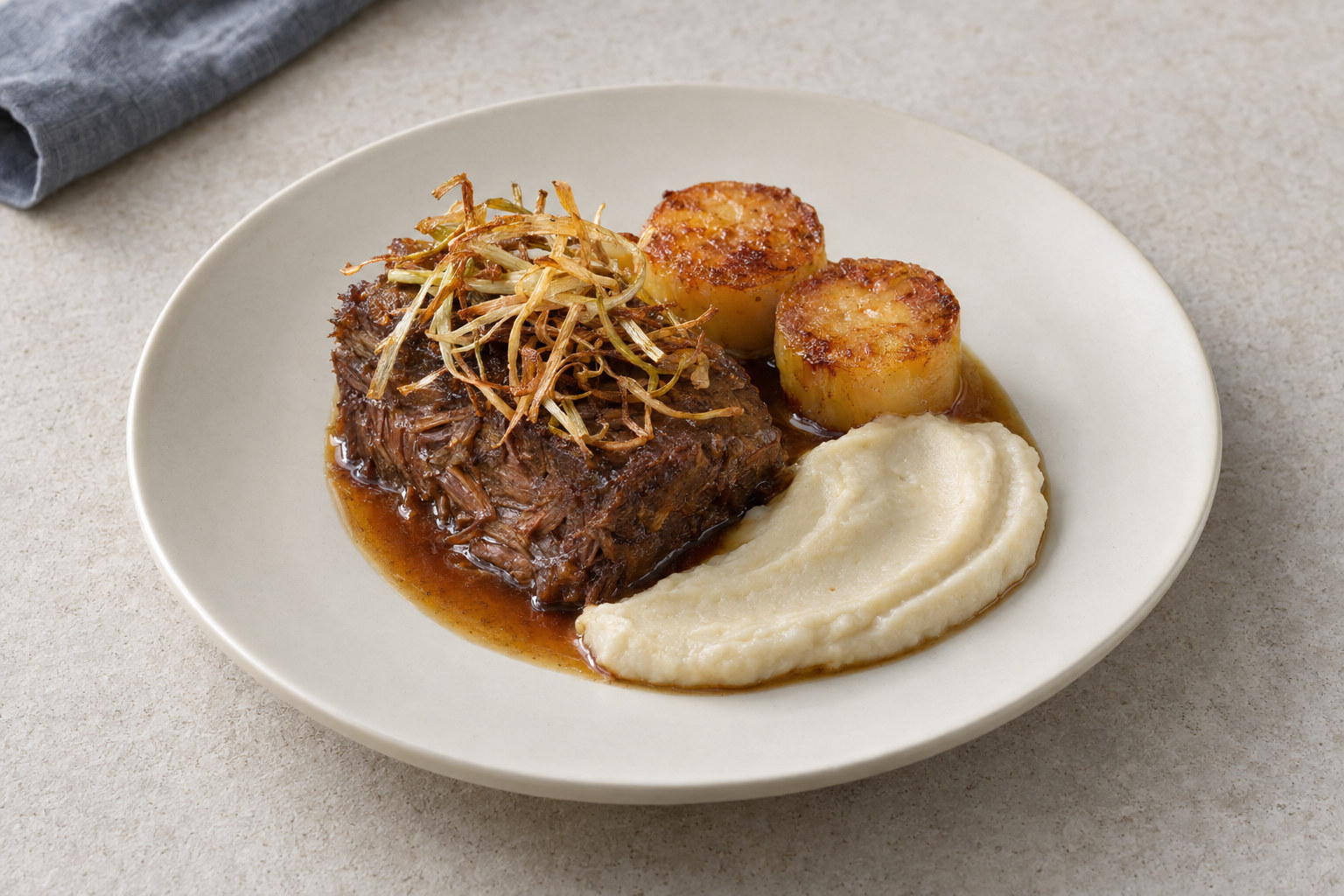
Full-flavoured meat jus with juniper is softened by celeriac purée and buttery potatoes; fried leek adds a light crunch.
Step-by-step method
What you will need
- kitchen scales
- probe thermometer with a thin probe
- knife and separate chopping boards
- measuring jug
- heavy 20 cm, 3 l saucepan with a tight-fitting lid
- shallow metal mould, 15 × 10 cm and 4 cm high
- smaller spare dish for any excess
- baking paper
- flat board and clean 500 g weight
- large container for a cooling bath
- ice packs for the bath
- fridge with a thermometer
- fine-mesh sieve
- blender
- 1.2 l saucepan for the purée
- 18 cm saucepan with a lid for the potatoes
- 20 × 15 cm roasting dish
- 12 cm saucepan at least 10 cm tall for frying
- oil thermometer
- slotted spoon
- kitchen paper
- wide spatula
- oven
- kettle
- small 0.5 l saucepan for the final jus reduction
- smaller clean board and weight for the spare dish
Before we start
On day one, we braise and shred the meat, press it into a shallow layer and cool it rapidly; then we press it in the fridge for 8 hours. The next day, we preheat the oven and start the fondant potatoes and purée at the same time. After 10 minutes, we put the meat and jus in the oven. We keep the finished sides covered over the lowest heat, stirring the purée occasionally. We fry the leek only once the meat has reached the required temperature.
Cut and sear
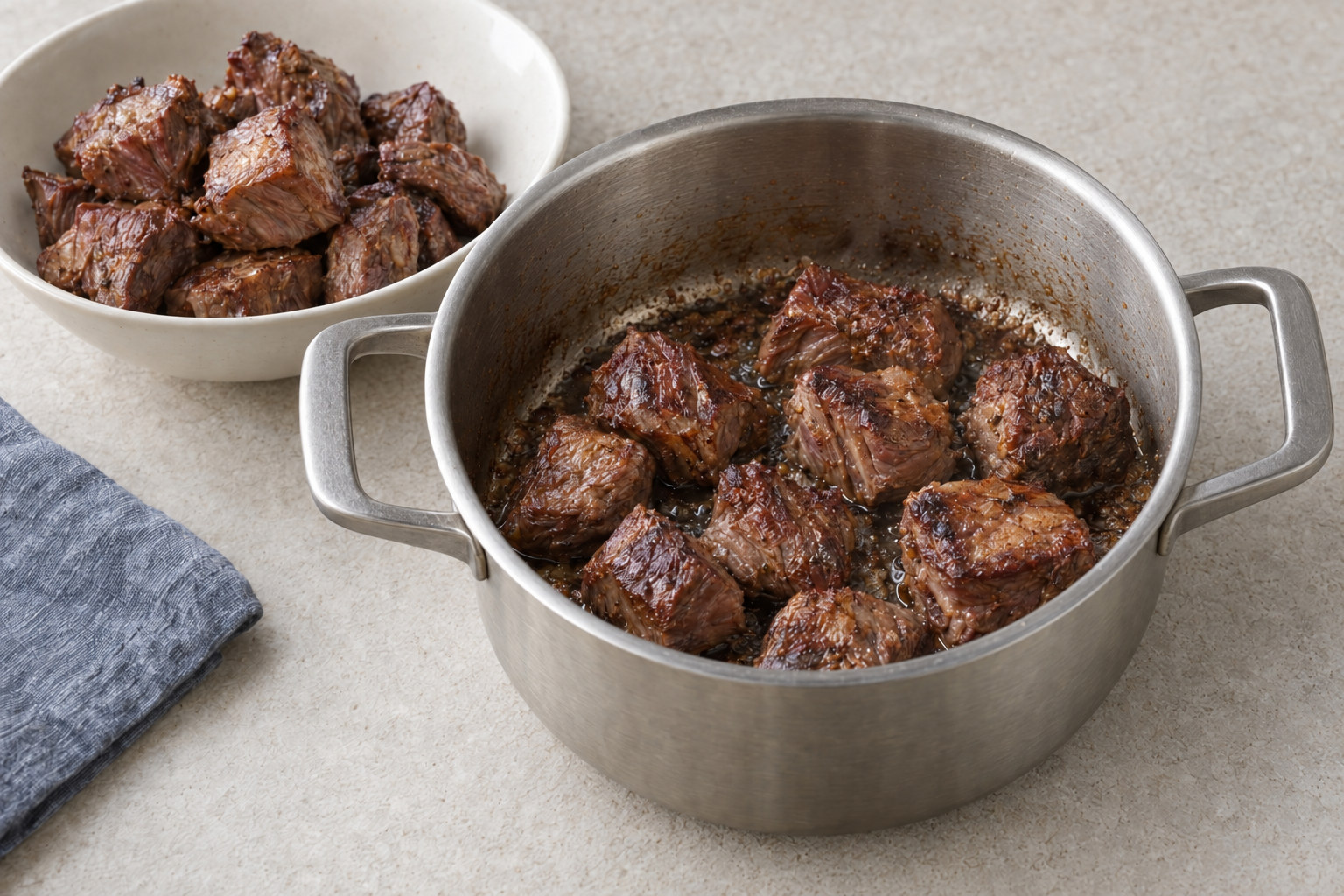
We cut the neck into 3 cm cubes, pat them dry, season with salt and pepper. We set aside a teaspoon of the oil for the onion and divide the rest between two 250 g batches. We sear each batch over a medium-high heat for 4–6 minutes, then transfer it to a clean bowl.
The cubes have browned surfaces; they must not boil in the juices at the bottom of the pan.
Build the braising base
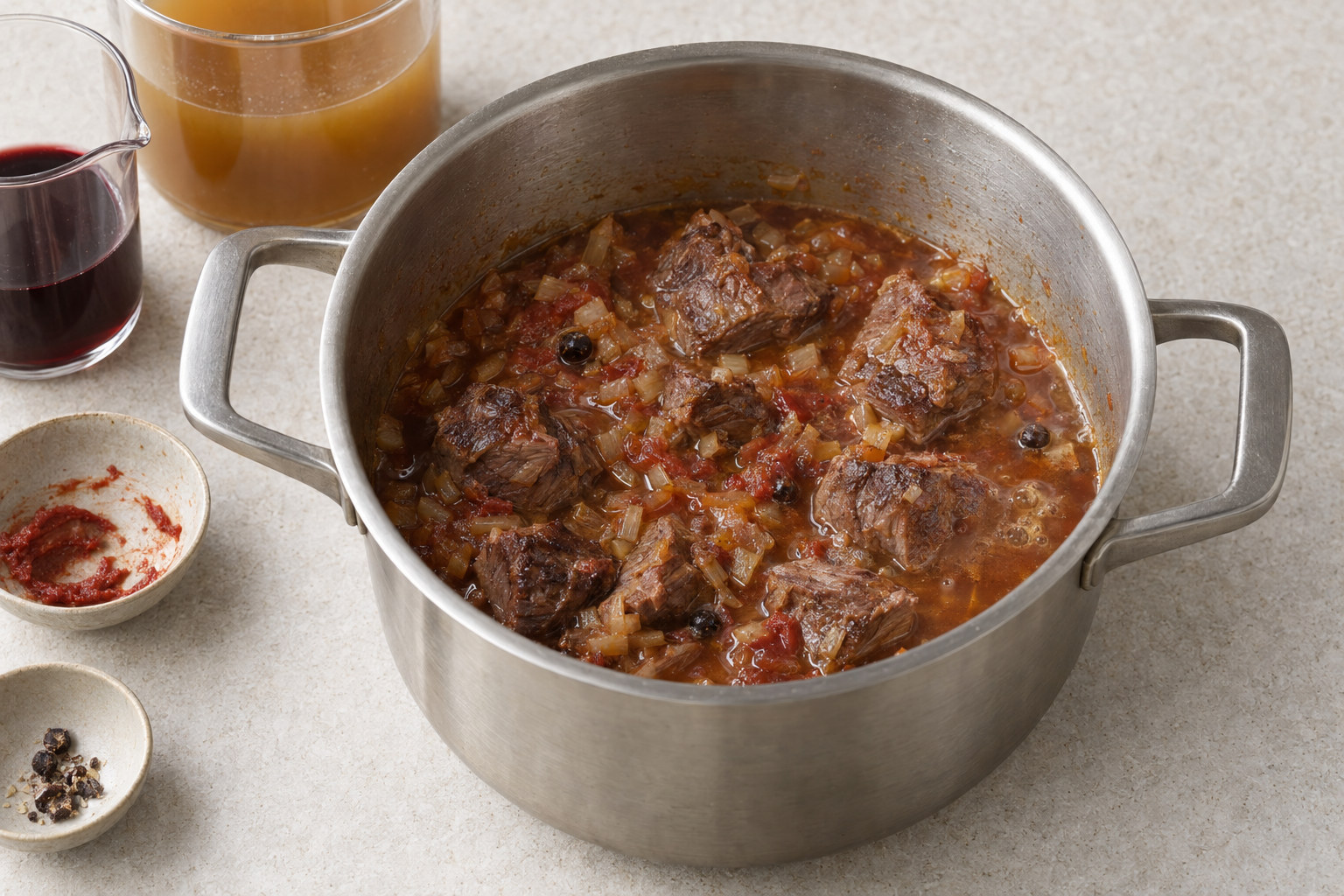
In the same pan, we cook the peeled, finely chopped onion in the remaining oil, stirring constantly, for 7–9 minutes until golden. We stir in the tomato purée and juniper, add the wine and simmer for 3 minutes. We return the meat and any collected juices, pour in all the stock and bring it to a very gentle simmer.
The onion smells sweet and the spices are not burnt.
Braise the meat until tender
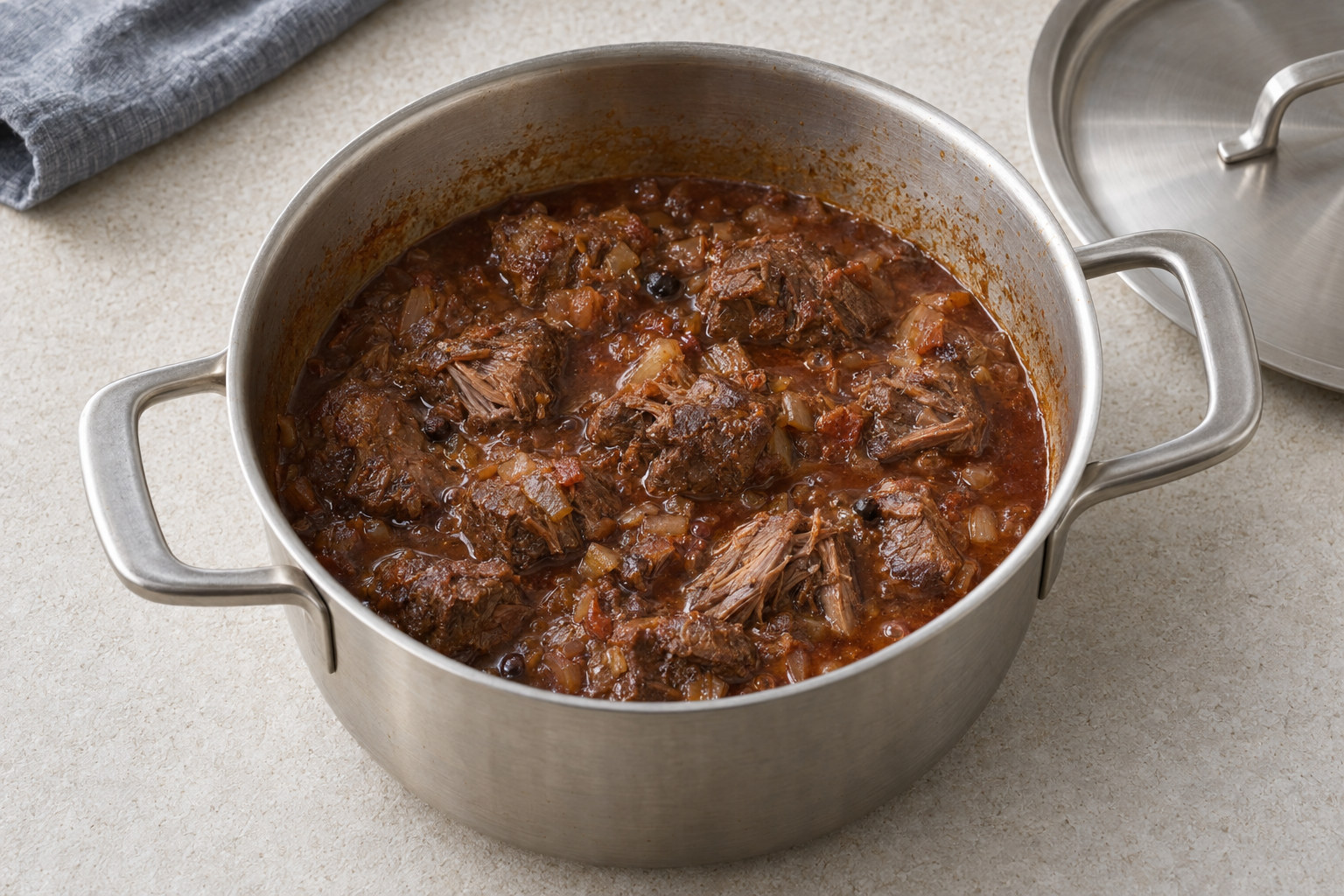
We cover the pan and braise the meat over a low heat for about 180–240 minutes. The liquid should bubble only occasionally. We stir every half-hour and add a little hot water as needed. The neck is ready when we can easily pull it apart with a fork. If it is still firm, we continue braising. If the jus reduces quickly, we lower the heat and check that the lid fits tightly.
Press and cool the meat
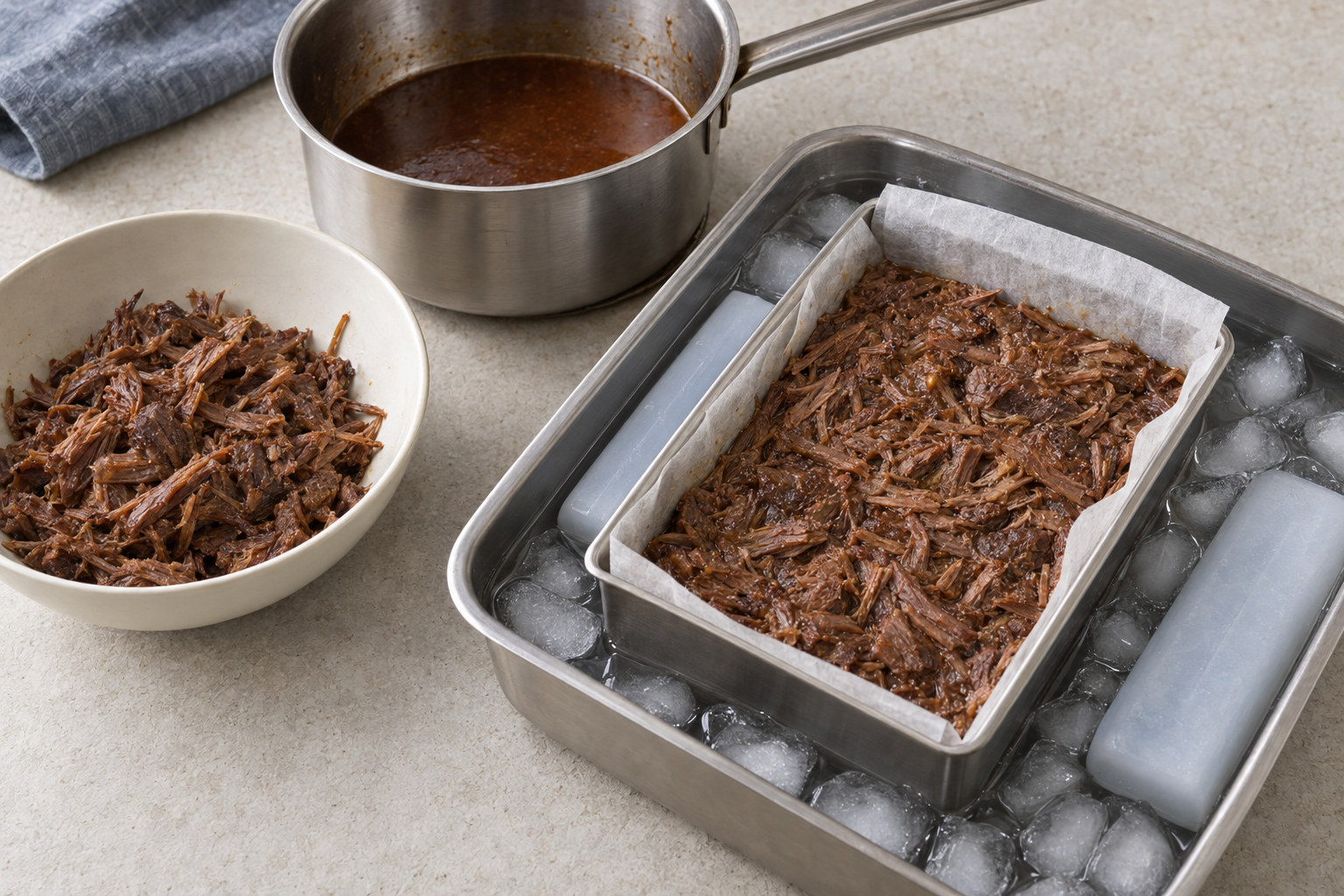
We remove the tender meat, pull it into short strands and let it drain. We strain the braising jus and reduce it over a medium heat to about 180 ml. If there is already less than that after straining, we do not reduce it further; we top it up to this exact volume with the water reserved for the jus. We stir two to three tablespoons of thick jus into the meat, just enough to bind the strands without leaving a pool. We press the meat into a baking-paper-lined mould in a layer no deeper than 3 cm. If there is any extra, we put it in a second shallow dish; we do not make the meat layer deeper. We place all the meat moulds and the separate container of remaining jus in cold water with ice packs, taking care that no water gets inside. We cool them rapidly and refrigerate them covered at 0–5 °C no later than 2 hours after cooking. Only once they are in the fridge do we place a flat board and a clean weight on the main mould; we use a suitably smaller weight for the smaller dish, if needed. We press for 8 hours. Once cold, the meat must hold together when carefully sliced.
Cook and blend the purée
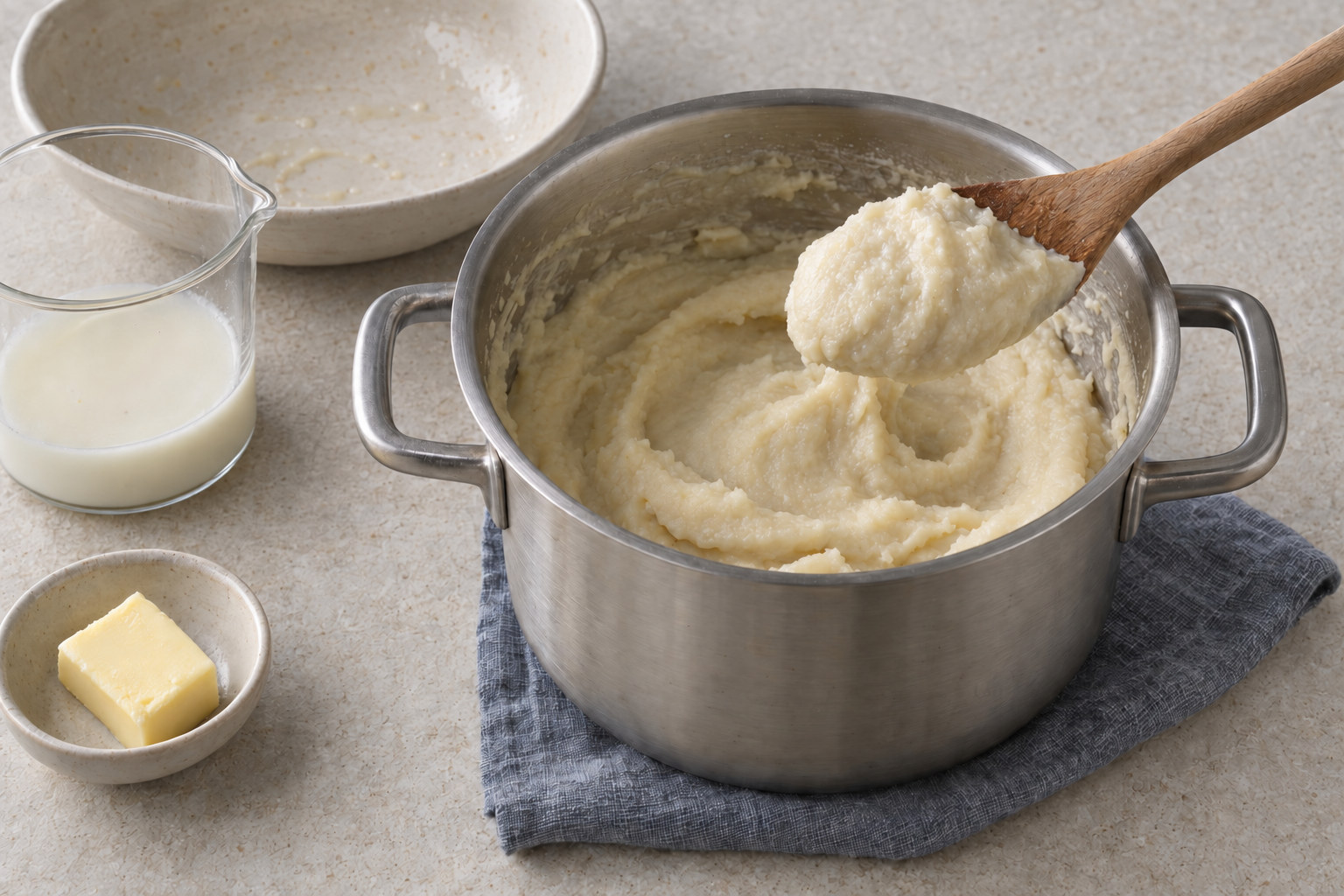
The next day, we peel the celeriac and cut it into 1 cm cubes. We put it in a pan with the milk, water for the purée and all the salt for the purée. We cover and simmer gently for 20–30 minutes, stirring a few times. We drain it and reserve the liquid. We blend the celeriac with the butter and first 40 ml of the reserved liquid, then add more two teaspoons at a time, up to 100 ml in total. We keep the smooth, thick purée covered in the pan over the lowest heat, stirring occasionally. We set the remaining liquid aside.
The purée is completely smooth and holds on a spoon; it must not be watery.
Make the fondant potatoes
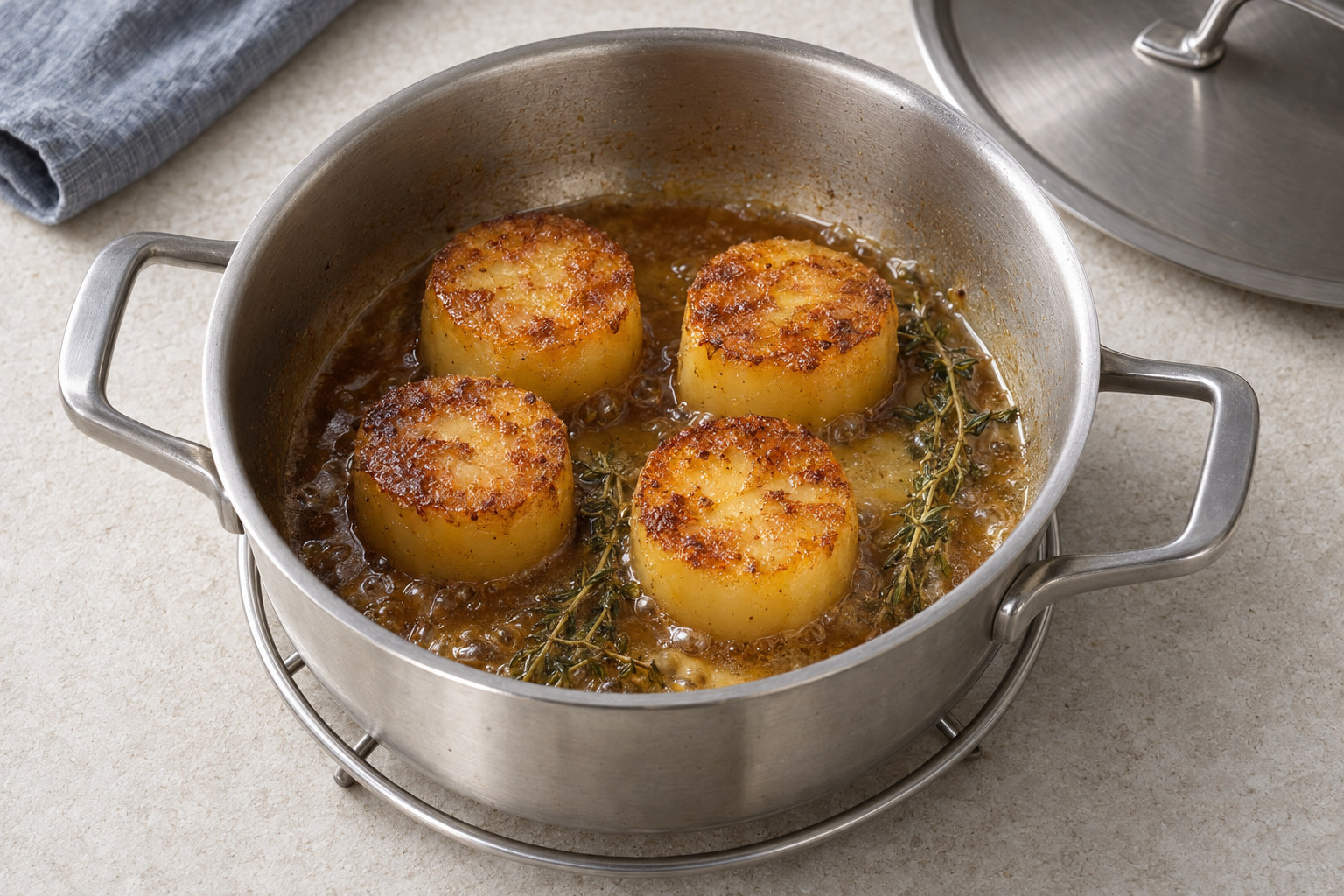
We peel the potatoes, cut them into 4 similar batons about 3 cm high and pat them dry. In a saucepan, we brown both flat sides in the butter over a medium heat for 3–4 minutes per side, then season with salt and add the thyme. We pour in all the vegetable stock and cover the pan; the liquid does not need to come halfway up the potatoes. We simmer gently for 25–35 minutes, carefully turning them every 8–10 minutes. As the liquid evaporates, we add water for the potatoes in 20 ml increments, up to 100 ml. When a thin knife passes through the centre, we uncover the pan and reduce the liquid to a glaze over 3–5 minutes. We remove the thyme stems and keep the potatoes covered and warm.
The potato holds its shape but is creamy-soft inside.
Slice, reheat and glaze
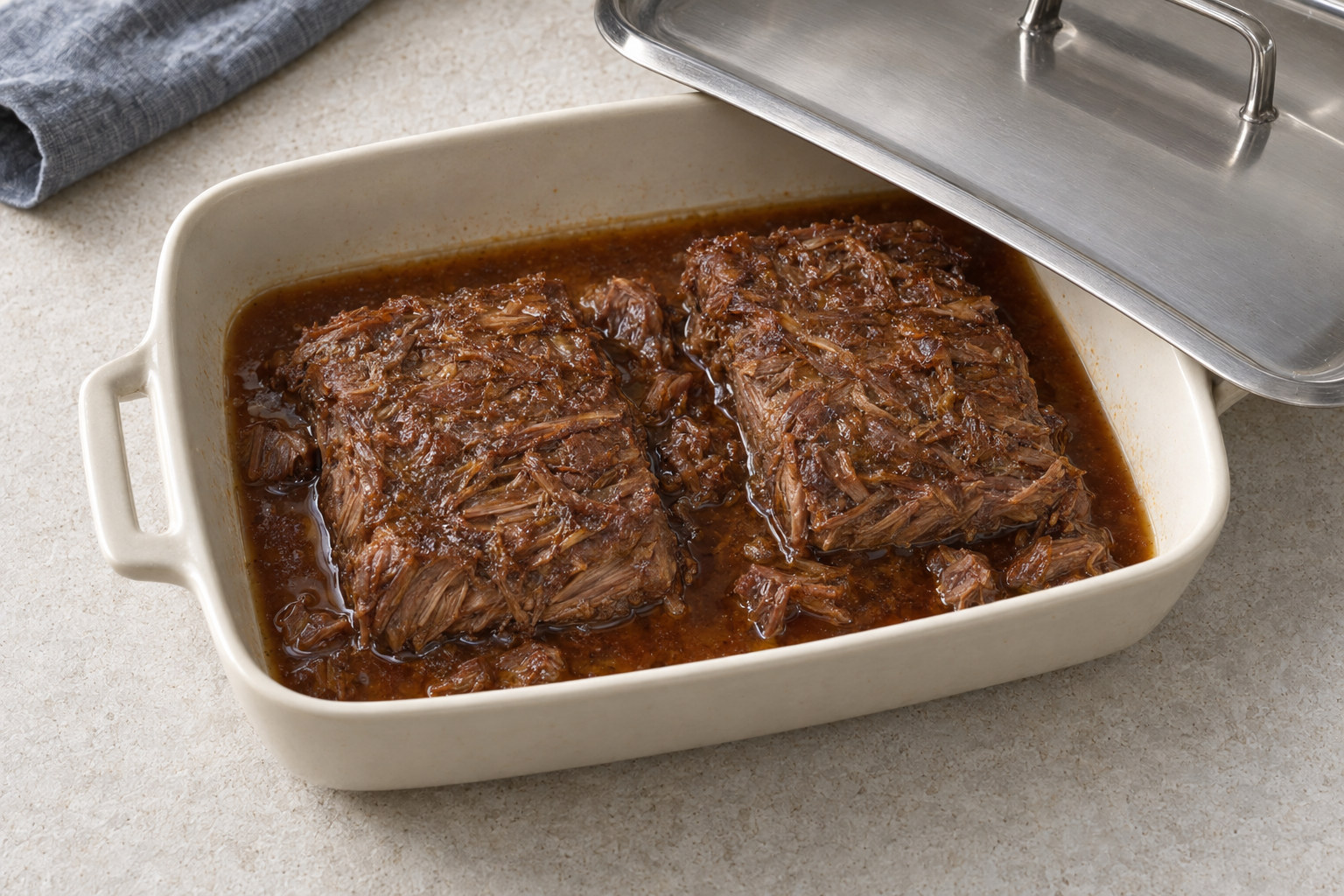
We turn the cold meat out of all the moulds used. We cut the main slab into 2 rectangles and divide any meat from the second dish evenly between them. Using a wide spatula, we transfer everything in a single layer to a roasting dish, leaving smaller pieces beside the main portions. We pour in all the reserved jus, at least 135 ml, and cover. We reheat in a preheated conventional oven at 170 °C for 25–40 minutes. From 25 minutes onwards, we check that the centre of each portion reaches at least 70 °C for 2 minutes. We do not turn the softened blocks; we baste them with the jus. If the jus is thin, we pour some into a spare small saucepan and reduce it for 3–5 minutes, then spoon it over the meat. Once the temperature is reached, we lower the oven to 80 °C and keep the meat covered while frying all the batches of leek. We reheat it only once and, when transferring it, support each whole portion, including the smaller pieces added to it.
We support each hot portion across its full base so the tender strands do not fall apart. We reduce the jus to a thin glaze.
Fry the leek
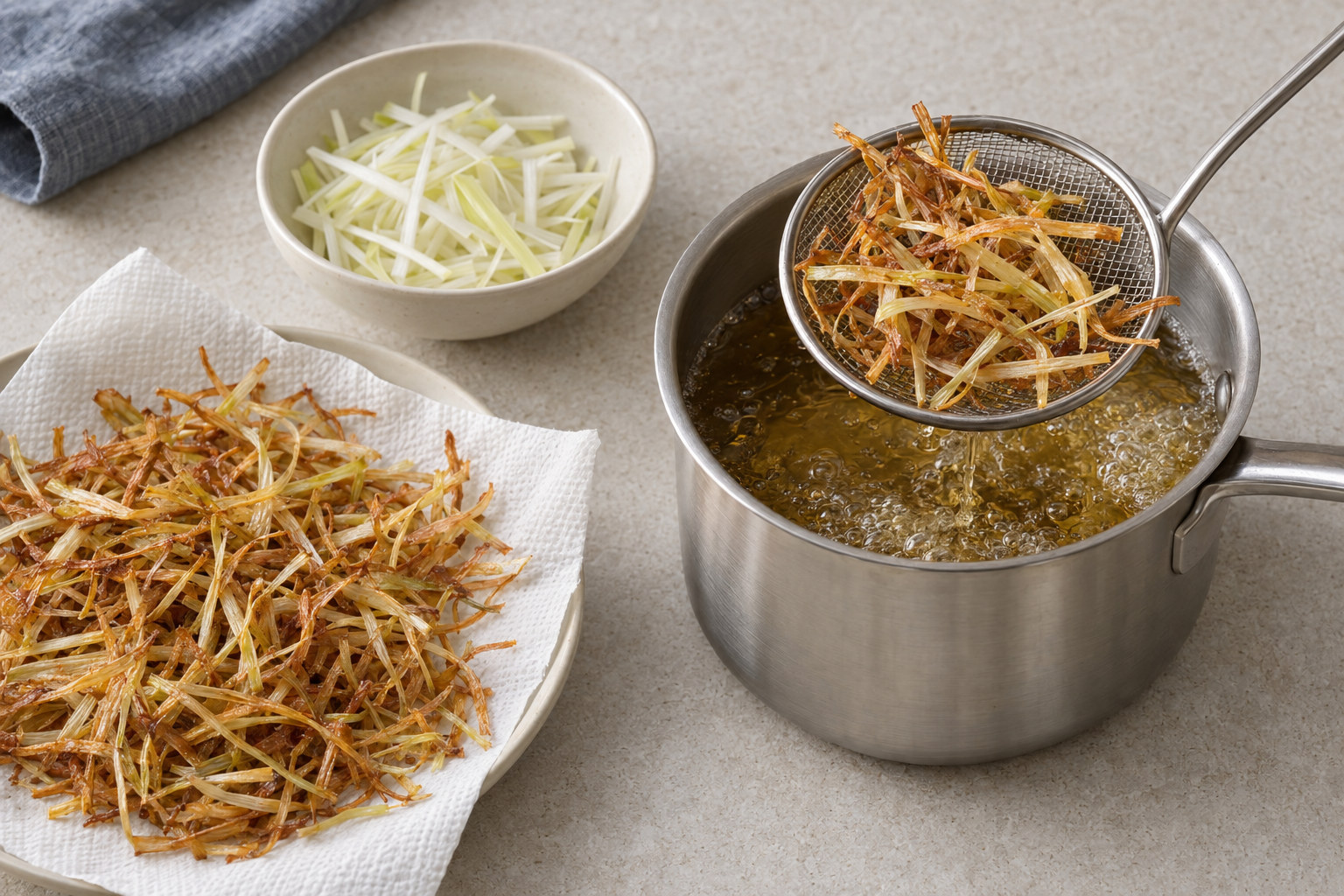
We cut the cleaned and thoroughly dried white part of the leek into 5 cm strips, 1–2 mm wide. We heat the oil to 160 °C in a narrow, tall saucepan. We fry the leek in three small batches for 40–70 seconds until lightly golden, letting the oil return to 160 °C between batches. We lift it onto kitchen paper and season evenly with the pinch of salt set aside.
The leek is lightly golden and crisp; dark brown leek tends to taste bitter.
Portion and serve
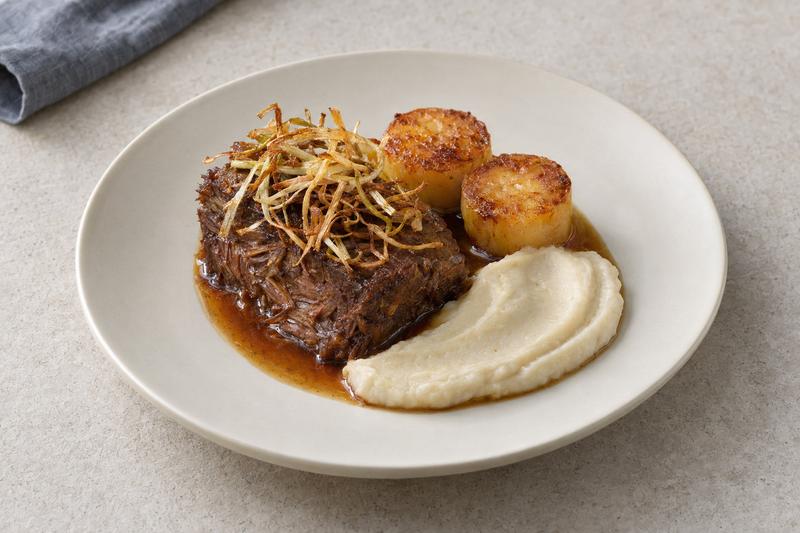
We divide the celeriac purée between 2 warmed plates, add one carefully lifted portion of red deer neck to each and two fondant potatoes per plate. We spoon the jus over the meat and top it with crisp leek. We serve immediately so the leek stays crisp.
Tips from our kitchen
- We braise the neck until it pulls apart into tender strands, then drain off excess jus before pressing. The natural connective tissue holds the shape when cold; we handle the portions carefully when reheating.
- The total time includes rapid cooling and 8 hours in the fridge. We use the meat and jus within 48 hours of the initial cooking.
What to watch out for
- Wet meat steams in an overcrowded pan instead of browning. We pat it dry before searing and work in batches.
How we serve it
- We lift the pressed meat portions with a wide spatula. We add the crisp leek only once plated and serve straight away so it stays crisp.
During preparation
- We keep raw meat and its utensils separate from cooked food. We measure the temperature in the centre of the meat with a clean, thin probe.
- We rapidly cool the meat and jus in shallow containers, refrigerate them at 0–5 °C within 2 hours of cooking at the latest, and use them within 48 hours. We reheat them only once and check that the centre of each portion reaches at least 70 °C for 2 minutes.
Our inspiration
Matt Whitfield brought experience from New York’s Eleven Madison Park and returned to Britain in 2019 as head chef at The Terrace in The Montagu Arms. His venison-neck recipe shows how meat suited to a long braise can take centre stage on a celebratory plate. We pair our red deer neck with celeriac purée and buttery potatoes. Beneath the fork, the neat portion gives way into tender strands under a rich jus — a lovely surprise in the first bite.
Matt Whitfield
British chef Matt Whitfield worked at Eleven Madison Park in New York. After returning to Britain in 2019, he led the kitchen at The Terrace in The Montagu Arms.
Similar recipes
Recipe for 4 people
Step-by-step method
Before we start
On day one, we braise and shred the meat, press it into a shallow layer and cool it rapidly; then we press it in the fridge for 8 hours. The next day, we preheat the oven and start the fondant potatoes and purée at the same time. After 10 minutes, we put the meat and jus in the oven. We keep the finished sides covered over the lowest heat, stirring the purée occasionally. We fry the leek only once the meat has reached the required temperature.
Cut and sear
We cut the neck into 3 cm cubes, pat them dry, season with salt and pepper. We set aside half a tablespoon of the oil for the onion and divide the rest between four 250 g batches. We sear each batch over a medium-high heat for 4–6 minutes, then transfer it to a clean bowl.
The cubes have browned surfaces; they must not boil in the juices at the bottom of the pan.
Build the braising base
In the same pan, we cook the peeled, finely chopped onion in the remaining oil, stirring constantly, for 7–9 minutes until golden. We stir in the tomato purée and juniper, add the wine and simmer for 3 minutes. We return the meat and any collected juices, pour in all the stock and bring it to a very gentle simmer.
The onion smells sweet and the spices are not burnt.
Braise the meat until tender
We cover the pan and braise the meat over a low heat for about 180–240 minutes. The liquid should bubble only occasionally. We stir every half-hour and add a little hot water as needed. The neck is ready when we can easily pull it apart with a fork. If it is still firm, we continue braising. If the jus reduces quickly, we lower the heat and check that the lid fits tightly.
Press and cool the meat
We remove the tender meat, pull it into short strands and let it drain. We strain the braising jus and reduce it over a medium heat to about 320 ml. If there is already less than that after straining, we do not reduce it further; we top it up to this exact volume with the water reserved for the jus. We stir 60–80 ml of thick jus into the meat, just enough to bind the strands without leaving a pool. We press the meat into a baking-paper-lined mould in a layer no deeper than 3 cm. If there is any extra, we put it in a second shallow dish; we do not make the meat layer deeper. We place all the meat moulds and the separate container of remaining jus in cold water with ice packs, taking care that no water gets inside. We cool them rapidly and refrigerate them covered at 0–5 °C no later than 2 hours after cooking. Only once they are in the fridge do we place a flat board and a clean weight on the main mould; we use a suitably smaller weight for the smaller dish, if needed. We press for 8 hours. Once cold, the meat must hold together when carefully sliced.
Cook and blend the purée
The next day, we peel the celeriac and cut it into 1 cm cubes. We put it in a pan with the milk, water for the purée and all the salt for the purée. We cover and simmer gently for 20–30 minutes, stirring a few times. We drain it and reserve the liquid. We blend the celeriac with the butter and first 70 ml of the reserved liquid, then add more two teaspoons at a time, up to 180 ml in total. We keep the smooth, thick purée covered in the pan over the lowest heat, stirring occasionally. We set the remaining liquid aside.
The purée is completely smooth and holds on a spoon; it must not be watery.
Make the fondant potatoes
We peel the potatoes, cut them into 8 similar batons about 3 cm high and pat them dry. In a saucepan, we brown both flat sides in the butter over a medium heat for 3–4 minutes per side, then season with salt and add the thyme. We pour in all the vegetable stock and cover the pan; the liquid does not need to come halfway up the potatoes. We simmer gently for 25–35 minutes, carefully turning them every 8–10 minutes. As the liquid evaporates, we add water for the potatoes in 20 ml increments, up to 160 ml. When a thin knife passes through the centre, we uncover the pan and reduce the liquid to a glaze over 3–5 minutes. We remove the thyme stems and keep the potatoes covered and warm.
The potato holds its shape but is creamy-soft inside.
Slice, reheat and glaze
We turn the cold meat out of all the moulds used. We cut the main slab into 4 rectangles and divide any meat from the second dish evenly between them. Using a wide spatula, we transfer everything in a single layer to a roasting dish, leaving smaller pieces beside the main portions. We pour in all the reserved jus, at least 240 ml, and cover. We reheat in a preheated conventional oven at 170 °C for 25–40 minutes. From 25 minutes onwards, we check that the centre of each portion reaches at least 70 °C for 2 minutes. We do not turn the softened blocks; we baste them with the jus. If the jus is thin, we pour some into a spare small saucepan and reduce it for 3–5 minutes, then spoon it over the meat. Once the temperature is reached, we lower the oven to 80 °C and keep the meat covered while frying all the batches of leek. We reheat it only once and, when transferring it, support each whole portion, including the smaller pieces added to it.
We support each hot portion across its full base so the tender strands do not fall apart. We reduce the jus to a thin glaze.
Fry the leek
We cut the cleaned and thoroughly dried white part of the leek into 5 cm strips, 1–2 mm wide. We heat the oil to 160 °C in a narrow, tall saucepan. We fry the leek in four small batches for 40–70 seconds until lightly golden, letting the oil return to 160 °C between batches. We lift it onto kitchen paper and season evenly with the pinch of salt set aside.
The leek is lightly golden and crisp; dark brown leek tends to taste bitter.
Portion and serve
We divide the celeriac purée between 4 warmed plates, add one carefully lifted portion of red deer neck to each and two fondant potatoes per plate. We spoon the jus over the meat and top it with crisp leek. We serve immediately so the leek stays crisp.