
Central Europe · Central Europe
Savoy cabbage rolls with pulled red deer neck
Under each green Savoy cabbage leaf is tender red deer neck with rice and fragrant marjoram. We bake the rolls in tomato sauce, which keeps both the filling and the leaves moist. Two substantial rolls per plate need no other side dish.
We braise the neck until tender; some pieces may take longer. We prepare the rice and cabbage while it braises.
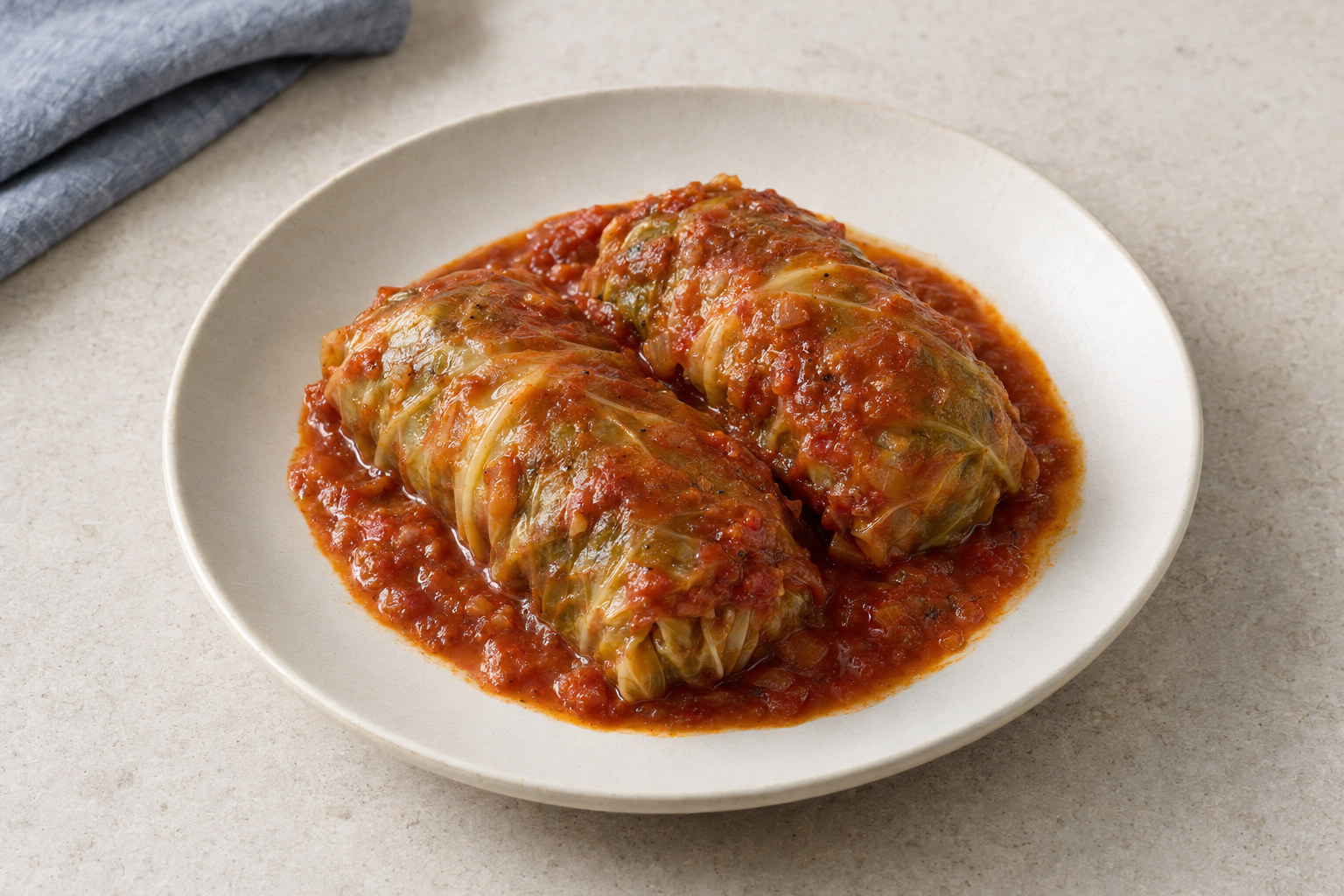
Sweet Savoy cabbage wraps pulled game with marjoram; the rice absorbs the meat juices and tomatoes add acidity.
Step-by-step method
What you will need
- kitchen scales
- knife and two separate boards
- measuring jug
- heavy 20 cm pot, 3 l capacity, with a tight-fitting lid
- 1 l lidded saucepan for the rice
- 3 l pot for the leaves
- 22 × 18 cm roasting dish, at least 5 cm deep
- slotted spoon
- clean tray
- foil or a lid for the roasting dish
- oven
- electric kettle
Before we start
We start the rice and cabbage leaves about 30 minutes before the meat is expected to become tender. We spread the leaves on a tray to cool and keep the rice covered. Before pulling the meat, we preheat the oven to 180 °C. We let the filling cool only briefly, until we can handle it, then immediately fill the leaves and bake the rolls.
We cut and brown the meat
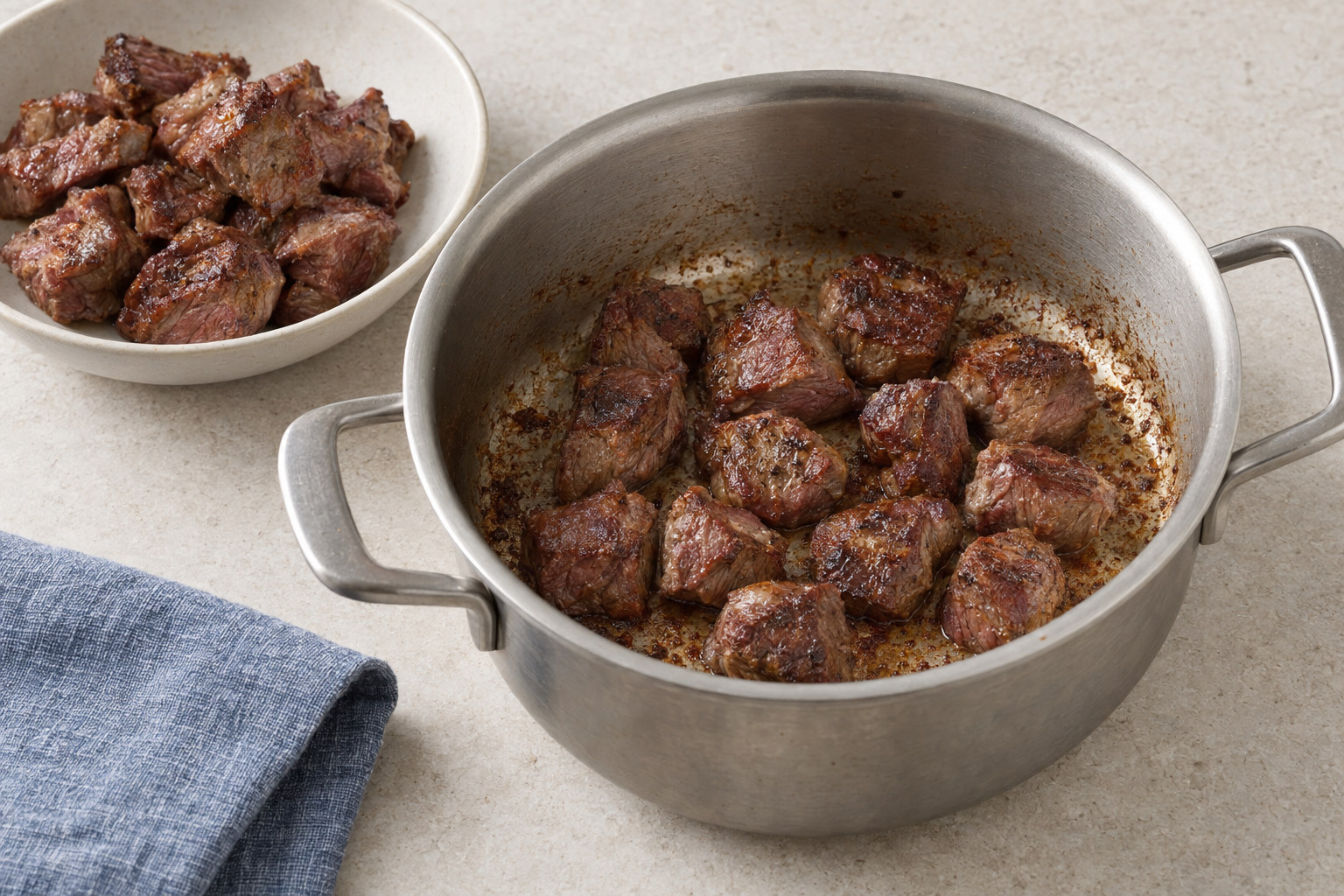
We cut the neck into 3 cm cubes, pat them dry and season with salt and pepper. We reserve a teaspoon of oil for the onion and divide the rest between two 225 g batches. We brown each batch over a medium-high heat for 4–6 minutes, then transfer it to a clean bowl.
The cubes have browned sides; they must not boil in the juices at the bottom.
We prepare the braising base
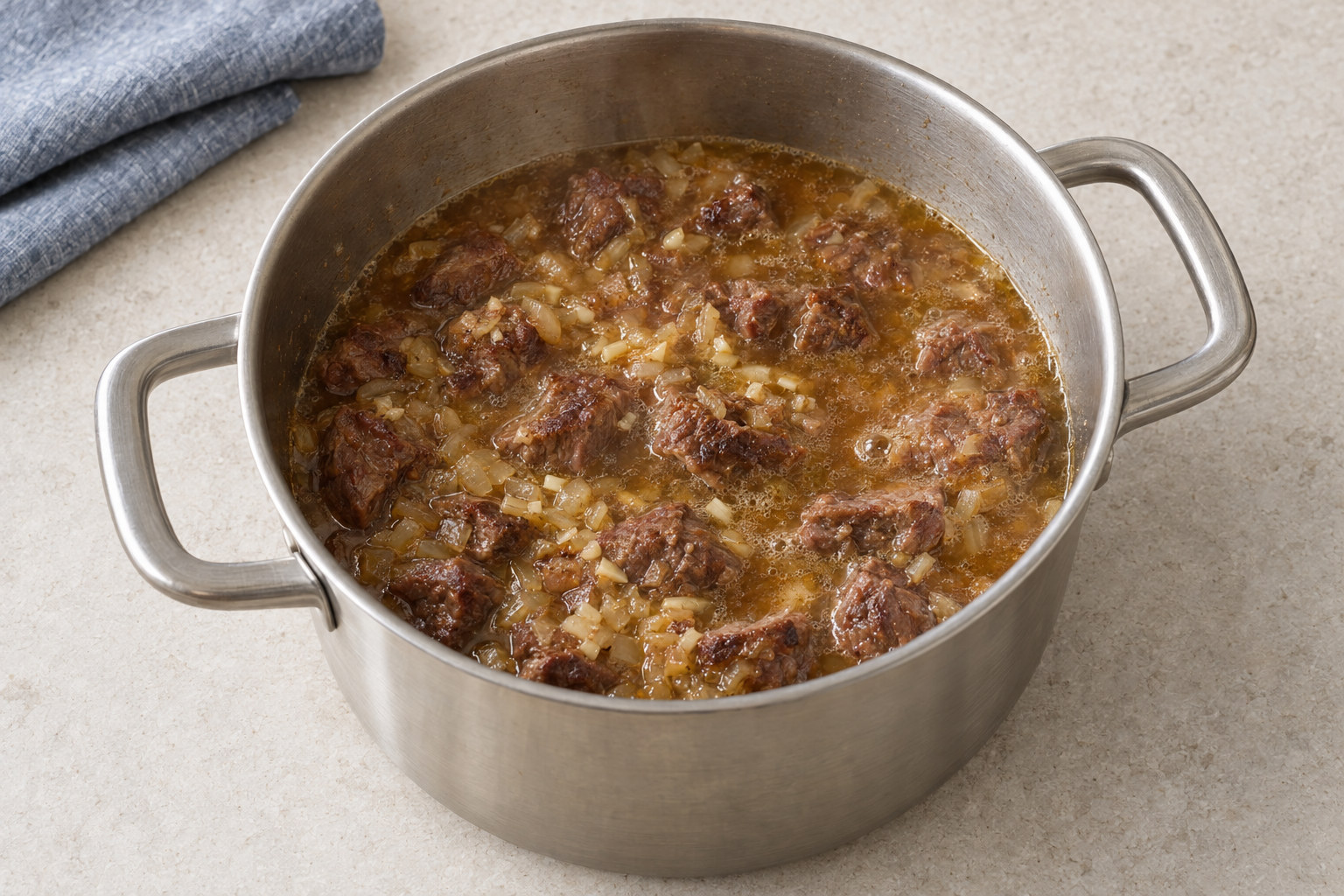
In the same pot, we fry the peeled, finely chopped onion in the remaining oil for 7–9 minutes, stirring constantly, until golden. We add the finely chopped garlic but reserve the marjoram for later. We return the meat and its collected juices, pour in all the stock and bring it to a very gentle simmer.
The onion smells sweet and the garlic is not burnt.
We braise the meat slowly until tender
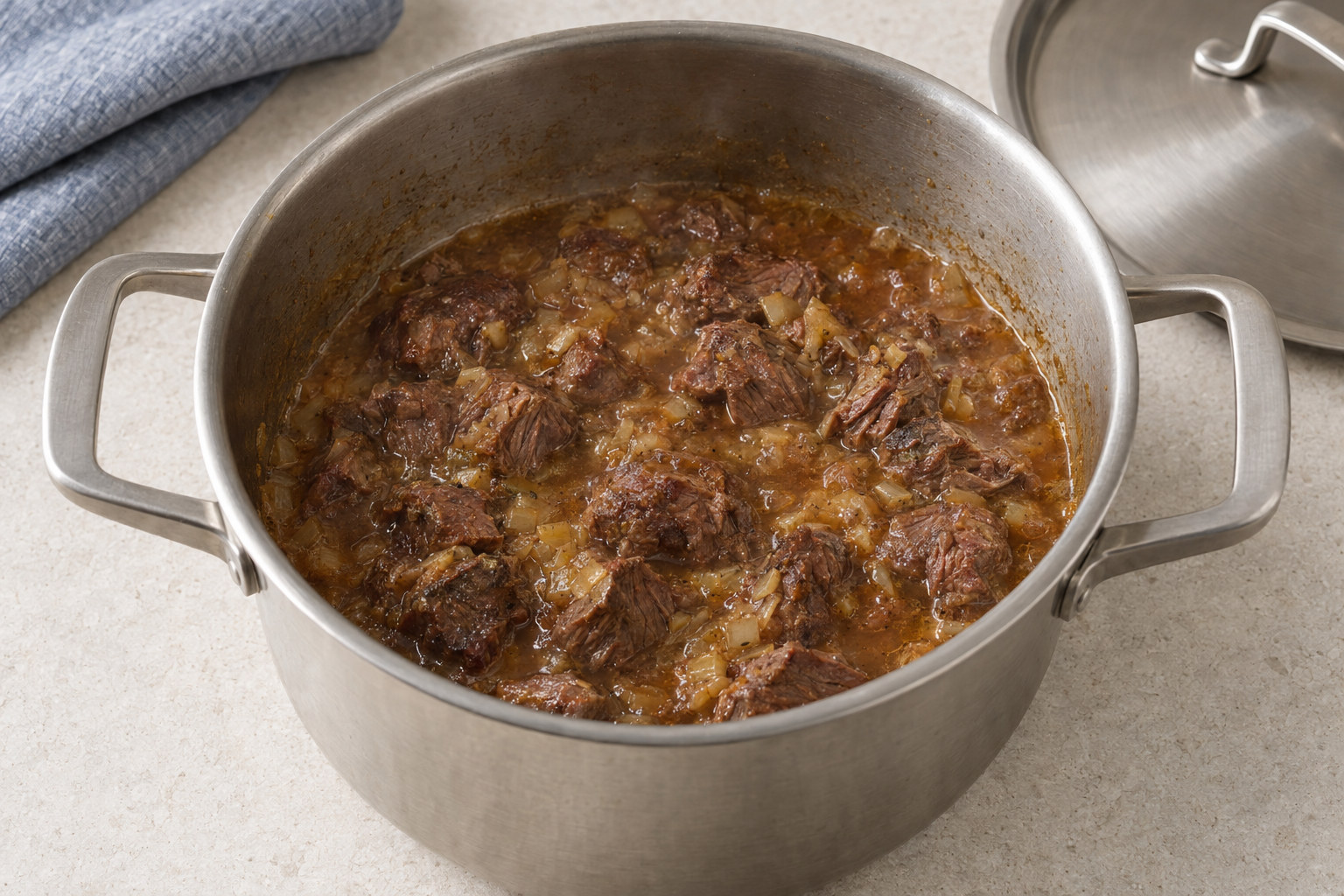
We cover the pot and braise the meat over a low heat for about 180–240 minutes. The liquid should bubble only occasionally. We stir every half-hour and add a little hot water as needed. We can easily pull the cooked neck into strands with a fork. If it is still firm, we keep braising and wait before making the rice and cabbage. If the liquid reduces quickly, we lower the heat and check that the lid fits closely.
We prepare the rice and leaves
We cover the basmati rice with 110 ml of water, bring it to the boil and cook it under a tight lid over the lowest heat for 12 minutes; we then let it stand for 5 minutes. We trim down the thick central ribs of the cabbage leaves so they will roll easily. We bring water to the boil in a second pot for the leaves. We cook 4 prepared leaves in two batches of two for 3–4 minutes, until they bend without cracking. We lift them out with a slotted spoon, spread them on a clean tray, let them steam off for 5–10 minutes and pat them dry.
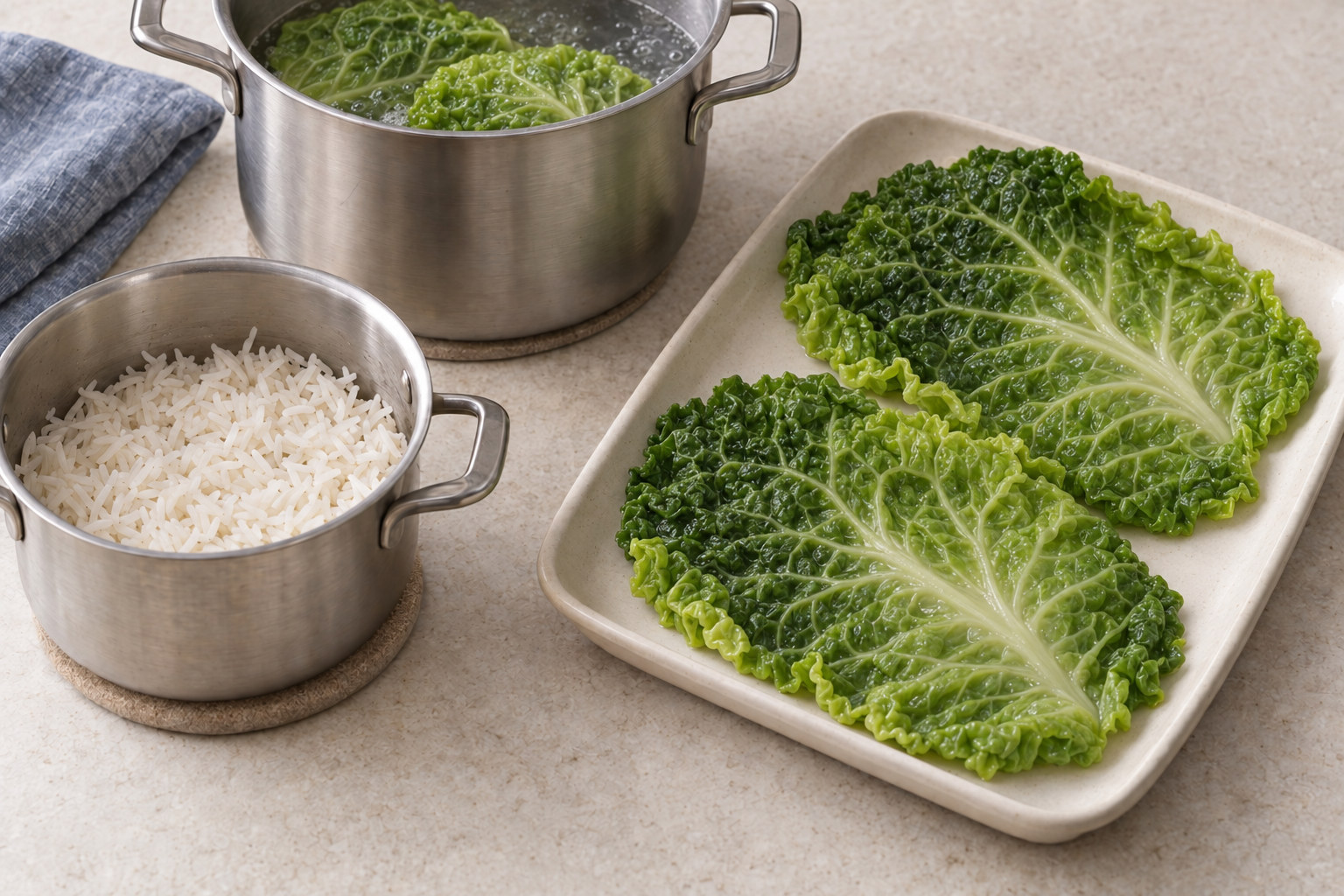
We fill the leaves
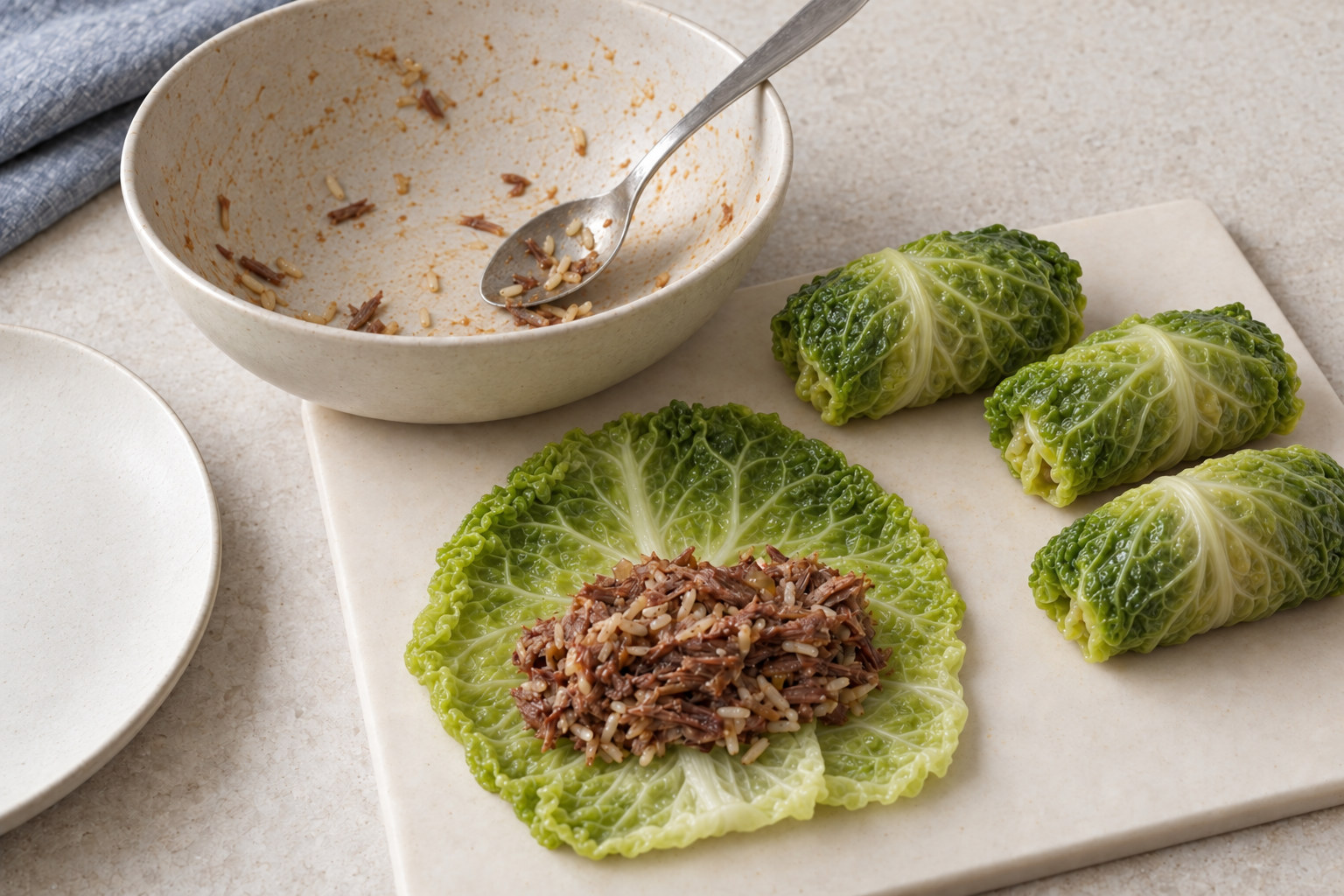
We lift out the tender meat and pull it into short strands. We stir in the rice, marjoram and half the salt for the filling. We add the meat braising liquid a tablespoon at a time, no more than 3 tbsp, until the mixture holds on a spoon. We let it steam off briefly, divide it into 4 portions and wrap each in a leaf: we fold in the sides first, then roll the leaves into parcels about 10 × 5 cm. We place the rolls seam-side down.
The seam stays underneath and the leaves wrap the filling snugly.
We bake the rolls
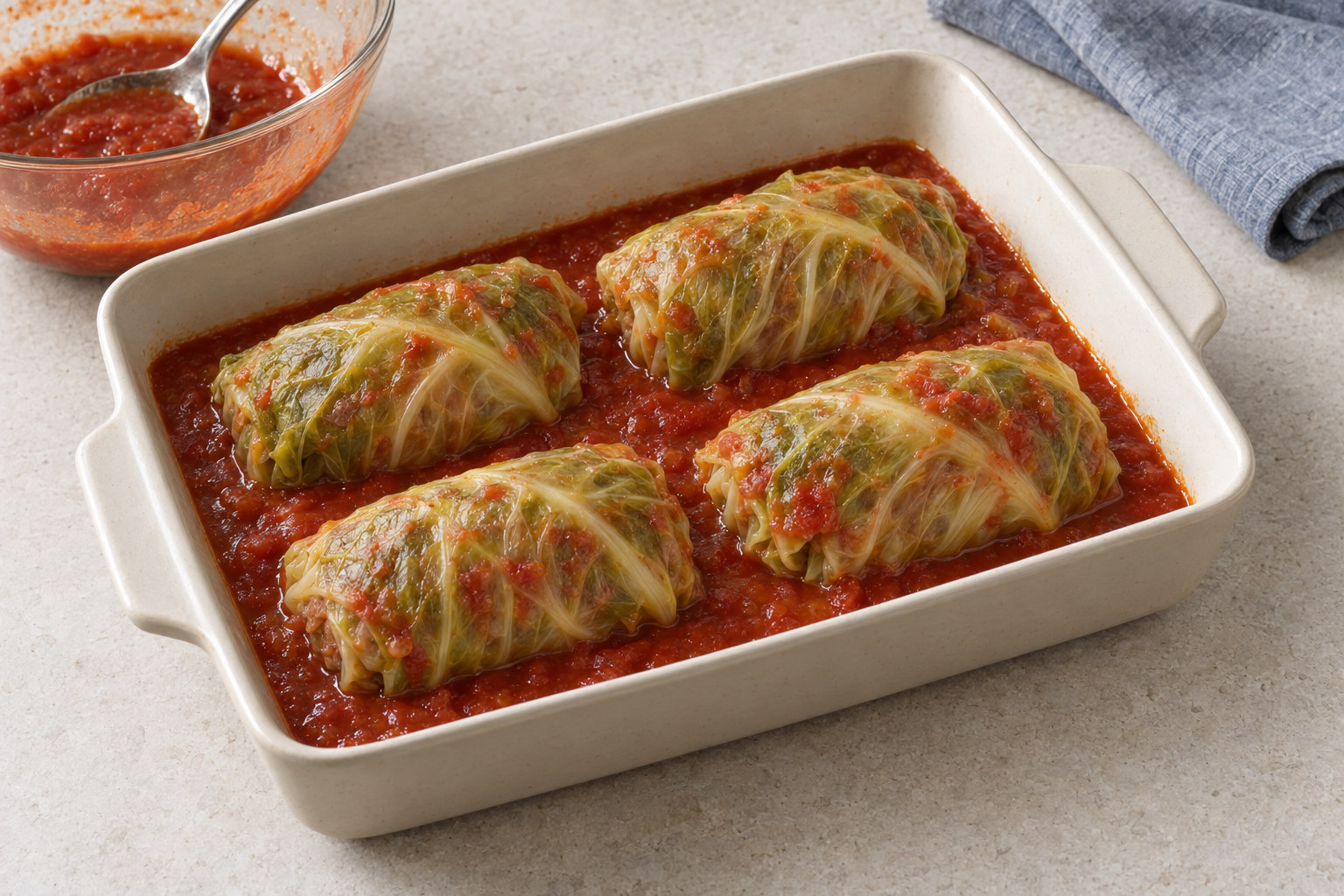
We mix the passata with the remaining half of the salt for the filling and pour it into the roasting dish. We lay the 4 rolls in a single layer, seam-side down, and add 100 ml of the remaining meat braising liquid; we reserve any further liquid. If we have less than that, we make up the difference with hot water. We cover and bake in a preheated conventional oven at 180 °C for 25–35 minutes. If the filling is still lukewarm in the middle, we keep the rolls covered and bake them for a few more minutes.
The sauce bubbles around the rolls and the filling is hot even at its centre.
We divide and serve
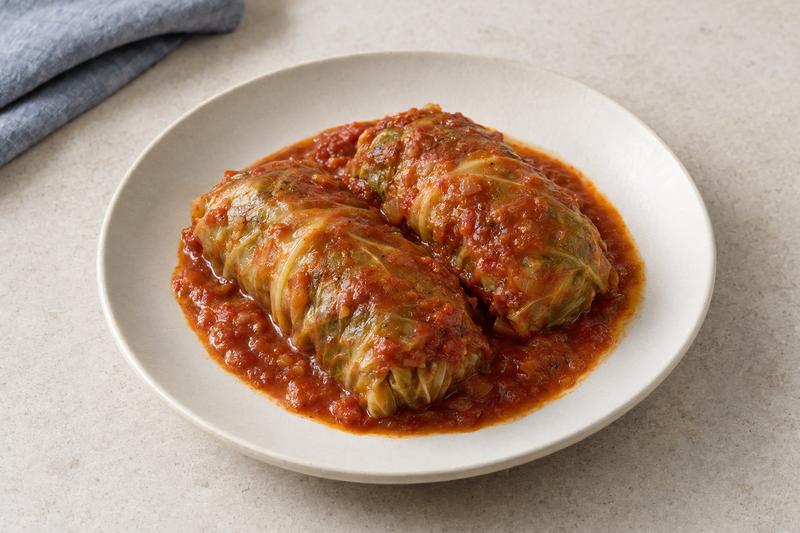
We put two cabbage rolls on each of 2 warmed plates and spoon over the tomato sauce from the dish. The rice is in the filling, so we need no further side dish.
Tips from our kitchen
- We use large, intact leaves with the thick rib pared down. A smaller leaf would not hold this generous amount of filling.
- We place the rolls seam-side down and do not turn them while baking.
What to watch out for
- Wet meat steams in an overcrowded pan instead of browning. We dry it before searing and work in batches.
How we serve it
- We serve two cabbage rolls per portion with the tomato sauce from the roasting dish. The rice is already in the filling.
During preparation
- We keep raw meat and its utensils separate from cooked food.
Our inspiration
When we cut into a roll, we find a juicy filling of meat, rice and marjoram beneath the Savoy cabbage leaf. Red deer neck brings a more robust flavour than we might expect from this modest green parcel. Its slow braise was inspired by Hank Shaw, a former chef at The Horn of Africa restaurant in Madison, who prizes neck for the tenderness it gains from long cooking. We bring the cabbage, rice and tomato sauce together in our own way for a hearty dish to share.
Similar recipes
Recipe for 4 people
Step-by-step method
Before we start
We start the rice and cabbage leaves about 30 minutes before the meat is expected to become tender. We spread the leaves on a tray to cool and keep the rice covered. Before pulling the meat, we preheat the oven to 180 °C. We let the filling cool only briefly, until we can handle it, then immediately fill the leaves and bake the rolls.
We cut and brown the meat
We cut the neck into 3 cm cubes, pat them dry and season with salt and pepper. We reserve half a tablespoon of oil for the onion and divide the rest between four 225 g batches. We brown each batch over a medium-high heat for 4–6 minutes, then transfer it to a clean bowl.
The cubes have browned sides; they must not boil in the juices at the bottom.
We prepare the braising base
In the same pot, we fry the peeled, finely chopped onion in the remaining oil for 7–9 minutes, stirring constantly, until golden. We add the finely chopped garlic but reserve the marjoram for later. We return the meat and its collected juices, pour in all the stock and bring it to a very gentle simmer.
The onion smells sweet and the garlic is not burnt.
We braise the meat slowly until tender
We cover the pot and braise the meat over a low heat for about 180–240 minutes. The liquid should bubble only occasionally. We stir every half-hour and add a little hot water as needed. We can easily pull the cooked neck into strands with a fork. If it is still firm, we keep braising and wait before making the rice and cabbage. If the liquid reduces quickly, we lower the heat and check that the lid fits closely.
We prepare the rice and leaves
We cover the basmati rice with 190 ml of water, bring it to the boil and cook it under a tight lid over the lowest heat for 12 minutes; we then let it stand for 5 minutes. We trim down the thick central ribs of the cabbage leaves so they will roll easily. We bring water to the boil in a second pot for the leaves. We cook 8 prepared leaves in four batches of two for 3–4 minutes, until they bend without cracking. We lift them out with a slotted spoon, spread them on a clean tray, let them steam off for 5–10 minutes and pat them dry.
We fill the leaves
We lift out the tender meat and pull it into short strands. We stir in the rice, marjoram and half the salt for the filling. We add the meat braising liquid a tablespoon at a time, no more than 80 ml in total, until the mixture holds on a spoon. We let it steam off briefly, divide it into 8 portions and wrap each in a leaf: we fold in the sides first, then roll the leaves into parcels about 10 × 5 cm. We place the rolls seam-side down.
The seam stays underneath and the leaves wrap the filling snugly.
We bake the rolls
We mix the passata with the remaining half of the salt for the filling and pour it into the roasting dish. We lay the 8 rolls in a single layer, seam-side down, and add 170 ml of the remaining meat braising liquid; we reserve any further liquid. If we have less than that, we make up the difference with hot water. We cover and bake in a preheated conventional oven at 180 °C for 25–35 minutes. If the filling is still lukewarm in the middle, we keep the rolls covered and bake them for a few more minutes.
The sauce bubbles around the rolls and the filling is hot even at its centre.
We divide and serve
We put two cabbage rolls on each of 4 warmed plates and spoon over the tomato sauce from the dish. The rice is in the filling, so we need no further side dish.