
Italian inspiration · Italian inspiration
Venison-neck cannelloni with sage béchamel
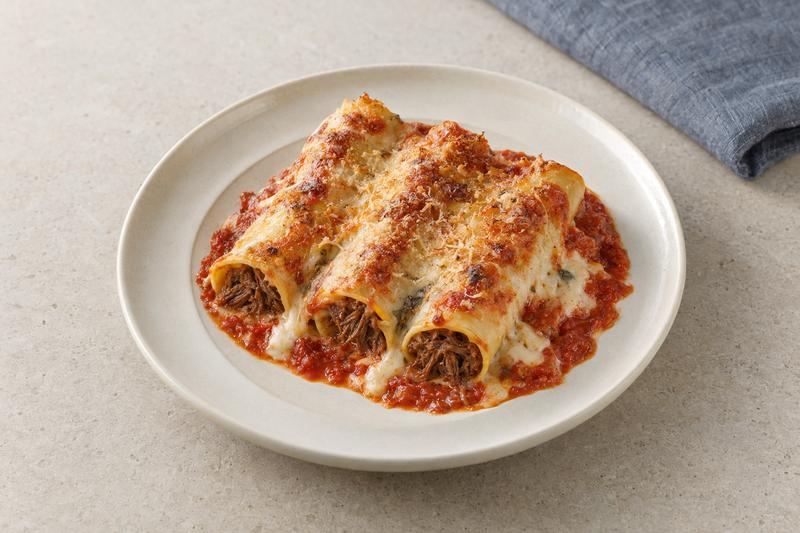
A golden layer of Parmesan tops pasta tubes filled with tender venison. Tomatoes bring juiciness, while sage perfumes the smooth béchamel. We put the baking dish in the middle of the table and serve everyone a generous portion with plenty of sauce.
We braise the venison neck until tender; some pieces may take longer. We make the béchamel while it braises.
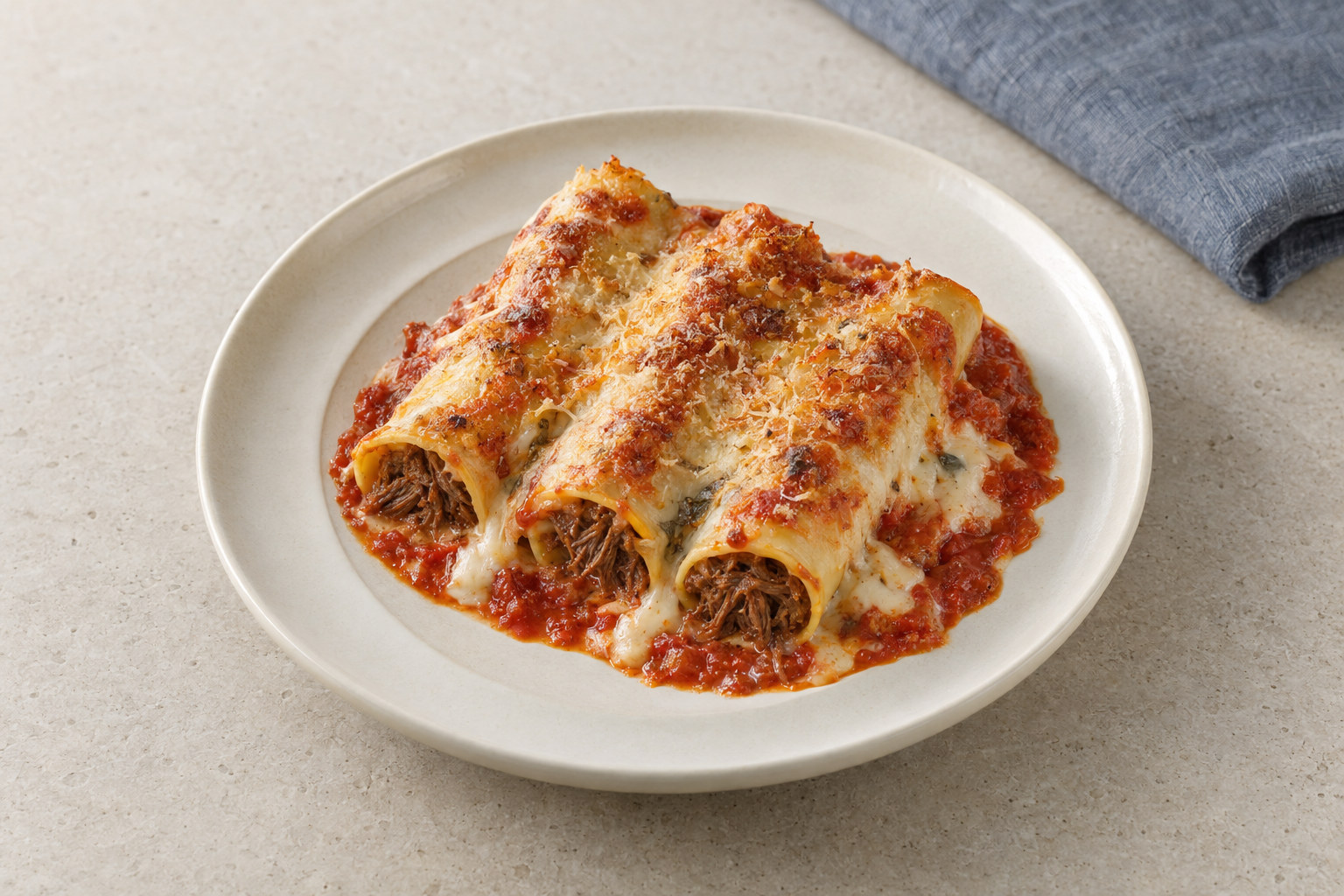
A richly flavoured venison filling, delicate sage-scented milk sauce, tangy tomatoes and golden Parmesan.
Step-by-step method
What you will need
- kitchen scales
- a probe thermometer with a thin probe
- a knife and two separate chopping boards
- a measuring jug
- a heavy 3 l pan, 20 cm across, with a tight-fitting lid
- a 1 l saucepan for the béchamel
- a baking dish 22 × 20 cm, at least 5 cm deep
- a whisk
- a piping bag with a 15 mm opening
- a shallow bowl for briefly cooling the filling
- a grater
- foil
- an oven
- a kettle
Before we start
Once the neck starts to yield when checked, we make the béchamel and preheat the oven to 180 °C. We shred the cooked meat finely and fill the pasta while it is still lukewarm. We keep the béchamel covered and stir it before pouring. Once assembled, we allow 40–45 minutes for baking and 5 minutes to rest.
Cut and sear
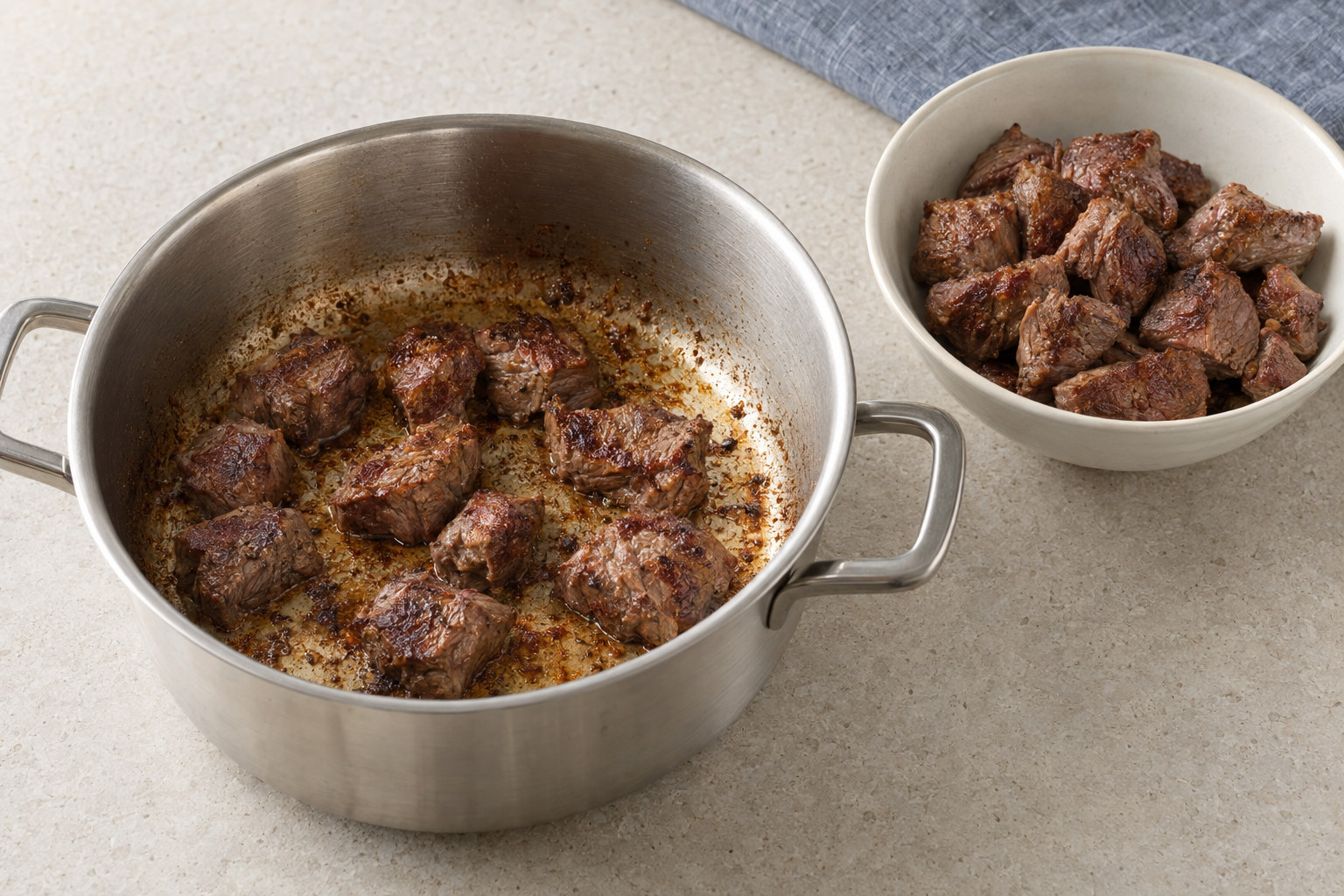
We cut the neck into 3 cm cubes, pat it dry, and season it with salt and pepper. We reserve 1 teaspoon of the oil for the onion and divide the rest between two 225 g batches. We sear each batch over medium-high heat for 4–6 minutes, then we transfer it to a clean bowl.
The meat is seared on its surfaces; it must not stew in the juices at the bottom of the pan.
Make the braising base
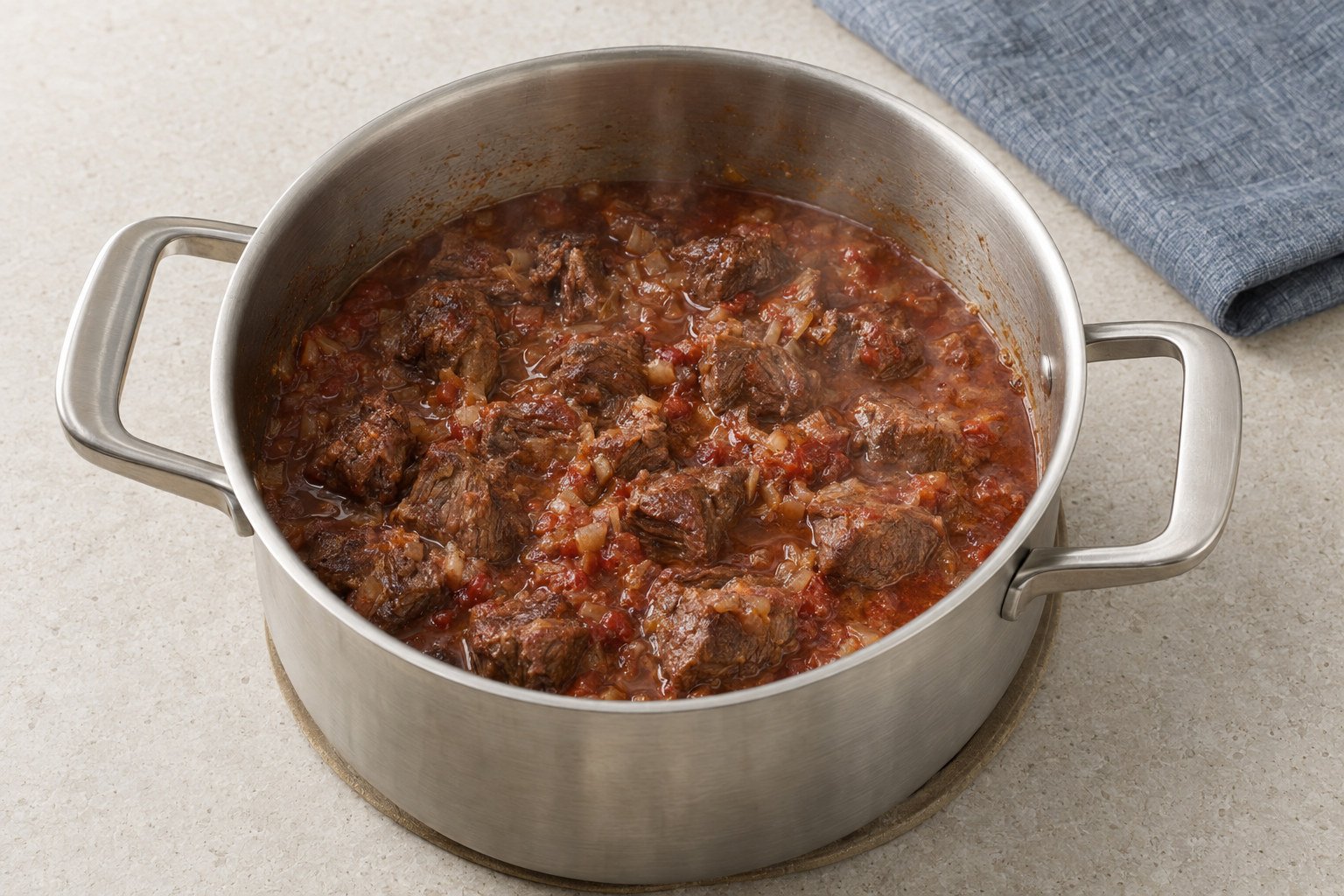
In the same pan, we cook the peeled, finely chopped onion in the remaining oil, stirring constantly, for 7–9 minutes until golden. We add the finely chopped garlic and tomato purée and stir for 1 minute. We pour in the wine and simmer for 3 minutes. We return the meat and any collected juices, pour in all the stock and bring it to a very gentle simmer.
The onion smells sweet; neither the garlic nor tomato purée is burnt.
Braise the meat until tender
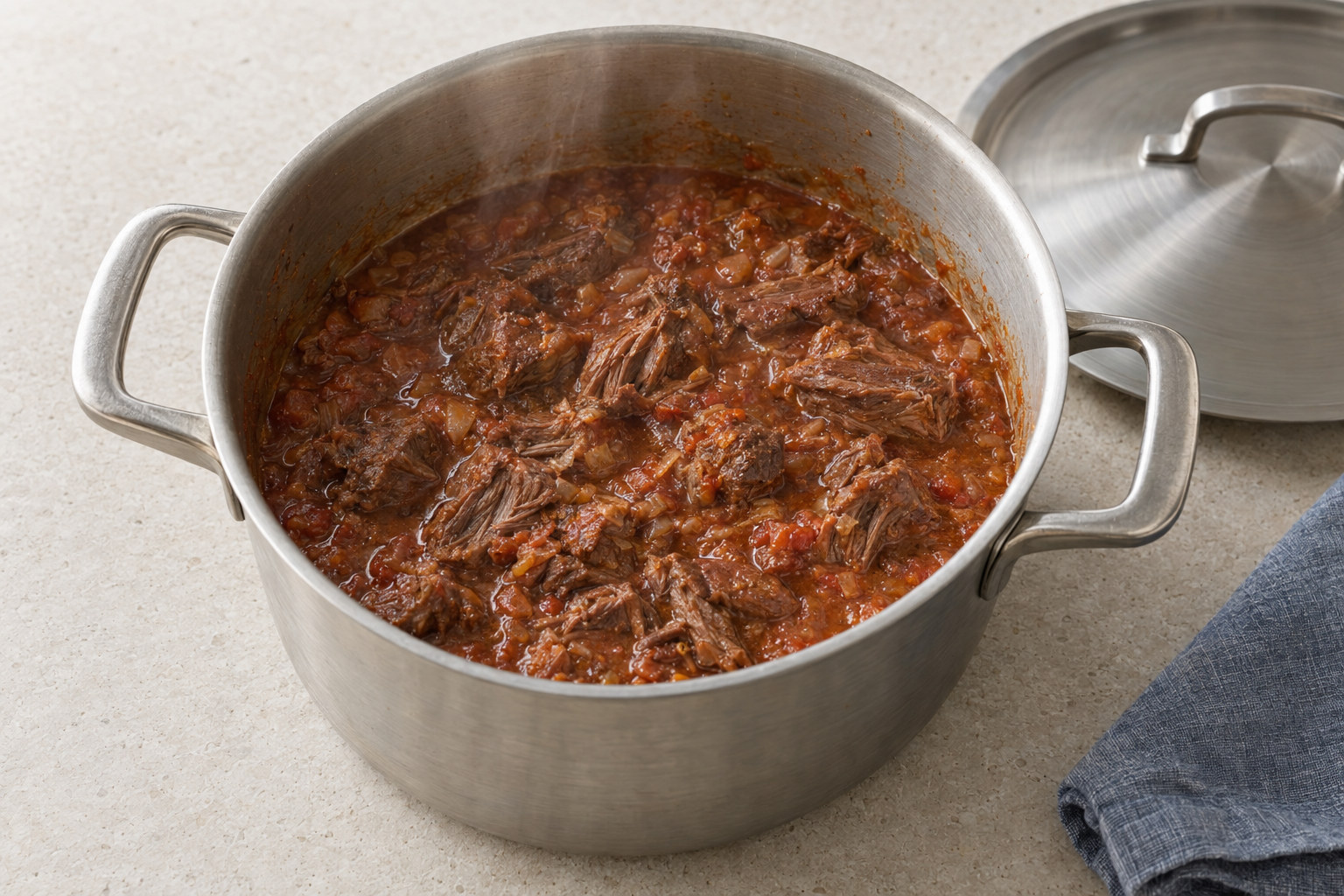
We cover the pan and braise the meat over a low heat for about 180–240 minutes. The liquid should bubble only occasionally. We stir every 30 minutes and add a little hot water if needed. The neck is ready when it pulls apart easily into strands with a fork. If it is still firm, we keep braising. If the liquid reduces too quickly, we lower the heat and check that the lid fits tightly. We start the béchamel only when the meat is nearly tender.
Make the sage béchamel
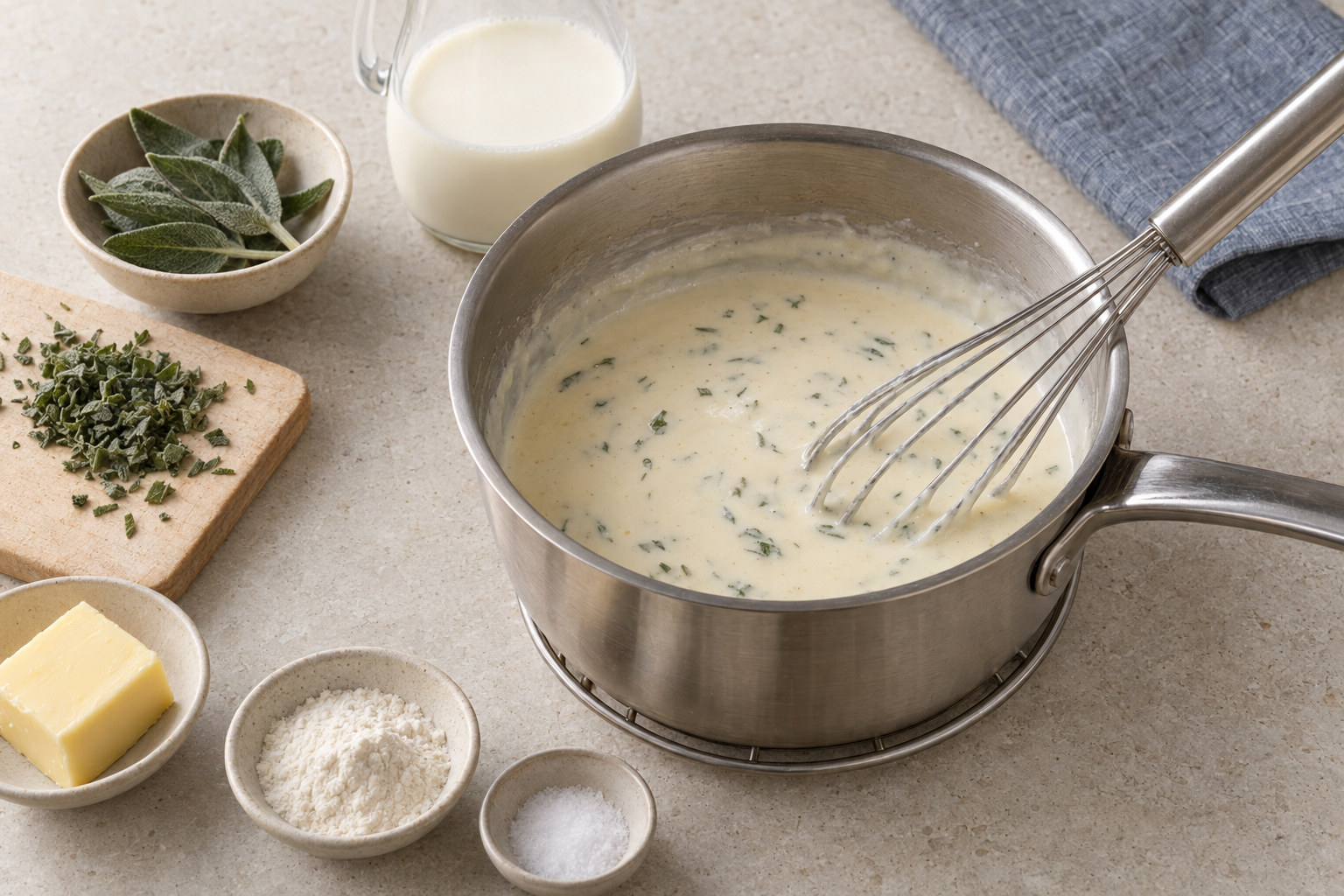
We stir the flour into the butter over a low heat for 2 minutes without letting it brown. We gradually whisk in all the milk, the finely chopped sage and the measured béchamel salt. We bring to a gentle simmer and cook for 8 minutes, stirring regularly. We take it off the heat and cover; the sauce should remain thin enough to moisten the dry pasta.
The sauce is thin and smooth, with no raw-flour taste; it will thicken further in the oven.
Fill and bake
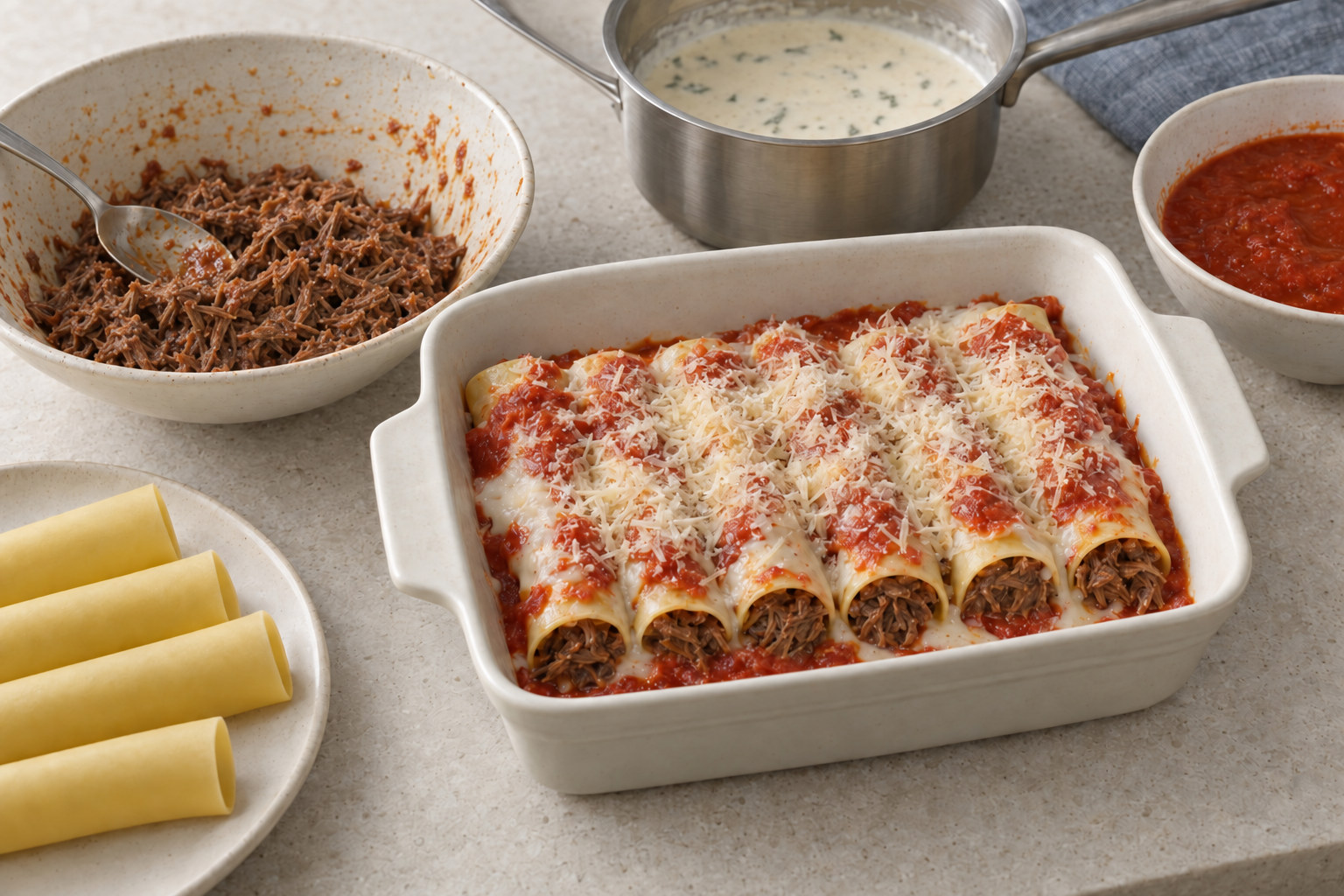
We remove the meat, shred it into strands shorter than 1 cm and reduce the cooking liquid for 5–10 minutes. We stir the liquid into the meat a spoonful at a time until the filling is moist and holds on a spoon. We spread it in a shallow bowl for 5–10 minutes, until lukewarm. We use a piping bag to fill all the dry pasta tubes. We spread half the passata and a quarter of the béchamel over the base of the baking dish. We arrange the cannelloni in a single layer and distribute any filling that did not fit inside the tubes in the gaps. We pour over the remaining passata and béchamel so no dry ends are left exposed. We sprinkle with all the Parmesan and cover with foil. We bake at 180 °C with top and bottom heat for 30 minutes covered, then for 10–15 minutes uncovered. We use a thin knife to test whether the pasta is tender in the centre and at the edge of the dish. We check the centre of the filling: it must reach at least 70 °C for at least 2 minutes. If it needs longer, we cover it again and check every 5 minutes.
The pasta is tender even in the corners and the top is lightly golden.
Portion and serve
We leave the cannelloni to rest for 5 minutes. We divide the dish into 2 servings, each with meat filling and sauce; we use a wide spatula so the tubes do not break.
Tips from our kitchen
- We shred the meat very finely before putting it in the piping bag. Long strands could block the nozzle and split the pasta tubes.
- We cover the dry pasta completely with sauce, including the ends, and keep it covered with foil for the first part of baking.
What to watch out for
- Wet meat steams rather than browns in an overcrowded pan. We pat it dry before searing and work in batches.
How we serve it
- We leave the cannelloni to rest for 5 minutes after baking and serve it with a wide spatula so the tubes do not break.
During preparation
- We keep raw meat and utensils separate from cooked food. We check the temperature with a clean, thin probe.
Our inspiration
Paul Welburn, former head chef at the London restaurant Rhodes W1, shows another way to serve ragù in his game cannelloni: the meat stays tucked inside the pasta. Its strands are revealed only when we cut into it. We adapt that idea for a baking dish of dry pasta tubes with slowly braised venison neck, tomatoes and sage béchamel, creating our own filled pasta to share at the table.
Similar recipes
Recipe for 4 people
Step-by-step method
Before we start
Once the neck starts to yield when checked, we make the béchamel and preheat the oven to 180 °C. We shred the cooked meat finely and fill the pasta while it is still lukewarm. We keep the béchamel covered and stir it before pouring. Once assembled, we allow 40–45 minutes for baking and 5 minutes to rest.
Cut and sear
We cut the neck into 3 cm cubes, pat it dry, and season it with salt and pepper. We reserve ½ tablespoon of the oil for the onions and divide the rest between four 225 g batches. We sear each batch over medium-high heat for 4–6 minutes, then we transfer it to a clean bowl.
The meat is seared on its surfaces; it must not stew in the juices at the bottom of the pan.
Make the braising base
In the same pan, we cook the two peeled, finely chopped onions in the remaining oil, stirring constantly, for 7–9 minutes until golden. We add the finely chopped garlic and tomato purée and stir for 1 minute. We pour in the wine and simmer for 3 minutes. We return the meat and any collected juices, pour in all the stock and bring it to a very gentle simmer.
The onions smell sweet; neither the garlic nor tomato purée is burnt.
Braise the meat until tender
We cover the pan and braise the meat over a low heat for about 180–240 minutes. The liquid should bubble only occasionally. We stir every 30 minutes and add a little hot water if needed. The neck is ready when it pulls apart easily into strands with a fork. If it is still firm, we keep braising. If the liquid reduces too quickly, we lower the heat and check that the lid fits tightly. We start the béchamel only when the meat is nearly tender.
Make the sage béchamel
We stir the flour into the butter over a low heat for 2 minutes without letting it brown. We gradually whisk in all the milk, the finely chopped sage and the measured béchamel salt. We bring to a gentle simmer and cook for 8 minutes, stirring regularly. We take it off the heat and cover; the sauce should remain thin enough to moisten the dry pasta.
The sauce is thin and smooth, with no raw-flour taste; it will thicken further in the oven.
Fill and bake
We remove the meat, shred it into strands shorter than 1 cm and reduce the cooking liquid for 5–10 minutes. We stir the liquid into the meat a spoonful at a time until the filling is moist and holds on a spoon. We spread it in a shallow bowl for 5–10 minutes, until lukewarm. We use a piping bag to fill all the dry pasta tubes. We spread half the passata and a quarter of the béchamel over the base of the baking dish. We arrange the cannelloni in a single layer and distribute any filling that did not fit inside the tubes in the gaps. We pour over the remaining passata and béchamel so no dry ends are left exposed. We sprinkle with all the Parmesan and cover with foil. We bake at 180 °C with top and bottom heat for 30 minutes covered, then for 10–15 minutes uncovered. We use a thin knife to test whether the pasta is tender in the centre and at the edge of the dish. We check the centre of the filling: it must reach at least 70 °C for at least 2 minutes. If it needs longer, we cover it again and check every 5 minutes.
The pasta is tender even in the corners and the top is lightly golden.
Portion and serve
We leave the cannelloni to rest for 5 minutes. We divide the dish into 4 servings, each with meat filling and sauce; we use a wide spatula so the tubes do not break.