
British inspiration · British inspiration
Red deer saddle Wellington with mushrooms and cranberry jus
Golden puff pastry reveals red deer saddle, a thin pancake and a fragrant layer of mushrooms and thyme when sliced. We serve this celebratory centrepiece with a wine jus and cranberries, bringing out both the game and buttery pastry. We allow enough time for every layer to cool properly before wrapping.
The total time includes chilling and resting the Wellington.
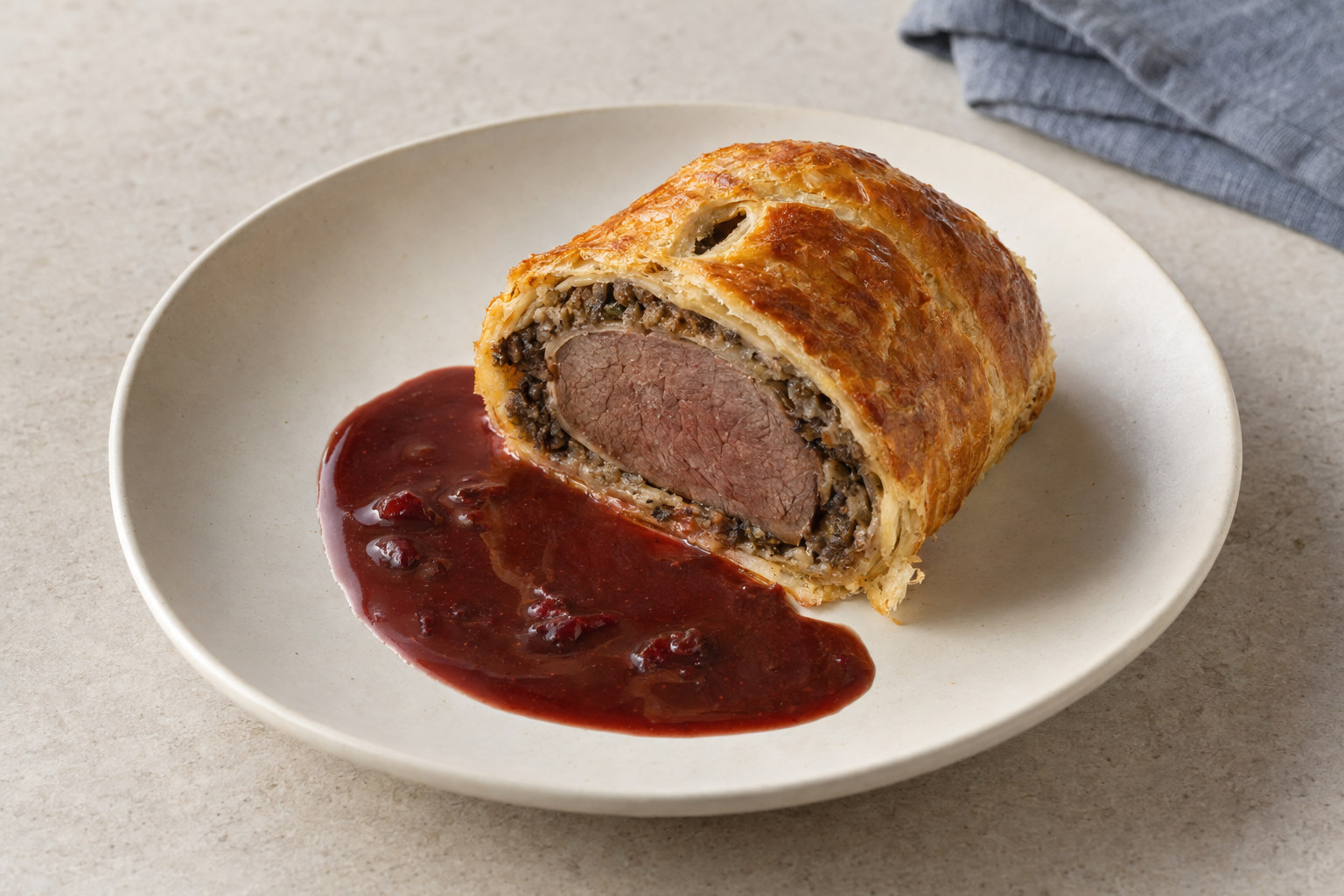
Full-flavoured red deer saddle, mushrooms with thyme and crisp buttery pastry are complemented by a sweet-and-sour cranberry jus.
Step-by-step method
What you will need
- kitchen scales
- probe thermometer with a thin probe
- knife and separate chopping boards
- measuring jug
- 26 cm frying pan
- 24 cm non-stick pancake pan
- wire rack
- 40 × 30 cm baking tray
- rolling pin
- pastry brush
- 1 l saucepan
- shallow trays for chilling
- cling film
- baking paper
- foil
- fridge
- serrated knife
- oven
Before we start
We sear the meat first and refrigerate it. While it chills, we cook the mushroom mixture until dry and make thin pancakes; we chill those too. We make one parcel with 360 g red deer saddle, two overlapping pancakes and 200 g pastry. After wrapping, we chill it for a further 20 minutes while preheating the tray. We reduce the jus while the Wellington bakes and whisk in the butter during its 8-minute rest.
Sear and chill the red deer saddle
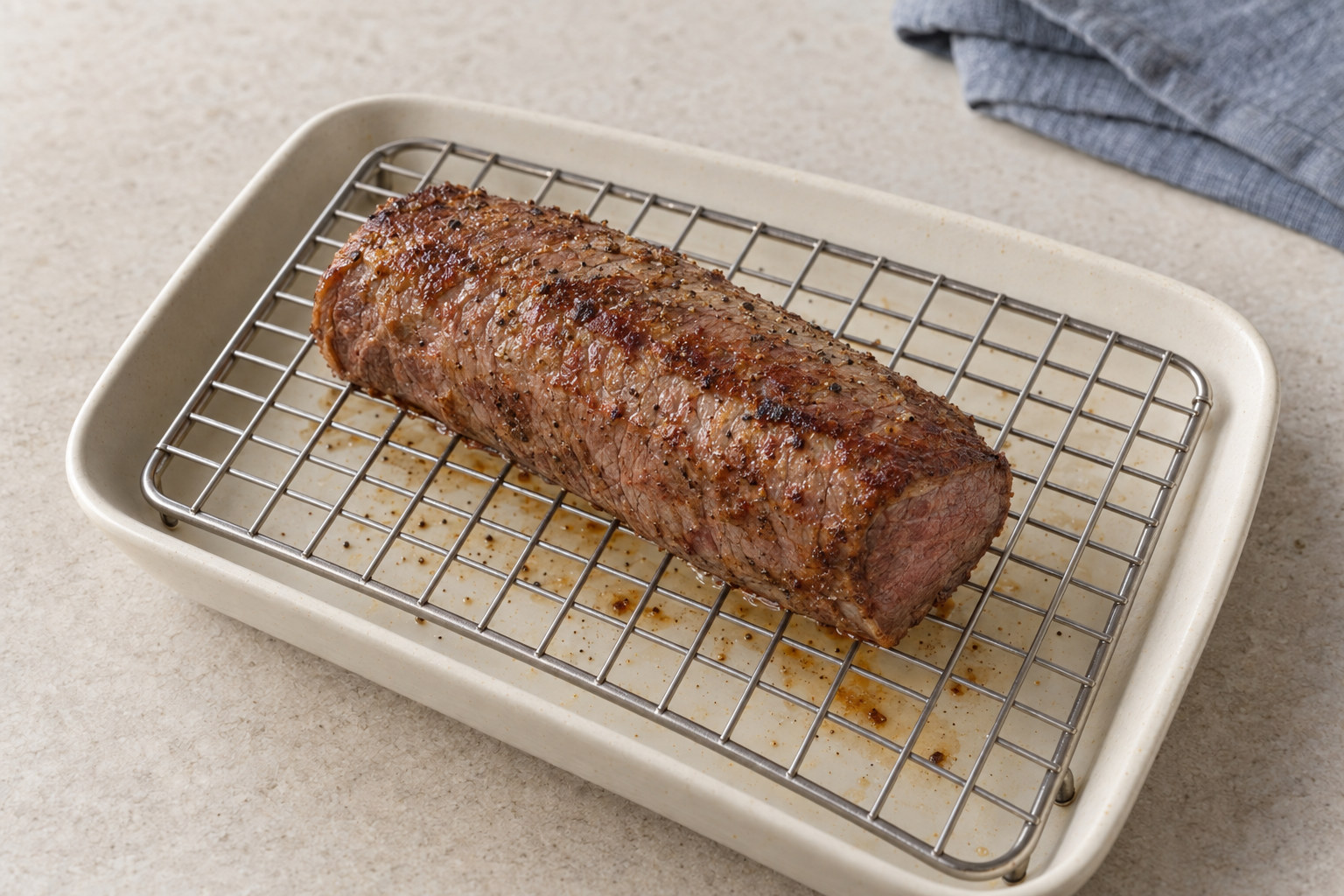
We use one evenly shaped 360 g red deer saddle, about 5 cm in diameter and 16–18 cm long. We pat it dry, season with salt and pepper, then sear it in the oil for 4–5 minutes in total, turning to brown every side. We transfer it to a rack over a clean tray, leave it to steam-dry for 5 minutes and refrigerate it for at least 30 minutes, until the surface is cold. The meat is not cooked through yet; we continue to handle it separately from cooked food.
Cook the moisture out of the mushrooms and make the pancakes
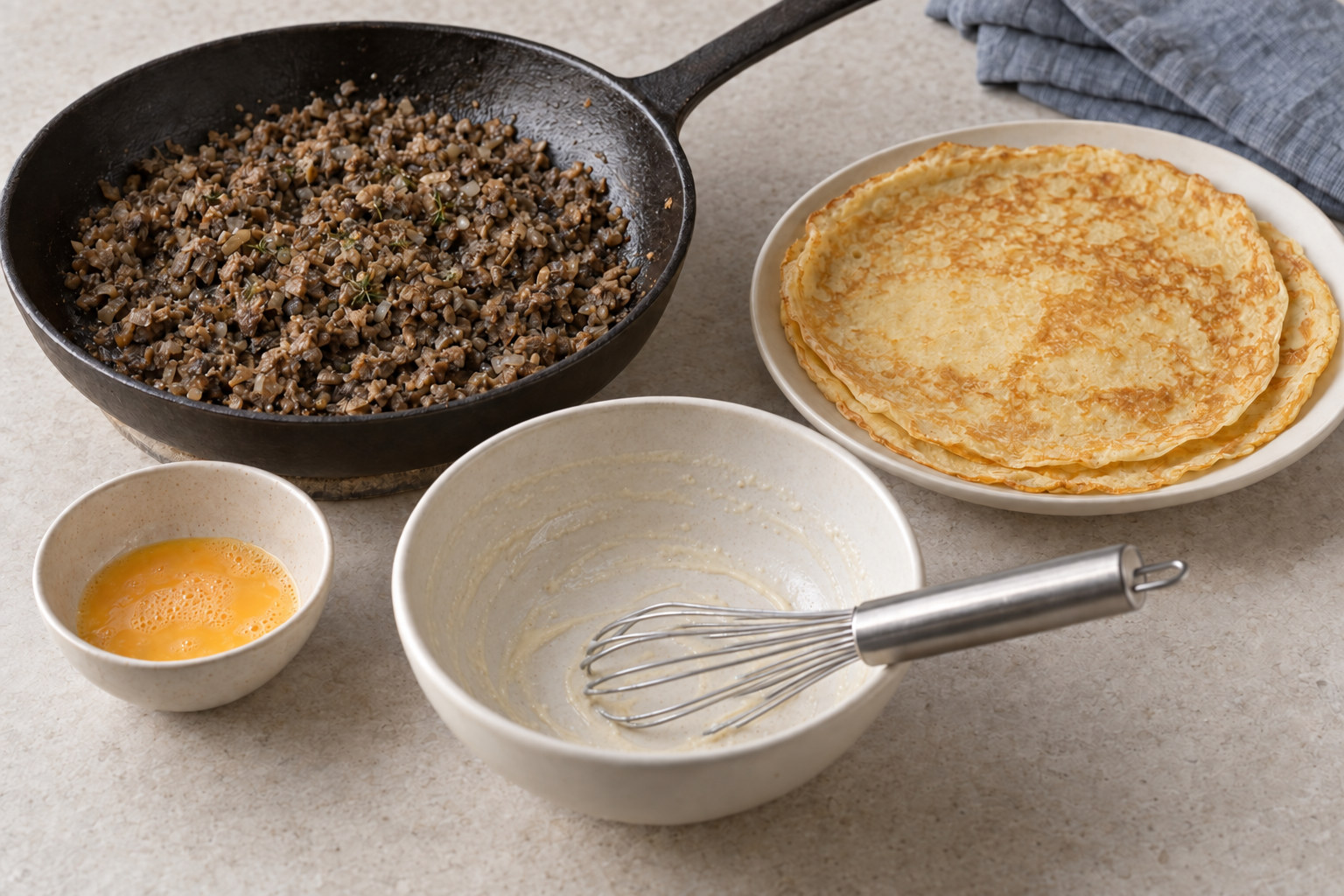
We clean the mushrooms, peel the shallot and chop both very finely. We cook them with the thyme sprigs and half the salt set aside for the mushrooms and pancakes in the butter, stirring, over a medium heat for 12–18 minutes, until the mixture is almost dry. We remove the thyme stems. We spread the mushrooms in a shallow layer, let them steam briefly and chill them in the fridge. We beat the egg and set half aside for brushing the Wellington. We whisk the remaining egg with the flour, milk and remaining salt to make the pancake batter. We divide the batter and all the oil in half and make two very thin 24 cm pancakes, cooking each for about 1–2 minutes on the first side and 30–60 seconds on the second. We lay them out and leave them to cool completely.
The mushroom mixture is almost dry and cold; the pancakes are pliable and have no holes.
Wrap the Wellington
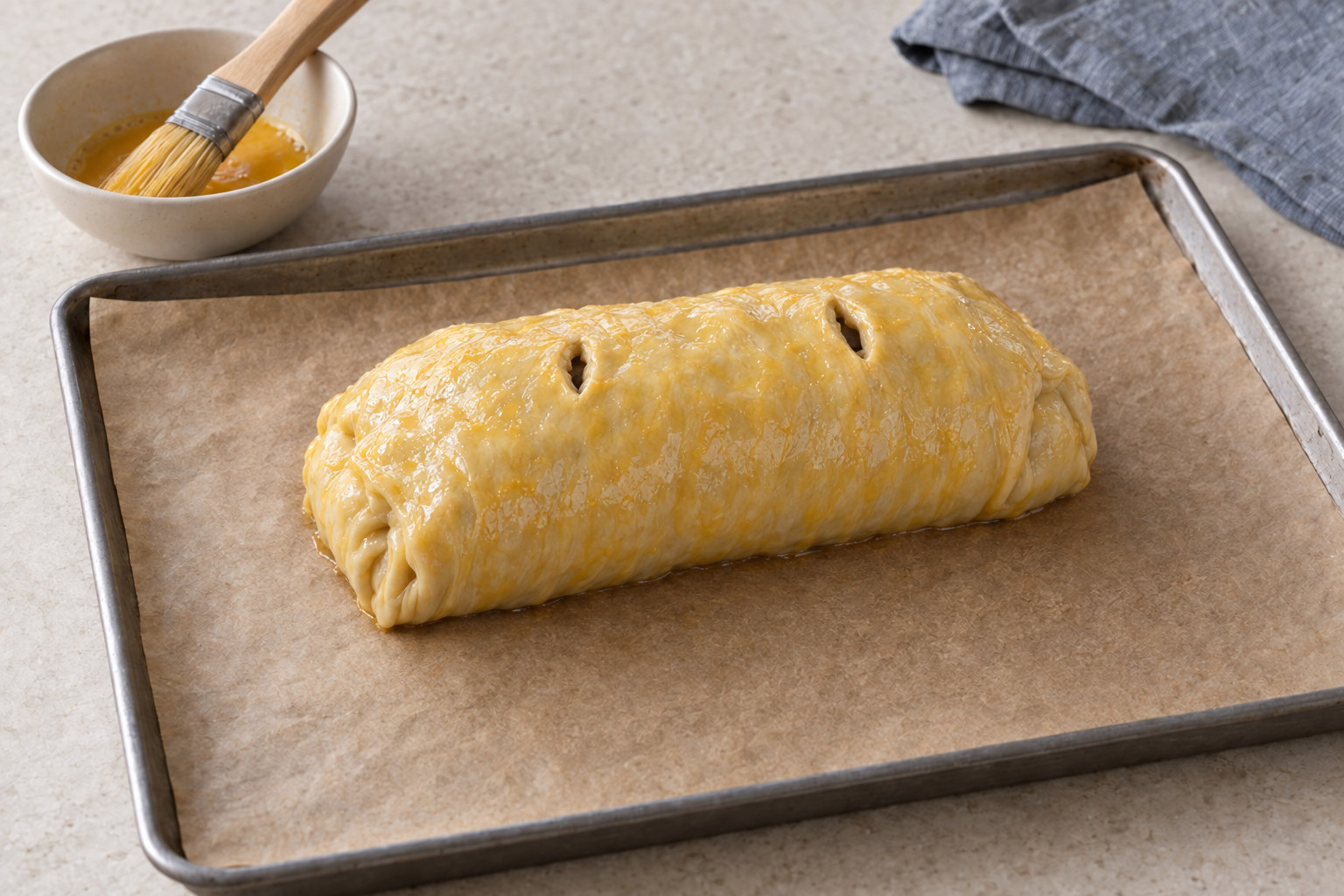
We place the two pancakes on cling film, overlapping them by about 10–12 cm. We spread all the chilled mushroom mixture over them, add the meat and use the film to wrap the pancakes around it. We fold the ends over once only; no meat should remain exposed. We remove the film. We roll the 200 g puff pastry between two sheets of baking paper to about 24 × 28 cm and 2–3 mm thick; we do not dust it with extra flour. We wrap the meat, leave about a 1 cm overlap at the seam, seal it with some of the egg and turn the seam underneath. We trim away excess pastry so the seam is not too thick. We brush the surface with the remaining egg and make two small steam holes in the parcel. We chill it for 20 minutes while preheating the oven and tray to 200 °C.
The parcel has no air pockets or thick, multilayered ends.
Bake the Wellington
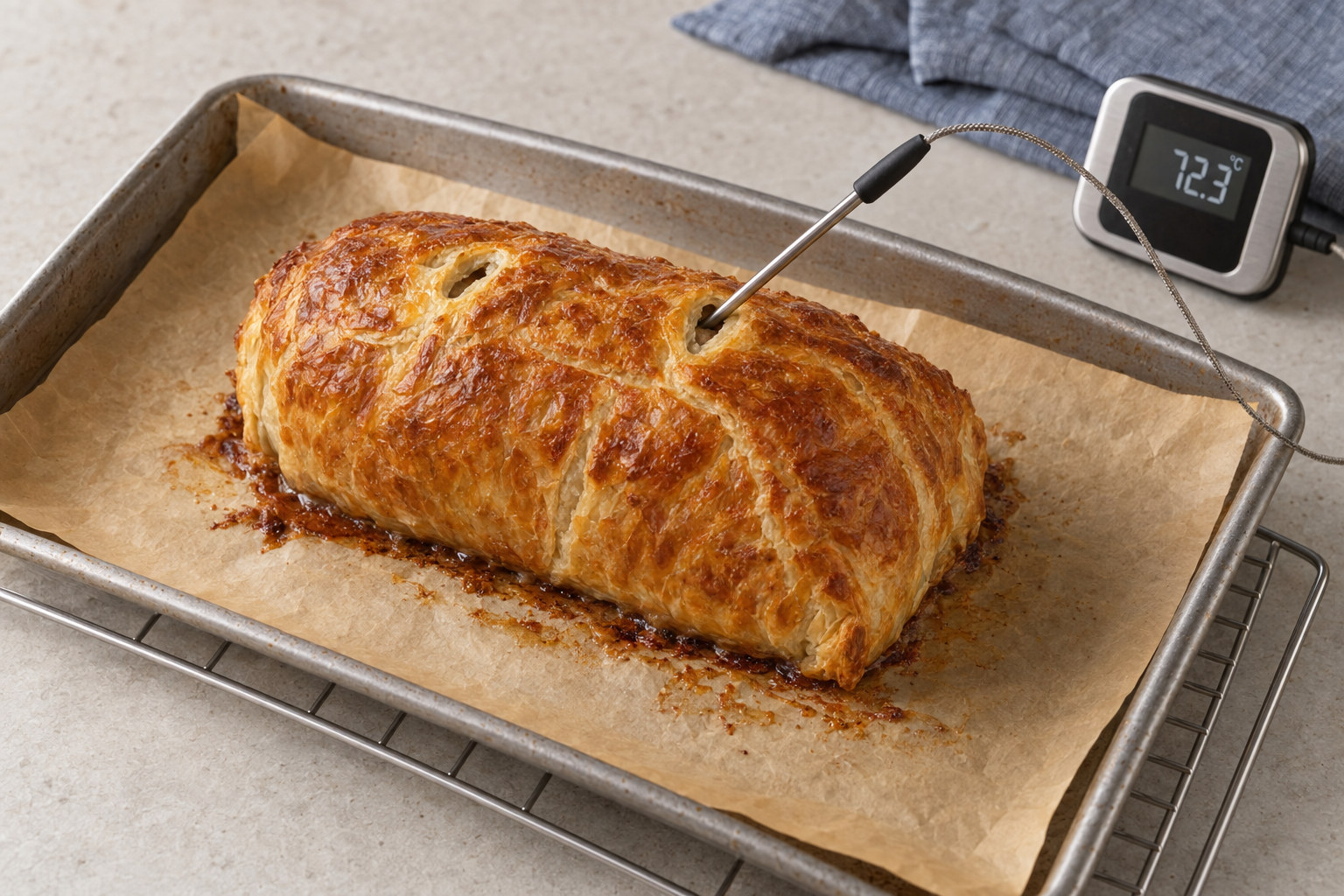
We transfer one parcel, still on its baking paper, to the preheated tray. We bake it at 200 °C with conventional top and bottom heat for about 35–55 minutes. From 30 minutes onwards, we insert a thin probe through a steam hole into the centre of the meat and filling; the temperature must stay at or above 70 °C for 2 minutes. If the centre is not ready, we continue baking and check every 5 minutes. If the pastry is browning too much, we cover it loosely with foil and finish at 170 °C. We rest it on a rack for 8 minutes.
The pastry should be golden and cooked through underneath.
Make the cranberry jus
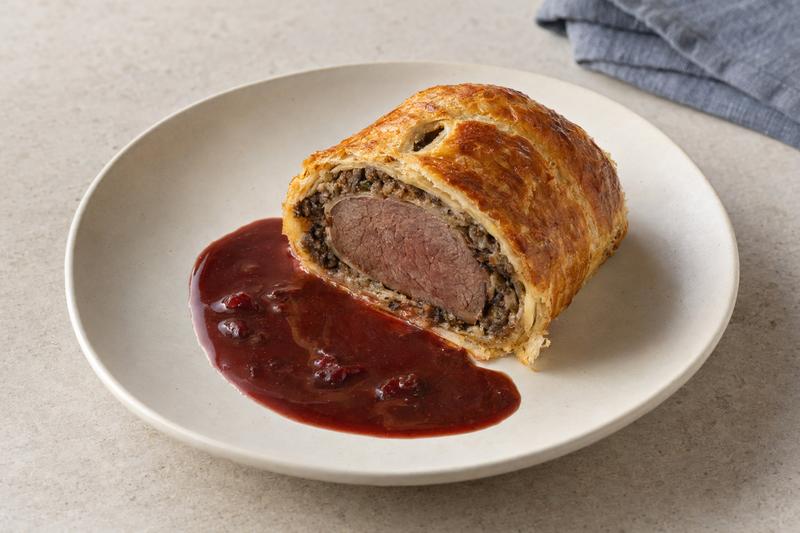
While the Wellington bakes, we make the jus. We reduce the wine to one-third in a small saucepan, add the stock and cranberry preserve, and simmer gently for 10–15 minutes until thickened. Away from a vigorous boil, we whisk in the cold butter. We slice the Wellington into portions with a serrated knife and serve the sauce alongside so the pastry stays crisp.
The jus is glossy, and the cut reveals a thin, continuous mushroom layer.
Tips from our kitchen
- We wrap the cold meat and dry mushrooms in the pastry. We keep the seam narrow so it cooks through at the same rate as the rest.
- After resting, we slice with a serrated knife so we do not crush the crisp pastry.
What to watch out for
- A warm or wet filling melts the butter in the pastry and makes the base soggy.
- Thick folds of puff pastry will not cook through at the same time as the main parcel.
How we serve it
- We slice the Wellington with a serrated knife and serve the cranberry jus alongside so the crisp pastry stays dry.
During preparation
- We keep raw meat and used utensils separate from cooked food.
Our inspiration
Wellington is best revealed at the table: cut into the golden pastry and all its layers appear. In his version, Andy McLeish, chef at Chapter One in Kent, England, wraps game in mushrooms and a thin pancake, which helps protect the delicate pastry from moisture. We make a wine and cranberry jus to serve alongside our red deer saddle. It is a dish for when we want to take our time and turn lunch together into a little celebration.
Similar recipes
Recipe for 4 people
Step-by-step method
Before we start
We sear the meat first and refrigerate it. While it chills, we cook the mushroom mixture until dry and make thin pancakes; we chill those too. Each of the two parcels contains 360 g red deer saddle, two overlapping pancakes and 180 g pastry. After wrapping, we chill them for a further 20 minutes while preheating the tray. We reduce the jus while the Wellingtons bake and whisk in the butter during their 8-minute rest.
Sear and chill the red deer saddle
We use two evenly shaped 360 g red deer saddle pieces, each about 5 cm in diameter and 16–18 cm long. We pat them dry, season with salt and pepper, divide the oil in half and sear each piece separately on all sides for 4–5 minutes. We transfer them to a rack over a clean tray, leave them to steam-dry for 5 minutes and refrigerate them for at least 30 minutes, until the surface is cold. The meat is not cooked through yet; we continue to handle it separately from cooked food.
Cook the moisture out of the mushrooms and make the pancakes
We clean the mushrooms, peel the shallots and chop both very finely. We cook them with the thyme sprigs and half the salt set aside for the mushrooms and pancakes in the butter, stirring, over a medium heat for 18–25 minutes, until the mixture is almost dry. We remove the thyme stems. We spread the mushrooms in a shallow layer, let them steam briefly and chill them in the fridge. We beat the eggs and set half aside for brushing the Wellington. We whisk the remaining eggs with the flour, milk and remaining salt to make the pancake batter. We divide the batter and all the oil into four portions and make four very thin 24 cm pancakes, cooking each for about 1–2 minutes on the first side and 30–60 seconds on the second. We lay them out and leave them to cool completely.
The mushroom mixture is almost dry and cold; the pancakes are pliable and have no holes.
Wrap the Wellington
For each parcel, we place two pancakes on cling film, overlapping them by about 10–12 cm. We spread half the chilled mushroom mixture over them, add the meat and use the film to wrap the pancakes around it. We fold the ends over once only; no meat should remain exposed. We remove the film. We divide the pastry into two 180 g portions and roll each between two sheets of baking paper to about 24 × 28 cm and 2–3 mm thick; we do not dust it with extra flour. We wrap the meat, leave about a 1 cm overlap at the seam, seal it with some of the egg and turn the seam underneath. We trim away excess pastry so the seam is not too thick. We brush the surface with the remaining egg and make two small steam holes in each parcel. We chill them for 20 minutes while preheating the oven and tray to 200 °C.
The parcel has no air pockets or thick, multilayered ends.
Bake the Wellington
We transfer both parcels, still on their baking paper, to the preheated tray, leaving at least 5 cm between them. We bake them at 200 °C with conventional top and bottom heat for about 35–55 minutes. From 30 minutes onwards, we insert a thin probe through a steam hole into the centre of the meat and filling in each parcel; the temperature must stay at or above 70 °C for 2 minutes. If the centre is not ready, we continue baking and check every 5 minutes. If the pastry is browning too much, we cover it loosely with foil and finish at 170 °C. We rest them on a rack for 8 minutes.
The pastry should be golden and cooked through underneath.
Make the cranberry jus
While the Wellingtons bake, we make the jus. We reduce the wine to one-third in a small saucepan, add the stock and cranberry preserve, and simmer gently for 10–15 minutes until thickened. Away from a vigorous boil, we whisk in the cold butter. We slice the Wellington into portions with a serrated knife and serve the sauce alongside so the pastry stays crisp.
The jus is glossy, and the cut reveals a thin, continuous mushroom layer.