
Czechia · Czechia
Red deer medallions with herb butter and potatoes
Butter with chives, parsley and lemon melts over hot red deer loin medallions. Together with the meat juices, it also seasons the boiled potatoes, so we need no other sauce. We first sear the meat, then finish all portions together in the oven.
We include the medallions’ rest before serving in the total time.
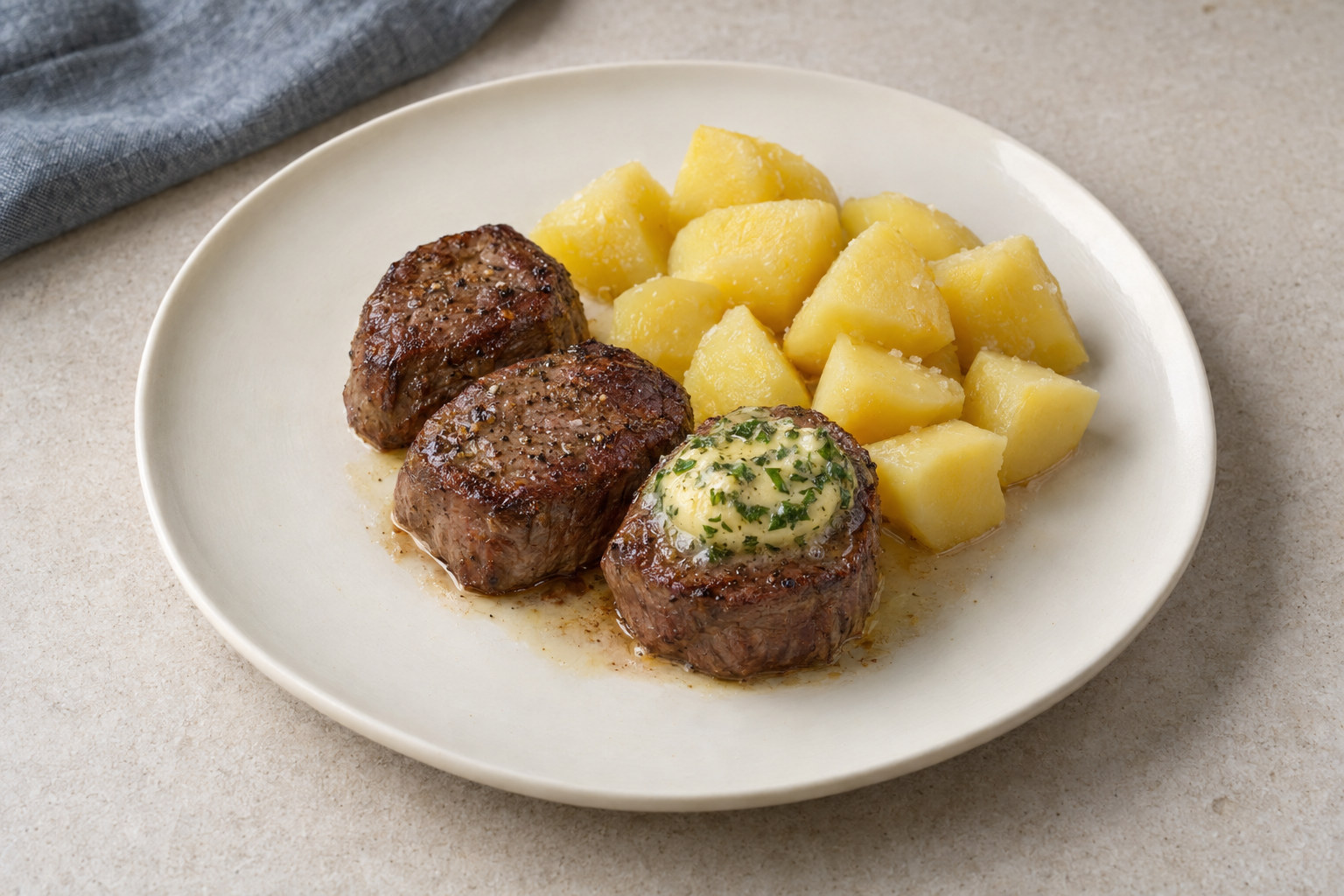
Seared red deer loin, butter with the delicate onion scent of chives and fresh lemon. Boiled potatoes catch the butter and juices without masking the meat.
Step-by-step method
What you will need
- kitchen scales
- thin-probe thermometer
- knife and two separate boards
- measuring jug
- 26 cm pan
- 22 × 18 cm small roasting tin
- 2 l pot with lid
- oven
- bowl for the herb butter
- colander
Before we start
We start preheating the oven and cooking the potatoes. Meanwhile, we cut the meat and mix the butter. We transfer the seared batches to one roasting dish and finish them together; after draining, we keep the potatoes covered until serving.
We prepare the meat
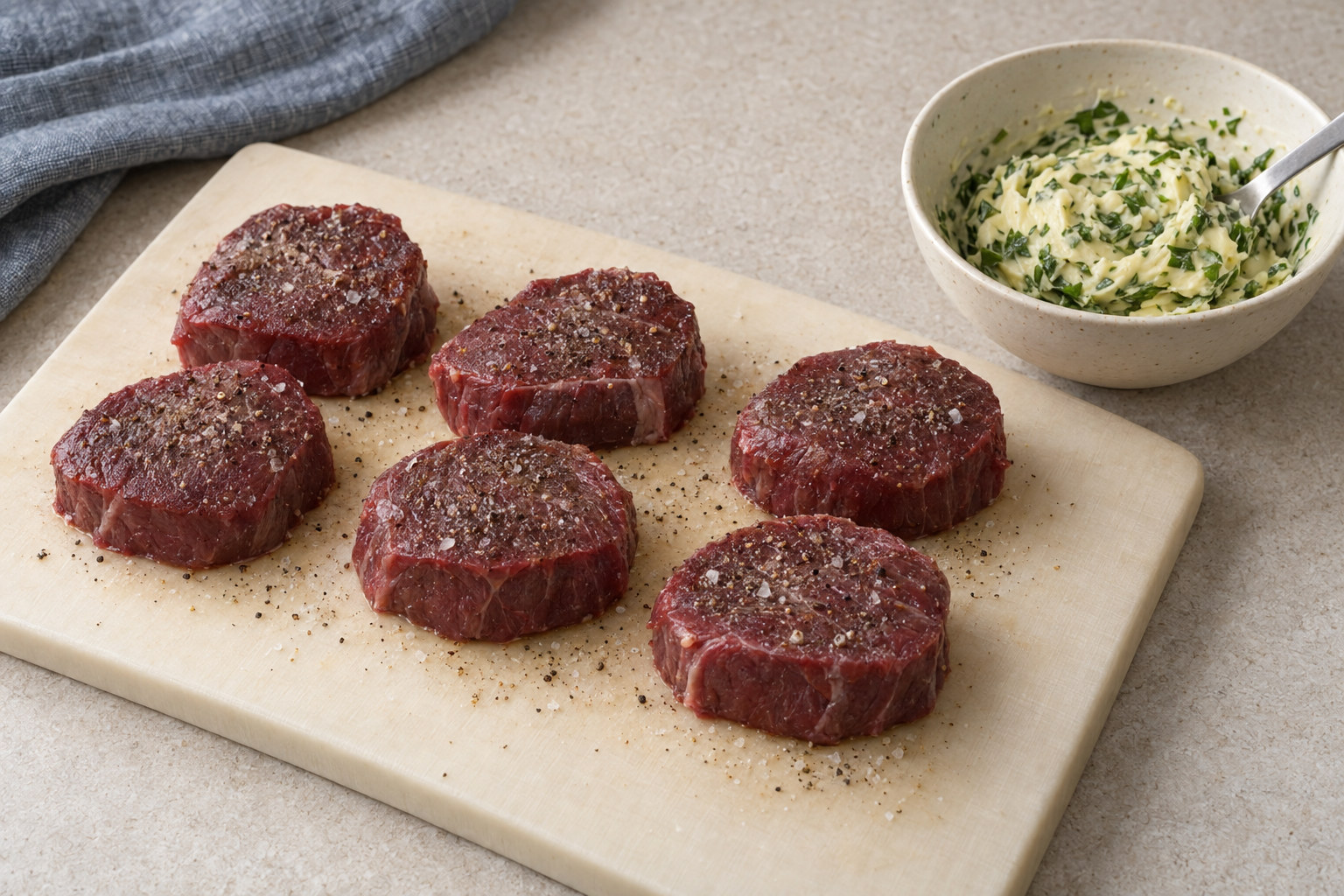
We cut the prepared loin across the grain into medallions about 2 cm thick and dry them carefully. If we want to finish the meat with Icelandic salt, we hold back one small pinch of the ordinary salt set aside for the meat. We season the meat with the remaining salt and pepper. We rinse, dry and chop the chives and parsley. We let the butter soften briefly, mix it with the herbs and lemon juice, then return it to the fridge.
Cook the potatoes
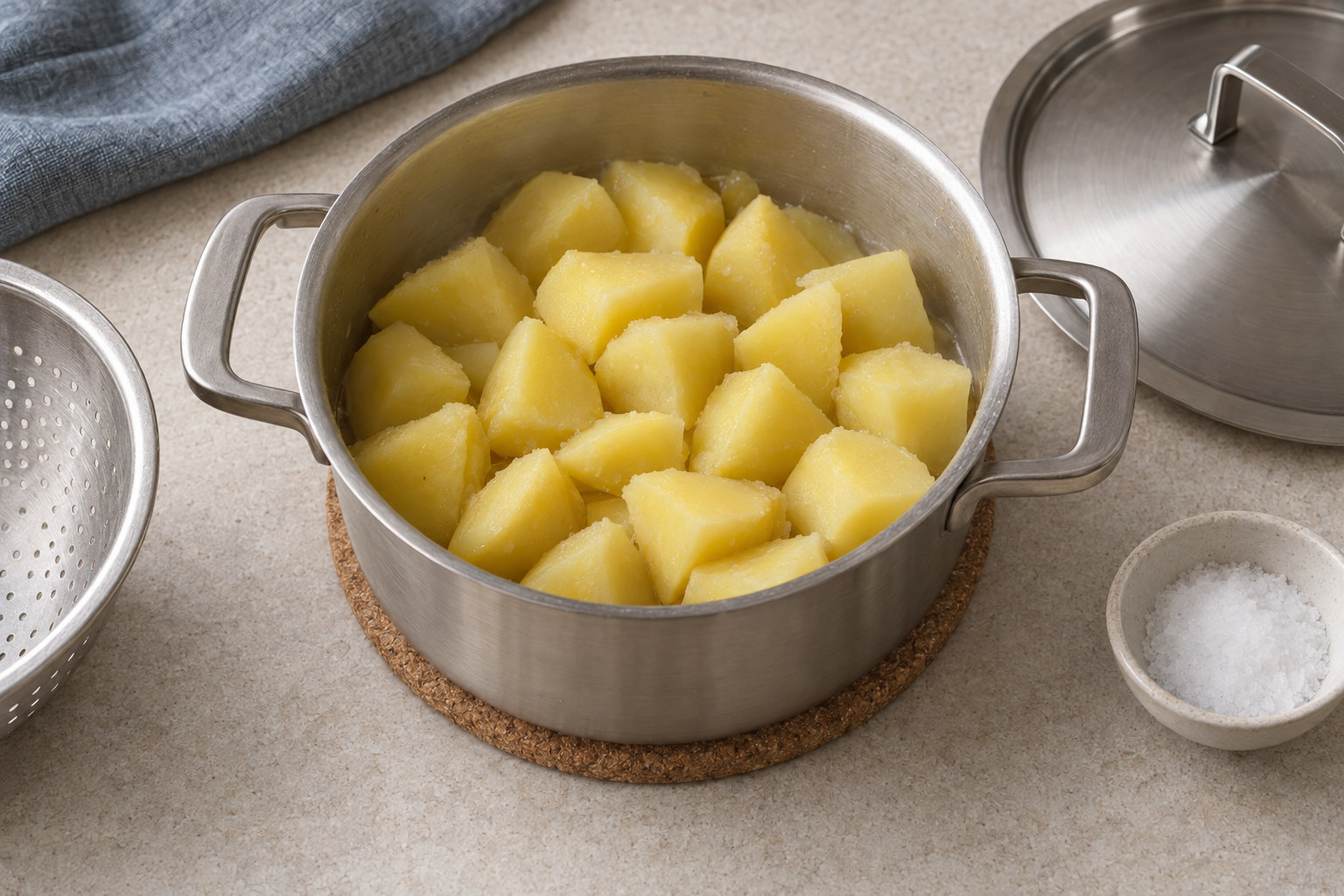
At the start, while the oven heats, we peel the potatoes and cut them into similarly sized pieces. We cover them with water, add salt and simmer for 15–20 minutes once boiling. We drain them, let the steam escape for 1 minute and keep them covered.
A fork passes through the centre, and the potatoes hold their shape.
We sear the medallions and finish them in the oven
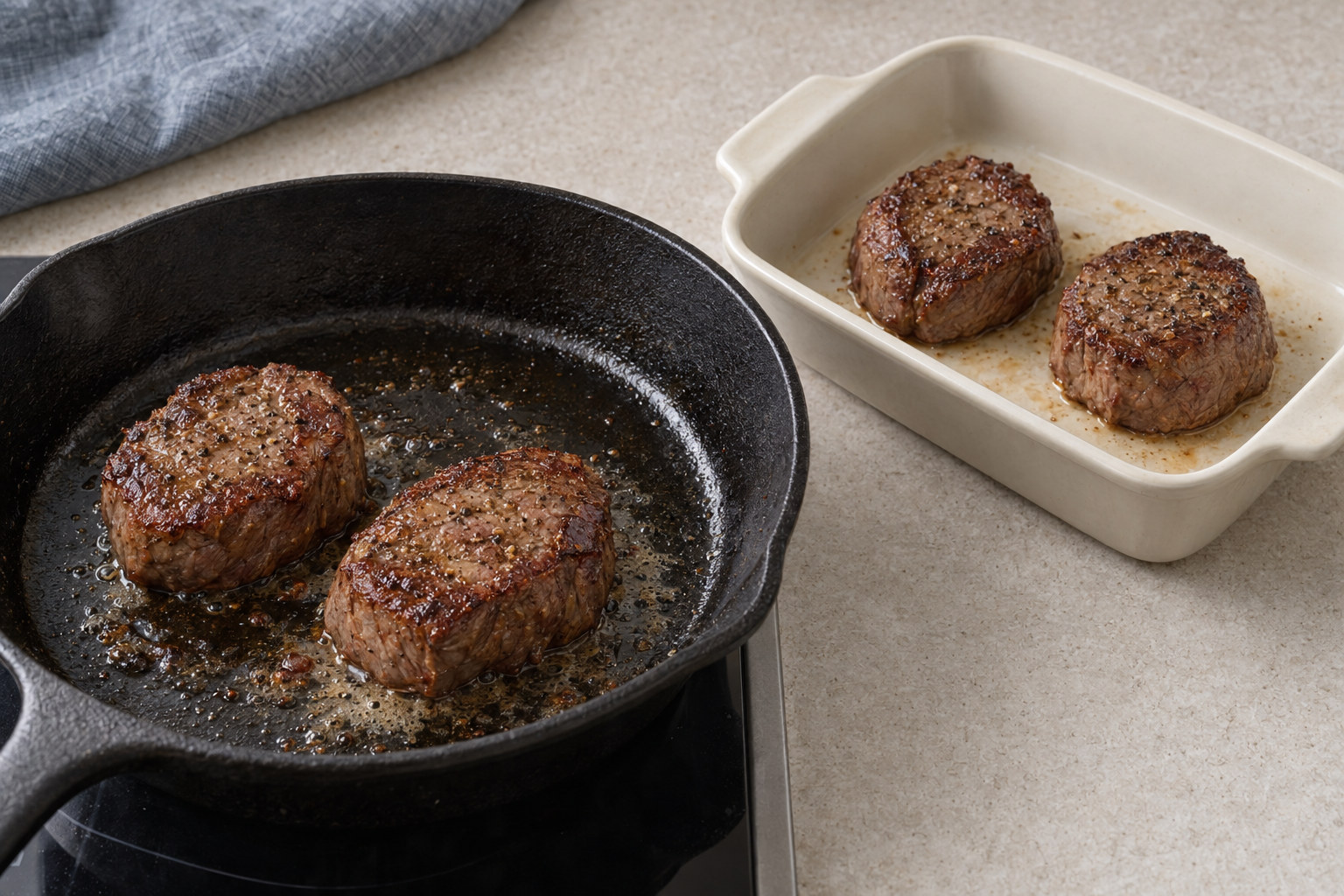
We heat the oven to 150 °C. We reserve half the oil for each of two batches and heat each share in the pan just before searing. We sear the medallions in two batches for 2 minutes per side, moving them to the same clean roasting dish. As soon as we finish the last batch, we finish them all together in the oven for approximately 8–15 minutes; we begin measuring from minute 5, as thinner pieces may be ready sooner. With a thin probe, we verify that the centre of every thicker medallion stays at no less than 70 °C for 2 minutes. We transfer them to a clean dish and rest for 3 minutes.
We prepare the butter for serving
While the meat rests, we check that the drained potatoes are still hot under the lid. We divide the herb butter into two equal portions.
The butter melts on the hot meat while the herbs stay fresh.
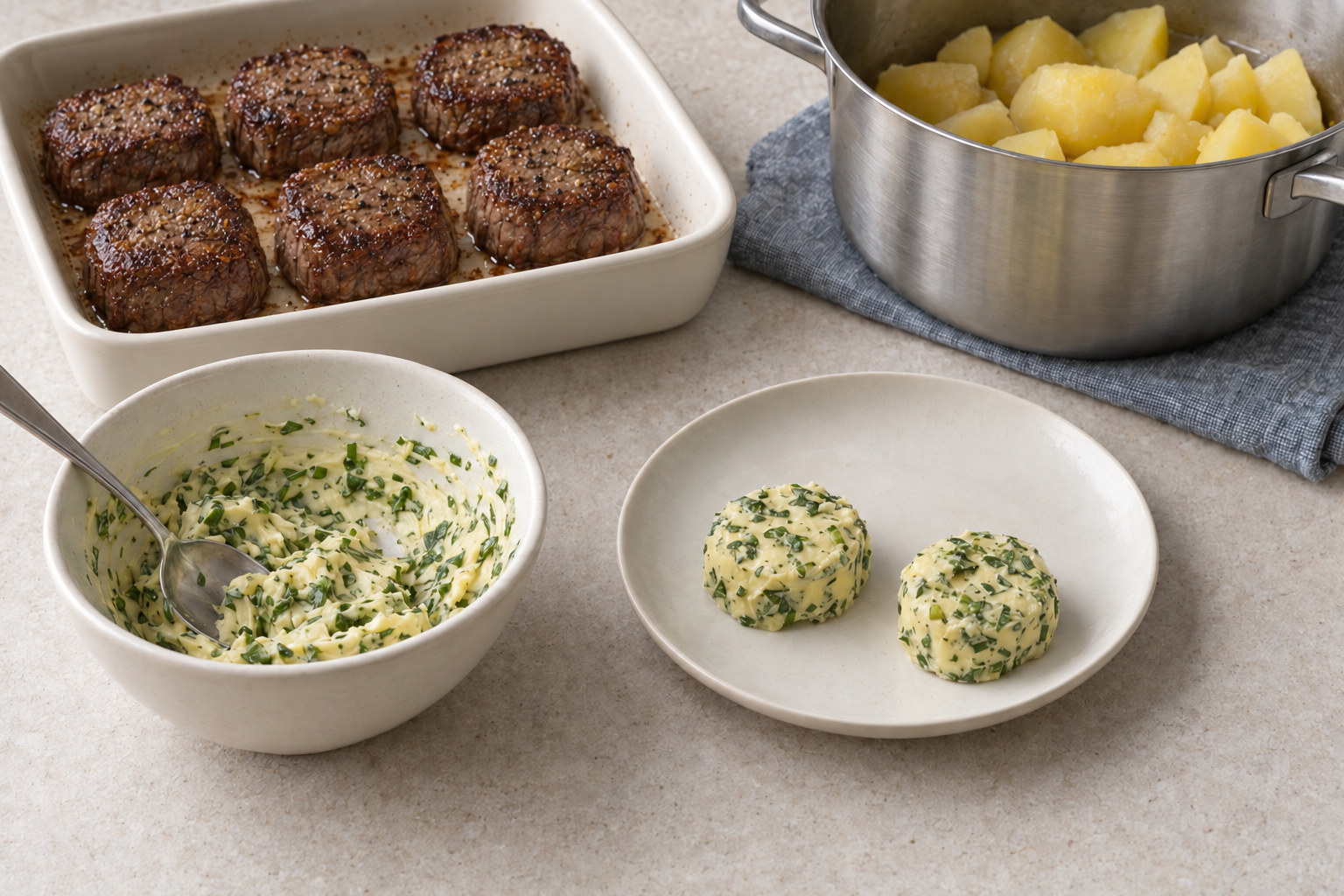
Plate and serve
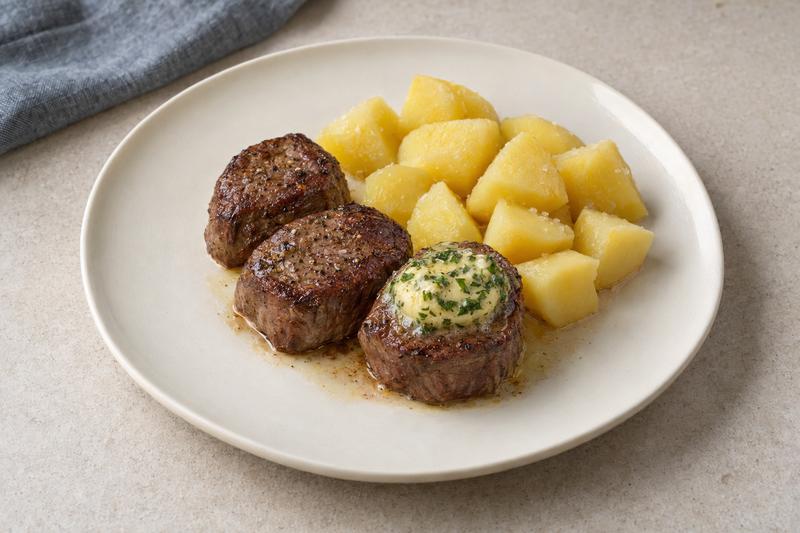
We divide the medallions and potatoes between 2 warm plates. We add the herb butter and the juices collected while the meat rested. If we held back ordinary salt at the start, we taste a mouthful of meat with potatoes, butter and juices. If desired, we divide one small pinch of Saltverk Icelandic flake salt with Arctic thyme over the meat; if the mouthful is salty enough, we omit it. We serve at once.
Tips from our kitchen
- We keep the herb butter in the fridge until serving. It melts on the hot meat and mingles with the juices.
- We cut the medallions to equal thickness and remove thinner pieces earlier when checking them.
What to watch out for
- Wet meat steams in an overcrowded pan instead of browning; we dry it and work in batches.
How we serve it
- We put herb butter on the hot medallions only once plated, then add boiled potatoes and the juices collected as the meat rested.
Ingredient swaps
chives
the same amount of parsley leaves instead of chives The butter loses its delicate onion scent but stays fresh-tasting.
During preparation
- We keep raw meat and used utensils separate from cooked food.
Our inspiration
Geoffrey Smeddle first studied history; a summer in his relatives’ hotel kitchen in Sauternes, France, drew him into professional cooking. Today his name is associated with The Peat Inn in Fife, Scotland. In his venison loin recipe he scents butter with thyme and garlic. For our fragrant lunch, we use butter with chives, parsley and lemon, which slowly melts on the hot meat and also seasons the potatoes.
Similar recipes
Recipe for 4 people
Step-by-step method
Before we start
We start preheating the oven and cooking the potatoes. Meanwhile, we cut the meat and mix the butter. We transfer the seared batches to one roasting dish and finish them together; after draining, we keep the potatoes covered until serving.
We prepare the meat
We cut the prepared loin across the grain into medallions about 2 cm thick and dry them carefully. If we want to finish the meat with Icelandic salt, we hold back two small pinches of the ordinary salt set aside for the meat. We season the meat with the remaining salt and pepper. We rinse, dry and chop the chives and parsley. We let the butter soften briefly, mix it with the herbs and lemon juice, then return it to the fridge.
Cook the potatoes
At the start, while the oven heats, we peel the potatoes and cut them into similarly sized pieces. We cover them with water, add salt and simmer for 15–20 minutes once boiling. We drain them, let the steam escape for 1 minute and keep them covered.
A fork passes through the centre, and the potatoes hold their shape.
We sear the medallions and finish them in the oven
We heat the oven to 150 °C. We divide the oil into four portions and heat one in the pan before each batch. We sear the medallions in four batches for 2 minutes per side, moving them to the same clean roasting dish. As soon as we finish the last batch, we finish them all together in the oven for approximately 8–15 minutes; we begin measuring from minute 5, as thinner pieces may be ready sooner. With a thin probe, we verify that the centre of every thicker medallion stays at no less than 70 °C for 2 minutes. We transfer them to a clean dish and rest for 3 minutes.
We prepare the butter for serving
While the meat rests, we check that the drained potatoes are still hot under the lid. We divide the herb butter into four equal portions.
The butter melts on the hot meat while the herbs stay fresh.
Plate and serve
We divide the medallions and potatoes among 4 warm plates. We add the herb butter and the juices collected while the meat rested. If we held back ordinary salt at the start, we taste a mouthful of meat with potatoes, butter and juices. If desired, we divide two small pinches of Saltverk Icelandic flake salt with Arctic thyme over the meat; if the mouthful is salty enough, we omit it. We serve at once.