
Contemporary British cooking, North African flavours · Contemporary British cooking, North African flavours
Venison loin with harissa, carrots three ways and bulgur
We balance the spiced harissa and honey glaze with three forms of carrot: silky purée, sweet roasted batons and crisp pickled ribbons. We slice the whole-roasted venison loin to serve alongside them and add buttery bulgur. Each carrot preparation gives the meat a different accompaniment.
The total time includes resting the meat before slicing.
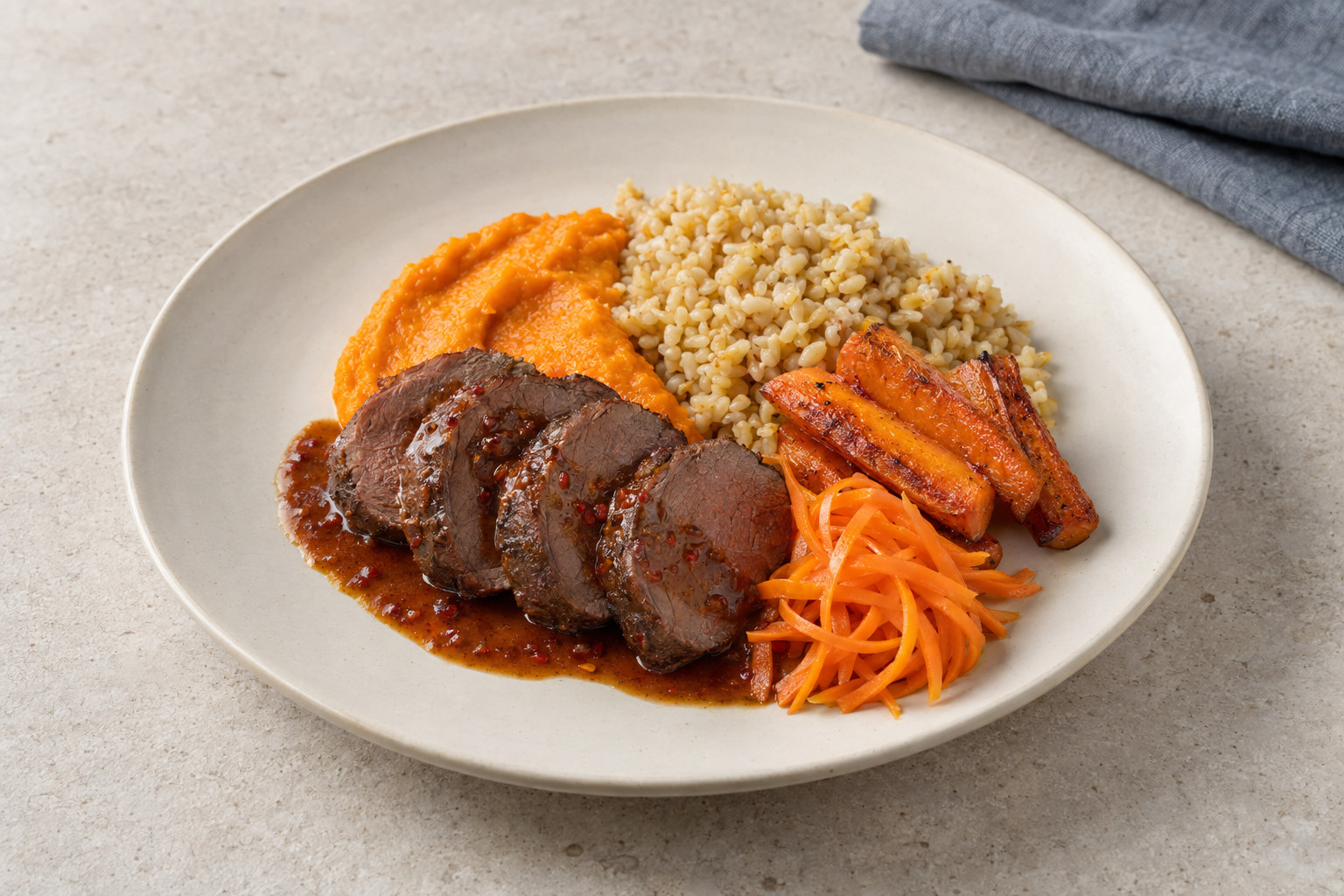
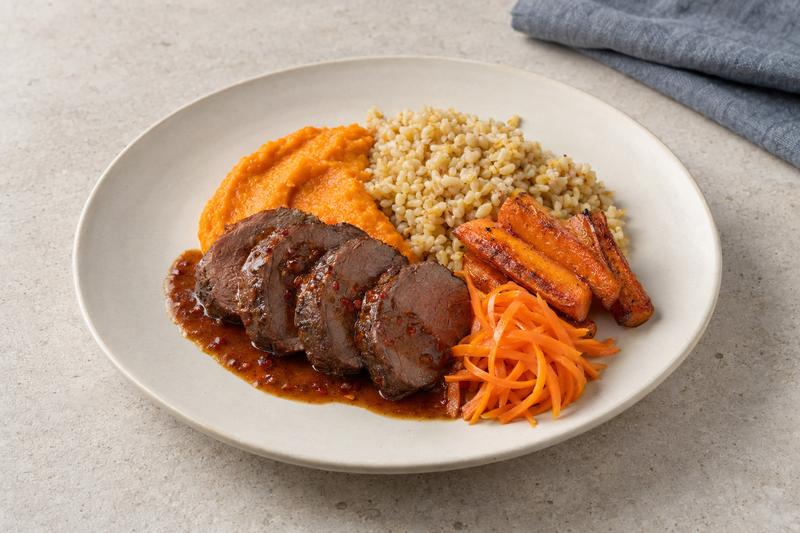
A sweet, hot glaze coats the venison loin. Tangy, crisp ribbons complement the smooth carrot purée and roasted batons, while buttery bulgur softens the spiced harissa flavour.
Step-by-step method
What you will need
- kitchen scales
- thin-probe thermometer
- knife and two separate chopping boards
- measuring jug
- 26 cm frying pan
- 30 × 25 cm baking tray
- 20 × 15 cm roasting dish
- narrow 1-litre saucepan with lid
- 1.5-litre pot with lid
- stick blender
- peeler
- colander
- bowl for the pickling liquid
- oven with two shelf levels
- electric kettle
Before we start
We pickle the carrot ribbons. We make the purée in a saucepan while roasting the batons at 200 °C. We remove the carrots from the oven, lower it to 150 °C and brown the loin. We start cooking the bulgur only after putting the meat in the oven. Towards the end, we return the batons to the second shelf and warm the purée in the saucepan; while the meat rests, we finish the glaze and plate the meal.
Prepare the meat
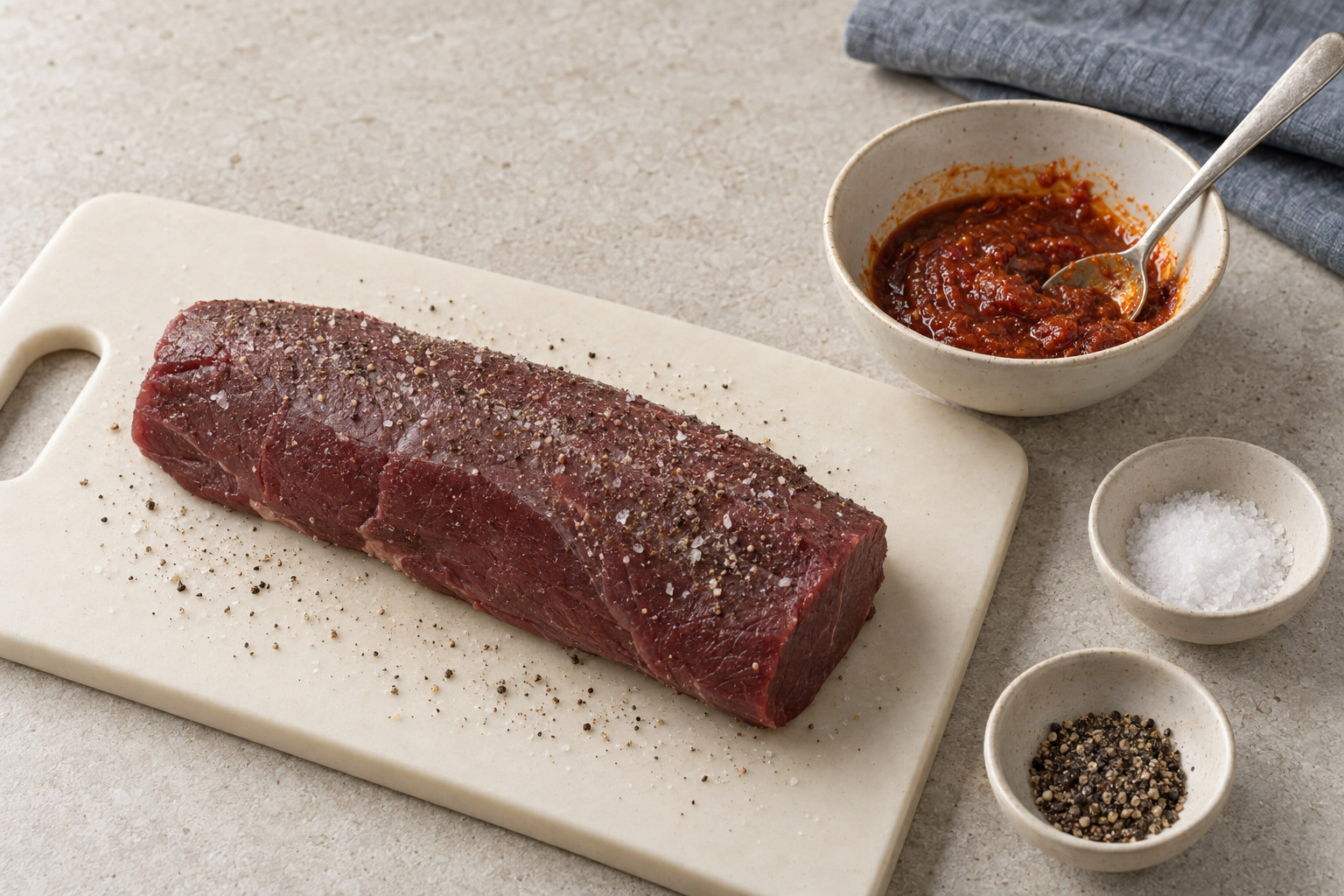
We pat the prepared loin dry and use one 360 g piece, 5–6 cm in diameter. We season with the salt for the meat and pepper. We mix the harissa with the honey and set it aside so the sugar does not burn during the initial browning.
Divide the carrots and pickle the ribbons
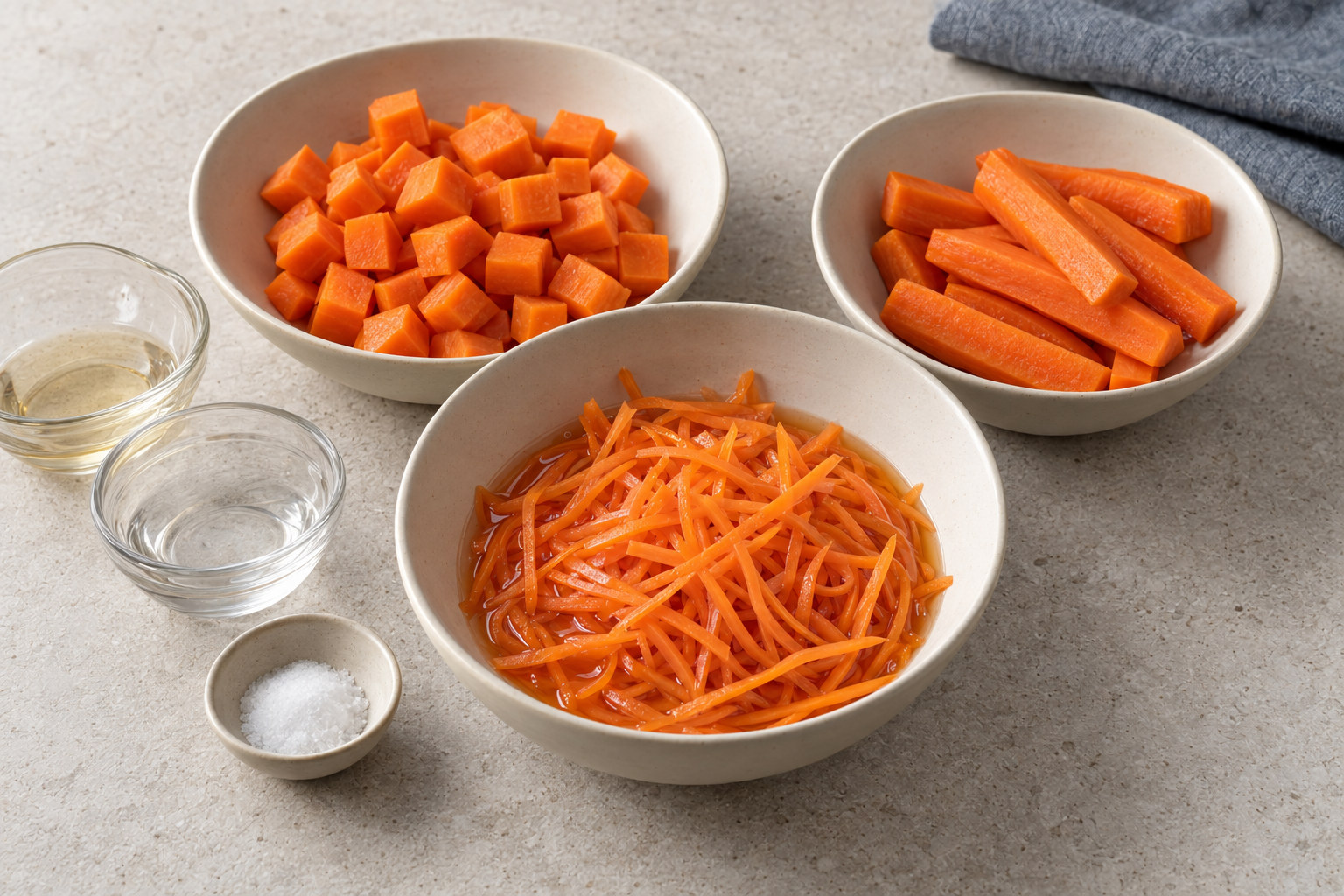
We peel and divide the carrots: 100 g into thin ribbons, 200 g into 1.5 cm cubes for the purée and 100 g into lengthwise batons. We toss the ribbons with the vinegar, water for the pickling liquid, sugar and a quarter of the salt for the carrots. We leave them for at least 20 minutes. We divide the remaining salt equally between the purée and roasted batons.
Make the purée and roast the carrots
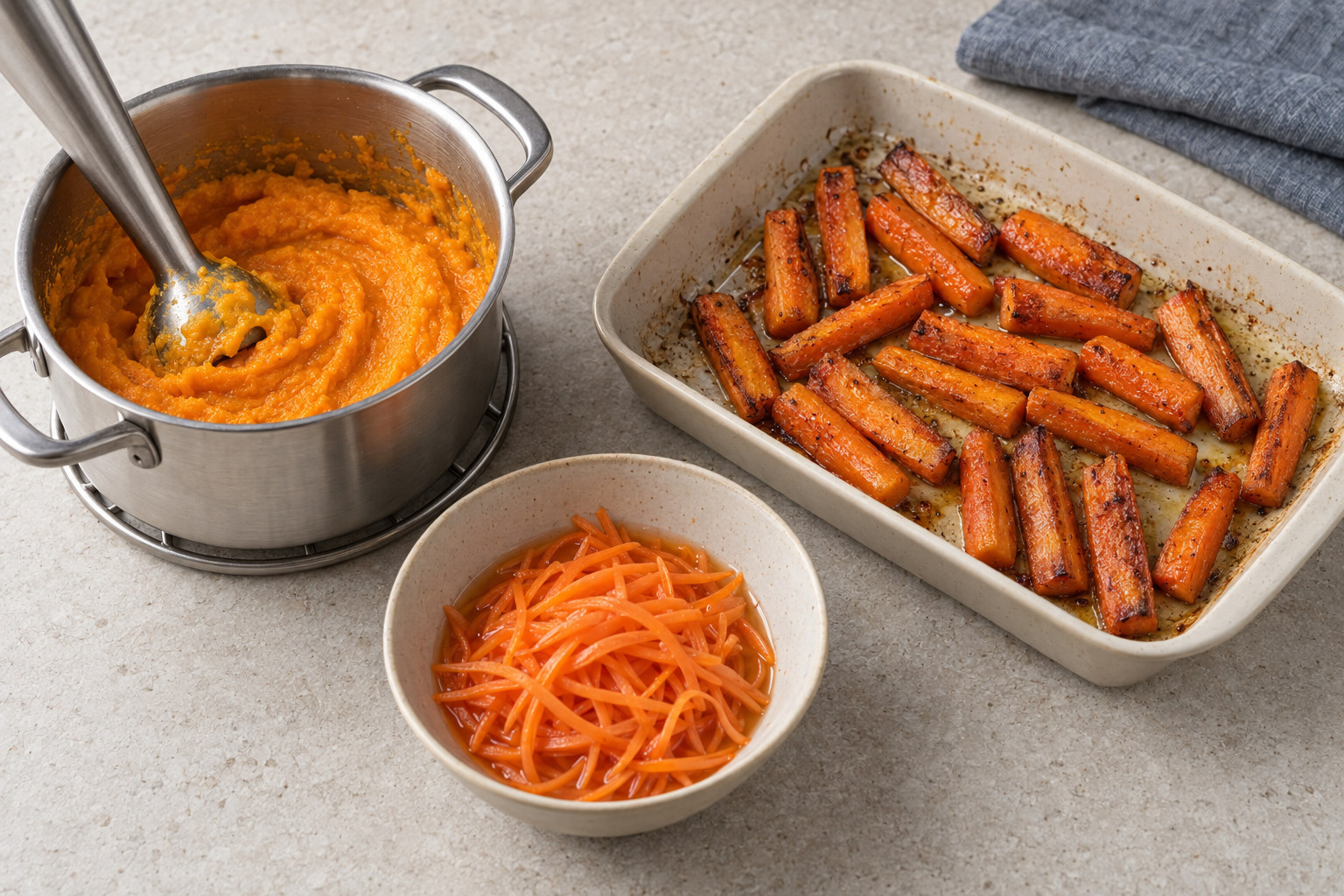
We put the cubes in a narrow saucepan with the milk and water for the purée. We simmer gently under a lid for about 20 minutes until tender; the liquid must not boil over vigorously. We drain and reserve 60 ml of the cooking liquid. We blend the carrots with the butter and salt for the purée, adding the reserved liquid two teaspoons at a time as needed, up to 60 ml. We cover the purée. We toss the batons with all the oil for the carrots and their salt, then roast at 200 °C with top and bottom heat for 20–25 minutes. We remove the tray, set the oven to 150 °C and briefly vent it before putting in the meat.
The purée is smooth, the batons are roasted and the raw pickled ribbons are crisp.
Brown the loin and finish it in the oven
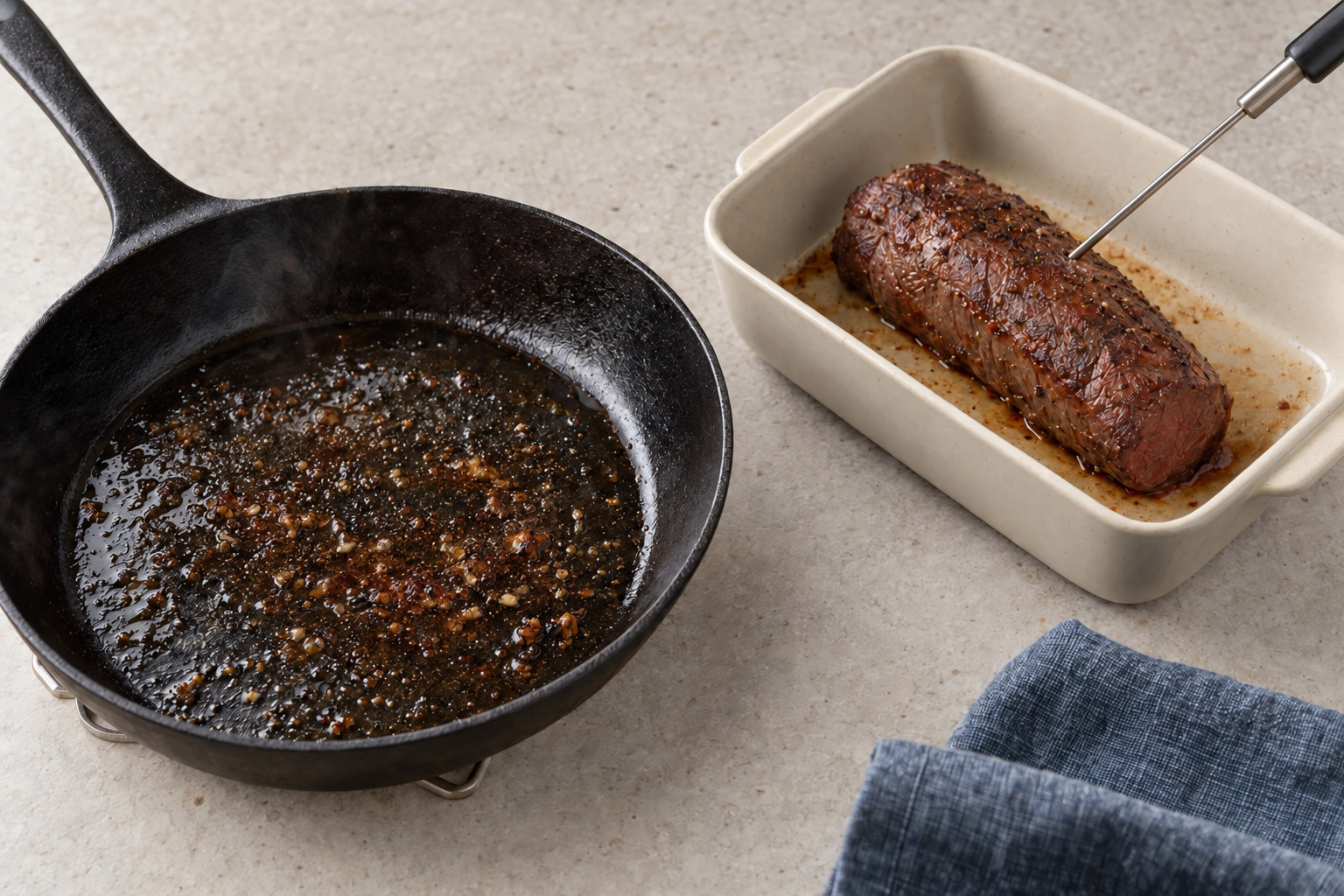
We heat the pan over medium-high heat. We brown one 360 g piece of loin in the oil on all sides for 5–6 minutes. We transfer it to the roasting dish and roast at 150 °C for about 20–35 minutes, depending on its 5–6 cm diameter. From 15 minutes onwards, we measure the centre of the meat; it must remain at no less than 70 °C for 2 minutes. If needed, we continue roasting and check every 5 minutes. For approximately the final 10 minutes, we return the tray of carrot batons to the second shelf. We let the cooked meat rest for 5 minutes.
Cook the bulgur
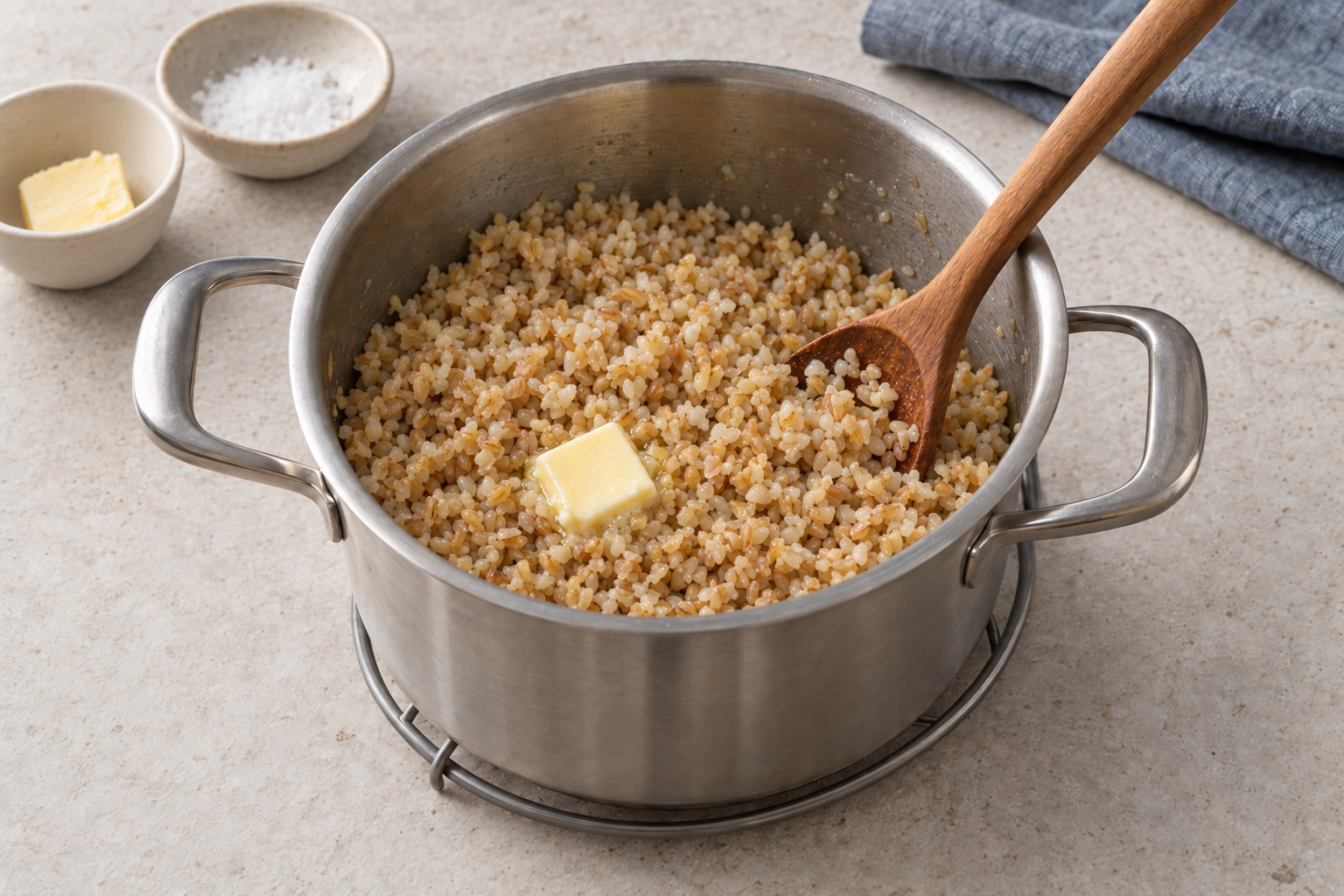
As soon as we put the loin in the oven, we rinse the bulgur, add 280 ml water in a pot and add salt. We leave the reserve water aside for now. We bring to a boil, cover and simmer gently for 12–15 minutes; if the water evaporates while the bulgur is still hard, we add hot reserve water two tablespoons at a time, up to 60 ml in total. We drain any excess liquid, stir in the butter and leave covered for 5 minutes to finish cooking.
The grains are tender but not mushy; nothing is catching on the bottom.
Finish the glaze and warm the purée
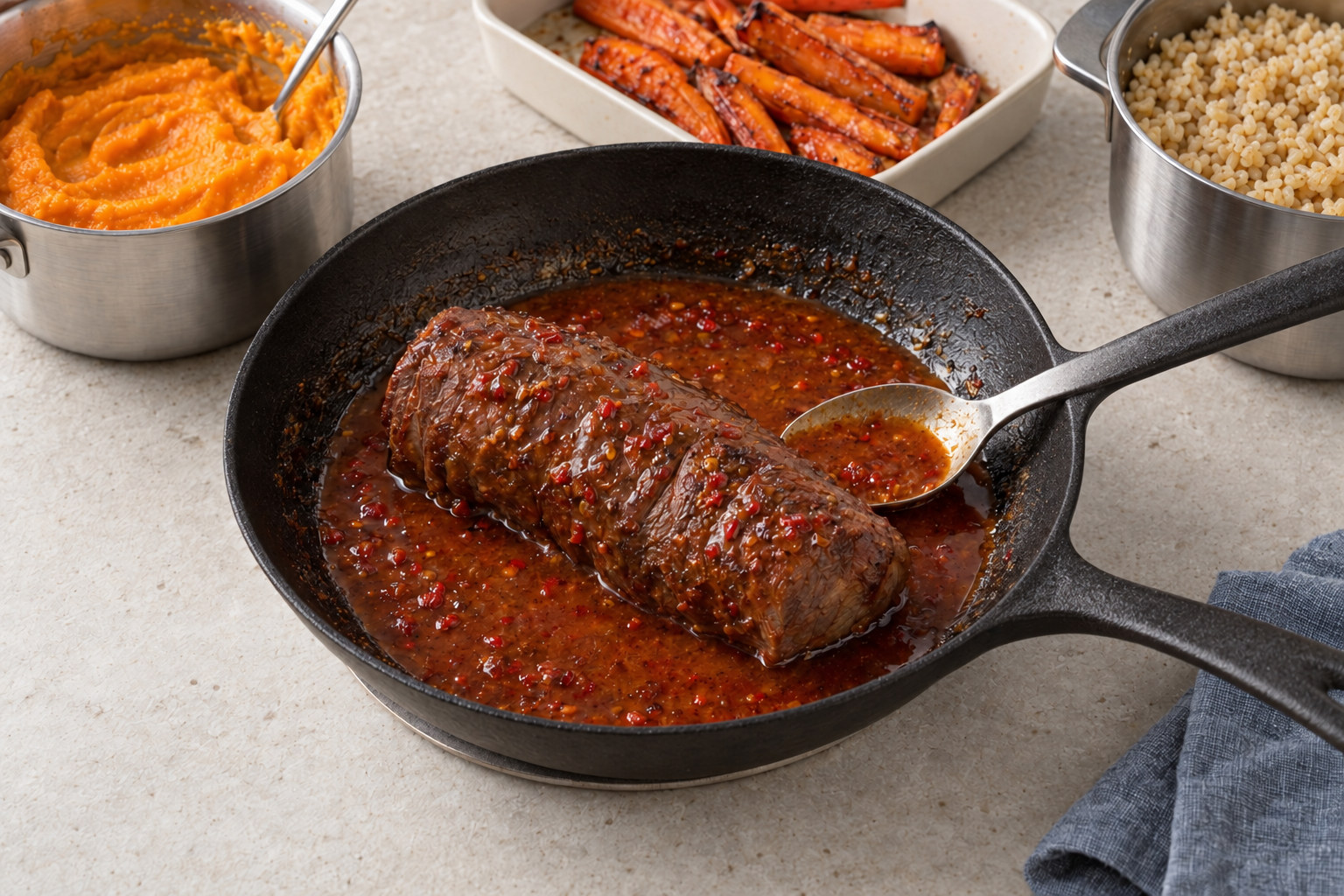
While the meat roasts, we pour the stock over the browned bits in the pan and stir in the prepared harissa and honey. We cook over medium heat for 3–6 minutes until we have a thin glaze, then take it off the heat. While the loin rests, we briefly warm the glaze and add the collected meat juices. We quickly turn the rested loin in it without simmering it further. We gently warm the covered purée over the lowest heat, stirring occasionally.
Divide and serve
We divide the hot bulgur and carrot purée between 2 warmed plates. We slice the glazed loin and add it with the warm roasted batons and pickled ribbons lifted out of their brine. We spoon the remaining glaze over the meat; we do not add the brine.
Tips from our kitchen
- We divide the carrots in advance between purée, roasting and pickling. We lift the pickled ribbons out of their brine before serving.
- We start with a mild harissa; chilli strength varies between pastes. We add the honey only to the glaze.
What to watch out for
- Wet meat steams in a crowded pan instead of browning; we pat it dry and work in batches.
How we serve it
- We serve the sliced glazed loin with bulgur, purée and roasted carrots. We add the pickled ribbons drained, without their brine.
Ingredient swaps
harissa
the same amount of a milder harissa Chilli heat varies between brands; we start with a mild paste. Ordinary pesto cannot replace its flavour.
During preparation
- We keep raw meat and utensils used for it separate from the finished food.
Our inspiration
Simon Hulstone, chef at The Elephant in Torquay, gives carrots three roles alongside venison with harissa: a smooth purée, a crisp pickled accompaniment and a portion slowly cooked in fat. One vegetable becomes a small tasting of different flavours and textures. We explore that variety at home too: we roast one portion instead of confiting it and serve all three preparations side by side.
Simon Hulstone
Simon Hulstone is a British chef associated with The Elephant restaurant in Torquay. His cooking features seasonal ingredients and carefully composed vegetable accompaniments.
Similar recipes
Recipe for 4 people
Step-by-step method
Before we start
We pickle the carrot ribbons. We make the purée in a saucepan while roasting the batons at 200 °C. We remove the carrots from the oven, lower it to 150 °C and brown the loin. We start cooking the bulgur only after putting the meat in the oven. Towards the end, we return the batons to the second shelf and warm the purée in the saucepan; while the meat rests, we finish the glaze and plate the meal.
Prepare the meat
We pat the prepared loin dry and use two equally thick 360 g pieces, each 5–6 cm in diameter. We season with the salt for the meat and pepper. We mix the harissa with the honey and set it aside so the sugar does not burn during the initial browning.
Divide the carrots and pickle the ribbons
We peel and divide the carrots: 185 g into thin ribbons, 370 g into 1.5 cm cubes for the purée and 185 g into lengthwise batons. We toss the ribbons with the vinegar, water for the pickling liquid, sugar and a quarter of the salt for the carrots. We leave them for at least 20 minutes. We divide the remaining salt equally between the purée and roasted batons.
Make the purée and roast the carrots
We put the cubes in a narrow saucepan with the milk and water for the purée. We simmer gently under a lid for about 20 minutes until tender; the liquid must not boil over vigorously. We drain and reserve 100 ml of the cooking liquid. We blend the carrots with the butter and salt for the purée, adding the reserved liquid two teaspoons at a time as needed, up to 100 ml. We cover the purée. We toss the batons with all the oil for the carrots and their salt, then roast at 200 °C with top and bottom heat for 20–25 minutes. We remove the tray, set the oven to 150 °C and briefly vent it before putting in the meat.
The purée is smooth, the batons are roasted and the raw pickled ribbons are crisp.
Brown the loin and finish it in the oven
We heat the pan over medium-high heat. We brown the two 360 g pieces of loin one at a time, each in half the oil, on all sides for 5–6 minutes. We transfer them side by side to the roasting dish and roast at 150 °C for about 20–35 minutes, depending on their 5–6 cm diameter. From 15 minutes onwards, we measure the centre of both pieces; each must remain at no less than 70 °C for 2 minutes. If needed, we continue roasting and check every 5 minutes. For approximately the final 10 minutes, we return the tray of carrot batons to the second shelf. We let the cooked meat rest for 5 minutes.
Cook the bulgur
As soon as we put the loin in the oven, we rinse the bulgur, add 500 ml water in a pot and add salt. We leave the reserve water aside for now. We bring to a boil, cover and simmer gently for 12–15 minutes; if the water evaporates while the bulgur is still hard, we add hot reserve water two tablespoons at a time, up to 120 ml in total. We drain any excess liquid, stir in the butter and leave covered for 5 minutes to finish cooking.
The grains are tender but not mushy; nothing is catching on the bottom.
Finish the glaze and warm the purée
While the meat roasts, we pour the stock over the browned bits in the pan and stir in the prepared harissa and honey. We cook over medium heat for 3–6 minutes until we have a thin glaze, then take it off the heat. While the loin rests, we briefly warm the glaze and add the collected meat juices. We quickly turn the rested loin in it without simmering it further. We gently warm the covered purée over the lowest heat, stirring occasionally.
Divide and serve
We divide the hot bulgur and carrot purée between 4 warmed plates. We slice the glazed loin and add it with the warm roasted batons and pickled ribbons lifted out of their brine. We spoon the remaining glaze over the meat; we do not add the brine.