
Korean inspiration · Korean inspiration
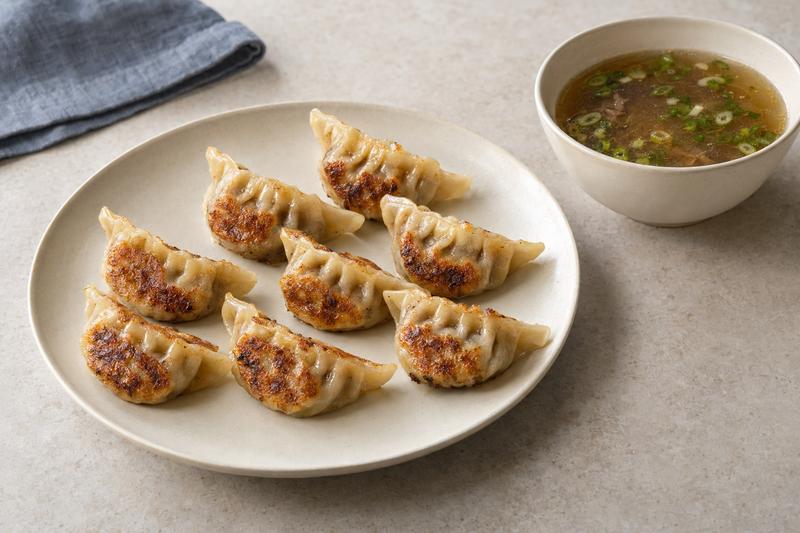
Fallow deer mandu with mushrooms, ginger broth and sesame oil
The crisp bases of homemade mandu conceal tender fallow deer with mushrooms, garlic and ginger. We serve hot broth fragrant with sesame oil beside the dumplings. This is cooking for a free day: slowly braising the filling, chilling it, then rolling and filling every wrapper.
The stated time includes braising, up to 45 minutes in a cooling bath, 60–90 minutes to chill the filling, resting the dough, shaping and two rounds of finishing.
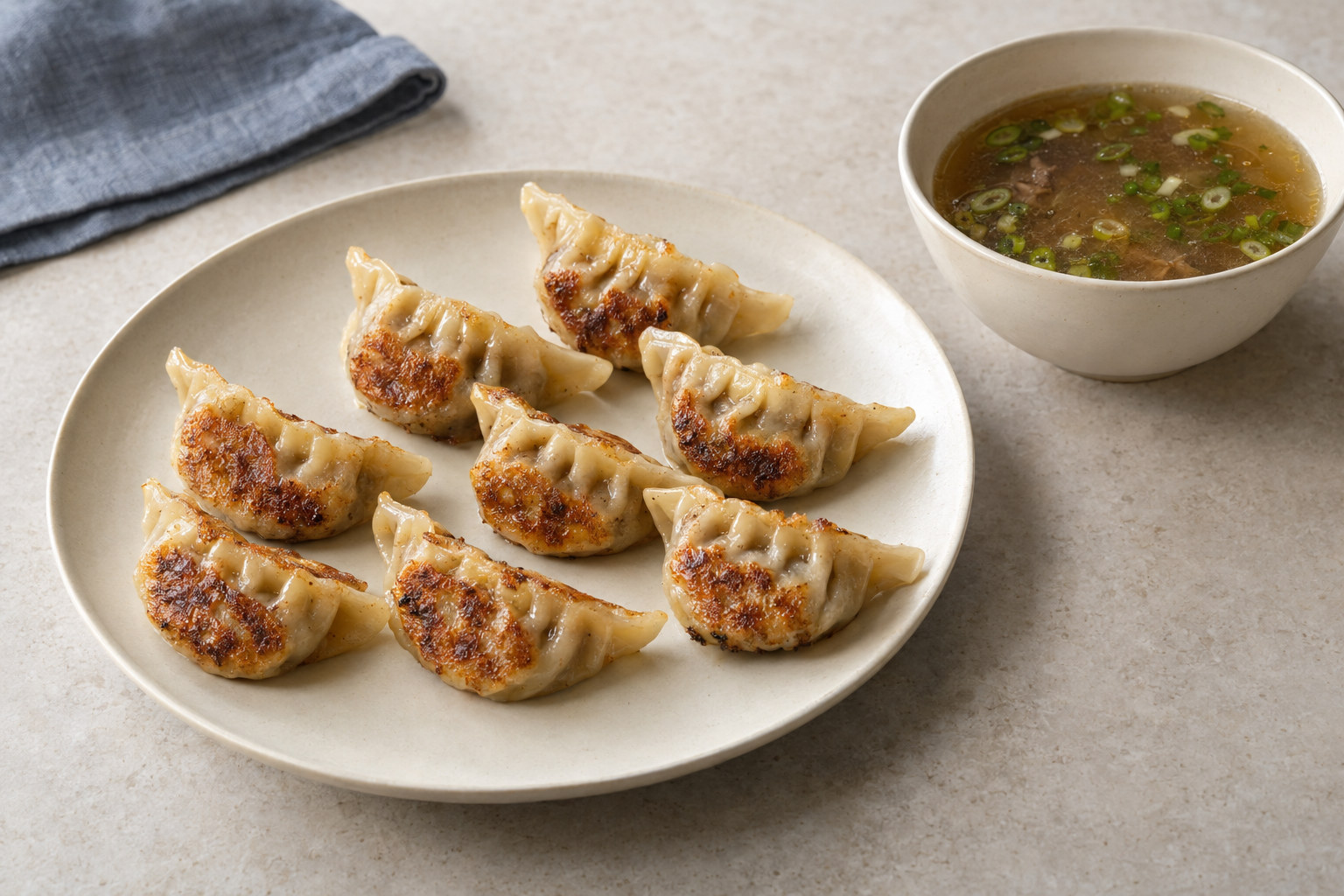
Browned button mushrooms and fresh ginger complement the rich game filling. Springy wrappers with crisp bases alternate with hot broth scented with toasted sesame.
Step-by-step method
What you will need
- kitchen scales
- probe thermometer with a thin probe
- knife and two separate chopping boards
- measuring jug
- heavy 20 cm pan with a lid, 3 l
- 26 cm frying pan for the mushrooms
- shallow 20 × 20 cm metal container
- shallow metal dish for the meat juices
- larger container and ice packs
- fridge with a thermometer
- rolling pin
- 40 × 30 cm tray
- 28 cm non-stick frying pan with a tight-fitting lid
- 1.5 l pan for the broth
- tray with a rack
- oven
- sieve for separating the onion from the meat juices
Before we start
We braise the meat first and make a filling with no free liquid. We quickly cool the filling and the separated meat juices and put them in the fridge. While they chill, we make the dough. We brown and steam the dumplings in two rounds, keeping the first briefly warm in the oven. We finish the broth only at the end.
Brown and braise the meat
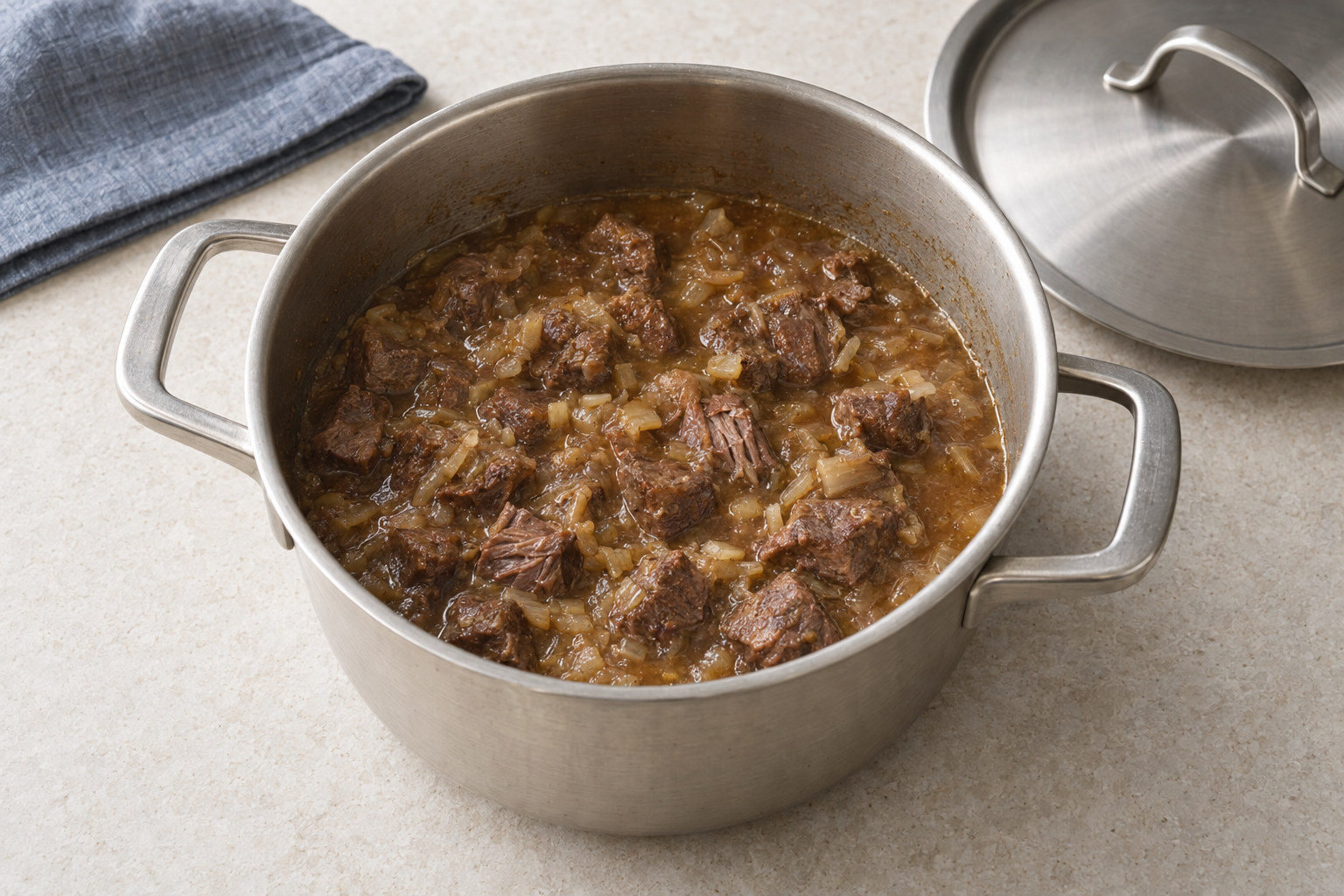
We peel and finely chop the onion and garlic for braising. We cut the meat into 3 cm cubes, pat it dry and season it with the salt for the meat and pepper. In 2 teaspoons of rapeseed oil, we brown two 160 g batches, each for 4–6 minutes over a medium-high heat. We remove the meat. In the remaining oil for the meat, we cook the chopped onion for 7–9 minutes, stirring. We add the finely chopped garlic for braising and stir for 30 seconds. We return the meat and any released juices to the pan and pour in all the beef stock. We cover with a tight-fitting lid and braise gently for about 150–210 minutes so the liquid bubbles only occasionally. Every 30 minutes, we stir and add a little hot water if needed. The tender meat pulls apart easily with a fork. If the connective tissue is still springy, we continue braising; we make the filling only with tender meat.
Make the filling
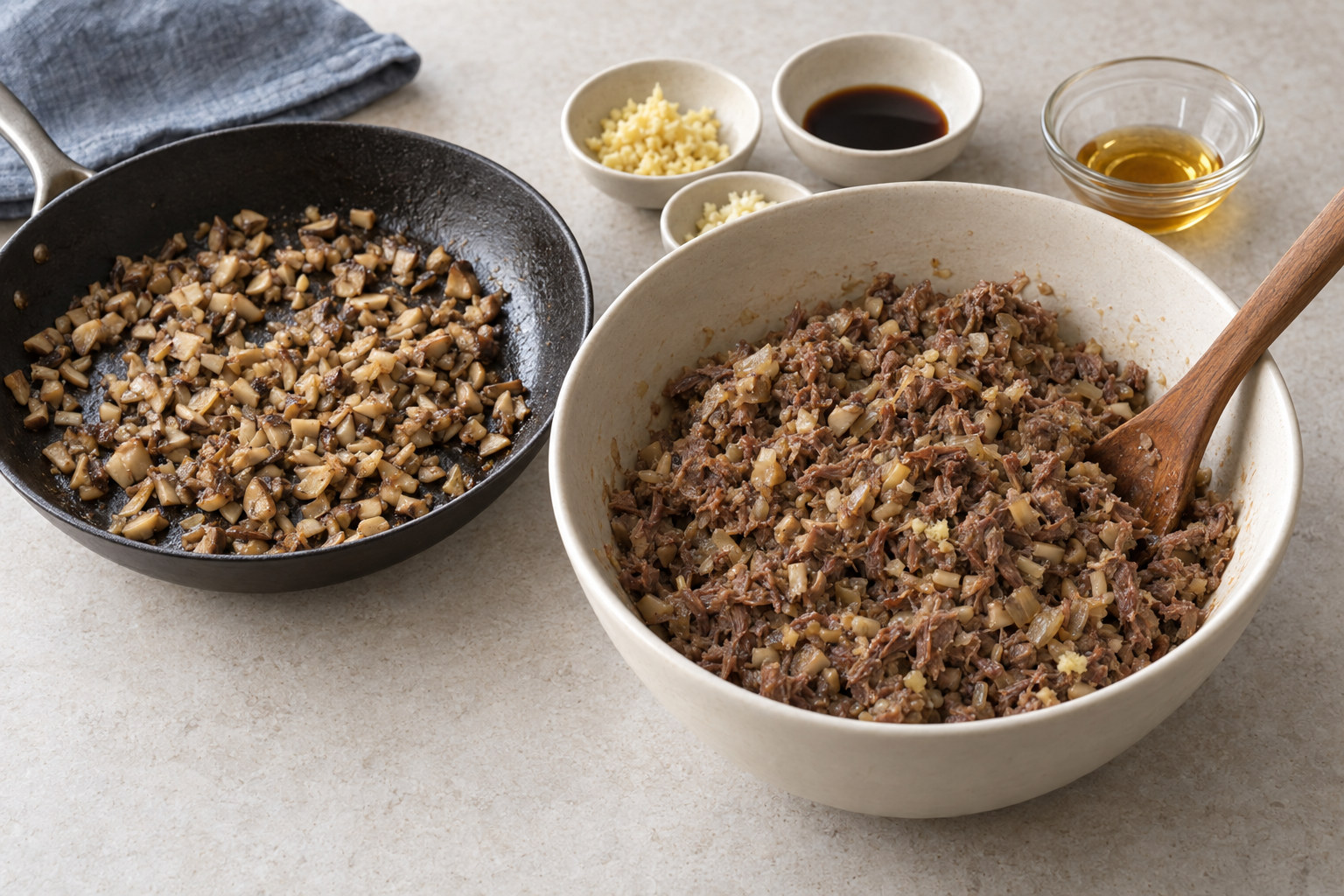
We take out the tender meat and chop it very finely. We strain the onion base. We chop the soft onion and add it to the meat, reserving the juices separately. We clean the button mushrooms and chop them into 3 mm pieces. We peel and finely chop the garlic and ginger for the filling. In half the oil for the mushrooms and dumplings, we brown the mushrooms for 7–9 minutes over a medium-high heat until all free water has evaporated. We add the chopped garlic and ginger for the filling and cook for 30 seconds. We mix them with the meat, onion, all the soy sauce and half the sesame oil. The filling holds on a spoon and releases no puddle of liquid; if any free liquid remains, we cook it off.
Chill the filling and juices
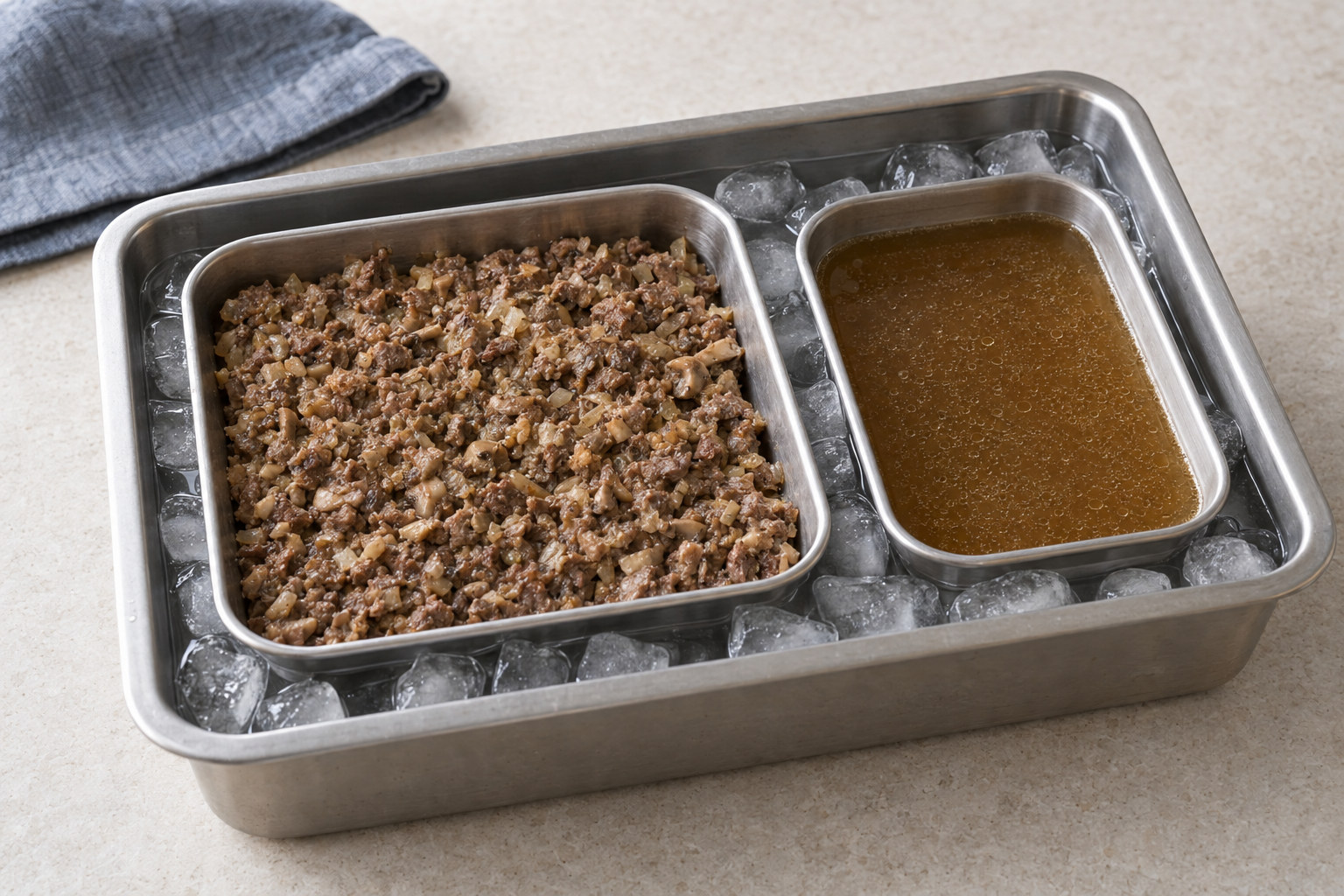
We spread the filling in a metal container to a depth of no more than 2 cm. We pour the separated meat juices into a second shallow dish. We stand both containers in a cold-water bath with ice packs and stir the contents occasionally. The bath water must not touch the food. After no more than 45 minutes, we transfer both containers to the fridge at 0–5 °C, always within 2 hours of finishing cooking. We chill for another 60–90 minutes, or longer if needed, until the centre of the filling is no warmer than 5 °C.
Make the dough
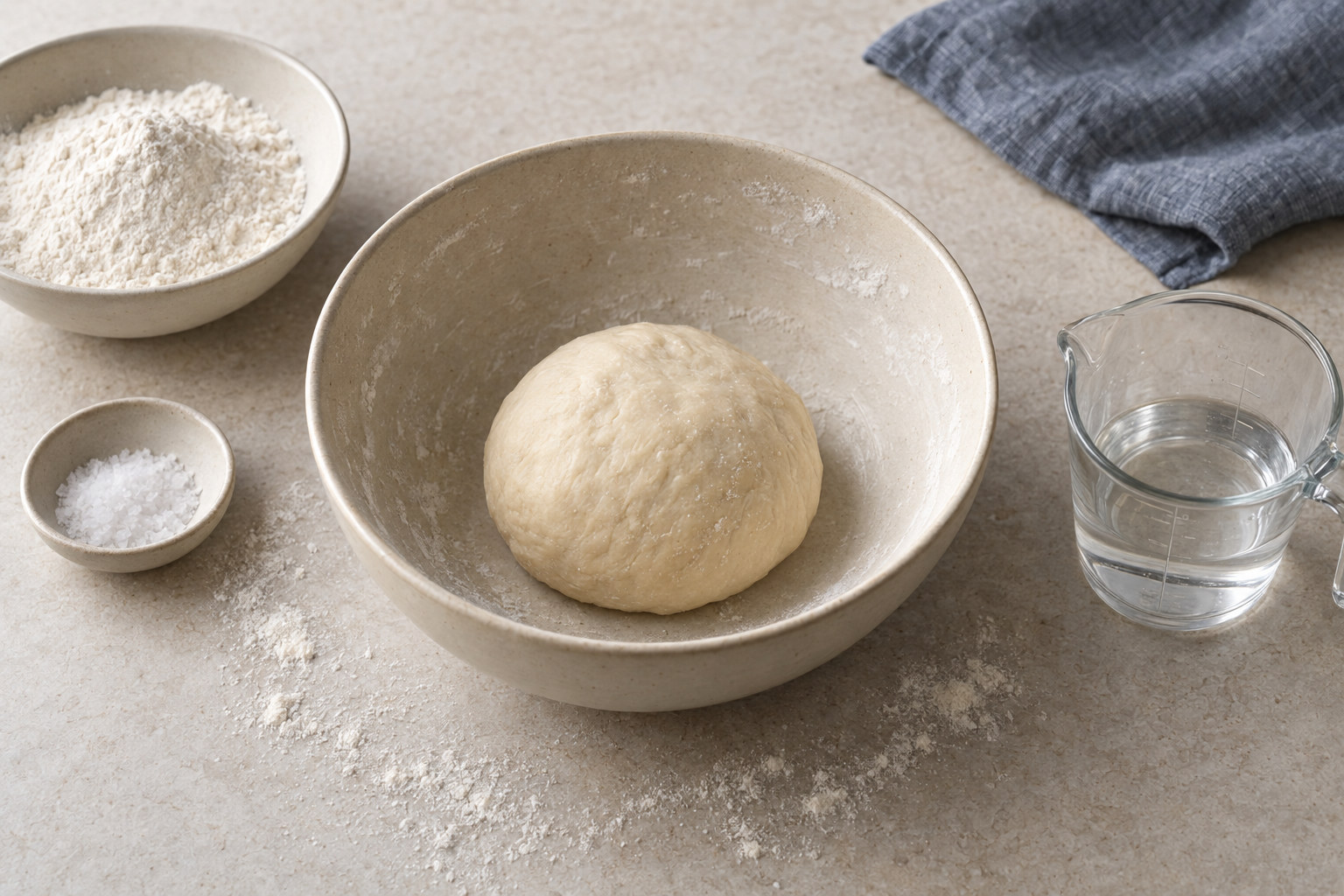
While the filling chills, we mix the flour, salt and water for the dough. We knead for 8–10 minutes until we have a smooth, firm ball. We cover it and leave it to rest at room temperature for 30 minutes. We keep the flour for dusting to one side for now.
Fill and seal the dumplings
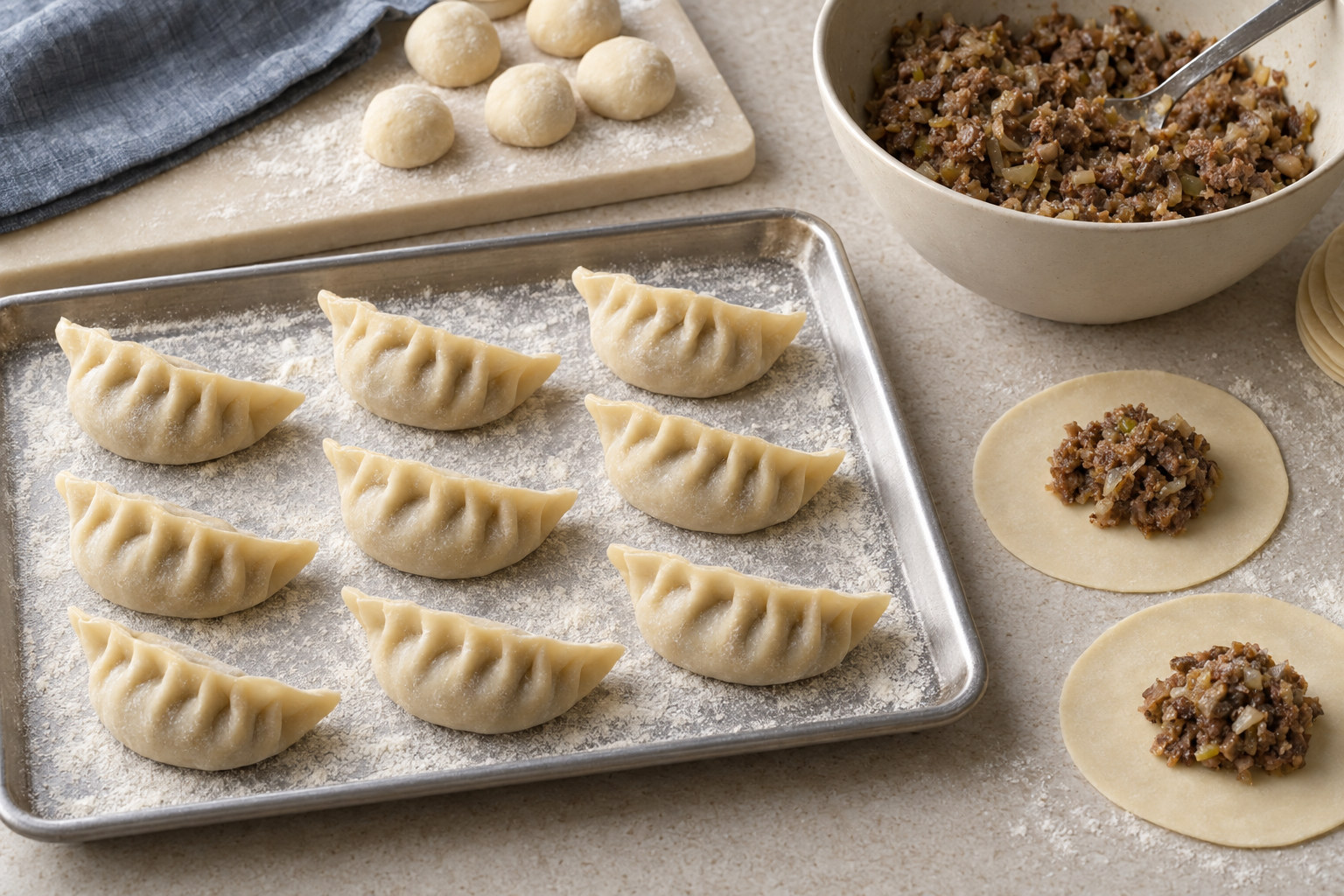
We divide the dough into 18 equal-weight balls. On a surface dusted with the flour set aside for dusting, we roll each into a circle about 10 cm across, 2 mm thick in the centre and about 1 mm at the edge. We keep the remaining dough covered. We divide the cold filling among the circles in small mounds, no more than 20 g on each. We return any leftover filling to the fridge with the meat juices and add it to the broth later. We fold the circles in half, press out the air and firmly pinch the clean edges together. We arrange the uncooked dumplings in one layer on a floured tray and keep them in the fridge until finishing.
Brown and steam the dumplings in two rounds
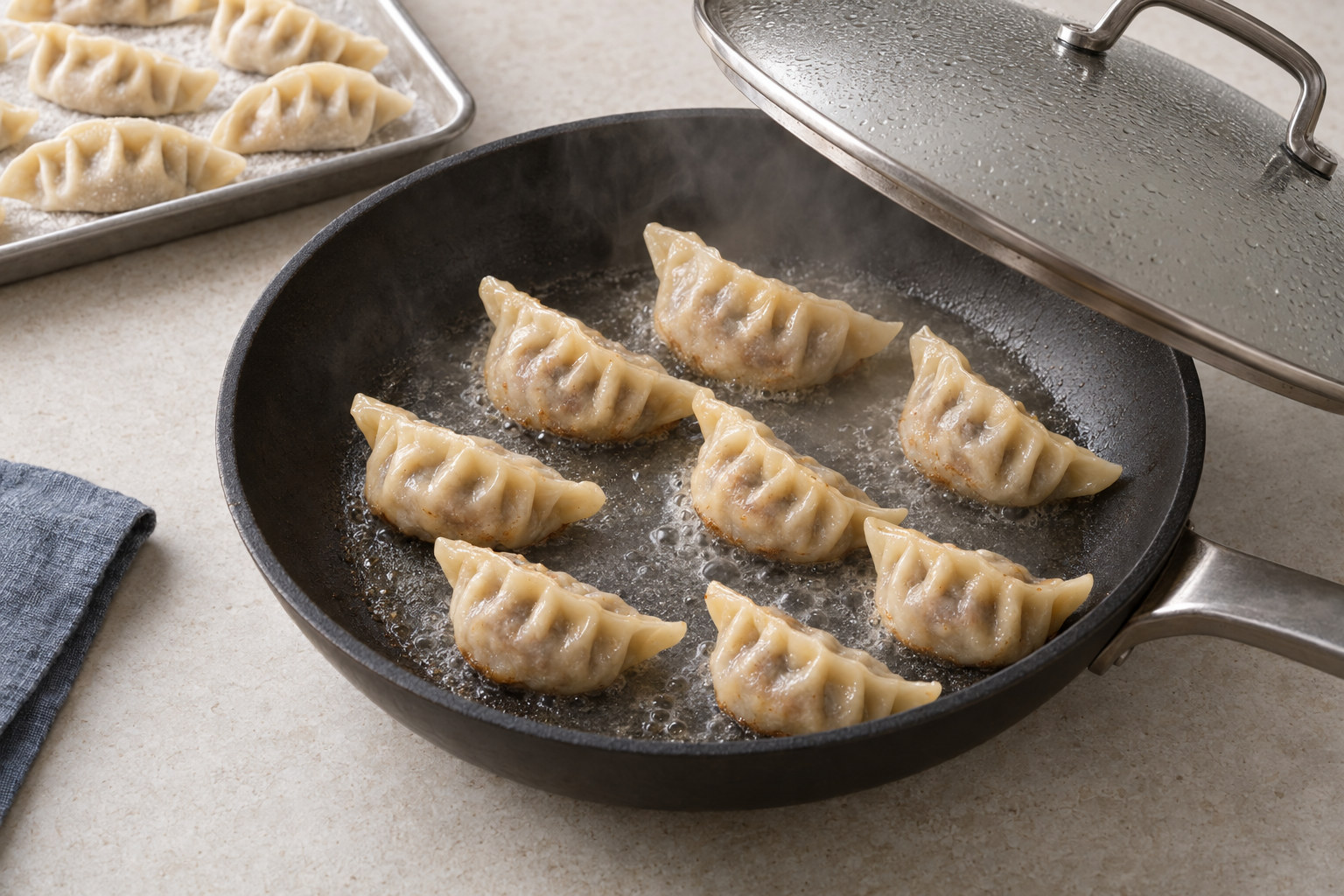
We preheat the oven to 80 °C. We divide the remaining oil for the mushrooms and dumplings into two batches for one pan. In each round, we brown 9 dumplings, flat base down, over a medium heat for 2–3 minutes. We carefully pour in 100 ml of water, cover immediately and steam over a low heat for 7–9 minutes. If the water evaporates too soon, we add no more than 20 ml of water to that batch. We check that the filling in the largest dumpling reaches at least 70 °C for 2 minutes. We uncover and let the bases dry out again for 1–2 minutes. We transfer the first round to a rack in the oven and keep it there for no more than 15 minutes. Meanwhile, we finish the second round in the same way.
Finish the ginger broth
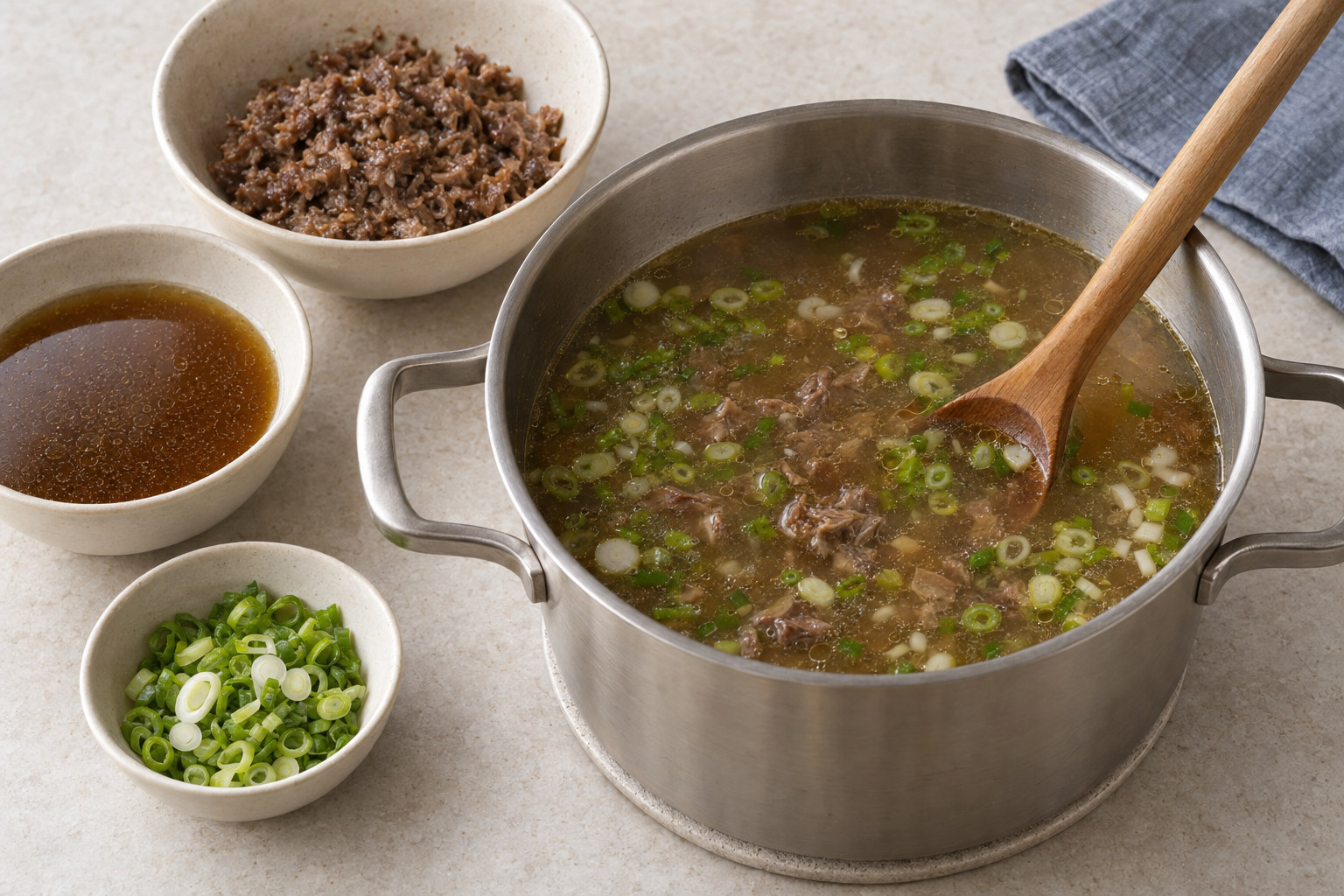
We peel and thinly slice the ginger for the broth. During the second round of dumplings, we add it to the vegetable stock with the salt and heat it. We simmer gently for 8 minutes. We add all the reserved meat juices and any surplus filling. Stirring, we heat it to at least 70 °C for 2 minutes and check the temperature. We remove the ginger slices. We stir in the remaining half of the sesame oil and the finely chopped spring onion.
Serve the mandu with broth
We divide the dumplings between 2 warmed plates, nine per person. We pour the hot ginger broth into 2 separate bowls and serve it with the dumplings. We do not dip the browned bases beforehand.
Tips from our kitchen
- We fill the dumplings sparingly with cold filling. We keep the edges clean and seal them firmly so they do not open during steaming.
- For four servings, we use two pans at the same time. We serve the broth separately so the browned bases of the dumplings do not soften too soon.
What to watch out for
- We brown the meat in the specified batches so it takes on colour instead of stewing in its own juices.
- We fill the dumplings only once the filling is cold and free of liquid. After steaming, we use a clean probe to measure the temperature inside the largest dumpling.
How we serve it
- We serve each person nine dumplings and a bowl of hot ginger broth. We do not dip the dumplings into it ahead of time, so their browned bases stay crisp.
During preparation
- We use a clean probe to measure the temperature. We keep raw meat and any utensils that touched it separate from cooked food, and wash our hands after handling it.
- We cool the filling and meat juices quickly in shallow layers and put them in the fridge at 0–5 °C within 2 hours at the latest. We use them within 48 hours and reheat them only once. We check the temperature at the centre of the filling as described in the method.
Our inspiration
With homemade mandu-pi wrappers, the thickness of the dough matters. A thinner edge closes into a fine seam, while a firmer centre supports the filling. With flour, water and a little patience, we make our own dumplings filled with braised fallow deer and mushrooms. We serve the finished dumplings with golden bases alongside hot ginger broth, alternating crisp bites with spoonfuls of fragrant broth.
Similar recipes
Recipe for 4 people
Step-by-step method
Before we start
We braise the meat first and make a filling with no free liquid. We quickly cool the filling and the separated meat juices and put them in the fridge. While they chill, we make the dough. We brown and steam the dumplings in two rounds, keeping the first briefly warm in the oven. We finish the broth only at the end.
Brown and braise the meat
We peel and finely chop the onion and garlic for braising. We cut the meat into 3 cm cubes, pat it dry and season it with the salt for the meat and pepper. In 1½ tablespoons of rapeseed oil, we brown four 160 g batches, each for 4–6 minutes over a medium-high heat. We remove the meat. In the remaining oil for the meat, we cook the chopped onion for 7–9 minutes, stirring. We add the finely chopped garlic for braising and stir for 30 seconds. We return the meat and any released juices to the pan and pour in all the beef stock. We cover with a tight-fitting lid and braise gently for about 150–210 minutes so the liquid bubbles only occasionally. Every 30 minutes, we stir and add a little hot water if needed. The tender meat pulls apart easily with a fork. If the connective tissue is still springy, we continue braising; we make the filling only with tender meat.
Make the filling
We take out the tender meat and chop it very finely. We strain the onion base. We chop the soft onion and add it to the meat, reserving the juices separately. We clean the button mushrooms and chop them into 3 mm pieces. We peel and finely chop the garlic and ginger for the filling. In half the oil for the mushrooms and dumplings, we brown the mushrooms for 10–12 minutes over a medium-high heat until all free water has evaporated. We add the chopped garlic and ginger for the filling and cook for 30 seconds. We mix them with the meat, onion, all the soy sauce and half the sesame oil. The filling holds on a spoon and releases no puddle of liquid; if any free liquid remains, we cook it off.
Chill the filling and juices
We divide the filling between two metal containers and spread it in each to a depth of no more than 2 cm. We pour the meat juices into a third shallow dish. We stand all three containers in a cold-water bath with ice packs and stir the contents occasionally. The bath water must not touch the food. After no more than 45 minutes, we transfer all three containers to the fridge at 0–5 °C, always within 2 hours of finishing cooking. We chill for another 60–90 minutes, or longer if needed, until the centre of the filling is no warmer than 5 °C.
Make the dough
While the filling chills, we mix the flour, salt and water for the dough. We knead for 8–10 minutes until we have a smooth, firm ball. We cover it and leave it to rest at room temperature for 30 minutes. We keep the flour for dusting to one side for now.
Fill and seal the dumplings
We divide the dough into 36 equal-weight balls. On a surface dusted with the flour set aside for dusting, we roll each into a circle about 10 cm across, 2 mm thick in the centre and about 1 mm at the edge. We keep the remaining dough covered. We divide the cold filling among the circles in small mounds, no more than 20 g on each. We return any leftover filling to the fridge with the meat juices and add it to the broth later. We fold the circles in half, press out the air and firmly pinch the clean edges together. We arrange the uncooked dumplings in one layer on floured trays and keep them in the fridge until finishing.
Brown and steam the dumplings in two rounds
We preheat the oven to 80 °C. We divide the remaining oil for the mushrooms and dumplings into four batches for two pans used over two rounds. In each pan, we brown 9 dumplings, flat base down, over a medium heat for 2–3 minutes. We carefully pour 100 ml of water into each pan, cover immediately and steam over a low heat for 7–9 minutes. If the water evaporates too soon, we add no more than 20 ml of water to any one batch. We check that the filling in the largest dumpling reaches at least 70 °C for 2 minutes. We uncover and let the bases dry out again for 1–2 minutes. We transfer the first round to a rack in the oven and keep it there for no more than 15 minutes. Meanwhile, we finish the second round in the same way.
Finish the ginger broth
We peel and thinly slice the ginger for the broth. During the second round of dumplings, we add it to the vegetable stock with the salt and heat it. We simmer gently for 8 minutes. We add all the reserved meat juices and any surplus filling. Stirring, we heat it to at least 70 °C for 2 minutes and check the temperature. We remove the ginger slices. We stir in the remaining half of the sesame oil and the finely chopped spring onion.
Serve the mandu with broth
We divide the dumplings between 4 warmed plates, nine per person. We pour the hot ginger broth into 4 separate bowls and serve it with the dumplings. We do not dip the browned bases beforehand.