
Greek-inspired · Greek-inspired
Fallow deer stifado with little onions and hand-shaped cavatelli
Fallow deer stifado is scented with cinnamon, and sweet whole onions sit in its thick tomato gravy. Red wine with a splash of vinegar brightens the sauce, while homemade cavatelli wait alongside. Their little hollows catch the gravy, so the hand-shaping is worth the time.
While the meat braises, we make the dough, let it rest and shape the cavatelli by hand. We cook the pasta only when the stifado is ready.
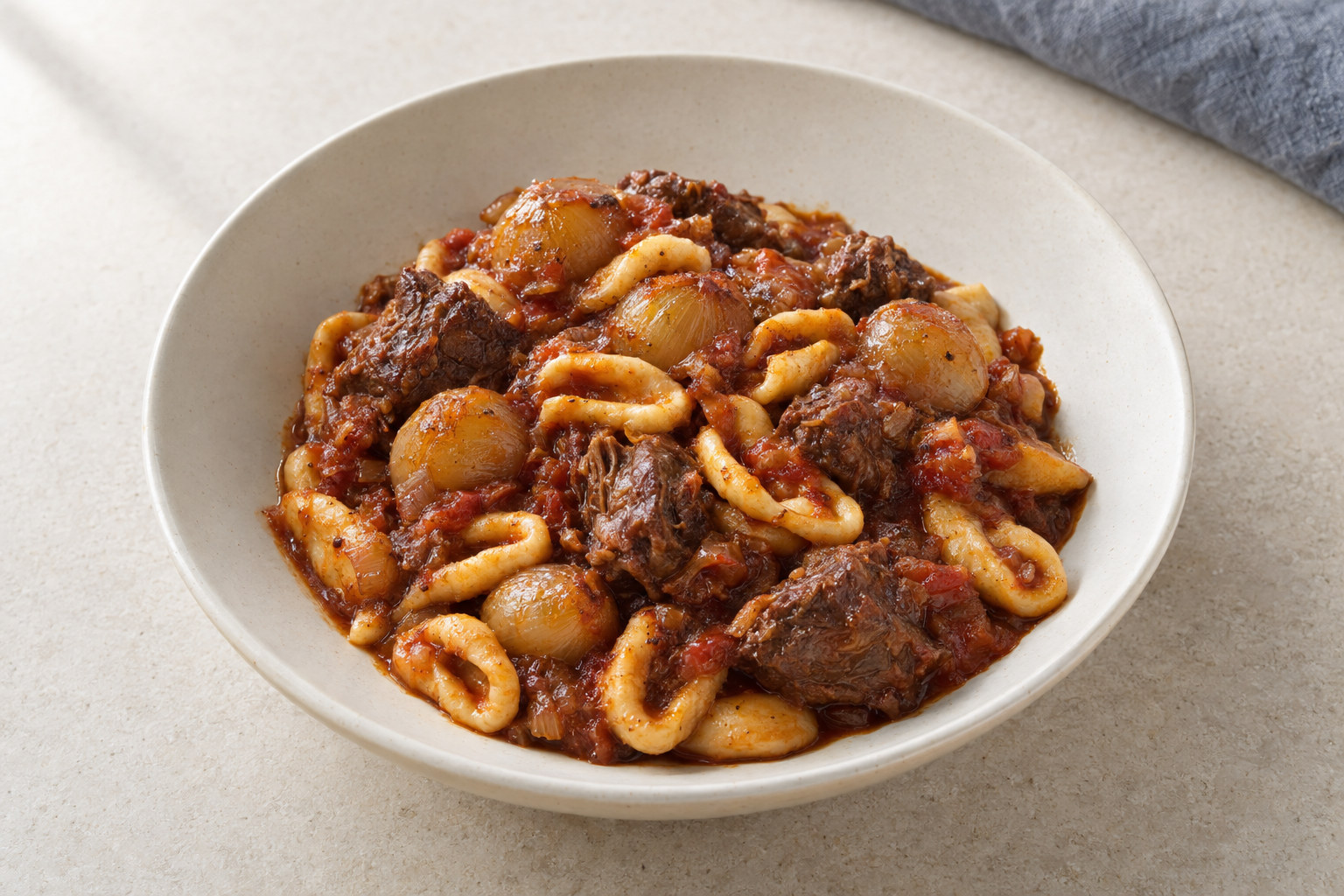
Sweet onions, wine vinegar and a little cinnamon bring out the flavour of the fallow deer. Hollow cavatelli catch the tomato gravy.
Step-by-step method
What you will need
- kitchen scales
- knife and two separate chopping boards
- measuring jug
- heavy 20 cm pot with lid, 3 l
- 22 cm frying pan for the onions
- 3 l pasta pot
- dough bowl
- dough scraper
- 40 × 30 cm tray
- colander
Before we start
We make the dough about 90 minutes before the expected end of braising. We brown the onions as a separate step. We lay the shaped cavatelli out on a tray and cook them in one batch, separately, once the stifado is ready.
We sear the meat and make the base
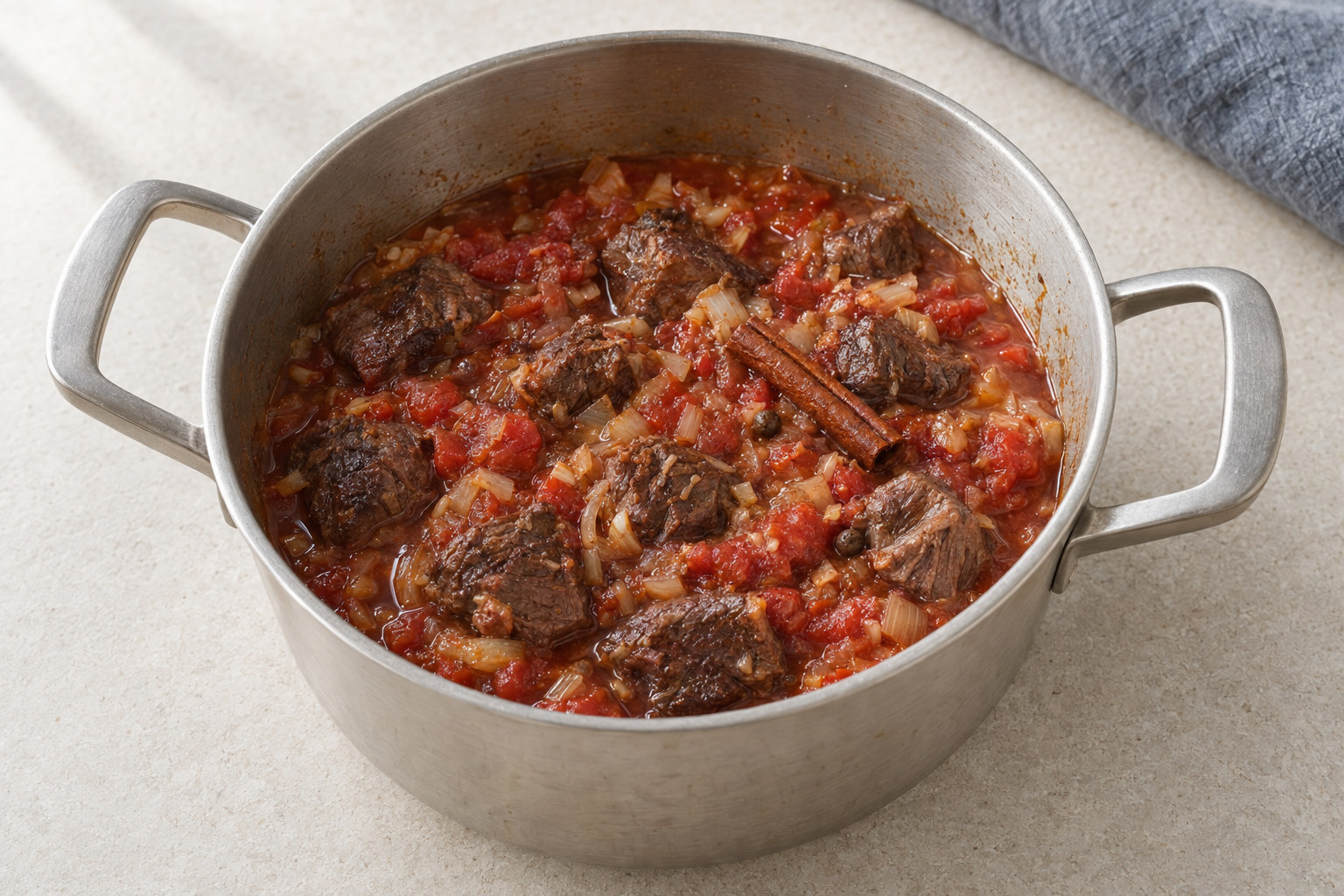
We peel and finely chop the onion and garlic. We cut the meat into 3 cm cubes, pat it dry and season it with the meat salt and pepper. In 2 tsp rapeseed oil, we sear two 225 g batches for 4–6 minutes each over a medium-high heat, then remove them. In the remaining oil, we cook the chopped onion, stirring, for 7–9 minutes and add the chopped garlic for 30 seconds. We pour in the wine and vinegar and simmer for 3 minutes. We return the meat and its juices, then add all the tomatoes, stock, cinnamon and allspice.
We braise the stifado
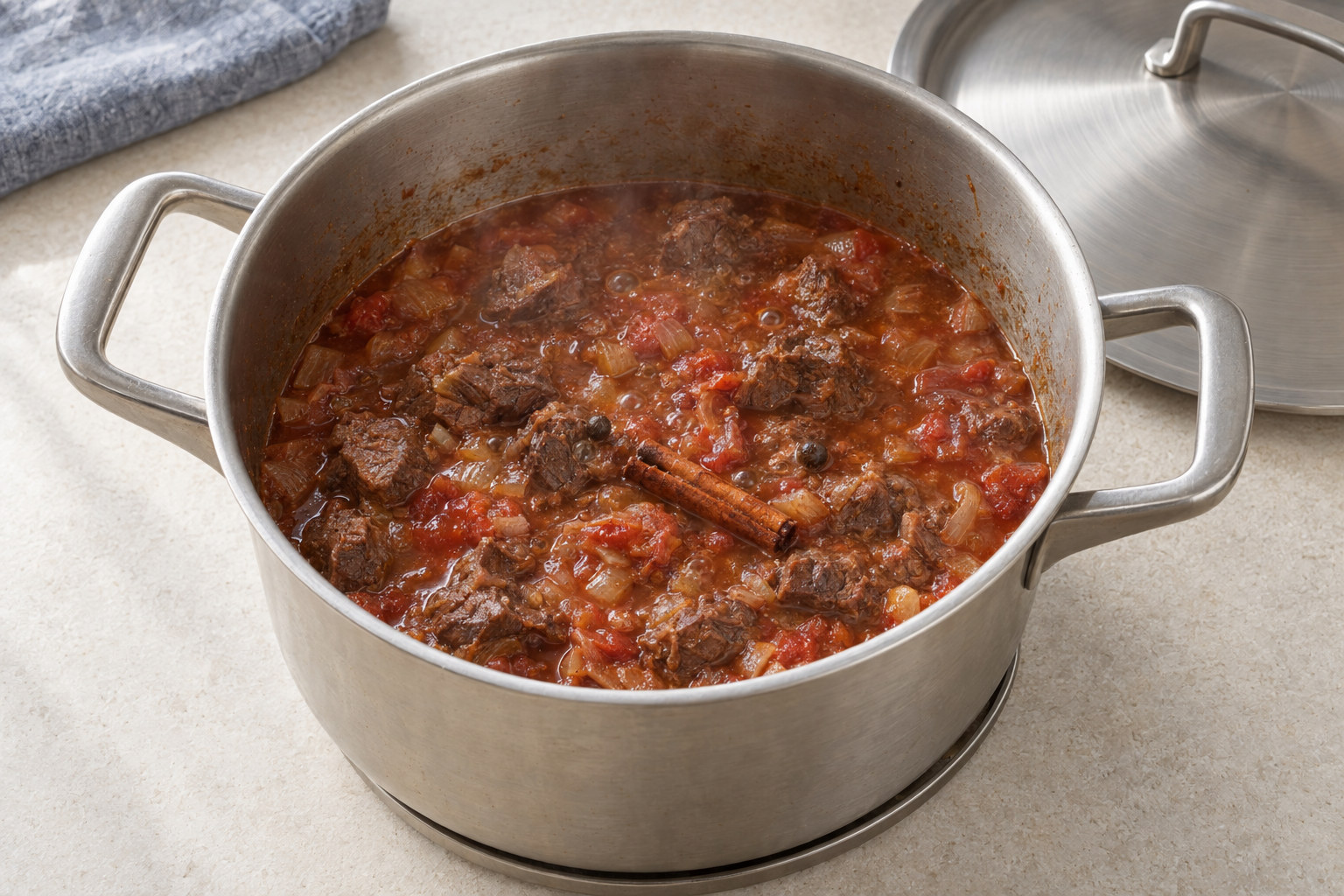
We cover the pot tightly and braise over a low heat for about 150–210 minutes. The liquid should bubble only occasionally. Every 30 minutes, we stir and add a little hot water as needed. The meat is ready when it pulls apart easily with a fork. If it is still tough, we continue braising and cook the pasta later. We add the browned onions only for the final 30 minutes; we prepare them in a separate step.
We make the cavatelli dough
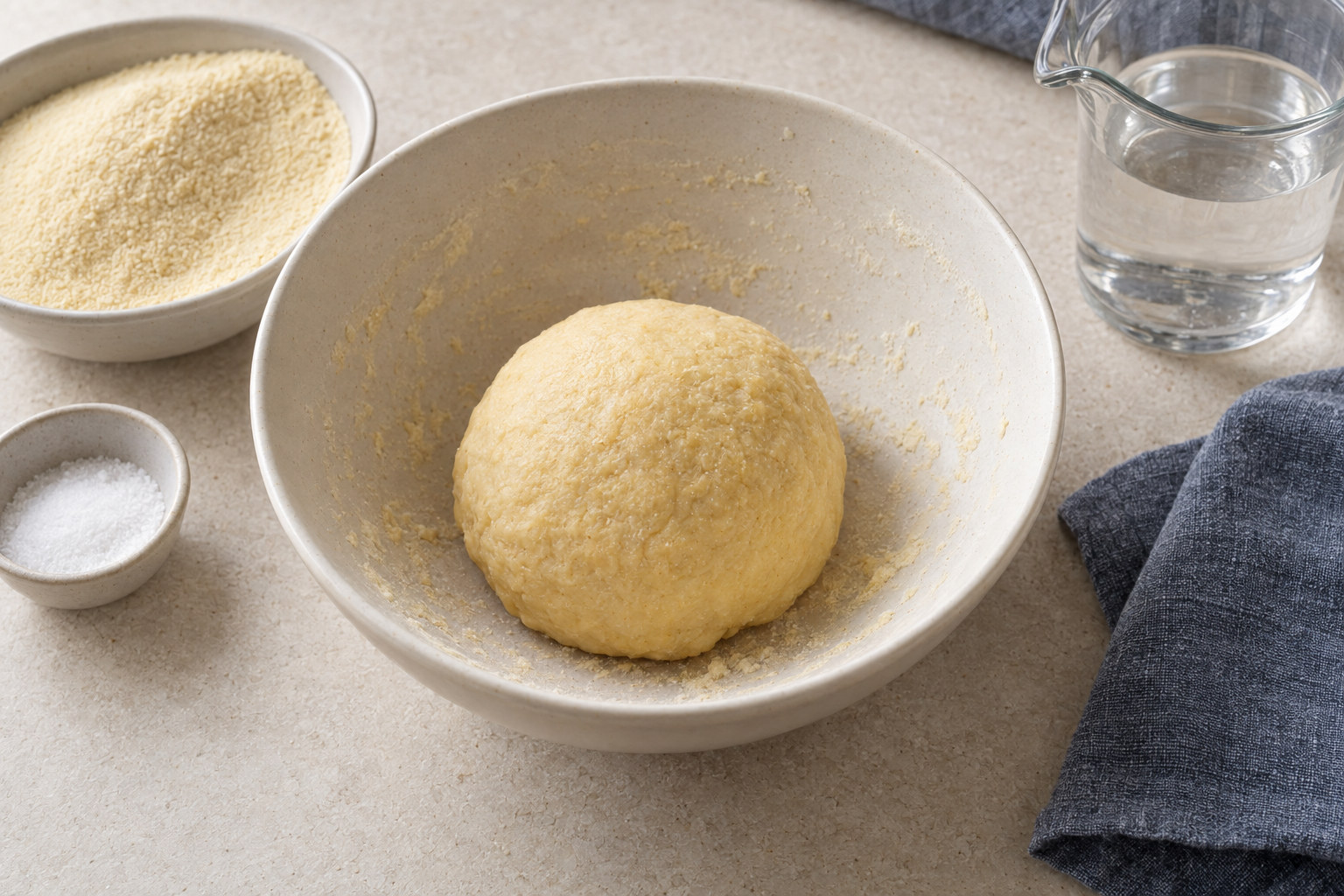
In a bowl, we mix the fine semolina with the dough salt, then gradually pour in all the cavatelli water. We knead for 8–10 minutes until the dough forms a smooth, firm ball. We cover it and leave it to rest at room temperature for 30 minutes. If it crumbles after resting, we dampen our hands and briefly knead it again.
We brown and braise the onions
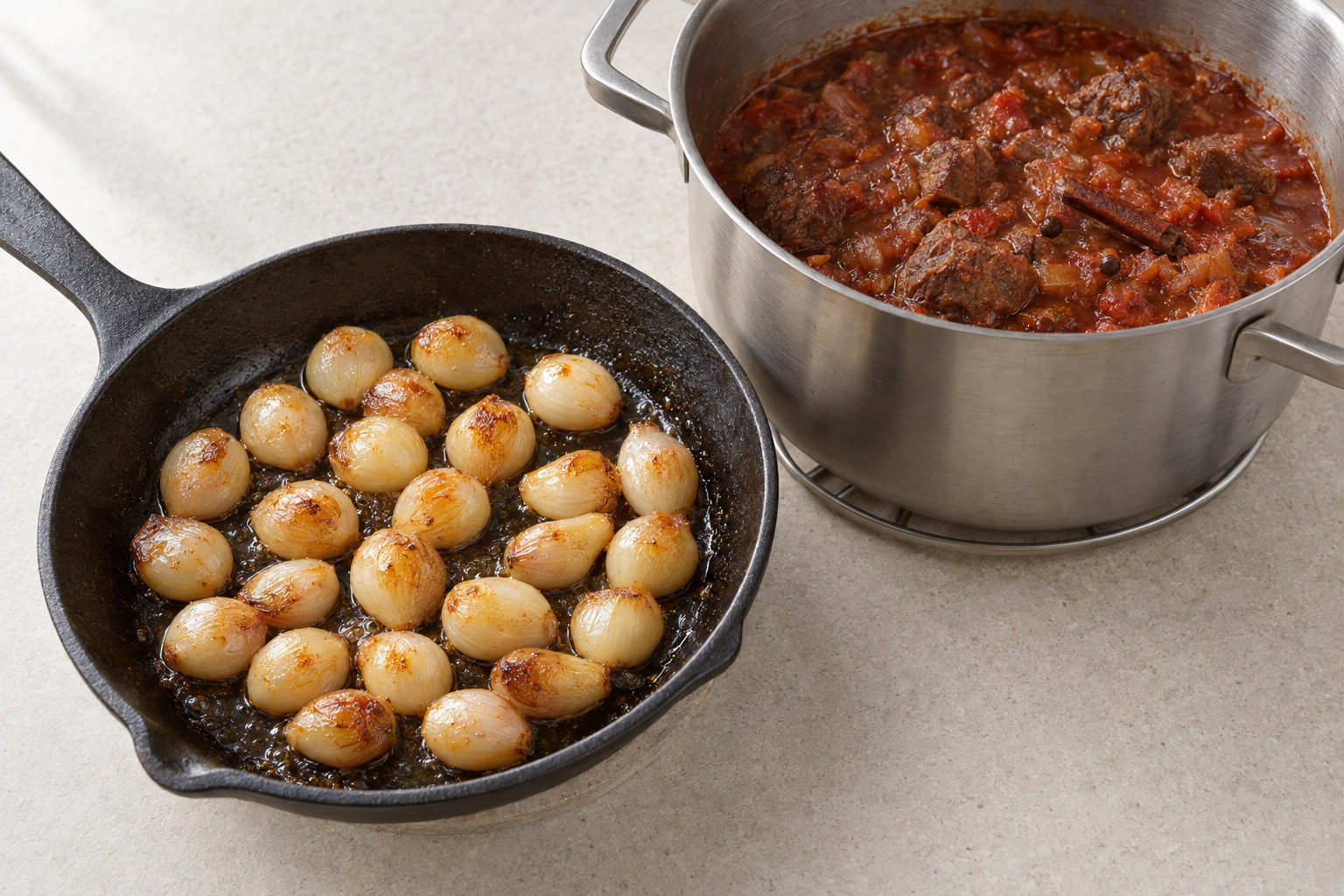
We peel the small onions and keep them whole. About 35 minutes before the expected end of braising, we heat the olive oil in a frying pan. Over a medium heat, we turn and brown all the onions lightly for 5 minutes. We transfer them, with the oil, to the stifado and braise them covered for the final 30 minutes, until a knife passes through easily.
We shape the cavatelli
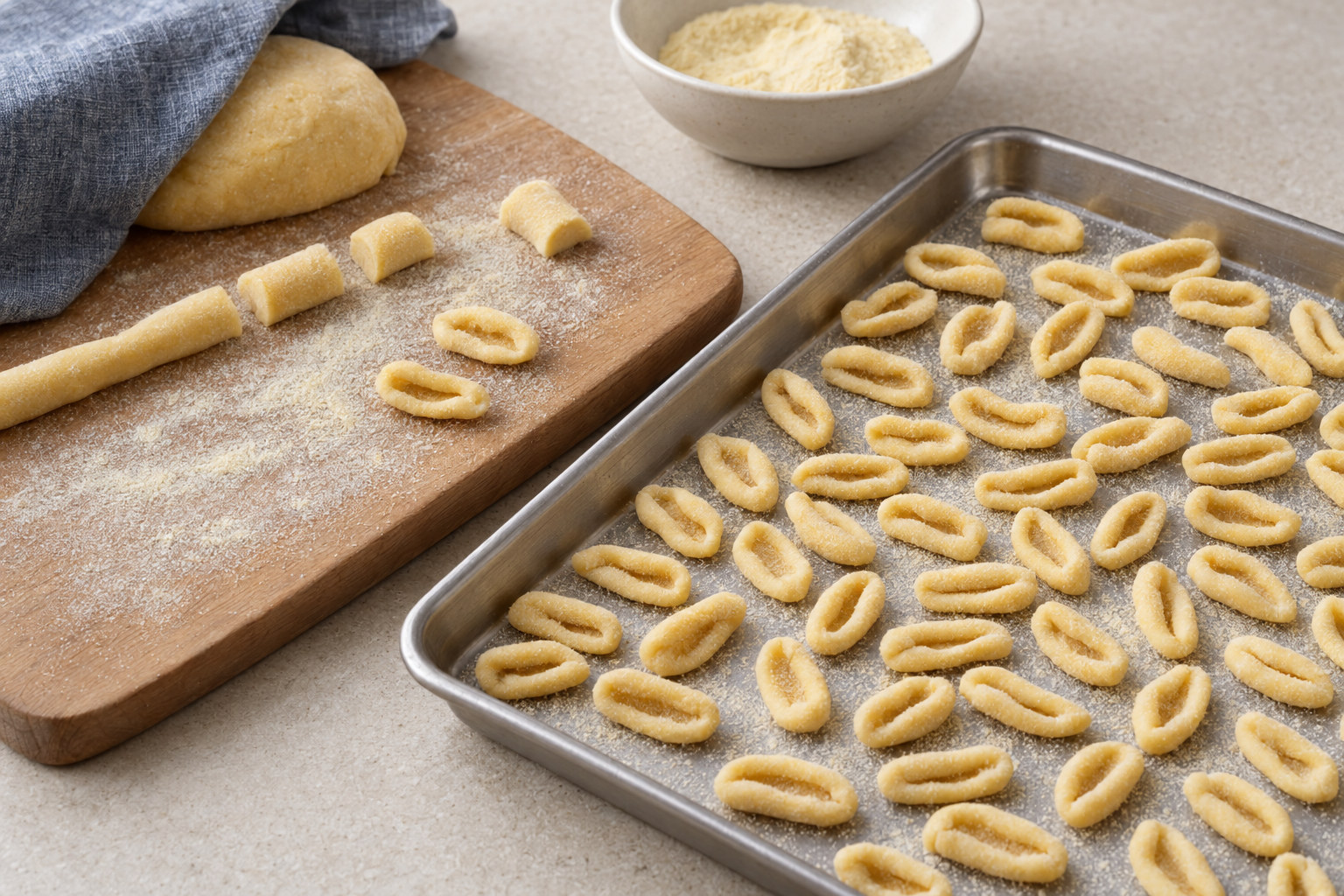
We divide the dough into small pieces and keep the ones we are not working with covered. On a board dusted with the semolina for shaping, we roll each piece into a 1 cm-thick rope, cut it into 2 cm lengths and press and draw each piece towards us with the pads of two fingers. We make a deep hollow with walls about 2 mm thick so the pasta is not solid inside. We arrange all the pieces in a single layer on a tray and use the remaining dusting semolina to keep them from sticking.
We cook the cavatelli in one batch
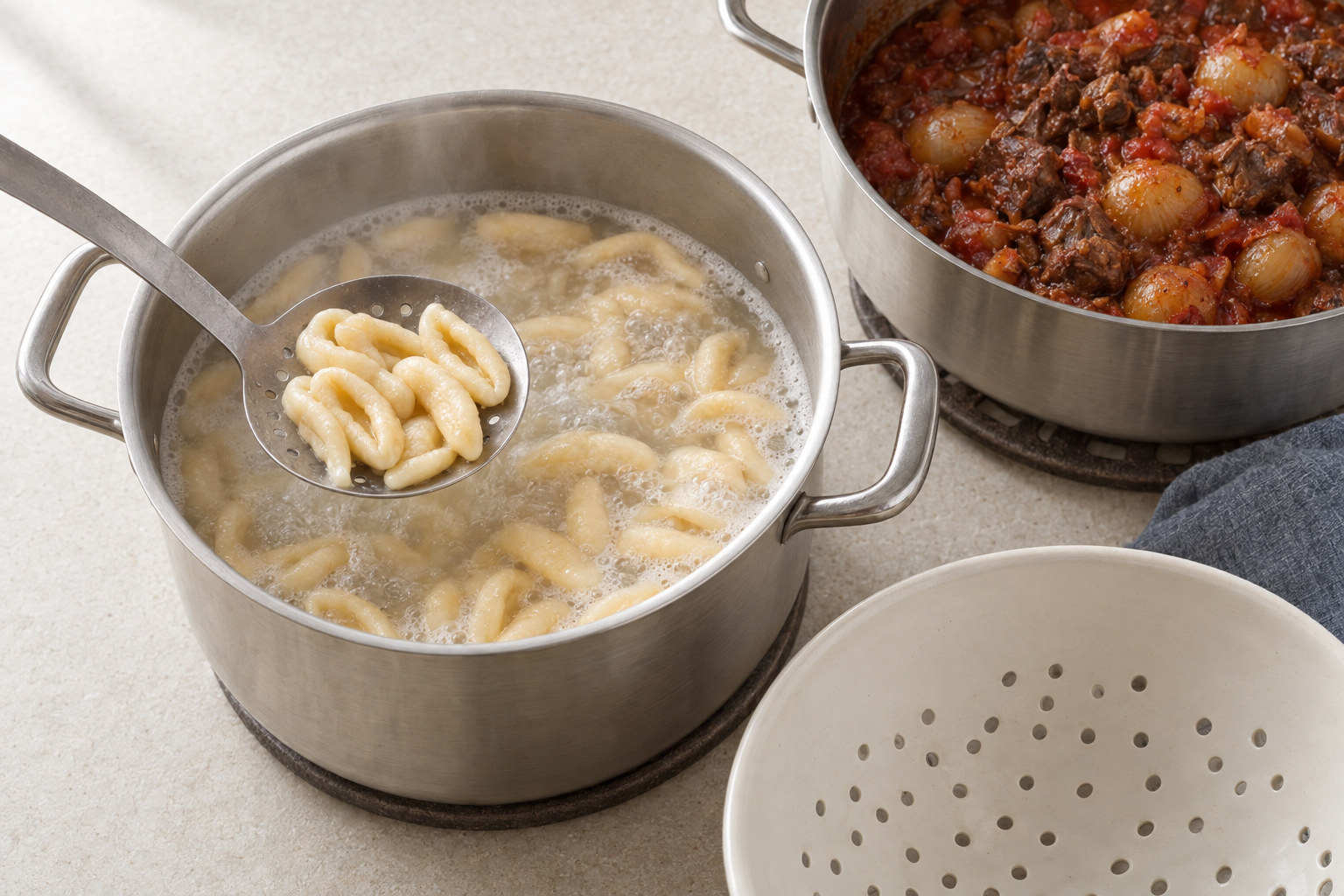
Once the meat and onions are tender, we remove the cinnamon and allspice and keep the stifado covered over the lowest heat. In a pot, we bring 2 l water with the pasta salt to the boil. We add all the pasta, stir gently and, once the water returns to a gentle boil, cook for 5–8 minutes. We cut one piece open and taste it: the walls should be tender with no raw, floury centre. We drain and serve at once.
We serve the stifado with cavatelli
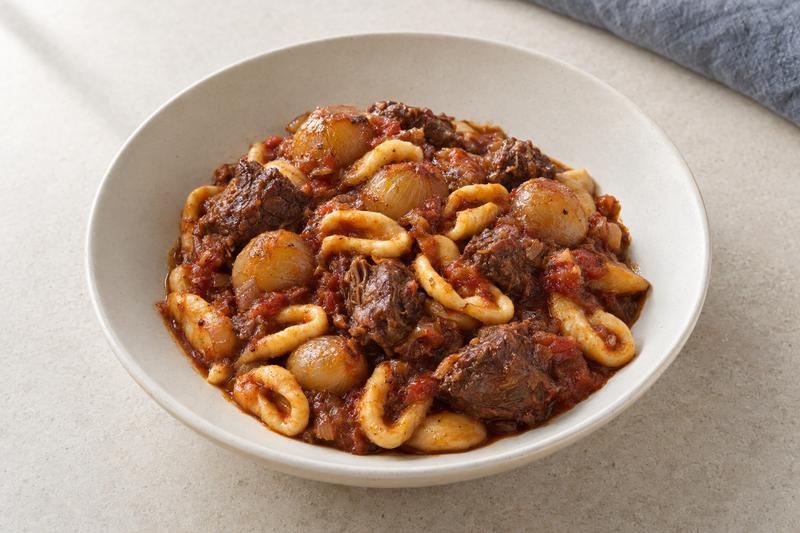
We divide the cavatelli between 2 warmed deep plates. We add the stifado, whole onions and gravy, then serve at once.
Tips from our kitchen
- We brown the whole onions separately and add them only towards the end of braising, so they soften but keep their shape.
- We start cooking the pasta only once the meat is tender. Before draining, we cut one piece open to check that no raw dough remains inside.
What to watch out for
- We sear the meat in the stated batches so it browns instead of stewing in its own juices.
- We cook the cavatelli only once the meat and onions are tender. If the venison is still tough, we braise it for longer.
How we serve it
- We divide the cavatelli between warmed deep plates and add the meat, whole onions and tomato gravy. We serve at once after draining the pasta.
During preparation
- We keep raw meat and the utensils used for it separate from cooked food.
Our inspiration
Cavatelli come from Italian cooking; their name evokes the small hollows pressed with our fingers. These egg-free semolina pasta shapes are typical of Molise and Apulia. We pair them in our own way with Greek-inspired stifado. The original dish is made by Akis Petretzikis, a Greek chef who led the kitchen at Avenue Bistro in Athens’ Metropolitan Hotel. While we shape the pasta, the meat has time to become tender; the hollows then catch the fragrant cinnamon-and-wine sauce.
Akis Petretzikis
Akis Petretzikis is a Greek chef who worked as head chef at Avenue Bistro in Athens’ Metropolitan Hotel. His goat stifado with shallots and wine is the inspiration for our fallow deer version.
Similar recipes
Recipe for 4 people
Step-by-step method
Before we start
We make the dough about 90 minutes before the expected end of braising. We brown the onions as a separate step. We lay the shaped cavatelli out on trays and cook them in one batch, separately, once the stifado is ready.
We sear the meat and make the base
We peel and finely chop the onion and garlic. We cut the meat into 3 cm cubes, pat it dry and season it with the meat salt and pepper. In 1½ tbsp rapeseed oil, we sear four 225 g batches for 4–6 minutes each over a medium-high heat, then remove them. In the remaining oil, we cook the chopped onion, stirring, for 7–9 minutes and add the chopped garlic for 30 seconds. We pour in the wine and vinegar and simmer for 3 minutes. We return the meat and its juices, then add all the tomatoes, stock, cinnamon and allspice.
We braise the stifado
We cover the pot tightly and braise over a low heat for about 150–210 minutes. The liquid should bubble only occasionally. Every 30 minutes, we stir and add a little hot water as needed. The meat is ready when it pulls apart easily with a fork. If it is still tough, we continue braising and cook the pasta later. We add the browned onions only for the final 30 minutes; we prepare them in a separate step.
We make the cavatelli dough
In a bowl, we mix the fine semolina with the dough salt, then gradually pour in all the cavatelli water. We knead for 8–10 minutes until the dough forms a smooth, firm ball. We cover it and leave it to rest at room temperature for 30 minutes. If it crumbles after resting, we dampen our hands and briefly knead it again.
We brown and braise the onions
We peel the small onions and keep them whole. About 35 minutes before the expected end of braising, we heat the olive oil in a frying pan. Over a medium heat, we turn and brown all the onions lightly for 5 minutes. We transfer them, with the oil, to the stifado and braise them covered for the final 30 minutes, until a knife passes through easily.
We shape the cavatelli
We divide the dough into small pieces and keep the ones we are not working with covered. On a board dusted with the semolina for shaping, we roll each piece into a 1 cm-thick rope, cut it into 2 cm lengths and press and draw each piece towards us with the pads of two fingers. We make a deep hollow with walls about 2 mm thick so the pasta is not solid inside. We arrange all the pieces in a single layer on trays and use the remaining dusting semolina to keep them from sticking.
We cook the cavatelli in one batch
Once the meat and onions are tender, we remove the cinnamon and allspice and keep the stifado covered over the lowest heat. In a pot, we bring 3.5 l water with the pasta salt to the boil. We add all the pasta, stir gently and, once the water returns to a gentle boil, cook for 5–8 minutes. We cut one piece open and taste it: the walls should be tender with no raw, floury centre. We drain and serve at once.
We serve the stifado with cavatelli
We divide the cavatelli between 4 warmed deep plates. We add the stifado, whole onions and gravy, then serve at once.