
British inspiration · British inspiration
Fallow deer ragout with horseradish cobbler scones
Golden horseradish scones bake on top of a thick fallow deer ragout with dark beer, carrots and mushrooms. They brown on top and soak up the meat juices underneath. We cook the accompaniment right on the ragout, bringing a dish fragrant with butter and gently pungent horseradish to the table.
We first braise the meat slowly, preparing and chilling the dough towards the end. We then bake the ragout with the scones; the time also includes a short rest before serving.
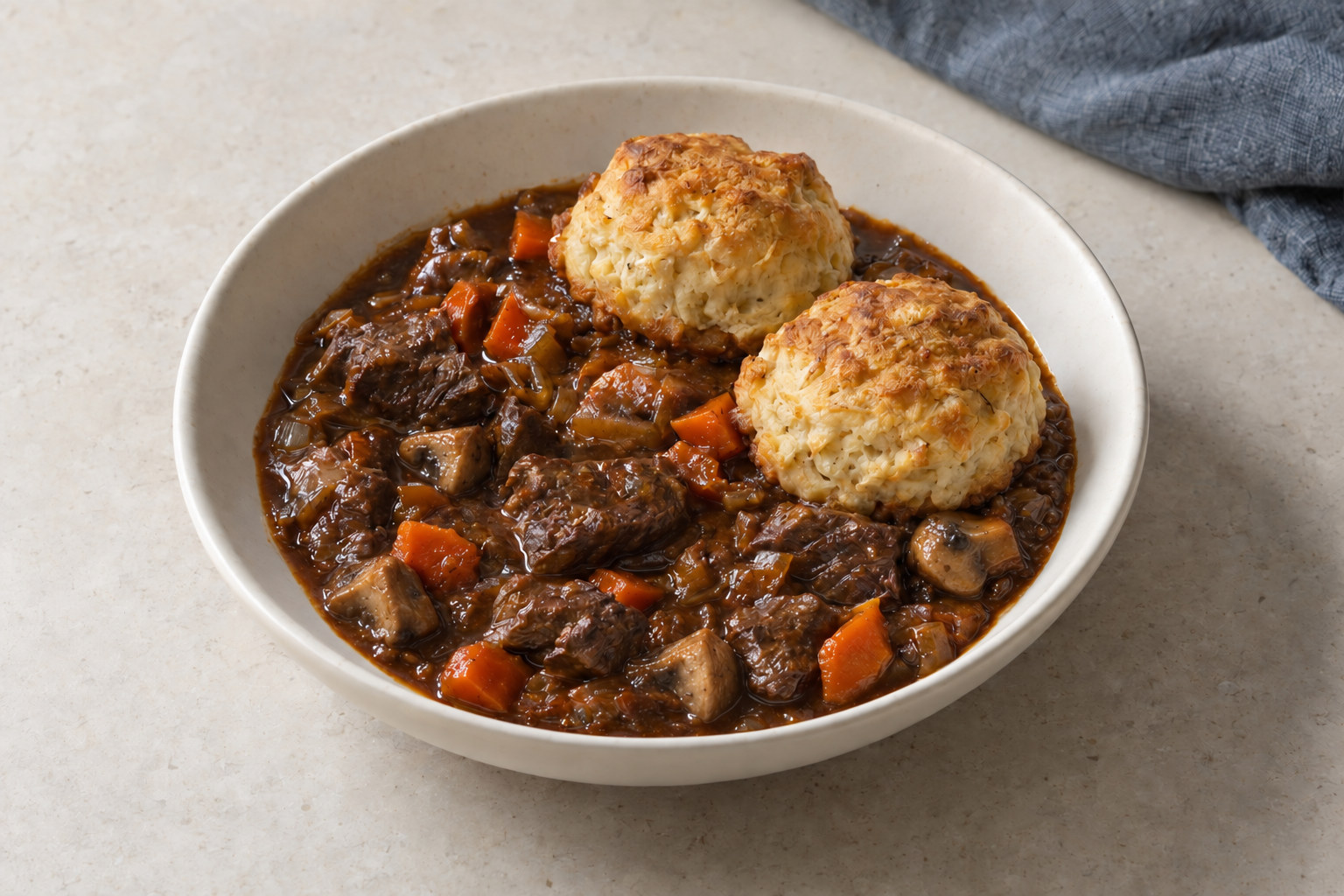
Dark beer and mushrooms give the ragout a rich flavour. The buttery scones have a gentle horseradish kick, golden tops and fluffy centres.
Step-by-step method
What you will need
- kitchen scales
- knife and two separate chopping boards
- measuring jug
- heavy 20 cm saucepan with a lid, 3 litres
- 22 × 20 cm baking dish, at least 7 cm deep
- mixing bowl for the dough
- spatula
- skewer
- fridge
- oven
- foil
Before we start
We first braise the ragout until tender. We prepare the dough during the final 30 minutes, chill it briefly and shape it without dusting with flour. We place the scones on the hot ragout and put it straight into the preheated oven.
Brown the meat and vegetables
We peel and finely chop the onion, then clean the carrot and mushrooms. We cut the meat into 3 cm cubes, pat dry and season with the salt for the meat and pepper. We divide two teaspoons of oil between two similar-sized batches of meat for browning. We brown each batch for 4–6 minutes over a medium-high heat, then remove the meat. We cook the chopped onion in the remaining oil for 7–9 minutes, stirring. We add the carrot cut into 1 cm cubes and the quartered mushrooms, cook for 5 minutes, then add the tomato purée and cook for 1 minute. We pour in the beer and boil for 3 minutes. We return the meat with its juices and add all the stock.
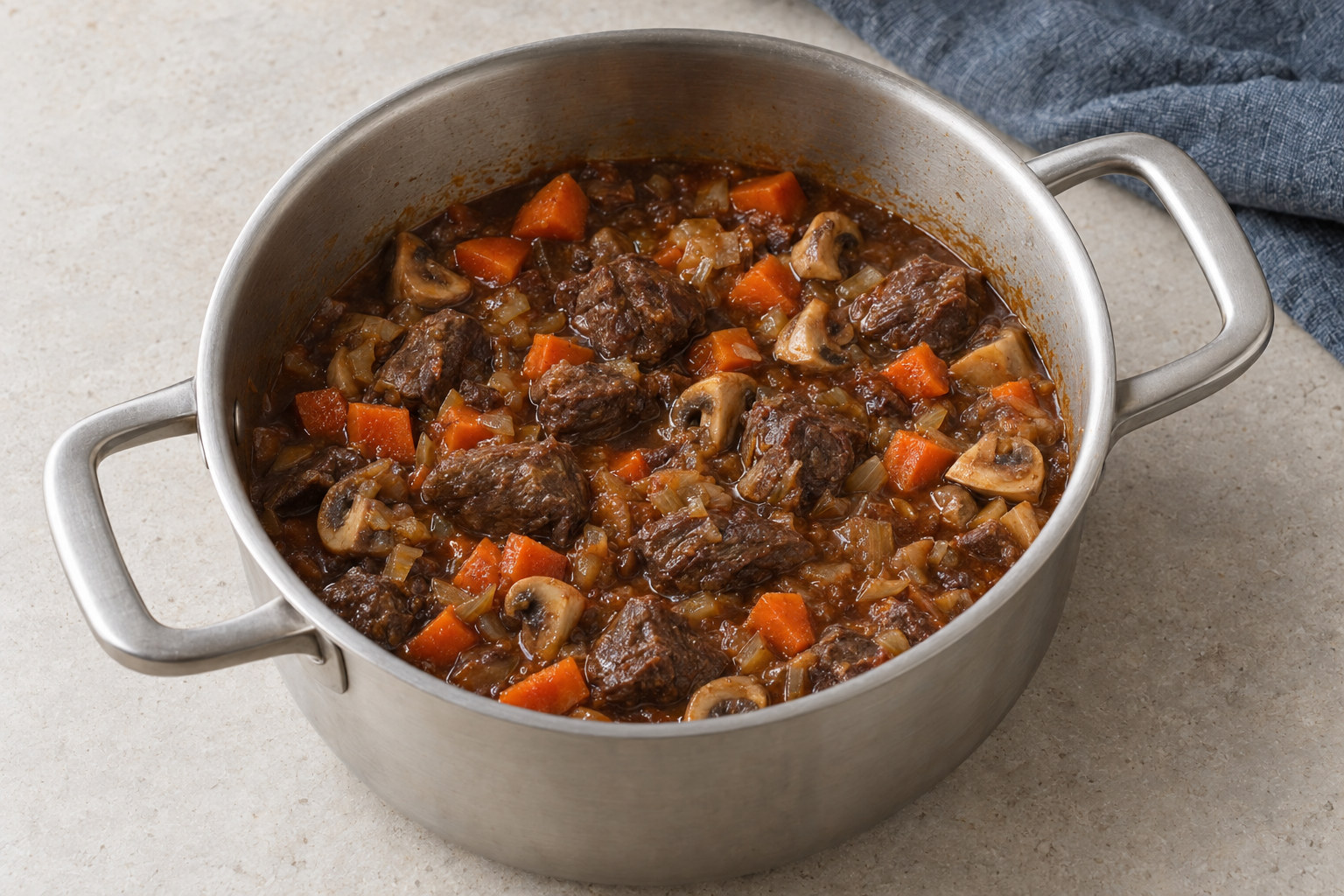
Braise the ragout
We cover the pan tightly and braise over a low heat for roughly 150–210 minutes. The liquid should only bubble occasionally. We stir every 30 minutes and add a little hot water as needed. The meat is ready when it pulls apart easily with a fork. If it is still tough, we continue braising and adjust when we prepare the scones accordingly. If the sauce is thin, we cook the ragout uncovered for 5–10 minutes until it thickens and lightly coats the meat.
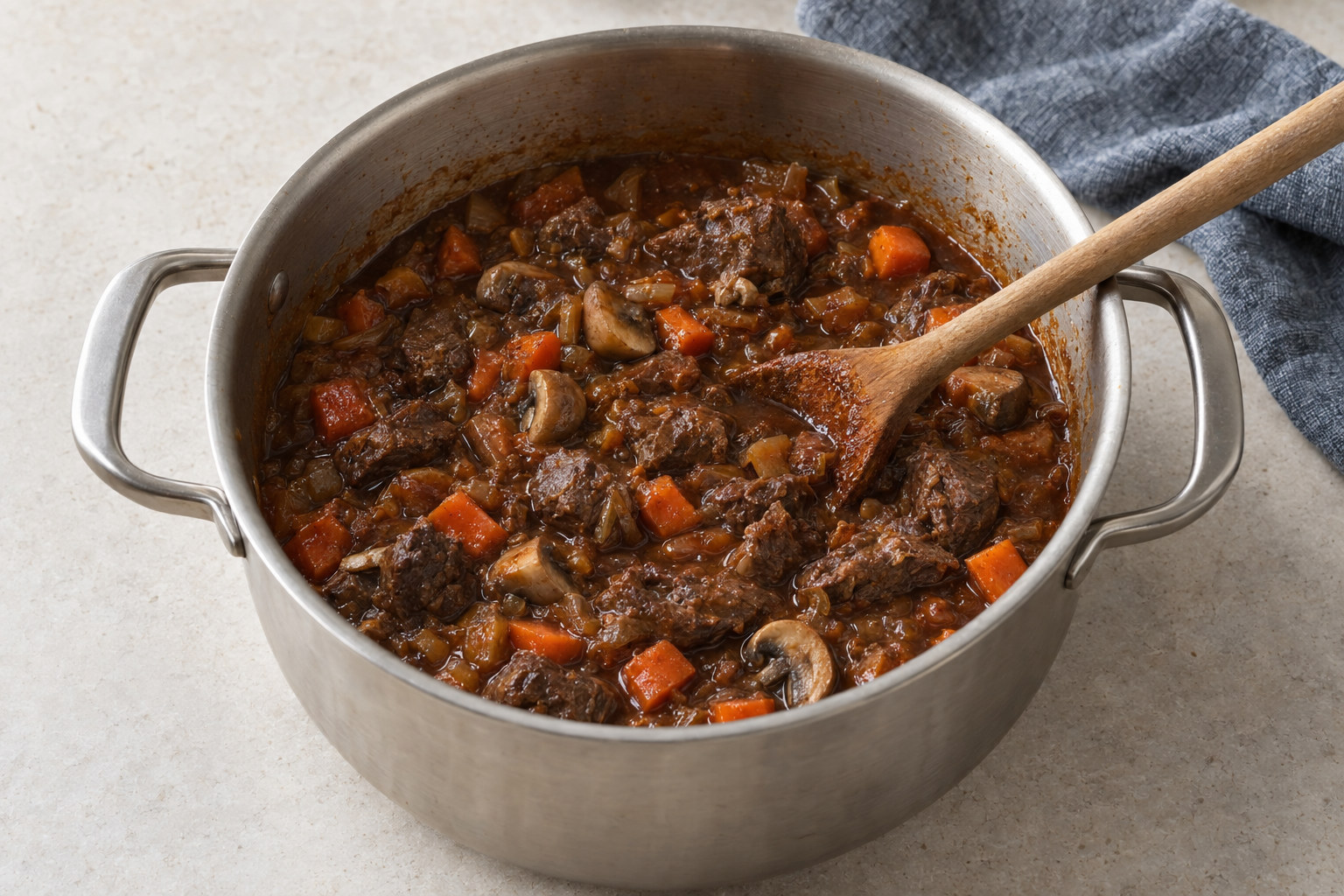
Make the scone dough
We peel and finely grate the horseradish. We mix all the flour, baking powder and the salt for the dough. We briefly rub in the cold butter with our fingertips to make crumbs. We stir in all the grated horseradish and milk and bring together with a spatula into a soft dough, without kneading. We cover and refrigerate the dough for 20 minutes. We preheat the oven to 200 °C with top and bottom heat.
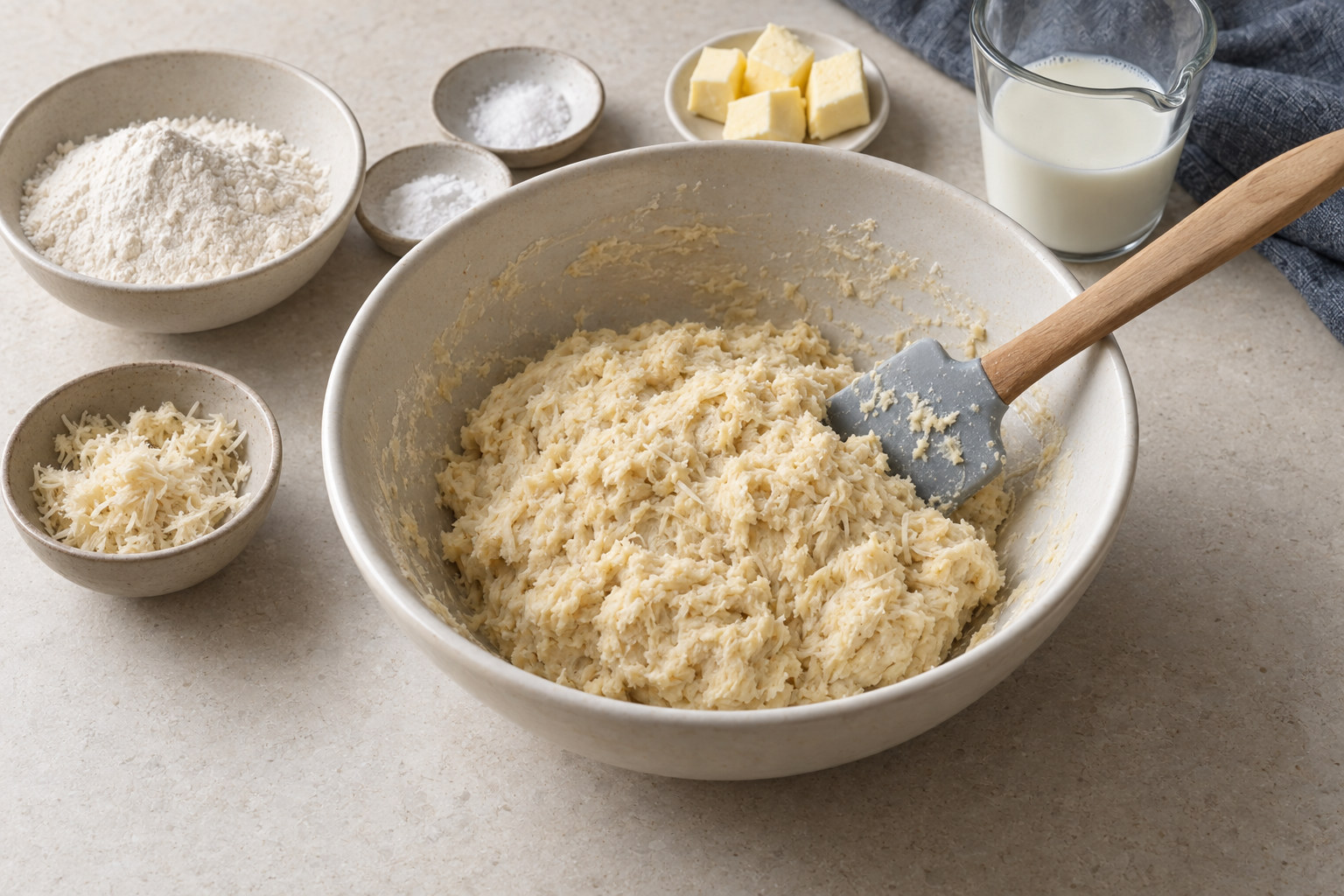
Shape the scones and place them on the ragout
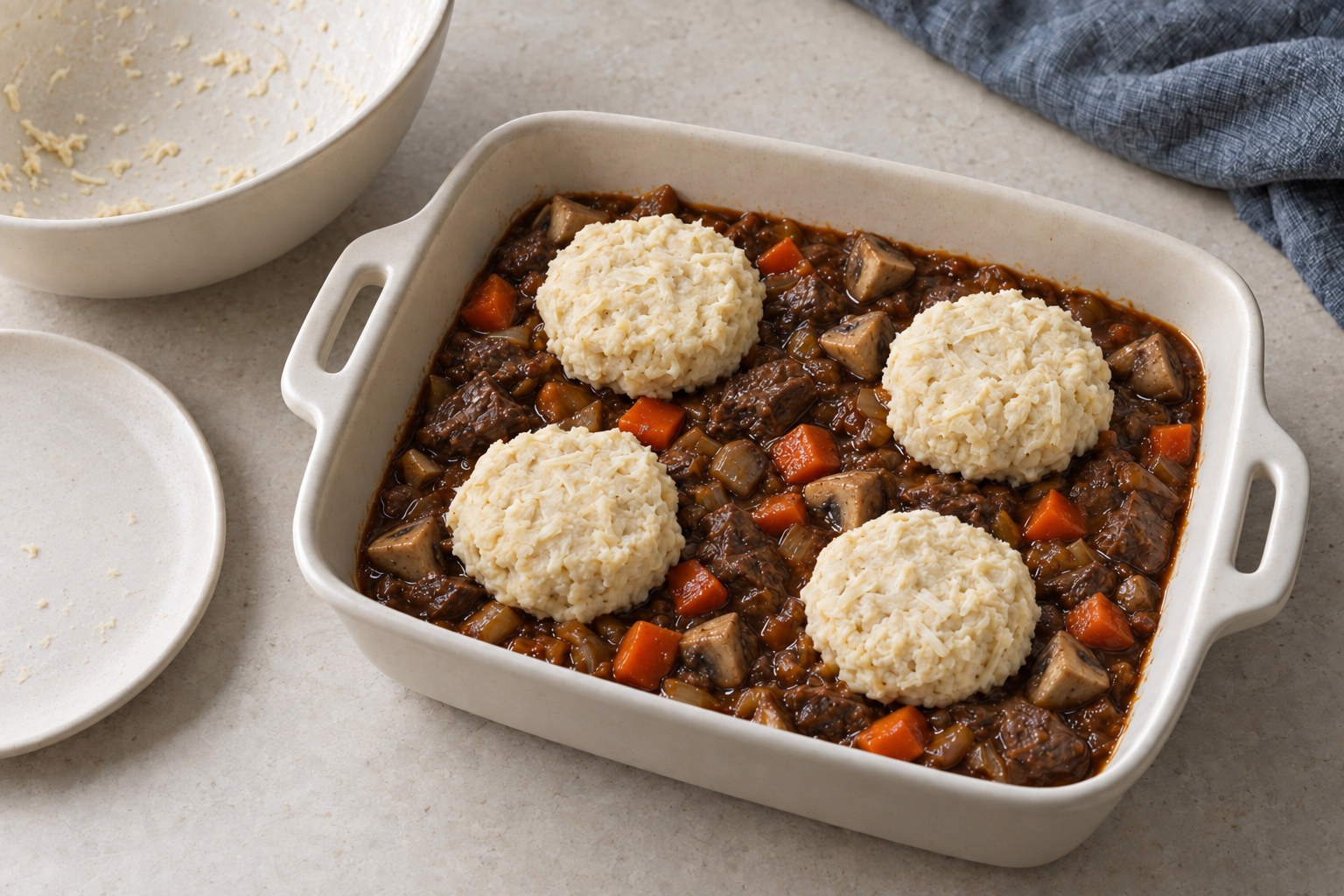
We divide the dough into four equal pieces. Between our palms, we shape rounds about 6 cm wide and 2 cm high, without adding more flour. We transfer all the hot ragout to the baking dish in a layer no deeper than 3 cm and place the scones on top, leaving gaps of at least 1 cm; we do not press them below the surface.
The gaps give the scones room to rise as they bake.
Bake the scones
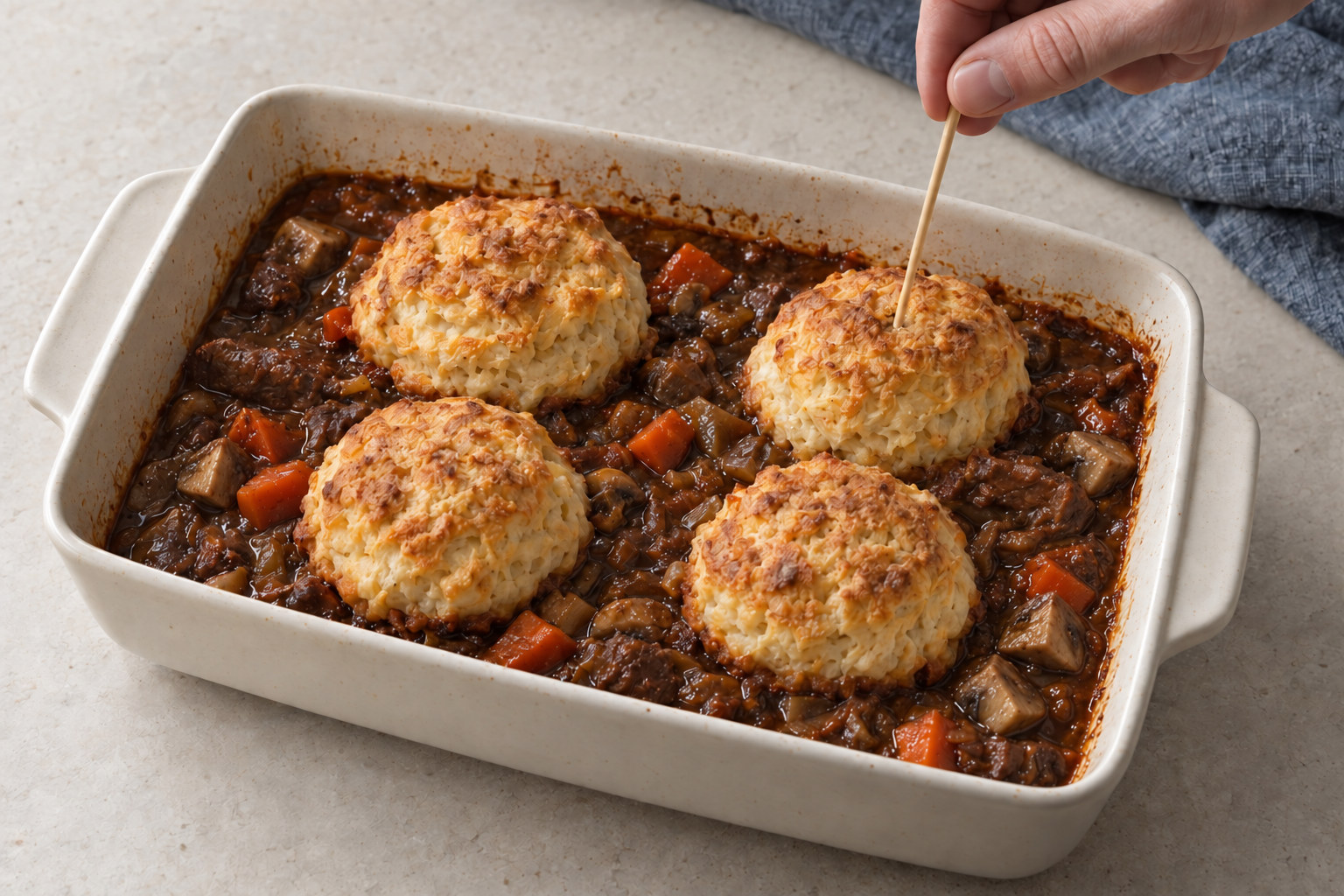
We bake at 200 °C for 20–25 minutes until golden. We insert a skewer into the centre of one scone; it should come out without raw dough. If needed, we bake for further 3-minute intervals and cover the top with foil if it browns too quickly. We leave the dish to rest for 5 minutes before serving.
Serve the ragout with the scones
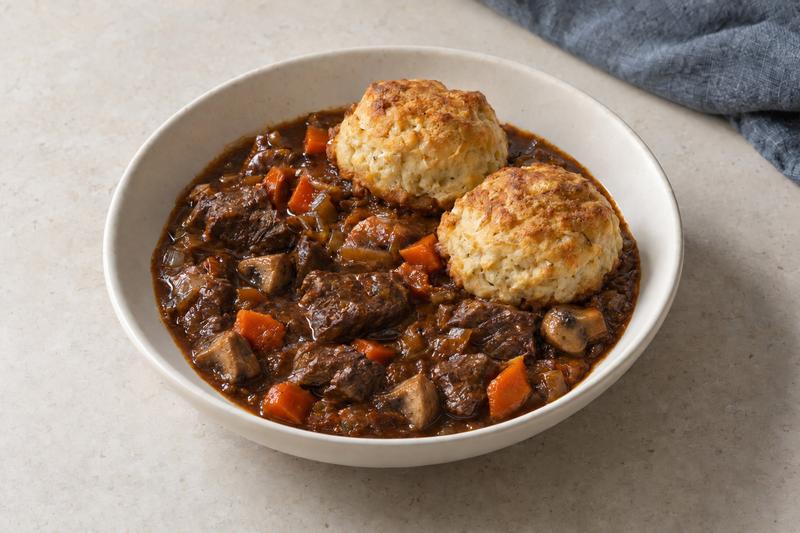
We divide all the ragout between 2 warmed deep plates. We add two horseradish scones per person and serve immediately.
Tips from our kitchen
- We place the scones only on fully cooked, thick ragout. If the sauce is thin, we reduce it first as described in the method.
- We bring the dough together briefly without kneading. We leave the specified gaps between the scones and check they are cooked with a skewer.
What to watch out for
- We brown the meat in the specified batches so it colours rather than stewing in its own juices.
- We mix the dough only briefly and do not knead it further. We place the scones on the meat only once it is tender and the sauce thick.
How we serve it
- After a short rest, we divide the ragout between warmed deep plates and add two horseradish scones per person. We serve immediately.
During preparation
- We keep raw meat and its utensils separate from cooked food.
Our inspiration
British chef Paul Welburn, who headed the kitchen at The Oxford Kitchen, presents venison cobbler as a dish for the colder months. He tops braised meat with horseradish scones, which bake directly on the ragout. A deep baking dish suits our fallow deer version too: beneath the golden dough is a sauce with dark beer and mushrooms. When we break a scone open, we can use it to scoop up a little sauce straight away.
Paul Welburn
Paul Welburn is a British chef who headed the kitchen at The Oxford Kitchen. His venison cobbler combines slow-braised meat with horseradish scones baked directly on the ragout.
Similar recipes

Recipe for 4 people
Step-by-step method
Before we start
We first braise the ragout until tender. We prepare the dough during the final 30 minutes, chill it briefly and shape it without dusting with flour. We place the scones on the hot ragout and put it straight into the preheated oven.
Brown the meat and vegetables
We peel and finely chop the onions, then clean the carrots and mushrooms. We cut the meat into 3 cm cubes, pat dry and season with the salt for the meat and pepper. We divide one and a half tablespoons of oil between four similar-sized batches of meat for browning. We brown each batch for 4–6 minutes over a medium-high heat, then remove the meat. We cook the chopped onions in the remaining oil for 7–9 minutes, stirring. We add the carrots cut into 1 cm cubes and the quartered mushrooms, cook for 5 minutes, then add the tomato purée and cook for 1 minute. We pour in the beer and boil for 3 minutes. We return the meat with its juices and add all the stock.
Braise the ragout
We cover the pan tightly and braise over a low heat for roughly 150–210 minutes. The liquid should only bubble occasionally. We stir every 30 minutes and add a little hot water as needed. The meat is ready when it pulls apart easily with a fork. If it is still tough, we continue braising and adjust when we prepare the scones accordingly. If the sauce is thin, we cook the ragout uncovered for 5–10 minutes until it thickens and lightly coats the meat.
Make the scone dough
We peel and finely grate the horseradish. We mix all the flour, baking powder and the salt for the dough. We briefly rub in the cold butter with our fingertips to make crumbs. We stir in all the grated horseradish and milk and bring together with a spatula into a soft dough, without kneading. We cover and refrigerate the dough for 20 minutes. We preheat the oven to 200 °C with top and bottom heat.
Shape the scones and place them on the ragout
We divide the dough into eight equal pieces. Between our palms, we shape rounds about 6 cm wide and 2 cm high, without adding more flour. We transfer all the hot ragout to the baking dish in a layer no deeper than 3 cm and place the scones on top, leaving gaps of at least 1 cm; we do not press them below the surface.
The gaps give the scones room to rise as they bake.
Bake the scones
We bake at 200 °C for 20–25 minutes until golden. We insert a skewer into the centre of one scone; it should come out without raw dough. If needed, we bake for further 3-minute intervals and cover the top with foil if it browns too quickly. We leave the dish to rest for 5 minutes before serving.
Serve the ragout with the scones
We divide all the ragout between 4 warmed deep plates. We add two horseradish scones per person and serve immediately.