
Italian inspiration · Italy
Homemade striploin and ricotta ravioli with sage butter sauce
Thin pasta encloses finely chopped beef with ricotta and Parmesan. We coat the homemade ravioli in a light sage butter sauce that fills the kitchen with fragrance as it warms. We set aside a relaxed afternoon to roll and fill them; at serving time, all we need is a little more Parmesan.
We allow time to make the dough, rest it for 30 minutes, cool the filling, fill the ravioli and cook them in batches.
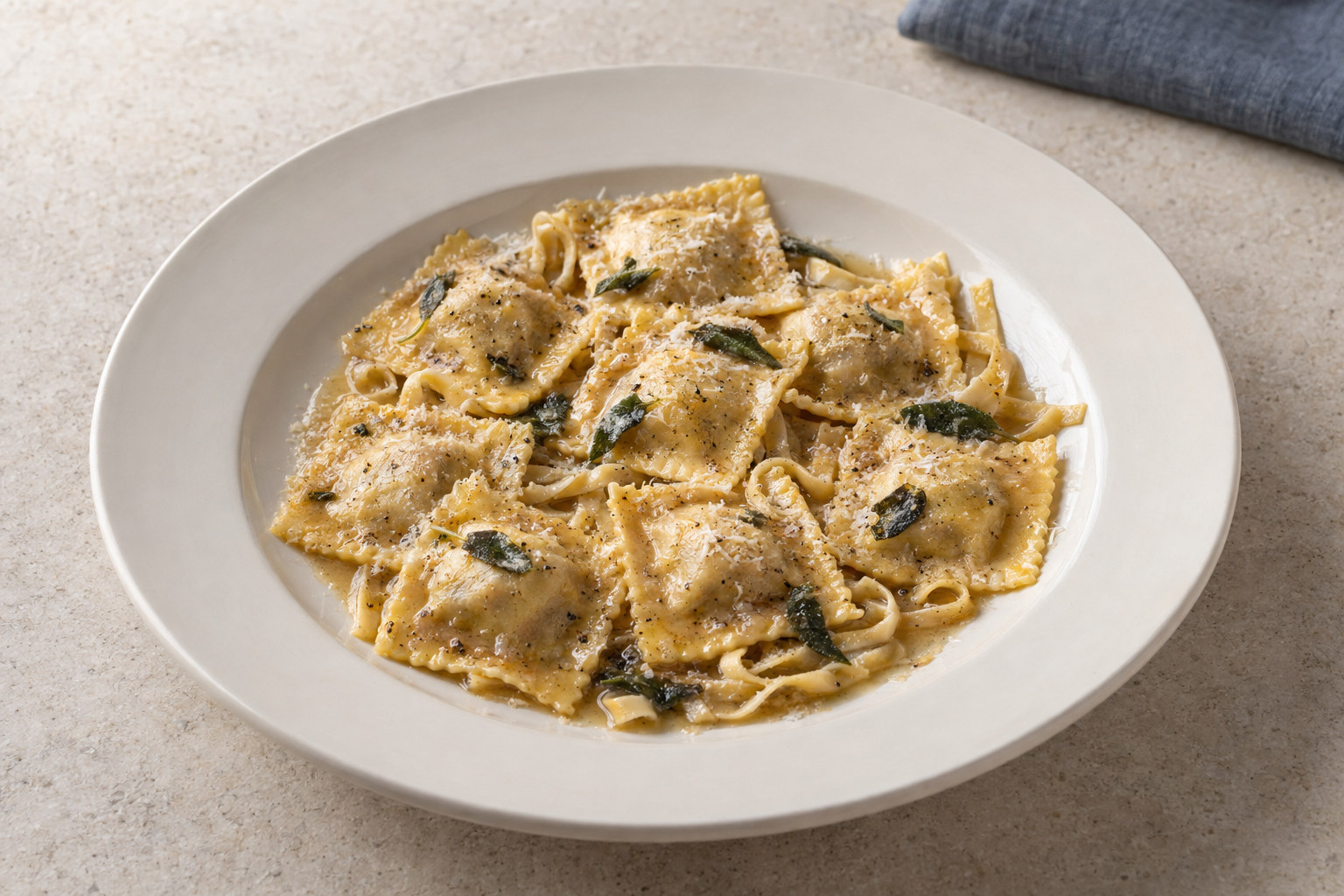
Delicate beef filling with creamy ricotta and Parmesan, thin supple pasta and a nutty-smelling butter sauce with sage and a drop of lemon.
Step-by-step method
What you will need
- 24 cm frying pan
- 5 l pot
- pasta machine
- pastry wheel
- rolling pin
- shallow dish for cooling the filling
- sieve
- thin-probe thermometer
- kitchen scales
- one chopping board for raw meat and another for cooked food
Before we start
We make about 20 ravioli, each 7 cm across. We cook them in two batches, keeping the first batch in the warm sauce.
We make the dough
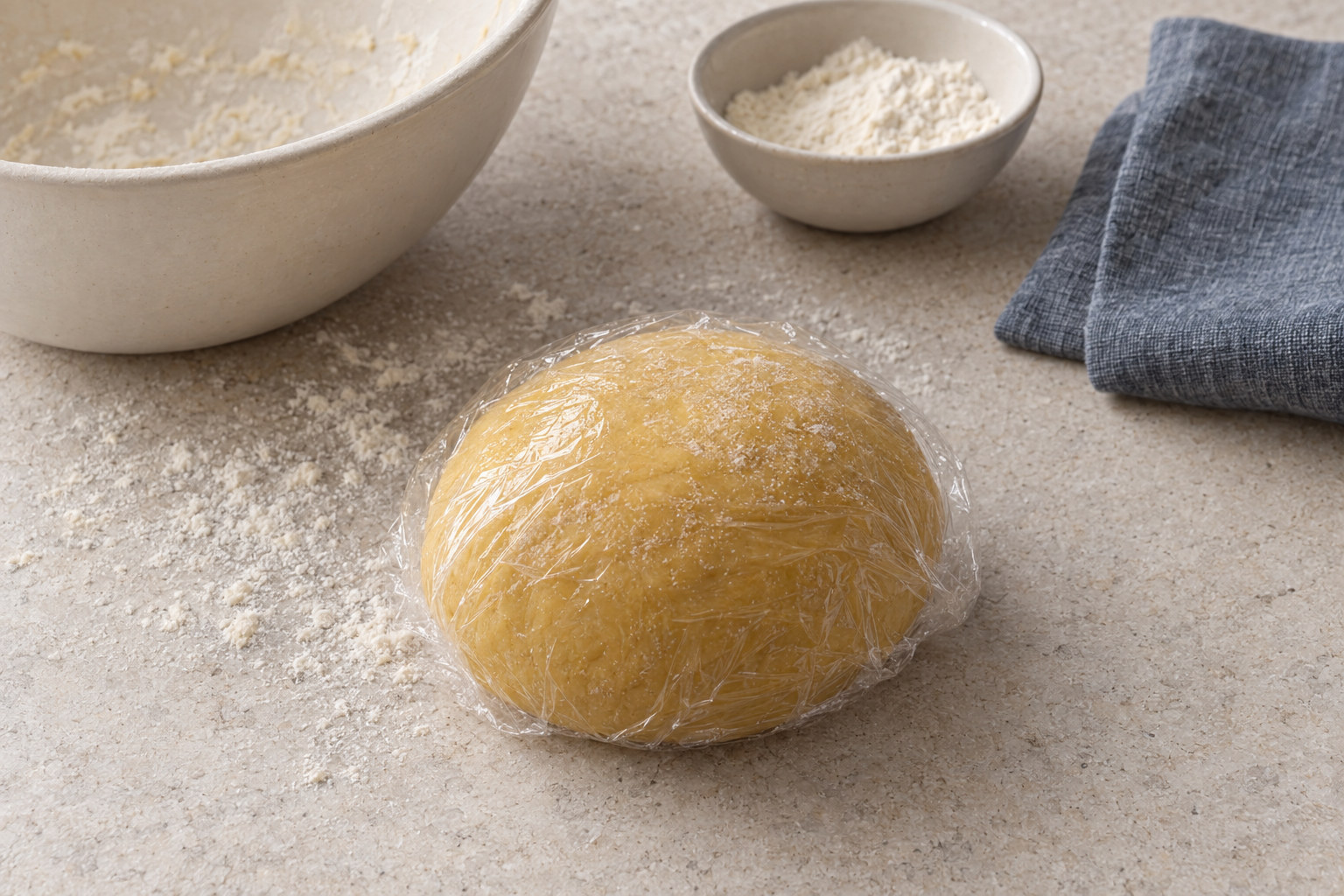
We combine the flour, eggs and oil. We knead for about 10 minutes until the dough is smooth and supple. We wrap it and let it rest for 30 minutes. If needed, we moisten our hands while kneading or lightly dust the dough with flour.
The dough is smooth and supple, with no dry crumbs.
We prepare the meat filling
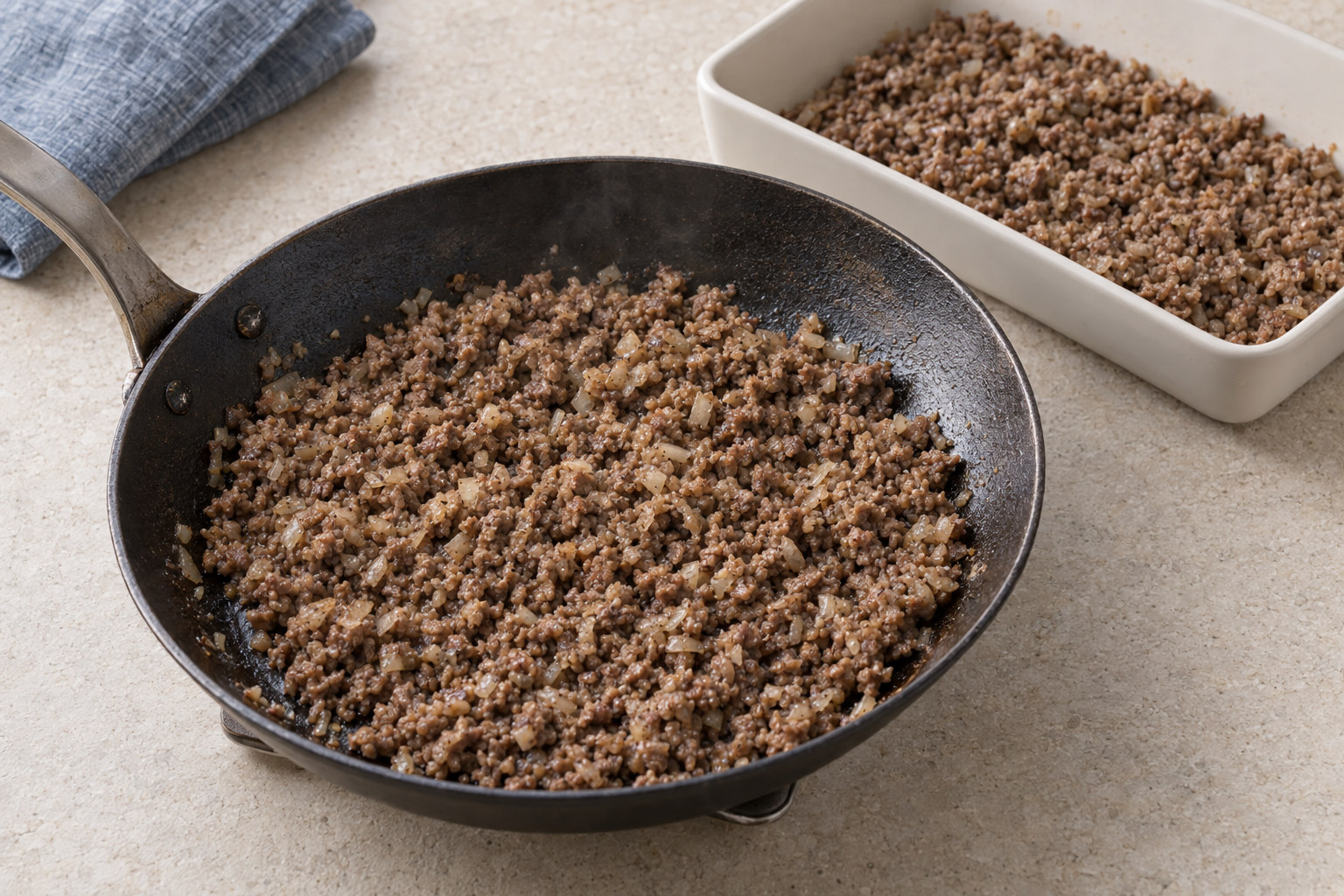
We trim the firm fat from the striploin and very finely chop the meat with a knife into pieces no larger than 2 mm. We peel and finely chop the shallot. We soften it for 4 minutes in the oil intended for the filling. We add the meat and cook for 5–7 minutes, stirring constantly and breaking up clumps. We stir in the salt and pepper. The finely chopped meat must reach at least 72 °C, and all free liquid must evaporate. We spread the filling in a clean shallow dish and leave it to cool for 20–30 minutes. If needed, we chill it briefly in the fridge afterwards.
The filling has no raw pieces or loose liquid that could later soak the pasta.
We mix the meat with ricotta
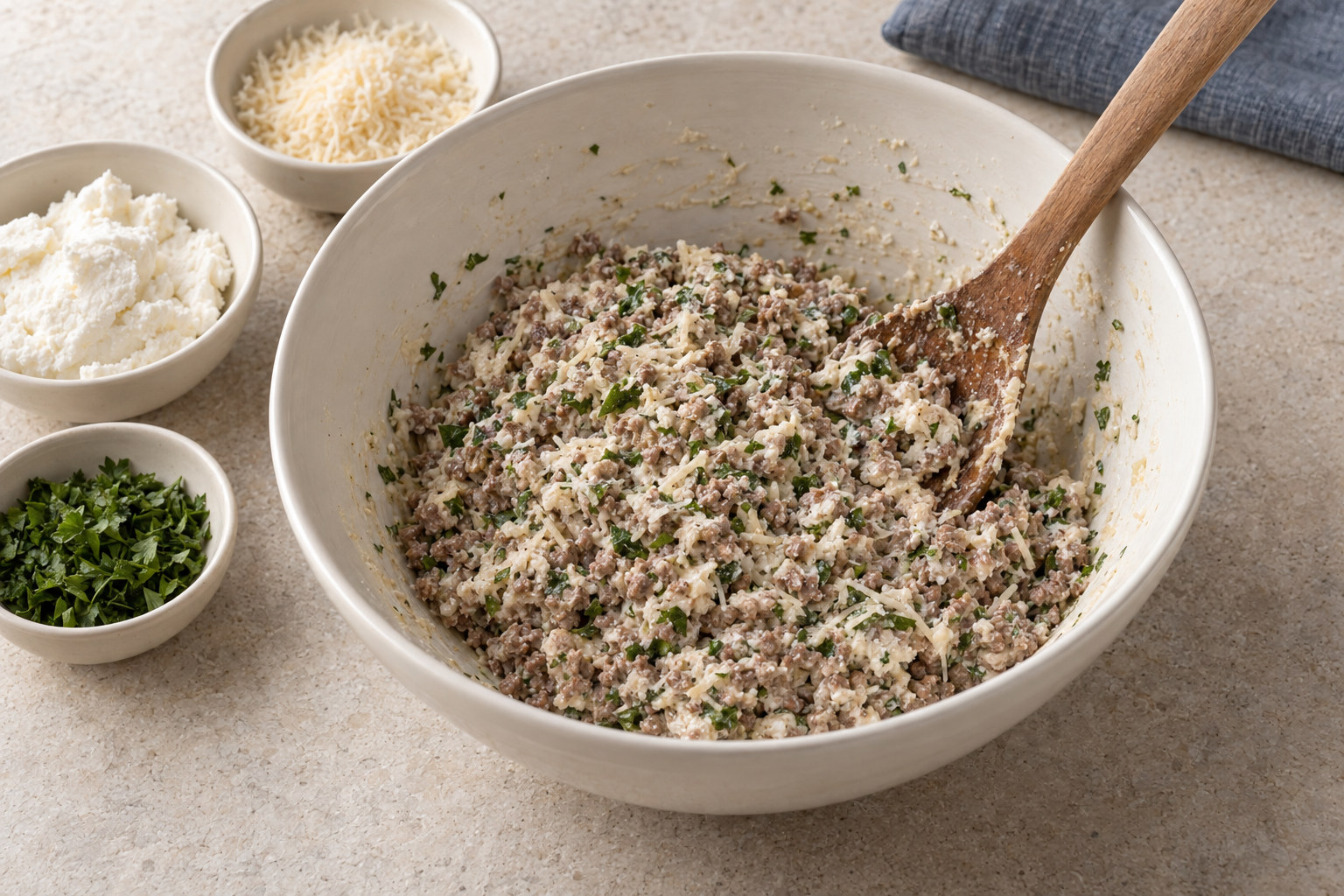
We wash, dry and chop the parsley, then finely grate the Parmesan. When the filling has cooled below 25 °C, we stir in the ricotta, Parmesan and parsley. We mix until it holds together. We can now taste the finished filling. We keep it in the fridge until we are ready to fill the ravioli.
The mixture holds on a spoon and does not run.
We roll, fill and seal the ravioli
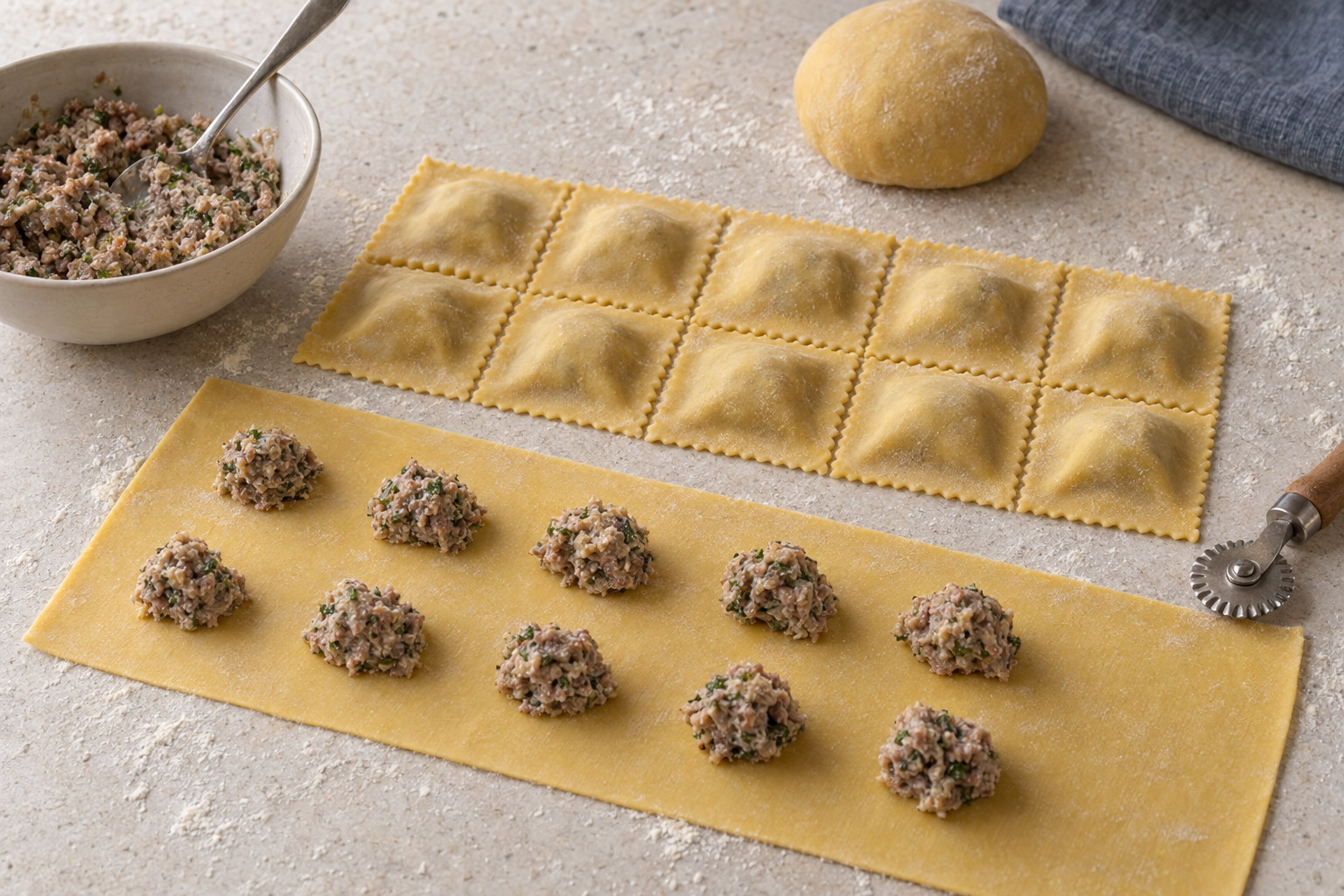
We divide the dough into 2 pieces and roll each into sheets about 1 mm thick, lightly dusting with flour. We place the filling in 20 mounds on half the pasta strips, leaving enough space between them to cut 7 cm squares. We lay the other strip over the filling, press out the air and seal the edges firmly. We cut the ravioli with a pastry wheel. We can reroll the scraps once or save them for noodles.
The edges are clean, with no filling or air pockets.
We make the butter sauce
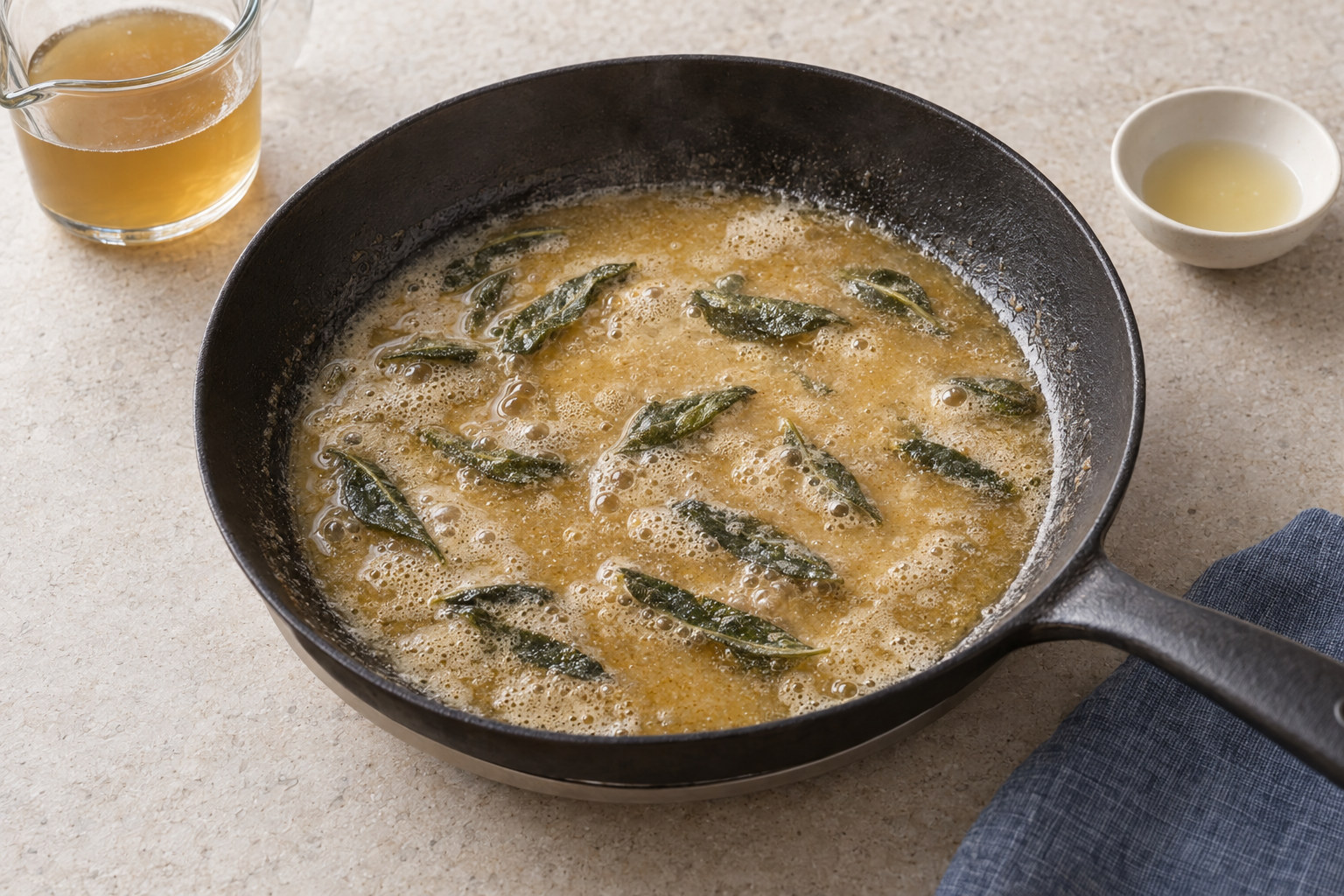
We wash and thoroughly dry the sage. We heat the butter for the sauce with the sage in a pan until the butter foams and smells nutty. We immediately and carefully pour in the unsalted stock; it may spit. We simmer gently for 2 minutes and add the lemon juice.
The butter is pale and nutty, not dark brown. There is still liquid in the sauce.
We cook the ravioli
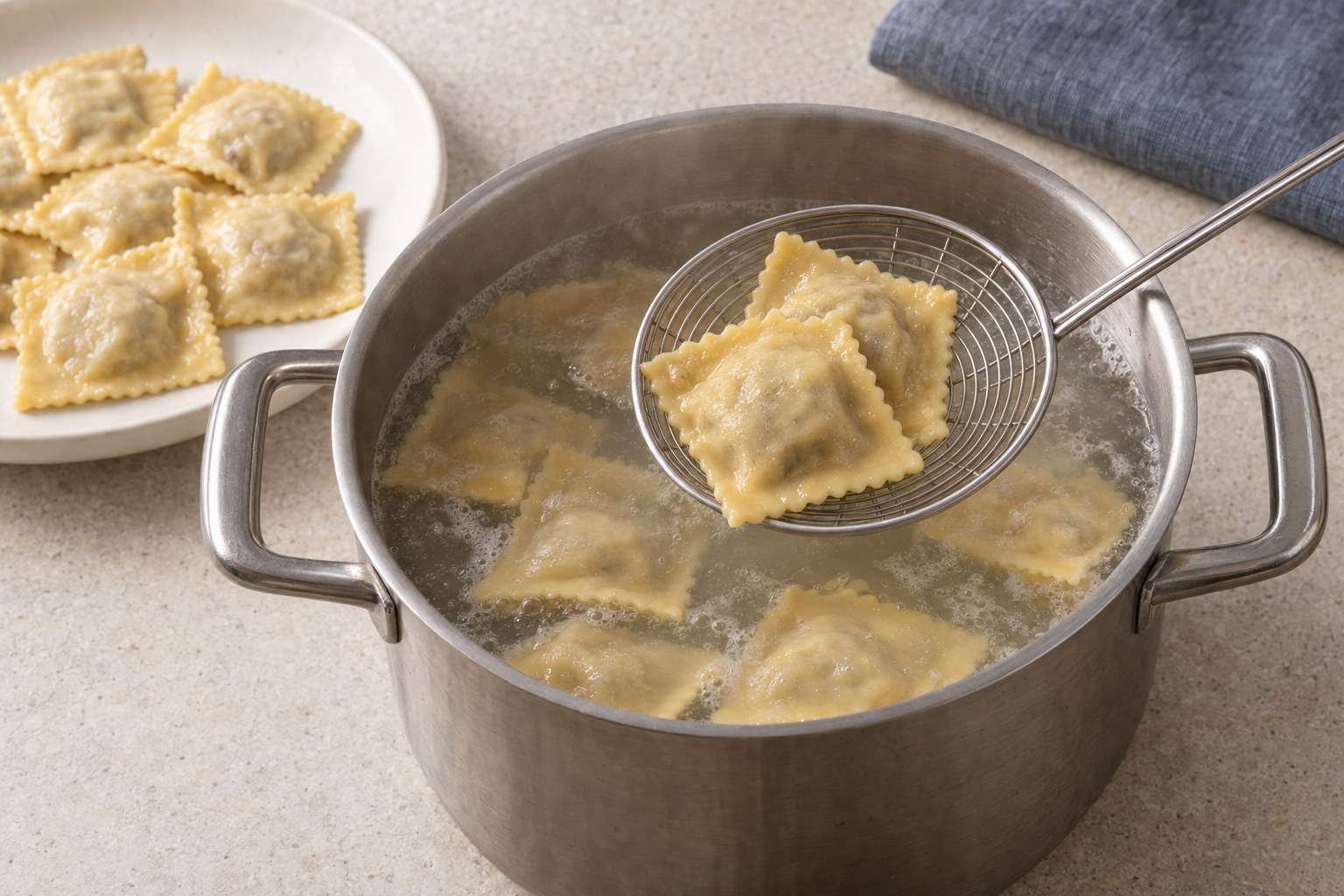
We bring water with the salt for cooking to the boil in a pot. We gently simmer the ravioli in two batches of ten, for 4–5 minutes per batch. We check one piece: the edge must not taste floury, and the centre of the cooled filling must reach at least 74 °C. We lift the cooked ravioli into the sauce with a strainer.
The pasta is cooked through even at the double-layered edge, and the ravioli stay sealed.
We finish the sauce and serve
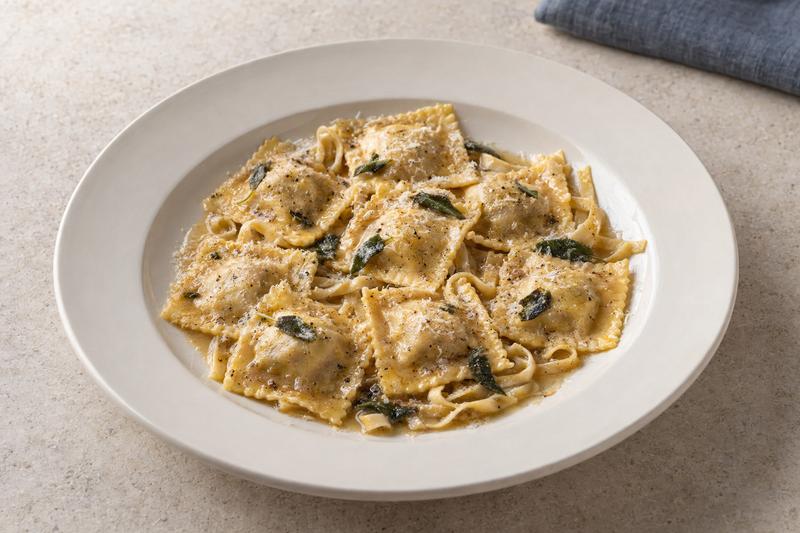
We add a total of 40 ml ravioli cooking water to the sauce and gently swirl the pan; we do not toss the ravioli vigorously. We divide the ravioli, sauce and finishing Parmesan between 2 warmed plates and serve.
The butter, stock and starch form a thin, smooth coating.
Tips from our kitchen
- Cool, dry filling is easier to portion than warm filling.
- We press the edges from the filling outwards so no air remains inside.
What to watch out for
- Coarse pieces of meat can tear the thin pasta when we shape it.
- We simmer ravioli very gently; large bubbles can strain the pasta seams.
How we serve it
- We serve the ravioli at once on warmed plates with sage sauce and Parmesan.
Ingredient notes
- We use boneless Wolowina Striploin in a 350 g pack. We trim off the firm fat edge and finely chop the meat as directed.
During preparation
- We check the meat temperature in the filling with a clean probe; colour alone does not show that it is cooked through. We keep raw meat and used utensils separate from the finished filling.
- We reheat the cooled cooked filling inside the finished ravioli to at least 74 °C. We check the temperature in the centre of a test piece.
Our inspiration
Pasta cooking water has a place in the sauce too. Jamie Oliver, who once cooked at London’s River Café, combines it with butter and herbs for ravioli with green vegetables, creating a delicate coating on the pasta. We finish our beef and ricotta ravioli the same way: a little cooking water helps the butter and stock cling to the pasta, so a heavy sauce does not overwhelm the filling.
Similar recipes
Recipe for 4 people
Step-by-step method
Before we start
We make about 40 ravioli. In each of two pots, we cook two batches of ten. Two pans let us finish four servings without overcrowding.
We make the dough
We combine the flour, eggs and oil. We knead for about 10 minutes until the dough is smooth and supple. We wrap it and let it rest for 30 minutes. If needed, we moisten our hands while kneading or lightly dust the dough with flour.
The dough is smooth and supple, with no dry crumbs.
We prepare the meat filling
We trim the firm fat from the striploin and very finely chop the meat with a knife into pieces no larger than 2 mm. We peel and finely chop the shallot. We soften it for 4 minutes in the oil intended for the filling. We add the meat and cook for 5–7 minutes, stirring constantly and breaking up clumps. We stir in the salt and pepper. The finely chopped meat must reach at least 72 °C, and all free liquid must evaporate. We spread the filling in a clean shallow dish and leave it to cool for 20–30 minutes. If needed, we chill it briefly in the fridge afterwards.
The filling has no raw pieces or loose liquid that could later soak the pasta.
We mix the meat with ricotta
We wash, dry and chop the parsley, then finely grate the Parmesan. When the filling has cooled below 25 °C, we stir in the ricotta, Parmesan and parsley. We mix until it holds together. We can now taste the finished filling. We keep it in the fridge until we are ready to fill the ravioli.
The mixture holds on a spoon and does not run.
We roll, fill and seal the ravioli
We divide the dough into 4 pieces and roll each into sheets about 1 mm thick, lightly dusting with flour. We place the filling in 40 mounds on half the pasta strips, leaving enough space between them to cut 7 cm squares. We lay the other strip over the filling, press out the air and seal the edges firmly. We cut the ravioli with a pastry wheel. We can reroll the scraps once or save them for noodles.
The edges are clean, with no filling or air pockets.
We make the butter sauce
We wash and thoroughly dry the sage. We divide the butter and sage between two pans and heat them until the butter foams and smells nutty. We immediately and carefully pour half the unsalted stock into each pan; it may spit. We simmer gently for 2 minutes and add half the lemon juice to each pan.
The butter is pale and nutty, not dark brown. There is still liquid in the sauce.
We cook the ravioli
We fill both pots with water, divide the cooking salt between them and bring to the boil. In each pot, we gently simmer two batches of ten ravioli, for 4–5 minutes per batch. We check one piece: the edge must not taste floury, and the centre of the cooled filling must reach at least 74 °C. We lift the cooked ravioli into the sauce with a strainer.
The pasta is cooked through even at the double-layered edge, and the ravioli stay sealed.
We finish the sauce and serve
We divide a total of 70 ml ravioli cooking water between the sauce in both pans and gently swirl them; we do not toss the ravioli vigorously. We divide the ravioli, sauce and finishing Parmesan among 4 warmed plates and serve.
The butter, stock and starch form a thin, smooth coating.