
Original cuisine · International inspiration
Striploin steak with crushed potatoes and garlicky spinach
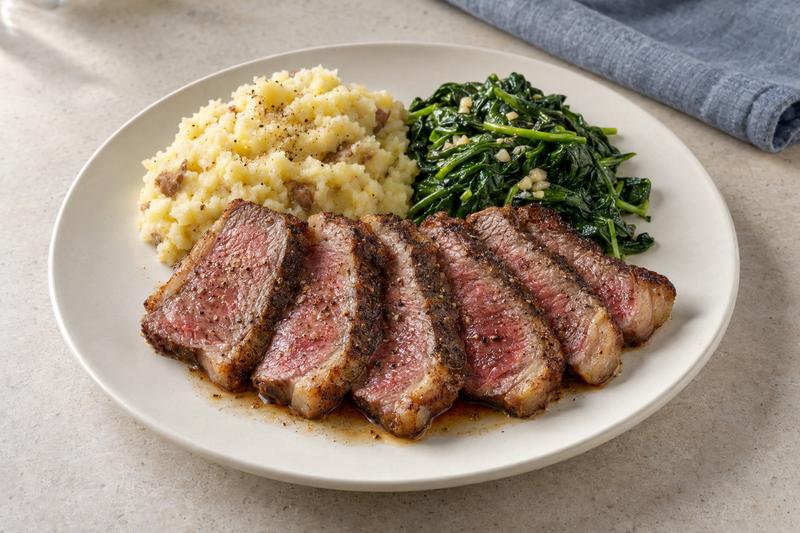
We serve the striploin in slices so its juices mingle with the crushed potatoes. We add fresh spinach with garlic and a little lemon to the seared steak. It is a simple plate that lets us enjoy the steak without another sauce.
We cook the potatoes while preparing the meat and finish the spinach while the steaks rest.
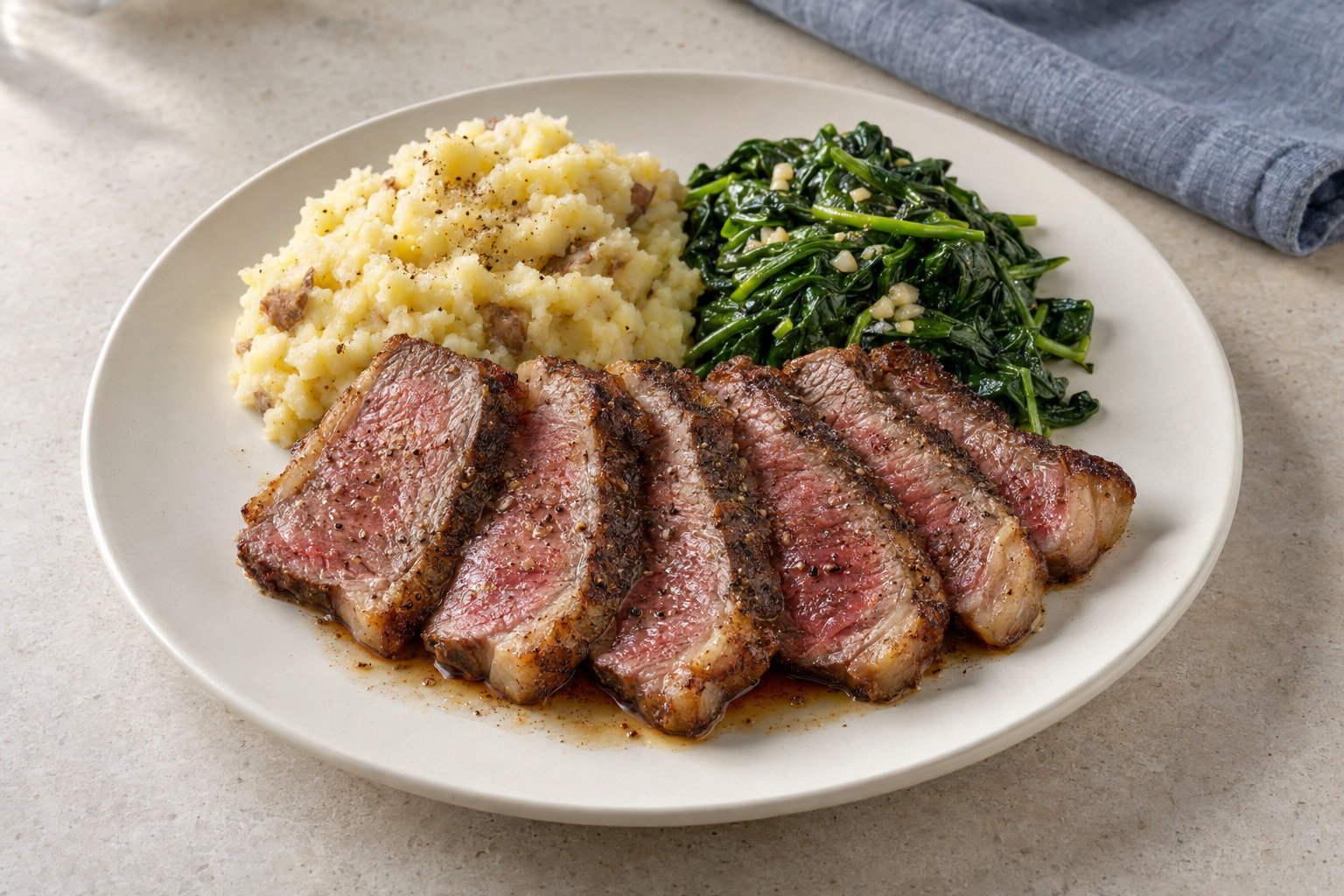
The bold flavour of striploin with its browned fat edge, buttery potatoes and tender spinach with garlic and lemon.
Step-by-step method
What you will need
- 28 cm frying pan
- 3-litre pot
- warm bowl for the potatoes
- potato masher
- tongs
- colander
- thin-probe thermometer
- kitchen scales
- separate boards for raw meat and cooked food
Choosing how well to cook your steak
Before cooking, we choose how well we would like our meat done. This guide describes culinary levels of doneness and approximate temperatures at the centre of the meat after resting. These are not pan or oven temperatures or food safety recommendations. For whole beef steaks, the United States Department of Agriculture (USDA) recommends a minimum internal temperature of 63 °C before removing the meat from the heat, followed by at least 3 minutes of resting.
| Doneness | Temperature after resting | What to expect |
|---|---|---|
| Rare | 52 °C | Rare. The centre is red, and the meat is very tender and juicy. |
| Medium Rare | 55 °C | Medium rare. The centre is warm and reddish-pink, and the meat is tender and juicy. |
| Medium | 60 °C | Medium. The centre remains pink, and the meat has a firmer bite. |
| Medium Well | 65 °C | Medium well. Only a faint pink strip remains in the centre; the meat is firmer and less juicy. |
| Well Done | 71 °C | Well done. There is no pink in the centre, and the meat is firm and less juicy. |
- We measure the temperature at the centre of the thickest part of the meat. We insert the probe from the side, avoiding bone and pockets of fat. Colour is only a guide; we rely on the thermometer.
- As a rule, we take the meat off the pan or grill, or out of the oven, when it is 2–3 °C below our chosen temperature after resting. Thick cuts and intense heat can cause a greater temperature rise during resting. We check it regularly and follow the individual recipe.
- We rest the meat for the time given in the recipe. If the temperature stops rising before reaching our chosen value, we briefly return the meat to a gentle heat and check again.
- Cooking times are a guide. If we prefer our meat less well done, we start checking its temperature earlier. For a higher degree of doneness, we allow more time over a gentler heat as needed, so the outside does not burn.
Before we start
Before cooking, we choose the doneness from the table above the method. We start the potatoes first. We fry two steaks in a 28 cm pan and cook the spinach in the pot freed after the potatoes.
Cook and crush the potatoes
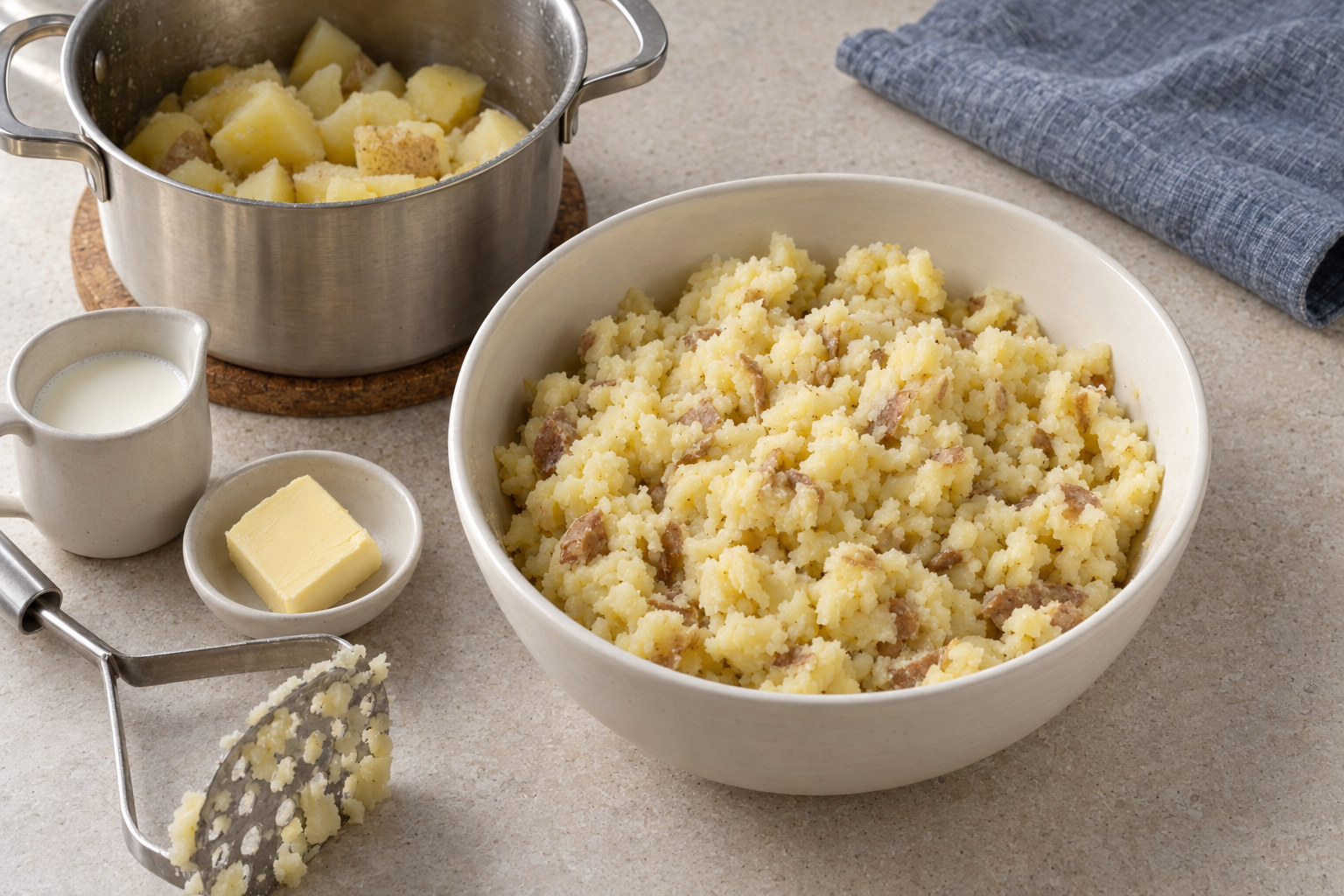
We peel and rinse the potatoes and cut them into 3 cm cubes. We add 1.5 l water, add the salt for the water and simmer for 18–22 minutes until tender. We drain and return them to the warm pot for 30 seconds. We add the milk, warm it briefly over low heat and crush the potatoes with the butter. We move them to a warmed bowl and cover, freeing the pot for spinach. We prepare the meat while the potatoes cook. We begin frying when the potatoes are almost tender. While the steaks fry, we finish the potatoes so we can cook the spinach in the pot as the meat rests.
The potatoes are roughly crushed, not whipped into a sticky mash.
Prepare the striploin
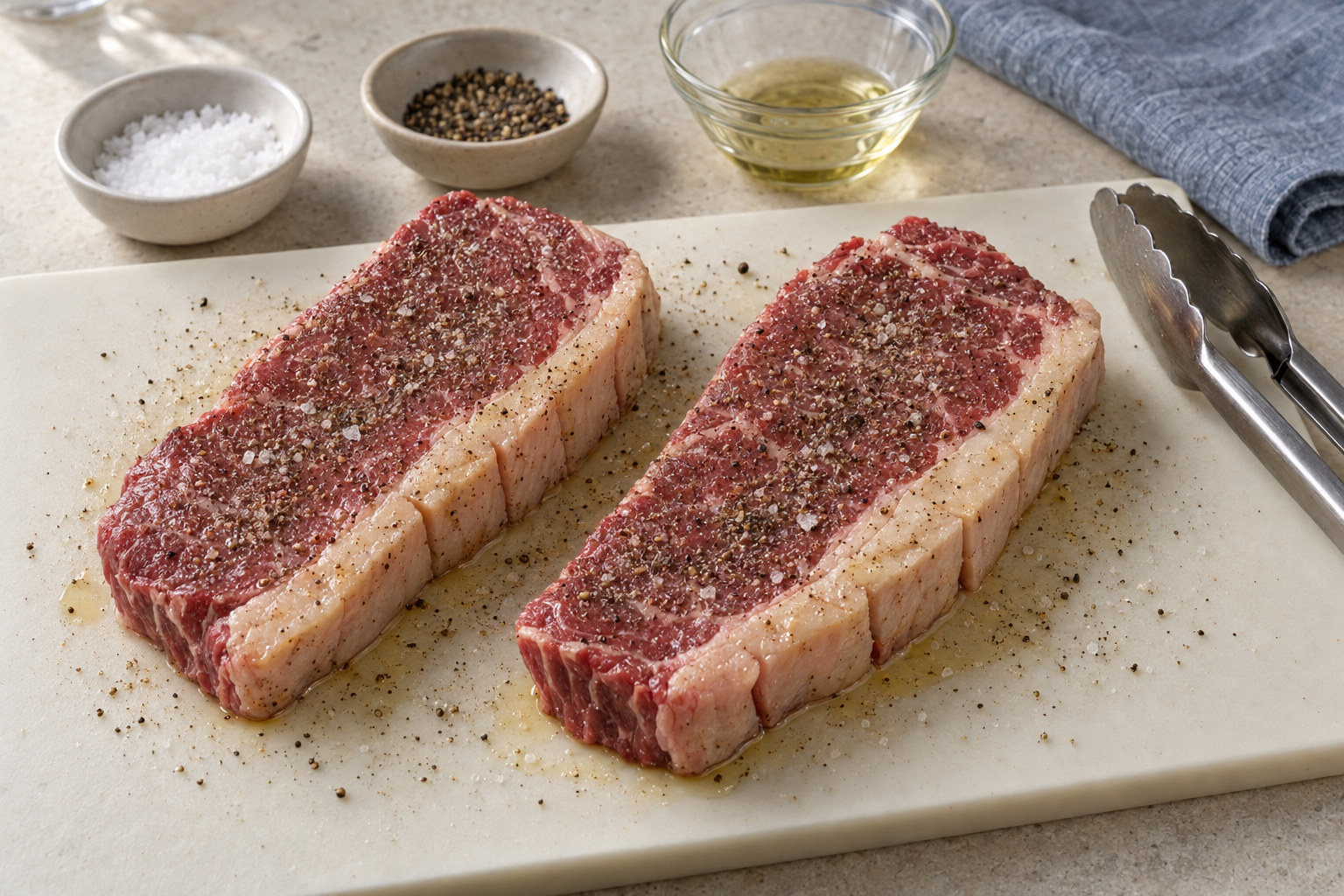
We pat two 350 g steaks dry. We lightly score the fat edge at 2 cm intervals, cutting only into the fat, not the meat. If we finish them with Icelandic salt, we reduce the ordinary meat salt by one small pinch; we salt the sides as written. We season the steaks evenly with salt and pepper and brush with oil. We wash and dry the spinach, then peel and chop the garlic.
Scoring the fat prevents it shrinking and bending the meat during frying.
Render the fat edge and fry the steaks
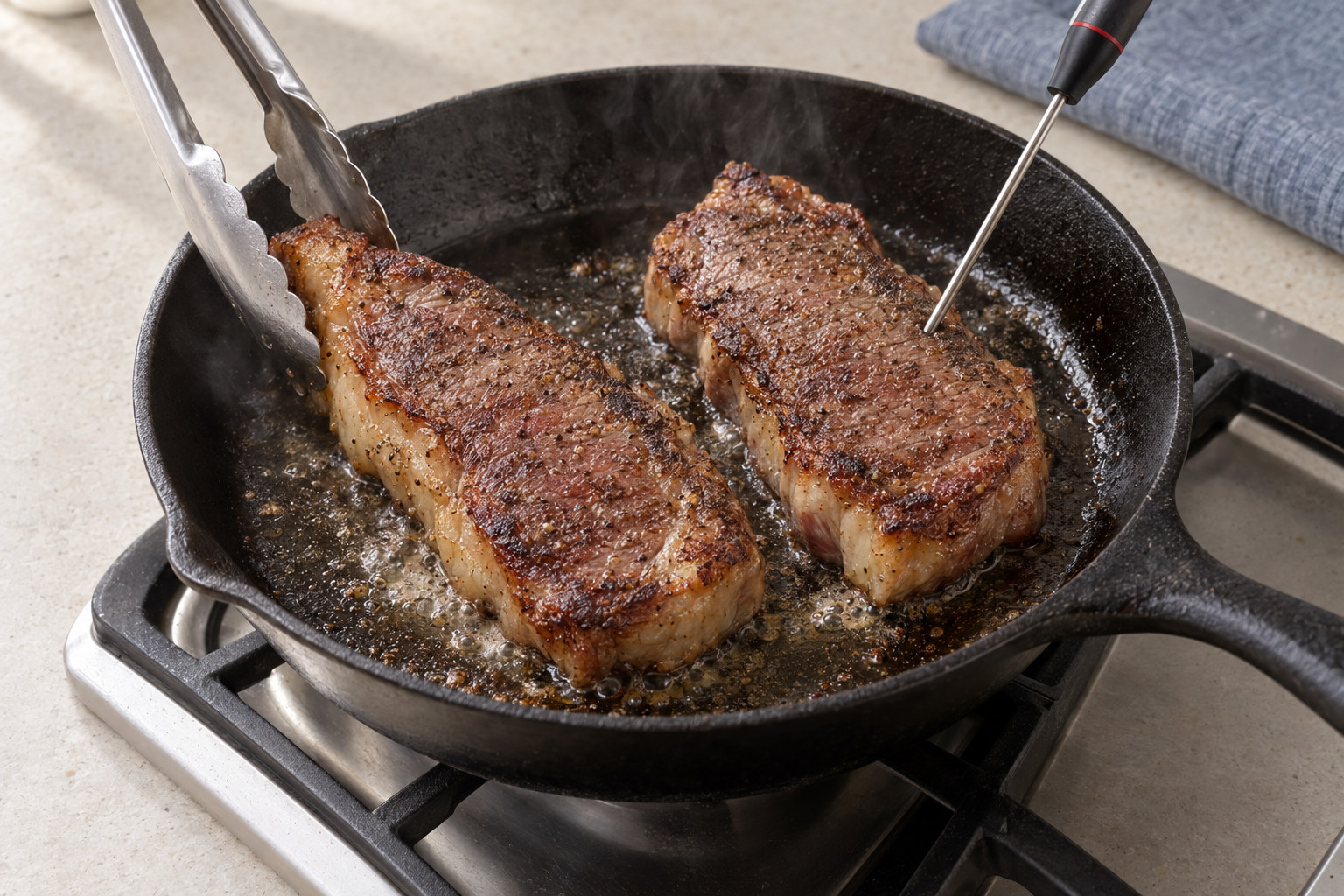
We heat the pan over medium-high heat. Holding both steaks with tongs, we first fry them on their fat edges for 1–2 minutes. We lay them flat and fry the first side for about 2 minutes as a guide. After turning, we start measuring the temperature in the centre of each piece. Guided by the reading, we fry the second side for about another 2 minutes. If needed, we lower the heat and turn every minute, usually for another 4–8 minutes. For a rarer steak, the meat may be ready sooner; for a more well-done steak, we continue longer over gentle heat according to the thermometer. We remove each steak when its internal temperature is about 2–3 °C below the target temperature after resting.
The fat edge is golden and softer. The probe does not touch the pan.
Rest the meat and prepare the spinach
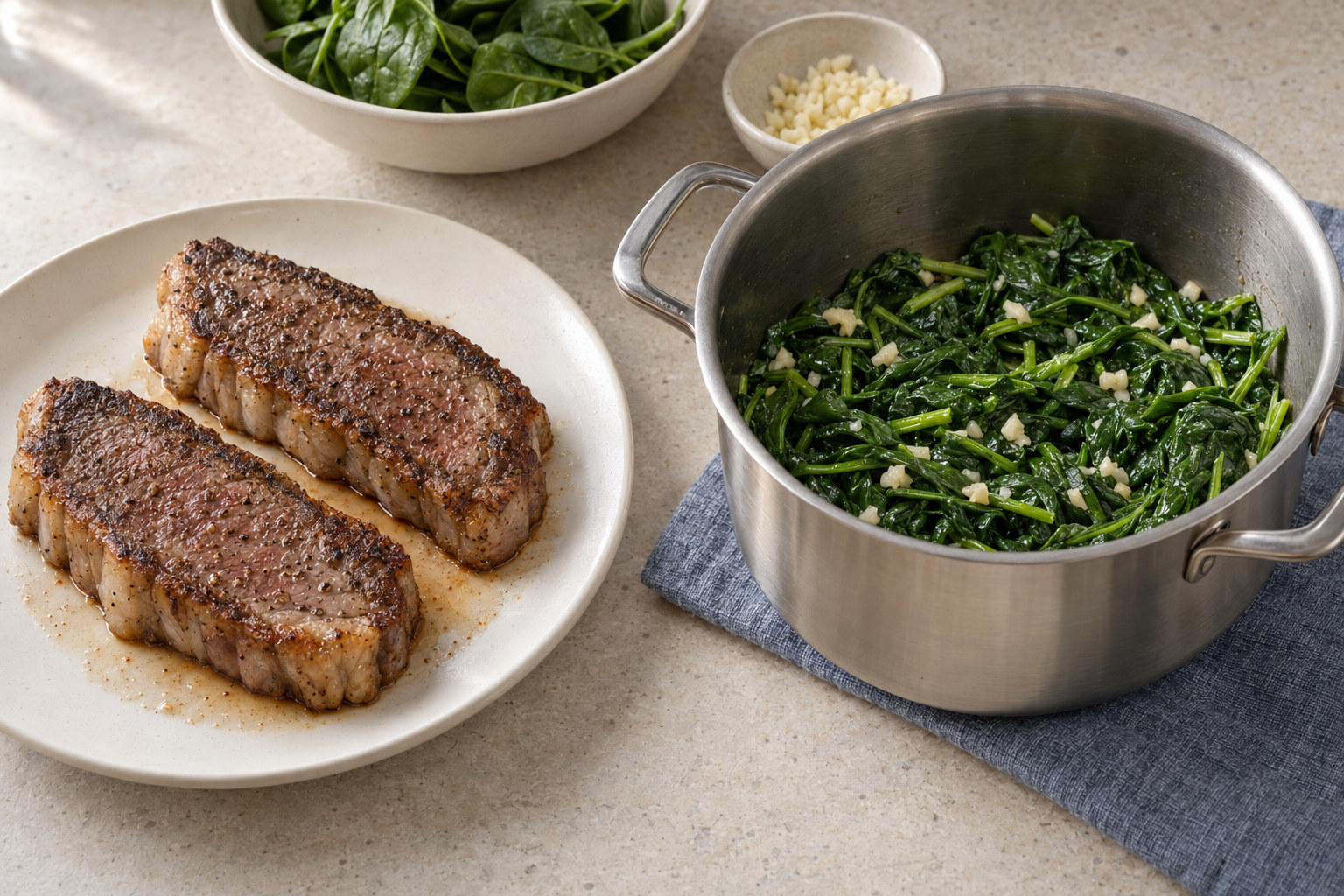
We transfer the meat to a clean, lukewarm plate away from the oven and leave it to rest for 5 minutes. We check the temperature during the rest and, if needed, briefly return the meat to gentle heat. Meanwhile, in the pot we used for the potatoes, we heat the olive oil for the spinach. We add finely chopped garlic and stir for 20 seconds. We add the spinach in handfuls, stirring for 1–2 minutes. Finally, we add salt and lemon juice.
The spinach has just wilted and the garlic is not brown.
Serve
We divide the crushed potatoes and spinach between plates. We slice the steak diagonally across the grain and add it with the juices released during resting. If we want to use the Icelandic salt, we taste the meat with the potatoes and spinach. If needed, we scatter one small pinch of Saltverk birch-smoked Icelandic flaky salt over the meat just before serving. If the bite is salty enough, we add no more salt.
Tips from our kitchen
- We hold the steaks with tongs while frying the fat edge. We keep our hands away from the spitting fat.
What to watch out for
- We do not add ice-cold milk to the potatoes.
- We add no water to the spinach; it contains enough of its own.
How we serve it
- We serve immediately on warmed plates.
Ingredient notes
- We use boneless Wolowina striploin in 350 g packs. We leave the fat edge on and fry it as described.
During preparation
- We measure the temperature with a clean probe inserted from the side into the centre of the thickest part of each piece, away from fat pockets. We check it during resting too; the meat colour is only a guide. We keep raw meat and any utensils that touched it separate from the finished sides.
Our inspiration
Striploin has a strip of fat along the edge that deserves as much attention as the meat itself. A brief sear on that edge turns it golden and softens it; if we laid the steak flat straight away, the edge would brown much less. This small detail lets us enjoy more than just the centre of a simple steak.
Similar recipes
Recipe for 4 people
Step-by-step method
Choosing how well to cook your steak
Before cooking, we choose how well we would like our meat done. This guide describes culinary levels of doneness and approximate temperatures at the centre of the meat after resting. These are not pan or oven temperatures or food safety recommendations. For whole beef steaks, the United States Department of Agriculture (USDA) recommends a minimum internal temperature of 63 °C before removing the meat from the heat, followed by at least 3 minutes of resting.
| Doneness | Temperature after resting | What to expect |
|---|---|---|
| Rare | 52 °C | Rare. The centre is red, and the meat is very tender and juicy. |
| Medium Rare | 55 °C | Medium rare. The centre is warm and reddish-pink, and the meat is tender and juicy. |
| Medium | 60 °C | Medium. The centre remains pink, and the meat has a firmer bite. |
| Medium Well | 65 °C | Medium well. Only a faint pink strip remains in the centre; the meat is firmer and less juicy. |
| Well Done | 71 °C | Well done. There is no pink in the centre, and the meat is firm and less juicy. |
- We measure the temperature at the centre of the thickest part of the meat. We insert the probe from the side, avoiding bone and pockets of fat. Colour is only a guide; we rely on the thermometer.
- As a rule, we take the meat off the pan or grill, or out of the oven, when it is 2–3 °C below our chosen temperature after resting. Thick cuts and intense heat can cause a greater temperature rise during resting. We check it regularly and follow the individual recipe.
- We rest the meat for the time given in the recipe. If the temperature stops rising before reaching our chosen value, we briefly return the meat to a gentle heat and check again.
- Cooking times are a guide. If we prefer our meat less well done, we start checking its temperature earlier. For a higher degree of doneness, we allow more time over a gentler heat as needed, so the outside does not burn.
Before we start
Before cooking, we choose the doneness from the table above the method. We fry four steaks in two 28 cm pans so they are not crowded. We keep the cooked potatoes covered in a large bowl, freeing the pot for spinach.
Cook and crush the potatoes
We peel and rinse the potatoes and cut them into 3 cm cubes. We add 2.4 l water, add the salt for the water and simmer for 18–22 minutes until tender. We drain and return them to the warm pot for 30 seconds. We add the milk, warm it briefly over low heat and crush the potatoes with the butter. We move them to a warmed bowl and cover, freeing the pot for spinach. We prepare the meat while the potatoes cook. We begin frying when the potatoes are almost tender. While the steaks fry, we finish the potatoes so we can cook the spinach in the pot as the meat rests.
The potatoes are roughly crushed, not whipped into a sticky mash.
Prepare the striploin
We pat four 350 g steaks dry. We lightly score the fat edge at 2 cm intervals, cutting only into the fat, not the meat. If we finish them with Icelandic salt, we reduce the ordinary meat salt by two small pinches; we salt the sides as written. We season the steaks evenly with salt and pepper and brush with oil. We wash and dry the spinach, then peel and chop the garlic.
Scoring the fat prevents it shrinking and bending the meat during frying.
Render the fat edge and fry the steaks
We heat both pans over medium-high heat. Holding two steaks in each pan with tongs, we first fry them on their fat edges for 1–2 minutes. We lay them flat and fry the first side for about 2 minutes as a guide. After turning, we start measuring the temperature in the centre of each piece. Guided by the reading, we fry the second side for about another 2 minutes. If needed, we lower the heat and turn every minute, usually for another 4–8 minutes. For a rarer steak, the meat may be ready sooner; for a more well-done steak, we continue longer over gentle heat according to the thermometer. We remove each steak when its internal temperature is about 2–3 °C below the target temperature after resting.
The fat edge is golden and softer. The probe does not touch the pan.
Rest the meat and prepare the spinach
We transfer the meat to a clean, lukewarm plate away from the oven and leave it to rest for 5 minutes. We check the temperature during the rest and, if needed, briefly return the meat to gentle heat. Meanwhile, in the pot we used for the potatoes, we heat the olive oil for the spinach. We add finely chopped garlic and stir for 20 seconds. We add the spinach in handfuls, stirring for 1–2 minutes. Finally, we add salt and lemon juice.
The spinach has just wilted and the garlic is not brown.
Serve
We divide the crushed potatoes and spinach between plates. We slice the steak diagonally across the grain and add it with the juices released during resting. If we want to use the Icelandic salt, we taste the meat with the potatoes and spinach. If needed, we scatter two small pinches of Saltverk birch-smoked Icelandic flaky salt over the meat just before serving. If the bite is salty enough, we add no more salt.