
French-inspired · France
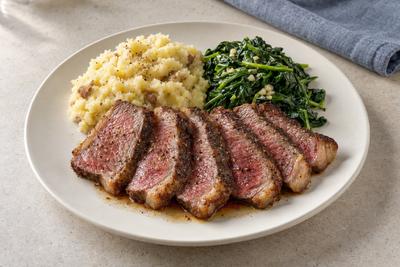
Striploin steak with shallot and red wine sauce and potato gratin
We bake thin layers of potato with cream and milk until golden. Alongside, we serve striploin steak with a glossy red wine and shallot sauce. The creamy potatoes and rich sauce make this a steak dinner worth setting the table for.
While the gratin bakes, we make the sauce and sear the steaks; the timing includes their resting time.
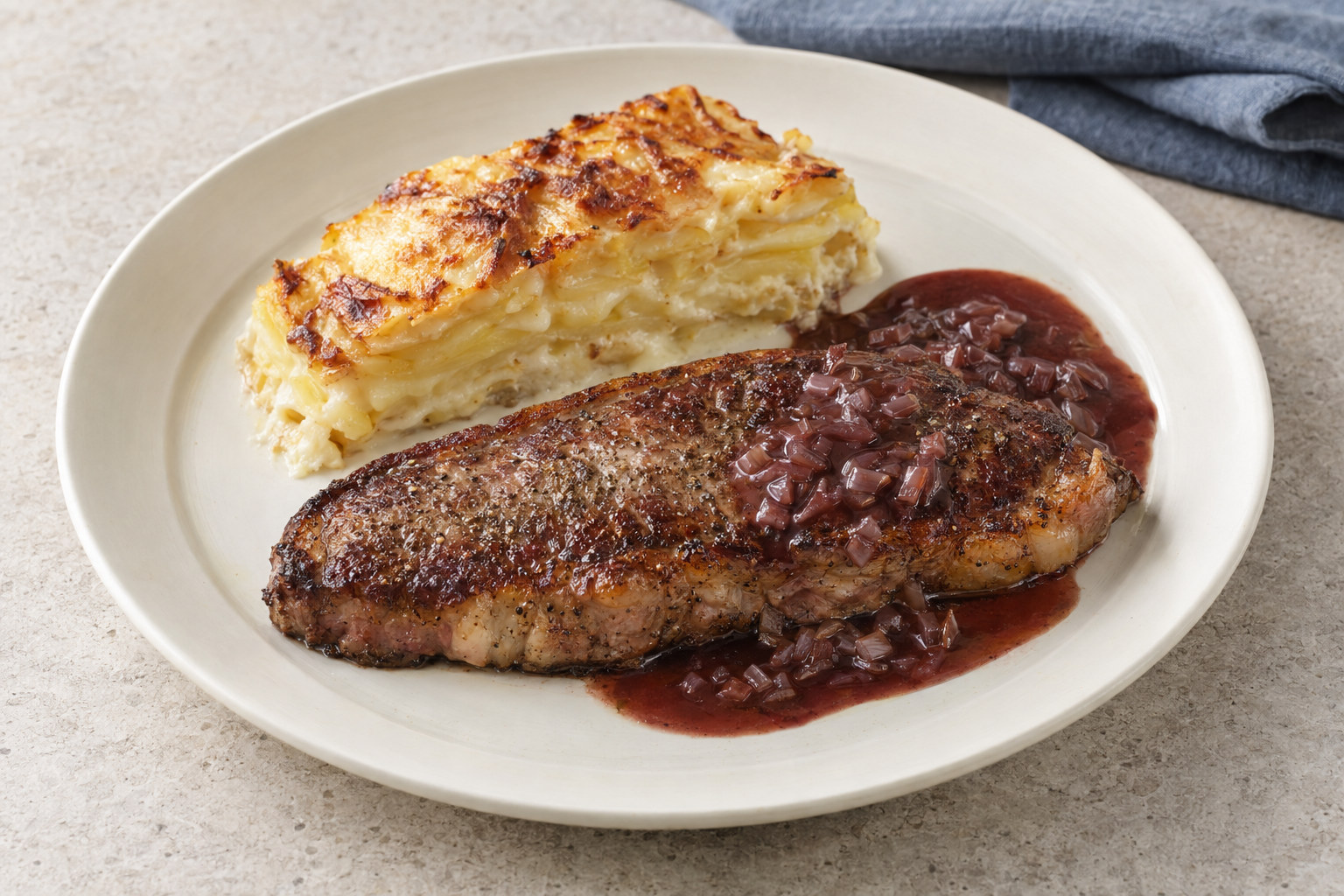
Seared beef, full-flavoured red wine and shallot, a silky butter-enriched sauce, and creamy potatoes with garlic and nutmeg.
Step-by-step method
What you will need
- 28 cm frying pan
- 2 l saucepan
- 16 cm small saucepan
- 16 × 20 cm baking dish
- oven
- sharp knife or mandoline with a safety guard
- whisk
- probe thermometer with a thin probe
- kitchen scales
- one chopping board for raw meat and another for cooked food
Choosing how well to cook your steak
Before cooking, we choose how well we would like our meat done. This guide describes culinary levels of doneness and approximate temperatures at the centre of the meat after resting. These are not pan or oven temperatures or food safety recommendations. For whole beef steaks, the United States Department of Agriculture (USDA) recommends a minimum internal temperature of 63 °C before removing the meat from the heat, followed by at least 3 minutes of resting.
| Doneness | Temperature after resting | What to expect |
|---|---|---|
| Rare | 52 °C | Rare. The centre is red, and the meat is very tender and juicy. |
| Medium Rare | 55 °C | Medium rare. The centre is warm and reddish-pink, and the meat is tender and juicy. |
| Medium | 60 °C | Medium. The centre remains pink, and the meat has a firmer bite. |
| Medium Well | 65 °C | Medium well. Only a faint pink strip remains in the centre; the meat is firmer and less juicy. |
| Well Done | 71 °C | Well done. There is no pink in the centre, and the meat is firm and less juicy. |
- We measure the temperature at the centre of the thickest part of the meat. We insert the probe from the side, avoiding bone and pockets of fat. Colour is only a guide; we rely on the thermometer.
- As a rule, we take the meat off the pan or grill, or out of the oven, when it is 2–3 °C below our chosen temperature after resting. Thick cuts and intense heat can cause a greater temperature rise during resting. We check it regularly and follow the individual recipe.
- We rest the meat for the time given in the recipe. If the temperature stops rising before reaching our chosen value, we briefly return the meat to a gentle heat and check again.
- Cooking times are a guide. If we prefer our meat less well done, we start checking its temperature earlier. For a higher degree of doneness, we allow more time over a gentler heat as needed, so the outside does not burn.
Before we start
Before cooking, we choose a doneness from the table above the method. We bake the gratin in a 16 × 20 cm dish. We start searing the steaks when the gratin is nearly ready, and make the sauce at the same time on another hob ring.
Prepare the potato gratin
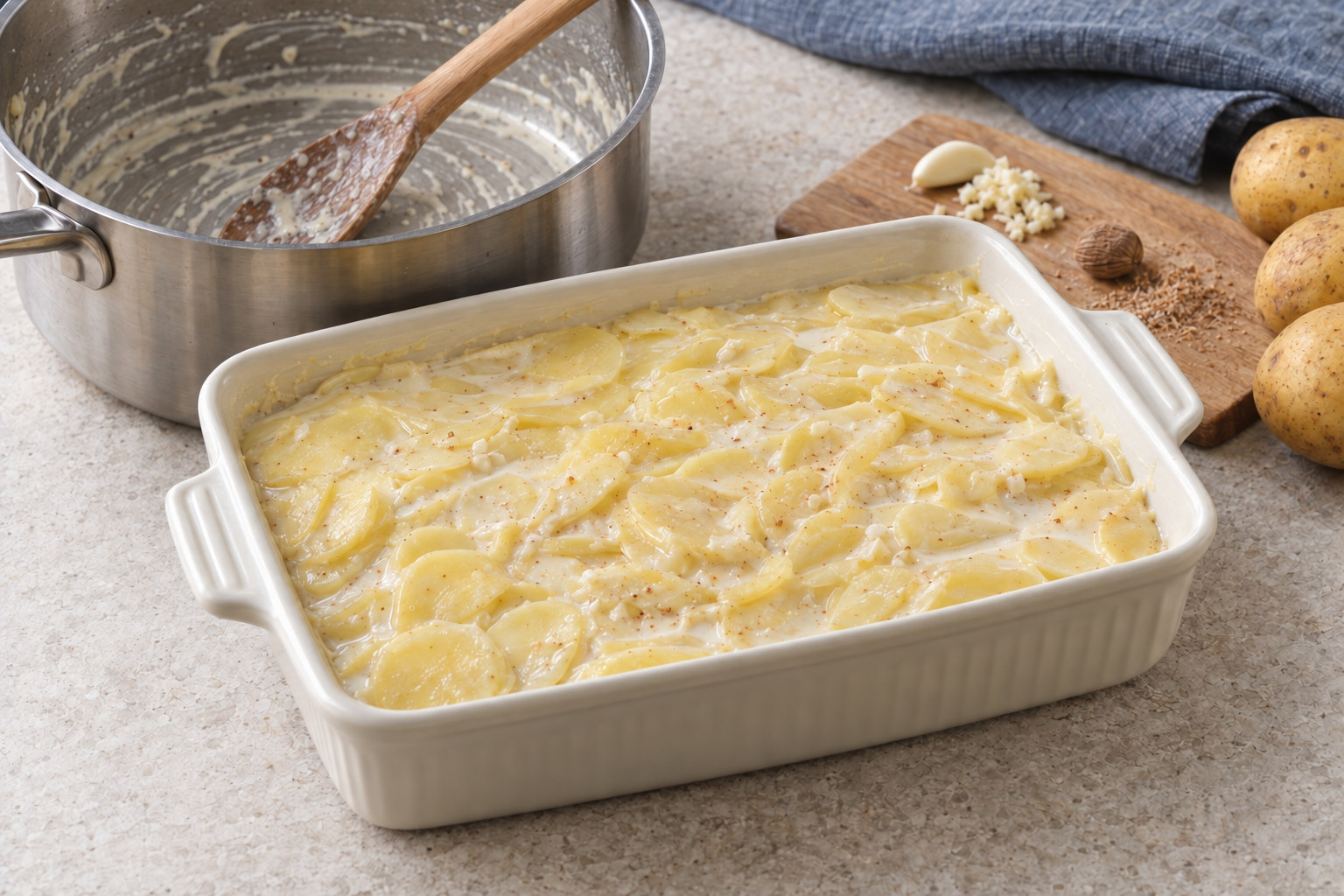
We preheat the oven to 180 °C with top and bottom heat. We butter the baking dish. We peel and rinse the potatoes, then cut them into even 2 mm slices. We peel and finely chop the garlic. We bring the cream, milk, chopped garlic, nutmeg and salt for the gratin to a gentle simmer. We stir in the potatoes and keep stirring over a low heat for 5 minutes. We transfer everything to the baking dish in a layer no deeper than 3 cm.
The liquid has worked between the slices and no thick pieces stick out.
Bake the gratin
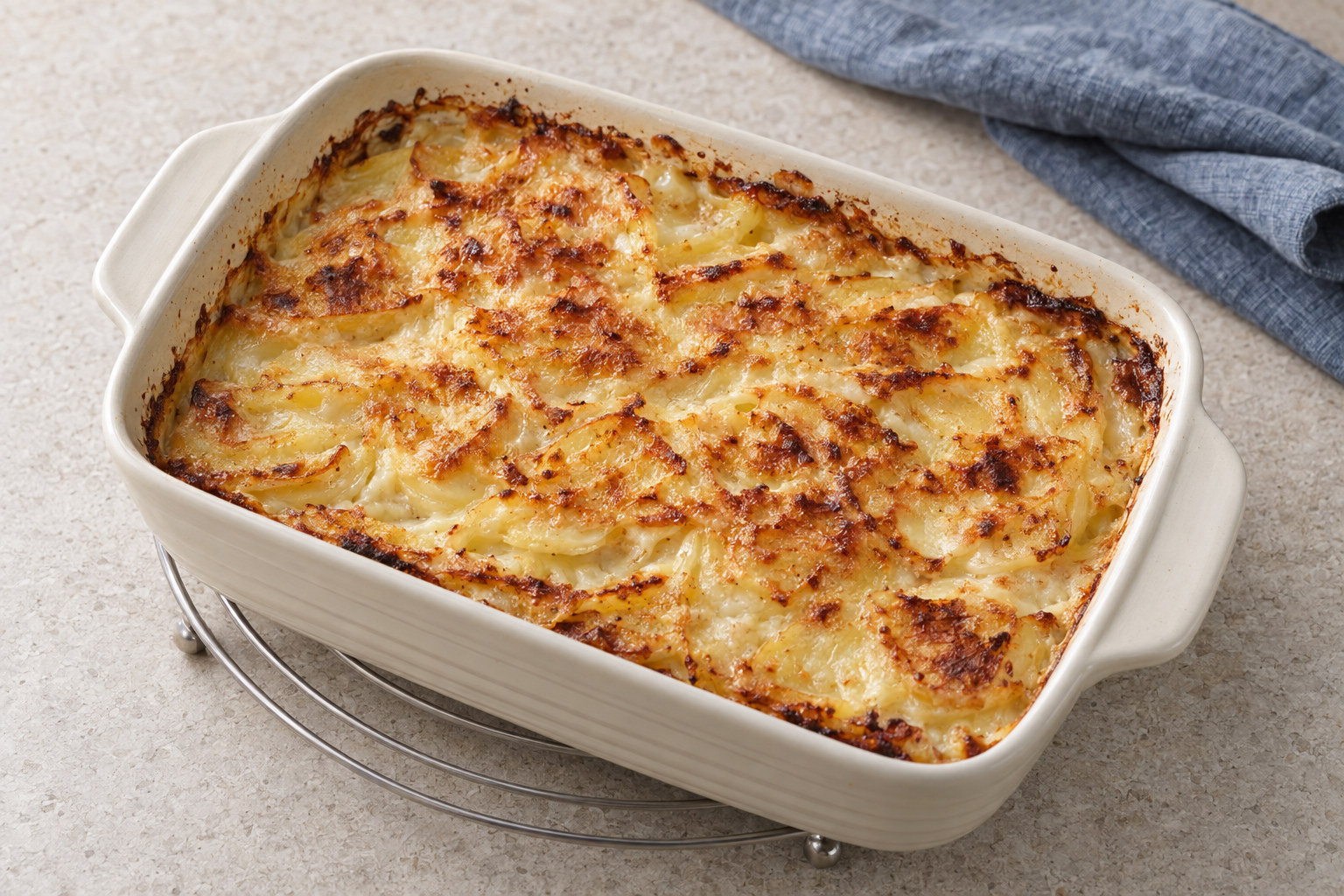
We cover the dish and bake for 25 minutes. We uncover it and bake for another 15–20 minutes, until the top is golden and the tip of a knife passes through the centre without resistance. We let the finished gratin rest for 5 minutes.
The cream bubbles gently without separating into a pool of fat.
Make the red wine sauce
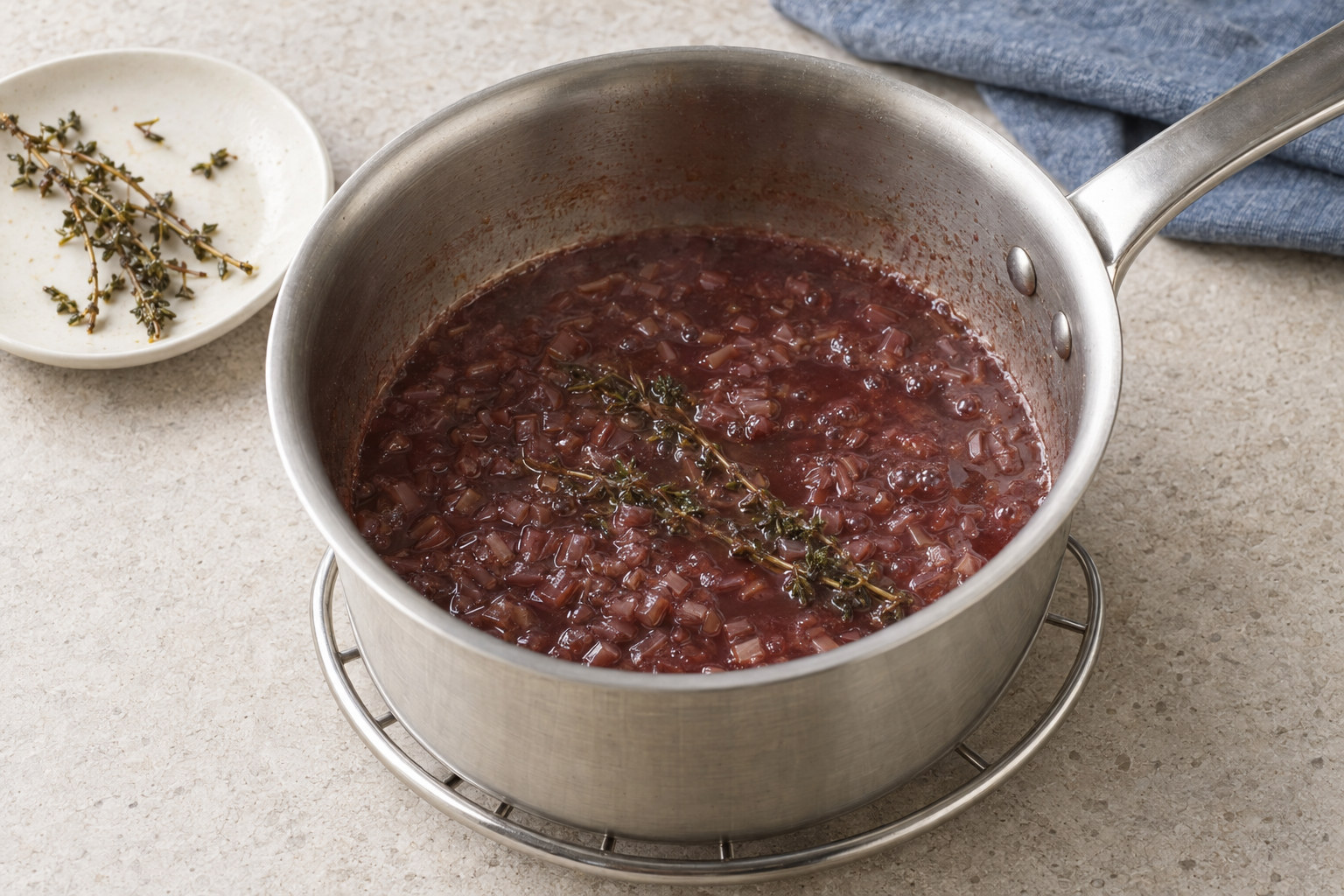
We peel and finely chop the shallot, and rinse the thyme. In a small saucepan we heat the oil for the sauce and cook the shallot in it for 4 minutes, stirring constantly. We pour in the wine, add the thyme and simmer for 8 minutes, until about 45 ml of wine remains. We add the stock and simmer for another 8 minutes, until the volume has reduced to approximately 120 ml. We remove the thyme.
The sauce is rich but still fluid, with no raw wine smell.
Sear the striploin
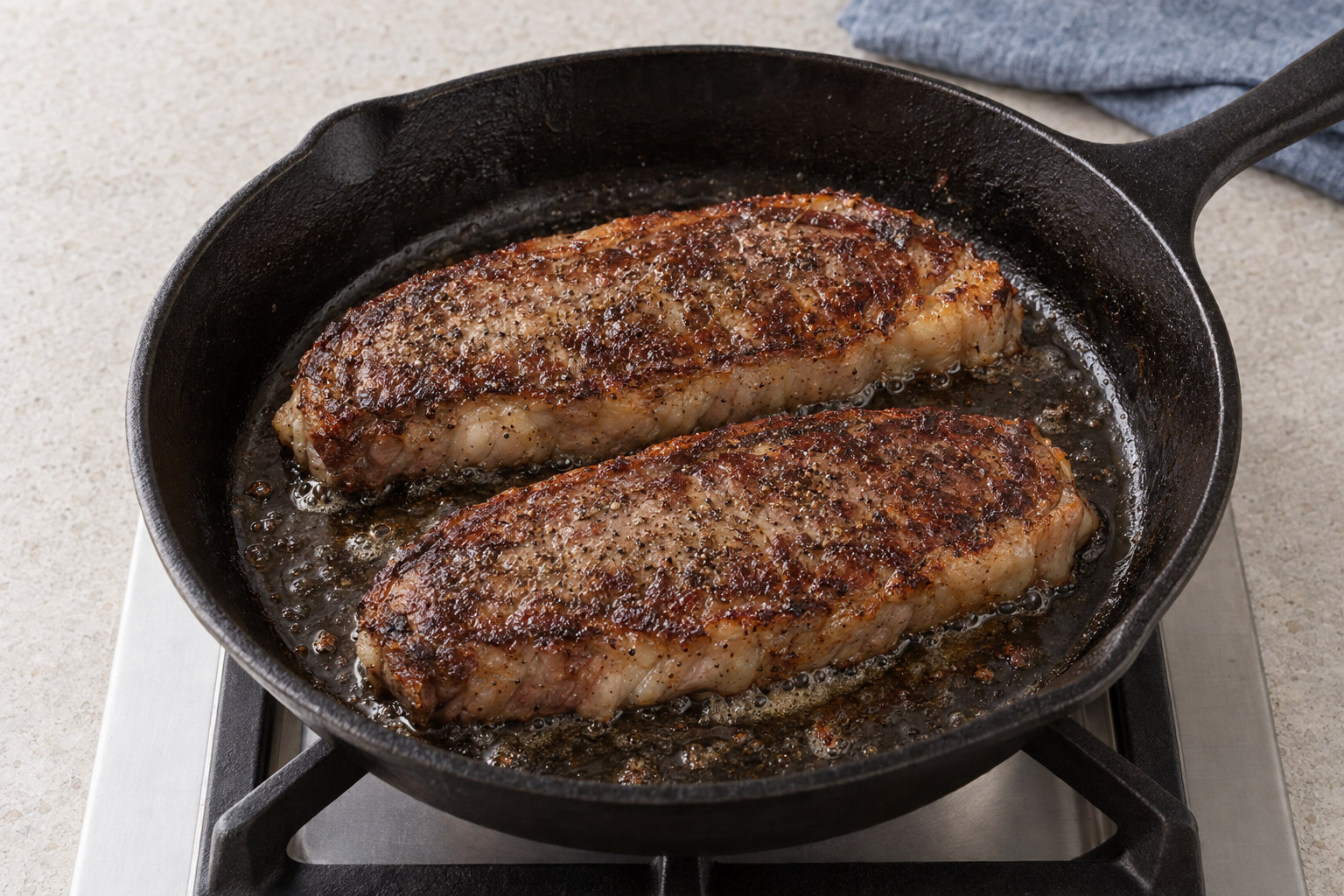
For Rare and Medium Rare, we start searing the steaks when the gratin is almost tender and has approximately 5 minutes left in the oven. We also allow for its 5-minute rest after removing it. For Medium, we start approximately 5–10 minutes before the gratin is done; for a higher level of doneness, we start a few minutes earlier still. If we finish the steaks with Icelandic salt, we reduce the regular salt for the meat by one small pinch; we salt the sides as the recipe says. We pat the meat dry, season it with salt and pepper and coat it with oil. We heat the pan well over a medium-high heat and sear both steaks. We sear the fat edge for 1–2 minutes and the first flat side for about 2 minutes. After turning, we measure the temperature at the centre of each steak. We cook the second side for approximately another 2 minutes, judging by the temperature and surface colour. If needed, we lower the heat and turn the steaks every minute, usually for another 4–8 minutes. For rarer steak, the meat may be ready sooner; for more doneness, we continue over a low heat for longer. We take each steak out when its internal temperature is approximately 2–3 °C below the target temperature after resting. We take the finished gratin out of the oven in time and let it rest; we do not let its top darken further while waiting for the meat.
We measure the temperature in the centre of the thickest part of the meat, not just at the surface.
Finish the sauce while the meat rests
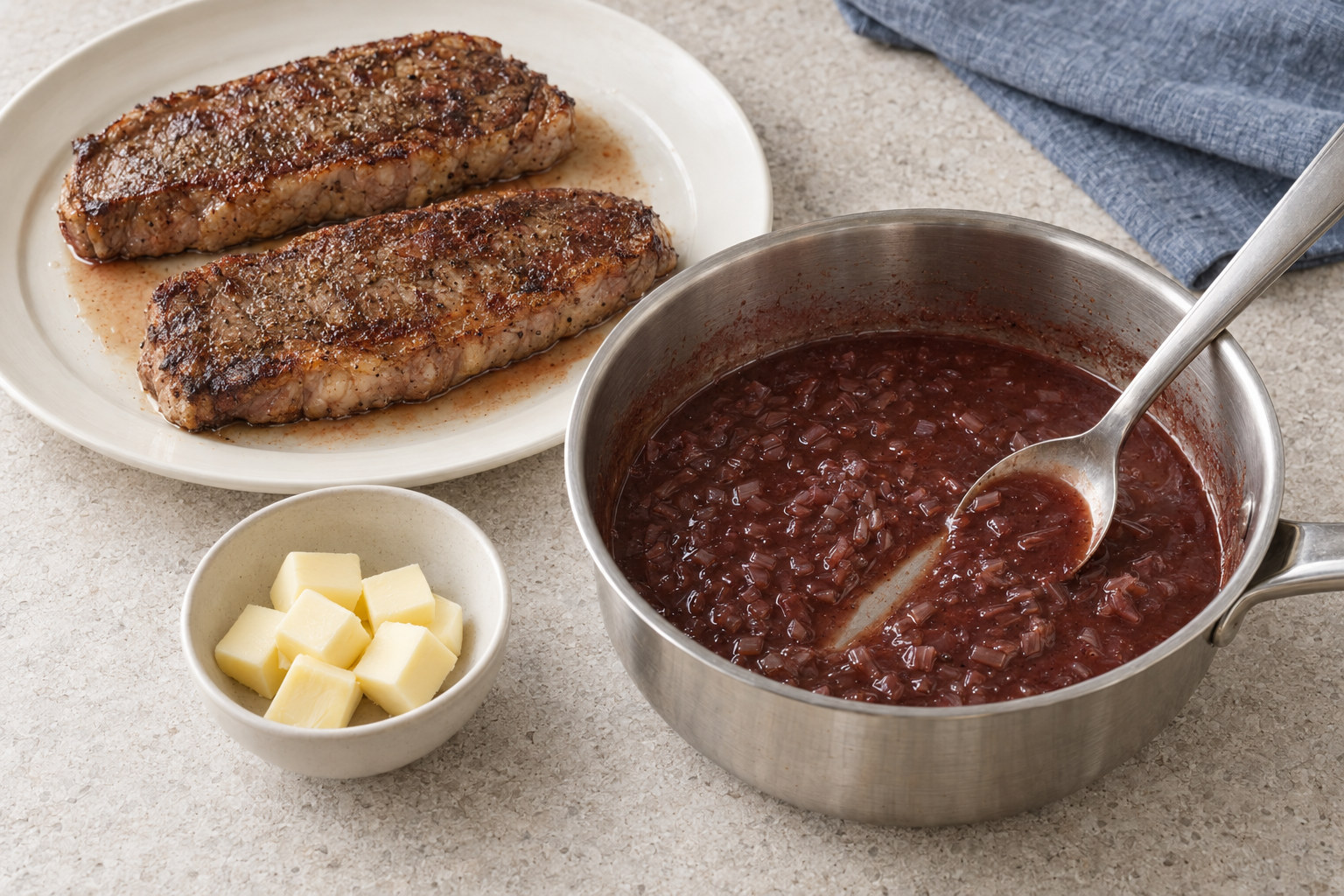
We put the meat on a clean, lukewarm plate outside the oven and let it rest for 5 minutes. We check its temperature during the rest and, if needed, briefly cook it further over a gentle heat. We whisk the cold butter into the hot wine reduction after taking it off the heat. We add the salt for the sauce and all the juices released by the meat as it rested. We do not boil the sauce after adding the butter.
The sauce is glossy and a spoon leaves a brief trail through it.
Serve
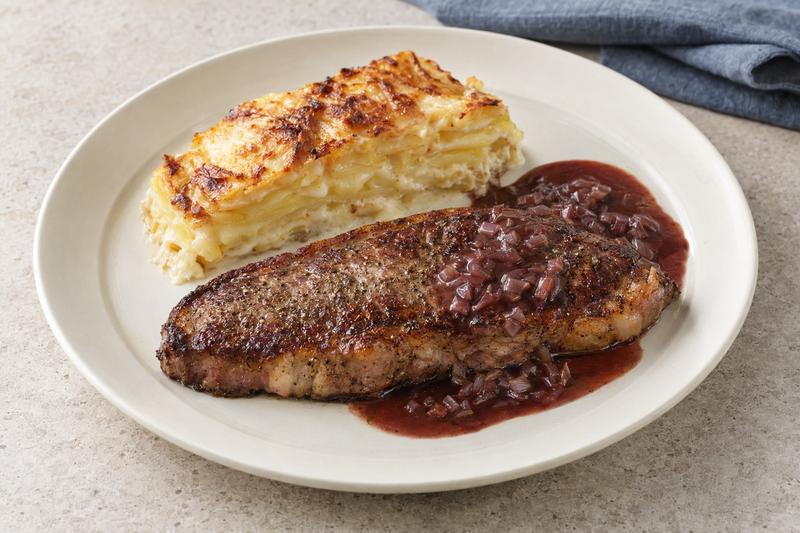
We divide the gratin into portions and lift them onto plates with a wide spatula. We add the steaks, spoon the sauce alongside and pour some over the meat. If using Icelandic salt, we taste the meat together with the gratin and wine sauce. If needed, we scatter one small pinch of Saltverk Icelandic flaky salt with Arctic thyme over the meat just before serving. If a mouthful is salty enough, we add no more salt.
The gratin holds together on a spatula but stays soft and creamy inside.
Tips from our kitchen
- We test the centre of the gratin with a knife; a golden top does not mean the middle is tender.
What to watch out for
- A thicker layer of potatoes needs considerably longer in the oven.
- We add salt to the reduction only at the end.
How we serve it
- We serve immediately on warmed plates.
Ingredient notes
- We use boneless Wolowina Striploin in a 350 g pack. We leave the fat edge on and sear it as described in the method.
- We save the rest of the box for another meal and buy the side dish ingredients and anything else needed separately.
During preparation
- We measure the temperature with a clean probe inserted from the side into the centre of the thickest part of each steak, away from pockets of fat. We check it again while the meat rests; its colour is only a guide. We keep raw meat and anything that has touched it separate from the cooked sides.
Our inspiration
A golden gratin needs no blanket of cheese. Josh Eggleton, chef at The Pony Chew Valley near Bristol, bakes thin potato slices with cream, milk, garlic and nutmeg in his potato gratin. Our side dish likewise gets its tenderness from the dairy mixture seeping between the slices. Its gentle sweetness stands out beside the wine sauce.
Similar recipes
Recipe for 4 people
Step-by-step method
Choosing how well to cook your steak
Before cooking, we choose how well we would like our meat done. This guide describes culinary levels of doneness and approximate temperatures at the centre of the meat after resting. These are not pan or oven temperatures or food safety recommendations. For whole beef steaks, the United States Department of Agriculture (USDA) recommends a minimum internal temperature of 63 °C before removing the meat from the heat, followed by at least 3 minutes of resting.
| Doneness | Temperature after resting | What to expect |
|---|---|---|
| Rare | 52 °C | Rare. The centre is red, and the meat is very tender and juicy. |
| Medium Rare | 55 °C | Medium rare. The centre is warm and reddish-pink, and the meat is tender and juicy. |
| Medium | 60 °C | Medium. The centre remains pink, and the meat has a firmer bite. |
| Medium Well | 65 °C | Medium well. Only a faint pink strip remains in the centre; the meat is firmer and less juicy. |
| Well Done | 71 °C | Well done. There is no pink in the centre, and the meat is firm and less juicy. |
- We measure the temperature at the centre of the thickest part of the meat. We insert the probe from the side, avoiding bone and pockets of fat. Colour is only a guide; we rely on the thermometer.
- As a rule, we take the meat off the pan or grill, or out of the oven, when it is 2–3 °C below our chosen temperature after resting. Thick cuts and intense heat can cause a greater temperature rise during resting. We check it regularly and follow the individual recipe.
- We rest the meat for the time given in the recipe. If the temperature stops rising before reaching our chosen value, we briefly return the meat to a gentle heat and check again.
- Cooking times are a guide. If we prefer our meat less well done, we start checking its temperature earlier. For a higher degree of doneness, we allow more time over a gentler heat as needed, so the outside does not burn.
Before we start
Before cooking, we choose a doneness from the table above the method. We bake the gratin in a 22 × 28 cm dish so the potato layer is no deeper than 3 cm. We sear all four steaks at once in two pans.
Prepare the potato gratin
We preheat the oven to 180 °C with top and bottom heat. We butter the baking dish. We peel and rinse the potatoes, then cut them into even 2 mm slices. We peel and finely chop the garlic. We bring the cream, milk, chopped garlic, nutmeg and salt for the gratin to a gentle simmer. We stir in the potatoes and keep stirring over a low heat for 5 minutes. We transfer everything to the baking dish in a layer no deeper than 3 cm.
The liquid has worked between the slices and no thick pieces stick out.
Bake the gratin
We cover the dish and bake for 25 minutes. We uncover it and bake for another 15–20 minutes, until the top is golden and the tip of a knife passes through the centre without resistance. We let the finished gratin rest for 5 minutes.
The cream bubbles gently without separating into a pool of fat.
Make the red wine sauce
We peel and finely chop the shallots, and rinse the thyme. In a small saucepan we heat the oil for the sauce and cook the shallots in it for 4 minutes, stirring constantly. We pour in the wine, add the thyme and simmer for 11 minutes, until about 80 ml of wine remains. We add the stock and simmer for another 12 minutes, until the volume has reduced to approximately 210 ml. We remove the thyme.
The sauce is rich but still fluid, with no raw wine smell.
Sear the striploin
For Rare and Medium Rare, we start searing the steaks when the gratin is almost tender and has approximately 5 minutes left in the oven. We also allow for its 5-minute rest after removing it. For Medium, we start approximately 5–10 minutes before the gratin is done; for a higher level of doneness, we start a few minutes earlier still. If we finish the steaks with Icelandic salt, we reduce the regular salt for the meat by two small pinches; we salt the sides as the recipe says. We pat the meat dry, season it with salt and pepper and coat it with oil. We heat two pans well over a medium-high heat and sear two steaks in each. We sear the fat edge for 1–2 minutes and the first flat side for about 2 minutes. After turning, we measure the temperature at the centre of each steak. We cook the second side for approximately another 2 minutes, judging by the temperature and surface colour. If needed, we lower the heat and turn the steaks every minute, usually for another 4–8 minutes. For rarer steak, the meat may be ready sooner; for more doneness, we continue over a low heat for longer. We take each steak out when its internal temperature is approximately 2–3 °C below the target temperature after resting. We take the finished gratin out of the oven in time and let it rest; we do not let its top darken further while waiting for the meat.
We measure the temperature in the centre of the thickest part of the meat, not just at the surface.
Finish the sauce while the meat rests
We put the meat on a clean, lukewarm plate outside the oven and let it rest for 5 minutes. We check its temperature during the rest and, if needed, briefly cook it further over a gentle heat. We whisk the cold butter into the hot wine reduction after taking it off the heat. We add the salt for the sauce and all the juices released by the meat as it rested. We do not boil the sauce after adding the butter.
The sauce is glossy and a spoon leaves a brief trail through it.
Serve
We divide the gratin into portions and lift them onto plates with a wide spatula. We add the steaks, spoon the sauce alongside and pour some over the meat. If using Icelandic salt, we taste the meat together with the gratin and wine sauce. If needed, we scatter two small pinches of Saltverk Icelandic flaky salt with Arctic thyme over the meat just before serving. If a mouthful is salty enough, we add no more salt.
The gratin holds together on a spatula but stays soft and creamy inside.