
Chinese inspiration · China
Homemade bao with ribeye and pickled vegetables
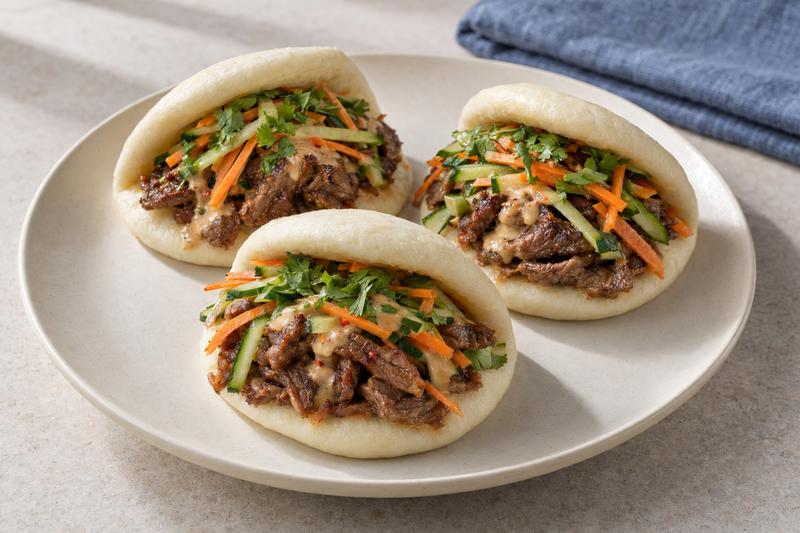
We open fluffy bao and fill them with seared ribeye, crunchy carrot and cucumber. Sesame sauce with chilli and a handful of coriander give them fragrance and juiciness. Homemade dough needs time to rise, but rewards us with warm, soft buns: we serve three per person.
The estimate includes 60–90 minutes for the first rise, 25 minutes for the second rise and steaming. We judge proving by the dough; it takes longer in a cooler kitchen.
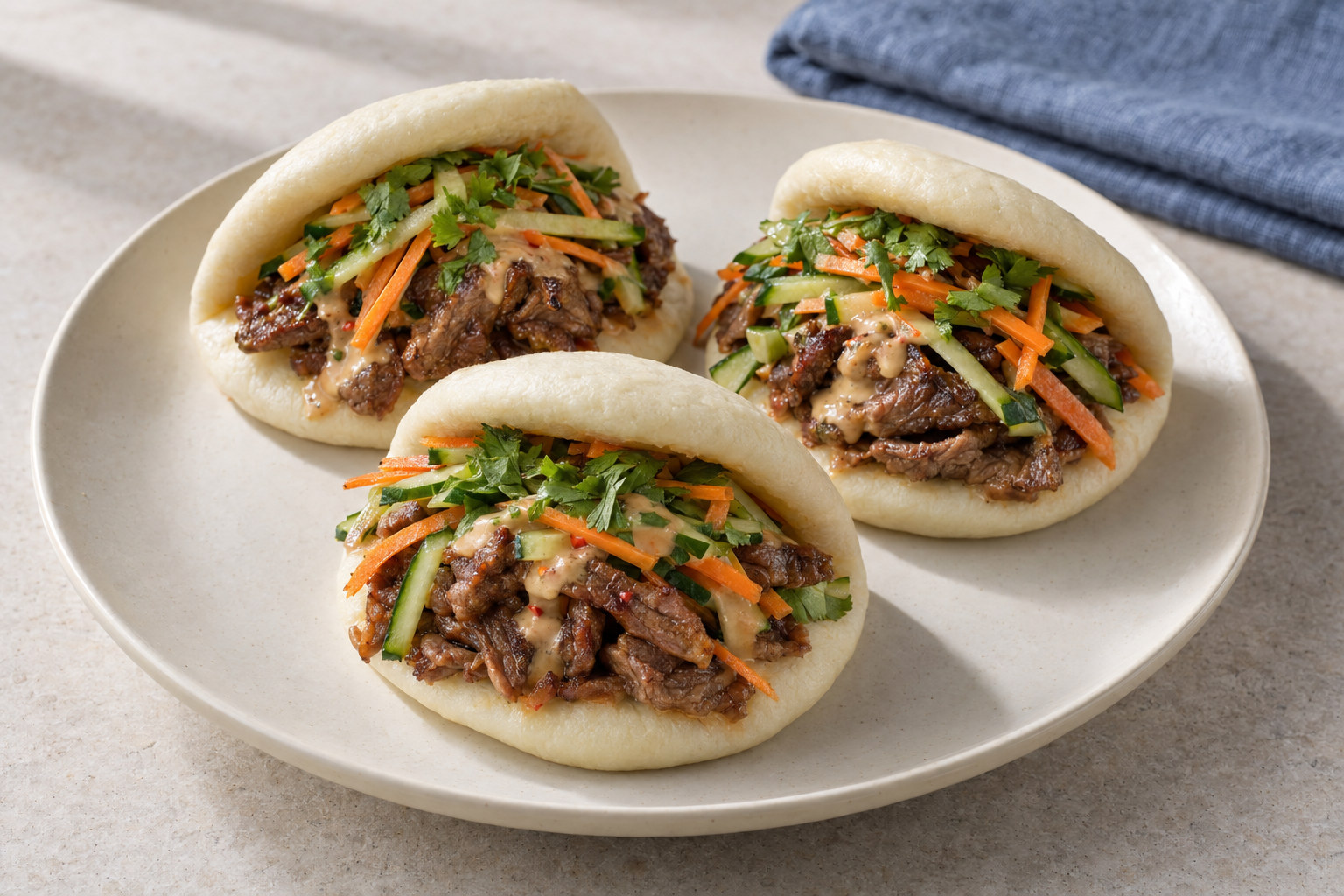
Gently sweet bao, beef with ginger and soy sauce, tangy fresh vegetables and sesame with a mild chilli finish.
Step-by-step method
What you will need
- 28 cm steamer with lid
- pot for the steamer
- 28 cm frying pan
- rolling pin
- baking parchment
- large mixing bowl and two smaller bowls
- whisk
- thin-probe thermometer
- kitchen scales
- board for raw meat and another for cooked food
Before we start
We make 6 bao. In a 28 cm steamer, we cook them in two batches of three. We start proving the second batch about 15 minutes later. We finish the meat while the last batch of bao steams.
We make the dough and let it rise
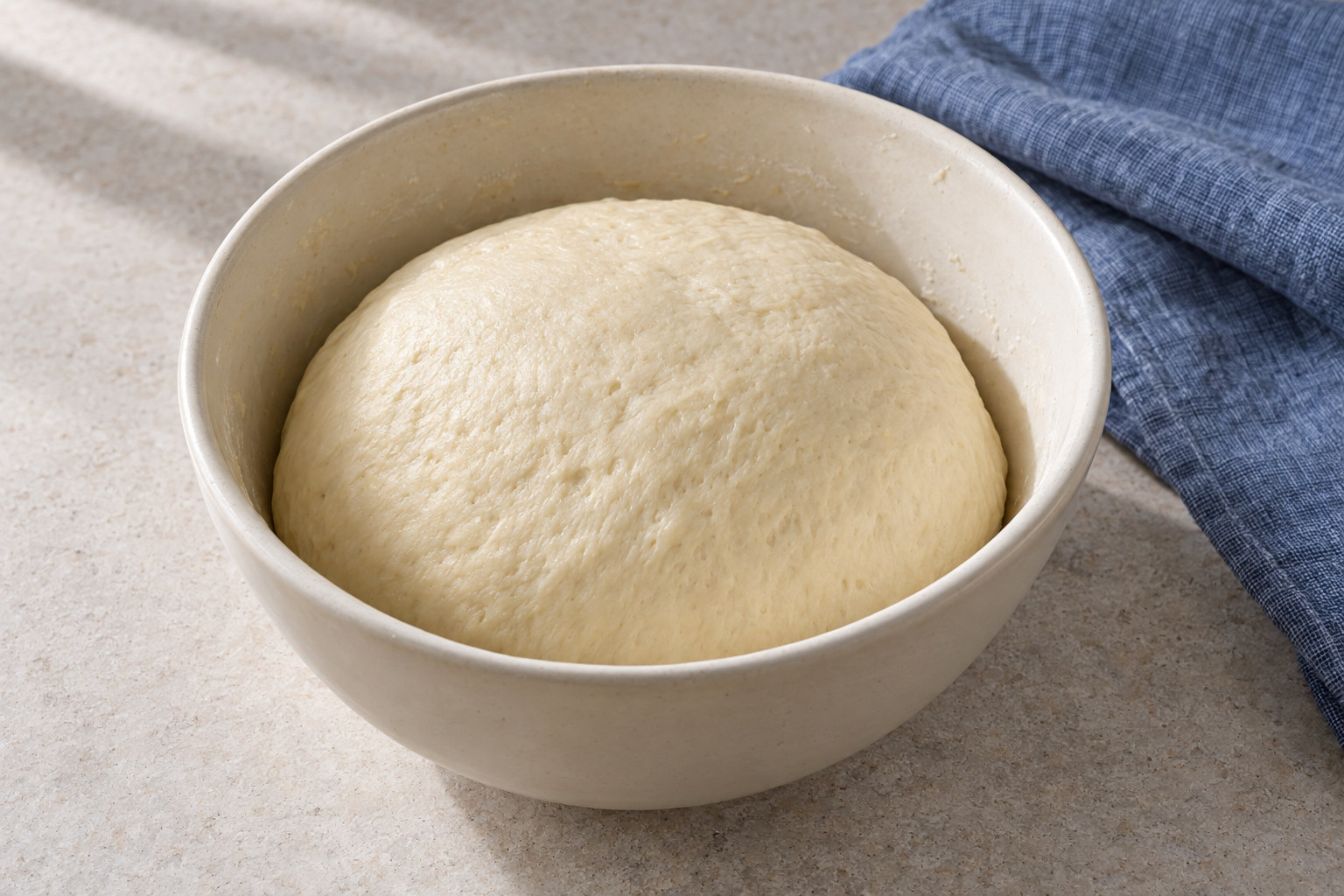
We mix the flour with the sugar, yeast and salt intended for the dough. We add lukewarm water at no more than 35 °C and half the oil allocated to the dough. We knead for 10 minutes until smooth and soft. We cover and leave to rise for 60–90 minutes, until nearly doubled in size.
The dough is elastic; the dent slowly springs back when pressed.
We pickle the vegetables and mix the sauce
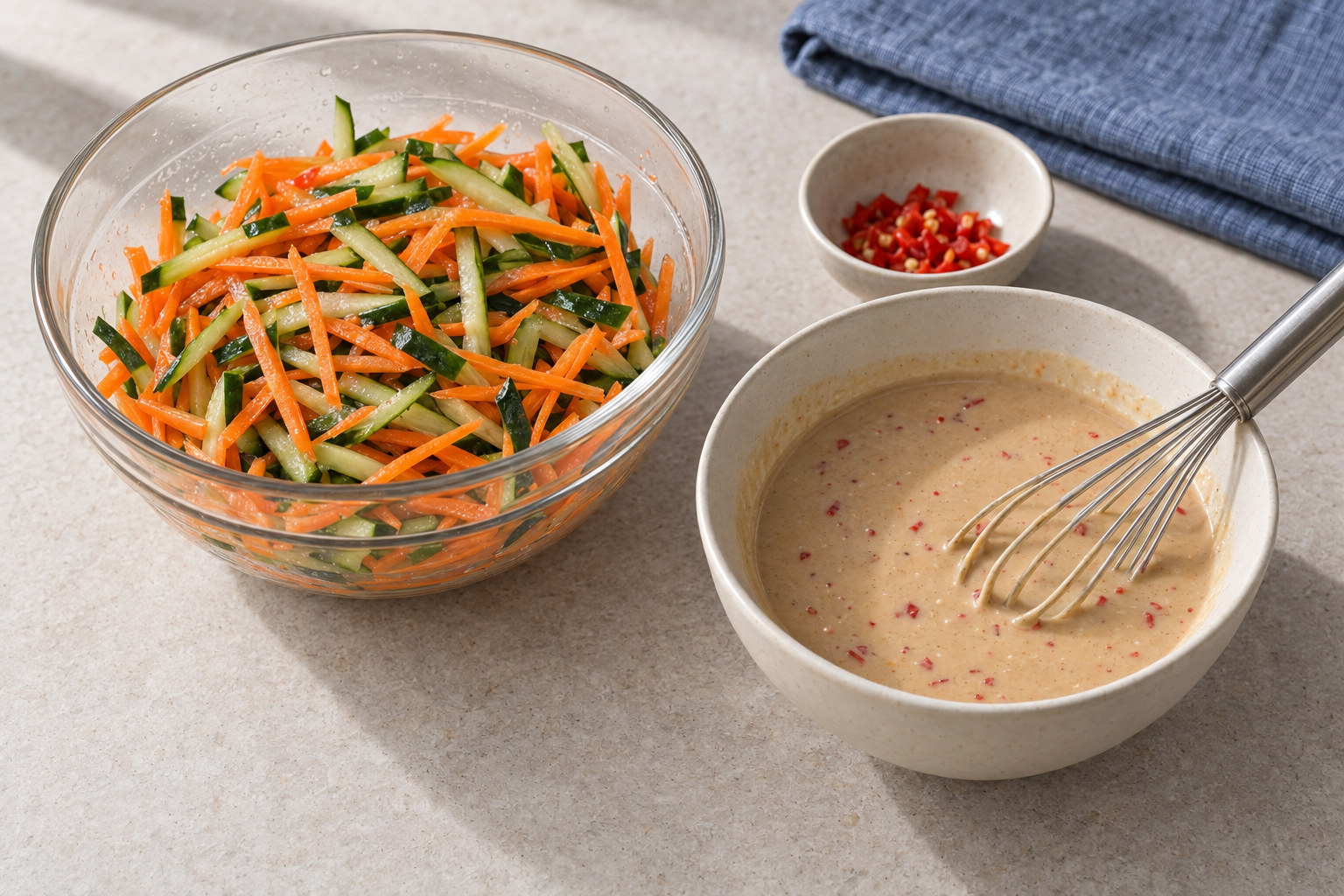
We wash the cucumber and chilli and peel the carrot. We cut the cucumber and carrot into thin matchsticks. We mix them with the rice vinegar, sugar and salt set aside for the pickled vegetables. We leave them in the fridge for at least 25 minutes. We mix the tahini with the water, soy sauce and lemon juice intended for the sesame sauce. We whisk until smooth and add the chopped chilli.
The vegetables stay crisp and the sesame sauce is spreadable.
We shape the buns
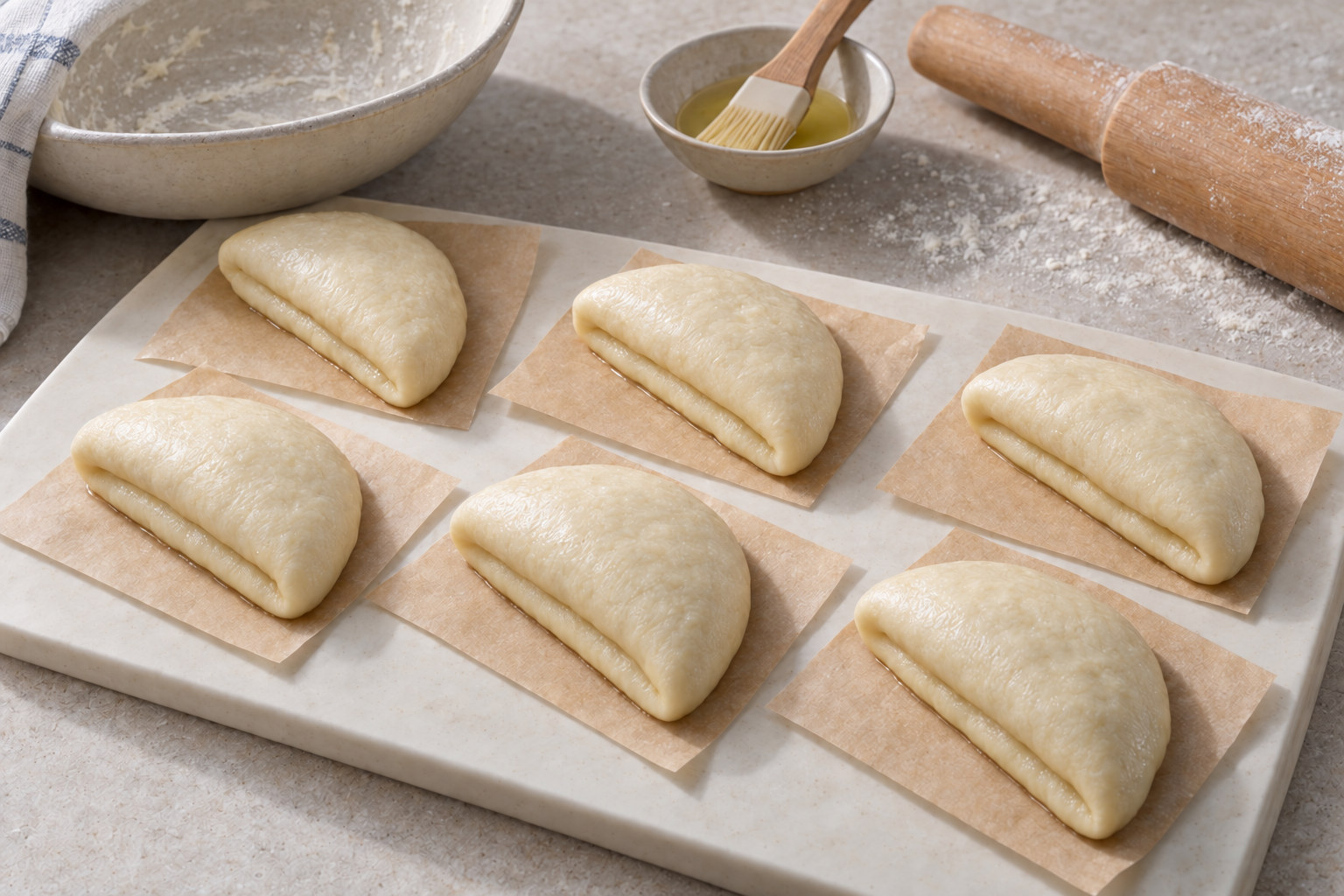
We briefly knead the dough and divide it into 6 equal pieces. We roll each into an oval about 9 × 13 cm, brush with the remaining oil for the dough and fold in half. We place each on its own square of baking parchment, cover and leave to prove for 25 minutes. We prepare the second group of three buns so that it starts proving about 15 minutes after the first.
The dough has puffed up slightly but has not spread.
We steam the bao
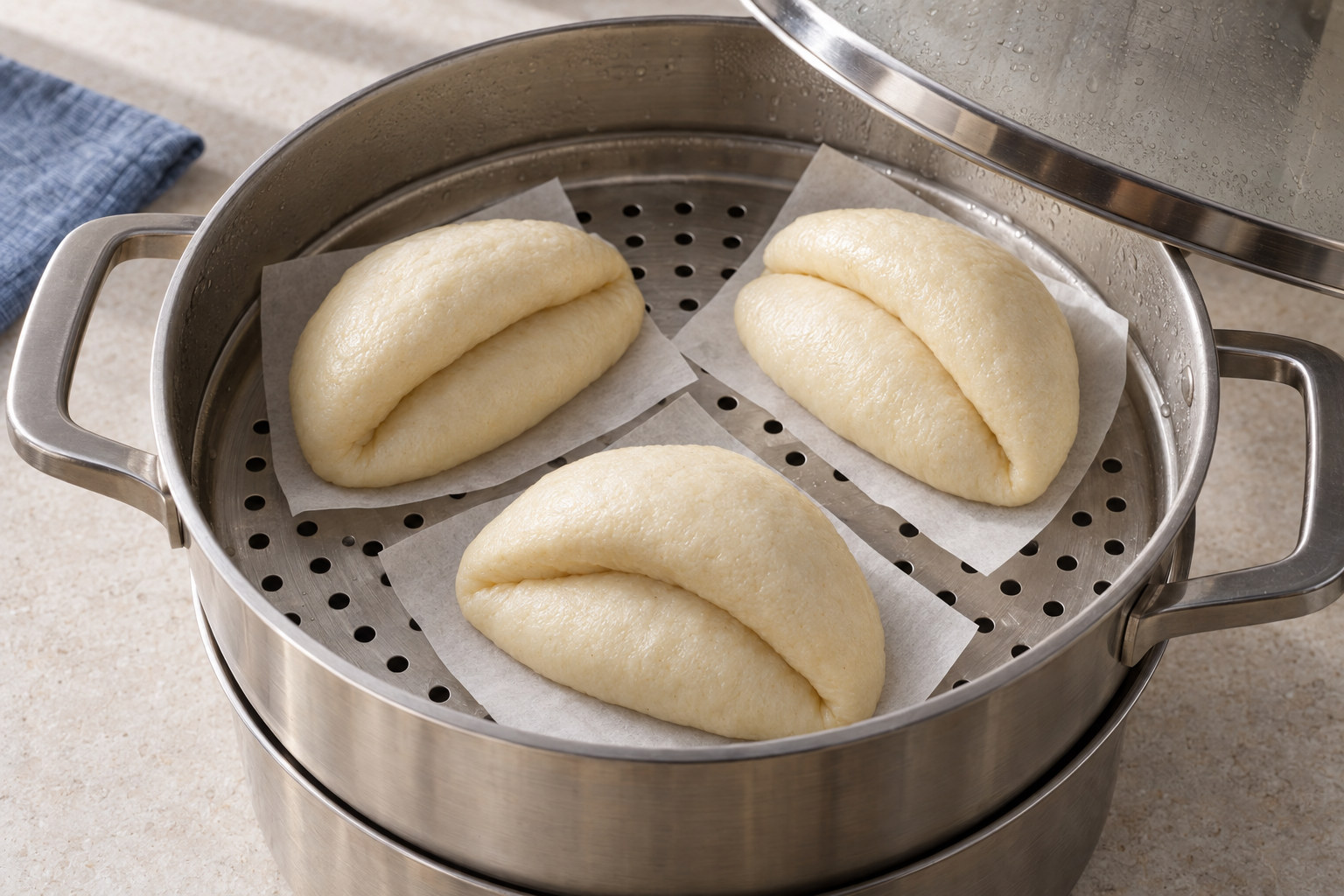
We pour water into the pot under the steamer, keeping it below the bottom of the basket. We bring it to a gentle simmer. We add three bao, leaving at least 3 cm between them. We cover and steam for 12 minutes. We turn off the heat and leave the steamer closed for another 5 minutes. We lift out the finished bao and cover them loosely. Before the second batch, we add hot water to the pot if needed and steam the bao in the same way.
The buns are fluffy, have no raw floury centre and spring back when lightly pressed.
We sear the beef filling
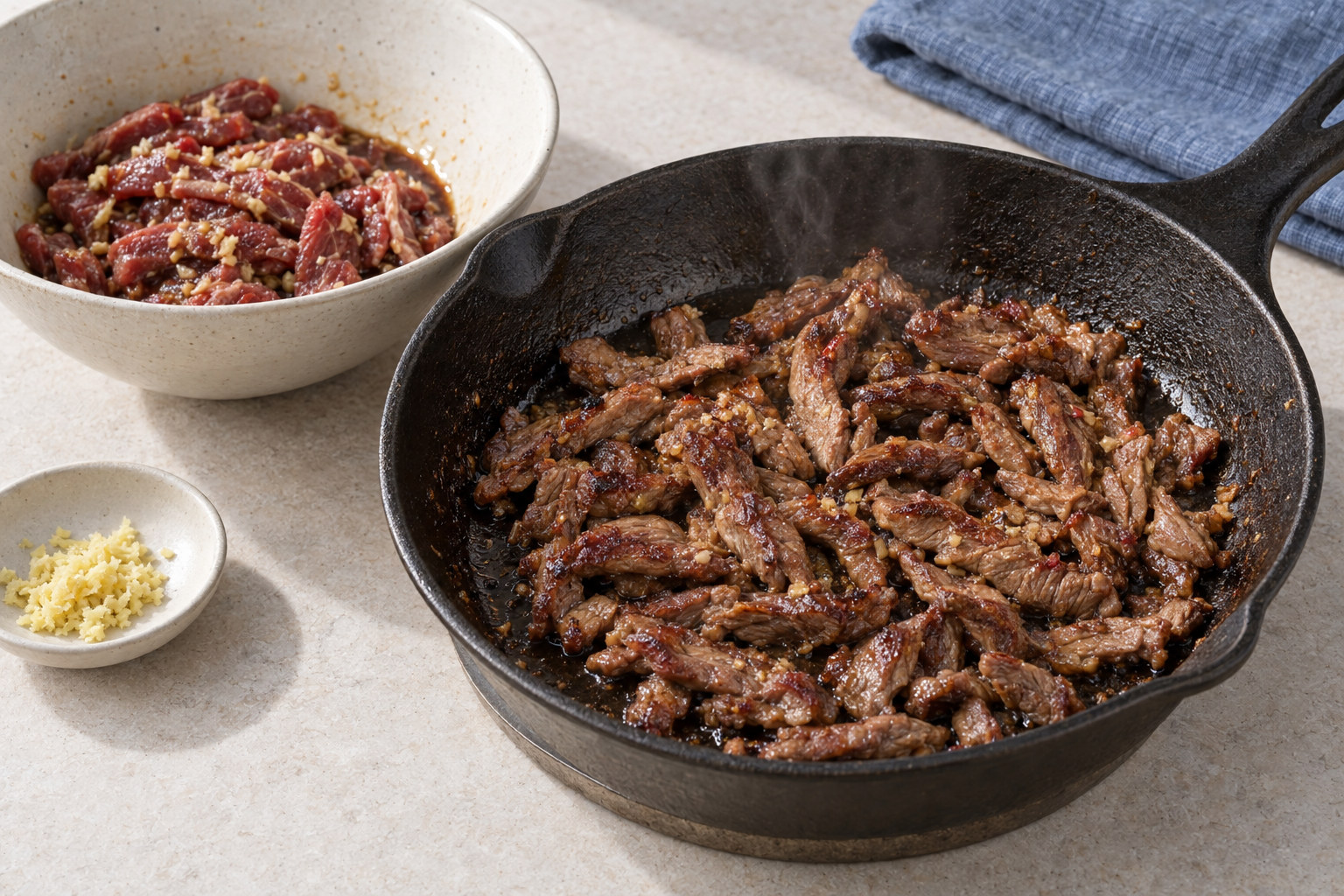
We peel and grate the ginger. We cut the ribeye across the grain into strips 5 mm thick. We mix with the soy sauce and finely grated ginger set aside for the meat; we add no more salt. We divide the oil between two batches and sear two 150 g batches of beef in turn in a hot pan. We cook each batch for about 3–4 minutes, until the centre of the thickest strip reaches at least 72 °C. We measure it with a thin probe inserted lengthways. We transfer the meat to a clean plate and cover briefly.
The beef has browned edges.
We fill the bao and serve
We wash, dry and chop the coriander. We drain the vegetables and discard the remaining pickling liquid. Before filling, we return the first batch of bao to the steamer over gently simmering water for 1–2 minutes. We gently open all the buns and spread sesame sauce inside each one. We divide all the beef and vegetables between them, then add the chopped coriander. We serve three bao per person.
The filling is juicy, but no pickling liquid runs out.
Tips from our kitchen
- We shape the second batch of bao later so it does not overprove while waiting.
- We keep the water under the steamer at a gentle simmer. Too much condensing steam can spoil the surface of the bao.
What to watch out for
- Opening the steamer as soon as we turn off the heat may cause the buns to collapse.
- We season the meat with soy sauce and add no more salt.
How we serve it
- We serve the filled bao immediately while warm: three buns per person.
Ingredient notes
- Boneless Wolowina Rib Eye is sold in a 300 g pack. We slice it into strips as described in the method.
- Boneless Nordic Nature Rib Eye is an alternative of the same cut, sold in a 350 g pack. We weigh out the amount stated in the recipe and cut the meat into strips. For 300 g we need 1 pack; for 600 g, 2 packs. We can use either ribeye option.
- We keep the rest of the box for another meal. We buy the side and remaining ingredients separately.
During preparation
- We check the meat’s temperature with a clean, thin probe inserted lengthways into the thickest strip; colour alone does not tell us whether it is cooked through. We keep raw meat and its utensils separate from the finished sides.
Our inspiration
We do not have to seal bao around the filling like dumplings. After steaming, we open the folded buns and fill them much like a bread roll. That lets us tuck cold, crisp vegetables alongside warm meat. We chose this style of bao for our own ribeye filling with sesame sauce.
Similar recipes
Recipe for 4 people
Step-by-step method
Before we start
We make 12 bao. In a two-tier 28 cm steamer, we cook them in two batches of six, three on each tier. We shape half of them 15 minutes later.
We make the dough and let it rise
We mix the flour with the sugar, yeast and salt intended for the dough. We add lukewarm water at no more than 35 °C and half the oil allocated to the dough. We knead for 10 minutes until smooth and soft. We cover and leave to rise for 60–90 minutes, until nearly doubled in size.
The dough is elastic; the dent slowly springs back when pressed.
We pickle the vegetables and mix the sauce
We wash the cucumber and chilli and peel the carrot. We cut the cucumber and carrot into thin matchsticks. We mix them with the rice vinegar, sugar and salt set aside for the pickled vegetables. We leave them in the fridge for at least 25 minutes. We mix the tahini with the water, soy sauce and lemon juice intended for the sesame sauce. We whisk until smooth and add the chopped chilli.
The vegetables stay crisp and the sesame sauce is spreadable.
We shape the buns
We briefly knead the dough and divide it into 12 equal pieces. We roll each into an oval about 9 × 13 cm, brush with the remaining oil for the dough and fold in half. We place each on its own square of baking parchment, cover and leave to prove for 25 minutes. We shape the second group of six buns 15 minutes after the first.
The dough has puffed up slightly but has not spread.
We steam the bao
We pour water into the pot under the steamer, keeping it below the bottom of the basket. We bring it to a gentle simmer. We add six bao, three on each tier, leaving at least 3 cm between them. We cover and steam for 12 minutes. We turn off the heat and leave the steamer closed for another 5 minutes. We lift out the finished bao and cover them loosely. Before the second batch, we add hot water to the pot if needed and steam the bao in the same way.
The buns are fluffy, have no raw floury centre and spring back when lightly pressed.
We sear the beef filling
We peel and grate the ginger. We cut the ribeye across the grain into strips 5 mm thick. We mix with the soy sauce and finely grated ginger set aside for the meat; we add no more salt. We sear the meat in two hot pans, two 150 g batches in each. We divide the oil between all four batches. We cook each batch for about 3–4 minutes, until the centre of the thickest strip reaches at least 72 °C. We measure it with a thin probe inserted lengthways. We transfer the meat to a clean plate and cover briefly.
The beef has browned edges.
We fill the bao and serve
We wash, dry and chop the coriander. We drain the vegetables and discard the remaining pickling liquid. Before filling, we return the first batch of bao to the steamer over gently simmering water for 1–2 minutes. We gently open all the buns and spread sesame sauce inside each one. We divide all the beef and vegetables between them, then add the chopped coriander. We serve three bao per person.
The filling is juicy, but no pickling liquid runs out.