
Original cuisine · International inspiration
Pan-fried ribeye with garlic butter, potatoes and green beans
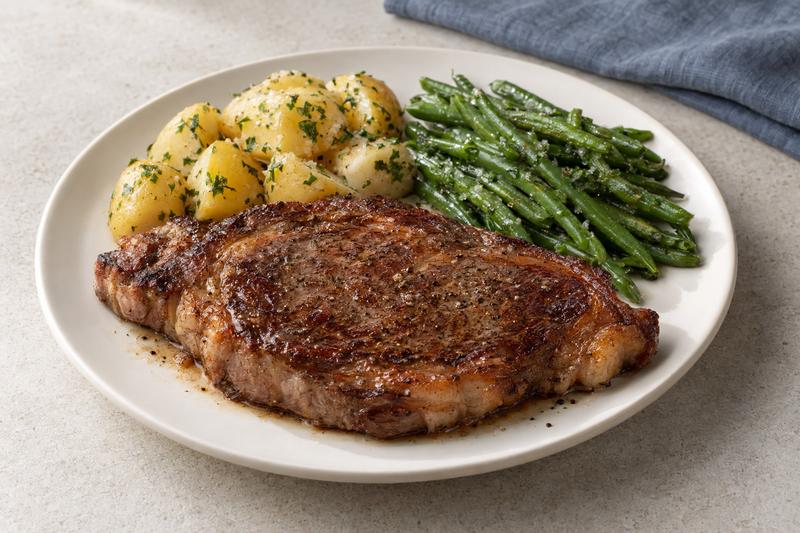
Garlic butter makes ribeye a wonderfully fragrant supper. We serve it with warm potatoes and green beans brightened with lemon and parsley. We cook the steak to suit our taste and prepare the whole side in one pot.
We cook the potatoes and beans alongside the steak; the total time includes resting the steaks.
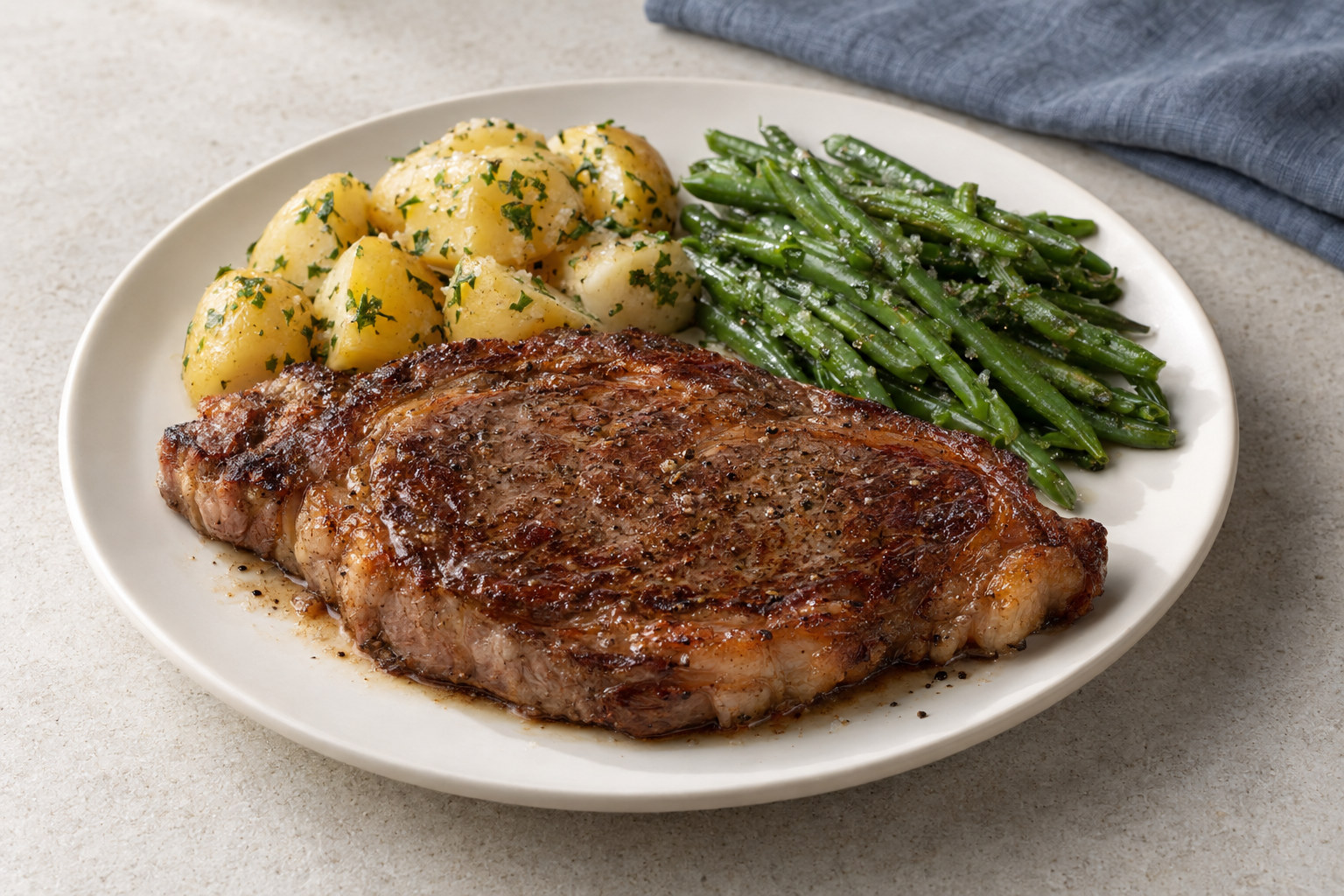
Beef with a deeply seared crust and garlic butter, tender potatoes and green beans lifted with lemon and parsley.
Step-by-step method
What you will need
- 28 cm frying pan
- 2.5 l pot
- colander
- thin-probe thermometer
- kitchen scales
- one chopping board for raw meat and another for cooked food
Choosing how well to cook your steak
Before cooking, we choose how well we would like our meat done. This guide describes culinary levels of doneness and approximate temperatures at the centre of the meat after resting. These are not pan or oven temperatures or food safety recommendations. For whole beef steaks, the United States Department of Agriculture (USDA) recommends a minimum internal temperature of 63 °C before removing the meat from the heat, followed by at least 3 minutes of resting.
| Doneness | Temperature after resting | What to expect |
|---|---|---|
| Rare | 52 °C | Rare. The centre is red, and the meat is very tender and juicy. |
| Medium Rare | 55 °C | Medium rare. The centre is warm and reddish-pink, and the meat is tender and juicy. |
| Medium | 60 °C | Medium. The centre remains pink, and the meat has a firmer bite. |
| Medium Well | 65 °C | Medium well. Only a faint pink strip remains in the centre; the meat is firmer and less juicy. |
| Well Done | 71 °C | Well done. There is no pink in the centre, and the meat is firm and less juicy. |
- We measure the temperature at the centre of the thickest part of the meat. We insert the probe from the side, avoiding bone and pockets of fat. Colour is only a guide; we rely on the thermometer.
- As a rule, we take the meat off the pan or grill, or out of the oven, when it is 2–3 °C below our chosen temperature after resting. Thick cuts and intense heat can cause a greater temperature rise during resting. We check it regularly and follow the individual recipe.
- We rest the meat for the time given in the recipe. If the temperature stops rising before reaching our chosen value, we briefly return the meat to a gentle heat and check again.
- Cooking times are a guide. If we prefer our meat less well done, we start checking its temperature earlier. For a higher degree of doneness, we allow more time over a gentler heat as needed, so the outside does not burn.
Before we start
Before we start cooking, we choose how well done we want the steak using the table above the method. Two 300 g steaks fit with a little space between them in a 28 cm frying pan. We start the potatoes before searing the steak.
Boil the potatoes
We peel, rinse and cut the potatoes into evenly sized pieces, about 3 cm. We put them in a pot with the water and salt for the sides. We bring to the boil, then simmer gently. We rinse the beans, trim their ends and prepare the steak. After about 8–10 minutes, when the potatoes are beginning to soften on the outside but are still firm inside, we add the beans. We finish cooking the sides as described in step 4. If we want our steak rare or medium rare, we start frying it once the water comes back to the boil after adding the beans. For a more well-done steak, we start after the potatoes have cooked for about 10 minutes. We finish the vegetables while the steak cooks; we do not wait until it has rested before adding the beans.
The potatoes yield to a knife but do not fall apart.
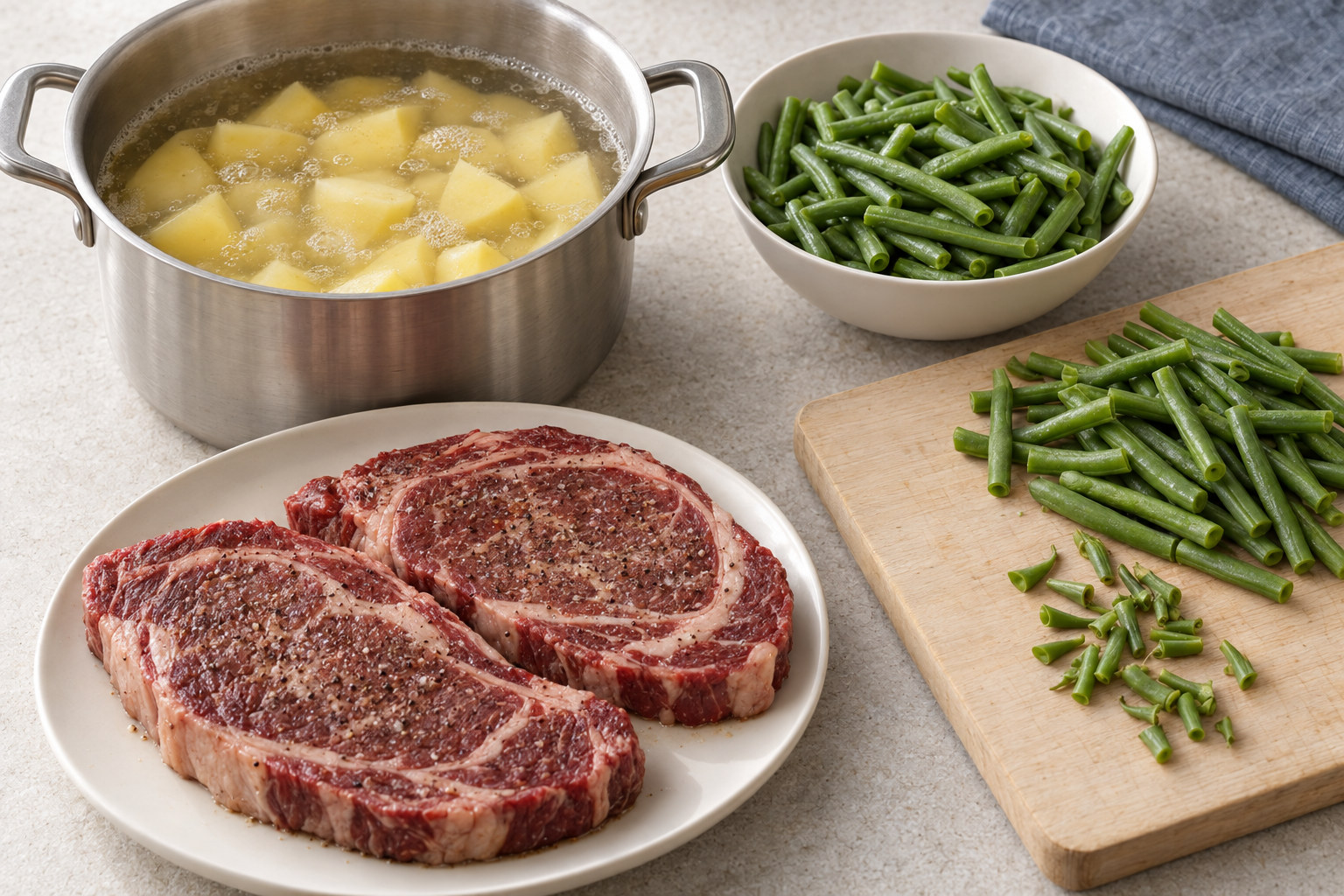
Prepare the steak
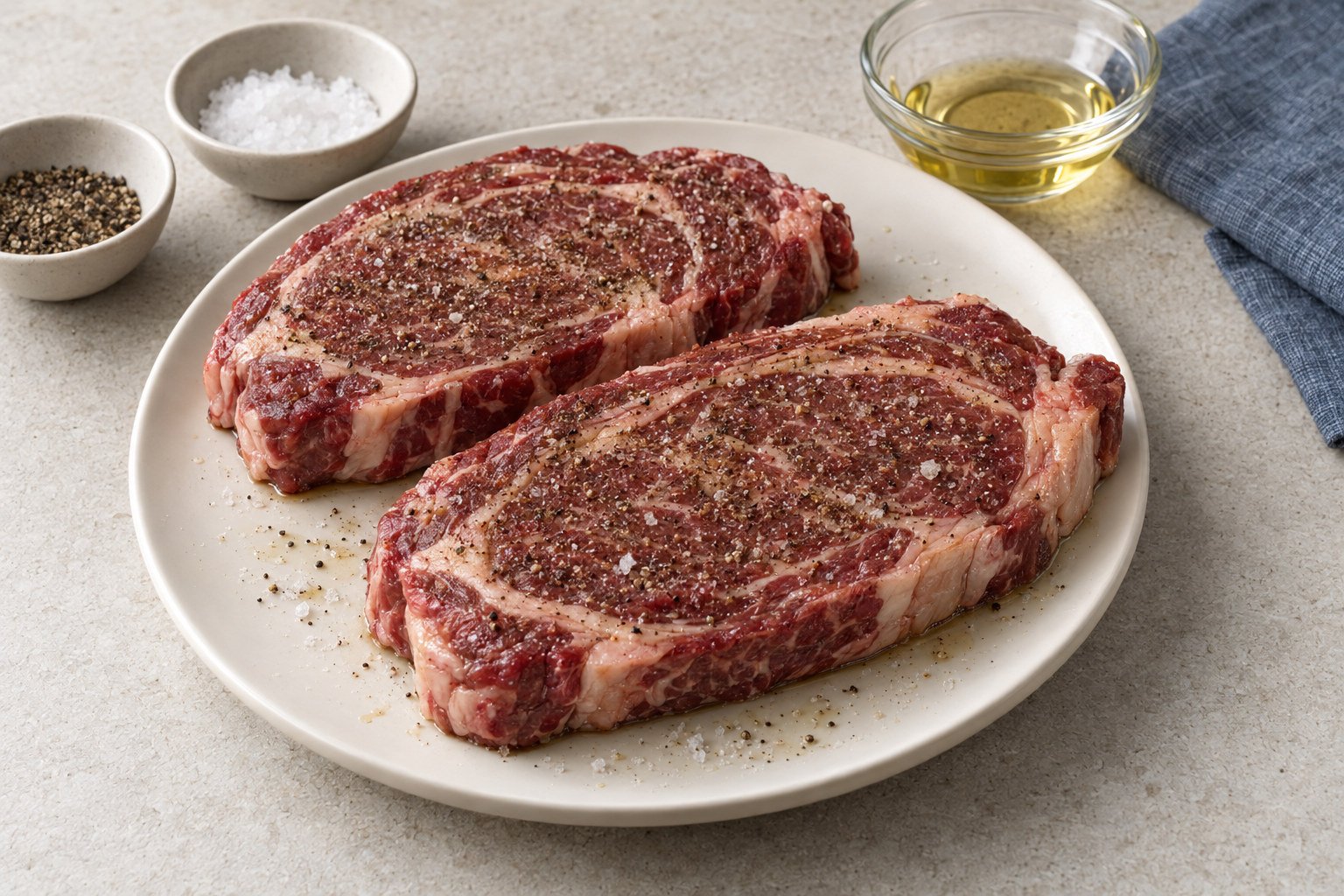
We use two steaks of 300 g each, about 2–3 cm thick, and pat them dry. If we want to use Icelandic salt, we reduce the regular salt on the steaks by one small pinch; we season the sides as stated in the recipe. We season both sides of the steaks evenly with salt and pepper and rub them with oil. We peel and crush the garlic. We wash, dry and chop the parsley.
Sear the ribeye
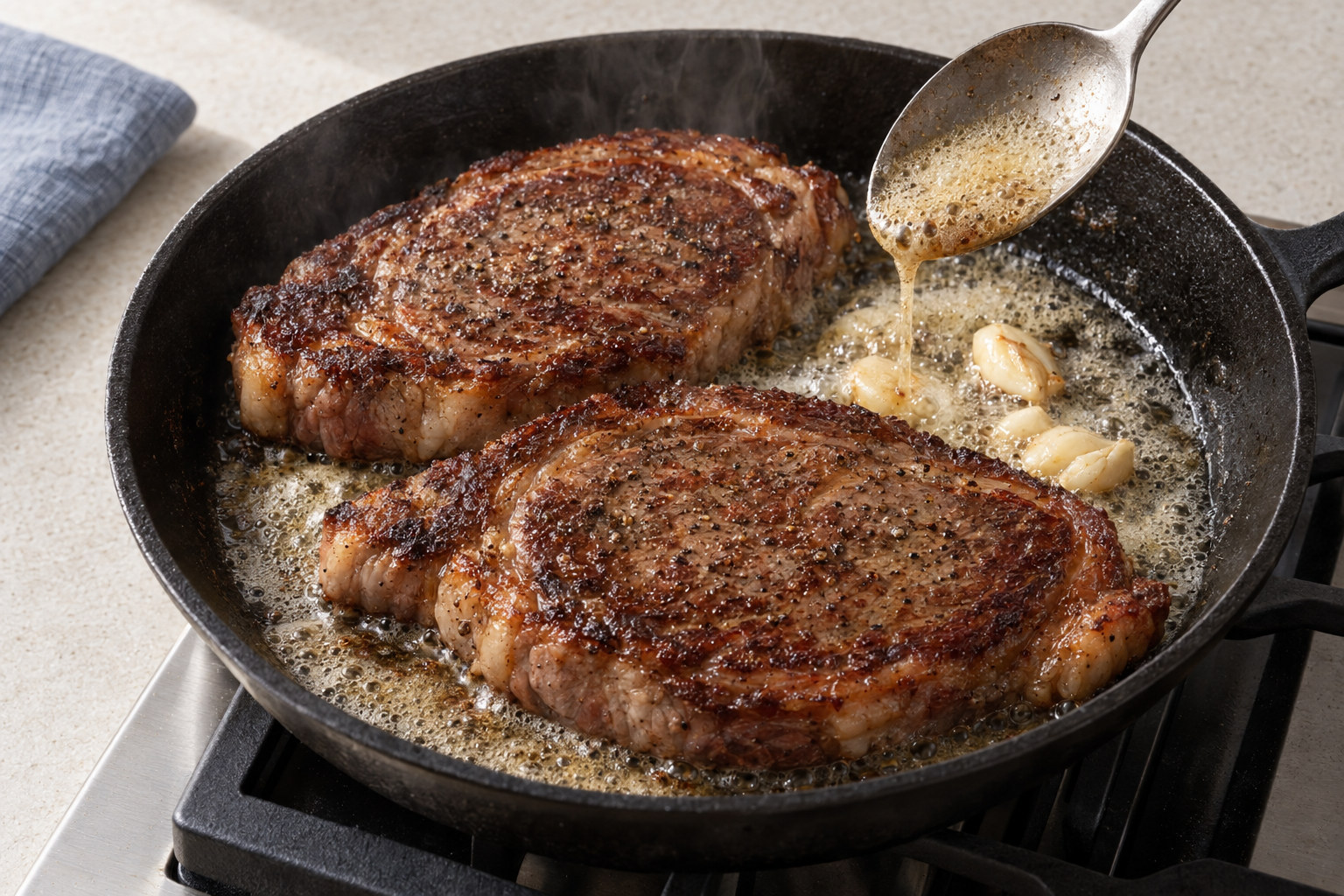
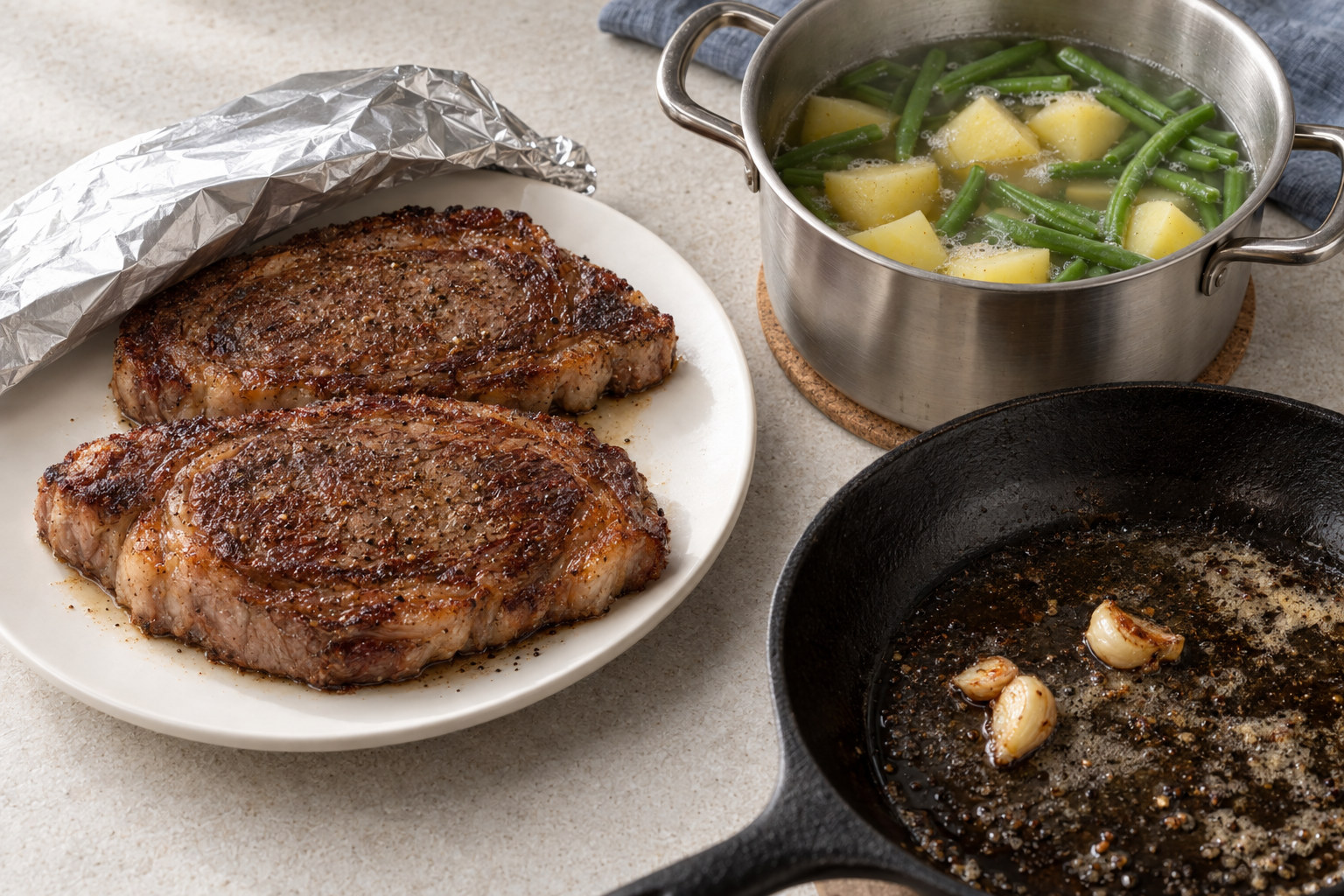
We heat a frying pan over a medium-high heat and add both steaks. We sear the first side for about 2 minutes. We turn the steaks and start checking the temperature in the centre of each one. We sear the second side for about another 2 minutes, judging by the temperature and colour of the surface. Once the surface is browned, we lower the heat to medium and add the butter and crushed garlic. We briefly baste the steaks with the butter and keep checking the temperature; they may already be ready if we want them less well done. If needed, we cook them for another 3–7 minutes, or longer over a lower heat for a more well-done steak. We turn them no more than once a minute. We remove each steak when its internal temperature is about 2–3 °C below the target temperature after resting. We rely on the thermometer; the timings are approximate.
The surface is browned, the butter has not turned black and the probe is in the centre of the steak.
Rest the steak and finish the vegetables
We place the cooked steaks on a clean, warm plate away from the oven, cover them loosely and leave them to rest for 5 minutes. We keep checking the temperature as they rest. If needed, we briefly cook the steaks for longer over a low heat. We cook the beans and potatoes for 6–8 minutes from the moment the water returns to the boil. The fine beans should be tender and the potatoes should yield to a knife; if needed, we cook them a little longer. We finish the sides even if the steak is still cooking. We drain the potatoes and beans and keep them covered briefly until serving. We remove the garlic from the pan; the browned bits must not be black.
The beans are tender but still hold their shape.
Season the sides and serve
We toss the potatoes and beans with the butter for the sides, lemon juice and chopped parsley. We serve the steaks whole or slice them across the grain. We pour over the juices released while they rested and add all the vegetables. If we want to use Icelandic salt, we taste the steak with the sides. If needed, just before serving, we divide one small pinch of Saltverk Icelandic birch-smoked flake salt over the steak. It replaces some of the regular salt we left out at the start. If the bite is salty enough, we do not add any more salt.
Tips from our kitchen
- Ribeye has several grain directions. We look at each section as we slice and cut across its grain.
What to watch out for
- We do not fry four steaks in one pan; we use two.
- We add the butter only after the first sear so it does not turn bitter.
How we serve it
- We serve at once on warmed plates.
Ingredient notes
- Boneless Wolowina Rib Eye is sold in 300 g packs. We leave the steaks thick enough to stay juicy as they cook.
- Boneless Rib Eye Nordic Nature is an alternative of the same cut, sold in 350 g packs. We weigh the amount stated in the recipe and trim any excess from the edge so the steak stays the same thickness. We need 2 packs for 600 g, 4 packs for 1,200 g and 1 pack for 300 g. Either ribeye can be used.
- We keep the rest of the box for another meal. We buy the side ingredients and remaining ingredients separately.
During preparation
- We insert a clean probe from the side into the centre of the thickest part of each steak, avoiding pockets of fat. We check the temperature during resting too; colour is only a guide. We keep raw meat and any utensils that have touched it separate from the cooked sides.
Our inspiration
With steak, it is easy to think that everything depends on an exact number of minutes in the pan. Thickness and cut matter just as much: pieces of meat of the same weight do not always cook at the same speed. So we watch the seared surface and the internal temperature of our ribeye separately. We add the garlic butter only after the first sear, so it perfumes the meat without turning bitter.
Similar recipes

Recipe for 4 people
Step-by-step method
Choosing how well to cook your steak
Before cooking, we choose how well we would like our meat done. This guide describes culinary levels of doneness and approximate temperatures at the centre of the meat after resting. These are not pan or oven temperatures or food safety recommendations. For whole beef steaks, the United States Department of Agriculture (USDA) recommends a minimum internal temperature of 63 °C before removing the meat from the heat, followed by at least 3 minutes of resting.
| Doneness | Temperature after resting | What to expect |
|---|---|---|
| Rare | 52 °C | Rare. The centre is red, and the meat is very tender and juicy. |
| Medium Rare | 55 °C | Medium rare. The centre is warm and reddish-pink, and the meat is tender and juicy. |
| Medium | 60 °C | Medium. The centre remains pink, and the meat has a firmer bite. |
| Medium Well | 65 °C | Medium well. Only a faint pink strip remains in the centre; the meat is firmer and less juicy. |
| Well Done | 71 °C | Well done. There is no pink in the centre, and the meat is firm and less juicy. |
- We measure the temperature at the centre of the thickest part of the meat. We insert the probe from the side, avoiding bone and pockets of fat. Colour is only a guide; we rely on the thermometer.
- As a rule, we take the meat off the pan or grill, or out of the oven, when it is 2–3 °C below our chosen temperature after resting. Thick cuts and intense heat can cause a greater temperature rise during resting. We check it regularly and follow the individual recipe.
- We rest the meat for the time given in the recipe. If the temperature stops rising before reaching our chosen value, we briefly return the meat to a gentle heat and check again.
- Cooking times are a guide. If we prefer our meat less well done, we start checking its temperature earlier. For a higher degree of doneness, we allow more time over a gentler heat as needed, so the outside does not burn.
Before we start
Before we start cooking, we choose how well done we want the steak using the table above the method. We use two 28 cm frying pans at the same time, placing two steaks in each. One larger pot is enough for the potatoes and beans.
Boil the potatoes
We peel, rinse and cut the potatoes into evenly sized pieces, about 3 cm. We put them in a pot with the water and salt for the sides. We bring to the boil, then simmer gently. We rinse the beans, trim their ends and prepare the steak. After about 8–10 minutes, when the potatoes are beginning to soften on the outside but are still firm inside, we add the beans. We finish cooking the sides as described in step 4. If we want our steak rare or medium rare, we start frying it once the water comes back to the boil after adding the beans. For a more well-done steak, we start after the potatoes have cooked for about 10 minutes. We finish the vegetables while the steak cooks; we do not wait until it has rested before adding the beans.
The potatoes yield to a knife but do not fall apart.
Prepare the steak
We use four steaks of 300 g each, about 2–3 cm thick, and pat them dry. If we want to use Icelandic salt, we reduce the regular salt on the steaks by two small pinches; we season the sides as stated in the recipe. We season both sides of the steaks evenly with salt and pepper and rub them with oil. We peel and crush the garlic. We wash, dry and chop the parsley.
Sear the ribeye
We heat two frying pans and add two steaks to each. We sear the first side for about 2 minutes. We turn the steaks and start checking the temperature in the centre of each one. We sear the second side for about another 2 minutes, judging by the temperature and colour of the surface. Once the surface is browned, we lower the heat to medium and divide the butter and crushed garlic between the two pans. We briefly baste the steaks with the butter and keep checking the temperature; they may already be ready if we want them less well done. If needed, we cook them for another 3–7 minutes, or longer over a lower heat for a more well-done steak. We turn them no more than once a minute. We remove each steak when its internal temperature is about 2–3 °C below the target temperature after resting. We rely on the thermometer; the timings are approximate.
The surface is browned, the butter has not turned black and the probe is in the centre of the steak.
Rest the steak and finish the vegetables
We place the cooked steaks on a clean, warm plate away from the oven, cover them loosely and leave them to rest for 5 minutes. We keep checking the temperature as they rest. If needed, we briefly cook the steaks for longer over a low heat. We cook the beans and potatoes for 6–8 minutes from the moment the water returns to the boil. The fine beans should be tender and the potatoes should yield to a knife; if needed, we cook them a little longer. We finish the sides even if the steak is still cooking. We drain the potatoes and beans and keep them covered briefly until serving. We remove the garlic from the pan; the browned bits must not be black.
The beans are tender but still hold their shape.
Season the sides and serve
We toss the potatoes and beans with the butter for the sides, lemon juice and chopped parsley. We serve the steaks whole or slice them across the grain. We pour over the juices released while they rested and add all the vegetables. If we want to use Icelandic salt, we taste the steak with the sides. If needed, just before serving, we divide two small pinches of Saltverk Icelandic birch-smoked flake salt over the steak. It replaces some of the regular salt we left out at the start. If the bite is salty enough, we do not add any more salt.