
French-inspired · France
Ribeye steak with peppercorn sauce and roast potatoes
Peppercorn sauce clings to the seared edge of the steak and to each potato wedge. For the ribeye, we make it with cream and stock, a little Dijon mustard and lemon. Tender salad leaves bring freshness between bites of meat and creamy sauce.
While the potatoes roast, we prepare the sauce and meat; the timing also includes the steaks resting.
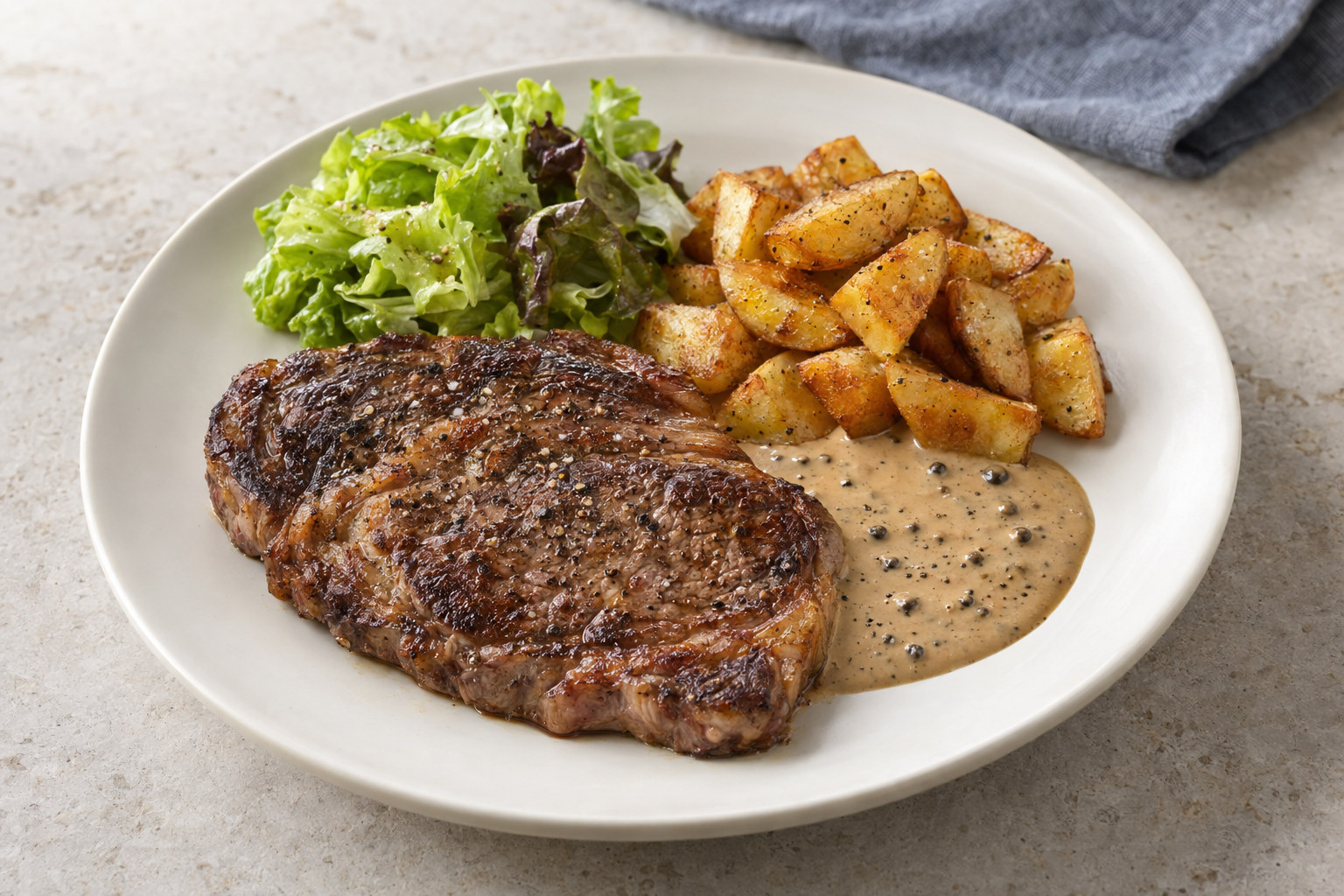
Juicy beef and a creamy, strongly peppery sauce with mustard, alongside crisp potatoes and a lemon-bright salad.
Step-by-step method
What you will need
- 28 cm frying pan
- 16 cm small saucepan
- 30 × 40 cm baking tray
- oven
- whisk
- probe thermometer with a thin probe
- kitchen scales
- one chopping board for raw meat and another for cooked food
Choosing how well to cook your steak
Before cooking, we choose how well we would like our meat done. This guide describes culinary levels of doneness and approximate temperatures at the centre of the meat after resting. These are not pan or oven temperatures or food safety recommendations. For whole beef steaks, the United States Department of Agriculture (USDA) recommends a minimum internal temperature of 63 °C before removing the meat from the heat, followed by at least 3 minutes of resting.
| Doneness | Temperature after resting | What to expect |
|---|---|---|
| Rare | 52 °C | Rare. The centre is red, and the meat is very tender and juicy. |
| Medium Rare | 55 °C | Medium rare. The centre is warm and reddish-pink, and the meat is tender and juicy. |
| Medium | 60 °C | Medium. The centre remains pink, and the meat has a firmer bite. |
| Medium Well | 65 °C | Medium well. Only a faint pink strip remains in the centre; the meat is firmer and less juicy. |
| Well Done | 71 °C | Well done. There is no pink in the centre, and the meat is firm and less juicy. |
- We measure the temperature at the centre of the thickest part of the meat. We insert the probe from the side, avoiding bone and pockets of fat. Colour is only a guide; we rely on the thermometer.
- As a rule, we take the meat off the pan or grill, or out of the oven, when it is 2–3 °C below our chosen temperature after resting. Thick cuts and intense heat can cause a greater temperature rise during resting. We check it regularly and follow the individual recipe.
- We rest the meat for the time given in the recipe. If the temperature stops rising before reaching our chosen value, we briefly return the meat to a gentle heat and check again.
- Cooking times are a guide. If we prefer our meat less well done, we start checking its temperature earlier. For a higher degree of doneness, we allow more time over a gentler heat as needed, so the outside does not burn.
Before we start
Before cooking, we choose a doneness from the table above the method. We roast the potatoes on a 30 × 40 cm tray. We make the sauce base in a 16 cm saucepan before searing the steaks.
Roast the potatoes
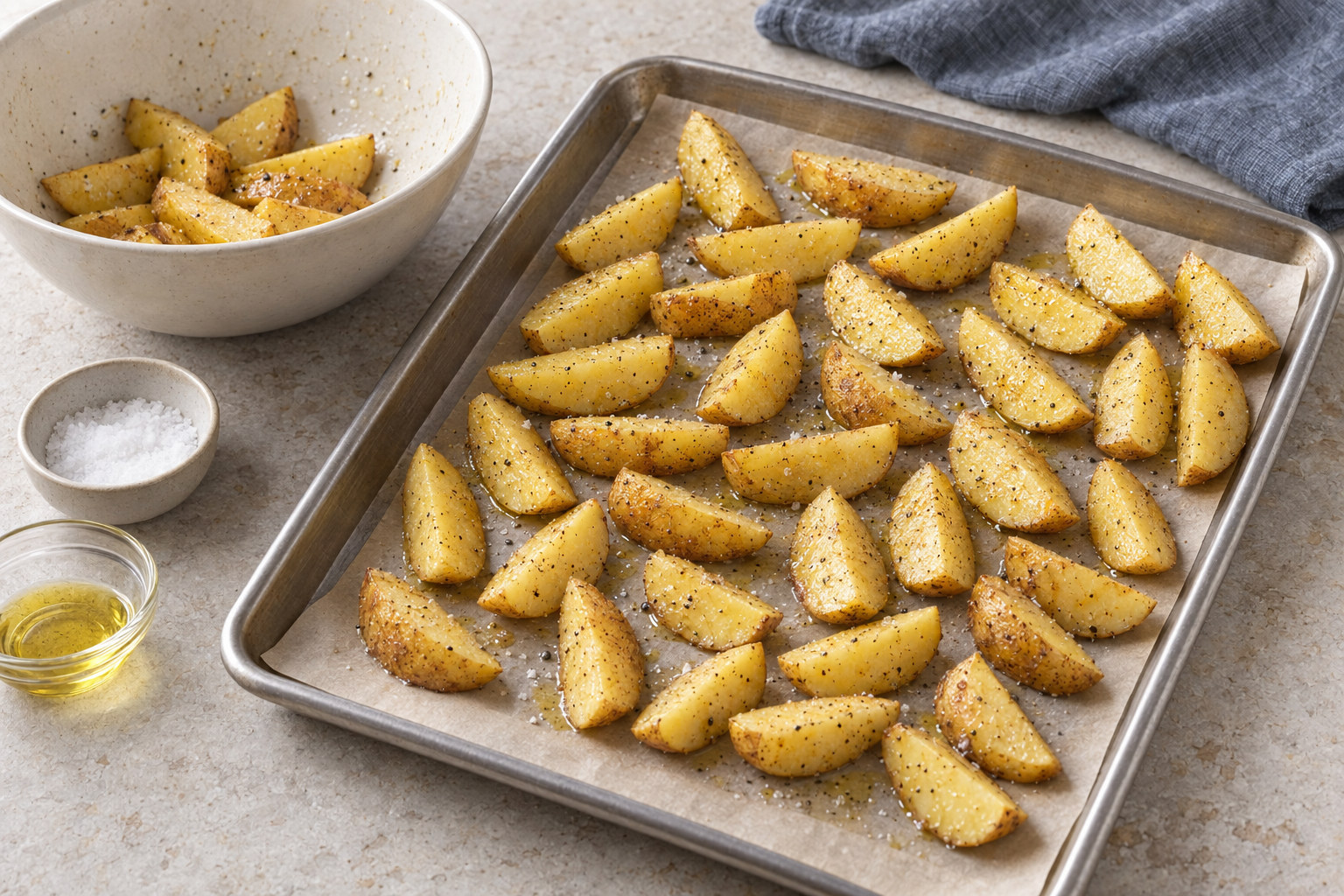
We preheat the fan oven to 210 °C. We wash and dry the potatoes, then cut them into wedges no more than 2 cm wide. We toss them with the oil and salt set aside for the side dish. We spread them in a single layer on a tray and roast for 30–35 minutes. After 18 minutes, we turn the wedges. Meanwhile, we make the sauce base and prepare the meat. We start searing the steaks when the potatoes have about 10 minutes left. If the meat needs more time, we take out the cooked potatoes and briefly reheat them in the hot oven just before serving.
The wedges do not overlap and a knife passes easily through the cooked centre.
Make the peppercorn base
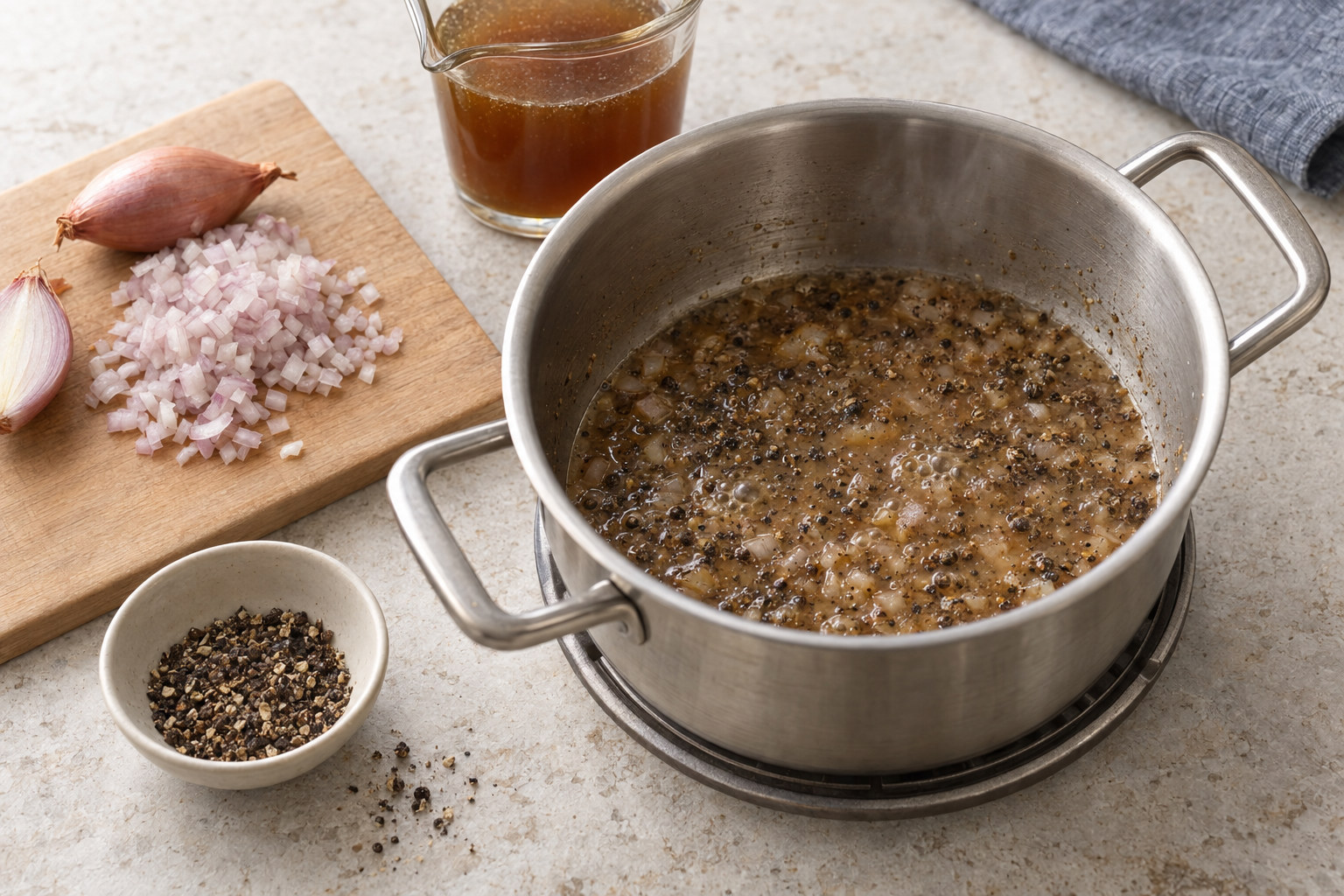
We peel and finely chop the shallot. In a saucepan, we melt half the butter set aside for the sauce and soften the shallot in it for 3 minutes. We add the coarsely crushed peppercorns and, after 20 seconds, pour in the stock. We simmer uncovered for about 8 minutes, until about 80 ml of liquid remains.
The pepper smells fragrant without burning. The stock has reduced to about half its volume.
Sear the steaks
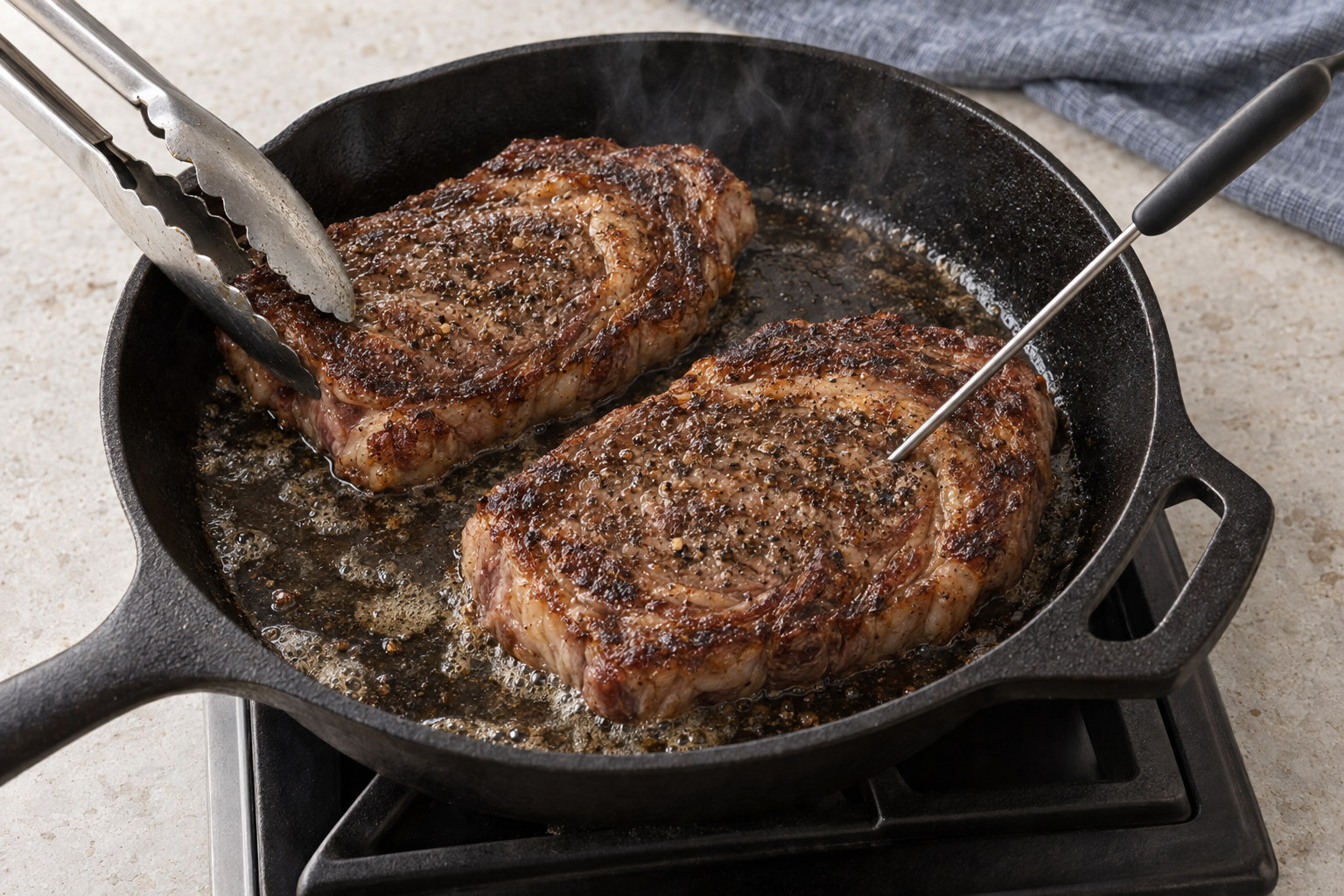
We pat the meat dry, season it with ¾ teaspoon of salt and rub it with oil. We heat the pan well over a medium-high heat and place the two steaks in it with space between them. We sear the first side for about 2 minutes as a guide. We turn the steaks and check the temperature at the centre of each piece. We sear the second side for roughly another 2 minutes, judging by the temperature and colour of the surface. If necessary, we lower the heat and turn the meat every minute for another 3–7 minutes. For a rarer steak it may be ready sooner; for a more well-done steak, we continue longer over a gentle heat. We remove each steak when its internal temperature is about 2–3 °C below the target temperature after resting. We leave it to rest for 5 minutes on a clean, warm plate outside the oven. We check the temperature during the rest too and, if needed, briefly cook the meat further over a gentle heat.
There is enough space around the steaks in the pan.
Finish the sauce
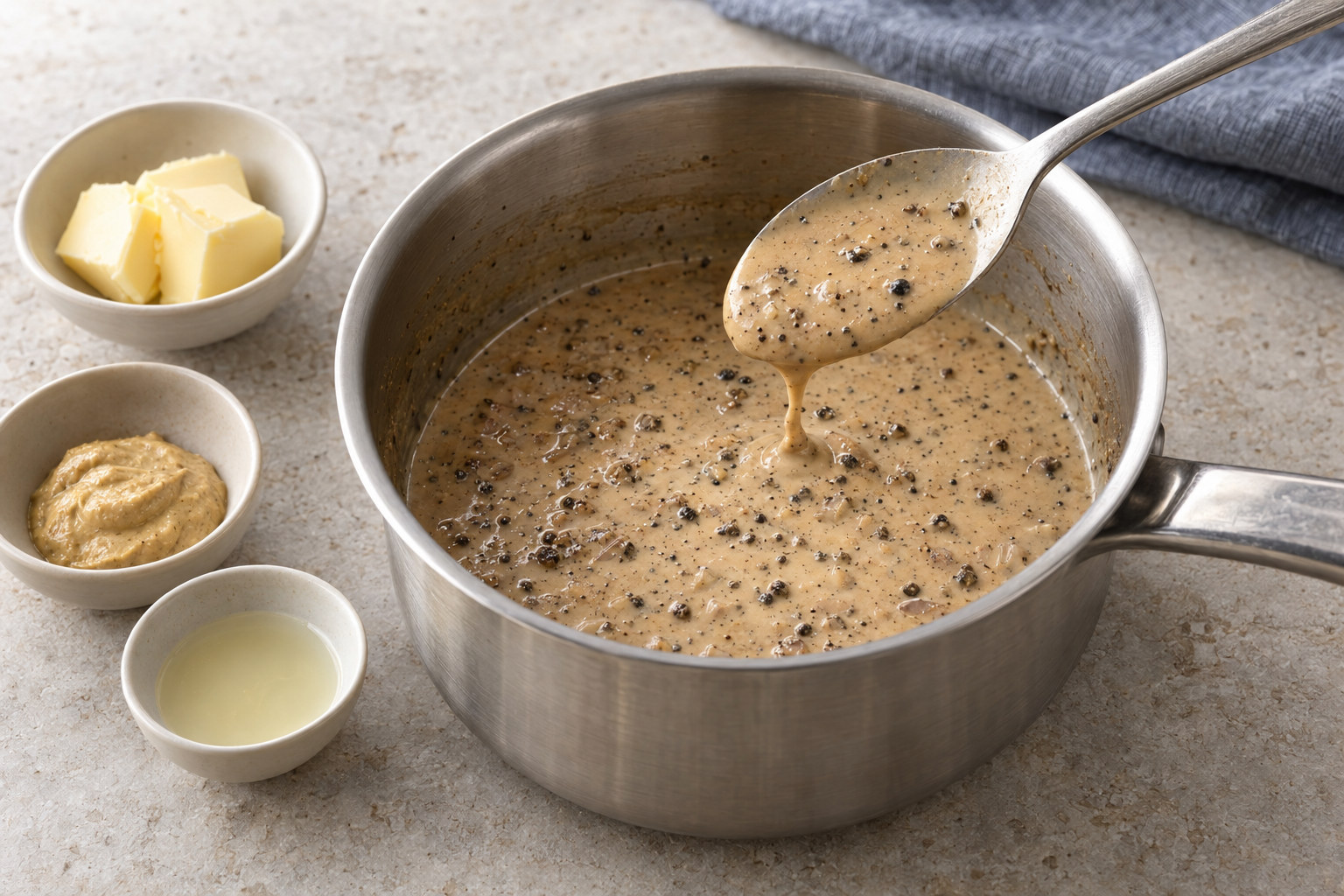
While the meat rests, we stir the cream into the reduced stock and simmer gently for 3–5 minutes. We remove the pan from the heat and whisk in the remaining butter set aside for the sauce, the Dijon mustard and lemon juice. We add the salt set aside for the sauce and any juices the meat released while resting. Once the butter is in, we do not boil the sauce vigorously.
The sauce lightly coats the back of a spoon; it is neither greasy nor pasty.
Prepare the salad
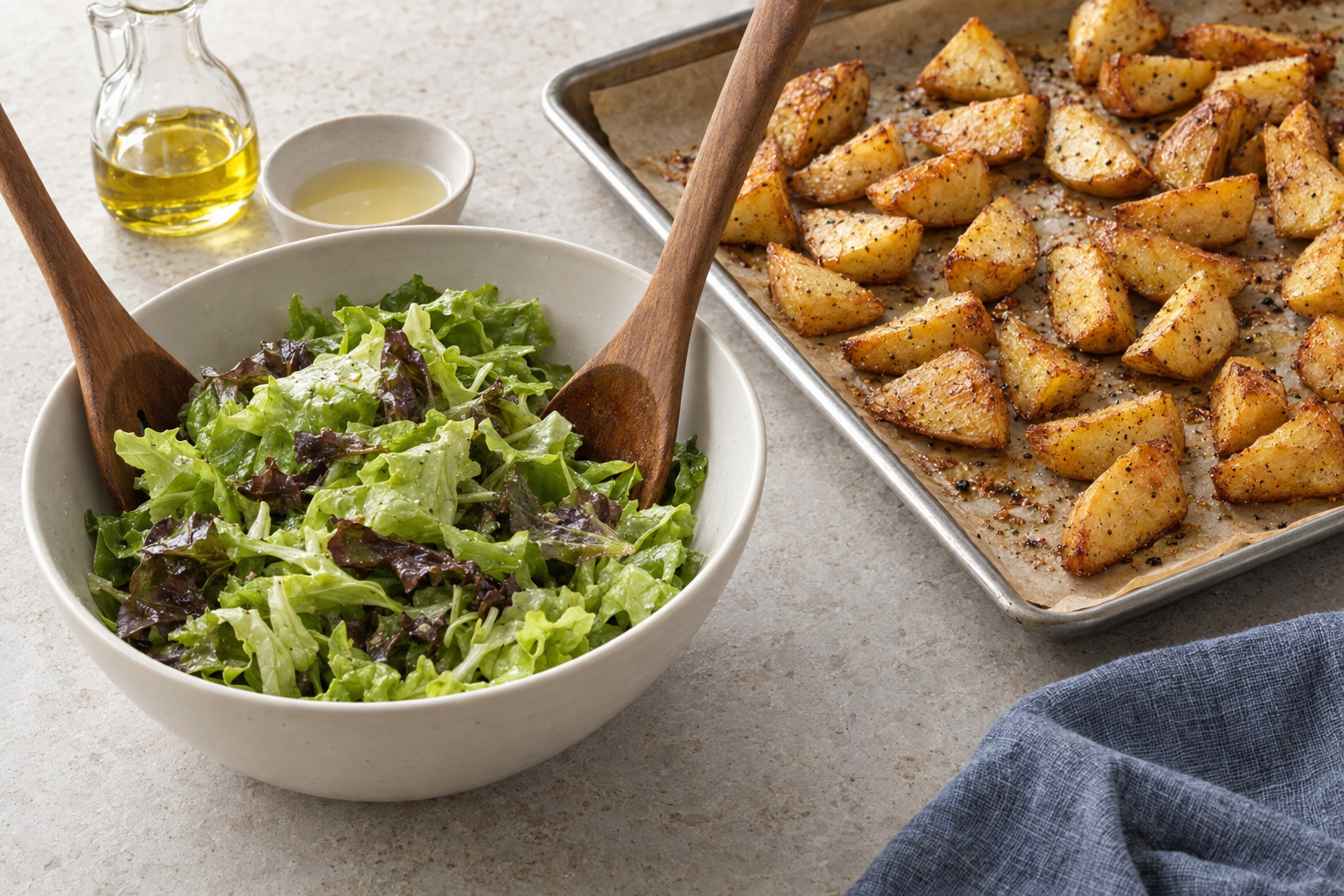
We wash and dry the salad leaves. Just before serving, we lightly toss them with the oil and lemon juice set aside for the salad. We release the roasted potatoes from the tray immediately.
The leaves are not wilted and the potatoes have crisp edges.
Serve
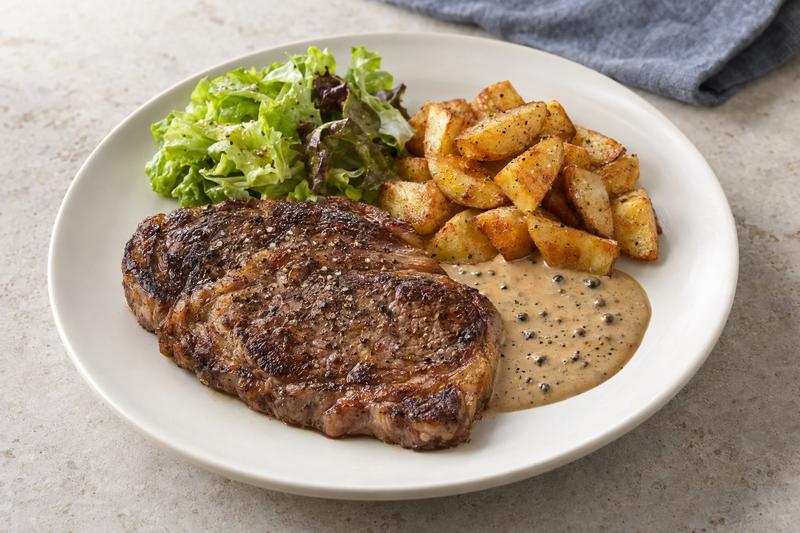
We place a steak on each warmed plate and add the potatoes and salad. We spoon the peppercorn sauce beside the meat so that it covers only part of the crust.
Tips from our kitchen
- Unsalted stock lets us reduce the sauce without making it too salty.
What to watch out for
- We let the crushed black pepper release its aroma in the fat only briefly; prolonged heating would make it bitter.
- We reduce the stock to the stated volume; the time alone is only a guide.
How we serve it
- We serve immediately on warmed plates.
Ingredient notes
- Boneless Wolowina Rib Eye is sold in 300 g packs. We keep the steaks thick enough to stay juicy while searing.
- Boneless Nordic Nature Rib Eye is an alternative of the same cut in a 350 g pack. We weigh out the amount in the recipe and trim any excess from the edge so the steak stays equally thick. We need 2 packs for 600 g, 4 packs for 1 200 g, or 1 pack for 300 g. The two ribeye options are interchangeable.
During preparation
- We measure the temperature with a clean probe inserted from the side into the centre of the thickest part of each steak, away from pockets of fat. We check it again while the meat rests; its colour is only a guide. We keep raw meat and anything that has touched it separate from the cooked sides.
Our inspiration
In his steak with peppercorn sauce, James Martin, former head chef at Hotel and Bistro du Vin in Winchester, reduces the stock before adding the cream. The stock gives the sauce its own depth beyond the pepper; the cream then softens it. That is the idea we take from his recipe. Our ribeye sauce has no brandy; we balance its creaminess with mustard and lemon.
Similar recipes
Recipe for 4 people
Step-by-step method
Choosing how well to cook your steak
Before cooking, we choose how well we would like our meat done. This guide describes culinary levels of doneness and approximate temperatures at the centre of the meat after resting. These are not pan or oven temperatures or food safety recommendations. For whole beef steaks, the United States Department of Agriculture (USDA) recommends a minimum internal temperature of 63 °C before removing the meat from the heat, followed by at least 3 minutes of resting.
| Doneness | Temperature after resting | What to expect |
|---|---|---|
| Rare | 52 °C | Rare. The centre is red, and the meat is very tender and juicy. |
| Medium Rare | 55 °C | Medium rare. The centre is warm and reddish-pink, and the meat is tender and juicy. |
| Medium | 60 °C | Medium. The centre remains pink, and the meat has a firmer bite. |
| Medium Well | 65 °C | Medium well. Only a faint pink strip remains in the centre; the meat is firmer and less juicy. |
| Well Done | 71 °C | Well done. There is no pink in the centre, and the meat is firm and less juicy. |
- We measure the temperature at the centre of the thickest part of the meat. We insert the probe from the side, avoiding bone and pockets of fat. Colour is only a guide; we rely on the thermometer.
- As a rule, we take the meat off the pan or grill, or out of the oven, when it is 2–3 °C below our chosen temperature after resting. Thick cuts and intense heat can cause a greater temperature rise during resting. We check it regularly and follow the individual recipe.
- We rest the meat for the time given in the recipe. If the temperature stops rising before reaching our chosen value, we briefly return the meat to a gentle heat and check again.
- Cooking times are a guide. If we prefer our meat less well done, we start checking its temperature earlier. For a higher degree of doneness, we allow more time over a gentler heat as needed, so the outside does not burn.
Before we start
Before cooking, we choose a doneness from the table above the method. We spread the potatoes over two trays and swap them halfway through roasting. We sear the meat in two pans at once and finish the sauce in a 20 cm saucepan.
Roast the potatoes
We preheat the fan oven to 210 °C. We wash and dry the potatoes, then cut them into wedges no more than 2 cm wide. We toss them with the oil and salt set aside for the side dish. We spread them in a single layer over two trays and roast for 30–35 minutes. After 18 minutes, we turn the wedges. Meanwhile, we make the sauce base and prepare the meat. We start searing the steaks when the potatoes have about 10 minutes left. If the meat needs more time, we take out the cooked potatoes and briefly reheat them in the hot oven just before serving.
The wedges do not overlap and a knife passes easily through the cooked centre.
Make the peppercorn base
We peel and finely chop the shallot. In a saucepan, we melt a tablespoon of the butter set aside for the sauce and soften the shallot in it for 3 minutes. We add the coarsely crushed peppercorns and, after 20 seconds, pour in the stock. We simmer uncovered for about 12 minutes, until about 140 ml of liquid remains.
The pepper smells fragrant without burning. The stock has reduced to about half its volume.
Sear the steaks
We pat the meat dry, season it with 1½ teaspoons of salt and rub it with oil. We heat two pans well over a medium-high heat and place two steaks in each, leaving space between them. We sear the first side for about 2 minutes as a guide. We turn the steaks and check the temperature at the centre of each piece. We sear the second side for roughly another 2 minutes, judging by the temperature and colour of the surface. If necessary, we lower the heat and turn the meat every minute for another 3–7 minutes. For a rarer steak it may be ready sooner; for a more well-done steak, we continue longer over a gentle heat. We remove each steak when its internal temperature is about 2–3 °C below the target temperature after resting. We leave it to rest for 5 minutes on a clean, warm plate outside the oven. We check the temperature during the rest too and, if needed, briefly cook the meat further over a gentle heat.
There is enough space around the steaks in the pan.
Finish the sauce
While the meat rests, we stir the cream into the reduced stock and simmer gently for 3–5 minutes. We remove the pan from the heat and whisk in the remaining butter set aside for the sauce, the Dijon mustard and lemon juice. We add the salt set aside for the sauce and any juices the meat released while resting. Once the butter is in, we do not boil the sauce vigorously.
The sauce lightly coats the back of a spoon; it is neither greasy nor pasty.
Prepare the salad
We wash and dry the salad leaves. Just before serving, we lightly toss them with the oil and lemon juice set aside for the salad. We release the roasted potatoes from the trays immediately.
The leaves are not wilted and the potatoes have crisp edges.
Serve
We place a steak on each warmed plate and add the potatoes and salad. We spoon the peppercorn sauce beside the meat so that it covers only part of the crust.