
Boxxi signature cuisine · European inspiration
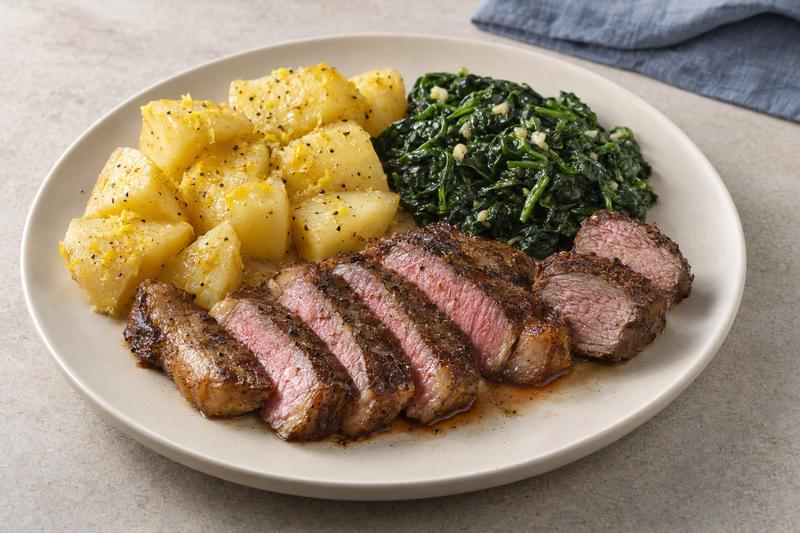
T-bone (striploin and tenderloin) with lemon potatoes and garlic spinach
One steak gives us two different cuts of beef: we share the striploin and tenderloin from a T-bone. We serve the seared meat with potatoes dressed in lemon juice and zest, and spinach scented with garlic. Fresh, simple sides let the beef take centre stage.
The time includes preparation and 8–10 minutes of resting. We roast thinner meat for less time; for a thick 1200 g steak, we allow up to 70 minutes in the oven. Above 7 cm thick, we add 20–30 minutes. Meat cooking times are guides; it may finish sooner or later depending on thickness and chosen doneness.
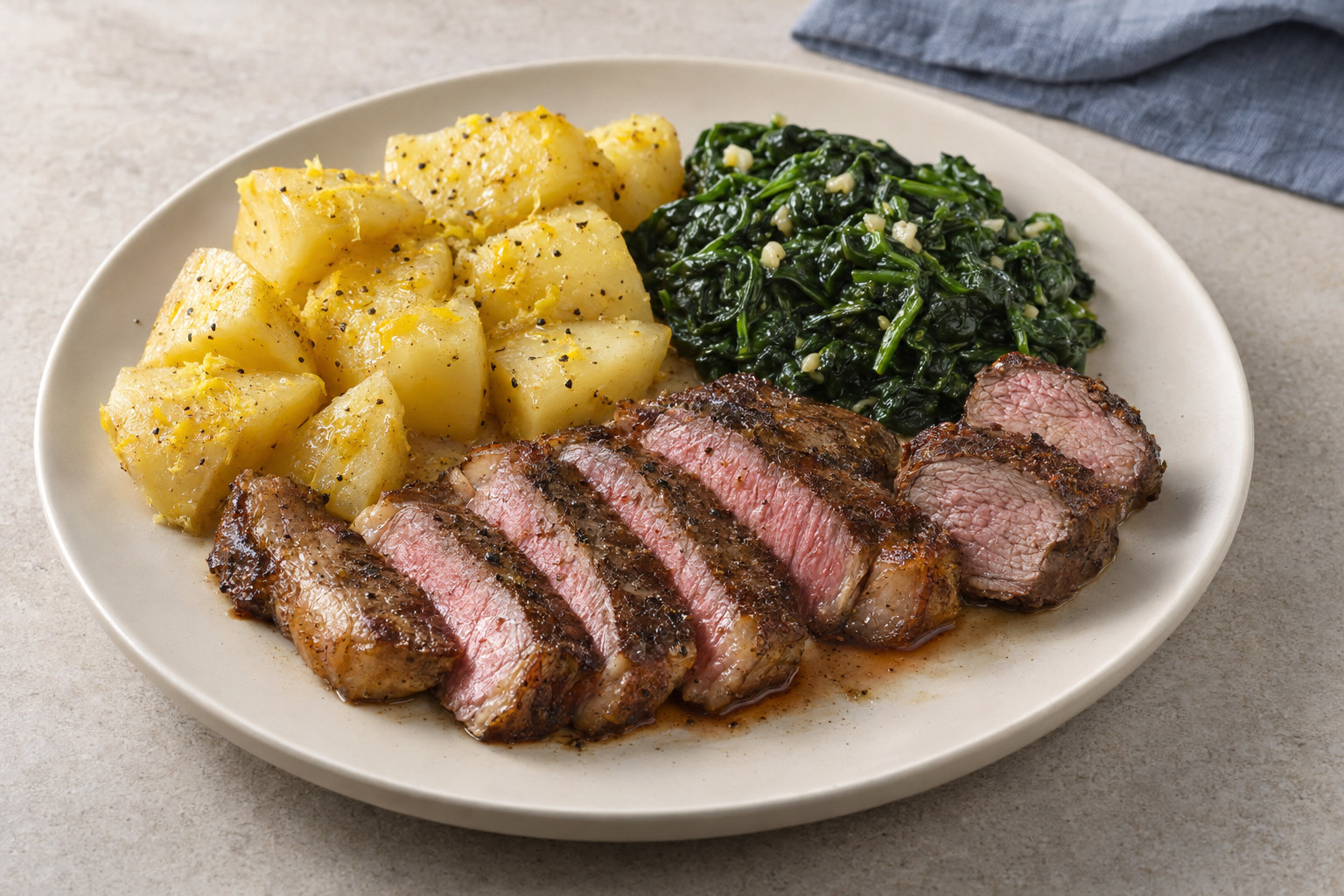
The browned beef is accompanied by a bright lemon flavour in the potatoes and gently garlicky spinach leaves.
Step-by-step method
What you will need
- kitchen scales
- thin probe thermometer
- knife, clean chopping board and tongs
- wide heavy pan or cast-iron griddle with a flat area of at least 30 × 30 cm; the whole steak must touch the surface, including around the bone
- oven and tray with a rack at least 35 × 30 cm, on which the meat lies flat at least 1 cm from the edge
- 3 l pan for the potatoes
- 3 l saucepan with a lid for the spinach
- colander, foil and fine grater
- 3 hob burners
Choosing how well to cook your steak
Before cooking, we choose how well we would like our meat done. This guide describes culinary levels of doneness and approximate temperatures at the centre of the meat after resting. These are not pan or oven temperatures or food safety recommendations. For whole beef steaks, the United States Department of Agriculture (USDA) recommends a minimum internal temperature of 63 °C before removing the meat from the heat, followed by at least 3 minutes of resting.
| Doneness | Temperature after resting | What to expect |
|---|---|---|
| Rare | 52 °C | Rare. The centre is red, and the meat is very tender and juicy. |
| Medium Rare | 55 °C | Medium rare. The centre is warm and reddish-pink, and the meat is tender and juicy. |
| Medium | 60 °C | Medium. The centre remains pink, and the meat has a firmer bite. |
| Medium Well | 65 °C | Medium well. Only a faint pink strip remains in the centre; the meat is firmer and less juicy. |
| Well Done | 71 °C | Well done. There is no pink in the centre, and the meat is firm and less juicy. |
- We measure the temperature at the centre of the thickest part of the meat. We insert the probe from the side, avoiding bone and pockets of fat. Colour is only a guide; we rely on the thermometer.
- As a rule, we take the meat off the pan or grill, or out of the oven, when it is 2–3 °C below our chosen temperature after resting. Thick cuts and intense heat can cause a greater temperature rise during resting. We check it regularly and follow the individual recipe.
- We rest the meat for the time given in the recipe. If the temperature stops rising before reaching our chosen value, we briefly return the meat to a gentle heat and check again.
- Cooking times are a guide. If we prefer our meat less well done, we start checking its temperature earlier. For a higher degree of doneness, we allow more time over a gentler heat as needed, so the outside does not burn.
Before we start
We prepare all the ingredients first. Only for meat up to 3 cm thick do we start the potatoes 10 minutes before searing. For other steaks, we start cooking the potatoes when the cooler muscle in the first steak to be finished is about 20 °C below the target temperature after resting. We wilt the spinach while the meat rests.
Prepare the steak and sides
We choose the doneness using the guide above the method. We use one whole 800 g Wolowina or Red+White T-bone. Instead, we can choose one whole 1200 g Chianina steak for two generous servings with the smaller potato side specified below. We pat the meat dry and prepare a pan large enough for it. We salt it with a total of three-quarters of a teaspoon, or 1 teaspoon for Chianina. We keep the meat in the fridge until searing. We wash and drain the spinach, then peel and finely chop the garlic. We prepare 500 g of potatoes, or only 350 g if using the 1200 g Chianina. We peel, rinse and cut the potatoes into 3 cm pieces. We bring the salted water for the potatoes almost to a boil. For meat up to 3 cm thick, we add the potatoes 10 minutes before searing, bring the water back to a gentle simmer and cook them for 16–22 minutes until tender. For other steaks, we keep the water covered and hot until it is time to add the potatoes.
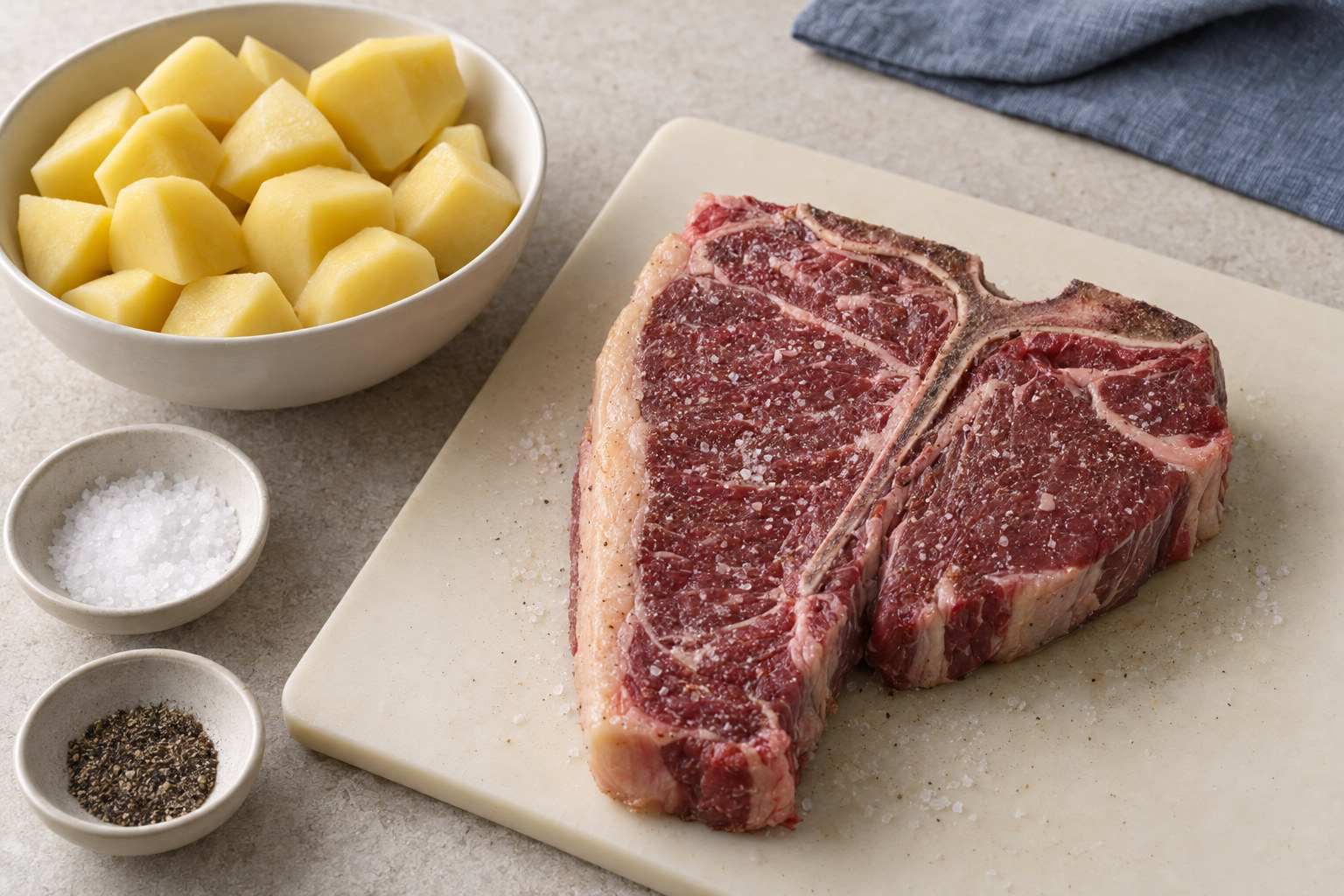
We identify the striploin and tenderloin on the T-bone before searing.
Sear and finish the T-bone
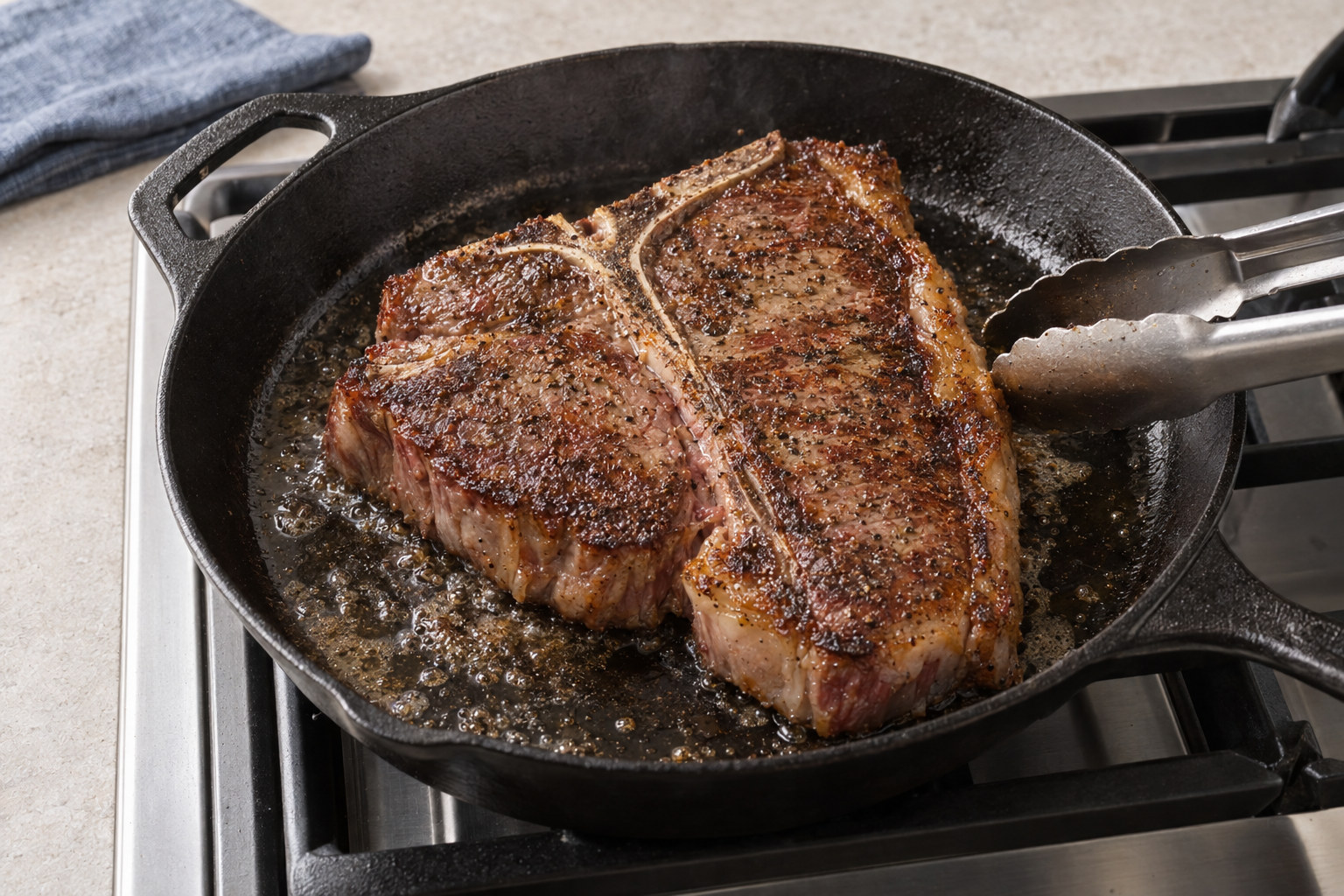
We preheat the oven to 150 °C with top and bottom heat. We heat the oil for the meat in one hot pan. We sear each steak for roughly 2–3 minutes on each broad side, then hold it with tongs on its meaty edges for 30–60 seconds. We transfer it to a rack. We shorten the initial sear if the probe shows that this is needed to avoid going beyond our chosen doneness. We keep the T-bone whole on the bone. We insert the probe from the side into the centre of both the striploin and the tenderloin, away from the bone and pockets of fat. We measure both muscles from the start of searing and then regularly, more often as they approach the target. We point the tenderloin, which heats faster, towards the cooler edge of the pan or oven. If needed, we turn the whole steak and loosely shield the tenderloin with a double layer of foil. A thin steak may be done after searing, in which case we do not put it in the oven. For a thickness of 3–5 cm, we allow about 15–35 minutes in the oven; for 5–7 cm, 30–60 minutes; and for a thick 1200 g Chianina steak, up to 70 minutes. Above 7 cm, another 20–30 minutes may be needed; we may reach a lower doneness sooner. For a steak thicker than 3 cm, we add the potatoes to the prepared hot salted water during roasting, when the cooler muscle is about 20 °C below our chosen target after resting. We bring the water back to a gentle simmer and cook the potatoes for 16–22 minutes until tender. We usually remove each whole steak when its cooler muscle is 2–3 °C below the chosen target after resting. A thick steak may rise further, so we keep checking its temperature. The tenderloin may end up more cooked than the striploin. We rest the meat for 8–10 minutes on a clean, lukewarm plate away from the heat, loosely covered with foil. We monitor the temperature of both muscles during the rest. If the temperature has stopped rising and the meat has not reached the chosen doneness, we briefly return the whole steak to gentle heat, turn the warmer muscle away from the heat and measure both again. We add pepper to taste afterwards.
Cook the lemon potatoes
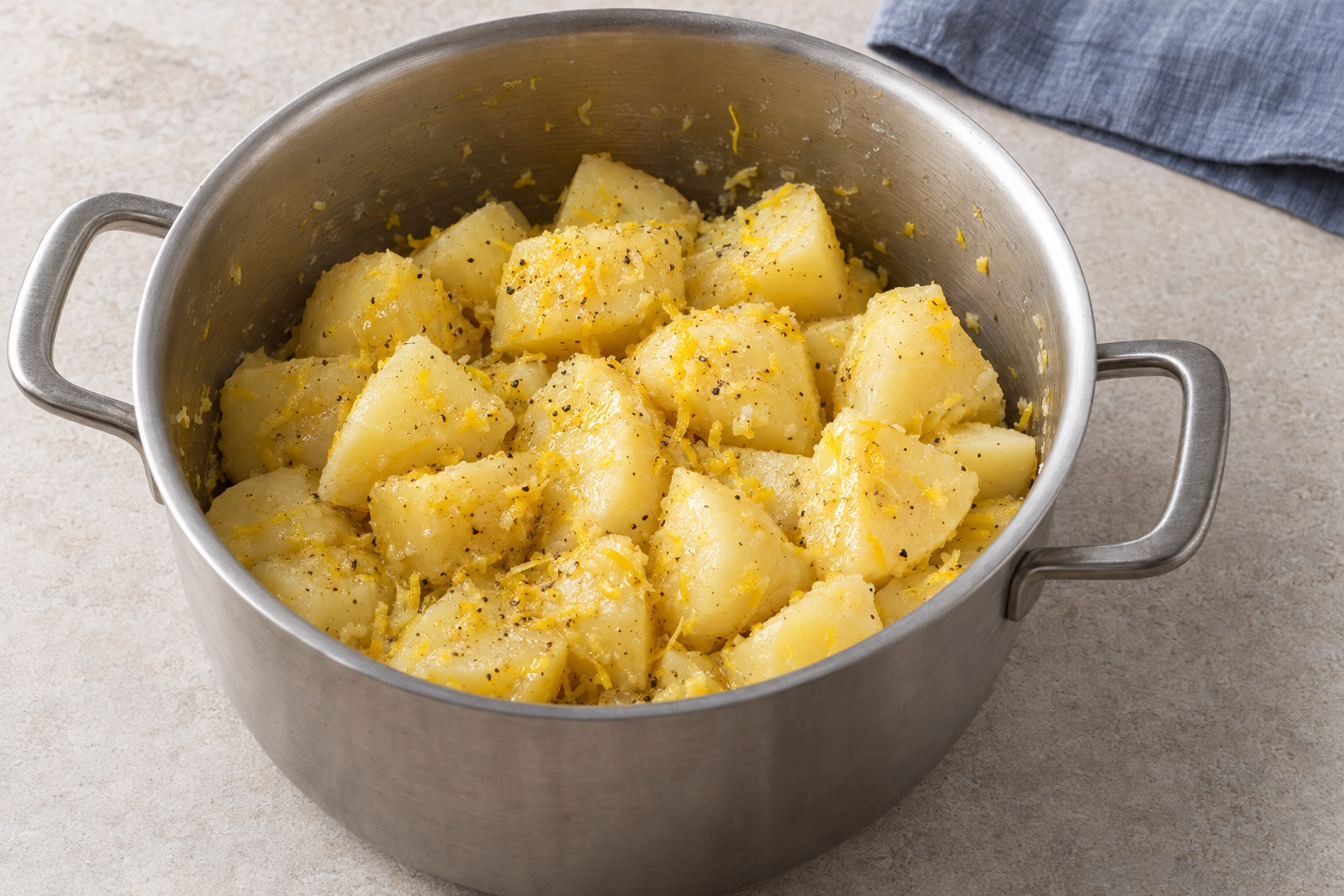
After 16–22 minutes from when the water returned to a gentle simmer, we check the potatoes: they are ready when a knife slides in easily. We drain them and toss them in the warm pan with 2 teaspoons of oil, lemon zest and 20 ml of lemon juice. We keep them covered away from direct heat for no more than 30 minutes.
The potatoes stay in whole pieces and are lightly coated with lemon.
Wilt the spinach and serve
As soon as we remove the meat, we heat 2 teaspoons of oil in the saucepan and cook the garlic in it for 30 seconds until fragrant. We add the spinach two handfuls at a time, allowing each addition to wilt a little. We add a pinch of salt, cover and let it wilt for 2 minutes. Then we uncover and stir for 1–2 minutes to evaporate any free water. After the full resting time, we cut the meat from both sides of the bone. We slice both muscles across the grain and divide them between two servings so each has some of both cuts. We add the potatoes, spinach and juices from the resting plate.
The spinach is not watery.
Tips from our kitchen
- We measure the temperature separately in the striploin and the smaller tenderloin.
What to watch out for
- We cook the steak whole on the bone. We slice it only after it has rested.
How we serve it
- After resting, we cut the meat from the bone and share it evenly between the chosen number of servings. We serve it with both sides at the same time.
Ingredient swaps
spinach
the same weight of chard leaves without their tough stalks We extend the wilting time by 2–3 minutes and check that the leaves are tender.
Ingredient notes
- One pack contains a whole 800 g Wolowina steak. A T-bone is striploin and a smaller tenderloin joined by the bone. We measure the steak’s thickness and dimensions before cooking.
- One pack contains a whole 800 g Red+White BMS 3 steak. A T-bone is striploin and a smaller tenderloin joined by the bone. We measure the steak’s thickness and dimensions before cooking.
- One pack contains a whole 1200 g Chianina IGP Fiorentina steak. A T-bone is striploin and a smaller tenderloin joined by the bone. We measure the steak’s thickness and dimensions before cooking.
- We keep the rest of the box for another meal. We obtain the sides and remaining ingredients separately.
During preparation
- We keep the meat in the fridge until cooking. After handling raw meat, we wash our hands and utensils; we use a clean board for the cooked meat.
- With a clean thermometer, we check the centre of the striploin and tenderloin separately, away from the bone and pockets of fat. If cooking more than one steak, we measure each one separately. We do not judge temperature by the colour of the meat.
Our inspiration
The two muscles on opposite sides of a T-bone share the attention. Striploin and the smaller tenderloin do not heat at the same rate, so in this recipe we check each one separately. After resting, we slice and divide both fairly so everyone tastes both cuts.
Similar recipes
Recipe for 4 people
The time includes preparation and 8–10 minutes of resting. We roast thinner meat for less time; for a thick 1200 g steak, we allow up to 70 minutes in the oven. Above 7 cm thick, we add 20–30 minutes. Meat cooking times are guides; it may finish sooner or later depending on thickness and chosen doneness. When we serve two different steaks in stages, the second batch of potatoes may extend the total time; the actual doneness of both steaks decides the timing.
Step-by-step method
Choosing how well to cook your steak
Before cooking, we choose how well we would like our meat done. This guide describes culinary levels of doneness and approximate temperatures at the centre of the meat after resting. These are not pan or oven temperatures or food safety recommendations. For whole beef steaks, the United States Department of Agriculture (USDA) recommends a minimum internal temperature of 63 °C before removing the meat from the heat, followed by at least 3 minutes of resting.
| Doneness | Temperature after resting | What to expect |
|---|---|---|
| Rare | 52 °C | Rare. The centre is red, and the meat is very tender and juicy. |
| Medium Rare | 55 °C | Medium rare. The centre is warm and reddish-pink, and the meat is tender and juicy. |
| Medium | 60 °C | Medium. The centre remains pink, and the meat has a firmer bite. |
| Medium Well | 65 °C | Medium well. Only a faint pink strip remains in the centre; the meat is firmer and less juicy. |
| Well Done | 71 °C | Well done. There is no pink in the centre, and the meat is firm and less juicy. |
- We measure the temperature at the centre of the thickest part of the meat. We insert the probe from the side, avoiding bone and pockets of fat. Colour is only a guide; we rely on the thermometer.
- As a rule, we take the meat off the pan or grill, or out of the oven, when it is 2–3 °C below our chosen temperature after resting. Thick cuts and intense heat can cause a greater temperature rise during resting. We check it regularly and follow the individual recipe.
- We rest the meat for the time given in the recipe. If the temperature stops rising before reaching our chosen value, we briefly return the meat to a gentle heat and check again.
- Cooking times are a guide. If we prefer our meat less well done, we start checking its temperature earlier. For a higher degree of doneness, we allow more time over a gentler heat as needed, so the outside does not burn.
Before we start
We prepare all the ingredients first. Only for meat up to 3 cm thick do we start the potatoes 10 minutes before searing. For other steaks, we start cooking the potatoes when the cooler muscle in the first steak to be finished is about 20 °C below the target temperature after resting. We wilt the spinach while the meat rests. For two 800 g steaks, we compare their thickness and chosen doneness. If they finish at different times, we serve two complete plates at a time, using one rested steak and half the sides. We serve a single Chianina steak for four together.
Prepare the steak and sides
We choose the doneness using the guide above the method. We use two whole Wolowina or Red+White T-bones, each weighing 800 g. Instead, we can choose just one whole 1200 g Chianina steak. Once sliced, we share it among four people and keep the sides at their full quantities. We pat the meat dry and prepare the required number of pans large enough for it. We salt the meat with 1½ teaspoons of salt, or 1 teaspoon for Chianina. We keep the meat in the fridge until searing. We wash and drain the spinach, then peel and finely chop the garlic. We prepare 950 g of potatoes with either choice of meat. If two 800 g steaks are likely to finish more than 15 minutes apart because of different thicknesses or chosen doneness, we divide the potatoes into two equal batches for serving in stages. For a single Chianina steak or steaks likely to finish at almost the same time, we cook all the potatoes together. We peel, rinse and cut them into 3 cm pieces. We bring the salted water for the potatoes almost to a boil. For meat up to 3 cm thick, we add the potatoes 10 minutes before searing; if the two steaks will finish at different times, we add only the first half for now. We bring the water back to a gentle simmer and cook the potatoes for 16–22 minutes until tender. For other steaks, we keep the water covered and hot until it is time to add them.
We identify the striploin and tenderloin on the T-bone before searing.
Sear and finish the T-bone
We preheat the oven to 150 °C with top and bottom heat. We heat the oil for the meat in two hot pans at the same time, or in one pan for a single Chianina T-bone. We sear each steak for roughly 2–3 minutes on each broad side, then hold it with tongs on its meaty edges for 30–60 seconds. We transfer each steak to a rack on its own tray; if using two trays, we swap their positions halfway through roasting. We shorten the initial sear if the probe shows that this is needed to avoid going beyond our chosen doneness. We keep the T-bone whole on the bone. We insert the probe from the side into the centre of both the striploin and the tenderloin, away from the bone and pockets of fat. We measure both muscles from the start of searing and then regularly, more often as they approach the target. We point the tenderloin, which heats faster, towards the cooler edge of the pan or oven. If needed, we turn the whole steak and loosely shield the tenderloin with a double layer of foil. A thin steak may be done after searing, in which case we do not put it in the oven. For a thickness of 3–5 cm, we allow about 15–35 minutes in the oven; for 5–7 cm, 30–60 minutes; and for a thick 1200 g Chianina steak, up to 70 minutes. Above 7 cm, another 20–30 minutes may be needed; we may reach a lower doneness sooner. For steaks thicker than 3 cm, we add the potatoes to the prepared hot salted water during roasting, when the cooler muscle in the first steak to be finished is about 20 °C below our chosen target after resting. If the steaks will finish more than 15 minutes apart, we start with only half the potatoes and add the second half to the hot water when the second steak reaches the same stage. Otherwise, we cook all the potatoes together. After adding each batch, we bring the water back to a gentle simmer and cook the potatoes for 16–22 minutes until tender. We usually remove each whole steak when its cooler muscle is 2–3 °C below the chosen target after resting. A thick steak may rise further, so we keep checking its temperature. The tenderloin may end up more cooked than the striploin. We rest the meat for 8–10 minutes on a clean, lukewarm plate away from the heat, loosely covered with foil. We monitor the temperature of both muscles during the rest. If the temperature has stopped rising and the meat has not reached the chosen doneness, we briefly return the whole steak to gentle heat, turn the warmer muscle away from the heat and measure both again. We add pepper to taste afterwards.
Cook the lemon potatoes
After 16–22 minutes from when the water returned to a gentle simmer, we check the potatoes: they are ready when a knife slides in easily. If cooking two batches, we lift out the first cooked potatoes with a slotted spoon, leaving the water in the pot. We lift out the second batch once tender as well. We toss each cooked batch in a warm pan with half the oil, lemon zest and lemon juice. If cooking all the potatoes together, we drain them and toss them with 1½ tablespoons of oil, lemon zest and 30 ml of lemon juice. We keep cooked potatoes covered away from direct heat for no more than 30 minutes.
The potatoes stay in whole pieces and are lightly coated with lemon.
Wilt the spinach and serve
As soon as we remove the meat, we heat 1 tablespoon of oil in the saucepan and cook the garlic in it for 30 seconds until fragrant. We add the spinach two handfuls at a time, allowing each addition to wilt a little. We add a quarter of a teaspoon of salt, cover and let it wilt for 2 minutes. Then we uncover and stir for 1–2 minutes to evaporate any free water. After the full resting time, we cut the meat from both sides of the bone. We slice both muscles across the grain and divide them between four servings so each has some of both cuts. We add the potatoes, spinach and juices from the resting plate. If serving the two steaks in stages, we cook the spinach in two half batches, including half the garlic, oil and salt each time, during the rest of the corresponding steak. In each round, we serve half the potatoes and stay within the stated holding time.
The spinach is not watery.